.jpg)


Menu Costs: How to Find the Dishes Losing You Money
How to work out what a dish really costs
Your menu costs are what each dish costs to make at today's supplier prices, not the figure you set at launch. To get it right, roll every ingredient on the plate up to the finished dish, then check that total against the prices on your latest invoices. Across 118,913 dishes in Supy's data, about 1 in 40 already costs more than it sells for. This article shows how to cost a dish, why to recheck it after launch, which dishes to act on, and how to keep costs current.
Costing one dish is four steps:
- List every ingredient. Include garnishes, oil and the share of each one that actually reaches the plate.
- Price each line from your latest invoice. Use the price you paid this week, not the price you paid at launch.
- Account for yield and wastage. Trim, cooking loss and prep wastage mean you buy more than you plate, so cost the raw quantity you use.
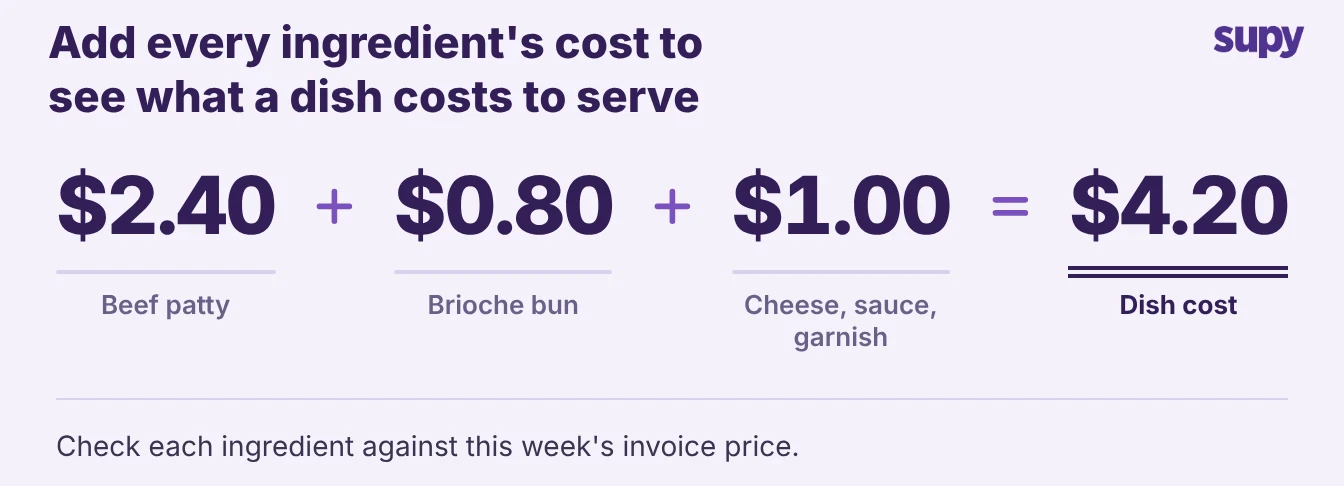
- Roll it up to the plated dish. Add the lines into one number, which is what this dish costs to serve today.
Then divide the dish cost by its menu price to get the food cost percentage. Say a burger costs $4.20 to make and sells for $14.00, which is a 30% food cost. Most operators treat anything under about a third of the menu price as healthy.
Why menu costs drift after launch
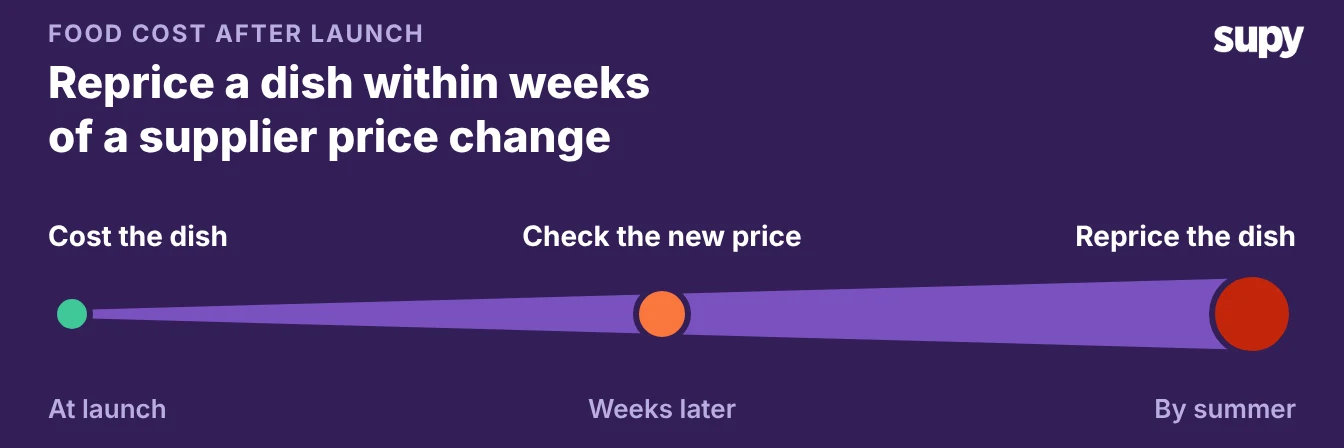
A dish costs what it costs at launch, but supplier prices never sit still. Each price rise raises the dish cost a little, while the recipe and the menu price stay the same. Most teams re-cost only a few times a year, so no one catches the change until the margin is already thin.
In Supy's data, drawn from 66 million supplier price records, a price that changes tends to change again within about 19 days. A dish that ran a 30% food cost in spring can cost 35% by summer, from prices nobody renegotiated.
What 118,913 dishes show about food cost
The Spread, Supy's study of restaurant data, looked at 118,913 dishes sold in a single day across 345 businesses. About 1 in 7 ran a food cost of 40% or more, well above where most kitchens want them to sit. About 1 in 40 dishes, or 2.35%, cost more than they sell for on recipe cost alone.
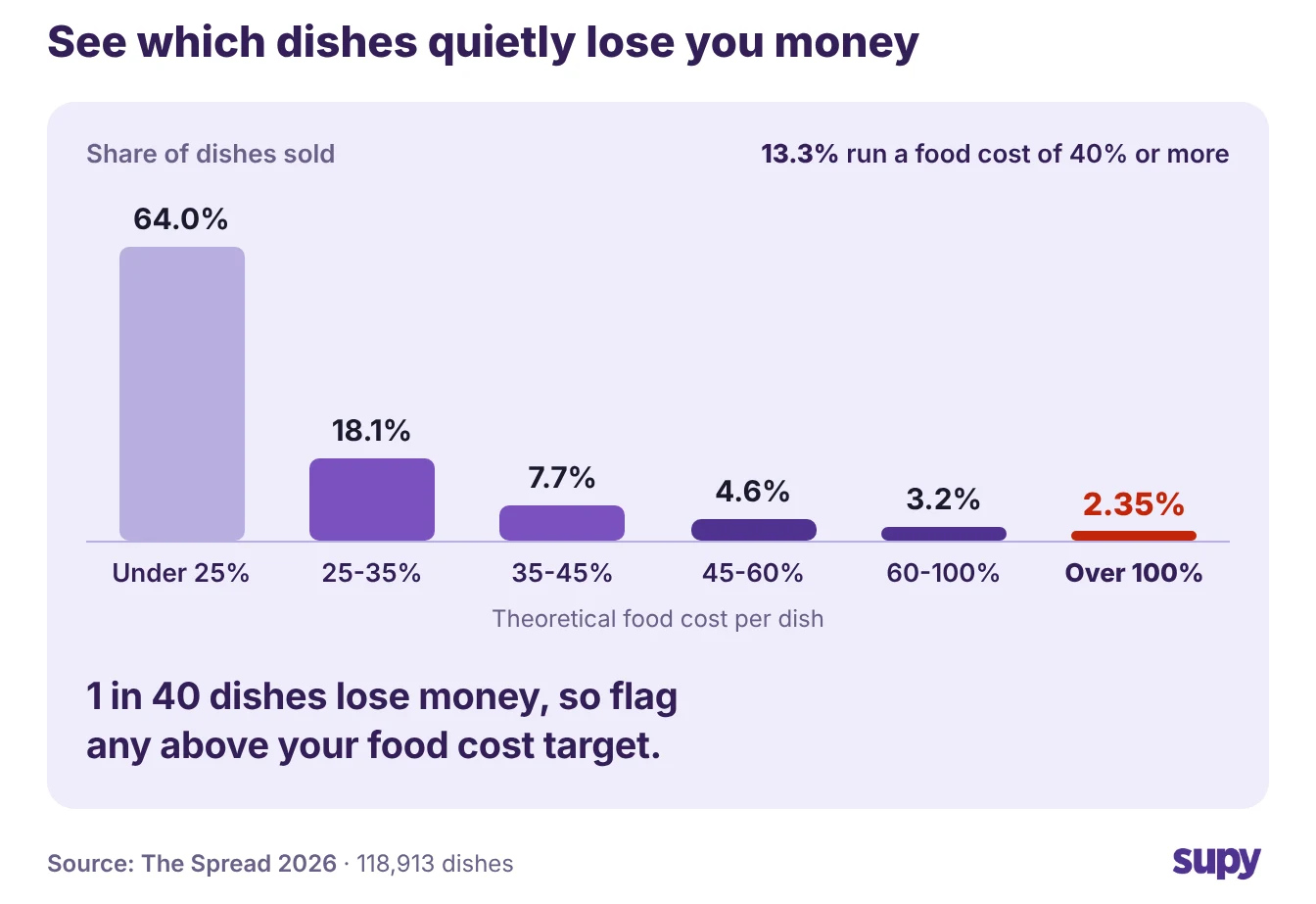
These are not rare errors on obscure items. They sit on live menus, selling every day at a loss, and the real plate cost runs higher still. You cannot spot them by eye, so you need the food cost percentage on every dish, refreshed as prices change.
Which dishes to reprice, re-spec or drop
Once you can see every dish's food cost, sort them into four moves. The band a dish sits in tells you what to do first.
| Where the dish sits | What it signals | First move |
|---|---|---|
| Food cost on target | Healthy margin | Keep it, and recheck when a key ingredient price moves |
| Food cost a few points over target | Supplier prices rose since launch | Reprice, or re-spec the costliest ingredient |
| Food cost far over target | The recipe or portion is wrong for the price | Re-engineer the dish, or raise the price |
| Dish costs more than it sells for | Losing money on every order | Pull it or fix it this week |
Reprice when the dish is close to target and the market will bear a small rise. Re-spec when one or two ingredients carry the cost, by swapping a cut, changing a supplier or trimming the portion. Re-engineer or drop a dish that loses money however you price it.
The point is to act on drift early. One multi-site bakery group found a recipe running well over its food cost target for weeks before anyone noticed.
Keeping menu costs current across sites
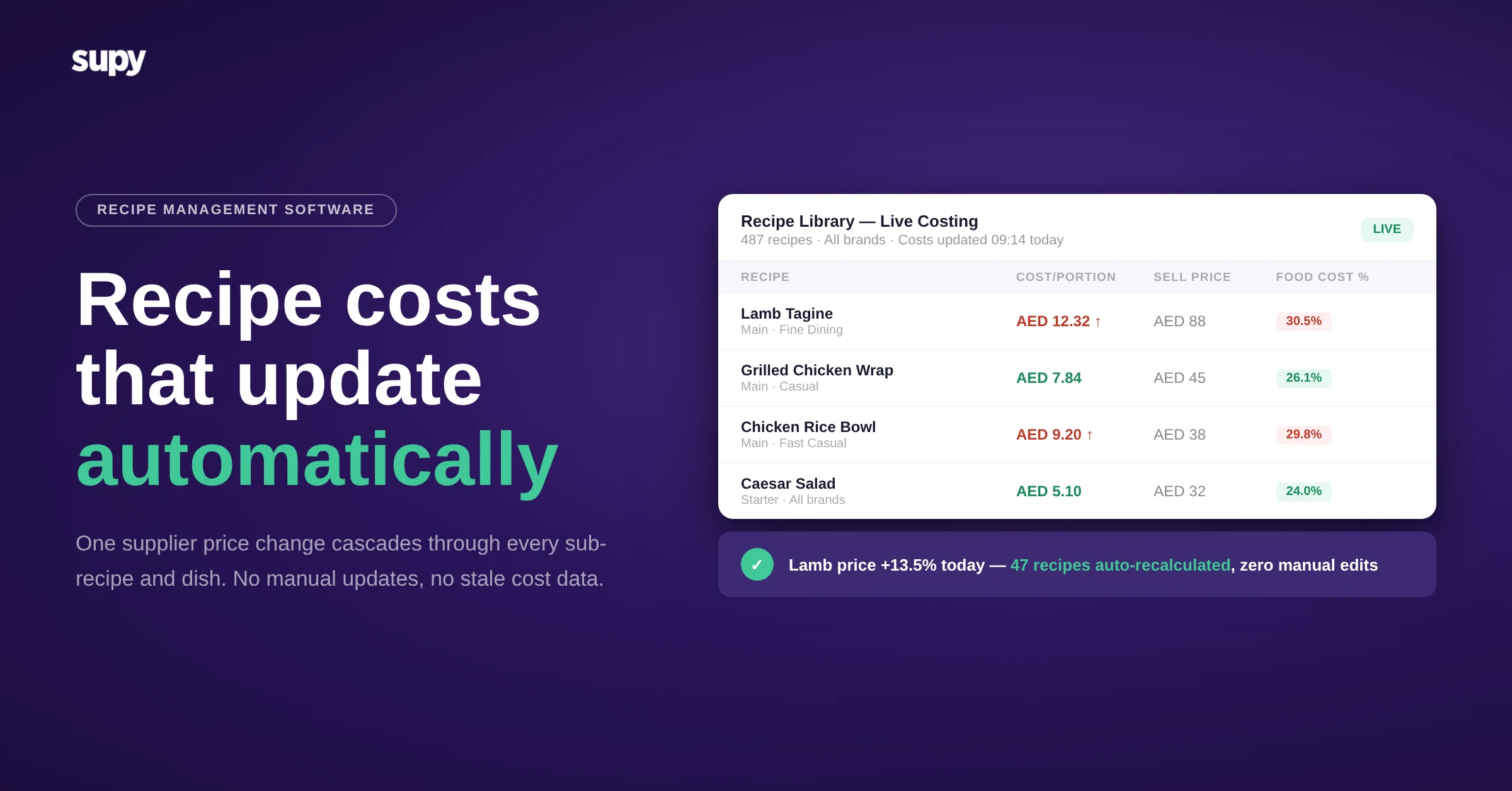
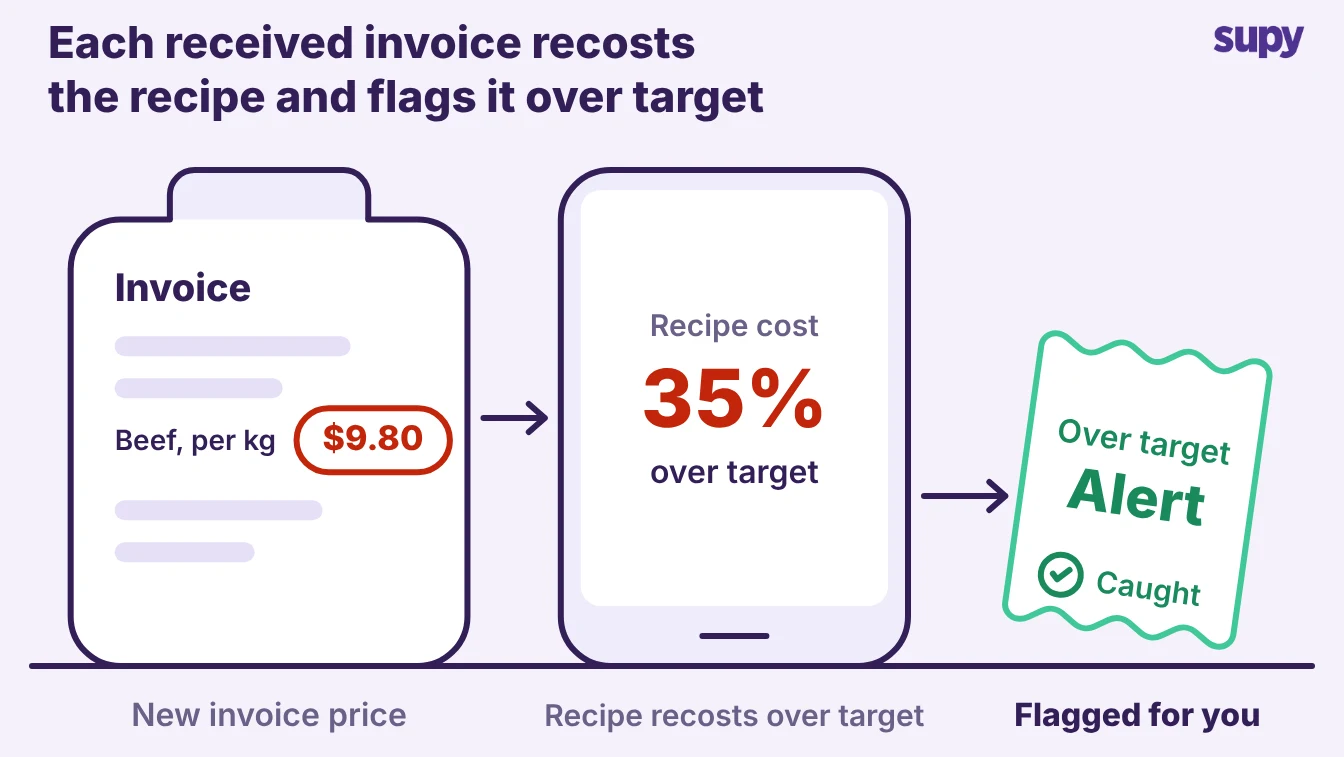
The fix is to recost recipes automatically, from the prices you actually pay. When an invoice is received, the recipe cost updates, and Supy flags any recipe that goes over its target.
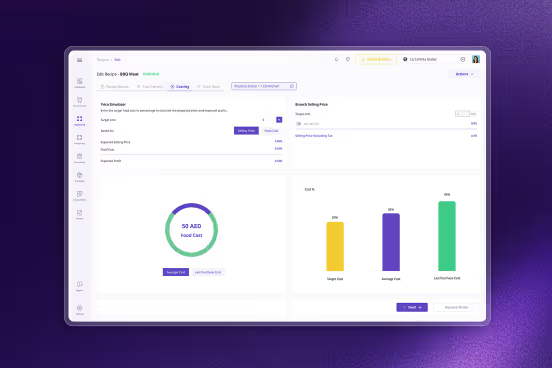
Supy recosts plated and prep recipes from each received invoice and flags any recipe over its food cost target. Instead of a quarterly spreadsheet pass, costs stay current on their own, and the same targets apply at every site.
To go deeper, read how to keep recipe costs current without a manual pass and see what the recipe and prep recipe tools cover. Start with your ten best sellers, and cost each at this week's prices. Flag any dish above its target or above where it sat at launch, then reprice or re-spec those first.