.jpeg)

Les 5 Meilleures Stratégies de Maîtrise des Coûts en Restauration (et Comment la Gestion des Stocks Vous Aide)

Gérer un restaurant avec la hausse des prix alimentaires est plus difficile que jamais. Avec des marges bénéficiaires déjà serrées, chaque ingrédient qui coûte plus cher met une pression supplémentaire sur votre résultat.
Selon la National Restaurant Association, les prix alimentaires de gros ont bondi de 9,7 % en glissement annuel en février. Parmi les plus fortes hausses :
- Œufs de poule : +183,3 %
- Fraises : +35,7 %
- Café : +14,2 %
- Pommes de terre : +23,0 %
- Bœuf : +9,5 %
Lorsque vos ingrédients de base coûtent plus cher, la réduction des dépenses devient incontournable. Les bonnes stratégies de maîtrise des coûts vous aident à réduire les pertes alimentaires, à améliorer vos décisions d'achat et à maintenir la rentabilité de votre restaurant malgré les fluctuations du marché.
L'un des moyens les plus efficaces d'y parvenir ? Le logiciel de gestion des stocks. Il vous aide à suivre vos Stocks en temps réel, à éviter les commandes excessives et à prévenir les pertes inutiles.
Voici cinq stratégies pour maîtriser les coûts et renforcer la performance financière de votre restaurant :
- Stratégie 1 : Optimiser les Niveaux de Stocks pour Réduire les Pertes
- Stratégie 2 : Contrôle des Portions et Standardisation des Recettes
- Stratégie 3 : Auditer les Stocks Fréquemment pour Éviter les Pertes
- Stratégie 4 : Commandes Intelligentes et Gestion des Fournisseurs
- Stratégie 5 : Gérer la Main-d'œuvre et la Préparation avec les Prévisions des Stocks
- Conclusion : Les Stocks, le Dénominateur Commun
- À propos de Supy
1. Stratégie 1 : Optimiser les Niveaux de Stocks pour Réduire les Pertes
L'une des principales raisons de la hausse du coût matière dans votre restaurant est la montée des prix des ingrédients. Mais maintenez-vous le bon niveau de Stocks pour faire face à ces coûts ?
Commander en excès ou laisser des articles trop longtemps en rayon peut entraîner des pertes alimentaires et une perte de bénéfices. Il est essentiel de trouver l'équilibre entre un stock suffisant pour répondre à la demande et éviter l'excédent qui finit par être perdu.
Fixer des Stocks Minimums pour Garder le Contrôle
Les stocks minimums garantissent que vous disposez de la bonne quantité de produits, suffisante pour répondre à la demande sans excédent inutile. Chaque ingrédient doit avoir un seuil minimum et maximum pour éviter le surstockage ou la rupture de stock.
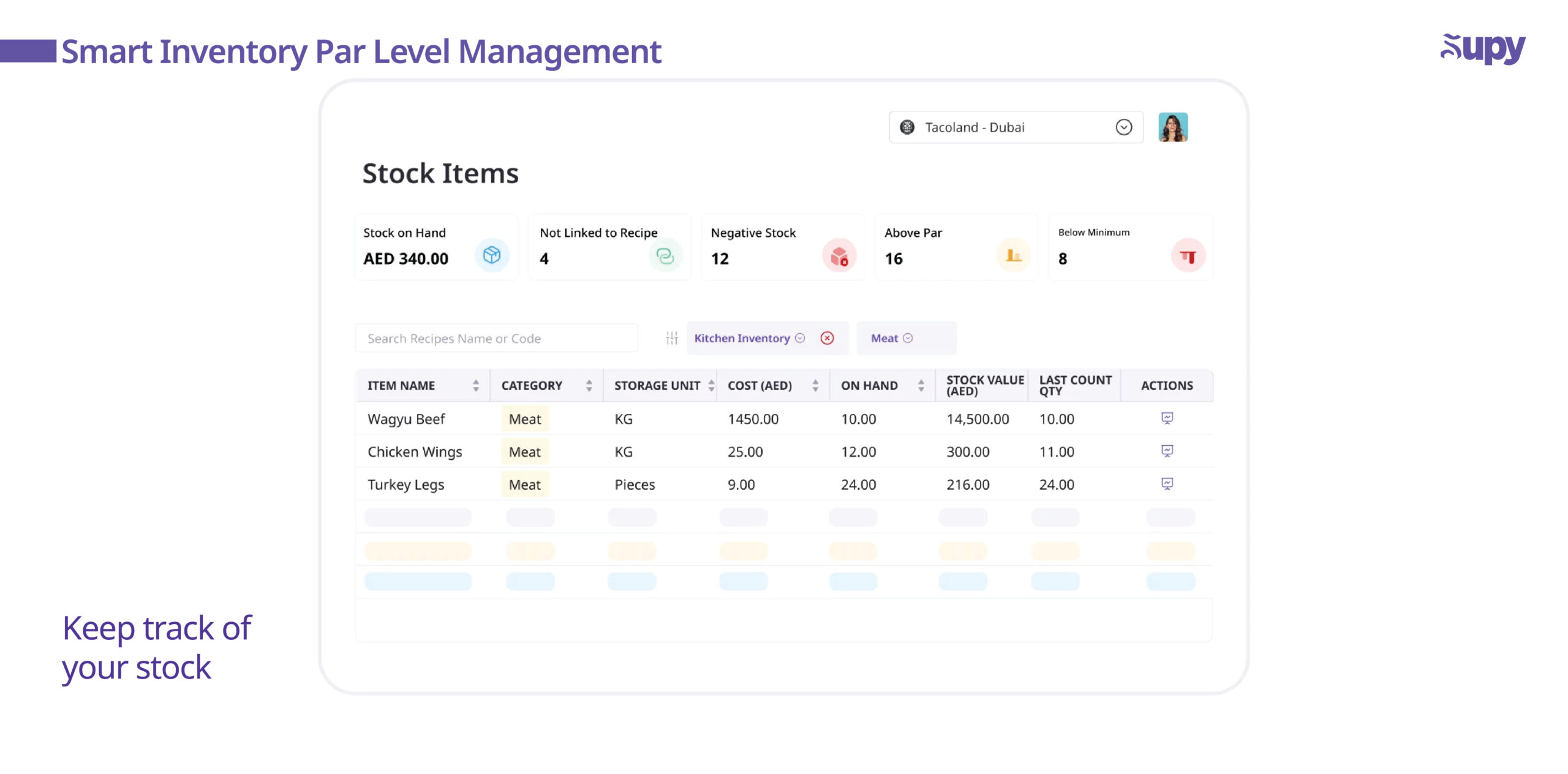
Les stocks minimums garantissent que vous disposez de la bonne quantité de produits, suffisante pour répondre à la demande sans excédent inutile. Chaque ingrédient doit avoir un seuil minimum et maximum pour éviter le surstockage ou la rupture de stock.
Infographie
Si votre restaurant utilise 20 livres de poulet par jour et reçoit des livraisons deux fois par semaine, votre stock minimum pourrait être de 30 livres (pour couvrir une demande imprévue), tandis que votre stock maximum pourrait être de 60 livres (pour éviter le surstockage).
- Suivez les tendances de consommation : Analysez les ventes passées pour déterminer la consommation moyenne quotidienne et hebdomadaire des ingrédients.
- Adaptez-vous aux fluctuations de la demande : Augmentez les Stocks pour les week-ends ou les heures de pointe, mais évitez le surstockage les jours plus calmes.
- Définissez des seuils de réapprovisionnement intelligents : Automatisez le réapprovisionnement lorsque les Stocks tombent au niveau minimum.
- Révisez régulièrement : Mettez à jour les stocks minimums chaque mois pour tenir compte des évolutions de la demande et des changements saisonniers.
Suivez le Ratio Stocks/Ventes pour des Commandes plus Intelligentes
Au-delà des stocks minimums, il est également important d'analyser l'utilisation exacte de vos Stocks. Ce suivi vous donne une vision claire de la correspondance entre vos ventes alimentaires et vos Stocks, et vous aide à déterminer si vous convertissez efficacement votre stock en bénéfices.
Deux indicateurs clés pour vous aider :
- Ratio Stocks/Ventes — Un ratio élevé indique un stock trop important, ce qui immobilise des liquidités et risque de provoquer des pertes.
- Taux de rotation des Stocks — Un taux sain (4 à 6) garantit une utilisation régulière des ingrédients sans surstockage.
Le suivi manuel des Stocks est chronophage et sujet aux erreurs. Supy automatise le suivi des Stocks, s'intègre aux systèmes POS et envoie des alertes pour les Stocks faibles et les ingrédients proches de leur date de péremption, vous aidant à prendre des décisions d'achat plus intelligentes avec un minimum d'effort.
2. Stratégie 2 : Contrôle des Portions et Standardisation des Recettes
Des portions incohérentes et des services trop généreux sont un frein caché à la rentabilité. Près de 48 % des consommateurs estiment que des portions excessives contribuent aux pertes alimentaires, et 15 % des plats principaux ne sont pas consommés. Ce sont des pertes alimentaires et financières.
Surveillez les Coûts de Portions
La dérive des portions se produit lorsque les tailles de service augmentent progressivement sans surveillance. Au fil du temps, cela peut faire grimper le coût matière réel et rogner vos marges. Sans directives claires sur les portions, votre restaurant pourrait offrir chaque mois des ingrédients supplémentaires pour des milliers d'euros.
Voici comment réduire les coûts en gardant les portions sous contrôle :
- Utilisez des mesures précises : Pesez les ingrédients au lieu d'estimer. Même de petits excédents s'accumulent avec le temps.
- Formez le personnel à respecter les directives de portions : Des tailles de service standardisées assurent la cohérence sur tous les articles du menu.
- Surveillez la dérive des portions : Vérifiez régulièrement les plats dressés pour confirmer qu'ils correspondent aux tailles de portions définies.
Un logiciel de gestion des stocks simplifie ce processus en suivant la quantité de chaque ingrédient qui devrait être utilisée par rapport à la quantité réellement utilisée.
Supy fournit une analyse du coût des recettes et des Rapports d'écart, aidant les managers à comparer les coûts matières théoriques aux coûts matières réels. Cela facilite l'identification des incohérences et l'ajustement des portions avant qu'elles n'affectent la rentabilité.
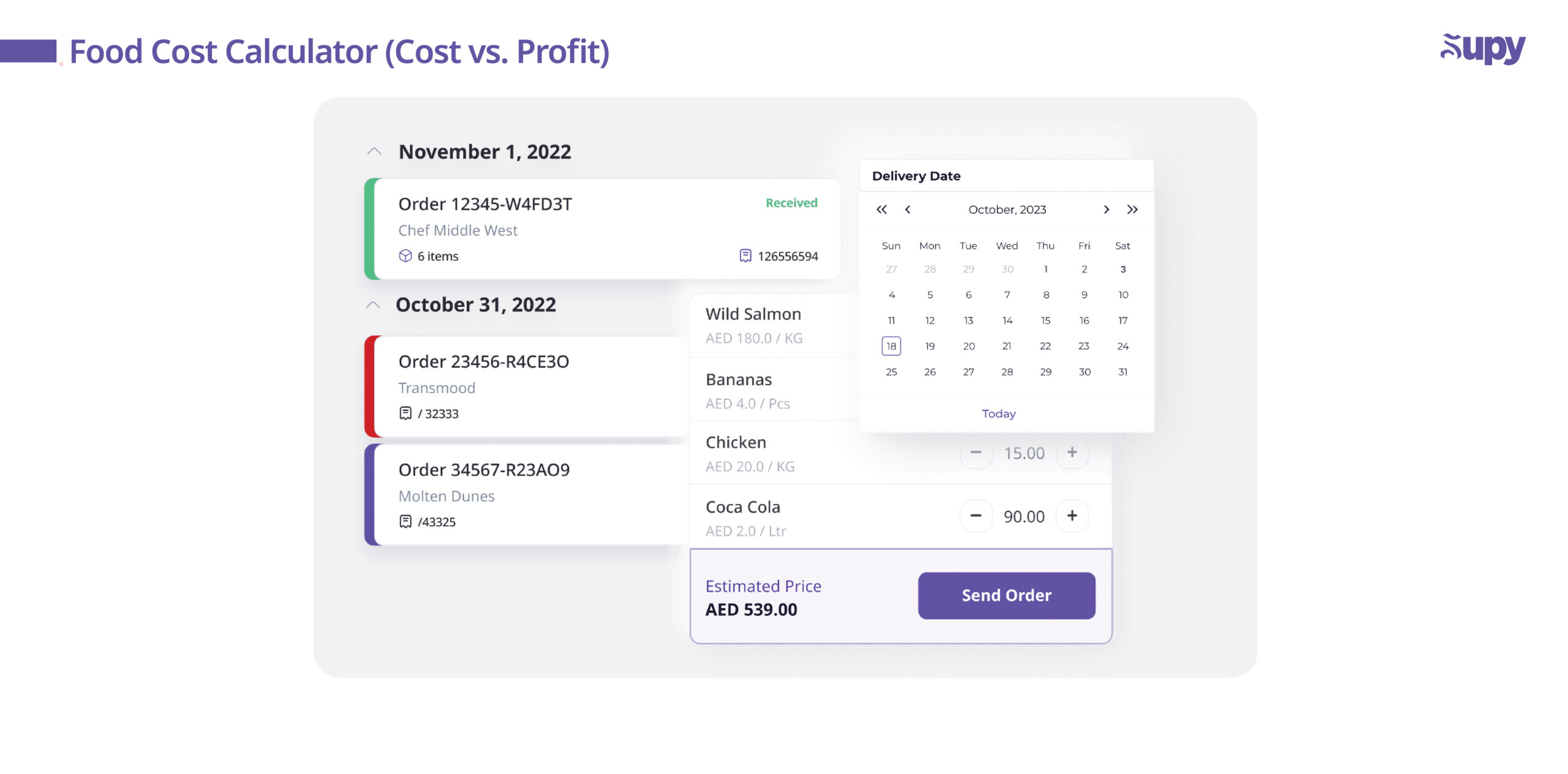
Pour calculer rapidement le ratio coût matière, la calculatrice gratuite du coût matière pour restaurants de Supy vous aide à analyser les dépenses en ingrédients et à maintenir une tarification de menu rentable.
Standardisez vos Recettes pour Maîtriser les Coûts
Une fois les meilleures tailles de portions définies pour la satisfaction client et la rentabilité, l'étape suivante consiste à les standardiser via une approche d'ingénierie de menu. C'est particulièrement utile pour les restaurants multi-sites, où la cohérence garantit que chaque client vit la même expérience.
Sans recettes standardisées, les chefs peuvent utiliser des quantités différentes d'ingrédients, entraînant des portions incohérentes et des coûts imprévisibles. Un logiciel de gestion des recettes vous aide à :
- Maintenir un goût et une qualité constants sur tous les points de vente.
- Prévenir l'utilisation excessive d'ingrédients en définissant des mesures exactes.
- Suivre la rentabilité des plats grâce à des calculs de coûts précis.
Lorsque le contrôle des portions et la standardisation des recettes sont combinés au suivi des Stocks, vous bénéficiez d'une visibilité complète sur le ratio coût matière et pouvez prendre des décisions basées sur les données pour protéger vos marges.
3. Stratégie 3 : Auditer les Stocks Fréquemment pour Éviter les Pertes
De nombreux restaurateurs s'appuient encore sur des comptages mensuels, mais au moment où les écarts sont détectés, les dommages sont déjà faits. Le suivi manuel — via des feuilles Excel ou des registres manuscrits — est chronophage et sujet aux erreurs.
Avec plusieurs membres du personnel gérant les Stocks, les erreurs d'enregistrement et de suivi sont inévitables. Un taux d'erreur humaine de 5 % dans la gestion des stocks de restaurant signifie que même de petits erreurs de calcul peuvent faire grimper les coûts de centaines, voire de milliers d'euros par mois.
Effectuez des Contrôles de Stocks Hebdomadaires et Quotidiens
Passer à des audits de Stocks plus fréquents permet de détecter les écarts rapidement, réduisant le risque de pertes ou de vols non détectés. Voici comment garder le contrôle de la consommation et prévenir les pertes :
- Effectuez des comptages cycliques hebdomadaires : Concentrez-vous sur les ingrédients à fort coût ou fréquemment utilisés pour garantir la précision.
- Effectuez des vérifications quotidiennes ciblées : Surveillez les articles de Stocks clés pour détecter les écarts avant qu'ils ne s'aggravent.
- Alternez les responsabilités de comptage : Confiez les comptages à différents membres du personnel pour prévenir les erreurs et encourager la responsabilisation.
La mesure de maîtrise des coûts la plus efficace est d'automatiser le suivi des Stocks avec un logiciel de gestion des stocks. Le suivi automatisé de Supy aide les restaurateurs à rationaliser les audits, réduire les pertes et prendre des décisions d'achat plus intelligentes, basées sur les données.
4. Stratégie 4 : Commandes Intelligentes et Gestion des Fournisseurs
De nombreux managers de restaurant négligent la façon dont les processus d'approvisionnement et de commande contribuent à la hausse des coûts alimentaires. Les achats excessifs, les prix incohérents et les pertes inutiles font grimper les dépenses. Des commandes plus intelligentes et une intégration des fournisseurs en temps réel peuvent générer de meilleures économies.
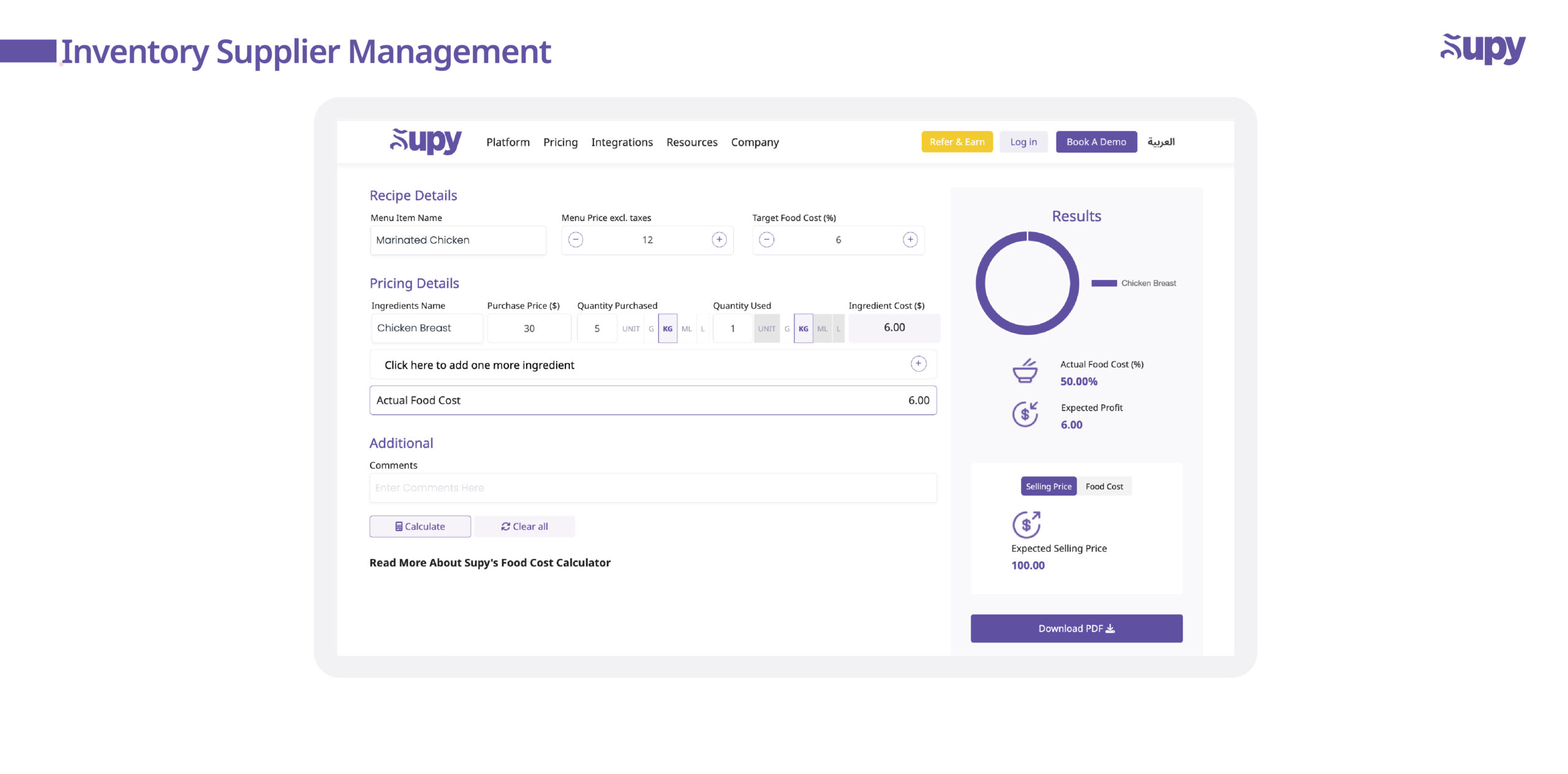
Adoptez des Techniques de Commande Intelligentes
Une maîtrise efficace du coût matière commence par la compréhension des tendances de consommation et des habitudes d'achat. Avec le bon logiciel de gestion de restaurant, vous pouvez suivre l'utilisation des ingrédients dans le temps et prendre des décisions d'achat basées sur les données. Cela vous aide à :
- Éviter les achats excessifs et réduire les pertes alimentaires
- Prévenir les ruptures de stock qui perturbent le service
- Identifier les opportunités de commandes groupées pour obtenir des remises fournisseurs
Par exemple, si les données montrent que vous utilisez régulièrement 200 livres de poulet par semaine, commander en vrac pourrait vous faire économiser 10 à 15 % par unité. Cela réduit les coûts et minimise le besoin de réapprovisionnements fréquents, diminuant ainsi le temps de traitement des commandes.
Négociez de Meilleurs Prix grâce à la Gestion des Fournisseurs
De nombreux restaurants manquent des opportunités d'économies faute d'une bonne gestion des fournisseurs alimentaires. Un logiciel de gestion de restaurant intègre les catalogues fournisseurs, permettant des comparaisons de prix en temps réel pour assurer des tarifs compétitifs sur chaque commande.
La négociation de meilleurs prix devient plus facile avec des Insights basés sur les données. Des achats en volume réguliers permettent aux restaurants d'obtenir des remises groupées, réduisant les coûts de 5 à 10 %.
Rejoindre un groupement d'achats (GPO) peut réduire davantage les dépenses en utilisant le pouvoir d'achat collectif. Les GPO donnent accès à des remises fournisseurs qui pourraient ne pas être disponibles pour les restaurants individuels.
5. Stratégie 5 : Gérer la Main-d'œuvre et la Préparation avec les Prévisions des Stocks
Les prévisions des Stocks efficaces ne permettent pas seulement d'économiser sur la nourriture — elles peuvent également optimiser vos coûts de main-d'œuvre. Lorsque vous savez exactement quels ingrédients sont nécessaires et quand, vous pouvez préparer plus intelligemment pour éviter la sur-préparation et le gaspillage à la fois d'aliments et d'heures de travail.
Liez les Prévisions des Stocks à l'Efficacité de la Main-d'œuvre
Lorsque les prévisions des Stocks sont précises, vous pouvez aligner vos plannings de préparation sur la demande réelle. La sur-préparation se produit souvent par manque de clarté sur les besoins en Stocks, entraînant des ingrédients inutilisés et des heures de travail gaspillées à préparer des plats qui ne sont pas nécessaires. Cet excédent de préparation coûte non seulement plus cher en ingrédients, mais monopolise aussi le temps du personnel en cuisine, rendant les coûts de main-d'œuvre inefficaces.
Avec un logiciel de gestion des stocks pour prévoir la demande, vous pouvez :
- Prédire la consommation des ingrédients en fonction des tendances de ventes et des événements à venir.
- Optimiser les heures de travail en alignant la préparation sur les besoins réels en Stocks.
- Minimiser les pertes pour s'assurer que les plats ne sont préparés que lorsqu'ils sont nécessaires, réduisant à la fois les pertes alimentaires et la main-d'œuvre inutile.
Améliorez le Planning de Préparation et Réduisez les Frais Généraux
Les prévisions des Stocks donnent une vision plus claire de la quantité de préparation nécessaire. L'analyse des tendances de ventes passées et des exigences du menu garantit que les plats sont préparés en quantités adéquates, réduisant le temps consacré à des tâches inutiles.
Par exemple, si un plat particulier est régulièrement populaire le vendredi mais pas le mardi, les plannings de préparation peuvent être ajustés en conséquence. Cette approche réduit les coûts de main-d'œuvre sans affecter la qualité ou le service.
Les restaurants qui cherchent des moyens créatifs et innovants d'améliorer la maîtrise du coût matière devraient utiliser les prévisions des Stocks pour rationaliser les opérations. Des décisions de préparation plus intelligentes signifient moins de pertes d'ingrédients, des dépenses de main-d'œuvre réduites et une cuisine globalement plus efficace.
6. Conclusion : Les Stocks, le Dénominateur Commun
Chaque stratégie de gestion des coûts alimentaires, de main-d'œuvre et des fournisseurs est liée aux Stocks. Sans suivi précis, les restaurants font face à des commandes excessives, des pertes et des dépenses plus élevées, rendant la rentabilité plus difficile à maintenir.
Un logiciel de gestion des stocks aide à contrôler les Stocks, prévenir les achats excessifs et aligner les achats sur la demande réelle. Le suivi en temps réel et les alertes automatiques réduisent les pertes, optimisent les commandes et améliorent l'efficacité.
Avec des marges plus serrées que jamais, investir dans le bon logiciel permet de prendre des décisions plus intelligentes et d'assurer la stabilité financière à long terme. Chaque pourcentage économisé sur le coût matière renforce votre résultat.
Pour plus d'informations, consultez notre eBook : Le Guide Ultime pour Réduire le Coût Matière dans les Restaurants Multi-sites et les Entreprises de Restauration.
7. À propos de Supy
Supy est une solution intelligente de gestion des stocks conçue pour le secteur de la restauration, aidant les entreprises à reprendre le contrôle de leurs Stocks, réduire les pertes et diminuer les coûts. Conçu pour les restaurants multi-sites, il offre un suivi en temps réel, un réapprovisionnement automatique des Stocks et des Insights pour optimiser les décisions d'achat et de préparation.
Découvrez comment Supy peut aider votre restaurant à minimiser les pertes alimentaires et à améliorer la rentabilité. Réservez une démo dès aujourd'hui et faites le premier pas vers une gestion des stocks plus intelligente.