.jpeg)


Top 5 Strategien zur Kostenkontrolle in Restaurants (und wie Warenwirtschaft hilft)
Immer stärker steigende Lebensmittelpreise machen es schwieriger denn je, ein Restaurant profitabel zu führen. Bei ohnehin schon engen Gewinnmargen erhöht jede Preissteigerung bei Zutaten den Druck auf Ihr Ergebnis.
Laut der National Restaurant Association stiegen die Großhandelspreise für Lebensmittel im Februar um 9.7% im Jahresvergleich. Einige der größten Preissteigerungen umfassen:
- Hühnereier: +183.3%
- Erdbeeren: +35.7%
- Kaffee: +14.2%
- Kartoffeln: +23.0%
- Rindfleisch: +9.5%
Wenn Ihre Kernzutaten teurer werden, wird das Senken von Ausgaben unumgänglich. Die richtigen Strategien zur Kontrolle der Lebensmittelkosten helfen Ihnen, Lebensmittelverschwendung zu reduzieren, Einkaufsentscheidungen zu verbessern und Ihr Restaurant trotz Marktschwankungen profitabel zu halten.
Eine der effektivsten Methoden dafür? Warenwirtschaftssoftware. Sie hilft Ihnen, Bestände in Echtzeit zu verfolgen, Überbestellungen zu vermeiden und unnötige Verluste zu reduzieren.
Hier sind fünf Strategien zur Kontrolle der Lebensmittelkosten und zur Stärkung der finanziellen Leistung Ihres Restaurants:
- Strategie 1: Bestandsniveaus optimieren, um Verschwendung zu reduzieren
- Strategie 2: Portionskontrolle und Rezeptstandardisierung
- Strategie 3: Häufige Inventur zur Verlustprävention
- Strategie 4: Intelligente Beschaffung und Lieferantenverwaltung
- Strategie 5: Personal und Vorbereitung mit Warenbestandsprognosen steuern
- Fazit: Warenwirtschaft als gemeinsamer Nenner
- Über Supy
1. Strategie 1: Bestandsniveaus optimieren, um Verschwendung zu reduzieren
Einer der Hauptgründe für steigende Lebensmittelkosten in Ihrem Restaurant sind die steigenden Zutatenpreise. Pflegen Sie aber auch das richtige Bestandsniveau, um mit diesen Kosten Schritt zu halten?
Überbestellung oder zu lange Lagerung von Artikeln kann zu Lebensmittelverschwendung und Gewinneinbußen führen. Es ist wichtig, eine Balance zwischen ausreichendem Warenbestand zur Nachfragedeckung und der Vermeidung von Überschüssen zu finden, die letztendlich weggeworfen werden.
Mindestbestandsgrenzen festlegen, um den Bestand zu kontrollieren
Mindestbestandsgrenzen stellen sicher, dass Sie die richtige Menge an Lebensmittelvorräten vorrätig haben – genug, um die Nachfrage zu decken, ohne unnötigen Überschuss. Jede Zutat sollte einen Mindest- und Höchstwert haben, um Überbevorratung oder Engpässe zu vermeiden.
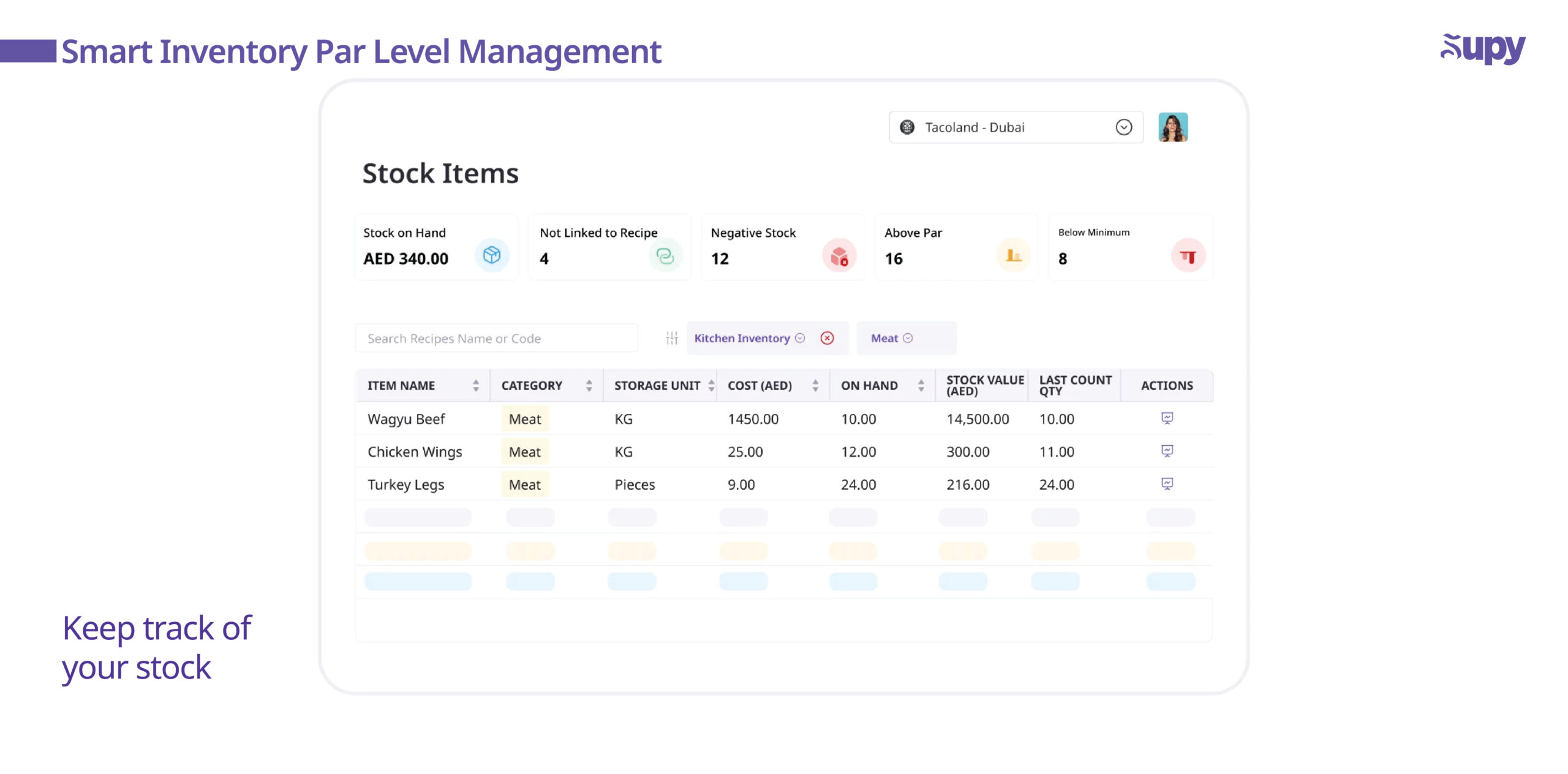
Mindestbestandsgrenzen stellen sicher, dass Sie die richtige Menge an Lebensmittelvorräten vorrätig haben – genug, um die Nachfrage zu decken, ohne unnötigen Überschuss. Jede Zutat sollte einen Mindest- und Höchstwert haben, um Überbevorratung oder Engpässe zu vermeiden.
Infografik
Wenn Ihr Restaurant täglich 20 Pfund Hühnerfleisch verbraucht und zweimal wöchentlich Lieferungen erhält, könnte Ihr Mindestbestandsniveau bei 30 Pfund liegen (um unerwartete Nachfrage abzudecken), während Ihr Höchstbestandsniveau bei 60 Pfund liegen könnte (um Überbevorratung zu vermeiden).
- Verbrauchstrends verfolgen: Analysieren Sie vergangene Umsätze, um den durchschnittlichen täglichen und wöchentlichen Zutatenverbrauch zu ermitteln.
- Für Nachfrageschwankungen anpassen: Erhöhen Sie den Bestand für Wochenenden oder Stoßzeiten, vermeiden Sie jedoch Überbevorratung an ruhigeren Tagen.
- Intelligente Nachbestellpunkte festlegen: Automatisieren Sie die Nachbestellung, wenn der Bestand auf den Mindestwert sinkt.
- Regelmäßig überprüfen: Aktualisieren Sie Mindestbestandsgrenzen monatlich, um Verschiebungen in der Nachfrage und saisonale Änderungen zu berücksichtigen.
Warenbestand-zu-Umsatz-Verhältnis für intelligentere Bestellungen verfolgen
Neben Mindestbestandsgrenzen ist es wichtig zu analysieren, wie genau Ihr Bestand verbraucht wird. Die Verfolgung dieser Daten gibt Ihnen ein klares Bild davon, ob Ihre Lebensmittelumsätze mit Ihrem Bestand übereinstimmen – und hilft Ihnen festzustellen, ob Sie Ihren Bestand effektiv in Gewinne umwandeln.
Zwei wichtige Kennzahlen zur Unterstützung:
- Warenbestand-zu-Umsatz-Verhältnis – Ein hoher Wert bedeutet zu viel Bestand, der Kapital bindet und Verderb riskiert.
- Bestandsumschlaghäufigkeit – Eine gesunde Rate (4-6) gewährleistet einen stetigen Zutatenverbrauch ohne Überbevorratung.
Die manuelle Bestandsverfolgung ist zeitaufwendig und fehleranfällig. Supy automatisiert die Warenwirtschaft, integriert sich in POS-Systeme und sendet Warnungen bei niedrigem Bestand und ablaufenden Zutaten, damit Sie mit minimalem Aufwand intelligentere Einkaufsentscheidungen treffen können.
2. Strategie 2: Portionskontrolle und Rezeptstandardisierung
Inkonsistente Portionen und übermäßig große Serviermengen sind eine versteckte Gewinnminderung. Fast 48 % der Verbraucher geben an, dass übermäßige Portionen zu Lebensmittelverschwendung beitragen, und 15 % der Hauptgerichte bleiben unangetastet. Das ist verschwendetes Essen und verschwendetes Geld.
Portionskosten überwachen
Schleichende Portionsvergrößerung tritt auf, wenn Portionsgrößen ohne Aufsicht allmählich zunehmen. Im Laufe der Zeit kann dies die tatsächlichen Lebensmittelkosten in die Höhe treiben und Ihre Margen auffressen. Ohne klare Portionsvorgaben könnte Ihr Restaurant jeden Monat Zutaten im Wert von Tausenden Euro zu viel ausgeben.
So reduzieren Sie Lebensmittelkosten durch Portionskontrolle:
- Genaue Messungen verwenden: Wiegen Sie Zutaten, anstatt zu schätzen. Selbst kleine Überschreitungen summieren sich über die Zeit.
- Personal in Portionsvorgaben schulen: Standardisierte Portionsgrößen gewährleisten Konsistenz bei allen Menüpunkten.
- Schleichende Portionsvergrößerung überwachen: Überprüfen Sie regelmäßig angerichtete Gerichte, um sicherzustellen, dass sie den festgelegten Portionsgrößen entsprechen.
Ein Warenwirtschaftssystem vereinfacht dies, indem es verfolgt, wie viel von jeder Zutat verwendet werden sollte im Vergleich zu dem, was tatsächlich verbraucht wird.
Supy bietet Rezeptkostenanalysen und Abweichungsberichte, die Managern helfen, theoretische Lebensmittelkosten mit tatsächlichen Lebensmittelkosten zu vergleichen. So lassen sich Unstimmigkeiten leichter erkennen und Portionsgrößen anpassen, bevor sie sich auf die Gewinne auswirken.
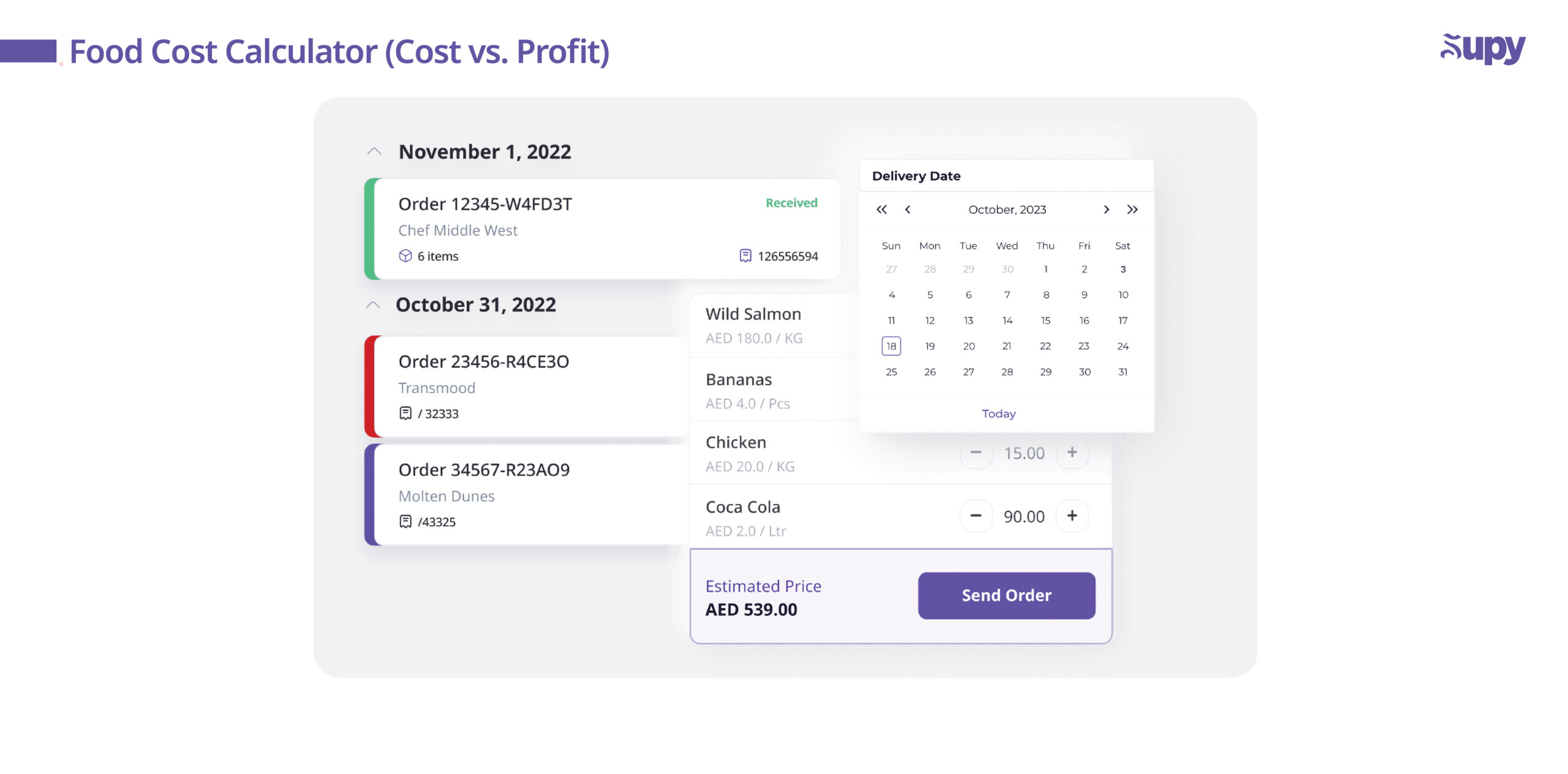
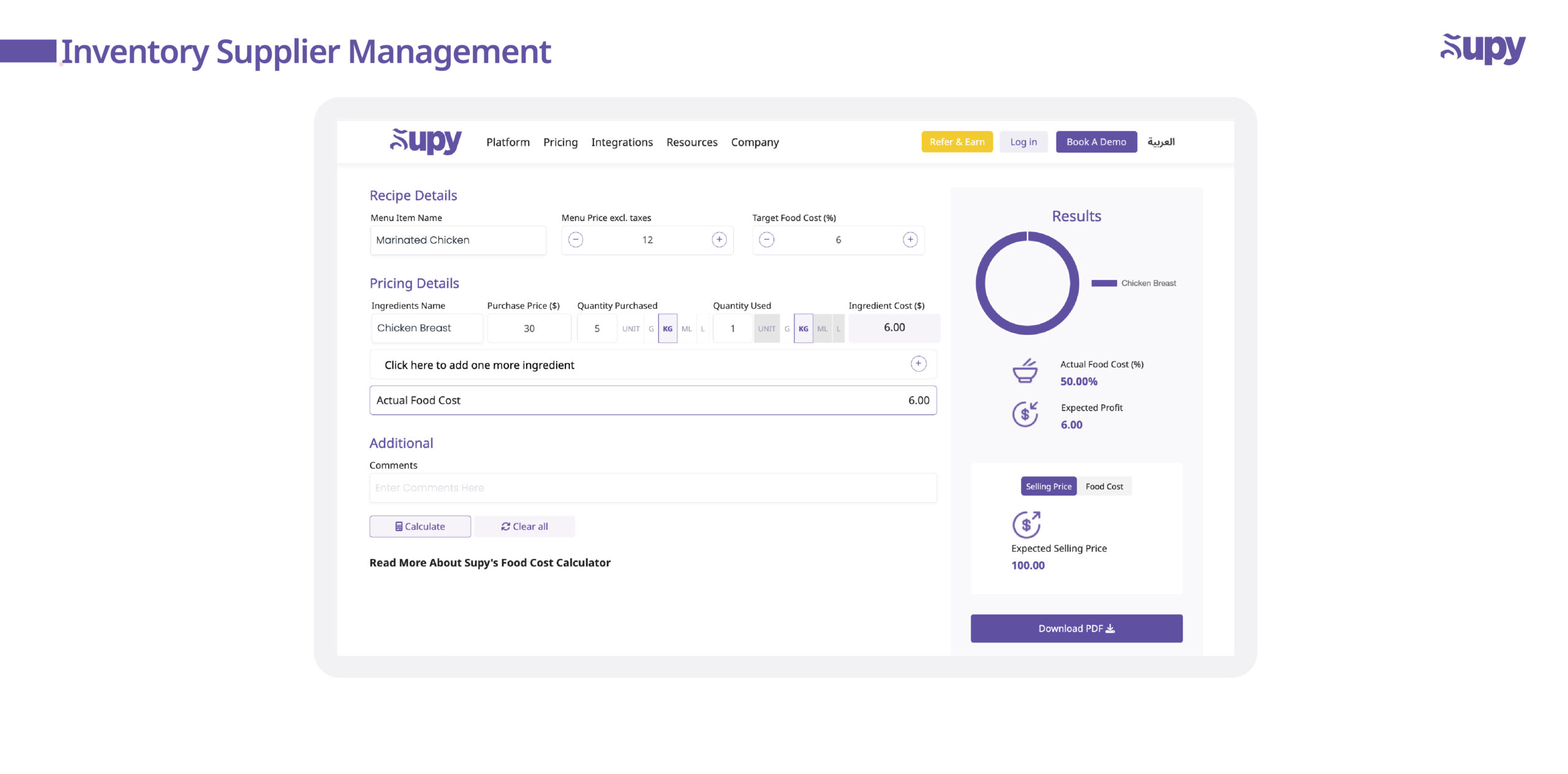
Wenn Sie eine schnelle Möglichkeit suchen, den Lebensmittelkostenprozentsatz zu berechnen, hilft Supys kostenloser Lebensmittelkostenrechner Ihnen dabei, Zutatenausgaben zu analysieren und die Menüpreisgestaltung profitabel zu halten.
Rezepte standardisieren, um Kosten zu kontrollieren
Sobald Sie die optimalen Portionsgrößen für Kundenzufriedenheit und Rentabilität ermittelt haben, ist der nächste Schritt deren Standardisierung mit einem Menü-Engineering-Ansatz. Dies ist besonders nützlich für Mehrfilialrestaurants, bei denen Konsistenz bedeutet, dass jeder Gast dasselbe Erlebnis erhält.
Ohne standardisierte Rezepte können Köche unterschiedliche Mengen an Zutaten verwenden, was zu inkonsistenten Portionen und unvorhersehbaren Kosten führt. Ein Rezeptmanagementsystem hilft Ihnen dabei:
- Konsistenten Geschmack und Qualität an allen Standorten zu gewährleisten.
- Übermäßigen Zutatenverbrauch zu verhindern durch genaue Mengenangaben.
- Gerichtrentabilität zu verfolgen mit präzisen Kostenberechnungen.
Wenn Portionskontrolle und Rezeptstandardisierung mit Bestandsverfolgung kombiniert werden, erhalten Sie vollständige Transparenz über den Lebensmittelkostenprozentsatz und können datengestützte Anpassungen vornehmen, um Ihre Margen zu schützen.
3. Strategie 3: Häufige Inventur zur Verlustprävention
Viele Restaurantbesitzer verlassen sich noch auf monatliche Inventuren, aber wenn Abweichungen bemerkt werden, ist der Schaden bereits entstanden. Manuelle Verfolgung – über Excel-Tabellen oder handgeschriebene Listen – ist zeitaufwendig und fehleranfällig.
Bei mehreren Mitarbeitern, die den Bestand verwalten, sind Fehler bei der Aufzeichnung und Verfolgung unvermeidlich. Eine menschliche Fehlerquote von 5 % in der Warenwirtschaft bedeutet, dass selbst kleine Fehlberechnungen dazu führen können, dass die Warenbestandskosten jeden Monat um Hunderte oder sogar Tausende von Euro steigen.
Wöchentliche und tägliche Inventurprüfungen durchführen
Der Wechsel zu häufigeren Inventurprüfungen hilft, Abweichungen frühzeitig zu erkennen und das Risiko unbemerkte Verschwendung oder Diebstahl zu reduzieren. So behalten Sie den Überblick über den Lebensmittelverbrauch und verhindern Verluste:
- Wöchentliche Stichprobenzählungen durchführen: Konzentrieren Sie sich auf teure oder häufig verwendete Zutaten, um die Genauigkeit sicherzustellen.
- Tägliche Stichprobenkontrollen durchführen: Überwachen Sie wichtige Lagerartikel, um Abweichungen zu erkennen, bevor sie eskalieren.
- Zählverantwortlichkeiten rotieren: Weisen Sie verschiedenen Mitarbeitern Aufgaben zu, um Fehler zu vermeiden und Verantwortungsbewusstsein zu fördern.
Die effektivste Kostenkontrollmaßnahme ist die Automatisierung der Bestandsverfolgung mit einem Warenwirtschaftssystem. Supys automatisierte Verfolgung hilft Restaurantbesitzern, Inventuren zu optimieren, Schwund zu reduzieren und intelligentere, datengestützte Einkaufsentscheidungen zu treffen.
4. Strategie 4: Intelligente Beschaffung und Lieferantenverwaltung
Viele Restaurantmanager übersehen, wie Beschaffungs- und Bestellprozesse zu höheren Lebensmittelkosten beitragen. Überbestellung, inkonsistente Preisgestaltung und unnötige Verschwendung treiben die Ausgaben in die Höhe. Intelligentere Beschaffung und Echtzeit-Lieferantenintegration können zu besseren Einsparungen führen.
Intelligente Bestelltechniken anwenden
Effektives Lebensmittelkostenmanagement beginnt mit dem Verständnis von Verbrauchstrends und Bestellmustern. Mit dem richtigen Restaurantmanagementsystem können Sie den Zutatenverbrauch über die Zeit verfolgen und datengestützte Bestellentscheidungen treffen. Das hilft Ihnen dabei:
- Überbestellungen zu vermeiden und Lebensmittelverschwendung zu reduzieren
- Engpässe zu verhindern, die den Service stören
- Möglichkeiten für Großbestellungen mit Lieferantenrabatten zu identifizieren
Wenn die Daten zum Beispiel zeigen, dass Sie konsistent 200 Pfund Hühnerfleisch pro Woche verbrauchen, könnte eine Großbestellung Ihnen 10-15% pro Einheit sparen. Das reduziert Kosten und minimiert die Notwendigkeit häufiger Nachbestellungen, wodurch die Bearbeitungszeit für Bestellungen sinkt.
Bessere Preise durch Lieferantenverwaltung aushandeln
Viele Restaurants verpassen Einsparmöglichkeiten aufgrund einer schwachen Lieferantenverwaltung. Ein Restaurantmanagementsystem integriert Lieferantenkataloge und ermöglicht Echtzeit-Preisvergleiche für wettbewerbsfähige Preise bei jeder Bestellung.
Das Aushandeln besserer Preise wird mit datengestützten Erkenntnissen einfacher. Konsistente Großeinkäufe ermöglichen es Restaurants, Mengenrabatte zu sichern und Kosten um 5-10% zu senken.
Der Beitritt zu einer Einkaufsgemeinschaft (GPO) kann die Ausgaben durch kollektive Kaufkraft weiter senken. GPOs bieten Zugang zu Lieferantenrabatten, die für einzelne Restaurants möglicherweise nicht verfügbar sind.
5. Strategie 5: Personal und Vorbereitung mit Warenbestandsprognosen steuern
Effektive Warenbestandsprognosen sparen nicht nur Geld bei Lebensmitteln – sie können auch Ihre Personalkosten optimieren. Wenn Sie genau wissen, welche Zutaten wann benötigt werden, können Sie die Vorbereitung intelligenter planen, um übermäßige Vorbereitungsarbeiten und die Verschwendung von Lebensmitteln und Arbeitsstunden zu vermeiden.
Warenbestandsprognosen mit Arbeitseffizienz verknüpfen
Wenn Warenbestandsprognosen genau sind, können Sie Ihre Vorbereitungspläne an den tatsächlichen Bedarf anpassen. Übermäßige Vorbereitungsarbeiten entstehen oft, wenn Klarheit über den Bedarf fehlt, was zu ungenutzten Zutaten und verschwendeten Arbeitsstunden führt. Diese überschüssige Vorbereitung kostet nicht nur mehr an Zutaten, sondern bindet auch Personalzeit in der Küche und macht Personalkosten ineffizient.
Mit einer Warenwirtschaftssoftware zur Bedarfsprognose können Sie:
- Zutatenverbrauch vorhersagen, basierend auf Umsatztrends und bevorstehenden Veranstaltungen.
- Arbeitsstunden optimieren, indem Vorbereitungsarbeiten am tatsächlichen Bedarf ausgerichtet werden.
- Verschwendung minimieren, um sicherzustellen, dass Lebensmittel nur zubereitet werden, wenn sie benötigt werden, was sowohl Lebensmittelverderb als auch unnötige Arbeitsaufwände reduziert.
Vorbereitungsplanung verbessern und Gemeinkosten reduzieren
Warenbestandsprognosen bieten ein klareres Bild davon, wie viel Vorbereitungsarbeit benötigt wird. Die Analyse vergangener Umsatztrends und Menüanforderungen stellt sicher, dass Lebensmittel in den richtigen Mengen vorbereitet werden, was Zeit für unnötige Aufgaben spart.
Wenn zum Beispiel ein bestimmtes Gericht an Freitagen konsistent beliebt ist, aber nicht an Dienstagen, können die Vorbereitungspläne entsprechend angepasst werden. Dieser Ansatz senkt Personalkosten, ohne Qualität oder Service zu beeinträchtigen.
Restaurants, die nach kreativen und innovativen Wegen suchen, die Kostenkontrolle zu verbessern, sollten Warenbestandsprognosen nutzen, um den Betrieb zu optimieren. Intelligentere Vorbereitungsentscheidungen bedeuten weniger verschwendete Zutaten, niedrigere Personalkosten und insgesamt eine effizientere Küche.
6. Fazit: Warenwirtschaft als gemeinsamer Nenner
Jede Strategie zur Verwaltung von Lebensmittel-, Personal- und Lieferantenkosten führt zurück zur Warenwirtschaft. Ohne genaue Verfolgung stehen Restaurants vor übermäßigen Bestellungen, Verschwendung und höheren Ausgaben, die die Rentabilität schwächer werden lassen.
Ein Warenwirtschaftssystem hilft dabei, Bestände zu kontrollieren, Überbestellungen zu verhindern und Einkäufe an den tatsächlichen Bedarf anzupassen. Echtzeit-Verfolgung und automatisierte Warnungen reduzieren Verschwendung, optimieren Bestellungen und verbessern die Effizienz.
Bei engeren Margen als je zuvor ermöglicht die Investition in die richtige Software intelligentere Entscheidungen und langfristige finanzielle Stabilität. Jeder Prozentpunkt, der bei den Lebensmittelkosten eingespart wird, stärkt Ihr Ergebnis.
Für weitere Einblicke empfehlen wir unser eBook: Der ultimative Leitfaden zur Senkung von Lebensmittelkosten in Mehrfilialen- & Enterprise-Restaurants.
7. Über Supy
Supy ist eine intelligente Warenwirtschaftslösung, die speziell für die Gastronomiebranche entwickelt wurde und Unternehmen dabei hilft, die Kontrolle über ihren Bestand zu übernehmen, Verschwendung zu reduzieren und Kosten zu senken. Designed für Mehrfilialrestaurants bietet es Echtzeit-Verfolgung, automatisierte Bestandsauffüllung und datengestützte Einblicke zur Optimierung von Einkaufs- und Vorbereitungsentscheidungen.
Erfahren Sie, wie Supy Ihrem Restaurant helfen kann, Lebensmittelverschwendung zu minimieren und die Rentabilität zu steigern. Demo buchen und machen Sie den ersten Schritt zu einer intelligenteren Warenwirtschaft.