.jpg)


Zero Waste Restaurant: Start With the Food You Already Throw Away
What zero waste means in a working kitchen
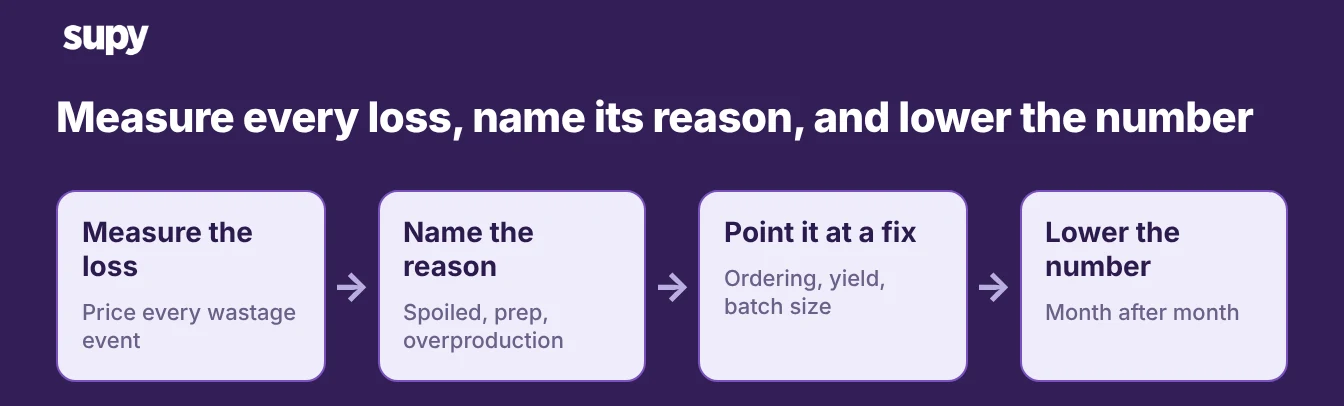
Zero waste in a restaurant does not mean nothing ever goes in the bin. It means you record every loss, know the reason for it, and cut the waste you can control. The goal is a number you measure and lower each month, not a crate of compostable packaging by the back door.
Most zero-waste advice starts with sustainability and ends there. Start instead with the food you already throw away. You bought it, prepped it and paid staff to handle it, and it never earned a penny. Measure it first, then cut it. The packaging story can come later.
Think of waste in two buckets: the loss you can cut and the giveaway you chose. Spoiled stock, prep trim and overproduction sit in the first bucket, where every unit is food you paid for that earned nothing. Staff and complimentary meals sit in the second, a cost you decided to carry. Zero waste works the first bucket hard and keeps the second honest and separate.
Measuring what you throw away, and why
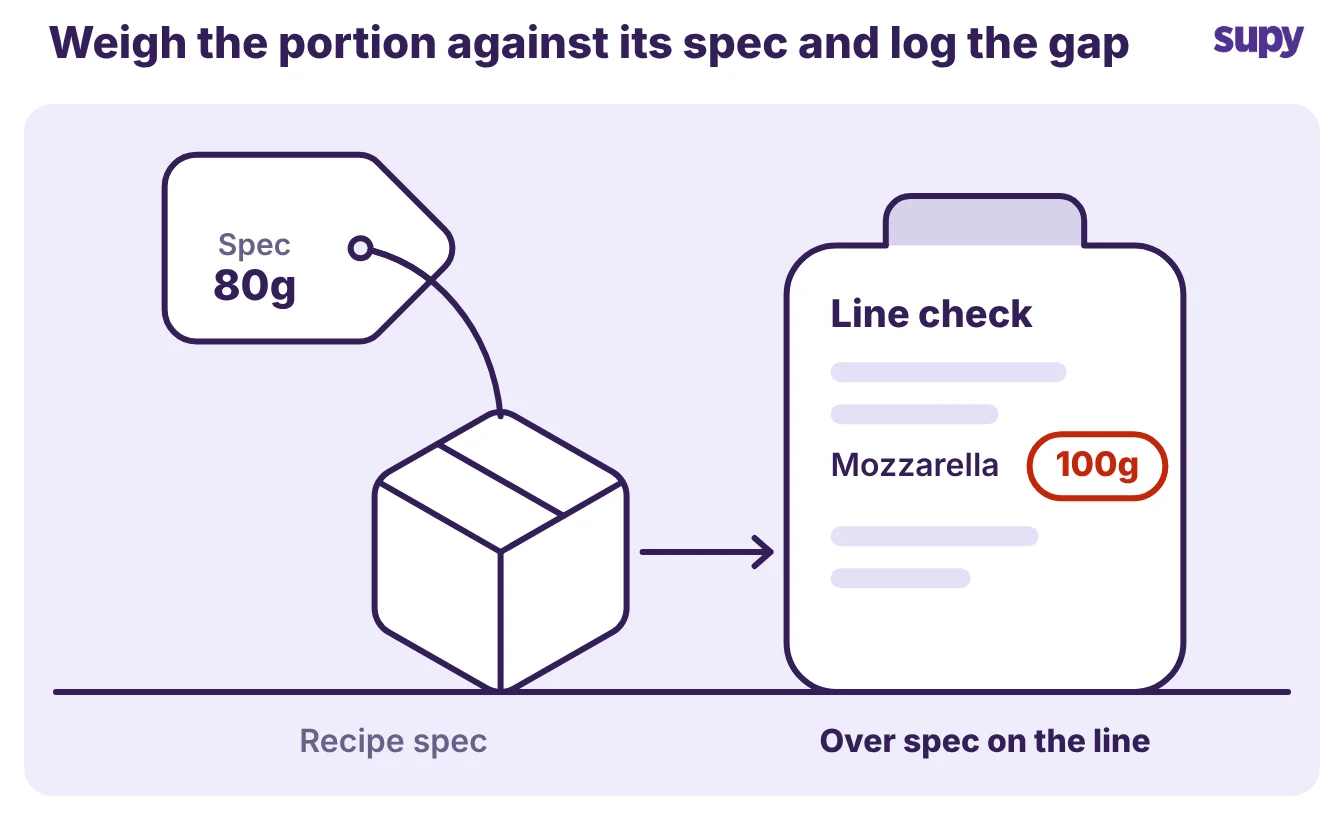
Record a reason for every waste event, because waste with no reason is a number you cannot act on. The reasons that matter are spoiled stock, prep trim, overproduction, and the staff and complimentary meals you give away on purpose. Over-portioning belongs on the list too. One pizzeria kept portioning its mozzarella at 100g against an 80g spec. The extra cheese never reached a bin, so nobody logged it as waste. The kitchen still paid for it, as cost.
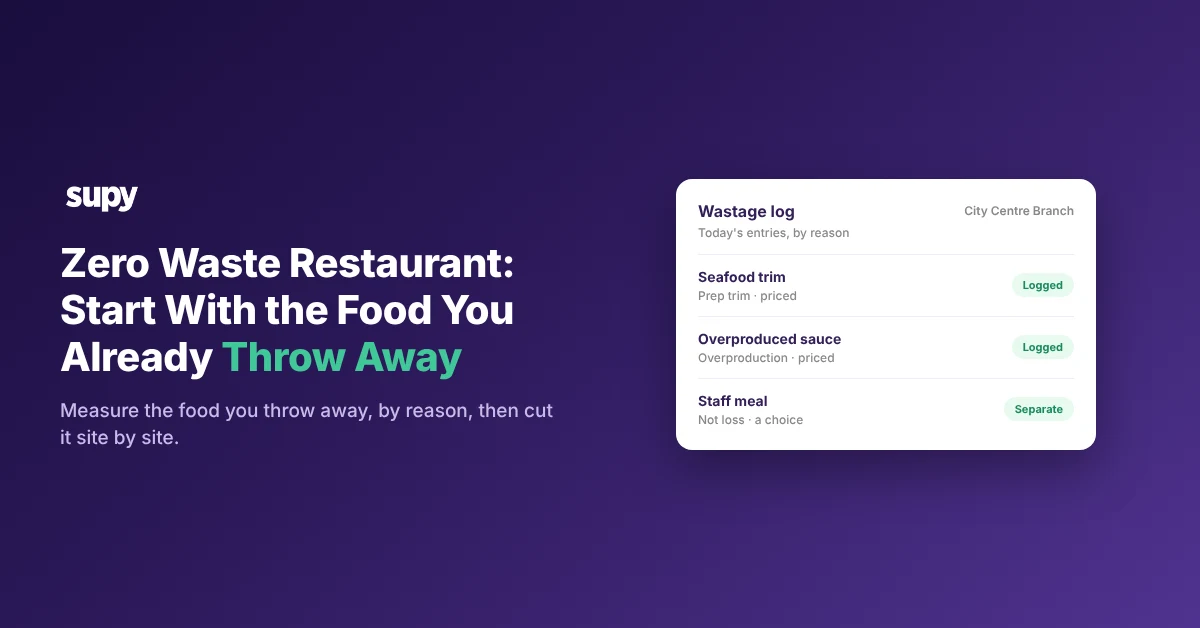
In Supy you set your own wastage reason categories. Each ingredient line in a single wastage event carries its own reason. One entry can mark spoiled chicken as spoiled stock and leftover sauce as overproduction. Keep the record in the same restaurant analytics system that already holds your stock and recipes, so the cost of each loss is priced automatically. A reason turns a waste number into a job for someone. A spoiled-stock figure goes to whoever orders and rotates stock. A prep-trim figure goes to whoever writes the recipes. Without the reason, nobody owns the number and nothing changes. For the detail on turning stock-count variance into logged reasons, see how to record wastage to explain stock variance.
The ingredients to tackle first
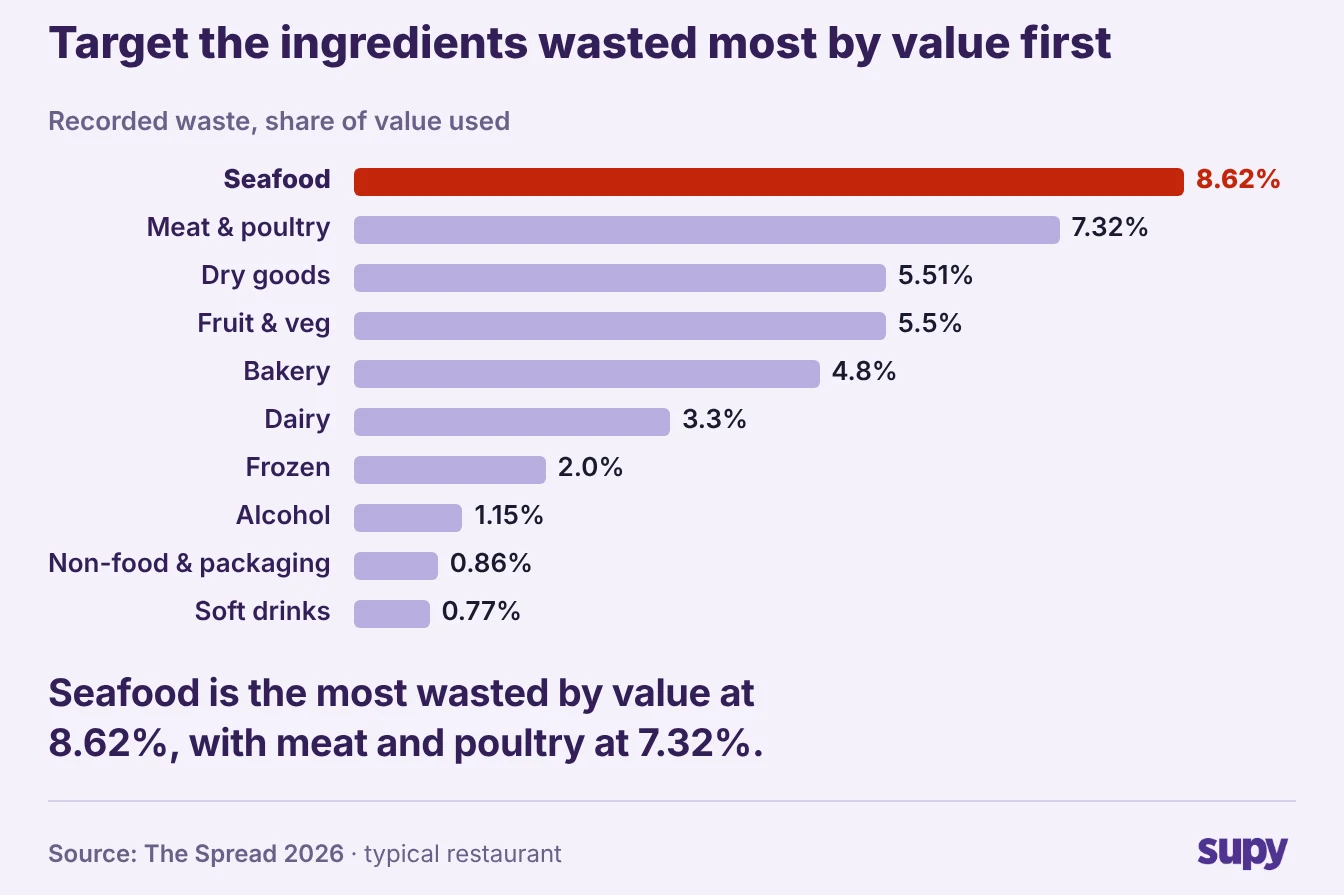
Start where the money is, not where the volume is. The most expensive ingredients are wasted the most by value: seafood tops the list at 8.62% of its value recorded as waste, with meat and poultry close behind at 7.32% (The Spread). These are medians across businesses, and only recorded waste counts, so a low category is a floor, not proof that little is lost there.
The lesson holds whatever your menu. A kilogram of wasted seafood costs far more than a kilogram of wasted dry goods. So a high-value category earns tighter portioning, better rotation and a shorter order cycle first. The cheap stuff can wait.
High-value ingredients waste more for real reasons: they spoil faster, they are portioned by hand, and a single dropped tray is a large sum. Tighten the spec on those items, count them more often, and order them in smaller, closer deliveries so you hold less of them at risk.
Wastage reasons that point to the fix
Each reason points to a different fix, which is the whole reason to record it.
| Wastage reason | The fix |
|---|---|
| Spoiled stock | Smaller, more frequent orders and strict first-in, first-out |
| Prep trim | Check recipe yield against what the kitchen gets, then retrain or re-spec |
| Overproduction | Forecast demand and cut batch sizes |
| Staff and complimentary meals | Not loss, a choice: keep them separate from true waste |
Supy keeps that separation in the numbers. The multi-site wastage report splits true loss from expense-coded waste such as staff and complimentary meals. Both sit side by side. A target can then chase the real loss, not a meal you meant to give away. Where your point-of-sale sends a void reason containing the word wastage, Supy captures the item and quantity into the wastage log automatically. A busy line does not have to stop and type.
Setting a waste target per site
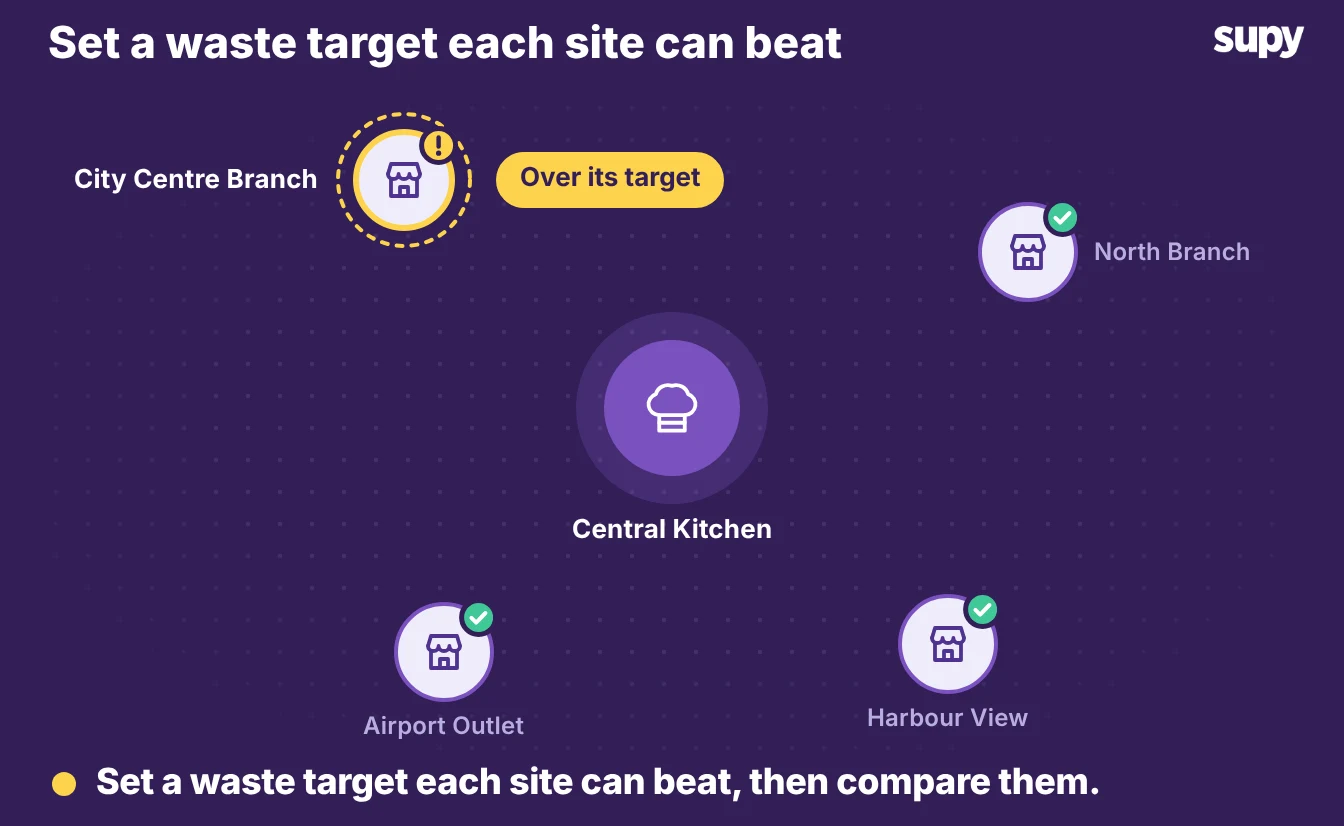
Set the target as a share of value, not a count of items, because value is what the business feels. Read each site's recorded waste against the others and against the high-value categories above, then set a number each site can move. Start the first target on seafood and meat, where a point of improvement is worth the most.
Set a target you can actually hit this quarter, not a round zero, and review it against the per-site report every month. A site that halves its seafood waste beats one that trims a percent off dry goods. Judge progress by value recovered, not by the count of lines logged.
A target only works when every site measures the same way. Agree the reason categories once, apply them everywhere, and let the per-site report show who is improving and who needs help. For rolling the same waste setup across every branch, see wastage tracking setup for multi-site groups.
Your first week toward zero waste
Pick one high-value category and work it for a week.
| Step | What to do in week one |
|---|---|
| Measure | Turn on a reason for every waste event on seafood or meat, and price each loss |
| Target | Read the week's recorded waste as a share of that category's value, then set a number to beat |
| Fix | Match each reason to its fix: tighter ordering, a yield check, smaller batches |
Zero waste is not a packaging project, it is a measurement habit. Record the food you already throw away, point each reason at its fix, and lower the number site by site until the waste that is left is the waste you chose.