.jpg)


Restaurant Stock Variance: Explain It by Recording Wastage
How Recorded Waste Explains a Stock Count
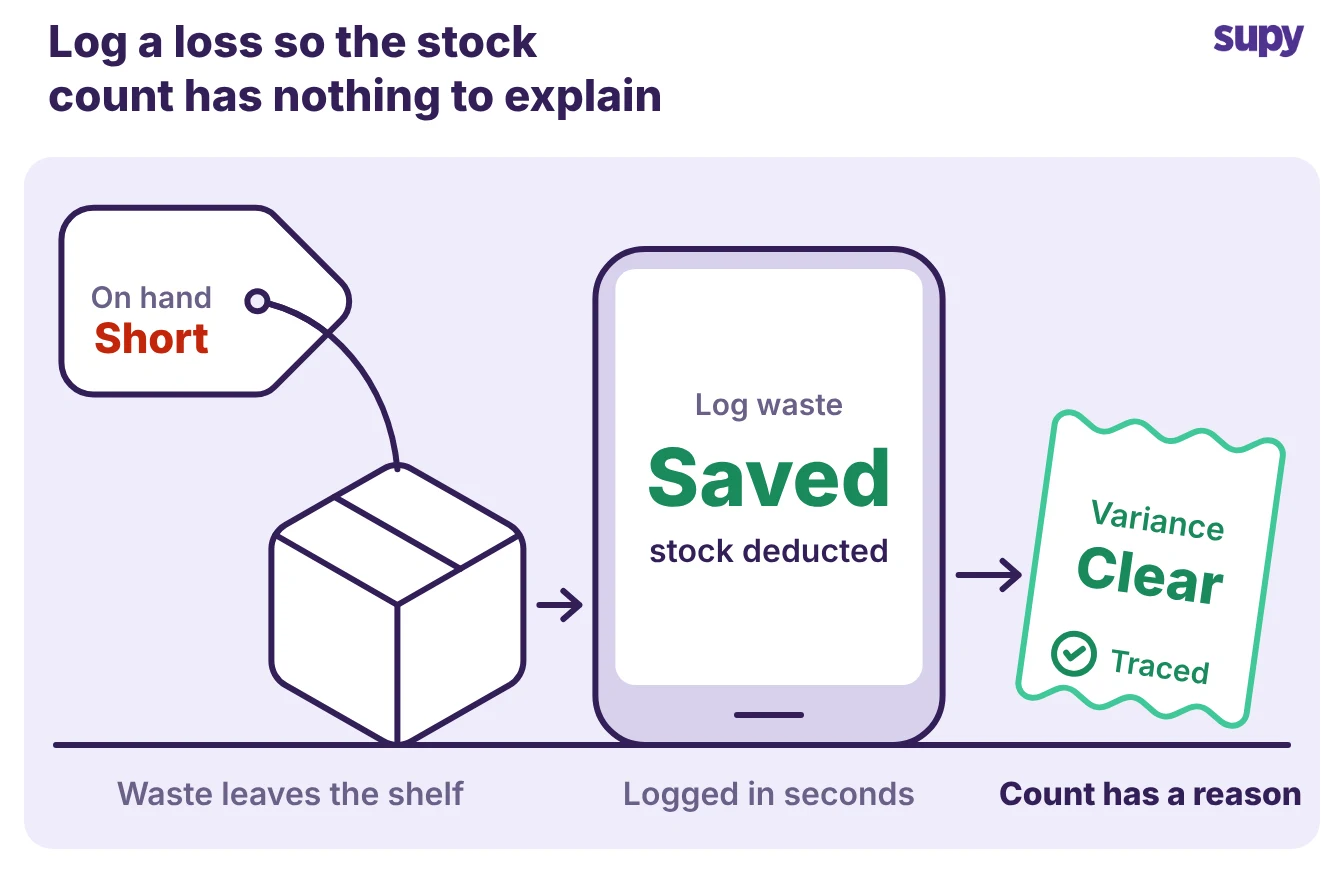
Recorded waste explains a stock count by accounting for stock that left the shelf without a sale. A stock-count variance is the difference between what the system expected and what the counter found. Every spoiled item, trimmed offcut and comped dish is real stock gone, so logging it turns an unexplained shortfall into an accounted-for loss.
When waste goes unrecorded, it does not disappear. It resurfaces at the next count as a shortfall nobody can name. One multi-site operator found that waste was not being logged and credit notes were entered inconsistently. Genuine losses then showed up as stock-count variances, not as losses the team had already accounted for. The fix is not a bigger count. It is recording the loss when it happens, so the count has nothing left to explain.
In Supy, every stock-affecting event is written to an auditable ledger: goods receipts, production, transfers, counts and wastage. Because a logged waste entry deducts from stock the moment you save it, the expected quantity the count is measured against already reflects the loss. The variance that remains is the part worth investigating.
Capture Waste the Moment It Happens
The hardest waste to capture is the small, in-service kind. A quick-service operator described waste that happened mid-shift, such as extra bread served and product used for add-ons. That waste never reached the books, because stopping to record it was too slow. Waste you cannot log in seconds is waste you will not log at all.
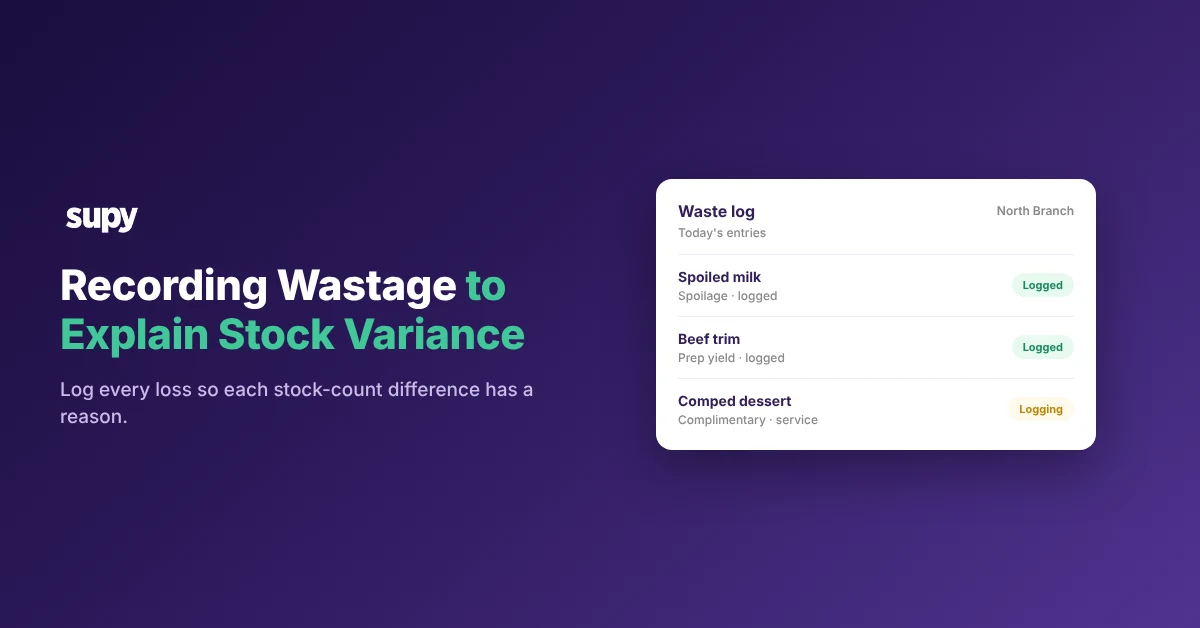
Supy lets staff log waste by item, quantity and reason in seconds, on mobile or desktop. Each entry deducts from stock and costs the loss at that day's ingredient price, so the record carries both the quantity and the money. A line cook can log a dropped tray on the pass without leaving the station, and a prep lead can log trim and spoilage at close.
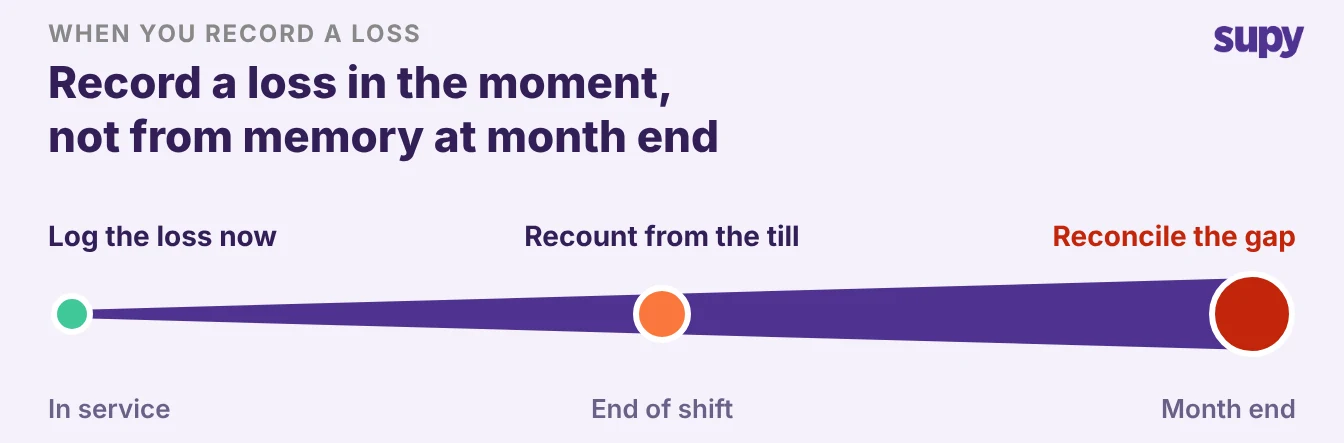
Make it routine. Put logging where the waste occurs, not at a back-office terminal, and record it when it happens rather than reconstructing it at month-end. Across a group of 6 sites, a habit of same-shift logging is what keeps each branch's count honest, because the losses are already on the ledger before anyone counts a shelf.
Give Every Loss a Reason You Can Report On
A quantity alone tells you stock is gone. A reason tells you why, and that is what turns wastage data into a decision. Supy ships two fixed reason categories, Sales and Complimentary, and lets you define your own on top, so the codes staff pick match how your kitchen actually loses stock. Supy can also convert canceled or voided point-of-sale transactions into wastage records automatically. A voided sale that already left the kitchen becomes a logged loss, not an unexplained dip at the next count.
Once every loss carries a reason, the same report that explains your variance also points at the fix:
| Reason code | What the variance signals | Where to look first |
|---|---|---|
| Spoilage | Stock aged out before use | Ordering volume and par levels |
| Trim | Yield lower than the recipe assumes | Prep method and recipe yield |
| Over-production | Prep outran demand | The production plan and forecast |
| Void | A rung-up sale left the kitchen, then canceled | Point-of-sale mapping and voids policy |
| Comp or staff meal | Stock given away off-ticket | Comp policy and approvals |
Giving each loss a reason is what lets you tell these apart, instead of treating all shrinkage as one undifferentiated number.
Trace Each Variance Line Back to a Logged Loss
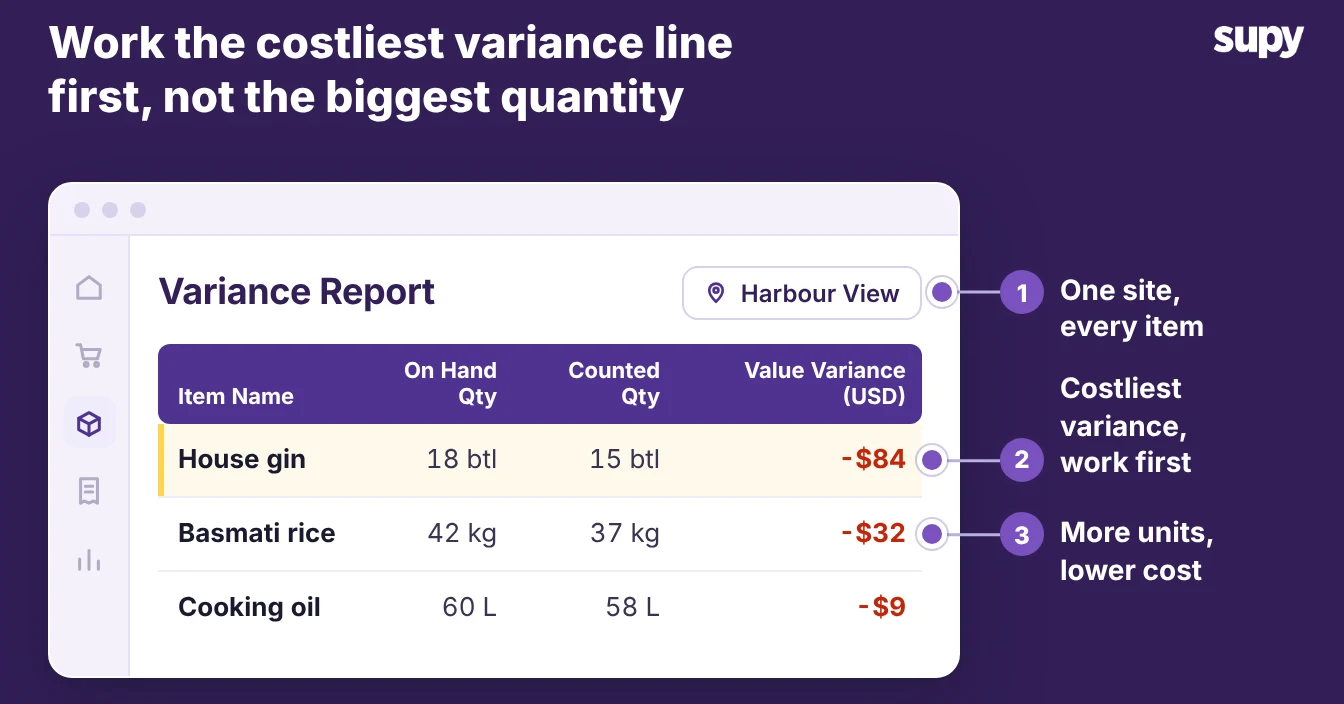
Once a count is submitted, Supy produces a variance report showing every item's difference between the physical count and the expected quantity. Because recorded waste has already been deducted and costed, each line reads against the losses logged for that item over the period. A variance line with matching wastage entries is explained. A line with none is the one that needs a look.
Work the report in that order. Start with the items whose variance has no logged waste behind it, because that is where the real shortfall, miscount or missed entry is hiding. Each line also carries the cost of its variance, so a costly line can outrank one that moved more units: a few bottles of spirits can outweigh a sack of flour. The auditable ledger lets you open any item and trace exactly how its stock moved, from receipt to waste to count, so you are checking a trail rather than guessing.
Take one location and one period to see it work. Say a branch recorded $180 of waste in a day but still showed 4% unexplained variance on a tracked item. Once that logged waste is subtracted, the residual drops toward 1%. That small gap is the only part you investigate. A common working target for a stable item is variance under 2%, so a branch sitting above it with little or no recorded waste is almost always under-logging, not overspending. Turn on same-shift logging, agree your reason codes, and let voided sales convert automatically. Within one count cycle the report will tell you which variance was waste all along, and which was something else.