.jpg)


How Restaurants Detect Pricing Errors Automatically With AI
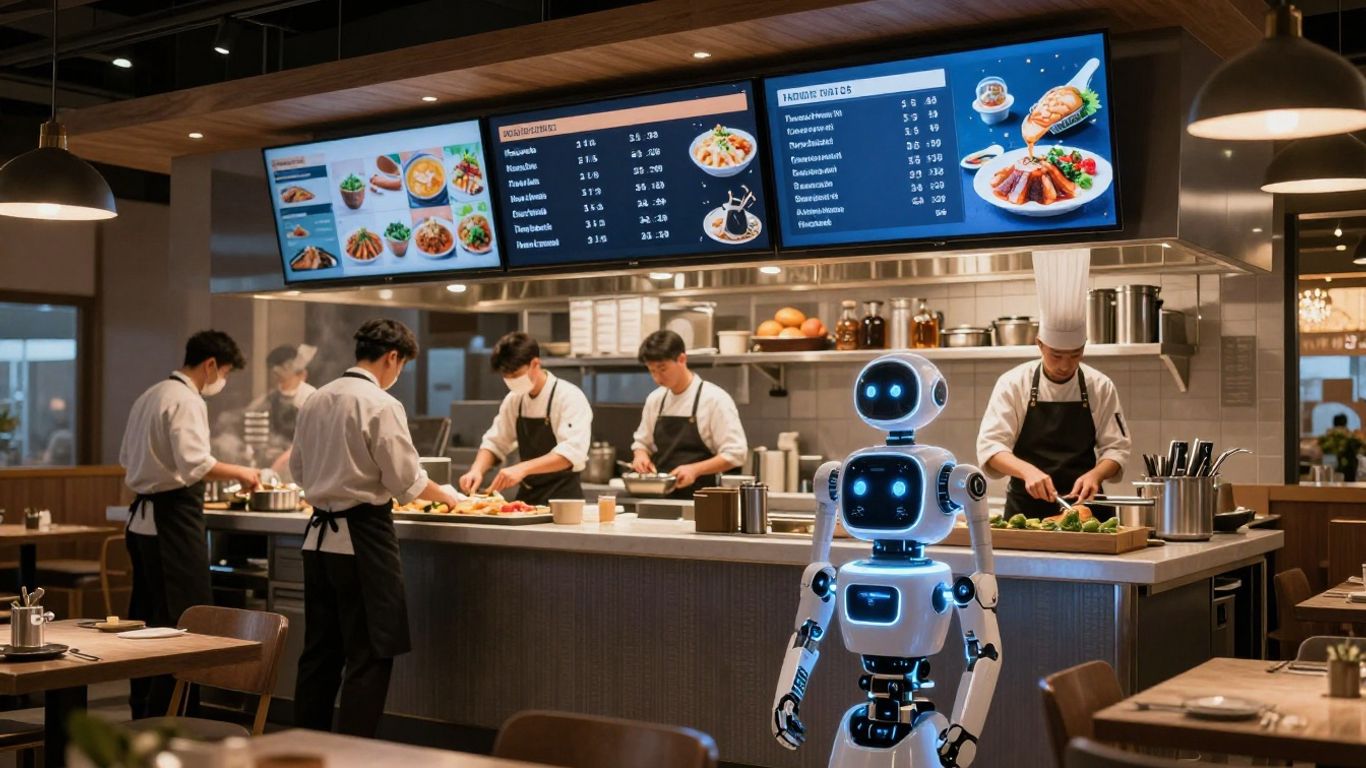
Keeping track of all the numbers in a restaurant can feel like a full-time job on its own. Prices change, suppliers make mistakes, and sometimes things just don't add up. It's easy for small errors to slip through, especially when you're busy. But what if there was a way to catch these pricing mistakes automatically? That's where artificial intelligence, or AI, comes in. It's changing how restaurants manage their finances and spot problems before they become big issues. Let's look at How Restaurants Detect Pricing Errors Automatically With AI.
Key Takeaways
AI can automatically check invoices against supplier price lists and past orders to flag unexpected price hikes or billing errors in real-time.
By analyzing line-item data, AI systems can spot discrepancies in unit sizes, identify unauthorized substitutions, and prevent repeated overcharges from suppliers.
AI helps in dynamic menu pricing by adjusting prices based on demand, weather, and inventory, which can also help reduce food waste by discounting items nearing expiration.
AI systems monitor order accuracy, from voice recognition in drive-thrus to self-service kiosks, reducing human error and improving customer satisfaction.
AI provides insights into menu performance, helping identify underpriced popular items or slow-moving dishes, and suggests price adjustments to boost overall profitability.
Leveraging AI for Automated Invoice and Supplier Checks
Modern restaurants can’t afford little mistakes on invoices, especially now when food margins are thin. AI-driven systems are changing how restaurants catch these errors, saving time while protecting profits. Let’s break down how automated invoice and supplier checks can work:
Real-Time Line-Item Validation
Every invoice line is automatically scanned and matched to what was actually ordered and received.
AI detects any unit price or quantity that looks off, flagging it right away for review.
Instead of random or delayed checks, staff can fix real problems as soon as the invoice comes in.
Small overcharges on routine invoices add up faster than most people expect. AI’s benefit is catching them early, before they quietly eat at the bottom line.
Detecting Unit Size and Substitution Errors
Products sometimes arrive swapped for a different size or even another item.
AI can compare the order’s specs (e.g., 2x 10lb cases) to the receiving invoice and flag mismatches right away.
It also spots when a substituted product costs more (or less), so pricing stays consistent and fair.
Ways restaurants get caught out:
Box sizes change without notice
Cheaper or pricier substitutions happen
Invoice line item names don’t always match the original purchase order
With AI, every substitution or size change becomes visible, not buried in paperwork.
Preventing Repeated Overcharges
Some errors aren’t one-offs. Suppliers can bill the wrong price week after week and it often goes unnoticed.
AI tracks pricing trends for each item, alerting buyers if the price starts drifting above the usual range.
Teams can quickly dispute charges or renegotiate before the problem compounds.
Here’s a simple workflow for staying ahead:
The system receives the invoice and scans for anything that’s changed.
It flags issues for quick review—no more digging through piles of receipts.
Urgent fixes are resolved in less than 48 hours, before payment leaves the account.
It’s not about making anyone look bad—it’s about knowing right away when there’s a problem, solving it fast, and not letting a few small errors grow into a big profit leak.
Utilizing AI in Dynamic Menu Pricing and Optimization
Gone are the days of setting menu prices and forgetting them for months on end. Restaurants are now using AI to make sure their prices are just right, all the time. It’s about being smart with what you charge, especially when things change quickly.
Adapting Prices Based on Demand and Weather
Think about it: on a rainy Tuesday night, fewer people might be out, and you want to encourage them to come in. Or, on a Friday evening, when everyone's looking for a place to eat, you can adjust prices slightly to reflect that higher demand. AI systems can track customer traffic patterns, local events, and even the weather forecast. This allows for real-time price adjustments that make sense for both the business and the customer. For instance, a popular patio spot might charge a bit more for outdoor seating on a sunny weekend afternoon compared to a chilly weekday evening. This isn't about price gouging; it's about aligning prices with what people are willing to pay at any given moment, which can be a real game-changer for restaurant revenue.
Reducing Food Waste with Timely Discounts
We all know that food waste is a huge problem in the restaurant industry. Ingredients spoil, and unsold dishes get thrown away. AI can help here by looking at what's selling and what's not, and more importantly, what's about to go bad. If a restaurant has a lot of a certain pastry that isn't selling as fast as expected, the AI can suggest a discount for it later in the day. This encourages customers to buy those items before they have to be discarded. It's a win-win: customers get a deal, and the restaurant reduces its losses.
Improving Profitability Through AI-Driven Insights
AI doesn't just look at the immediate sales; it analyzes a lot of data to help restaurants make better decisions overall. It can identify which dishes are the most profitable, even if they aren't the most popular. It can also spot items that are costing a lot to make but aren't bringing in much money, suggesting they might need a price increase or a complete rework. This kind of detailed analysis helps restaurants:
Pinpoint high-margin items that deserve more promotion.
Identify slow-moving dishes that might need to be removed or changed.
Suggest price tweaks based on ingredient costs, customer buying habits, and what competitors are charging.
The goal is to create a menu that not only satisfies customers but also consistently contributes to the bottom line. It's about making sure every item on the menu is earning its keep.
By using AI for dynamic pricing, restaurants can stay competitive, reduce waste, and ultimately become more profitable. It's a smart way to manage a business in today's fast-paced world.
Applying AI for Proactive Inventory and Cost Management
Restaurants used to run on guesswork, sticky notes, and late-night inventory tallies. Now, AI flips that process on its head. AI-driven tools reshape back-of-house operations, making inventory tracking, ordering, and forecasting smoother and faster than ever. When restaurants use the right tools, staff save hours, mistakes drop, and the bottom line gets a real boost. Here’s how AI makes it happen:
Real-Time Ingredient Tracking
AI-powered systems now log inventory counts in real-time as ingredients arrive, move, and get used in the kitchen. That means:
No more paper lists or double-checking spreadsheets.
Instant alerts if a key ingredient is running low or missing.
Automatic syncing with POS data to match sales with ingredient usage.
AI removes most of the guesswork from inventory, letting managers focus on running the restaurant rather than hunting for missing cases of chicken.
AI features for restaurants can even pick up on unusual spikes or drops in inventory, helping spot issues before they become big losses.
Automated Supplier Ordering to Prevent Stockouts
Running out of a main ingredient is a nightmare—AI tools help dodge this. They:
Track ingredient levels in real time.
Predict depletion dates based on recent sales.
Trigger automated reorders or prompt managers before stock actually runs out.
This not only keeps the kitchen running but also reduces the chances of over-ordering, which can lead to waste and shrink profit margins.
Forecasting Ingredient Needs for Accurate Purchasing
Nobody likes wasted produce or last-minute SOS calls to suppliers. Here’s how AI forecasting helps:
Looks at past sales numbers, seasonal trends, and even weather.
Suggests what and how much to buy for upcoming shifts.
Makes purchasing more precise, so kitchens stay stocked without filling up the fridge with extra, unsold food.
AI’s predictive accuracy means less stress for staff and more reliable food costs—plus fresher ingredients for your guests every day.
Hand-counting inventory is a drag, but with modern AI systems, those hours can be cut in half, accuracy gets a big lift, and employees spend less time on repetitive tasks.
Monitoring Order Accuracy and Revenue with AI Systems
Restaurants can lose a lot of money because of order mistakes and missed selling opportunities. AI systems are changing how restaurants check their order accuracy and boost their sales, all without slowing things down. With voice recognition, self-service kiosks, and clever upselling suggestions, restaurants are able to stay on top of every detail and earn more on each order.
Voice Recognition for Precision in Orders
Voice recognition tools help catch little errors before they reach the kitchen. These tools:
Turn what customers say into accurate orders, even handling weird accents and menu slang.
Cut down on mistakes that happen when staff mishear or rush through orders.
Speed up drive-thru and phone orders, especially during busy times.
This means fewer wrong meals, less wasted food, and happier guests who get what they actually ordered.
Self-Service Kiosks to Minimize Human Error
Putting the order in customers’ hands has clear perks. Self-service kiosks:
Let people double-check their own choices before sending them to the kitchen.
Take the pressure off employees to remember customizations or special requests.
Record every order digitally, making it easy to spot trends or recurring mistakes later on.
Here’s a quick look at the difference kiosks can make:
AI Upselling for Increased Revenue
AI doesn’t just catch errors—it also helps restaurants earn more per check. Upselling systems analyze what’s being ordered and:
Suggest add-ons (a side, a drink, dessert) just before checkout.
Personalize offers based on customer history or time of day.
Automatically test which combos or promo pushes actually work, learning as they go.
Setting up these AI-powered order systems can seem like a big shift, but for most restaurants, the savings and lift in revenue start to show up quickly. It's a way to fix old headaches and spot new opportunities, all with a system that actually pays attention to the details.
Detecting Cost Leaks and Margin Losses Before They Escalate
Even when you’re watching supplier prices pretty closely, costs can quietly climb in all sorts of ways—shrinking box sizes, sneaky substitutions, or just old-fashioned mistakes on an invoice. The real bite comes when these cost leaks aren’t caught soon enough, and suddenly that small uptick has turned into a repeated, hard-to-fix margin loss. AI helps restaurants move from chasing last month’s errors to actually catching them before they cause a problem.
Spotting Gradual Price Increases Instantly
Restaurants have plenty going on, so it’s tough to catch every price drift. AI looks for changes in unit cost, not just the total bill, flagging small increases that add up. Here’s how AI can catch those increases:
Analyzes each invoice line against approved prices and past purchases
Highlights price jumps, pack size tweaks, or unit changes (like pounds to kilograms)
Flags outliers in real time so action can be taken before the next order
A simple weekly review of flagged items can make a huge difference. If 200 kg of chicken breast at $6.00/kg jumps to $6.75/kg, that’s $150 extra each week per site. Multiply by several stores and weeks, and it’s a big deal—without anyone doing anything obviously wrong.
Flagging Billing Errors and Unexpected Substitutions
AI doesn’t just watch for price hikes—it also recognizes when the product isn’t what you agreed to buy. This means spotting:
Different brands or grades swapped in without warning
Invoice errors, like miscounted units or double billing
Pack size shrinkage, where you get less but pay the same (or more)
Some "price increases" are actually a sneaky switch of unit size or a substitute that costs more. With AI, these issues pop up right away, so managers can dispute or push back immediately, instead of after the fact.
Integrating Invoice Data for Comprehensive Audits
What really ties the process together is connecting invoice data across time, suppliers, and products. AI digitizes and compares every line item, so nothing slips through the cracks. Here’s a table showing what gets picked up during an automated audit:
When cost leaks are found quickly, the team can challenge a charge, request a credit, or switch suppliers before the loss becomes permanent.
All these AI-driven controls don’t replace buyers or chefs—they take the noise out, so you’re only fixing real issues. For restaurants that need to boost sales from at-risk inventory, AI-powered discount strategies can also help avoid unnecessary waste, plugging leaks on another front. Ultimately, it’s this combo of sharp detection and fast response that turns margin control into less of a guessing game—and more of a system that actually keeps money where it belongs.
Supporting Kitchen Operations with AI-Powered Analytics
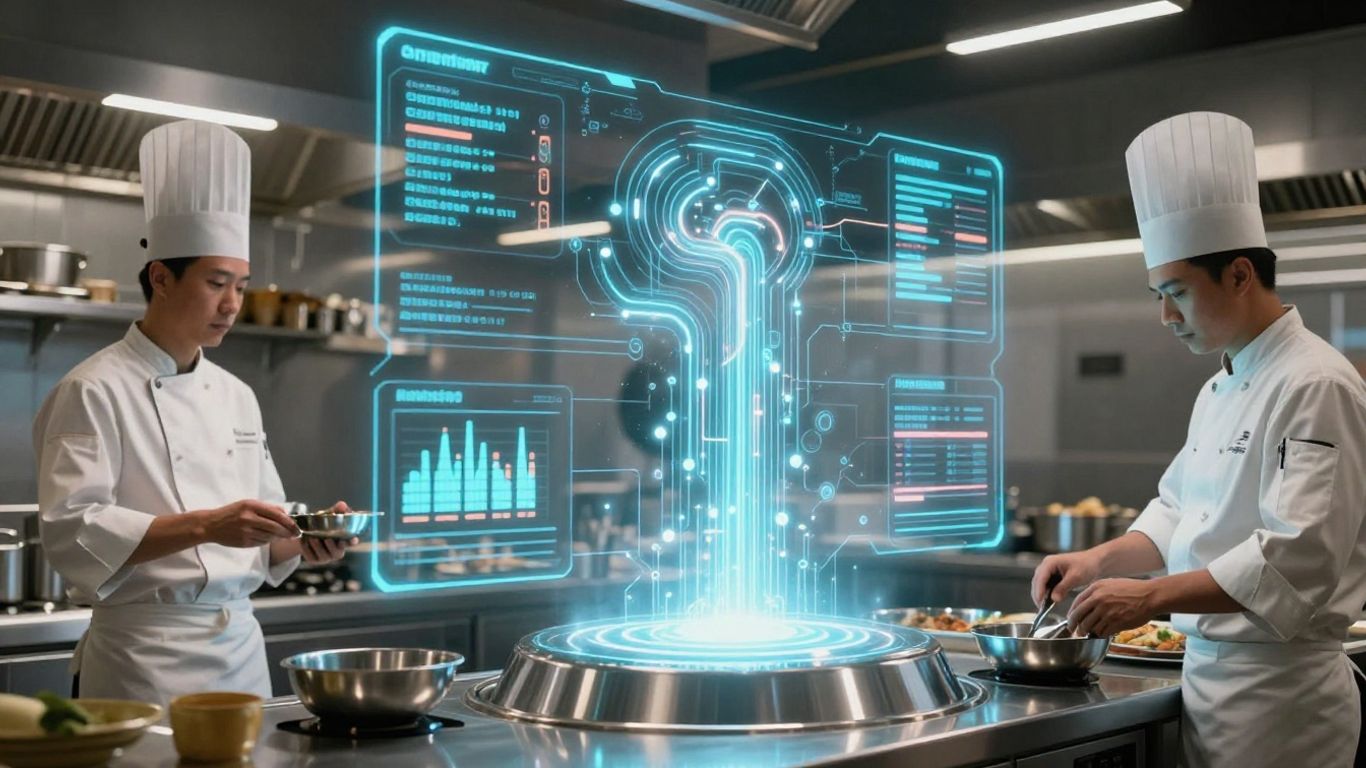
Running a busy kitchen is like conducting a symphony, and AI is the new conductor, making sure every instrument plays its part perfectly. It's not just about making food; it's about making it efficiently, consistently, and without breaking the bank. AI helps kitchens move beyond guesswork and into a world of data-driven precision.
Optimizing Prep Times and Order Delivery
Ever wonder how some restaurants handle massive rushes without a hitch? AI plays a big role. It looks at everything – past sales, what's popular right now, even local events – to predict exactly how much of each dish needs to be prepped. This means less food sitting around getting old and more of what customers want, ready to go.
Predictive Prep: AI forecasts ingredient needs based on historical data and real-time demand signals.
Order Prioritization: Systems can intelligently sequence incoming orders to ensure timely preparation and delivery, especially for large or complex orders.
Reduced Wait Times: By optimizing prep and workflow, AI helps cut down customer wait times, leading to happier diners.
AI systems can analyze order patterns and kitchen capacity to suggest the most efficient workflow. This helps prevent bottlenecks and ensures that orders are prepared and sent out in a logical sequence, improving overall service speed.
Reducing Cooking Mistakes with Smart Equipment
Mistakes in the kitchen, whether it's overcooking a steak or burning a sauce, cost money and create waste. Smart equipment, guided by AI, can help. Think ovens that adjust their own temperature based on what's inside or fryers that signal when oil needs changing. This kind of tech takes the pressure off cooks and helps maintain a high standard of quality.
Tracking Ingredient Usage to Prevent Waste
Food waste is a huge drain on profits. AI can track exactly how much of each ingredient is being used, and more importantly, how much is being wasted. By analyzing this data, restaurants can identify where waste is happening – maybe a particular side dish is always left on plates, or an ingredient is expiring before it's used. This information allows for smarter menu adjustments and better inventory control, directly impacting food costs and inventory.
Here's a quick look at how AI tackles waste:
Portion Control: AI can help standardize portion sizes, reducing the amount of food left on plates.
Expiration Monitoring: Systems track ingredient shelf life, prompting staff to use older items first.
Waste Pattern Analysis: AI identifies frequently discarded items, suggesting menu or prep changes.
Automating Menu Engineering to Identify Pricing and Item Errors

It's strange to think that outdated menu prices or forgotten items could quietly cost restaurants hundreds or even thousands over a few months. AI-driven menu engineering automates the way restaurants spot errors in pricing and item performance, making sure nothing slips through the cracks. It’s not just about catching typos—it’s about saving real money and staying ahead of waste.
Identifying Underperforming Menu Items
AI combs through sales, ingredient costs, and customer feedback to spot items that aren't pulling their weight. Instead of relying on gut feeling, restaurants can use data to see:
Which dishes barely sell and still use up labor and inventory.
Items that tie up expensive ingredients but rarely move.
Menu choices customers frequently question or return.
A simple results table might look like this:
It's much easier to decide what to cut or revise when it stares you in the face.
Recommending Strategic Price Adjustments
Smart systems don't just spot slow dishes—AI also highlights where prices are off. Menu analysis includes:
Comparing item costs against current selling prices.
Tracking vendor price changes and ingredient inflation.
Notifying managers instantly when profit margins dip too low.
You might see AI suggest a small increase on popular items or flag an expensive dish that’s no longer worth the effort. These tweaks keep a restaurant profitable without frustrating guests.
Aligning Menu Design with Customer Preferences
Menus shouldn’t be static. AI reviews what guests order most, what gets five stars, and when dishes trend up or down. Here’s what’s involved:
Highlight items that boost check averages or pair well with sides.
Suppress slow sellers or options with negative feedback.
Adjust descriptions and menu placements based on eye-tracking or sales data.
AI in menu engineering quietly makes the difference between a restaurant just surviving and one that keeps the kitchen busy, customers happy, and profits steady — all by fixing errors nobody would have caught by hand.
Wrapping It Up
So, as we've seen, AI isn't just some fancy tech for big corporations anymore. For restaurants, it's becoming a really practical way to catch those little errors that can really eat into profits. Think about it – catching a wrong price before it hits the menu, or making sure your supplier invoices are spot on. These aren't huge, flashy changes, but they add up. By using AI to keep an eye on things, restaurants can spend less time worrying about mistakes and more time focusing on what really matters: great food and happy customers. It’s about making operations smoother and keeping more money in the bank, which, let's be honest, is a win for everyone.
Frequently Asked Questions
How does AI help restaurants catch pricing mistakes automatically?
AI systems can read invoices from suppliers and compare each item’s price and size to what was agreed on. If something changes, like a higher price or a different unit size, the AI flags it right away. This helps restaurants fix mistakes before they lose money.
Can AI adjust menu prices during busy or slow times?
Yes! AI can look at things like how many customers are coming in, the weather, and even local events. If it’s busy, prices can go up a little. If it’s slow, AI can suggest discounts. This helps restaurants make more money and sell food before it goes to waste.
How does AI reduce food waste in restaurants?
AI tracks how much of each ingredient is used and predicts how much will be needed. If there’s extra food that might expire soon, AI can recommend special discounts to help sell it. This way, less food ends up in the trash.
What role does AI play in making sure orders are correct?
AI can help with voice recognition for taking orders, and self-service kiosks let customers enter their own choices. This reduces mistakes from misheard or miswritten orders, making sure customers get exactly what they want.
How does AI spot hidden cost leaks or billing errors?
AI checks invoices line by line and looks for changes in prices, unit sizes, or unexpected substitutions. It can catch small increases or billing mistakes before they add up and hurt profits.
Can AI recommend changes to the menu to help restaurants earn more?
Yes, AI studies which menu items sell best and which don’t. It can suggest removing unpopular dishes, raising prices on popular ones, or adding new items that match what customers like. This helps restaurants make smarter choices and improve their profits.