.jpeg)

Comment mettre en place un système de gestion des stocks pour votre coffee shop ?
Le secteur des coffee shops est en plein essor dans le monde entier, avec une croissance remarquable à tous les niveaux. Rien qu'aux États-Unis, le secteur a enregistré une augmentation de 3,8 % en 2024, portant le nombre total de coffee shops et snack bars à 78 851. Si cette croissance illustre des opportunités en pleine expansion, elle renforce également la nécessité d'une gestion efficace des opérations, notamment en matière de gestion des stocks.
La gestion des stocks dans les coffee shops présente des défis uniques. Les propriétaires doivent gérer avec soin les denrées périssables comme le lait et les produits de boulangerie, approvisionner des ingrédients spéciaux pour des menus exclusifs, et assurer le réapprovisionnement des articles à forte rotation tels que les grains de café et les gobelets à emporter. Sans système adapté, ces exigences peuvent entraîner du surstockage, des pertes ou des ruptures de stock au pire moment.
Un système de gestion des stocks bien organisé offre des Solutions concrètes à ces défis, en rationalisant les opérations et en améliorant l'efficacité. Voyons comment mettre en place un système de gestion des stocks et l'intégrer harmonieusement à vos opérations existantes.
- Étape 1 : Évaluez les besoins en stocks de votre coffee shop
- Étape 2 : Choisissez le bon logiciel de gestion des stocks
- Étape 3 : Mettez en place et organisez vos stocks
- Étape 4 : Formez votre équipe pour réussir
- Étape 5 : Suivez et analysez les données de stocks
- Exemple concret : comment The Coffee Address a résolu ses défis de gestion des stocks
- Conseils supplémentaires pour une gestion efficace des stocks de coffee shop
- Conclusion : prenez le contrôle de vos stocks
- À propos de Supy
1. Étape 1 : Évaluez les besoins en stocks de votre coffee shop
2. Étape 2 : Choisissez le bon logiciel de gestion des stocks
Une fois vos objectifs en matière de gestion des stocks bien définis, il est temps de choisir le logiciel qui soutient le mieux les opérations de votre coffee shop. Le bon outil simplifie le suivi des stocks, réduit les tâches manuelles et vous aide à gérer vos stocks plus efficacement. Choisir un logiciel doté des bonnes fonctionnalités peut faire une réelle différence dans l'optimisation de vos processus quotidiens.
Les fonctionnalités clés d'un logiciel de gestion des stocks comprennent :
- Suivi en temps réel : Bénéficiez d'une vue actualisée de vos niveaux de stocks pour éviter les ruptures d'approvisionnement ou les commandes excessives.
- Accessibilité mobile : Accédez aux données de stocks à tout moment via une interface conviviale, pour prendre des décisions rapides même lorsque vous n'êtes pas sur place.
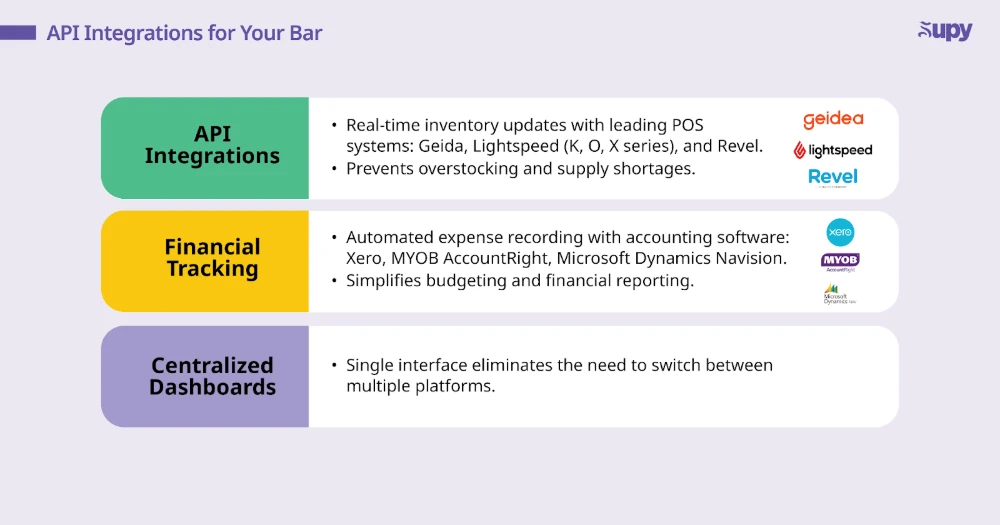
- Intégration avec les systèmes POS : Synchronisez automatiquement les données de vente avec les stocks pour maintenir des enregistrements précis sans effort supplémentaire.
- Alertes de stock : Recevez des notifications lorsque les niveaux de stocks sont faibles ou lorsque des articles approchent de leur date d'expiration.
- Gestion des fournisseurs : Organisez et gérez les commandes fournisseurs au sein du système pour rationaliser le réapprovisionnement.
- Analyses et reporting : Utilisez les données pour comprendre les tendances de vente, optimiser les niveaux de stocks et réduire les pertes.
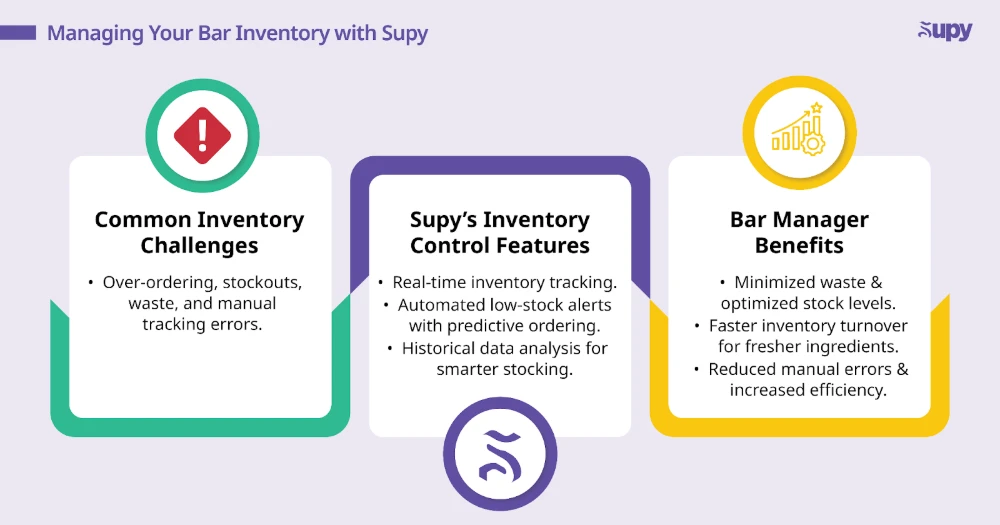
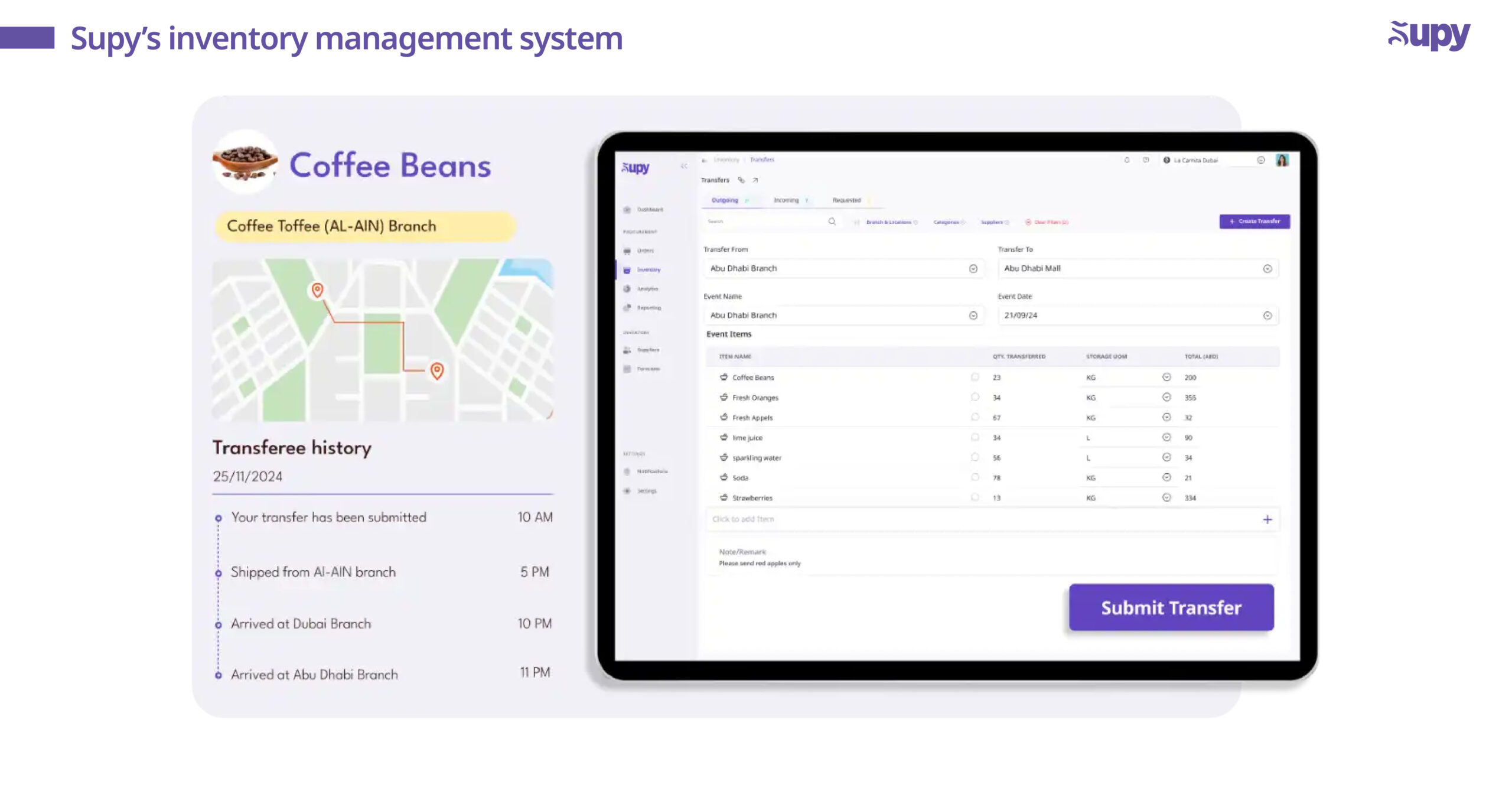
Le système de gestion des stocks de Supy est conçu pour les opérations de coffee shop. Il offre un suivi en temps réel, des alertes de stock adaptées à vos besoins spécifiques et une intégration fluide avec les systèmes POS. Avec Supy, la gestion des stocks devient plus simple, vous faisant gagner du temps et des ressources pour vous concentrer sur le développement de votre activité et le service à vos clients.
3. Étape 3 : Mettez en place et organisez vos stocks
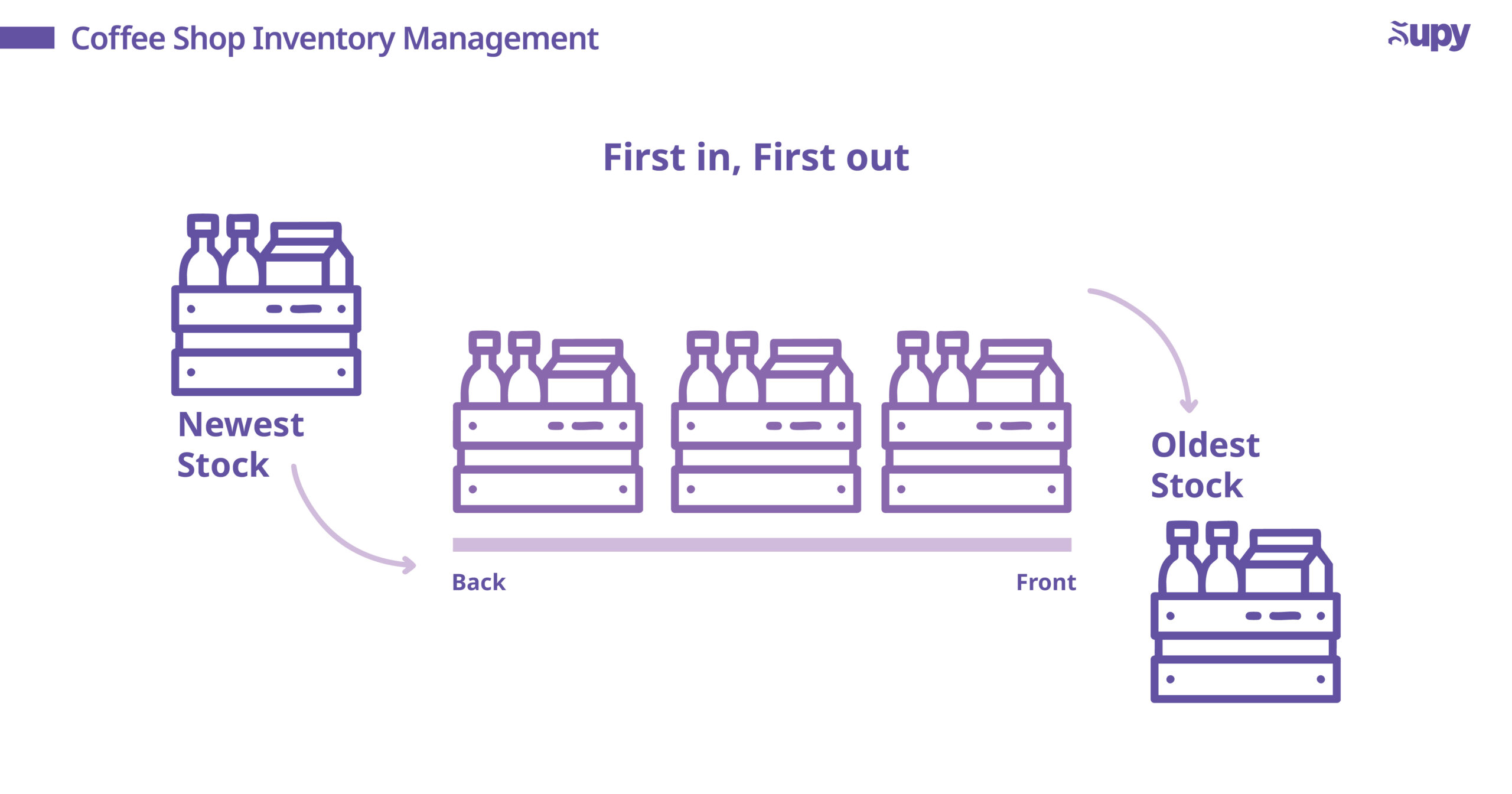
Pour mettre en place le système, vous devez organiser vos stocks de manière à simplifier le suivi et la gestion. Commencez par étiqueter chaque article avec des codes-barres ou des QR codes, permettant un scan rapide et précis lors des prises d'inventaire ou lors de l'enregistrement de nouvelles livraisons. Utilisez des étagères ou des bacs de stockage alignés avec les catégories de stocks que vous avez créées, comme les grains de café, les sirops et les produits laitiers. Une organisation claire permet de gagner du temps pendant les heures de pointe et aide à prévenir les articles mal placés ou les erreurs de commande.
Pour les articles périssables comme le lait, la crème et les produits de boulangerie, appliquez la méthode FIFO (premier entré, premier sorti). Placez les nouveaux stocks derrière les anciens afin que l'inventaire le plus ancien soit utilisé en premier, et surveillez les dates d'expiration pour éviter les pertes. Cette approche minimise les altérations, garantit la fraîcheur et maintient les coûts sous contrôle. En combinant un étiquetage clair et une rotation efficace des stocks, vous maintenez un inventaire organisé, accessible et aligné sur les besoins de votre activité.
4. Étape 4 : Formez votre équipe pour réussir
Votre système de gestion des stocks n'est efficace que si les personnes qui l'utilisent le maîtrisent. Si investir dans le bon logiciel est important, le temps que vous consacrez à la formation de votre équipe l'est tout autant. Le personnel doit être à l'aise avec le comptage des stocks, l'enregistrement des livraisons et la gestion des ingrédients pour réduire les pertes. Des formations pratiques, des instructions claires et des guides de référence rapide garantissent la cohérence, même pendant les shifts chargés.
La direction supervisera principalement le logiciel, mais le personnel l'utilisera quotidiennement pour consulter les recettes, suivre les stocks ou mettre à jour l'inventaire. Une équipe bien formée associée à un leadership fort crée un cadre fiable pour une gestion efficace des stocks dans votre coffee shop.
Ce qui nous a particulièrement plu, c'est le point de vue de [Name] sur l'investissement logiciel dans notre podcast, que ce soit pour un restaurant, un coffee shop ou tout autre établissement Back-of-House en restauration.
https://www.youtube.com/shorts/-X9Xlt1aN5w
5. Étape 5 : Suivez et analysez les données de stocks
Un logiciel axé sur les données vous fournit des Insights, mais la prise de décision reste entre vos mains. La façon dont vous utilisez ces informations détermine votre succès. Des audits réguliers garantissent que les stocks physiques correspondent aux enregistrements système, permettant de détecter les erreurs rapidement et de réduire les pertes. Cela favorise également la responsabilisation, en prévenant les commandes excessives et le gaspillage.
L'analyse des rapports offre une visibilité en temps réel sur les performances des stocks. Identifiez les articles surstockés qui immobilisent du capital et les produits peu performants qui ne se vendent pas. Ajustez vos achats en fonction de la demande, en privilégiant les articles à forte rotation et les produits saisonniers. Cette approche axée sur les données permet de maîtriser le coût matière, d'optimiser les stocks et de maintenir votre coffee shop efficace et rentable.
6. Exemple concret : comment The Coffee Address a résolu ses défis de gestion des stocks
The Coffee Address, la principale chaîne de coffee shops d'Arabie Saoudite, est reconnue pour son café de spécialité, son service client exceptionnel et ses établissements visuellement saisissants. Avec plus de 140 sites à travers le royaume, la marque propose des expériences en boutique et vend des grains torréfiés frais via sa boutique en ligne.
Malgré son succès, The Coffee Address a dû faire face à d'importants défis de gestion des stocks qui ont impacté à la fois la rentabilité et l'efficacité opérationnelle :
- Des écarts entre le stock réel et le stock théorique, entraînant des pertes alimentaires et un manque à gagner.
- Un manque de productivité des employés et une mauvaise gestion des tâches, résultant d'outils inadaptés et de priorités peu claires.
- Absence d'analyses en temps réel, retardant les décisions critiques liées aux stocks et aux menus et réduisant la réactivité globale.
Pour répondre à ces enjeux, The Coffee Address a adopté le logiciel de gestion des stocks de Supy, qui offre des fonctionnalités avancées adaptées à leurs besoins. Des rappels quotidiens automatisés pour les prises d'inventaire ont contribué à réduire les pertes alimentaires en priorisant les articles à forte demande et en assurant le suivi des écarts de stocks. L'intégration fluide avec le POS Foodics a permis une synchronisation en temps réel des données de vente avec les niveaux de stocks, rendant le suivi et les ajustements plus efficaces.
Grâce à ce système, The Coffee Address a atteint une plus grande précision dans la gestion des stocks, des processus de commandes internes plus rapides et une meilleure gestion des tâches. Les outils mobiles et les analyses en temps réel de Supy ont apporté une valeur ajoutée en soutenant une meilleure planification des menus, l'optimisation du coût matière et une gestion rationalisée des stocks, permettant à The Coffee Address d'améliorer à la fois sa rentabilité et son efficacité opérationnelle sur l'ensemble de ses sites.
7. Conseils supplémentaires pour une gestion efficace des stocks de coffee shop
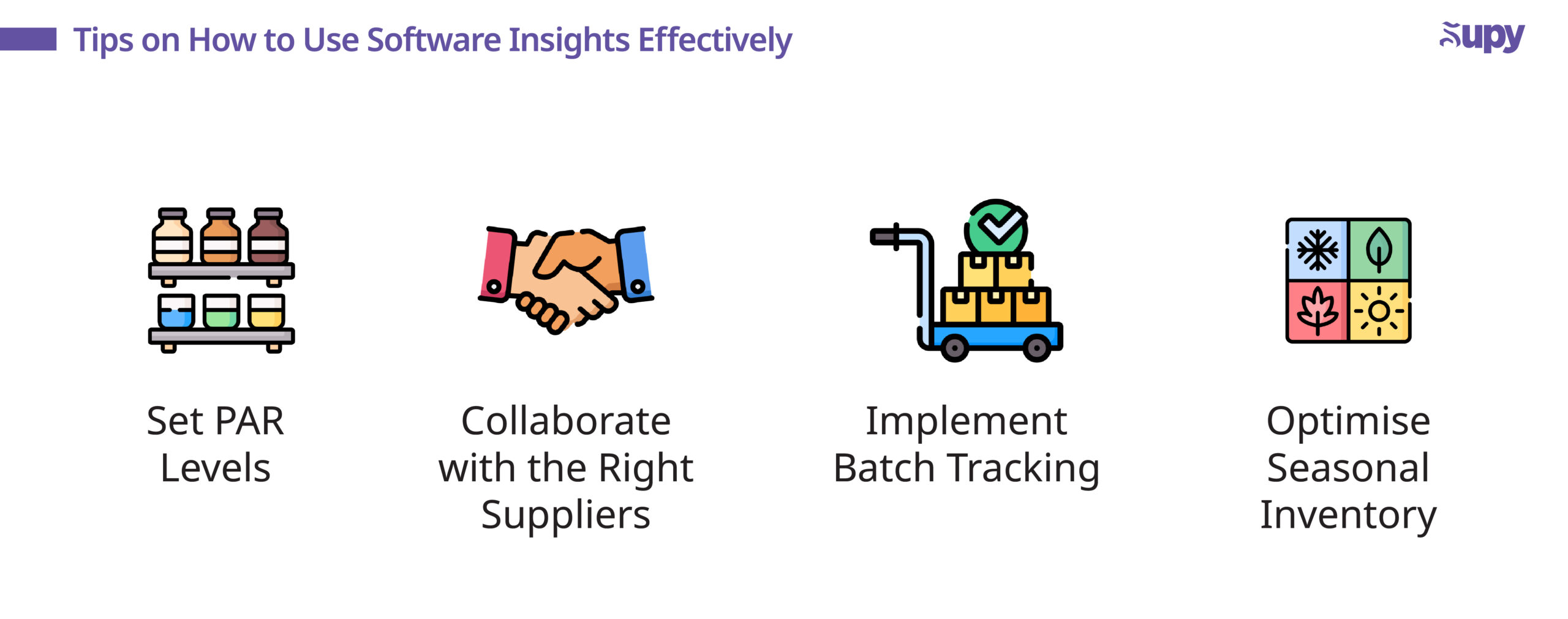
Une gestion efficace des stocks va au-delà des fondamentaux. Voici quelques conseils pour améliorer vos processus de gestion des stocks :
Définissez des niveaux de stock minimum pour les articles à forte demande
Établir des niveaux de stock minimum (quantités minimales et maximales en stock) pour les articles essentiels comme les grains de café, le lait et les sirops permet d'éviter les ruptures de stock pendant les heures de pointe. Examinez régulièrement les données de vente pour ajuster ces niveaux en fonction des tendances de la demande. Par exemple, en haute saison, vous devrez peut-être augmenter les niveaux de stock minimum pour faire face à un trafic client plus important. Ces niveaux garantissent que vous disposez toujours de la bonne quantité de stock sans passer de commandes excessives.
Collaborez étroitement avec vos fournisseurs
Des relations solides avec les fournisseurs sont essentielles pour un système de gestion des stocks fiable, et l'optimisation de l'approvisionnement peut s'avérer très bénéfique. Les outils d'approvisionnement rationalisent les bons de commande, suivent les livraisons et alignent les stocks sur la demande réelle grâce à des mises à jour en temps réel. Partager les données de vente et les prévisions avec les fournisseurs garantit des livraisons dans les délais, réduit le risque de ruptures de stock et aide à négocier de meilleures conditions, comme des remises sur les achats en volume. Cette approche efficace et collaborative améliore la précision des stocks, minimise les délais et soutient des opérations rentables pour votre coffee shop.
Mettez en place un suivi par lots pour les périssables
Le suivi des produits périssables comme le lait et les produits de boulangerie par lots garantit que vous utilisez les articles avant leur expiration. Utilisez votre système de gestion des stocks pour enregistrer les dates d'arrivée et surveiller la durée de conservation de chaque lot. Cela vous permet de faire tourner les stocks efficacement, de minimiser les pertes et de garantir que les clients reçoivent toujours des produits frais. Le suivi par lots fournit également des Insights sur les tendances de durée de conservation, vous aidant à planifier vos commandes plus efficacement.
Optimisez les stocks pour les menus saisonniers
Si votre coffee shop propose des menus saisonniers, planifiez vos stocks en fonction de ces changements pour éviter le surstockage ou les pénuries. Analysez les données de ventes antérieures pour les articles saisonniers afin de prévoir la demande avec plus de précision. Par exemple, commandez des quantités supplémentaires de sirop de courge épicé en automne tout en réduisant les articles moins populaires pendant cette période. L'optimisation de vos stocks selon les variations saisonnières vous permet de répondre aux attentes des clients tout en maintenant une rentabilité optimale.
8. Conclusion : prenez le contrôle de vos stocks
Une gestion efficace des stocks est un élément essentiel pour gérer un coffee shop performant : elle vous permet de rationaliser les opérations, de réduire les pertes et d'améliorer la rentabilité. Commencez par des petits changements progressifs, comme organiser vos stocks et définir des niveaux de stock minimum clairs pour les articles essentiels.
L'utilisation des bons outils, comme un logiciel de gestion des stocks, vous permet de prendre des décisions éclairées et d'optimiser les processus au fil du temps. Misez sur l'amélioration continue et la collaboration avec votre équipe et vos fournisseurs pour faire de la gestion des stocks un avantage stratégique pour votre activité.
9. À propos de Supy
Supy est conçu pour répondre aux défis spécifiques de la gestion des stocks dans les coffee shops et les entreprises de restauration. Il améliore la précision des commandes, rationalise le suivi des stocks et rend les opérations quotidiennes plus efficaces. Réservez une démo dès aujourd'hui pour découvrir comment Supy peut apporter de la valeur à votre activité.
Ressources connexes