.jpeg)


Warenwirtschaft im Café: So richten Sie ein System ein
Die Café-Branche boomt weltweit mit bemerkenswertem Wachstum. Allein in den USA verzeichnete die Branche einen Anstieg von 3,8 % im Jahr 2024, wodurch die Gesamtzahl der Kaffeehäuser und Snack-Shops auf 78.851 stieg. Dieses Wachstum zeigt die wachsenden Möglichkeiten, erhöht aber auch den Bedarf an effizienten Abläufen, insbesondere beim Bestandsmanagement.
Die Warenwirtschaft in Cafés bringt einzigartige Herausforderungen mit sich. Betreiber müssen verderbliche Waren wie Milch und Backwaren sorgfältig handhaben, Spezialzutaten für besondere Menüangebote vorhalten und Artikel mit hohem Umschlag wie Kaffeebohnen und Einwegbecher im Blick behalten. Ohne ein geeignetes System können diese Anforderungen zu Überbevorratung, Verschwendung oder dem Mangel an wichtigen Vorräten zum falschen Zeitpunkt führen.
Ein gut organisiertes Warenwirtschaftssystem bietet praktische Lösungen für diese Herausforderungen und optimiert Abläufe sowie Effizienz. Im Folgenden zeigen wir, wie Sie ein Warenwirtschaftssystem einrichten und nahtlos in Ihre bestehenden Abläufe integrieren können.
- Schritt 1: Bewertung des Warenbedarfs Ihres Cafés
- Schritt 2: Die richtige Warenwirtschaftssoftware wählen
- Schritt 3: Warenbestand einrichten und organisieren
- Schritt 4: Ihr Team auf Erfolg vorbereiten
- Schritt 5: Bestandsdaten überwachen und analysieren
- Praxisbeispiel: Wie The Coffee Address Bestandsprobleme löste
- Weitere Tipps für effektive Warenwirtschaft im Café
- Fazit: Behalten Sie Ihren Warenbestand unter Kontrolle
- Über Supy
1. Schritt 1: Bewertung des Warenbedarfs Ihres Cafés
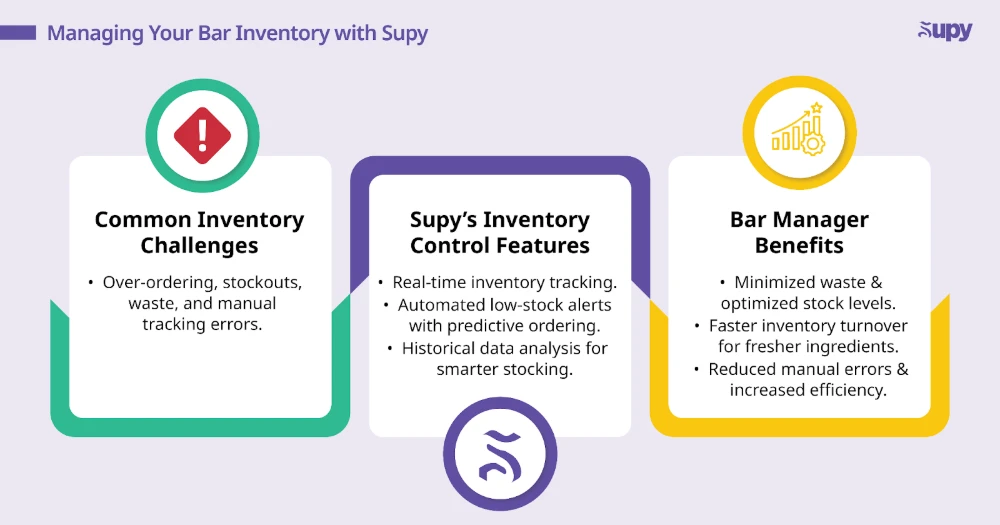
2. Schritt 2: Die richtige Warenwirtschaftssoftware wählen
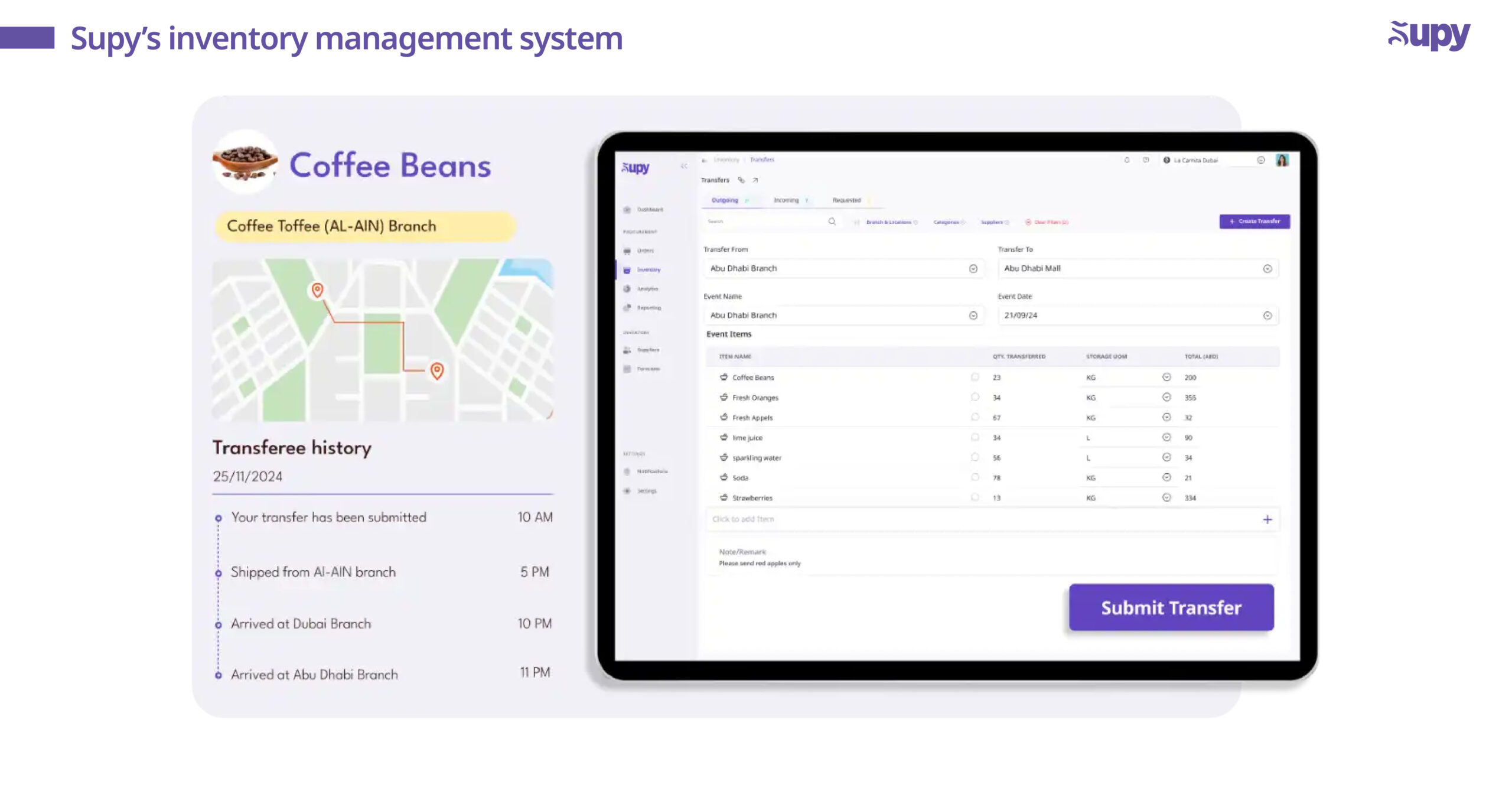
Sobald Sie klare Ziele für Ihren Warenbedarf definiert haben, ist es an der Zeit, die Software auszuwählen, die Ihren Café-Betrieb am besten unterstützt. Das richtige Tool vereinfacht die Bestandsverfolgung, reduziert manuelle Arbeit und hilft Ihnen, Ihren Warenbestand effizienter zu verwalten. Die Wahl einer Software mit den richtigen Funktionen kann einen wesentlichen Beitrag zur Optimierung Ihrer täglichen Abläufe leisten.
Wesentliche Funktionen einer Warenwirtschaftssoftware umfassen:
- Echtzeit-Tracking: Behalten Sie Ihren Warenbestand stets im Blick, um Engpässe oder Überbestellungen zu vermeiden.
- Mobile Zugänglichkeit: Greifen Sie jederzeit über eine benutzerfreundliche Oberfläche auf Bestandsdaten zu und treffen Sie schnelle Entscheidungen, auch wenn Sie nicht vor Ort sind.
- Integration mit POS-Systemen: Synchronisieren Sie Verkaufsdaten automatisch mit dem Warenbestand, um genaue Bestandsdaten ohne zusätzlichen Aufwand zu erhalten.
- Bestandswarnungen: Erhalten Sie Benachrichtigungen, wenn der Bestand niedrig ist oder Artikel das Ablaufdatum nähern.
- Lieferantenverwaltung: Verwalten und organisieren Sie Lieferantenbestellungen direkt im System, um die Nachbestellung zu optimieren.
- Controlling und Berichte: Nutzen Sie Dateneinblicke, um Verkaufstrends zu verstehen, Bestandsniveaus zu optimieren und Verschwendung zu reduzieren.
Supys Warenwirtschaftssystem ist speziell für den Café-Betrieb konzipiert. Es bietet Echtzeit-Tracking, auf Ihre Bedürfnisse abgestimmte Bestandswarnungen und nahtlose Integration mit POS-Systemen. Mit Supy wird die Bestandsverwaltung einfacher, sodass Sie Zeit und Ressourcen sparen können, um sich auf das Wachstum Ihres Unternehmens und die Betreuung Ihrer Gäste zu konzentrieren.
3. Schritt 3: Warenbestand einrichten und organisieren
Zur Einrichtung des Systems müssen Sie Ihren Warenbestand so organisieren, dass Nachverfolgung und Verwaltung vereinfacht werden. Beginnen Sie damit, jeden Artikel mit Barcodes oder QR-Codes zu versehen, um bei Inventuren oder der Einbuchung neuer Lieferungen schnelle und genaue Aktualisierungen per Scanner zu ermöglichen. Verwenden Sie Regale oder Lagerbehälter, die den von Ihnen erstellten Warengruppen entsprechen, etwa Kaffeebohnen, Sirupe und Milchprodukte. Eine klare Organisation spart Zeit in Stoßzeiten und beugt Verwechslungen oder Bestellfehlern vor.
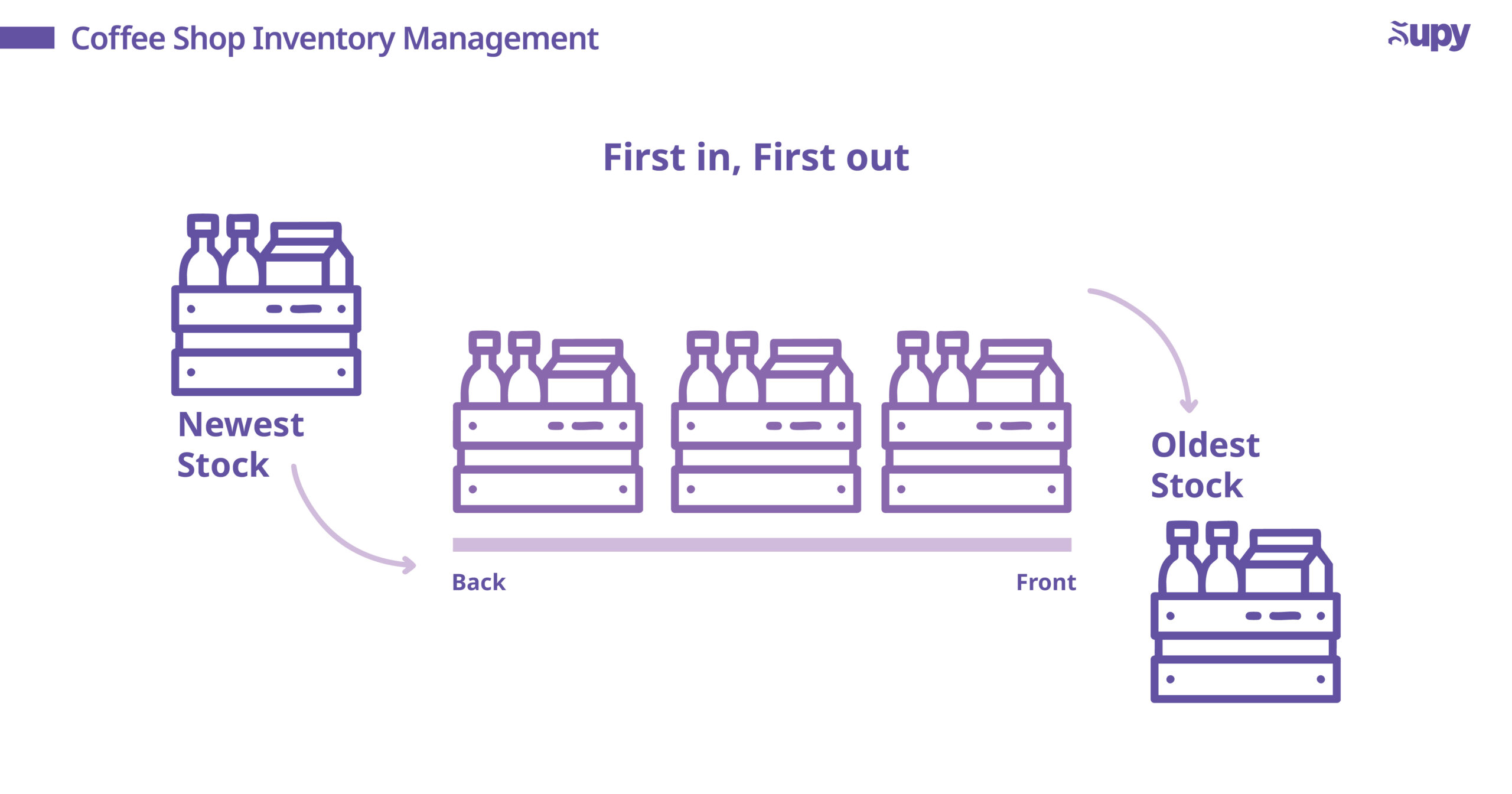
Wenden Sie für verderbliche Waren wie Milch, Sahne und Backwaren die FIFO-Methode (First In, First Out) an. Stellen Sie neuere Ware hinter ältere, damit der älteste Bestand zuerst verbraucht wird, und überwachen Sie Ablaufdaten sorgfältig, um Verschwendung zu vermeiden. Dieser Ansatz minimiert Verderb, stellt Frische sicher und hält die Kosten in Schach. Eine klare Beschriftung in Kombination mit effektiver Bestandsrotation sorgt dafür, dass Ihr Warenbestand geordnet, zugänglich und auf Ihre Geschäftsanforderungen ausgerichtet bleibt.
4. Schritt 4: Ihr Team auf Erfolg vorbereiten
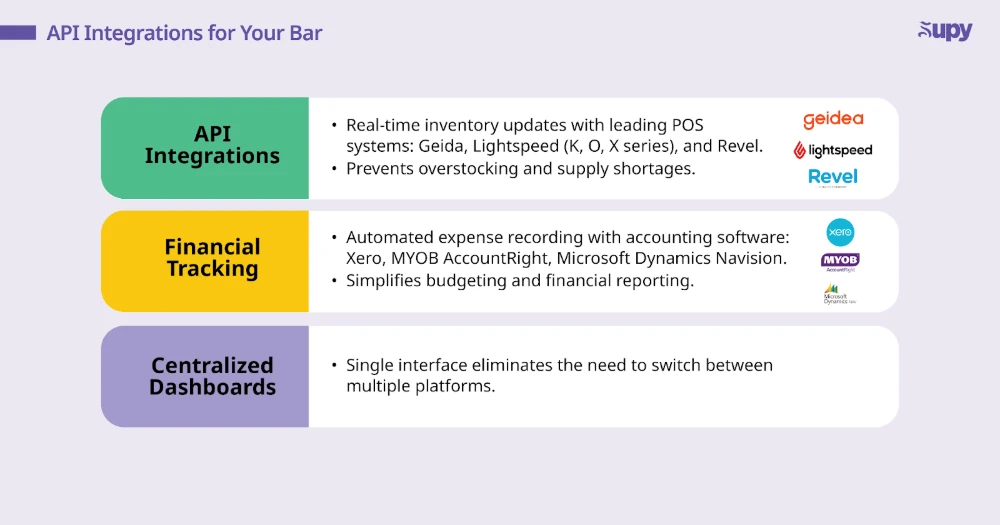
Ihr Warenwirtschaftssystem ist nur so effektiv wie die Menschen, die es nutzen. Die Investition in die richtige Software ist wichtig, aber die Zeit, die Sie in die Schulung Ihres Teams investieren, ist genauso bedeutsam. Mitarbeiter sollten vertraut sein mit Inventuren, der Einbuchung von Lieferungen und der Verwaltung von Zutaten, um Verschwendung zu reduzieren. Praxisnahe Schulungen, klare Anweisungen und Kurzreferenzanleitungen gewährleisten Konsistenz, auch in Stoßzeiten.
Die Führungsebene wird die Software primär überwachen, während das Personal sie täglich für die Prüfung von Rezepten, die Bestandsverfolgung oder die Aktualisierung der Inventur nutzt. Ein gut geschultes Team in Verbindung mit einer starken Führung schafft ein zuverlässiges Rahmenwerk für eine effektive Warenwirtschaft in Ihrem Café.
Besonders gefiel uns der Standpunkt von [Name] zu Software-Investitionen in unserem Podcast, ob für ein Restaurant, Café oder einen anderen Back-of-House-F&B-Betrieb.
https://www.youtube.com/shorts/-X9Xlt1aN5w
5. Schritt 5: Bestandsdaten überwachen und analysieren
Eine datengestützte Software liefert Ihnen Erkenntnisse, aber die Entscheidungen treffen weiterhin Sie. Wie Sie diese Erkenntnisse nutzen, bestimmt Ihren Erfolg. Regelmäßige Audits stellen sicher, dass der physische Bestand mit den Systemdaten übereinstimmt, Fehler frühzeitig erkannt werden und Schwund reduziert wird. Dies fördert auch die Verantwortlichkeit und beugt Überbestellung und Verschwendung vor.
Die Auswertung von Berichten bietet Echtzeit-Einblicke in die Bestandsleistung. Identifizieren Sie überlagerte Artikel, die Kapital binden, und Produkte mit schlechter Nachfrage. Passen Sie Einkäufe an die Nachfrage an und priorisieren Sie Artikel mit hohem Umschlag und saisonale Produkte. Dieser datengestützte Ansatz hilft bei der Kontrolle der Lebensmittelkosten, der Optimierung des Warenbestands und der Aufrechterhaltung der Effizienz und Rentabilität Ihres Cafés.
6. Praxisbeispiel: Wie The Coffee Address Bestandsprobleme löste
The Coffee Address, Saudi-Arabiens führende Kaffeekette, ist bekannt für ihren Spezialitätenkaffee, außergewöhnlichen Kundenservice und visuell beeindruckende Filialen. Mit über 140 Standorten im Königreich bietet die Marke Erlebnisse vor Ort und verkauft frisch geröstete Bohnen über den Online-Shop.
Trotz ihres Erfolgs sah sich The Coffee Address mit erheblichen Bestandsproblemen konfrontiert, die sowohl die Rentabilität als auch die betriebliche Effizienz beeinträchtigten:
- Abweichungen zwischen tatsächlichem und theoretischem Bestand, die zu Lebensmittelverschwendung und Umsatzeinbußen führten.
- Mangelnde Mitarbeiterproduktivität und Aufgabenfehlorganisation, bedingt durch unzureichende Tools und unklare Prioritäten.
- Fehlende Echtzeit-Analysen, die kritische Bestands- und Menüentscheidungen verzögerten und die Reaktionsfähigkeit insgesamt reduzierten.
Um diese Probleme zu beheben, implementierte The Coffee Address die Warenwirtschaftssoftware von Supy mit fortschrittlichen Funktionen, die auf ihre Bedürfnisse zugeschnitten waren. Automatische tägliche Erinnerungen für Inventuren halfen, Lebensmittelverschwendung zu reduzieren, indem Artikel mit hoher Nachfrage priorisiert und Bestandsabweichungen erfasst wurden. Die nahtlose Integration mit Foodics POS ermöglichte eine Echtzeit-Synchronisierung von Verkaufsdaten mit dem Warenbestand und machte die Nachverfolgung und Anpassungen effizienter.
Mit diesem System erzielten sie letztlich eine höhere Bestandsgenauigkeit, schnellere interne Bestellprozesse und ein verbessertes Aufgabenmanagement. Die mobilen Tools und Echtzeit-Analysen von Supy schufen Mehrwert durch bessere Menüplanung, Optimierung der Lebensmittelkosten und optimiertes Bestandshandling, wodurch The Coffee Address sowohl die Rentabilität als auch die betriebliche Effizienz an seinen zahlreichen Standorten steigern konnte.
7. Weitere Tipps für effektive Warenwirtschaft im Café
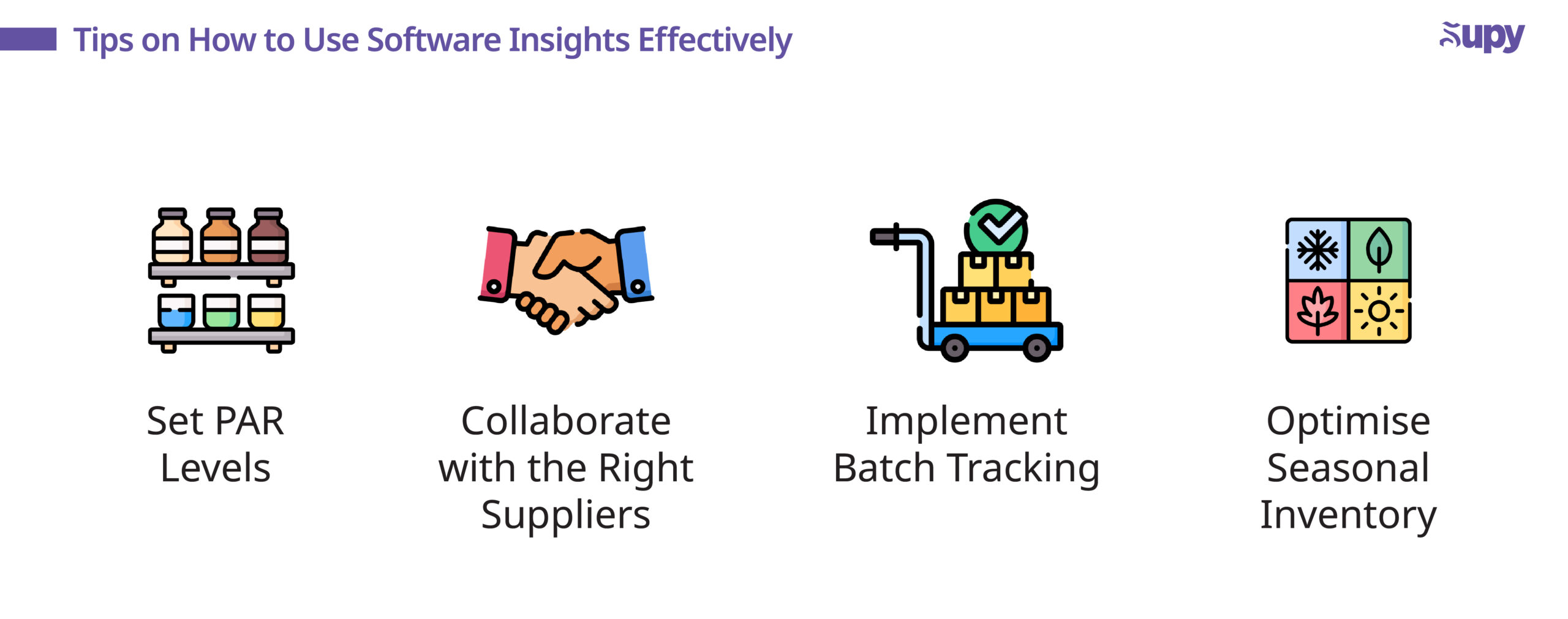
Effektive Warenwirtschaft geht über die Grundlagen hinaus. Hier sind einige Tipps zur Optimierung Ihrer Bestandsprozesse:
Mindestmengen für gefragte Artikel festlegen
Das Festlegen von Mindestmengen (Minimum- und Maximumbestand) für wesentliche Artikel wie Kaffeebohnen, Milch und Sirupe hilft, Engpässe in Stoßzeiten zu vermeiden. Überprüfen Sie Verkaufsdaten regelmäßig, um diese Mengen basierend auf Nachfragetrends anzupassen. In Hochsaisons müssen Sie möglicherweise die Mindestmengen erhöhen, um dem höheren Kundenaufkommen gerecht zu werden. Mindestmengen stellen sicher, dass Sie stets die richtige Menge an Vorräten haben, ohne übermäßig zu bestellen.
Enge Zusammenarbeit mit Lieferanten
Starke Lieferantenbeziehungen sind entscheidend für ein zuverlässiges Warenwirtschaftssystem, und die Optimierung der Beschaffung kann sehr vorteilhaft sein. Beschaffungstools vereinfachen Bestellungen, verfolgen Lieferungen und gleichen den Warenbestand durch Echtzeit-Updates mit der tatsächlichen Nachfrage ab. Der Austausch von Verkaufsdaten und Prognosen mit Lieferanten sichert pünktliche Lieferungen, reduziert das Risiko von Engpässen und hilft bei der Aushandlung besserer Konditionen wie Mengenrabatte. Dieser effiziente und kooperative Ansatz verbessert die Bestandsgenauigkeit, minimiert Verzögerungen und unterstützt kostengünstige Abläufe in Ihrem Café.
Chargenerfassung für verderbliche Waren einführen
Die Verfolgung verderblicher Waren wie Milch und Backwaren nach Chargen stellt sicher, dass Sie Artikel vor Ablauf ihres Verfallsdatums verbrauchen. Nutzen Sie Ihr Warenwirtschaftssystem, um Eingangsdaten zu erfassen und die Haltbarkeit jeder Charge zu überwachen. So können Sie den Bestand effizient rotieren, Verschwendung minimieren und Ihren Gästen stets frische Produkte anbieten. Die Chargenerfassung liefert zudem Erkenntnisse über Haltbarkeitstrends, was eine effektivere Bestellplanung ermöglicht.
Warenbestand für saisonale Menüs optimieren
Wenn Ihr Café saisonale Menüs anbietet, planen Sie den Warenbestand entsprechend diesen Änderungen, um Überbevorratung oder Engpässe zu vermeiden. Analysieren Sie frühere Verkaufsdaten für saisonale Artikel, um die Nachfrage genauer vorherzusagen. Bestellen Sie beispielsweise im Herbst zusätzliche Kürbissirup-Vorräte, während Sie bei Artikeln, die in dieser Zeit weniger nachgefragt werden, zurückhaltender sind. Die Optimierung Ihres Warenbestands für saisonale Schwankungen ermöglicht es Ihnen, die Erwartungen Ihrer Gäste zu erfüllen und gleichzeitig die Kosteneffizienz zu wahren.
8. Fazit: Behalten Sie Ihren Warenbestand unter Kontrolle
Eine effektive Warenwirtschaft ist ein wesentlicher Bestandteil eines erfolgreichen Café-Betriebs und hilft Ihnen, Abläufe zu optimieren, Verschwendung zu reduzieren und die Rentabilität zu steigern. Beginnen Sie mit kleinen Schritten, etwa indem Sie Ihren Warenbestand organisieren und klare Mindestmengen für wesentliche Artikel festlegen.
Der Einsatz der richtigen Tools, wie einer Warenwirtschaftssoftware, ermöglicht es Ihnen, fundierte Entscheidungen zu treffen und Prozesse kontinuierlich zu optimieren. Setzen Sie auf kontinuierliche Verbesserung und die Zusammenarbeit mit Ihrem Team und Ihren Lieferanten, um die Warenwirtschaft in einen strategischen Wettbewerbsvorteil für Ihr Unternehmen zu verwandeln.
9. Über Supy
Supy wurde entwickelt, um die einzigartigen Herausforderungen der Warenwirtschaft in Cafés und F&B-Betrieben zu lösen. Es trägt zur Verbesserung der Bestellgenauigkeit, zur Optimierung der Bestandsverfolgung und zur Steigerung der Effizienz im täglichen Betrieb bei. Demo buchen, um zu entdecken, wie Supy Ihrem Unternehmen Mehrwert bieten kann.
Verwandte Ressourcen