





How to Choose a Restaurant Automated Ordering System

What a restaurant automated ordering system actually automates
Most results for this search are guest ordering apps that take customer orders at the till. A restaurant automated ordering system, the kind a multi-site group needs, places your recurring supplier orders for you on a schedule or against stock levels. This guide covers what to automate, what to keep manual, and what to check before you buy.
The win for a group is steady orders that go out on time, from every branch, with no one keying them in. Automated ordering is the part of restaurant procurement software that handles the orders your sites send to suppliers. It is not the guest ordering that happens at the till.
- Cost by hand. The cost of doing it by hand is real. One operations manager spends about 2 hours a week re-typing the same recurring orders, and about 3 hours a day keying in orders from supplier emails. A large group placing hundreds of orders a day had no way to consolidate them. The team exported orders to a spreadsheet and sent them over WhatsApp, which put the manual steps back into the process they wanted to automate.
- Keying not judgement. Automated ordering takes out the keying. It does not take out the judgement. The rest of this guide is where to draw that line.
Decide what to automate and what to keep manual
Not every item belongs on an automatic schedule. The split that works for most groups follows how predictable each item is.
| Item type | How to order it | Why |
|---|---|---|
| Staples with steady use, such as oil, flour and packaging | A fixed standing order on a set day | Demand barely moves, so a recurring schedule is safe |
| Core stock that tracks sales | Fill-to-par replenishment | The system tops each item back up to its par level |
| Volatile fresh items, such as fish and specials | A manual order, checked each time | Use changes daily, so a person still decides the quantity |
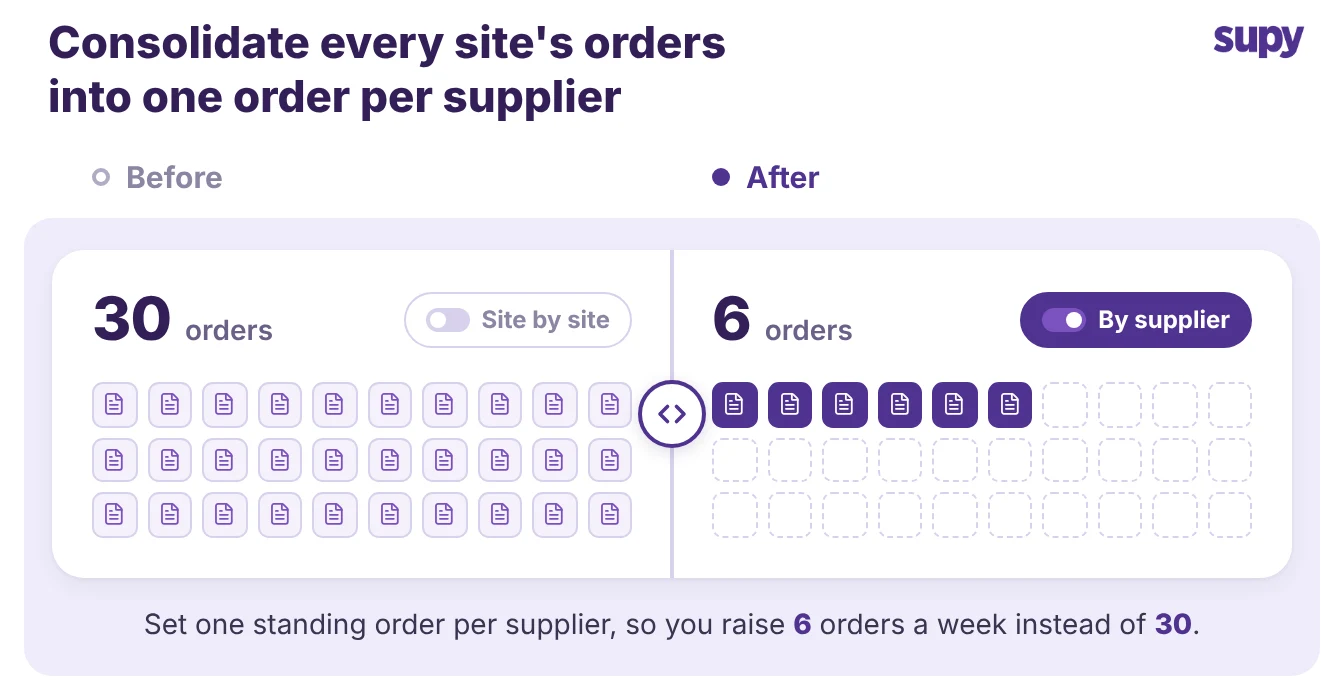
Supy builds recurring orders on templates and runs them daily, weekly or monthly. Its fill-to-par option generates an order that brings each item back to its par level. That level is the par minus what you already hold and what is already on its way.
- Par level calculator. If you'd rather not work par out by hand, the free par level calculator does it for every item on your sheet from your usage, delivery days and supplier lead times.
- Order by hand. For items that swing too much to schedule, you still order them by hand. Several operators told Supy exactly that about their fresh ranges, where what they buy changes with what sold the night before.
Choose whether an order sends itself or waits for a review
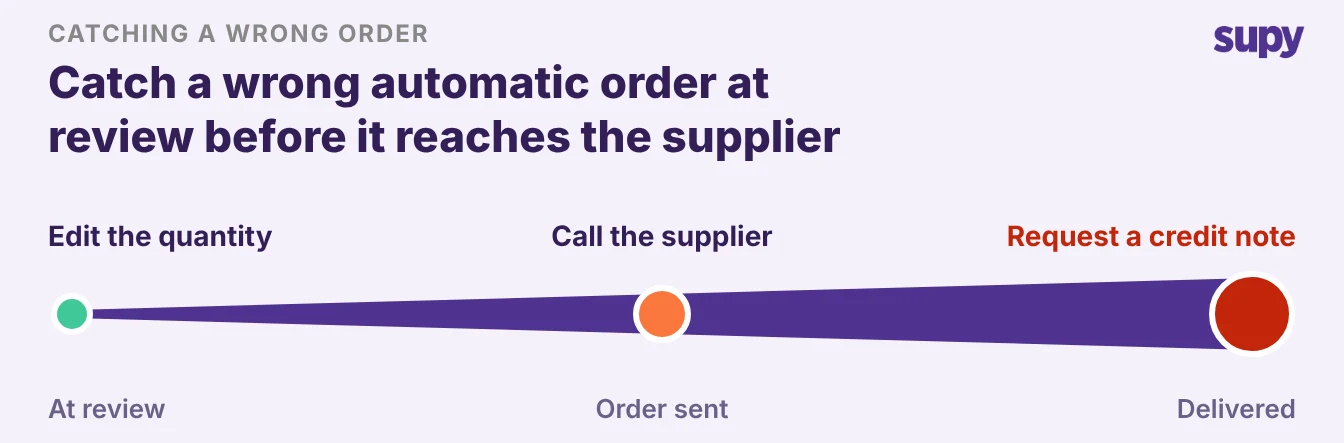
Once an order is automatic, you still decide whether it goes straight to the supplier or waits for a person to check it first. Both are valid, and the right one depends on the item and the site. This is the same question covered in automated restaurant purchase orders, applied here per standing order.
- Send or hold. Send it straight through when the order is low-risk: a fixed weekly delivery of the same staples at a known price. Hold it for review when a wrong quantity or an outdated price would be expensive, or when a new site is still learning the system.
- Per standing order. Supy sets this per standing order. Each one is created either as a draft for a person to check, or submitted to the supplier with no stop. A purchasing lead who sometimes forgot to place the weekly order gets the schedule. The order they would hate to get wrong keeps the review step.
Keep control when every site is ordering
A recurring order that fires on its own needs a way to pause, stop and track it. Without that, automation just moves the risk somewhere you cannot see.
Supy gives every standing order a clear state:
- Active. The order is running on its schedule.
- Paused. A manager has suspended it, and it resumes when they switch it back on.
- Blocked. The system could not build the order, usually a setup problem to fix.
- Archived. The order is ended for good and does not come back.
Who can create, pause or archive an order is set by permission, so head office decides which sites can change what.
- Schedules handle cases. Schedules handle the awkward cases on their own. A weekly order skips a day the supplier does not deliver, and a monthly order set for the end of the month fires on the last day even when the month is short.
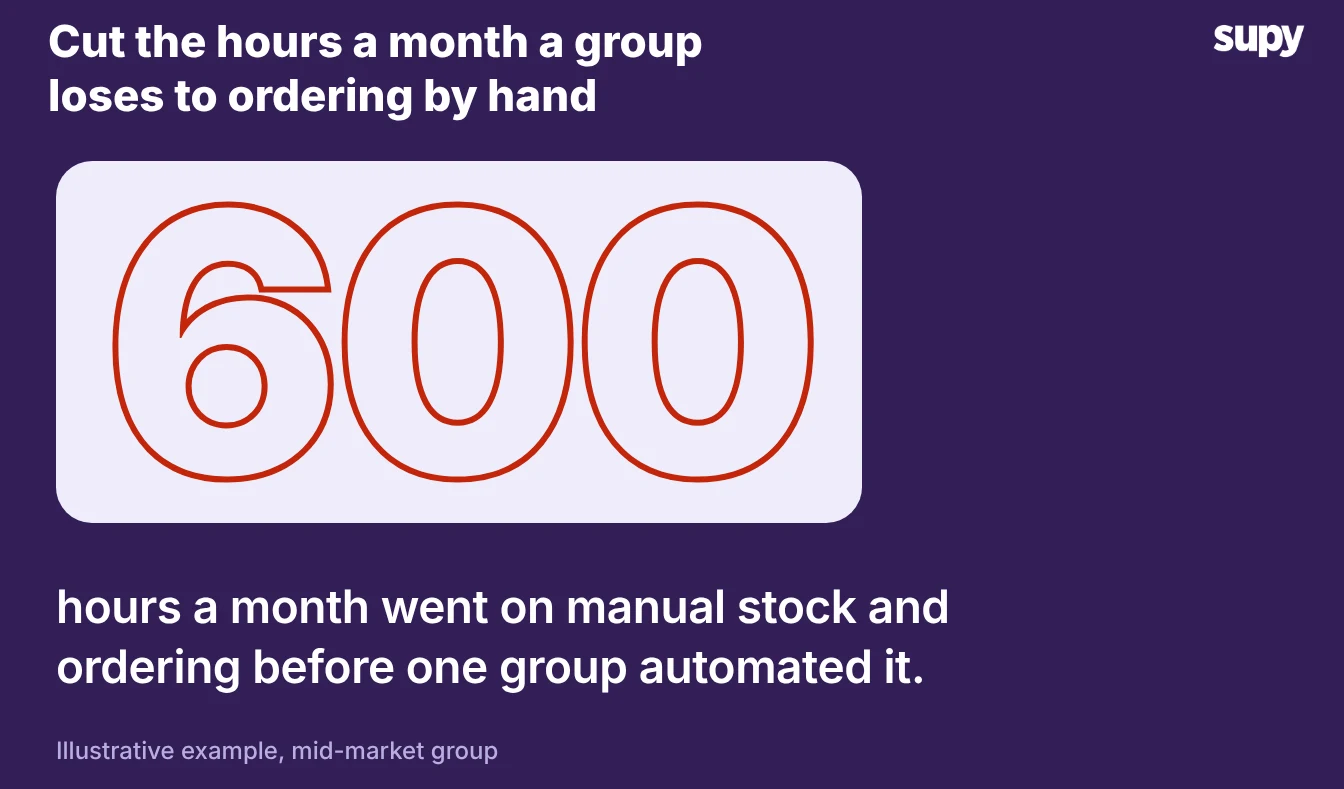
- Under your control. Those states and permissions are what keep an automatic order under your control, not a risk. One mid-market group had logged over 600 hours a month across its sites on manual stock and ordering before it moved to a system like this.
What to check in a demo before you buy
Judge an automated ordering system on four things, and ask to see each one in a demo rather than taking it on trust.
| Criterion | What to check in the demo |
|---|---|
| Scheduling that matches your cadence | Can it run daily, weekly and monthly orders, and handle non-delivery days without you fixing them? |
| A review-or-auto-send choice | Can you set, per order, whether it sends itself or waits for a person? |
| Multi-site control | Can head office see every site's orders and limit who changes a standing order? |
| It fits what you already run | Does it connect to your point-of-sale and accounting so orders, stock and costs stay in one place? |
Supy covers all four, and connects to 75+ systems so ordering is not kept separate from the rest of what you run. Start with the orders you already place every week on the same day. Put those on a schedule first, keep your volatile items manual, and add the review step wherever a mistake would cost you.