Restaurant Goods Receiving: Catch Quantity Variance at the Door

How to Catch Goods Receiving Variance at the Door
Goods receiving variance is the gap between what your purchase order says and what the delivery actually contains. It shows up as the wrong quantity, more or fewer units than you ordered, or the wrong weight on actual-weight goods. Catch both at the door, because once stock is put away you do not find the loss until month-end. This article shows the decision to make at the door and the tolerance that guides it.
On a busy delivery, staff cannot weigh and count every line before the driver leaves, so the check gets skipped. You then find the loss weeks later in your cost of goods sold, far from the delivery that caused it. The fix is not more checking. It is a clear rule for what to check and one decision to make when a line is off.
Quantity Variance: When More or Fewer Units Arrive Than You Ordered
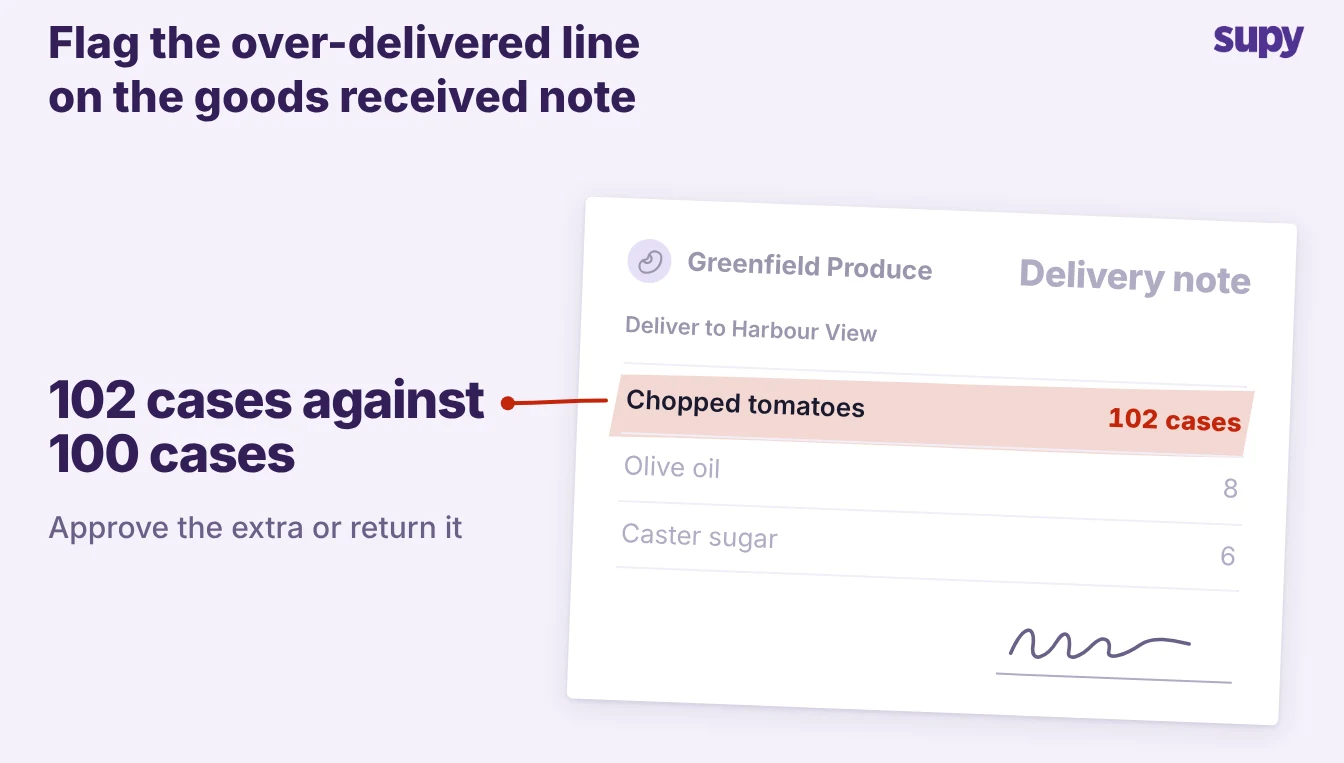
- Over-deliveries missed. Your team misses over-deliveries more often than short ones, because most receiving checks only look for a shortfall. If your team reconciles the delivery against the purchase order and waves it through once nothing is missing, an over-delivery rides along unnoticed. Say the order was 100 cases and 102 arrive. The supplier invoices for 102, your team receives against a 100-case order, and you pay for two cases nobody decided to buy.
- Short deliveries. A short delivery is the mirror image. You ordered and paid for stock that never came, so your system shows inventory you do not have, and the next count reads it as a stock variance. Both gaps start at the same moment: the receiver comparing the delivery against the order. So both get caught by the same check. Count the units actually delivered, record that figure, and compare it to the order before the driver leaves.
The receiver needs one instruction for each outcome.
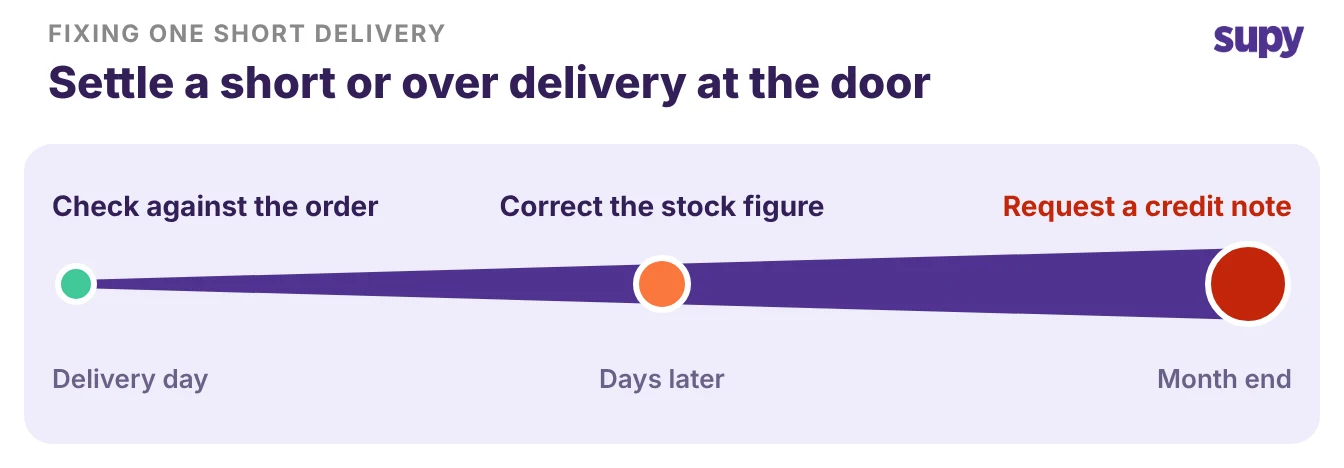
- More than ordered. Accept only what you can use and return the rest, or keep it and have the buyer approve the extra cost.
- Fewer than ordered. Receive the quantity that arrived, not the quantity on the order, and raise a credit note for the difference while the driver is still there.
Across several sites, head office cannot see this variance unless the received lines are in one place. A central view of every received line, flagged where it came in above or below the order, turns a per-delivery scramble into something a manager reviews at a glance.
Supy's invoice and credit-note workflow lists every flagged line for a manager and keeps each credit attached to the delivery that caused it.
Weight Variance: Receive Produce and Seafood at Actual Weight
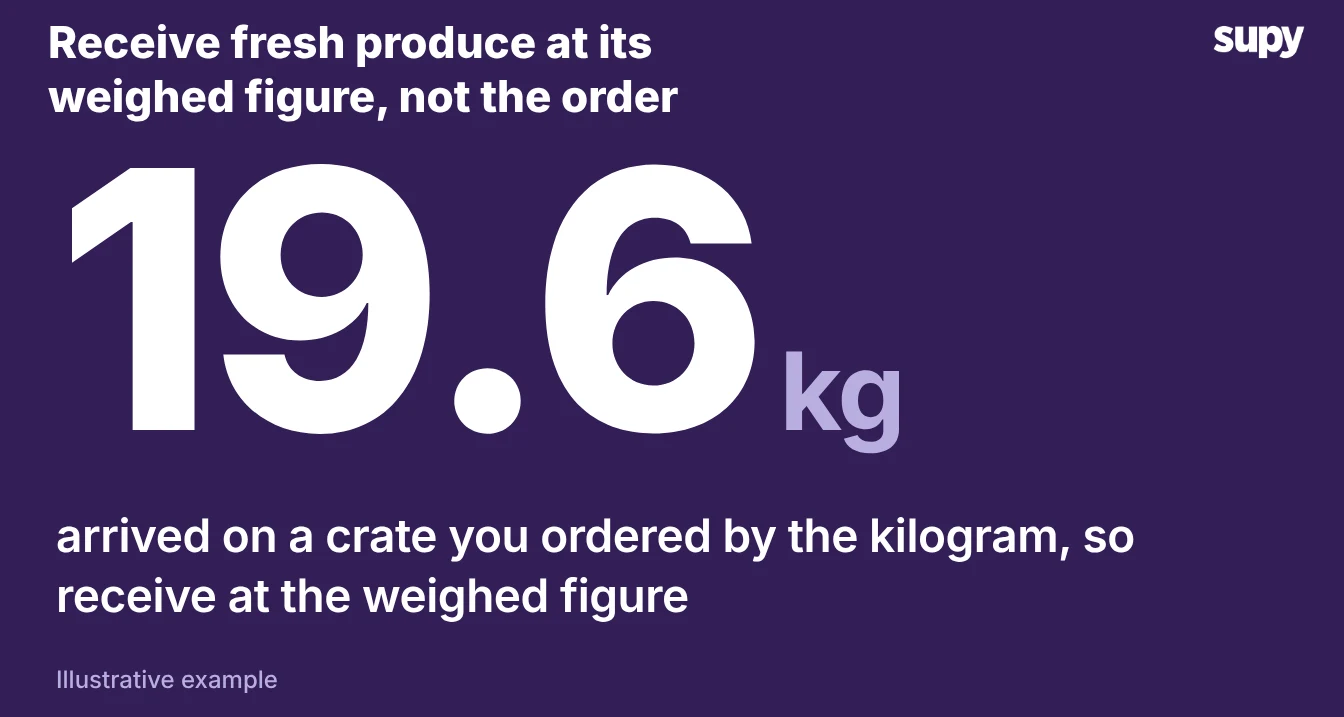
Actual-weight goods never match the order to the gram. Order 20 kg of fish and 19.6 kg arrives; order a case of beef and it weighs whatever the animal weighed. This is not an error to chase, it is how fresh supply works, so the rule is different from the quantity rule above.
- The rule. Receive these items at the weight on the scale, not the weight on the order. When a receiver records the delivery at the ordered 20 kg instead of the weighed figure, every portion built from that item costs a little more or less than you think. If you record it wrong on each delivery, your recipe costs stop matching what the food actually cost. Weighing at the door and recording the actual figure keeps your costing honest and gives you a real price per kilogram to check against the invoice.
- The exception. The exception is a weight so far off it stops being normal variance. A 20 kg order that arrives at 14 kg is a short delivery, not a light one, and it needs the same credit-at-the-door decision as a missing case. The tolerance below is what tells your team where normal variance ends and a short delivery begins.
Set a Receiving Tolerance So Staff Know What to Check
A receiving tolerance is the band inside which a difference is accepted without a fuss, and beyond which the line is flagged for a person. It is what lets a receiver clear a delivery quickly without ignoring the shortfalls that cost money.
Set it tighter for counted, high-value goods and wider for actual-weight fresh supply. A case either arrives or it does not, while a box of fish never weighs exactly what was ordered.
| Item type | Tolerance band | What the receiver does |
|---|---|---|
| Counted dry and packaged goods | 1% | Count every line; flag any over or short delivery for a credit or approval. |
| High-value counted items (spirits, premium cuts) | 1% | Count in full; a single missing unit is worth chasing. |
| Actual-weight fresh goods (produce, meat, fish) | 5% | Weigh and receive at actual weight; raise a credit note when the shortfall is over the band. |
Write the band on the receiving sheet or into the system so it is the same at every site. Without a written figure, each receiver sets their own. One chases every gram while another accepts a short case, and head office cannot tell which sites are actually checking.
The Decision at the Door: Accept, Short-Pay or Reject
Every delivery line ends in one of three decisions, and the receiver should know which one they are in before the driver leaves. Work it in this order.
- Inside tolerance. Accept the line at the quantity or weight delivered, record that figure, and move on. Nothing to chase.
- Over tolerance, more than ordered. Decide whether you can use the extra. Keep it only with the buyer's approval, because it is spend nobody planned; otherwise return the surplus on the spot and have the driver sign for it.
- Over tolerance, less than ordered or rejected on quality. Receive what you are keeping at the real quantity, and raise a credit note for the shortfall or the rejected goods while the driver is there to sign. A credit raised at the door is the one that gets paid; a credit chased at month-end usually does not.
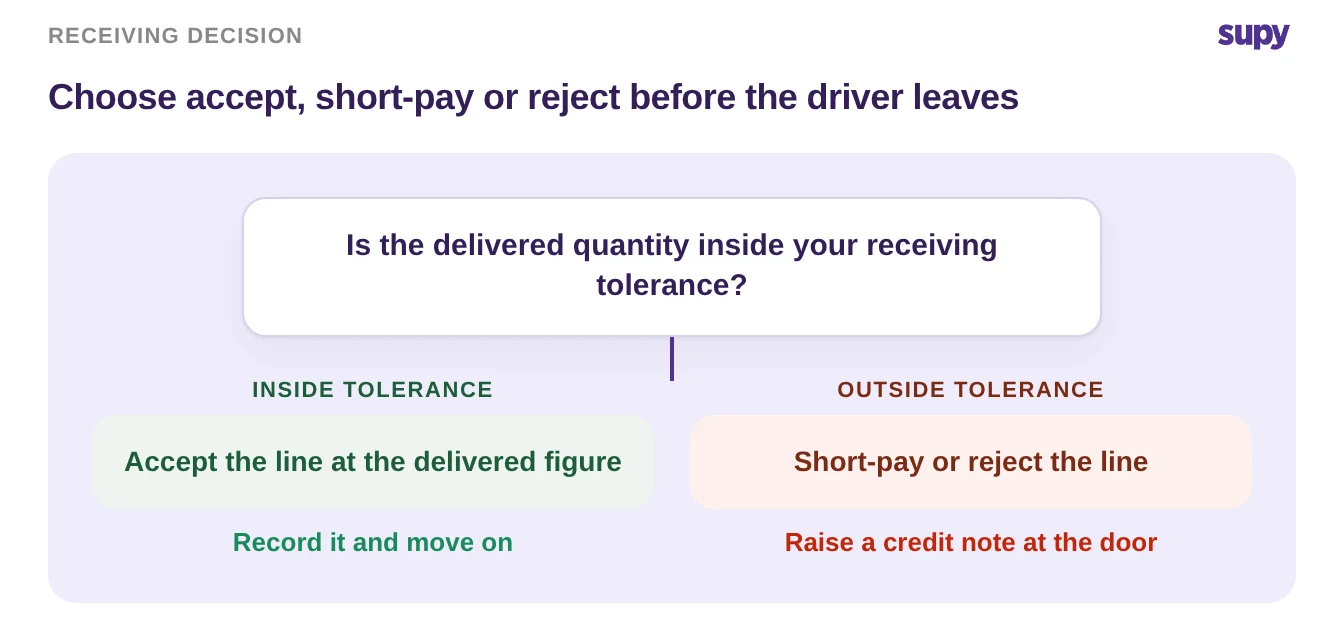
Once the figure is recorded at the quantity actually received, your inventory and your cost reflect what genuinely arrived rather than what the order asked for. The credit, raised against that delivery, recovers the money before the invoice is paid rather than leaving it to find at month-end.
To start this week, pick the branch you are in.
- No written tolerance. Set the bands above and put them on the receiving sheet.
- A tolerance but no over-delivery check. Add the accept-or-approve step for anything above the order.
- Missing credits. Make the rule that a short or rejected line gets a credit note before the driver leaves, never after.
For the mechanics of receiving a delivery that arrived without a matching order at all, see our guide to receiving goods without a purchase order.