.jpg)


The Secret Behind TGI Fridays' $2 Billion Comeback
.png)
Watch extracts
Guest & host


Episode Summary
Most restaurant brands that survive bankruptcy don't come back stronger. TGI Fridays - with a printed playbook in every employee's hands and a target of $2 billion in revenue by 2030 - intends to be the exception.
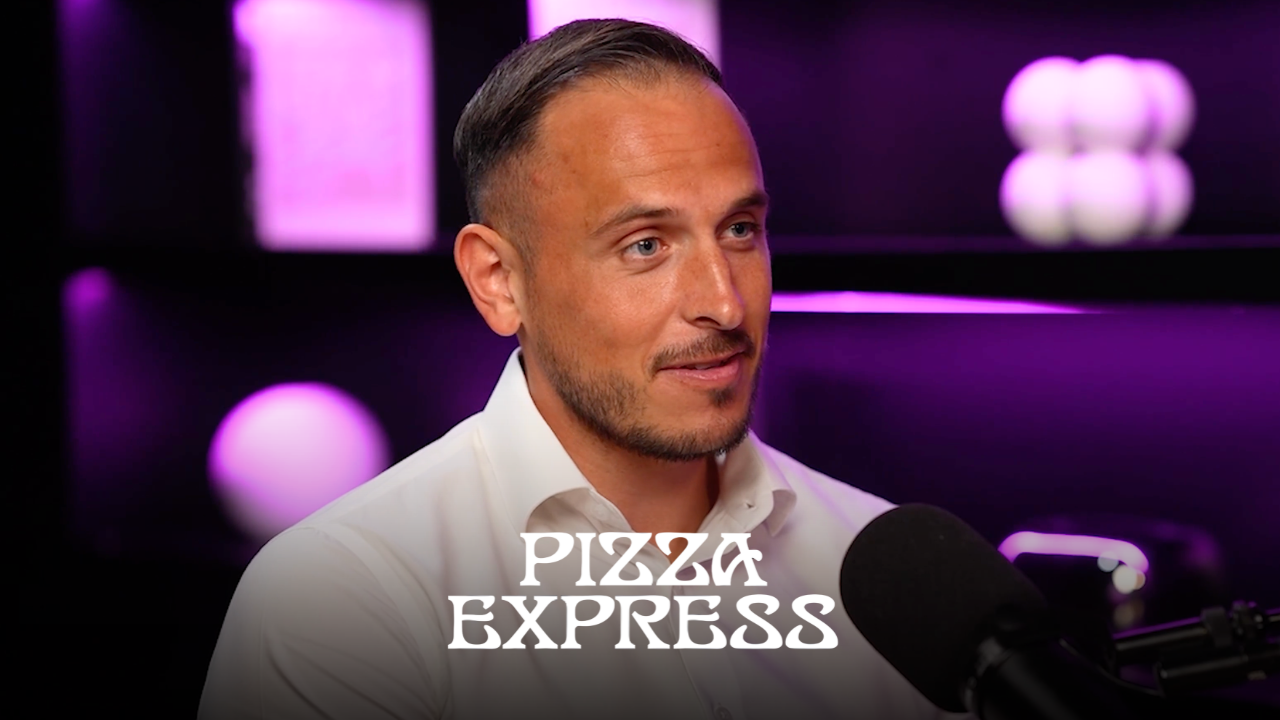
In this episode, Phil Broad, Global President of TGI Fridays, sits down with Curran to explain what actually went wrong in the US, and what the comeback looks like from the inside. Phil's relationship with the brand goes back three decades to when he opened the High Wycombe restaurant in the UK - an era when nine of the eleven highest-grossing Fridays in the world were British. His career since has run through Pizza Hut, Starbucks - where he built 750 stores - to Outback Steakhouse, Tesco, and leadership roles across the GCC. In February, one day into retirement, he took a call asking if he wanted to get busy again. He thought about it for ten seconds.
The conversation covers the venture capital ownership that managed cash out of the business - cutting training first, letting experience decline, watching sales spiral - and the reinvestment now underway: buying back the UK estate, where 24 of the acquired restaurants had no working heating, relaunching the iconic red and white stripes, and signing 150 new restaurants in twelve months across Japan, Peru, Kenya, the Maldives, the Balkans, and Mexico.
From the mop and bucket a friend once handed him as a Starbucks turnaround strategy, to the 70/20/10 rule that keeps a global menu consistent and local at once, to the story of a nurse in Kuwait that captures his entire philosophy on trust - this is one of the most honest and entertaining conversations about rebuilding a global brand you will hear.
Learnings From The Episode
Phil Broad has spent three decades opening, running, and rescuing some of the most recognisable restaurant brands in the world. Every lesson here was earned on the restaurant floor - from High Wycombe to Kuwait to Dallas.
Businesses don't die from bad products - they die from owners who treat them like ATMs
Phil is unusually direct about what bankrupted TGI Fridays Inc.: venture capital ownership that managed cash out of the business instead of investing in it. The first thing to go was training. Then experienced people left, guest experiences declined, and sales spiralled - slowly, then all at once.
The evidence was waiting when the new ownership bought back the UK estate in January. Of the restaurants they acquired, 24 had no working heating. The fabric of the business had been quietly stripped for years.
His framing is the one every operator should remember: a restaurant business is not an ATM. You can't keep taking cash out - you have to refill it. Brian Niccol is doing it at Starbucks. Fridays is doing it now. The owners who understand this build brands that last decades. The ones who don't produce headlines about bankruptcy.
Picking a franchisee is like picking your bride
A Fridays franchise agreement runs up to twenty years - a ten-plus-ten contract that, once signed, Phil treats as unbreakable. Deal's done. Shake hands. Build the business together on a win-win basis.
That permanence changes how he evaluates partners. He'll spend hours on calls before ever meeting someone, testing for the things contracts can't enforce: are they like-minded, do they share the same values, will his team get on with their team? The glue that sticks brand and culture together matters more than any clause.
The discipline runs both ways. Fridays knows when to use the accelerator and when to use the brake including deliberately slowing franchisees down when they're growing faster than their operations can support. A twenty-year marriage survives on judgement, not enthusiasm.
The 70/20/10 rule: how a global brand stays consistent and local at the same time
Fridays holds a recipe bank of a thousand recipes, and every new market's menu follows the same structure. Seventy percent is dictated core - the ribs, grilled items, and iconic dishes that make a Fridays a Fridays anywhere in the world. Twenty percent the franchisee selects from the recipe bank, choosing what fits their market. The final ten percent is genuine local flexibility - dishes created together for local tastes, like more vegetarian and rice-based options in the Philippines.
The philosophy behind the numbers is what makes it work. As Phil puts it: who are we to dictate to a franchisee who's a national, who lives there? If they believe in a dish, Fridays supports them and makes sure it's executed right.
It's the operational expression of the marriage principle - enough structure to protect the brand, enough trust to respect the partner.
The two metrics that matter: sales, and how your people feel.
Ask Phil what number matters and his answer is immediate: sales. His reasoning is blunt - you can have every conversation with your landlord, cut every hour of labor, trim every line of the P&L, and the person who ultimately suffers from all of it is the guest. Sales decline is the one problem you cannot manage your way out of; you can only sell your way out, with a sales-led plan and an experience worth returning for.
That philosophy runs through everything the new Fridays is doing. The brand's evolution had been too slow for years - so now there's a 160-square-metre format opening in Japan where restaurants used to need 500, a franchisee in Melbourne installing AI shuffleboard alongside the margaritas, a new POS system rolling out because, as Phil puts it, the difference between a good system and a bad one is a manager getting home at one in the morning or four. Even training has been rebuilt - short, sharp video bursts from a Dubai-based L&D team, delivered through multilingual avatars of the leadership themselves.
None of it is cost-cutting. All of it is investment in the two things Phil believes actually drive the number: the guest experience, and the people delivering it.
Culture is the operating system - and it has to be taught, told, and retold
Spend an hour with Phil and you notice how much of his leadership is transmitted through stories. The symbols hidden in every Fridays - the peacock for the pride of the team, Abraham Lincoln for integrity, the elephant balancing on a ball for work-life balance, the steel pole theory, the triangle balancing guest, business, and employee. None of it is decoration. It's how thousands of people across dozens of countries absorb what the brand expects without reading a manual.
The same intentionality shows up everywhere in the episode. A global conference returning for the first time since 2019, with the World Bartender Challenge and a $10,000 prize, because celebration is part of the system. A support structure split across three offices - the United States, the United Arab Emirates, the United Kingdom - so wellbeing and work-life balance survive a 24-hour global operation. A leadership habit of asking a late employee how they are, not why they're late. And underneath all of it, the best advice Phil ever received, from Howard Schultz: lead with your heart.
His own measure of success makes the point better than any values poster could - no matter what job he takes, his first task is finding his own replacement. Bet on people, grow them from within, and the culture carries itself forward.

Ready to optimize your restaurant operations?
More stories from F&B leaders
.png)
.png)
.png)
.png)
.png)
.png)
.png)
.png)
.png)
.png)
.png)
.png)
.png)
.png)
.png)
.png)
.png)
.png)
.png)
Ready to transform your operations?
Join 3500+ restaurant operators cutting costs, streamlining operations and making smarter decisions with Supy.
