.jpeg)

Surmonter les défis de la gestion de bar : conseils pour gérer un bar avec succès
Gérer un bar va bien au-delà du simple fait de préparer des cocktails et de divertir les clients ; c'est un exercice d'équilibre qui consiste à gérer le personnel, à maîtriser les coûts et à garantir la satisfaction des clients. Il n'est pas surprenant que près de 60 % des nouveaux bars ferment au cours de leurs trois premières années, soulignant les défis inhérents au secteur de la restauration. Mais ceux qui réussissent y parviennent en comprenant ces défis et en maîtrisant le processus de gestion de bar pour devenir un directeur de bar performant.
Que vous soyez confronté à des problèmes de personnel ou que vous cherchiez à maintenir la rentabilité, surmonter ces obstacles est essentiel pour gérer un bar avec succès. La bonne nouvelle, c'est qu'avec les bonnes stratégies, vous pouvez transformer ces défis en opportunités de croissance et d'efficacité.
Dans cet article, nous aborderons :
- Pénurie de main-d'œuvre
- Gestion des stocks
- Gestion financière
- Service client
- Conformité et questions juridiques
- Marketing et promotions
- Perturbations de la chaîne d'approvisionnement
- Défis liés à la gestion multi-établissements
- Conclusion
- À propos de Supy
Prêt à transformer votre approche de la gestion de bar ? Explorons les stratégies essentielles qui vous aideront à naviguer face aux défis les plus complexes et à mettre votre bar sur la voie du succès à long terme.
1. Pénurie de main-d'œuvre
La pénurie de main-d'œuvre est un défi majeur dans le secteur des bars, de nombreux établissements fonctionnant avec seulement 60 à 85 % du personnel nécessaire. Cela entraîne une surcharge de travail pour les employés, une baisse de la qualité du service et un risque d'atteinte à la réputation du bar. La pandémie a aggravé le problème, poussant de nombreux travailleurs vers des emplois plus stables. En conséquence, les bars doivent recruter et former du personnel moins expérimenté, créant un cycle de sous-effectif, de fort turnover et d'inefficacités opérationnelles.
Solutions
- Investir dans la fidélisation des employés : Créez un environnement de travail positif avec une rémunération compétitive, des avantages sociaux et des possibilités d'avancement. La mise en place de programmes d'incitation pour les employés, tels que des primes ou des récompenses pour les performances exceptionnelles, peut renforcer davantage le moral et la fidélité. Une culture d'entreprise exemplaire peut améliorer la satisfaction des employés, rendant votre bar plus attractif et contribuant à retenir les talents.
- Recrutement flexible et formation des employés : Recrutez des personnes moins expérimentées et proposez des programmes de formation complets pour qu'elles répondent aux standards de votre bar. Une approche rigoureuse de la formation du personnel peut rapidement transformer les nouveaux recrutés en membres d'équipe efficaces, réduisant ainsi la charge pesant sur vos employés plus expérimentés.
- Optimiser la planification et la charge de travail : Utilisez une planification basée sur les données pour répartir équitablement le travail et prévenir l'épuisement professionnel. Des horaires flexibles permettent au personnel du bar de concilier vie professionnelle et vie personnelle, améliorant la satisfaction au travail et les performances, ce qui profite in fine au directeur de restaurant et aux opérations globales du bar.
2. Gestion des stocks
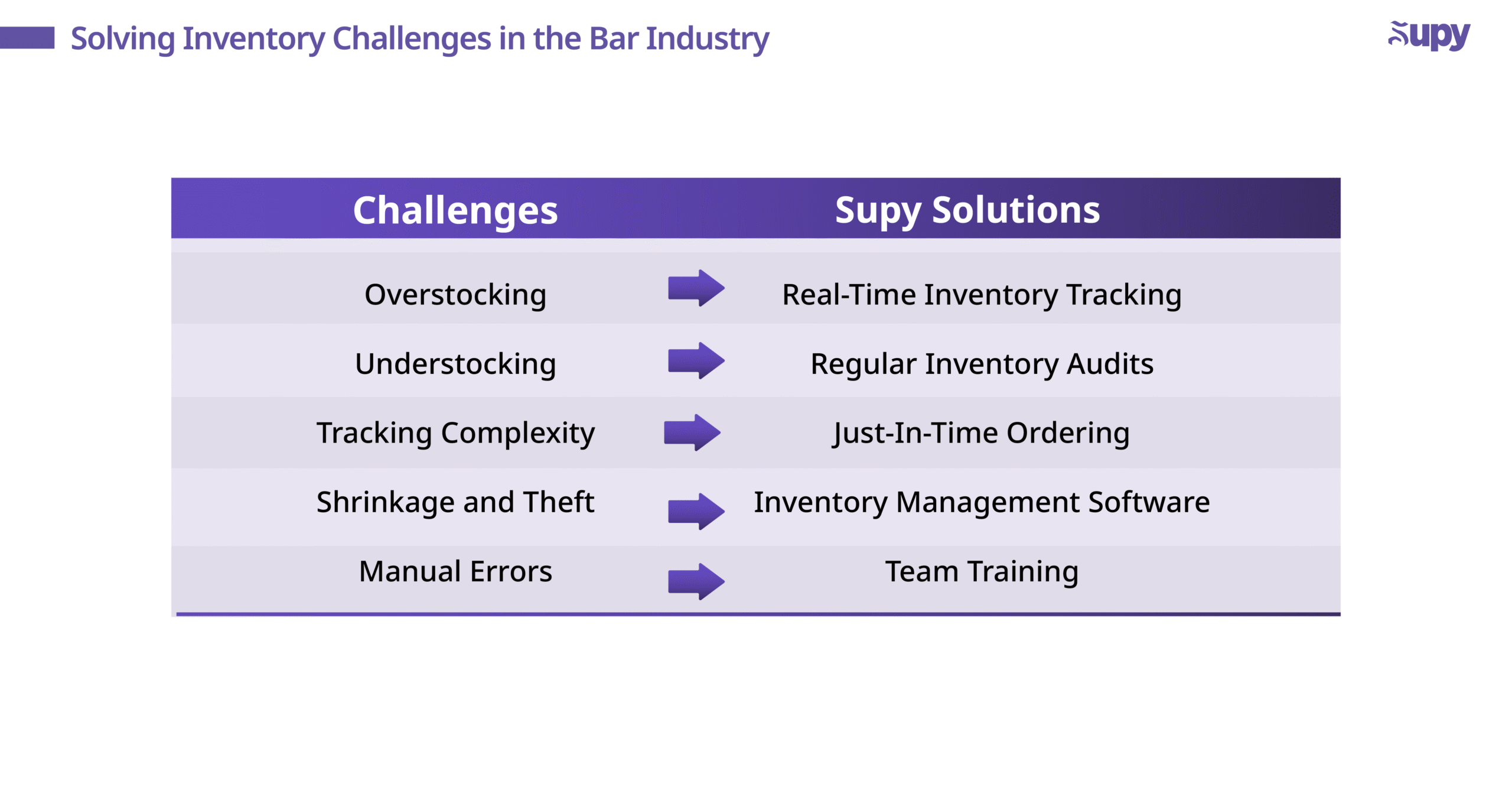
La gestion des stocks d'un bar est complexe mais essentielle au succès. Un contrôle insuffisant des stocks peut entraîner un surstockage, immobilisant des capitaux et augmentant les pertes, ou un sous-stockage, entraînant des pertes de ventes et des clients déçus. Les directeurs de bar luttent constamment pour équilibrer les niveaux de stock, notamment en raison de la complexité du suivi de multiples articles dans des environnements à rythme effréné. Le vol et les pertes représentent un risque supplémentaire, rendant un suivi précis indispensable. Un système de gestion des stocks robuste ou un logiciel de gestion de bar contribue à rationaliser les opérations, à réduire les pertes et à fournir des Insights en temps réel pour protéger les marges.
Solutions
- Mettre en place un suivi des stocks en temps réel : Utilisez un logiciel de gestion des stocks comme Supy pour surveiller les niveaux de stock en temps réel. Cette technologie vous permet de suivre votre inventaire au fur et à mesure de ses fluctuations tout au long de la journée, en vous assurant de toujours savoir ce que vous avez en stock. En suivant les stocks en temps réel, vous pouvez réduire les pertes, éviter le surstockage et éviter les ruptures d'articles populaires aux heures de pointe.
- Effectuer des audits réguliers des stocks : Planifiez des contrôles réguliers des stocks pour détecter rapidement les écarts. Les audits réguliers vous aident à identifier les tendances, telles que les articles fréquemment commandés en excès ou peu utilisés, ce qui vous permet d'effectuer des ajustements avant qu'ils n'affectent votre résultat net. Des audits réguliers des stocks contribuent également à identifier les vols ou les pertes potentiels, en veillant à ce que vos niveaux de stock correspondent à vos enregistrements de ventes.
- Mettre en œuvre la commande en flux tendu : Utilisez un système de commande en flux tendu pour minimiser la quantité de stock sur site. En commandant les fournitures au plus près de leur date de besoin, vous pouvez réduire les stocks excédentaires et libérer des capitaux. Cette approche contribue également au maintien d'un stock plus frais, ce qui peut améliorer la qualité des produits servis et réduire les pertes. Un système de gestion des spiritueux bien géré est essentiel pour parvenir à cet équilibre.
3. Gestion financière
La gestion des finances d'un bar va bien au-delà du simple comptage des liquidités ; elle requiert une planification stratégique et des analyses pour maintenir la rentabilité. Avec des marges serrées dans le secteur de l'hôtellerie-restauration, même de petites erreurs financières peuvent entraîner des problèmes de trésorerie et une hausse des coûts. Maîtriser les dépenses sans sacrifier la qualité est un défi majeur, car chaque coût, des stocks à la main-d'œuvre, affecte le résultat net. L'examen régulier des comptes de résultat aide les directeurs de bar à suivre les dépenses, à identifier les opportunités d'économies et à assurer la stabilité financière à long terme.
Solutions
- Tirer parti des outils d'Analyses financières : La mise en place d'un logiciel de gestion financière aide les bars à surveiller des indicateurs clés comme le taux de rotation des stocks et les coûts de main-d'œuvre, permettant des décisions basées sur les données qui améliorent la rentabilité. Des outils comme Toast et Lightspeed suivent les tendances de ventes et les performances du personnel, tandis que les Solutions de gestion des stocks comme Supy préviennent le surstockage, réduisent les pertes et détectent les Écarts dus au vol ou au sur-versement. Pour une surveillance financière plus globale, QuickBooks et Xero fournissent un suivi des dépenses en temps réel et des analyses des profits. En exploitant ces outils, les bars peuvent rationaliser leurs opérations financières et optimiser les coûts pour une meilleure rentabilité à long terme.
- Respecter un budget détaillé : Élaborez un budget complet couvrant toutes les dépenses d'exploitation et comparez-le régulièrement aux dépenses réelles. Cette pratique vous permet de garder le contrôle des dépenses, d'identifier les écarts tôt et d'effectuer des ajustements si nécessaire pour maintenir la stabilité financière, garantissant ainsi que votre bar reste sur une trajectoire rentable.
- Optimiser la tarification du menu : Analysez la rentabilité de chaque article du menu en utilisant les données de vos rapports financiers. Envisagez de mettre en place une tarification dynamique, où les prix sont ajustés en fonction de la demande ou de l'heure de la journée, afin de maximiser les revenus. Ajustez les prix ou les tailles des portions pour mettre en avant les articles à forte marge, en veillant à ce que votre menu soit à la fois rentable et attrayant pour les clients, contribuant ainsi à une stratégie de gestion de bar plus performante.
4. Service client
Le service client est le pilier d'un bar prospère, influençant la fidélisation des clients et leur recommandation de votre établissement. Dans un secteur concurrentiel, un service exceptionnel favorise la fidélité et les visites répétées. Cependant, le fort turnover du personnel, les périodes d'affluence et les attentes variées des clients rendent la constance difficile à maintenir. Sans une gestion solide du service, même les bars bien gérés peuvent avoir du mal à fidéliser leur clientèle. Répondre rapidement aux préoccupations et donner la priorité au service est essentiel pour bâtir une fidélité à long terme.
Solutions
- Formation régulière du personnel : Investissez dans une formation continue pour vous assurer que votre équipe maîtrise les interactions avec les clients et les techniques de service. Les formations de remise à niveau régulières et les opportunités de développement professionnel contribuent à maintenir le personnel aligné sur vos standards de service, lui permettant de délivrer une expérience constamment excellente.
- Personnaliser l'expérience client : Encouragez le personnel à mémoriser les préférences des clients habituels et à interagir avec eux sur un plan personnel. De petits gestes, comme se souvenir de la boisson préférée d'un client, peuvent le faire se sentir valorisé et renforcer sa fidélité à votre bar, ce qui peut également avoir un impact positif sur les avis en ligne.
- Recueillir et agir sur les retours : Recueillez régulièrement les retours des clients par le biais de sondages ou de conversations directes pour répondre à leurs préoccupations. Utilisez ces retours pour identifier les axes d'amélioration et apporter des changements conformes aux attentes des clients, garantissant ainsi que votre bar répond à leurs besoins et continue de prospérer dans un environnement concurrentiel.
5. Conformité et questions juridiques
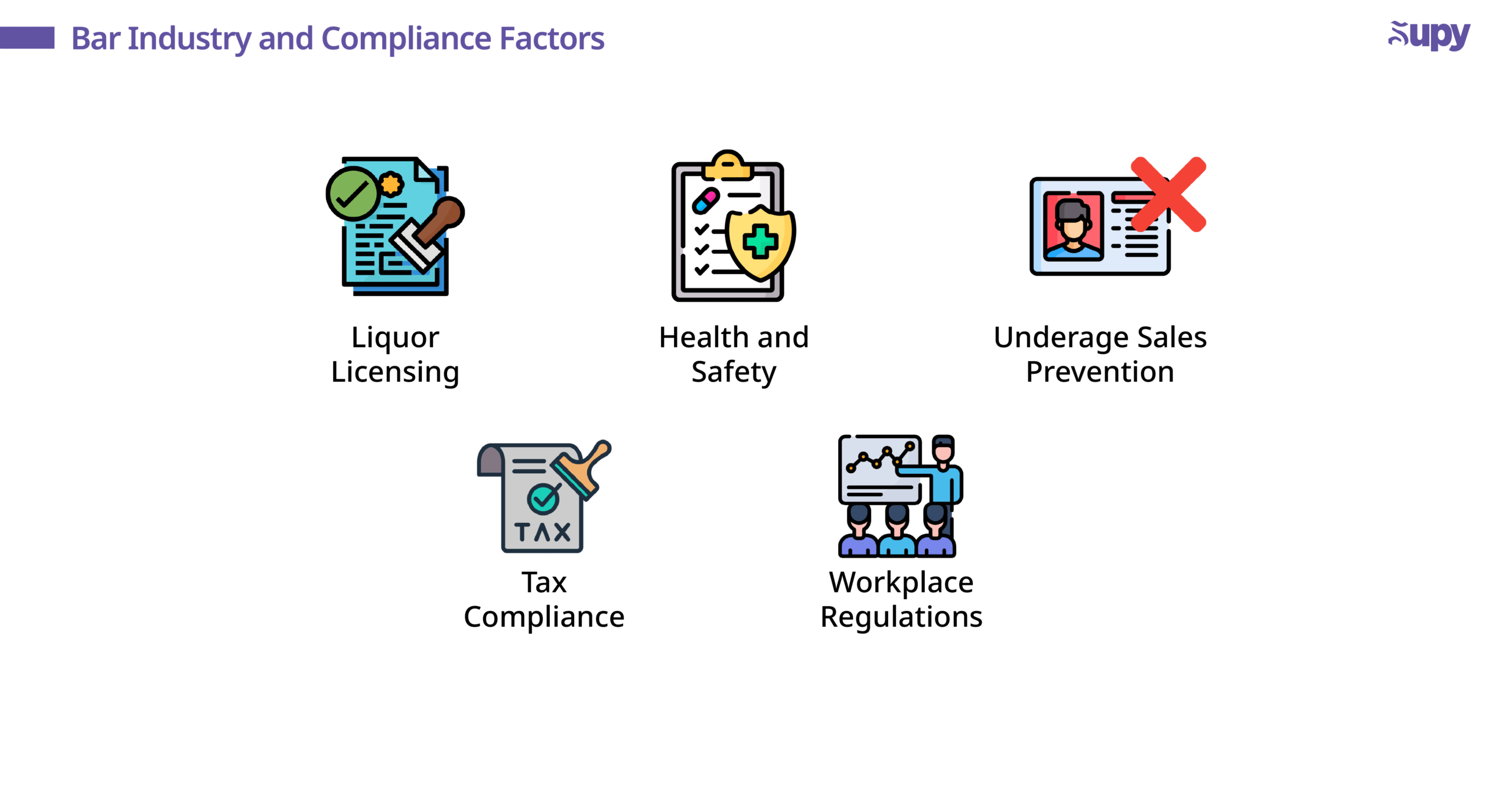
La gestion de la conformité réglementaire est essentielle pour tout bar. De la licence de débit de boissons aux normes d'hygiène et de sécurité, le non-respect des réglementations peut entraîner des amendes, des poursuites judiciaires, voire une fermeture. La difficulté réside dans le fait que les lois varient selon les régions et évoluent fréquemment, nécessitant une attention constante. Tenir le personnel informé et en conformité alourdit la charge de travail, mais c'est crucial pour protéger la réputation et le succès à long terme de votre bar.
Solutions
- Se tenir informé et à jour : Examinez régulièrement les réglementations locales, régionales et nationales applicables à votre bar. Abonnez-vous aux newsletters sectorielles ou aux mises à jour juridiques pour rester informé de tout changement de loi ou de tendance des consommateurs susceptible d'affecter vos opérations. Adopter une approche proactive à cet égard permet de vous assurer que votre bar reste en conformité en permanence.
- Effectuer des audits de conformité réguliers : Réalisez des contrôles réguliers pour vous assurer que votre bar respecte toutes les exigences légales, de la licence de débit de boissons aux normes d'hygiène et de sécurité. Ces audits peuvent vous aider à identifier les problèmes potentiels avant qu'ils ne deviennent sérieux, réduisant le risque d'amendes ou de poursuites judiciaires et contribuant au succès de votre bar.
- Former le personnel aux exigences légales : Veillez à ce que tous les employés soient informés des obligations légales liées à leurs fonctions, notamment en matière de service d'alcool et de sécurité des clients. Des sessions de formation régulières permettent à votre équipe de rester informée et en conformité, minimisant le risque d'infractions susceptibles de compromettre votre activité et vous aidant à gérer un bar plus efficacement.
6. Marketing et promotions
Dans le secteur des bars, très concurrentiel, un marketing solide est essentiel pour attirer et fidéliser les clients. Une identité de marque unique et un engagement constant permettent à votre bar de se démarquer. Cependant, les budgets limités, le manque d'expertise et l'évolution rapide des tendances font du marketing un véritable défi. Rester pertinent nécessite créativité et proactivité, en utilisant les réseaux sociaux, les événements et les programmes de fidélité pour générer du trafic et stimuler les ventes.
Solutions
- Exploiter les réseaux sociaux : Utilisez des plateformes comme Instagram, Facebook et Twitter pour interagir avec votre audience et promouvoir des événements, des offres spéciales et de nouveaux articles au menu. La publication régulière d'images, de vidéos et de stories de haute qualité peut maintenir votre bar en tête de liste pour les clients potentiels et vous aider à bâtir une communauté en ligne fidèle.
- Organiser des événements et des promotions originaux : Organisez des soirées à thème, de la musique live ou des événements de dégustation qui plaisent à votre clientèle cible. Ces événements attirent non seulement de nouveaux clients, mais donnent également aux habitués une raison de venir plus fréquemment, augmentant ainsi leurs dépenses globales dans votre bar.
- Mettre en place un programme de fidélité : Créez un programme de récompenses qui incite aux visites répétées en offrant des réductions, des consommations offertes ou des avantages exclusifs aux clients fidèles. Un programme de fidélité bien conçu peut améliorer la fidélisation des clients et encourager le bouche-à-oreille, contribuant à la croissance organique de votre bar.
7. Perturbations de la chaîne d'approvisionnement
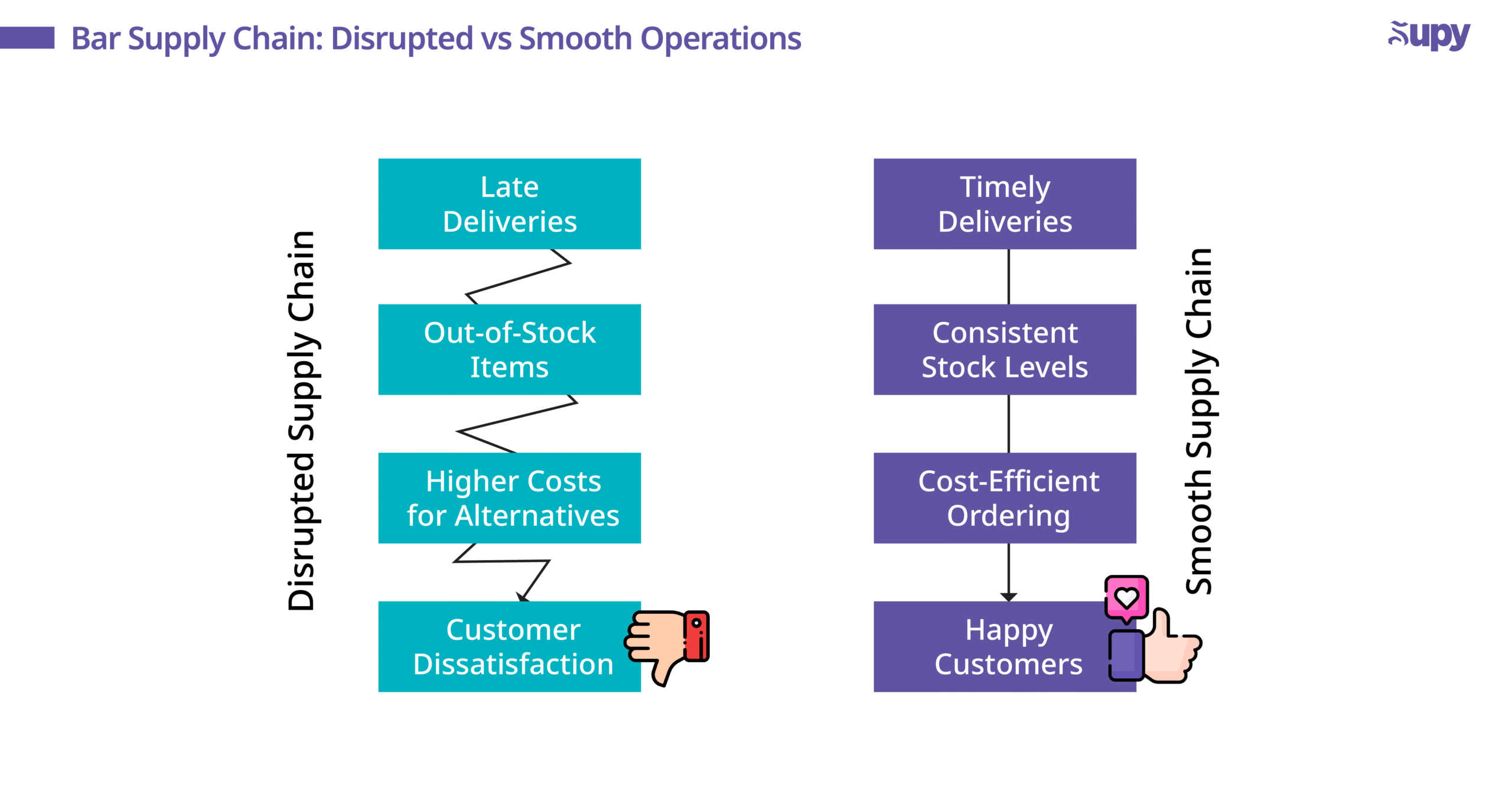
Les perturbations de la chaîne d'approvisionnement ont rendu plus difficile pour les bars de s'approvisionner en ingrédients et équipements essentiels, entraînant des pénuries, des coûts plus élevés et des modifications de menu qui frustrent les clients. Sans plan proactif, ces problèmes peuvent impacter la qualité du service et la rentabilité. Les bars doivent établir des relations solides avec leurs Fournisseurs, rester flexibles et utiliser une gestion intelligente des stocks pour naviguer dans l'imprévisibilité.
Solutions
- Diversifier votre réseau de Fournisseurs : Travaillez avec plusieurs Fournisseurs pour vos produits clés afin de réduire la dépendance à une seule source. En diversifiant votre réseau de Fournisseurs, vous pouvez mieux gérer les risques et vous assurer que les perturbations chez un Fournisseur ne vous laisseront pas sans articles essentiels.
- Utiliser des outils d'Approvisionnement intelligents : Mettez en place un logiciel d'approvisionnement, comme Supy, pour suivre vos niveaux de stock et anticiper les besoins futurs. Ces outils peuvent vous aider à anticiper les pénuries et à ajuster vos commandes en conséquence, garantissant que votre bar reste bien approvisionné même en cas de perturbations de la chaîne d'approvisionnement.
- Établir des relations solides avec les Fournisseurs : Développez et maintenez de bonnes relations avec vos Fournisseurs pour assurer une meilleure communication et de la flexibilité en cas de perturbation. Des relations solides peuvent conduire à des conditions plus favorables, un service prioritaire et une résolution plus rapide des problèmes lorsqu'ils surviennent, aidant votre bar à naviguer plus efficacement face aux défis de la chaîne d'approvisionnement.
8. Défis liés à la gestion multi-établissements
La gestion de plusieurs établissements de bar présente des défis en matière de cohérence, d'efficacité et de qualité. Des clientèles différentes, des dynamiques de personnel variées et des réglementations multiples rendent difficile l'application d'une stratégie uniforme. Assurer une expérience de marque cohérente dans tous les établissements est crucial, car des variations dans le service ou les offres peuvent nuire à la réputation. La gestion à distance du personnel ajoute de la complexité, nécessitant une formation rigoureuse et une supervision accrue pour maintenir les standards.
Solutions
- Standardiser les opérations dans tous les établissements : Développez et mettez en place des procédures standardisées pour la gestion des stocks, la formation du personnel et le service client. Cela garantit la cohérence dans tous les établissements, contribuant à maintenir une expérience de marque uniforme pour les clients, quel que soit le bar qu'ils visitent.
- Utiliser un logiciel de gestion centralisé : Mettez en place un logiciel de gestion centralisé qui vous permet de surveiller et de gérer tous vos établissements depuis une plateforme unique. Des outils comme Supy peuvent contribuer à rationaliser la gestion des stocks, les processus de commande et l'analyse des données, garantissant que chaque établissement fonctionne efficacement tout en respectant les mêmes standards.
- Effectuer des audits croisés réguliers entre établissements : Réalisez des audits réguliers dans tous vos établissements pour vous assurer du respect des standards de l'entreprise et identifier les axes d'amélioration. Ces audits doivent évaluer tout, des niveaux de stock à la qualité du service client, vous aidant à maintenir la cohérence et à résoudre les problèmes avant qu'ils n'affectent votre activité à plus grande échelle.
9. Conclusion
Gérer un bar avec succès nécessite bien plus qu'une passion pour l'hospitalité ; cela exige une approche stratégique pour surmonter les divers défis susceptibles d'impacter vos opérations. En appliquant les bons conseils de gestion de bar, tels que la résolution des pénuries de main-d'œuvre, l'optimisation de la gestion des stocks et l'exploitation d'une surveillance financière rigoureuse, vous pouvez transformer les obstacles potentiels en opportunités de croissance. L'utilisation de systèmes Automatisés, comme les logiciels de gestion des stocks, peut rationaliser les processus et améliorer votre expérience de gestion.
Que vous soyez propriétaire d'un bar gérant un seul établissement ou gestionnaire de plusieurs bars, vous concentrer sur la cohérence, l'efficacité et la satisfaction des clients mettra votre activité sur la voie du succès à long terme. Grâce aux Insights et aux outils fournis dans ce guide, vous êtes bien équipé pour relever ces défis de front et vous assurer que votre bar prospère dans un secteur concurrentiel.
10. À propos de Supy
Supy est une solution tout-en-un conçue spécifiquement pour les défis uniques du secteur de l'hôtellerie-restauration, notamment les bars et les restaurants. Du suivi des stocks en temps réel à l'Approvisionnement intelligent, en passant par la gestion centralisée de plusieurs établissements, Supy rationalise les opérations et vous aide à maintenir la cohérence dans tous les aspects de votre activité.
En exploitant des Analyses avancées et l'Automatisation, Supy permet aux directeurs de bar d'optimiser tout, des niveaux de stock à la gestion financière, stimulant ainsi la rentabilité et améliorant la satisfaction des clients. Prêt à voir comment Supy peut transformer votre gestion de bar ? Réservez une démo dès aujourd'hui et découvrez la différence que Supy peut apporter à votre activité.