.jpeg)
Cuisine centrale : définition, avantages et gestion optimale
Ressources gratuites
- Qu’est-ce que le niveau de par et comment le calculer ?
- 22 stratégies marketing pour restaurants en 2024
- 10 façons de réduire le food cost – 2024 Édition
- 10 façons de réduire le food cost – 2024 Édition
- 10 façons de réduire le food cost – 2024 Édition
Si vous préférez ne pas calculer le niveau de par manuellement, le calculateur de niveau de par gratuit le fait pour chaque article de votre liste à partir de votre consommation, de vos jours de livraison et des délais fournisseurs.
Ressources gratuites
- Qu’est-ce que le niveau de par et comment le calculer ?
- 22 stratégies marketing pour restaurants en 2024
- 10 façons de réduire le food cost – 2024 Édition
Ressources associées
- Modèle : Gestion des stocks en restauration
- Les fonctionnalités à rechercher dans un logiciel de gestion des stocks pour restaurants en 2024
- Gestion des stocks en restauration : les 8 conseils essentiels
- Comment gérer votre liste d’articles dans un logiciel de gestion des stocks
- Taux de rotation des stocks : comment le calculer
- Qu’est-ce que le niveau de par & comment le calculer ?
- Qu’est-ce que l’écart de food cost & comment le maîtriser ?
- Comment calculer le pourcentage de food cost en restauration
- 10 façons de réduire le food cost – 2024 Édition
- Webinaire : Les secrets de réduction du food cost des entreprises multi-sites
- 10 conseils pour réduire les pertes alimentaires en restauration
- Analyse des ventes en restauration : comment augmenter les ventes grâce aux données
- Ingénierie des menus : comment construire un menu rentable
- Cuisine de production : définition & conseils essentiels
- Les 21 indicateurs clés en restauration & comment les améliorer
- Qu’est-ce qu’une dark kitchen & comment en gérer une avec succès ?
- Les 7 modèles de dark kitchen & quand choisir lequel
- Approvisionnement en restauration : conseils pour une gestion efficace
- Le guide ultime de la gestion opérationnelle en restauration
- Logiciel de gestion des recettes en restauration : définition, avantages, fonctionnalités & défis
- Développement d’un restaurant : quand & comment élargir votre activité
- 22 stratégies marketing pour restaurants en 2024
- Qu’est-ce qu’une cuisine centrale & quels sont ses avantages ?
- Podcast : Construire un restaurant intemporel (Couqley Dubaï)
- Podcast : Tout sur le traiteur (Pinch Gourmet)
- Podcast : Ce qui construit des entreprises rentables (Tashas Group)
- Podcast : Lancer & exploiter une chaîne de fast-food aux EAU (Burger28)
- Calculateur de ROI
- Calculateur de food cost
Dans le monde actuel de la restauration, de nombreux opérateurs ont pris conscience que la gestion d’une exploitation multi-sites est devenue une tâche plus complexe en raison de nombreux problèmes logistiques et liés aux coûts. Pour cette raison, nous avons assisté à une évolution majeure du modèle opérationnel. Les entreprises multi-sites se sont progressivement converties au module de cuisine centrale. Ce module de cuisine centrale permet de développer l’activité tout en maintenant une exploitation fluide, garantit la qualité des aliments et facilite la gestion des sites, tout en maîtrisant les coûts. Un facteur déterminant derrière cette transition notable est le changement de focus de nombreuses enseignes de restauration, passant d’une approche conventionnelle propre à chaque site à un modèle centré sur le développement de la marque, soutenu par les efficiences de la cuisine centrale. Cette approche centrée sur la marque, renforcée par l’utilisation stratégique des cuisines centrales, constitue une pierre angulaire pour diverses stratégies de croissance, notamment l’établissement de sites en franchise, le renforcement des services de livraison et de vente à emporter, l’exploitation de restaurants virtuels et de dark kitchens, et même l’exploration d’opportunités de vente au détail. Au milieu de ces diverses expansions, le rôle et l’importance des opérations et de la gestion de cuisine centrale augmentent à un rythme sans précédent.Table des matières :1- Qu’est-ce qu’une cuisine centrale2- Quels sont les avantages d’une cuisine centrale pour les opérations multi-sites3- Quelle technologie est nécessaire pour gérer efficacement une cuisine centrale4- Les différents types de cuisines centrales5- Comment optimiser votre cuisine centrale ? (Bonnes pratiques)6- Conclusion7- À propos de Supy
1. Qu’est-ce qu’une cuisine centrale
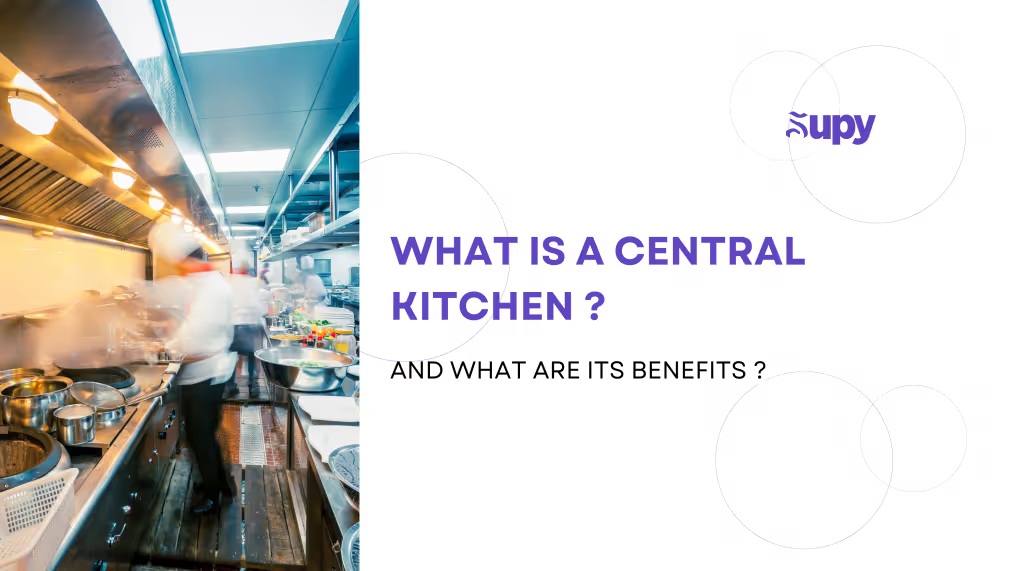
Une cuisine centrale, également connue sous le nom de cuisine de production centrale, cuisine de commissariat ou cuisine de préparation, fonctionne comme une installation culinaire principale pour les restaurants multi-sites ou les groupes hôteliers. Ce concept est utilisé non seulement par les grandes chaînes, mais de plus en plus par les entreprises de taille moyenne pour améliorer l’efficacité et maîtriser les coûts. Les cuisines centrales rationalisent le processus en achetant des matières premières en vrac et en préparant des composants de plats ou même des plats entiers. Ceux-ci sont ensuite distribués aux différents restaurants où ils sont finalisés, dressés et servis aux clients ou préparés pour la livraison. Initialement adoptées par les opérations institutionnelles et de restauration collective à grande échelle comme les compagnies aériennes, les croisières, les hôpitaux, les écoles et l’armée, les cuisines centrales sont désormais un outil stratégique pour les acteurs de la restauration en pleine expansion. En centralisant la préparation des aliments, ces cuisines permettent de réduire les coûts de personnel et d’exploitation. Elles offrent également la flexibilité d’être louées à de plus petits restaurants, food trucks et cafés qui ne disposent pas des installations nécessaires pour stocker de grandes quantités d’ingrédients ou préparer des repas. Avec une cuisine centrale, les restaurants peuvent produire tous leurs composants, tels que les pains et les sauces, ou même des repas complets en un seul endroit, garantissant ainsi la cohérence et la qualité dans tous les points de vente. Ces cuisines sont équipées pour stocker de grandes quantités d’aliments surgelés et disposent d’équipements spécialisés pour cuisiner ou transformer divers composants alimentaires. Cette configuration favorise non seulement l’uniformité de la qualité des plats, mais soutient également efficacement les stratégies d’expansion des restaurants.

Lecture recommandée
Développement d’un restaurant : quand & comment élargir votre activité
2. Quels sont les avantages d’une cuisine centrale pour les opérations multi-sites
Investir dans un module de cuisine centrale peut nécessiter un investissement initial substantiel, mais il apporte de nombreux avantages. Voici quelques-uns des principaux bénéfices associés à la mise en place d’un module de cuisine centrale.
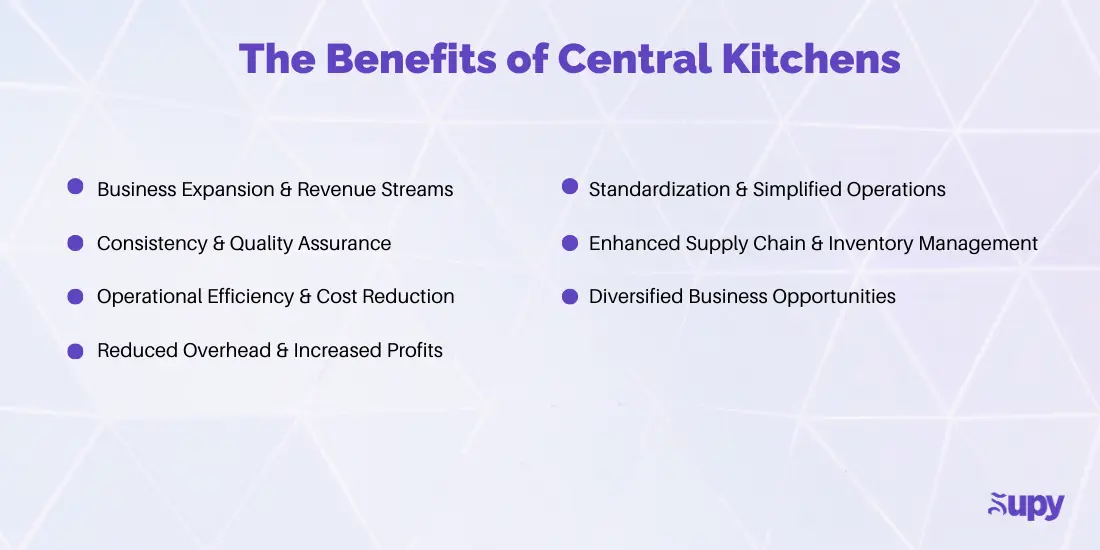
Expansion commerciale et nouvelles sources de revenus :Une cuisine centrale offre d’importantes opportunités de croissance. Elle permet aux restaurants d’explorer de nouveaux marchés, comme la vente au détail et en gros, en commercialisant des produits maison populaires tels que le pain artisanal ou les sauces. Cela ajoute non seulement un nouveau flux de revenus sans nécessiter d’infrastructures ou de personnel supplémentaires, mais permet également de tester de nouveaux marchés et stratégies d’expansion.Cohérence et contrôle qualité :Les cuisines centrales garantissent la cohérence du goût et de la qualité dans tous les points de vente, en utilisant les mêmes recettes, équipements et personnel formé. Cette uniformité renforce la marque, créant un style caractéristique reconnaissable que les clients apprécient. La cohérence est également essentielle pour les franchises, garantissant une expérience client durable et fiable.Efficacité opérationnelle et réduction des coûts :Les opérations centralisées améliorent considérablement l’efficacité en automatisant les processus et en regroupant les tâches. Cela inclut des avantages tels que la réduction des coûts de stocks grâce aux achats en volume, la rationalisation de la gestion des pertes et l’utilisation efficace des ressources humaines. Le personnel des établissements individuels peut se concentrer davantage sur le service client, les principales préparations étant gérées de manière centralisée.Réduction des frais généraux et augmentation des profits :En consolidant les opérations de cuisine, les frais généraux tels que les salaires, le loyer et les charges d’exploitation sont considérablement réduits. Cela se traduit par une augmentation des profits et une gestion plus légère. Moins de personnel de cuisine est nécessaire dans les établissements individuels, et grâce aux achats centralisés, les restaurants peuvent bénéficier de meilleurs prix pour les commandes en volume.Standardisation et simplification des opérations :Les recettes et procédures opérationnelles standardisées centralisées dans la cuisine simplifient le processus de cuisson dans les établissements individuels. Cette standardisation exige un personnel moins expérimenté dans chaque site, garantissant une qualité constante tout en réduisant les coûts de formation. La cuisine centrale gère la majorité des préparations, réduisant le besoin d’espace cuisine et d’équipements importants dans les établissements individuels.Amélioration de la chaîne d’approvisionnement et de la gestion des stocks :Le modèle de cuisine centrale rationalise la chaîne d’approvisionnement et la gestion des stocks, en utilisant des systèmes tels que le Réapprovisionnement Automatique Périodique (PAR) pour gérer efficacement les niveaux de stocks. Cela conduit à un meilleur contrôle des coûts matière et à une réduction des pertes.Diversification des opportunités commerciales :Les cuisines centrales permettent aux restaurants d’explorer des activités supplémentaires, telles que le traiteur, les collaborations en grande distribution et l’hébergement de marques virtuelles. Cela permet de maximiser l’utilisation de l’installation centrale, notamment en périodes creuses, et de créer de nouveaux canaux de revenus. En résumé, un module de cuisine centrale offre à une exploitation de restauration multi-sites des avantages significatifs en termes d’efficacité, de cohérence, d’économies et d’opportunités de croissance et de diversification, contribuant tous à une marque plus forte et plus résiliente.
3. Quelle technologie est nécessaire pour gérer une cuisine centrale efficace
Investir dans un logiciel de cuisine centrale spécialisé est essentiel pour améliorer l’efficacité d’une cuisine centrale. Cette technologie sert de centre des opérations, permettant à la cuisine de production et à tous les autres domaines de votre restaurant de fonctionner en harmonie. Elle offre une image complète et à jour de l’ensemble de votre activité de restauration. Avec des fonctionnalités qui automatisent les opérations en cuisine, le logiciel de cuisine centrale forme le socle de l’identité de votre restaurant. Les caractéristiques importantes comprennent :
- L’automatisation des estimations de food cost
- La simplification des procédures de commande interne pour réduire les erreurs ;
- La coordination des commandes, de la production et de l’expédition pour une gestion efficace des stocks
- Le suivi de tous les processus de production, d’entrée et d’expédition en temps réel
- S’assurer que la production alimentaire est réalisée efficacement pour maîtriser les coûts
- Créer un système centralisé et standardisé pour que tous les restaurants ou établissements suivent les indicateurs clés de performance (KPI) et puissent communiquer avec la cuisine centrale.
Cet investissement technologique garantit que chaque partie du module de cuisine centrale fonctionne aussi efficacement que possible, tout en rationalisant les processus et en augmentant la production globale.
Lecture recommandée
Cuisine de production : définition & conseils essentiels
4. Les différents types de cuisines centrales
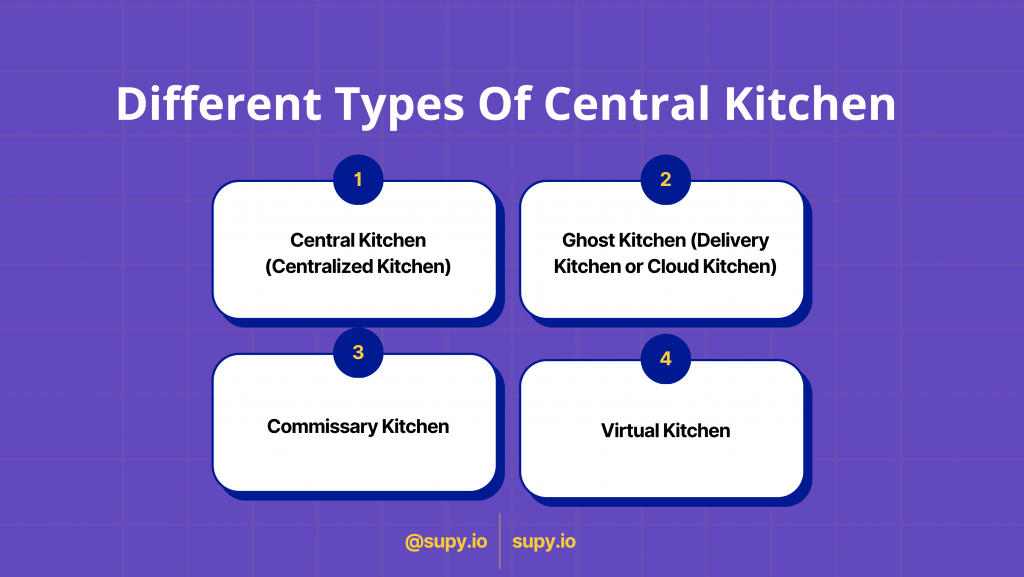
Les cuisines centrales et les différents types de cuisines spécialisées remplissent chacune des fonctions uniques dans le secteur de la restauration, répondant à différents besoins opérationnels. Il est essentiel de comprendre ces distinctions pour une utilisation optimale :Cuisine centrale (centralisée) :Une cuisine centrale est un lieu principal où les aliments sont préparés, puis distribués à d’autres sites. C’est un hub de production alimentaire, servant plusieurs points de vente ou établissements de restauration, garantissant cohérence et efficacité dans la préparation des repas.Dark kitchen (cuisine de livraison) :Les dark kitchens sont exclusivement dédiées à la préparation d’aliments pour la livraison. Elles diffèrent des cuisines centrales car elles se concentrent exclusivement sur les commandes de livraison, aidant les restaurants existants à mieux gérer la demande de livraison sans surcharger leurs cuisines sur place.Cuisine de commissariat :Couramment utilisée dans les universités ou les cantines d’entreprise, une cuisine de commissariat fonctionne à la fois avec un lieu hors site pour la préparation alimentaire en vrac et une cuisine sur place où les touches finales sont apportées. Ce modèle est bénéfique pour les grandes institutions nécessitant une préparation alimentaire centralisée avec une finition localisée. Ces cuisines fournissent des espaces partagés pour plusieurs équipes culinaires travaillant simultanément. Elles sont souvent utilisées par des entreprises F&B en démarrage ou des enseignes de restauration existantes qui nécessitent un espace cuisine supplémentaire pour les commandes hors site.Dark kitchen virtuelle :Les dark kitchens virtuelles sont utilisées exclusivement par des entreprises proposant des services de livraison sans emplacement physique de restauration. Ces cuisines se concentrent sur la préparation de repas uniquement pour la livraison, similaires aux dark kitchens mais souvent sans marque de restaurant associée. Chaque type offre des avantages distincts. Par exemple, les cuisines partagées offrent une utilisation flexible et des économies de coûts, idéales pour les nouvelles marques ou en pleine croissance explorant différents marchés. En revanche, les dark kitchens sont dédiées à l’augmentation du volume de livraison, optimisant le processus sans avoir besoin d’un restaurant traditionnel. Les cuisines centrales, quant à elles, visent l’efficacité et la cohérence, servant de cœur de production pour plusieurs établissements. Comprendre ces différences aide à sélectionner le modèle de cuisine le plus adapté selon les objectifs commerciaux et les besoins opérationnels spécifiques.
5. Optimisation de votre cuisine centrale : bonnes pratiques essentielles
L’amélioration des opérations d’une cuisine centrale implique une gestion méticuleuse et une planification stratégique, compte tenu de son rôle crucial dans le service à plusieurs sites. Voici un guide consolidé pour optimiser le fonctionnement de votre cuisine centrale :
- Gestion des stocks :Une gestion efficace des stocks est essentielle. Cela comprend des processus de commande rationalisés entre les sites et la cuisine centrale pour minimiser les erreurs. Investir dans des logiciels robustes peut aider à surveiller les performances et à gérer les commandes efficacement.
- Gestion et formation du personnel :Le personnel d’une cuisine centrale doit recevoir une formation adéquate pour s’adapter aux nouvelles procédures et aux machines complexes. La formation initiale facilite leur transition, renforce leur confiance et améliore leur satisfaction au travail. Une équipe bien gérée conduit à un meilleur moral et à une communication claire des rôles.
- Aménagement optimal de la cuisine :Concevez votre cuisine centrale pour soutenir un Workflow idéal, tout en maintenant une flexibilité pour les ajustements futurs. Dans les cuisines centrales de traiteur, la capacité à réaménager en fonction des demandes de production est essentielle. Envisagez des tables de préparation et des équipements mobiles pour faciliter la modification des configurations de postes.
- Qualité et sécurité alimentaire :Contrairement à l’idée que la préparation en masse compromet la qualité, standardiser les recettes et investir dans des équipements qui maintiennent la fraîcheur peut garantir des standards élevés. La préparation alimentaire centralisée nécessite des mesures strictes de sécurité alimentaire, notamment des vérifications régulières des températures et le respect des réglementations d’hygiène.
- Sélection stratégique de l’emplacement :L’emplacement de votre cuisine centrale devrait idéalement être à moins d’une heure de conduite de vos sites pour faciliter la livraison rapide des composants et des plats. Le bon emplacement peut considérablement améliorer l’efficacité opérationnelle.
- Développement d’une stratégie de cuisine centrale :Une stratégie complète doit aborder l’évaluation de la charge de travail, la planification budgétaire, l’allocation des produits pour la préparation, les besoins en équipements et en aménagement, les calendriers de maintenance, la gestion des équipes, la logistique du transport et les systèmes pour un Workflow fluide dans tous les établissements.
- Optimisation du Workflow et conception de la cuisine :La création de Workflows optimaux est essentielle pour l’efficacité. Cela implique un aménagement de cuisine bien pensé, adapté aux besoins spécifiques de votre exploitation. Prenez en compte des exemples et modèles du secteur, comme le modèle de dark kitchen hub-and-spoke, pour vous inspirer en matière de conception efficace.
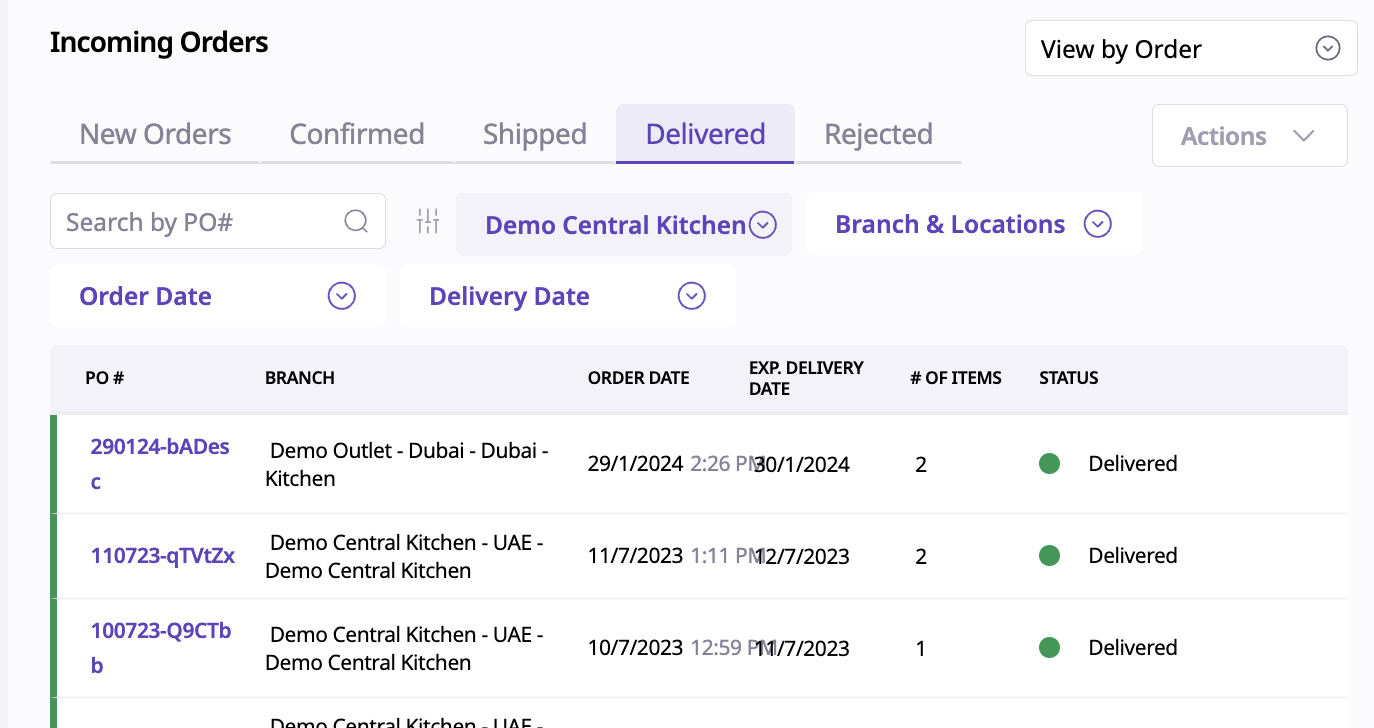
- Utilisation d’un logiciel de cuisine centrale :La mise en place de solutions logicielles sophistiquées peut être transformatrice. Ces plateformes permettent de surveiller les ventes et les niveaux de stocks, de simplifier les commandes internes et de gérer facilement les processus de production, d’entrée et d’expédition. Elles permettent également de générer des plans de production centraux en tenant compte des besoins spécifiques de chaque restaurant.
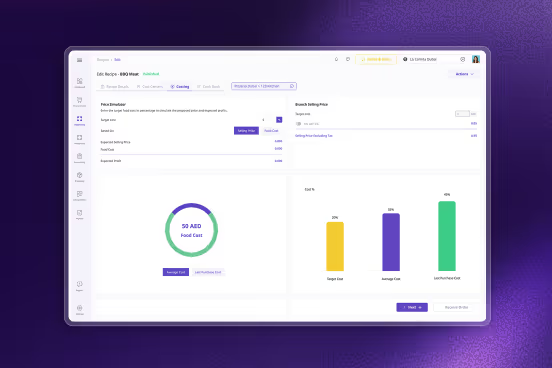
Recevez, expédiez et surveillez les commandes internesAvec le logiciel de cuisine centrale de Supy

En vous concentrant sur ces domaines clés, vous pouvez transformer votre cuisine centrale en un élément hautement efficace, productif et rentable de votre marque F&B multi-sites. Cela rationalise non seulement les opérations, mais ouvre également des opportunités d’expansion et de pénétration de marché.
6. Conclusion
En conclusion, le concept de cuisine centrale émerge comme une solution révolutionnaire pour les restaurants et groupes hôteliers multi-sites. Comme nous l’avons exploré, les cuisines centrales servent de colonne vertébrale pour l’efficacité, la cohérence et le contrôle des coûts, améliorant considérablement les opérations globales d’une chaîne de restauration. De la préparation et de la distribution en vrac des composants de plats au maintien d’une qualité uniforme dans tous les sites, les cuisines centrales sont essentielles pour rationaliser les processus et réduire les frais généraux. Les avantages sont multiples – ils s’étendent au-delà de la simple efficacité opérationnelle pour inclure des voies d’expansion commerciale, une assurance qualité constante et de nouvelles sources de revenus grâce à des opportunités commerciales diversifiées. La mise en place de technologies avancées joue un rôle crucial, permettant une gestion transparente des stocks, une formation efficace du personnel et garantissant la qualité et la sécurité alimentaires. De plus, comprendre les différents types de cuisines centrales, tels que les dark kitchens, les cuisines de commissariat, les cuisines partagées et les dark kitchens, permet aux propriétaires de restaurants de choisir le modèle le mieux adapté à leurs besoins et objectifs commerciaux. En adoptant les meilleures pratiques dans la gestion de ces hubs centraux, de l’aménagement optimal de la cuisine à la sélection stratégique de l’emplacement et à l’optimisation des Workflows, les marques de restauration peuvent considérablement améliorer leur productivité et leur rentabilité. Les cuisines centrales non seulement rationalisent les opérations, mais ouvrent également de nouvelles opportunités de croissance et d’expansion sur le marché.
7. À propos de Supy
Suite à notre exploration complète des cuisines centrales, il convient de souligner une avancée notable dans ce domaine – l’introduction du nouveau module de cuisine centrale de Supy, spécialement conçu pour les opérations multi-sites. Ce module innovant de Supy témoigne des besoins évolutifs du secteur F&B, en particulier pour les entreprises opérant sur plusieurs sites. Le module de cuisine centrale de Supy est conçu pour répondre aux défis uniques auxquels font face les opérations multi-sites. Il rationalise le processus complexe de gestion de la production, de la distribution et des stocks dans divers points de vente. Cette solution offre une intégration fluide des tâches, du suivi de l’utilisation des ingrédients et de l’automatisation des processus de commande, à la garantie de la cohérence de la qualité alimentaire et des standards de préparation. Ce qui distingue ce module, c’est son interface conviviale et ses puissantes analyses. Il fournit des Insights en temps réel sur les opérations, permettant aux managers de restaurants de prendre des décisions basées sur les données. Le module améliore également la communication et la coordination entre la cuisine centrale et les établissements individuels, garantissant que chaque site dispose de ce dont il a besoin pour fonctionner efficacement. En essence, le nouveau module de cuisine centrale de Supy n’est pas seulement un outil ; c’est un partenaire stratégique pour les chaînes de restauration qui cherchent à optimiser leurs opérations, à réduire leurs coûts et à améliorer l’expérience client. Avec cet ajout, Supy continue de démontrer son engagement à innover des solutions qui répondent aux besoins dynamiques du secteur de l’hôtellerie-restauration.