Cafe Checklist: Opening, Closing and Waste Checks for a Cafe Kitchen
The cafe opening checklist
A cafe checklist is the list a team works through at open, during service and at close, so no shift skips a vital check. The checks that matter most are the ones a till never records, and one 5-site coffee group ran cost variance near 18% because of the waste it missed. This article gives the opening, service and closing lists, the waste a till misses, and how to confirm each check on site.
The opening list sets the shift up. It catches a problem while there is still time to fix it, before the first customer orders. Confirm fridge and cold-well temperatures against the range your local authority requires, and check that range with the relevant food safety body before you rely on it.
| Opening check | What it catches |
|---|---|
| Unlock, disarm and look for overnight problems | A leak, a pest or a failed fridge before service starts |
| Check fridge and cold-well temperatures are in range | A fridge that failed overnight, before it spoils stock |
| Date-check and rotate prep, and pull anything past its use-by | Serving or counting stock that should be in the bin |
| Calibrate the grinder and set the espresso dose | Over-pouring coffee all day, which the till never shows |
| Count and record the float and yesterday's waste | A cash gap, and waste that would otherwise vanish |
| Confirm the deliveries due today and who signs for them | A short delivery that nobody checks at the door |
Checks to run during service
Service checks keep the first hour's standards going all day. A cafe loses most of its unrecorded cost here, in small amounts that never reach a report. Keep the list short so a busy barista can actually finish it.
| Service check | What it catches |
|---|---|
| Recalibrate the grinder after a rush or a new bag of beans | Yield drift that quietly lifts coffee cost |
| Log every remade drink, free cup and staff drink as waste | Waste the till reads as nothing at all |
| Check fridge temperatures mid-shift | A unit failing during service, before stock is lost |
| Mark a short or wrong delivery at the door and raise a credit note | Paying for stock that never arrived |
| Top up and rotate display stock, and pull anything at its use-by | Selling a past-date item, and the food safety risk with it |
The cafe closing checklist
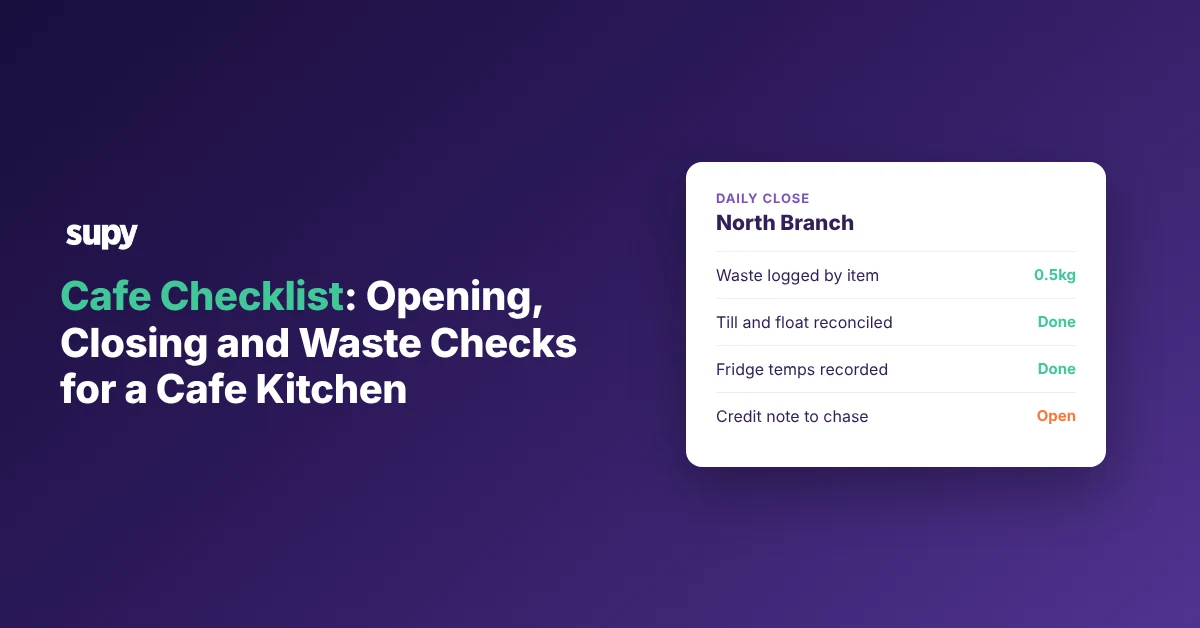
The closing list is where a cafe protects its numbers. Record waste by item rather than as one lump, so the next day's variance has a cause you can act on, not a gap with no explanation.
Reconcile while the shift is fresh, not at month end. Chase a short delivery the same day, too. One 4-site group marked short deliveries on paper and then never chased the supplier credit notes.
| Closing check | What it catches |
|---|---|
| Record closing waste by item, not as a single total | Where the kilograms actually go, so variance has a cause |
| Reconcile the till, the float and the recorded waste | A cash or stock gap while the shift is still fresh |
| Check and record final fridge and freezer temperatures | An overnight failure, caught at open rather than after spoilage |
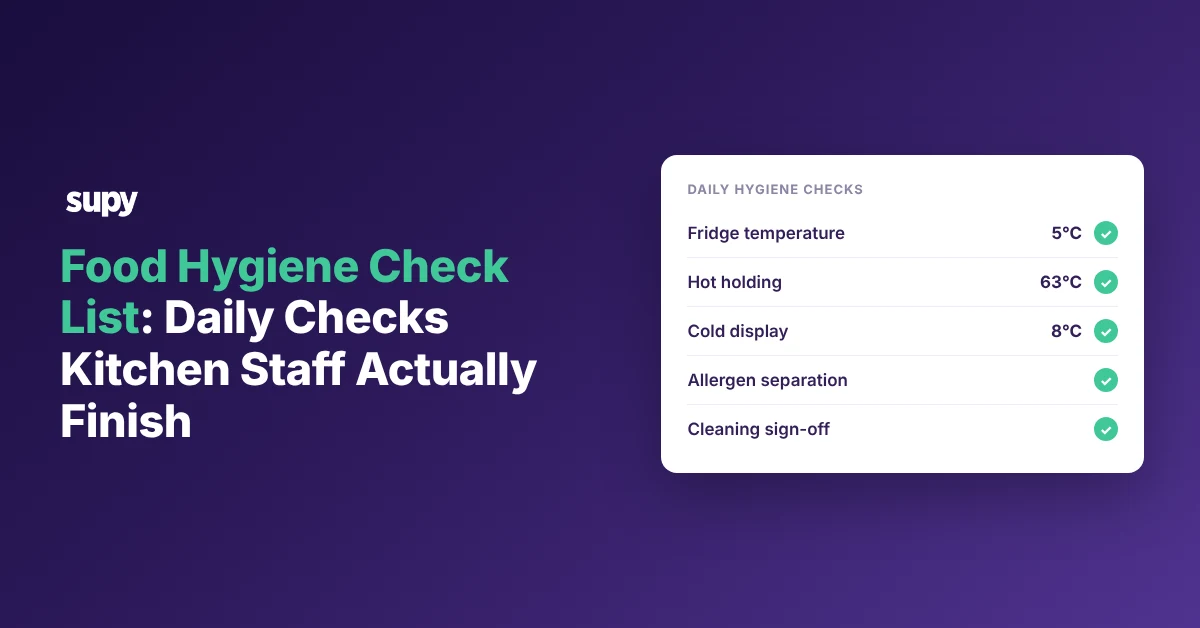
| Clean down and complete the cleaning log | A hygiene gap an inspector would find |
| Chase any open credit note from a short delivery | A credit note marked on paper and then forgotten |
| Lock up, set the alarm and confirm the list was finished on site | A list ticked later from memory |
The waste a cafe till never records
A cafe till records what it sells and nothing it throws away, so waste never shows up in the numbers unless someone writes it down.
A till cannot tell you that a standing order rose from 2kg to 2.5kg while sales held flat, so the extra 0.5kg became waste nobody chased. The order looked normal every week, and only a count against what the cafe actually used would catch it.
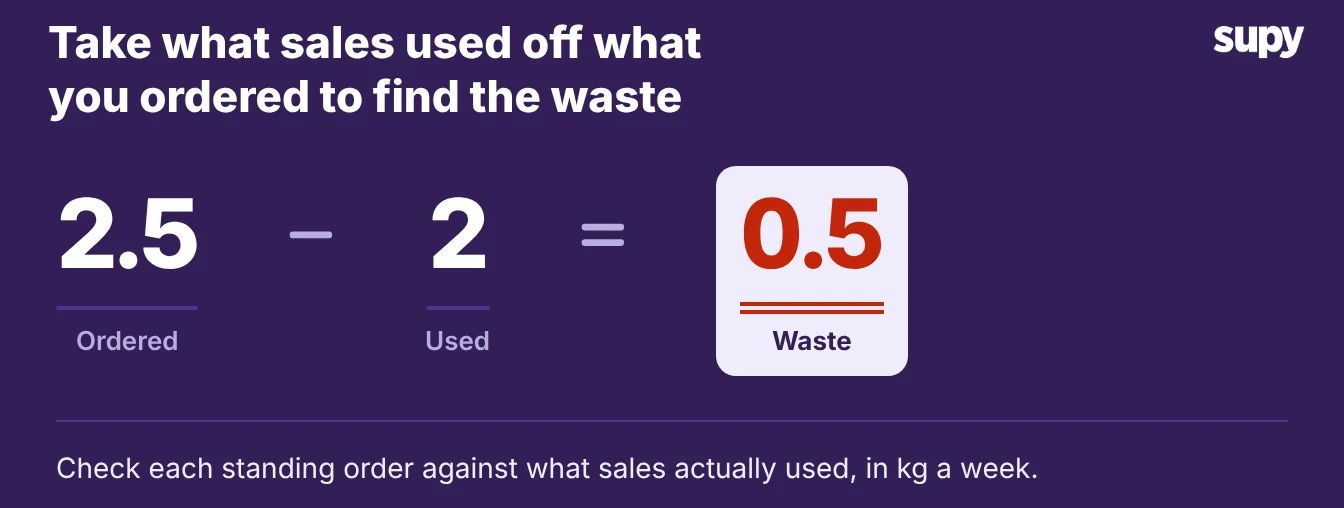
The waste a cafe logs by hand is specific, and it belongs on the closing list.
- Recalibration shots. Espresso pulled to reset the grinder through the day.
- Remade drinks. A coffee made again because the first was wrong.
- Free cups. Takeaway cups comped or given away.
- Juice yield. The juice lost when you press it fresh.
Each one is stock that left the building as a cost, not a sale. Written down by item, they give the variance a cause. Left off the checklist, they read as shrinkage with no explanation.
- Stock control. A daily checklist meets stock control here. Recording waste against the right item feeds a true cost of goods sold, and you can see how that figure moves in how to calculate restaurant food cost percentage.
- Multi-site groups. A group running several cafes usually moves this off paper and into restaurant inventory management software. Every branch then records against the same item master, so the waste logged at close sits beside the sales.
Making sure checks are done on site, not ticked later
A checklist only protects the cafe if it is completed where the work happens. The common failure is a list filled in from memory after the shift, when staff finish, go home, and tick the boxes there. A temperature written up at home is a guess, and a waste line recalled the next morning is usually rounded down.
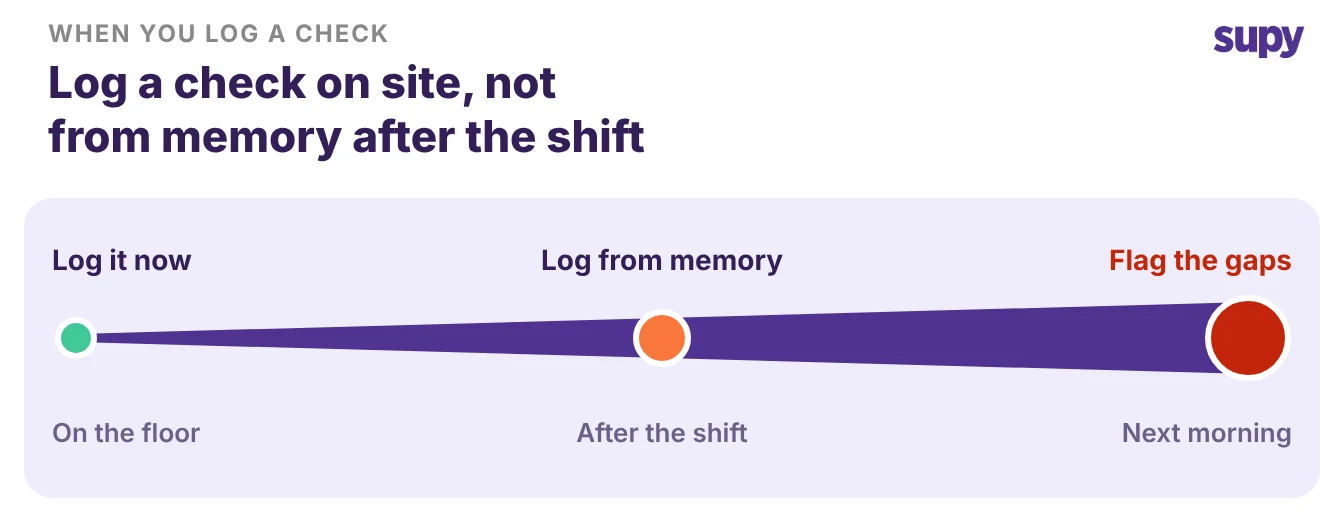
Tie each check to the moment and the place it covers.
- Fridge temperature. Recorded when someone reads the fridge.
- Waste line. Recorded when the item goes in the bin.
- Delivery check. Done at the door while the driver is still there.
A digital record that time-stamps each entry on site closes the gap between doing a check and writing it down. Supy's Checklists feature is coming soon to do exactly that, so a check is logged on the floor rather than rebuilt from memory.
Closing is the list that protects the most money, so start there. Record waste by item for a week, reconcile it against what the till sold, and the gap between the two is your first target. Once closing is solid, add the opening and service lists, and make the rule that a check counts only when someone does it on site.