Food Hygiene Check List: Daily Checks Kitchen Staff Actually Finish
The daily food hygiene check list
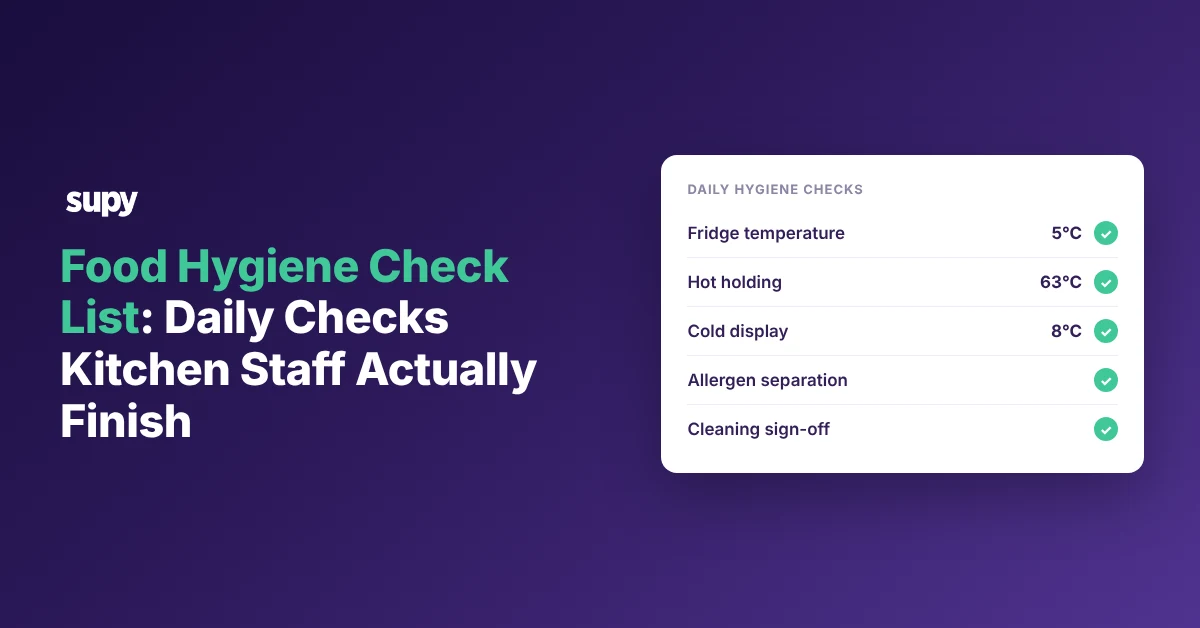
A food hygiene check list is the fixed set of daily checks that keep food safe in a kitchen. Keep cold food at 8°C or below and hot food at 63°C or above, the legal limits set by the Food Standards Agency. Confirm the rules with the agency or your local environmental health team before you rely on them, because they differ across the UK nations. This article gives the full daily list as a table, then shows how to make each check provable and what to do when one fails.
| Check | When | What good looks like | Who signs |
|---|---|---|---|
| Fridge temperature | Opening | 8°C or below, ideally near 5°C | Opening chef |
| Freezer temperature | Opening | Minus 18°C or below | Opening chef |
| Hot holding | Each service | 63°C or above | Section chef |
| Cold display | Each service | 8°C or below, out for 4 hours at most | Section chef |
| Deliveries | On arrival | Chilled at 8°C or below, dates and packaging sound | Receiver |
| Date labels | Opening and close | Use-by dates in date, old stock removed | Closing chef |
| Allergen separation | Prep | Named allergens stored and prepped apart | Prep chef |
| Probe calibration | Weekly, logged daily | Probe reads correctly, wiped between foods | Opening chef |
| Handwashing stations | Opening | Soap, hot water and towels stocked | Opening chef |
| Cleaning sign-off | Close | Cleaning schedule done and signed | Closing chef |
| Waste and pest check | Close | Bins out, no signs of pests | Closing chef |
| Corrective actions | Any failed check | Logged, owner set, due date set | Duty manager |
The daily list above runs in about 12 checks. For the cleaning side of the list in full, see our restaurant kitchen cleaning checklist. This post keeps to the hygiene checks around temperature, dates and allergens.
Why checks get ticked without being done
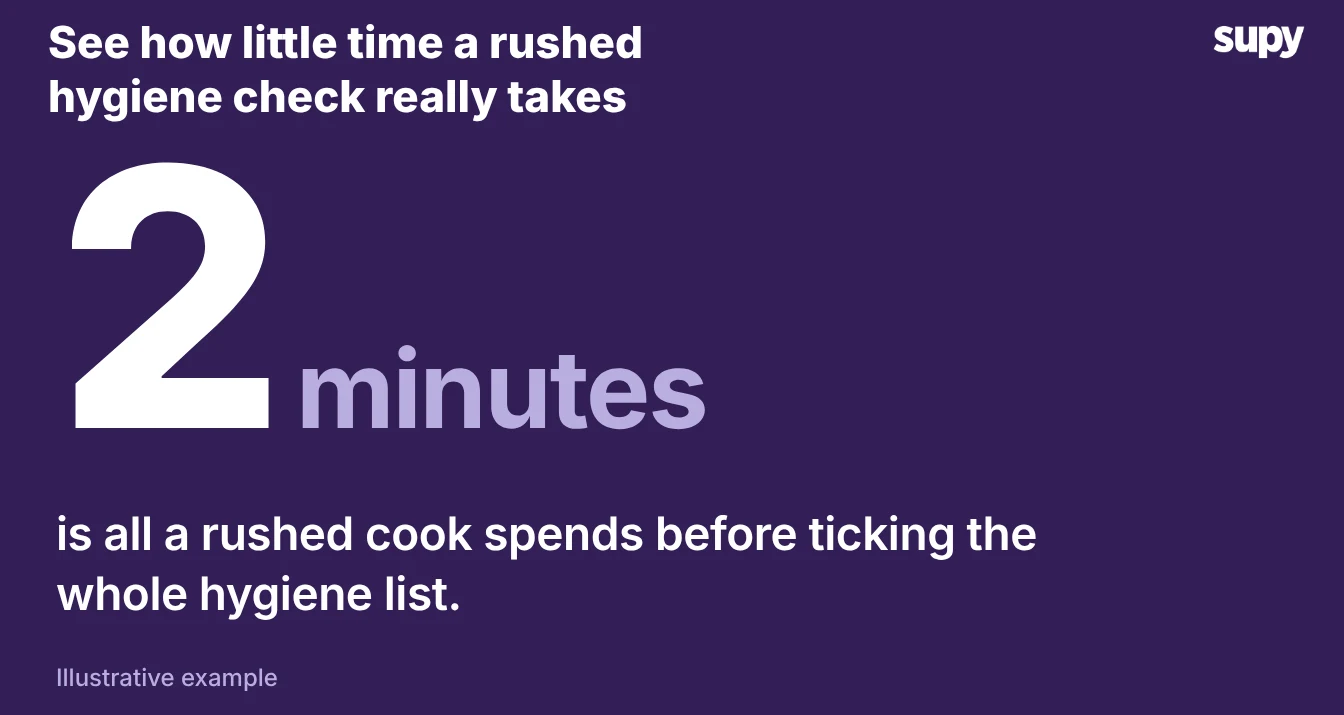
A missing list is rarely the problem; a list nobody finishes is. A 10-step check that should take 30 minutes gets ticked in 2, and the box then says the fridge was checked when nobody read the probe. On a paper sheet in a drawer, or across a few WhatsApp groups, nobody can tell the difference afterwards.
That gap shows up at the worst moment. One chef kept all the compliance paperwork on paper and scattered, so the team scrambled every time environmental health inspected. The inspector does not want a tidy sheet of ticks; they want proof a check was done, by whom, and what happened when a reading was wrong.
So the question is not whether your kitchen has a food hygiene check list. It is whether each tick on it is true. The rest of this post is about making that the case.
How to make each food hygiene check provable
A provable check records more than a tick. It names who ran the check, logs the reading and the time, and records the fix when something is out of range. A fridge check logged as a reading, a time and a name is a record an inspector and a duty manager can both trust.
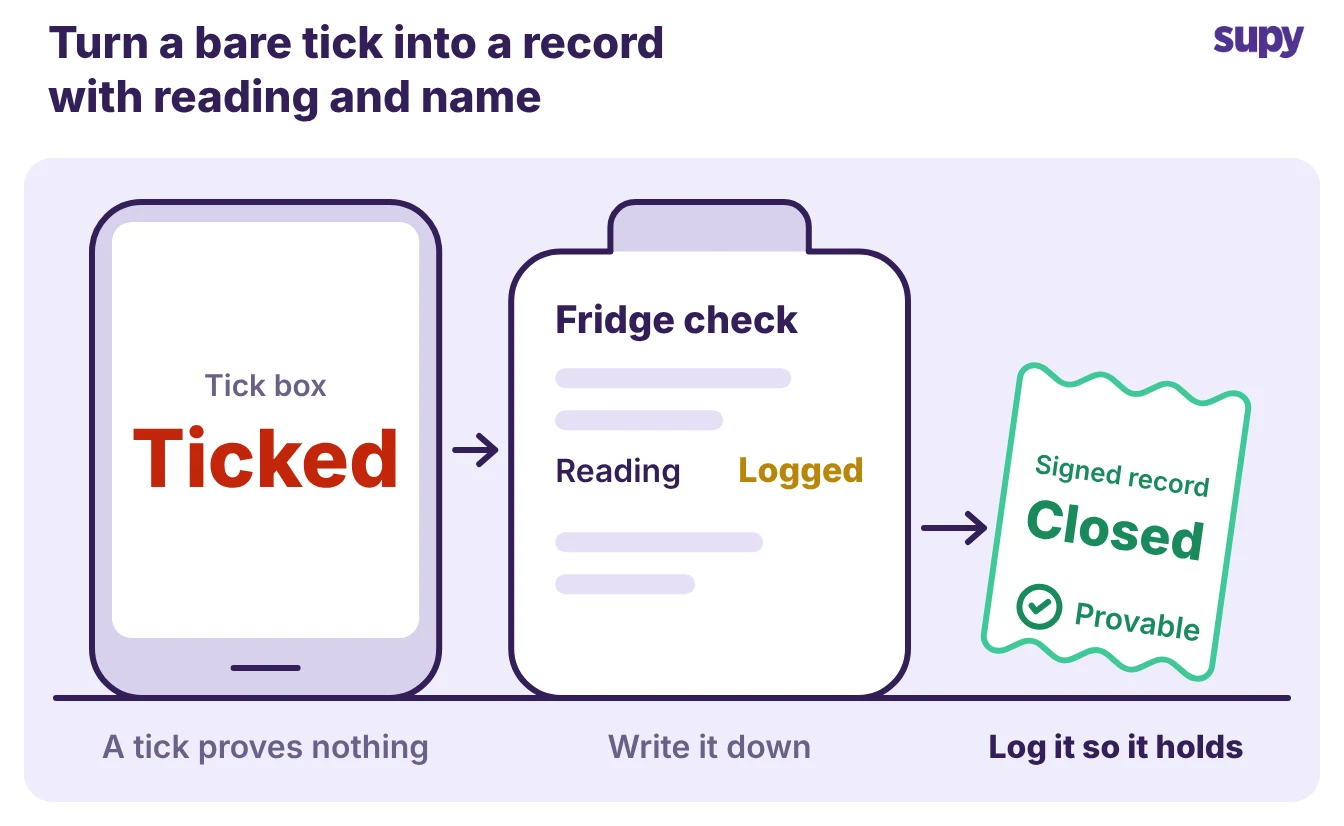
Build provability into the list itself:
- Name the person, not the shift. "Opening chef" is a role on the sheet. The signature is the name of whoever actually ran the check that morning.
- Capture the reading, not just a tick. Write the fridge temperature, the hot-holding temperature, the delivery temperature. A number tells you how close you are to the legal limits before you cross them.
- Timestamp each check. A fridge logged at opening and again before each service shows the cold chain held all day, not just once.
- Keep the record where a manager can see it. A photo in one person's phone is not a record the group can audit. Opening, service and closing checks belong in one place the duty manager reviews.
Temperatures are the checks that carry the most legal weight, so record them carefully. Our guide to the food temperature log covers what to write down and how often.
What to do when a hygiene check fails
A failed check is not the problem; a failed check with no recorded fix is. When a reading is out of range, the list should push the person into a short, tracked sequence. A red box left on a sheet is not enough.
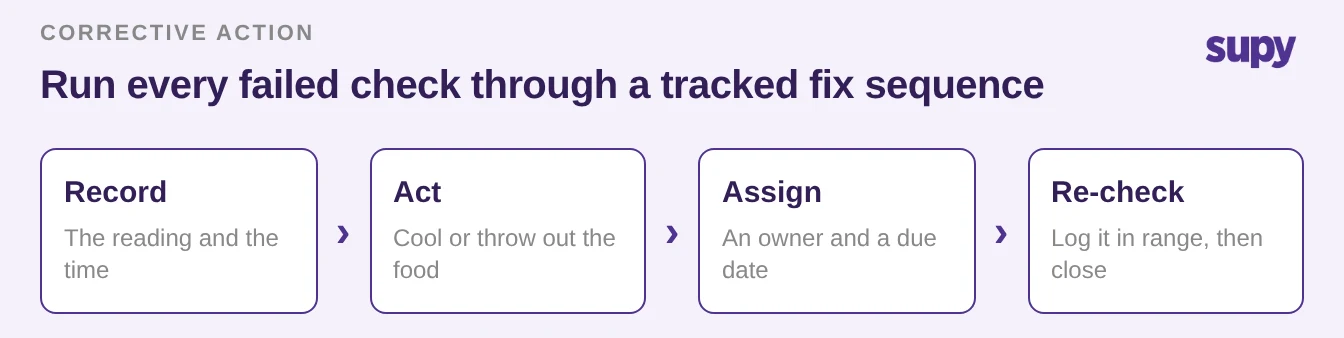
Run every failure through the same four steps:
- Record the reading. Write the actual number and the time, not just "out of range". A fridge warm at opening is a different call from one that drifts up late in service.
- Act on the food. Hot food held below 63°C for more than 2 hours must be cooled quickly or thrown away. Chilled food out for more than 4 hours must be thrown away, and the Food Standards Agency sets both limits. Decide and record the call.
- Assign a named owner and a due date. Someone fixes the fridge, calls the engineer, or reorders the probe, by a stated date. This is the corrective action an inspector looks for, and it is the step most paper lists miss.
- Re-check and close it. The owner records the fridge back in range, signs it, and the duty manager closes the action. An open corrective action with no close is an unfinished job, and it reads that way to an inspector too.
This fail-to-fix trail is what separates a food hygiene check list that protects the restaurant from one that only looks busy. The checks catch the problem; the corrective action proves you dealt with it.
Running the same food hygiene check list across every site
In a group, managers edit the list site by site, until no two kitchens run the same one. One drops a check, another reorders it, and head office cannot see which branch missed a fridge check last Tuesday. Fix it with one list every kitchen runs the same way, so a failed check reaches the area manager the same day.
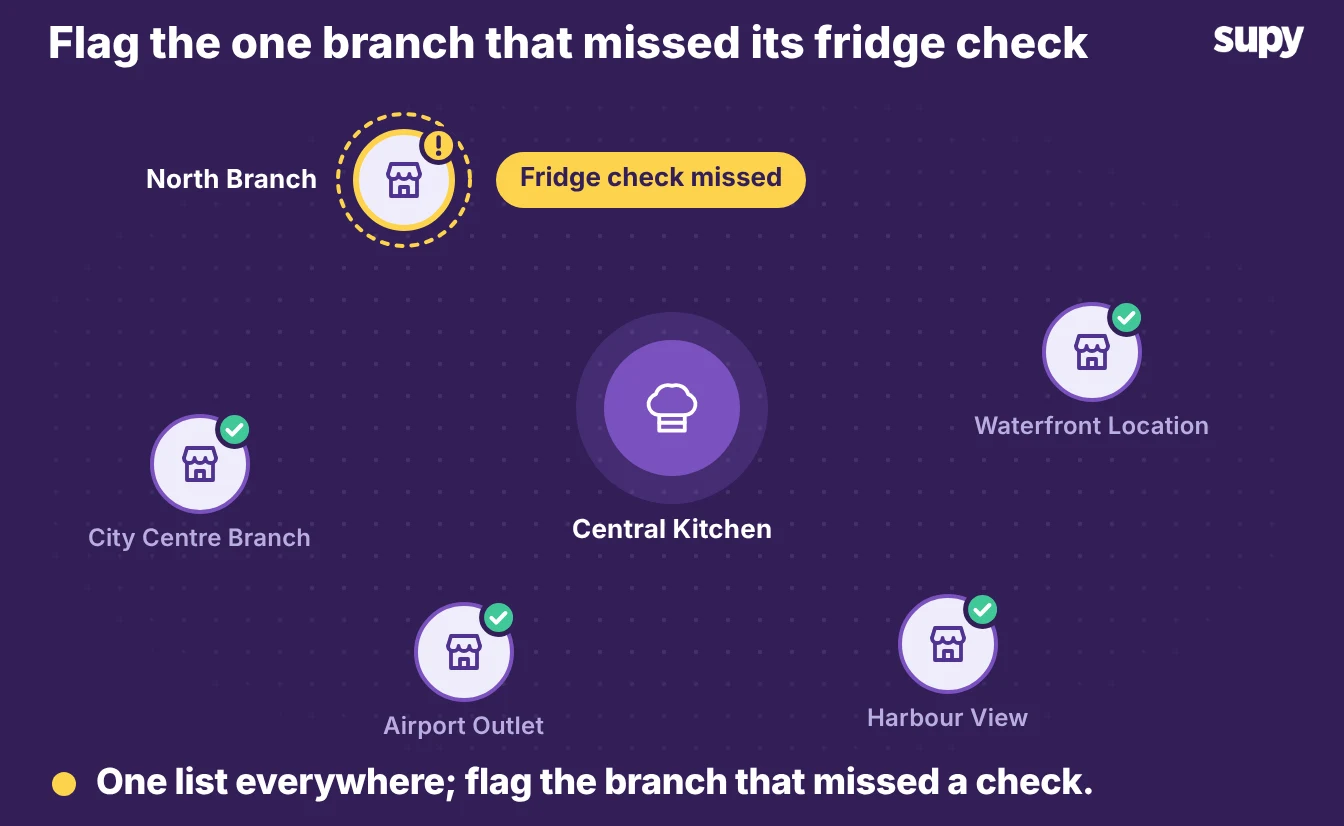
Standardise three things across sites:
- One list, one wording. Every kitchen runs the same checks in the same order. A check that means "fridge within the legal limit" in one branch cannot mean "fridge looks fine" in another.
- Exceptions reported up, not buried. A failed check and its corrective action should reach the area manager the same day, so a recurring fault at one location gets caught before an inspector finds it.
- Records kept together. Opening, service and closing checks from every site sit in one place, so an audit pulls a branch's week without a hunt through phones and drawers.
Supy's restaurant inventory management software already keeps inventory, ordering and cost consistent across every site. Groups on one system keep their other operational records consistent the same way, while food hygiene checks sit in their own logs or a dedicated food safety system.
Start with one check you can prove this week. Pick the fridge temperature, record the reading and the name every morning, and add the corrective-action steps the first time one fails. Once it is provable at every site, add the next one, because a list your staff finish and stand behind beats a longer one nobody trusts.