.jpeg)
Les meilleurs systèmes POS pour les restaurants aux EAU et dans le CCG en 2026
.png)
Exploiter un restaurant aux Émirats arabes unis (EAU) ou dans le Conseil de coopération du Golfe (CCG) est l'un des défis les plus stimulants – et les plus exigeants – du secteur de la restauration mondiale. De la scène gastronomique ultra-compétitive de Dubaï au marché hôtelier en pleine expansion de Riyad, la région se développe plus vite que presque partout ailleurs dans le monde. Mais cette croissance s'accompagne de complexité : équipes multinationales, conformité à la TVA, attentes élevées des clients et pression opérationnelle liée à la mise à l'échelle de plusieurs établissements simultanément.
Au cœur de votre exploitation en salle se trouve votre système de point de vente (POS). Bien choisi, il devient le moteur qui génère efficacité, précision et rentabilité. Mal choisi, il crée des frictions à chaque service – ralentit votre équipe, frustre vos clients et vous laisse sans les données nécessaires pour prendre de bonnes décisions commerciales.
Dans ce guide, nous analysons tout ce que les exploitants de restaurants du CCG doivent savoir sur les systèmes POS en 2026 : ce qu'ils sont, ce qu'ils doivent faire, les fonctionnalités les plus importantes dans cette région et quels systèmes sont les mieux adaptés à chaque type de restaurant. Nous expliquerons également pourquoi choisir le bon POS n'est que la moitié de l'équation – et pourquoi le coupler à Supy vous donnera un contrôle opérationnel et financier complet.
Table des matières
- Qu'est-ce qu'un système POS pour restaurant ?
- Pourquoi un système POS est indispensable pour les restaurants du CCG
- Les fonctionnalités que doit avoir tout système POS de restaurant
- Les meilleurs systèmes POS pour les restaurants aux EAU et dans le CCG
- Pourquoi Supy est l'étape indispensable après votre POS
- Conclusion
1. Qu'est-ce qu'un système POS pour restaurant ?
Un système de point de vente (POS) est la plateforme logicielle et matérielle qui gère chaque transaction côté client dans votre restaurant. Dans sa forme la plus simple, c'est ce que votre équipe utilise pour prendre les commandes, les transmettre à la cuisine et traiter les paiements. Dans sa forme la plus avancée, il devient le hub opérationnel de toute votre exploitation en salle – reliant chaque point de contact du parcours client en un flux de données unique et en temps réel.
Dans le contexte d'un restaurant moderne, un système POS combine généralement un terminal à écran tactile ou une tablette (souvent fixée à la caisse ou portée par le personnel de salle), un module de traitement des paiements, un système d'affichage en cuisine (KDS) ou une imprimante de tickets, et un tableau de bord back-office accessible depuis n'importe quel appareil. Les systèmes POS sur le cloud – la norme du secteur en 2026 – permettent aux gérants et propriétaires de restaurant de consulter les données de vente, de performance et d'exploitation depuis n'importe où, en temps réel.
Il est important de comprendre ce qu'un système POS n'est pas : ce n'est pas une plateforme de gestion back-office. Un POS enregistre ce qui a été vendu. Il ne calcule pas le coût de production de ces ventes, ne gère pas les factures de vos fournisseurs, ne suit pas vos niveaux de stocks réels et ne vous explique pas pourquoi votre ratio coût matière est plus élevé qu'il ne devrait l'être. Ces capacités appartiennent à une plateforme de gestion back-office dédiée – comme Supy – et les deux ensemble vous donnent la vision complète – nous y reviendrons dans la section cinq.
2. Pourquoi un système POS est indispensable pour les restaurants du CCG
.jpg)
Le marché de la restauration du CCG devrait atteindre 47,6 milliards USD d'ici 2027, porté par la croissance démographique, le développement du tourisme et les ambitions d'initiatives nationales telles que la Vision 2030 de l'Arabie saoudite. Dubaï seule a accueilli 18,72 millions de visiteurs internationaux en 2024, et son secteur de la restauration a répondu avec un rythme d'ouvertures de nouveaux restaurants qui en fait l'un des marchés gastronomiques les plus compétitifs au monde.
Dans cet environnement, un système POS n'est pas optionnel – c'est une infrastructure fondamentale. Voici pourquoi il est particulièrement important pour les exploitants du CCG :
Conformité à la TVA. Depuis l'introduction de la TVA aux EAU en 2018 et l'augmentation du taux à 15 % en Arabie saoudite en 2020, chaque restaurant de la région est tenu d'émettre des factures fiscales conformes à la FTA et de tenir des registres de TVA précis. Un système POS moderne gère automatiquement le calcul de la TVA, la mise en forme des factures et les rapports – économisant à votre équipe des heures de travail manuel et vous protégeant des risques de non-conformité.
Gestion multi-sites. Les groupes de restauration les plus performants du CCG se développent de façon agressive. Un POS qui vous permet de gérer les mises à jour de menus, les tarifs et les promotions de manière centralisée – en transmettant les modifications simultanément à tous les établissements – est indispensable pour maintenir la cohérence et la rapidité au fil de votre croissance.
Forte rotation du personnel. Le turnover dans l'hôtellerie-restauration du CCG est chroniquement élevé, en raison des cycles de visa et du marché des talents très compétitif. Un système POS avec une interface intuitive que les nouveaux membres de l'équipe peuvent apprendre en quelques heures – et non en jours – réduit directement le coût de formation que génère ce turnover.
Rapidité lors des pics de service. Qu'il s'agisse d'un beach club à pleine capacité un vendredi après-midi ou d'un groupe de restauration décontractée gérant l'affluence de l'iftar pendant le Ramadan, un POS capable de traiter des transactions à volume sans ralentir est une exigence opérationnelle fondamentale.
Données pour la prise de décision. Les exploitants de restaurants les plus performants aux EAU ne prennent pas de décisions au feeling. Ils utilisent les données de vente, les taux de rotation des tables, la rentabilité par article et les analyses des heures de pointe pour optimiser tout, de l'effectif au positionnement des menus. Votre POS est la source principale de ces données.
3. Les fonctionnalités que doit avoir tout système POS de restaurant
Tous les systèmes POS ne se valent pas, et les fonctionnalités qui comptent dans un restaurant du CCG sont spécifiques aux exigences opérationnelles de la région. Avant d'évaluer une plateforme spécifique, utilisez cette liste comme base de référence :
.jpg)
1. Conformité à la TVA et factures approuvées par la FTA. Indispensable pour les exploitants aux EAU et en KSA. Votre POS doit générer des factures fiscales conformes, calculer automatiquement la TVA et produire des rapports de TVA exportables pour la Comptabilité et l'audit.
2. Support multilingue. L'arabe et l'anglais sont tous deux essentiels sur le marché du CCG – pour votre affichage côté client, votre console de gestion back-office et l'interface de votre personnel. En Arabie saoudite, le support en arabe est particulièrement important.
3. Multi-sites et gestion centralisée. Si vous exploitez plus d'un établissement – ou prévoyez de le faire –, vous avez besoin d'un POS qui vous permet de gérer les menus, les tarifs, les promotions et les rapports sur tous les sites depuis un seul tableau de bord.
4. Architecture sur le cloud. Un POS sur le cloud vous donne un accès en temps réel aux données de vente et de performance depuis n'importe quel appareil, où que vous soyez. Il réduit également la dépendance matérielle et permet des mises à jour plus rapides sans intervention informatique sur site.
5. Mode hors ligne. La connectivité Internet n'est pas toujours garantie dans tous les établissements du CCG, notamment dans les centres commerciaux et les hôtels. Un POS capable de traiter des transactions lors de pannes Internet – et de se synchroniser automatiquement lorsque la connexion est rétablie – évite des interruptions de service coûteuses.
6. Intégration du système d'affichage en cuisine (KDS). L'acheminement transparent des commandes du POS vers l'affichage en cuisine élimine le goulot d'étranglement des tickets papier, réduit les erreurs et accélère le service. Dans les environnements à fort volume, c'est un outil d'efficacité fondamental.
7. Gestion des tables et intégration des réservations. Pour les restaurants à service complet et la gastronomique, une gestion sophistiquée des tables – flux des couverts, suivi des plats, addition séparée – et l'intégration avec des plateformes de réservation comme SevenRooms ou The Fork sont indispensables.
8. Intégration des plateformes de livraison. Les agrégateurs de livraison, notamment Talabat, Deliveroo et Careem, sont d'importants canaux de revenus dans tout le CCG. Votre POS doit s'intégrer avec ces plateformes pour consolider les commandes sans ressaisie manuelle.
9. Rapports et analyses. Ventes par période, article, catégorie et établissement. Taux de rotation des tables. Dépenses moyennes par couvert. Suivi des annulations et remises. Ces rapports doivent être accessibles en temps réel, pas générés à la demande par votre équipe informatique.
10. Capacité d'intégration back-office. C'est la fonctionnalité que la plupart des exploitants négligent – et celle qui importe le plus pour la rentabilité. Votre POS doit pouvoir s'intégrer à votre logiciel de gestion des stocks et back-office. Sans ce lien, les données générées par votre POS restent déconnectées de votre Maîtrise des coûts, et vous perdez la visibilité sur vos marges réelles.
4. Les meilleurs systèmes POS pour les restaurants aux EAU et dans le CCG
Le bon système POS dépend de votre type de restaurant, de votre taille et de vos priorités opérationnelles. Nous présentons ci-dessous les principales plateformes par segment – pour vous aider à identifier celle qui correspond à votre activité.
Le meilleur POS pour la restauration décontractée intermédiaire et les groupes multi-sites

.jpg)
Idéal pour : restaurants de restauration décontractée, groupes à service complet, cafés, restauration hôtelière, opérateurs multi-sites dans tout le CCG
Lightspeed s'est imposé comme l'une des plateformes POS les plus adoptées dans le segment intermédiaire et la restauration décontractée du CCG, et cette adoption reflète une véritable adéquation produit-marché. La plateforme est native sur le cloud, ce qui signifie que vous pouvez gérer l'ensemble de votre exploitation – menus, personnel, tarifs, promotions et rapports – depuis n'importe quel appareil, où que vous soyez. Pour un propriétaire de groupe de restauration supervisant quatre établissements à Dubaï depuis une réunion à Riyad, l'accès en temps réel aux données de performance est d'une valeur réelle.
Pourquoi Lightspeed ? Lightspeed se distingue particulièrement pour les exploitants du CCG par ses capacités de gestion multi-sites. Les mises à jour de menus, les changements de tarifs et les campagnes promotionnelles peuvent être transmis centralement à tous les établissements simultanément – éliminant les mises à jour établissement par établissement qui créent des incohérences lors de la mise à l'échelle. Combiné à des analyses au niveau de l'article qui montrent non seulement ce qui se vend mais ce qui est réellement rentable, Lightspeed donne aux opérateurs du marché intermédiaire l'intelligence opérationnelle pour prendre de meilleures décisions en matière d'ingénierie des menus et de gestion du personnel.
L'écosystème d'intégrations de Lightspeed est l'un de ses atouts les plus solides. Il se connecte nativement à Supy pour la gestion des stocks et le back-office, ce qui signifie que chaque transaction traitée au POS met automatiquement à jour votre consommation théorique de stocks et alimente vos calculs de coût matière – vous donnant une image des coûts en temps réel que la plupart des exploitants du CCG n'ont tout simplement pas. Découvrez l'intégration complète Lightspeed x Supy ici.
Où il est moins idéal : Lightspeed n'est pas conçu pour les environnements gastronomiques ultra-premium – beach clubs de luxe, restaurants gastronomiques haut de gamme ou grandes opérations de restauration hôtelière nécessitant une personnalisation poussée, une gestion complexe des couverts et une intégration avec les systèmes de gestion hôtelière. Pour ces environnements, des plateformes plus spécialisées conviennent mieux.
Le meilleur POS pour les cafés, le fast casual et les franchises

.jpg)
Idéal pour : chaînes de cafés spécialisés, restaurants fast casual, réseaux de franchises, marques multi-sites en croissance
Revel Systems a développé une forte présence sur le marché du CCG grâce à sa plateforme native iPad, et bénéficie d'une traction particulièrement forte dans le segment des cafés et du fast casual. L'interface iOS familière du système réduit considérablement le temps de formation du personnel – un avantage qui se multiplie dans une région où la rotation des équipes est élevée et la vitesse d'Onboarding importante.
Désormais intégré à l'écosystème de paiements Shift4, Revel apporte une fiabilité de paiement de niveau entreprise à une plateforme intuitive et accessible. Le mode Always On traite les transactions localement lors des coupures Internet, avec synchronisation automatique à la reconnexion – éliminant les pertes de revenus causées par les interruptions de connectivité en période de service intense. L'Open API facilite les intégrations tierces, et la plateforme prend en charge les paramètres de langue arabe et les configurations TVA du CCG dès sa mise en service.
Pourquoi Revel ? Pour les exploitants en franchise et multi-sites, la console de gestion centralisée de Revel est un outil particulièrement précieux. Les mises à jour de menus, les autorisations du personnel, les changements de tarifs et les configurations promotionnelles peuvent tous être gérés depuis une interface unique et transmis à chaque établissement simultanément. Pour une marque de cafés spécialisés en expansion de trois à quinze établissements aux EAU et en KSA, le contrôle centralisé est ce qui maintient la cohérence de la marque et la scalabilité de l'opération.
Revel s'intègre à Supy, connectant les données de vente du POS de chaque établissement directement dans votre Workflow d'approvisionnement et de gestion des stocks – pour que votre visibilité sur les coûts soit en temps réel plutôt qu'au moment du bilan mensuel. Découvrez l'intégration Revel x Supy ici.
Où il est moins idéal : Les tarifs de Revel sont dans le haut de sa gamme, et la console de gestion peut nécessiter plus de familiarité technique que l'interface de salle ne le laisse supposer. Il est également moins adapté à la chorégraphie de service complexe et aux exigences ultra-premium des environnements gastronomiques de luxe.
Le meilleur POS pour la gastronomique premium et luxe, les beach clubs et les restaurants à destination

.jpg)
Idéal pour : gastronomique de luxe, restaurants à destination haut de gamme, beach clubs, établissements de nuit à fort volume et groupes d'hospitalité premium dans tout le CCG
Quadranet s'est imposé comme l'une des Solutions POS les plus fiables pour le segment hôtellerie-restauration premium du CCG. Ils nous font confiance : certains des établissements les plus prestigieux de Dubaï ont choisi Quadranet pour son expertise dans les opérations premium. Leur système est choisi par certains des établissements les plus prestigieux de Dubaï – O Beach, Gigi Rigolatto, Reif Kushiyaki, Mimi Kakushi – des marques dont les exigences opérationnelles vont bien au-delà de la simple gestion des tables et du traitement des paiements.
Pourquoi Quadranet ? Ce qui distingue Quadranet dans ce segment, c'est son focus sur ce qu'ils appellent le « parcours client complet » – de la première réservation à l'occasion de dîner, sur plusieurs visites et points de contact. Pour un beach club où un seul client peut passer d'un daybed au bord de la piscine à une table de restaurant puis à un bar au cours d'une visite de six heures, cette gestion du parcours est opérationnellement complexe et commercialement cruciale. La plateforme de Quadranet le gère nativement.
Le système EPOS s'inscrit dans une suite plus large comprenant des écrans d'affichage en cuisine, des outils de fidélité, la commande en ligne et l'intégration des réservations – tous conçus pour des exploitations devant travailler à fort volume sans sacrifier la précision de service qu'exige une expérience premium. Fait important, la présence régionale de Quadranet à Dubaï signifie qu'un support local est disponible à la vitesse et avec l'intensité qu'exigent les exploitations hôtelières du CCG : pas de support aux heures de bureau pour un établissement qui réalise son plus fort volume les jeudi et vendredi soirs.
Quadranet s'intègre à Supy, permettant même aux exploitations premium les plus complexes de connecter les données de revenus en salle directement au suivi des coûts back-office. Pour un restaurant où un seul plat peut contenir douze composants approvisionnés individuellement, cette connexion des coûts en temps réel est ce qui protège les marges au niveau de l'ingrédient. Découvrez l'intégration Quadranet x Supy ici.
Où il est moins idéal : Quadranet est spécifiquement conçu pour le haut de gamme du marché. Pour les exploitants PME soucieux des coûts, les groupes de restauration décontractée ou les chaînes de cafés où la simplicité et l'efficacité des coûts sont prioritaires, le système offre plus de capacités que ces exploitations n'en ont besoin – et est tarifé en conséquence.
Le meilleur POS pour la restauration hôtelière d'entreprise et les grandes exploitations

.jpg)
Idéal pour : grands groupes de restaurants hôteliers, grande restauration de resort, stades et lieux d'événements, chaînes de franchise d'entreprise, destinations multi-concepts
Oracle MICROS Simphony est le système POS de choix pour les exploitations hôtelières les plus grandes et les plus complexes opérationnellement du CCG. Déployé dans plus de 180 pays et approuvé par les grandes marques hôtelières mondiales, Simphony apporte 40 ans d'expérience dans l'hôtellerie d'entreprise aux types d'exploitations multi-concepts à fort volume qui définissent le haut de gamme du marché du CCG.
Pourquoi Oracle MICROS Simphony ? La force centrale de Simphony est le contrôle à l'échelle. Gestion des menus centralisée sur un nombre quelconque d'établissements, rapports multi-sites en temps réel, intégration poussée avec les systèmes de gestion hôtelière (critique pour les exploitations de restauration hôtelière où les frais de chambre doivent se synchroniser avec la facturation à la réception), systèmes d'affichage en cuisine, commande mobile, bornes en libre-service et une Open API qui s'intègre dans l'ensemble du stack technologique d'entreprise. Pour un établissement gérant simultanément cinq concepts de restaurant distincts, un bar de piscine et un service en chambre, Simphony fournit l'architecture pour les gérer tous depuis un seul système unifié sans perdre de granularité sur aucun d'eux.
La plateforme gère également les transactions en devises multiples et est entièrement configurable pour les exigences fiscales, linguistiques et TVA régionales de chaque marché du CCG – indispensable pour les groupes opérant simultanément aux EAU, en KSA, au Qatar et à Bahreïn.
Où il est moins idéal : Oracle MICROS Simphony est premium en termes de prix et comporte une complexité d'implémentation significative. Pour les exploitants mono-site, les PME en croissance ou les groupes de restauration décontractée, le système est nettement surdimensionné, et l'investissement d'implémentation est difficile à justifier. Il mérite sa place à une véritable échelle d'entreprise – et c'est là qu'il doit rester.
5. Pourquoi Supy est l'étape indispensable après votre POS
Choisir le bon système POS est une décision cruciale pour tout exploitant de restaurant du CCG. Mais ce n'est que la première moitié de l'équation.
Voici la réalité : votre système POS enregistre ce qui a été vendu. Il ne vous dit pas ce qu'il en coûte de produire ces ventes. Et sur un marché où les prix des ingrédients fluctuent avec les conditions d'importation, les coûts de main-d'œuvre sont alourdis par les frais de visa et de logement, et la conformité à la TVA ajoute de la complexité administrative à chaque niveau – opérer sans visibilité sur les coûts en temps réel n'est pas seulement inefficace. C'est coûteux.
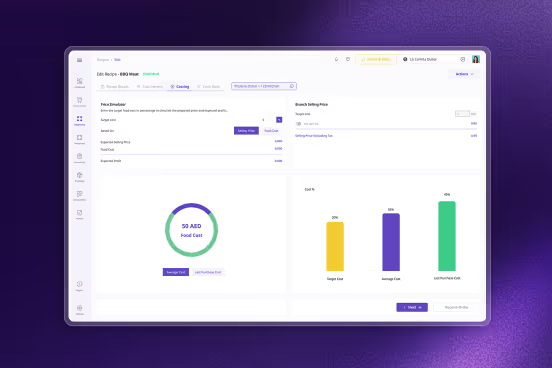
C'est là qu'intervient Supy. Supy est une plateforme de gestion back-office conçue spécifiquement pour les groupes de restauration multi-sites, et se connecte directement à chaque système POS présenté dans ce guide. Quand vos données POS affluent dans Supy, voici ce qui change :
- Coût des recettes en temps réel : Chaque vente traitée par votre POS met automatiquement à jour votre consommation théorique d'ingrédients et le coût de vos recettes. Quand un fournisseur augmente le prix du bœuf premium, Supy vous montre immédiatement quels plats sont affectés et dans quelle mesure – avant que ce coût n'atteigne votre résultat mensuel.
- Visibilité des stocks en temps réel : Plutôt que de découvrir les ruptures de stock pendant le service, Supy vous donne les niveaux de stocks en direct sur tous les établissements – mis à jour automatiquement au fil des ventes traitées par votre POS et des livraisons reçues et scannées.
- Réception de factures par IA : Le traitement de factures par IA de Supy capture automatiquement les factures fournisseurs, les rapproche des bons de commande, signale les écarts de prix et met à jour vos coûts d'ingrédients sans saisie manuelle. Chaque changement de prix est répercuté dans les coûts de vos recettes au moment où il est traité.
- Tableaux de bord multi-sites : Coût des marchandises vendues, écarts et données de rentabilité en temps réel sur tous les établissements – accessible depuis n'importe quel appareil. Au lieu d'attendre les rapports de gestion hebdomadaires, vous voyez en direct ce qui se passe dans votre exploitation.
- Détection des écarts et analyses : Quand la consommation réelle dans un établissement s'écarte de l'utilisation théorique, Supy le signale immédiatement. Un client Supy a identifié qu'un cocktail spécifique causait un écart inexpliqué dans le stock du bar – la solution était un verre de 5 £. Sans les données, ce coût aurait continué à s'accumuler pendant des mois.
.jpg)
Ensemble, votre POS et Supy vous offrent quelque chose qu'aucun des deux ne peut apporter seul : une visibilité opérationnelle complète de bout en bout. Votre POS est votre moteur en salle. Supy est votre cerveau back-office. Sur le marché de la restauration du CCG, compétitif et à coûts élevés, utiliser les deux est ce qui protège vos marges au fil de votre croissance. Réservez une démo avec Supy et découvrez comment il s'intègre à votre POS →
6. Conclusion
Le marché de la restauration du CCG est l'un des plus dynamiques et exigeants au monde. Les exploitants y font face à une combinaison unique d'opportunités de croissance rapide, d'attentes élevées des clients, de complexité réglementaire et du défi opérationnel de mise à l'échelle simultanée sur plusieurs établissements et concepts. Bien établir vos fondations technologiques – en commençant par le bon système POS – n'est pas une préoccupation périphérique. C'est au cœur de la question de savoir si votre entreprise croît de façon rentable ou coûteuse.
Les systèmes POS couverts dans ce guide – Lightspeed, Revel, Quadranet et Oracle MICROS Simphony – représentent chacun la meilleure option pour un segment spécifique du marché du CCG. Comprendre lequel correspond à votre exploitation est la première étape. Le connecter à une plateforme back-office comme Supy est la seconde – et c'est l'étape qui vous fait passer de bonnes données à d'excellentes décisions.
Si vous êtes prêt à prendre le contrôle de votre exploitation de restaurant de bout en bout, réservez une démo avec Supy aujourd'hui et découvrez à quoi ressemble une visibilité opérationnelle complète en pratique.