.jpeg)
Technologies de restauration incontournables en 2025 : gardez une longueur d'avance
Nous sommes déjà à la mi-2025, et comme la plupart des restaurateurs, vous l’avez constaté par vous-même. Les entreprises qui investissent dans des Solutions technologiques plus intelligentes prennent de l’avance : service plus rapide, coûts réduits et équipes plus performantes. Rester accroché à des systèmes obsolètes devient quant à lui de plus en plus difficile, alors que les attentes des clients et les exigences du secteur de la restauration ne cessent d’augmenter.
Si vous réfléchissez aux changements à apporter cette année, suivre les dernières tendances technologiques dans la restauration est l’une des décisions les plus intelligentes que vous puissiez prendre. Les bons outils vous aideront non seulement à gérer votre activité plus efficacement aujourd’hui, mais aussi à fidéliser vos clients et à préparer votre établissement aux défis et aux opportunités à venir.
Dans cet article, nous passerons en revue les technologies de restauration incontournables en 2025 et au-delà :
- Une gestion des stocks plus intelligente grâce aux données en temps réel
- Les systèmes pilotés par l’IA en cuisine
- Les systèmes POS intégrés au service de tout l’écosystème restaurant
- Les plateformes de commande en ligne directe redéfinissent l’expérience client
- La planification intelligente et la gestion des effectifs pour un fonctionnement optimisé
- Conclusion
- À propos de Supy
1. Une gestion des stocks plus intelligente grâce aux données en temps réel
Plus de la moitié des restaurants utilisent déjà un logiciel de gestion des stocks pour suivre leurs stocks et leurs approvisionnements. Vous aussi, très probablement. Mais la réalité est que le simple suivi ne suffit plus pour rester compétitif.
Les outils de gestion des stocks d’aujourd’hui sont bien plus intelligents et font bien plus que simplement lister le contenu de votre chambre froide. Les meilleurs systèmes de gestion des stocks prédisent les tendances de consommation, recommandent des quantités de commande plus intelligentes, suivent les pertes automatiquement et vous alertent même lorsque les prix des fournisseurs augmentent discrètement, vous permettant de gérer vos stocks avec plus de contrôle et moins de conjectures.
Voici ce qu’apporte la dernière génération d’outils de gestion des stocks :
- Commande prédictive : Au lieu de simplement signaler les ruptures de stock, les systèmes plus intelligents prévoient vos besoins en fonction de l’historique des ventes, de la saisonnalité et des réservations à venir, vous permettant d’anticiper sans surcommander.
- Suivi des pertes en temps réel : Les outils modernes vous permettent d’enregistrer les pertes au moment où elles surviennent, de repérer les tendances et de les corriger rapidement. Quelques problèmes de gaspillage non détectés chaque semaine peuvent représenter des milliers de pertes annuelles. La technologie intelligente vous aide à les détecter avant qu’ils s’accumulent.
- Insights sur les performances fournisseurs : Le suivi automatisé des livraisons, des changements de prix et des écarts renforce votre capacité à gérer votre chaîne d’approvisionnement efficacement et à négocier de meilleures conditions.
- Visibilité des coûts et de la rentabilité au niveau des recettes : Les meilleures plateformes relient les données de stocks directement à votre menu, vous aidant à détecter la hausse des coûts des ingrédients qui érode discrètement vos marges et à ajuster avant que cela n’affecte votre rentabilité.
- Opérations mobile-first : Les inventaires, contrôles de stocks et passations de commandes peuvent désormais s’effectuer sur un appareil mobile en une fraction du temps qu’il fallait avec des tableurs ou des registres papier.
Avec une gestion des stocks plus intelligente, vous construisez un établissement plus solide. Vous réduisez les pertes alimentaires, contrôlez mieux vos achats et protégez vos marges dans un environnement où chaque euro compte.
De nombreux restaurants voient un ROI de 150 % ou plus dès la première année après l’implémentation d’un logiciel de gestion des stocks moderne. Des plateformes comme Supy aident les restaurateurs à optimiser leurs achats, gérer leurs stocks de manière proactive et transformer les tâches répétitives en un véritable levier de croissance pour leur activité.
2. Les systèmes pilotés par l’IA en cuisine
2025 a déjà apporté une vague d’innovations pilotées par l’IA dans de nombreux secteurs, et la restauration ne fait pas exception. Au cours de la seule année écoulée, l’IA est passée de simple atout à un rôle actif dans la façon dont les restaurateurs gèrent leurs opérations, accueillent leurs clients et maîtrisent leurs coûts.
Le marché de l’IA pour le secteur alimentaire et des boissons devrait à lui seul atteindre plus de 56 milliards de dollars d’ici 2029, avec une expansion de près de 43 % par an. En termes simples, les outils alimentés par l’IA disponibles pour les restaurants deviennent de plus en plus intelligents, rapides et faciles à utiliser.
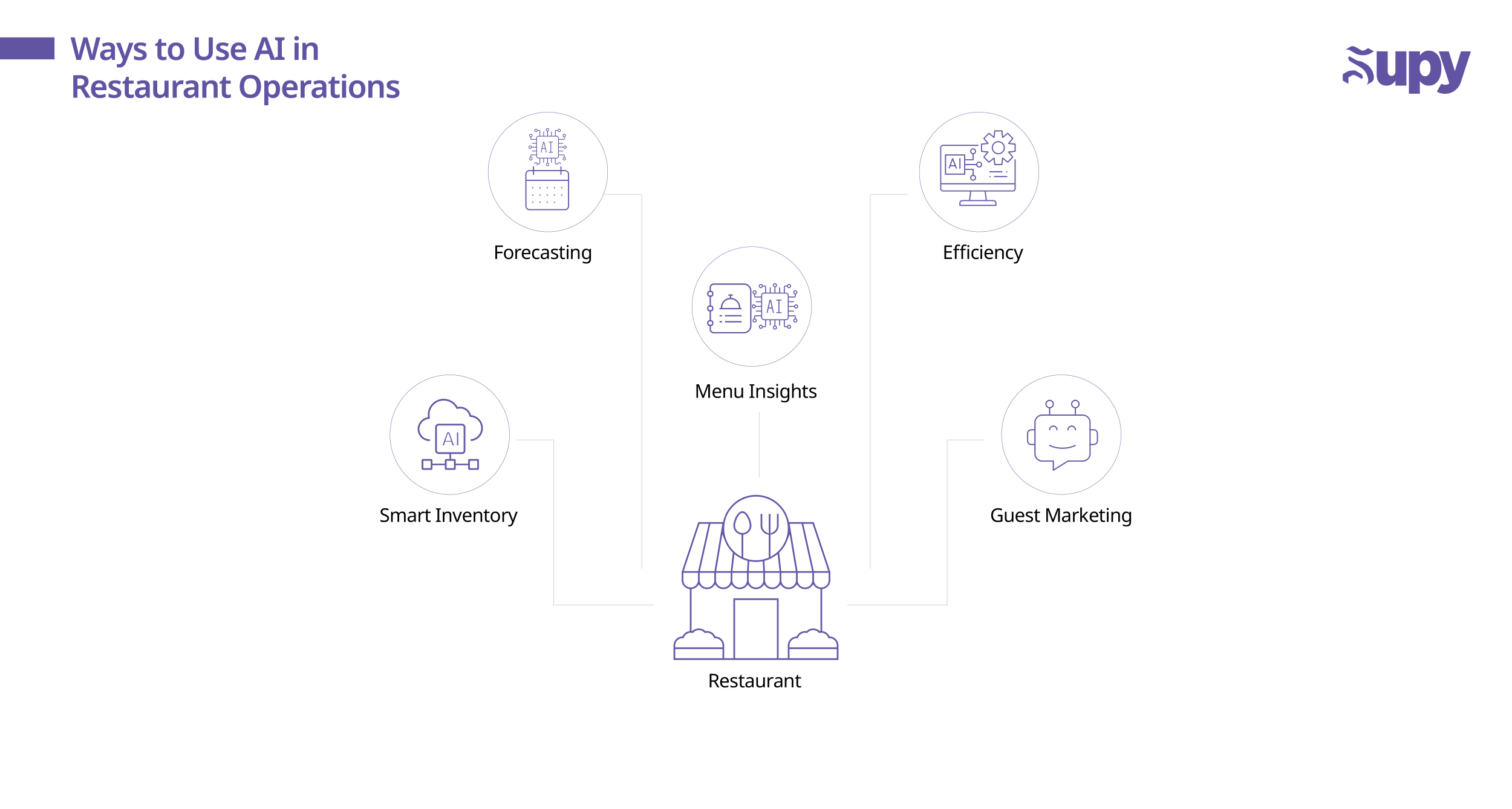
Voici comment l’automatisation et les analyses pilotées par l’IA aident les restaurants à travailler plus efficacement aujourd’hui :
- Prévisions des ventes plus intelligentes : L’IA analyse vos ventes passées, la saisonnalité, les conditions météorologiques et les événements locaux pour prédire votre niveau d’activité. Cela vous aide à planifier les effectifs, les stocks et les préparatifs avec plus de précision, sans surcharger votre équipe ni gaspiller des aliments.
- Automatisation des stocks et des commandes : Les analyses alimentées par l’IA suivent les niveaux d’ingrédients en temps réel et peuvent générer automatiquement des bons de commande sur la base de la consommation prévue, en économisant du temps et en réduisant le risque de ruptures de stock ou de surcommandes.
- Insights sur les performances des menus : Les systèmes avancés analysent les préférences des clients pour mettre en évidence les plats qui génèrent le plus de rentabilité, ceux dont les marges se réduisent et où de petits ajustements peuvent améliorer les revenus sans refonte majeure du menu.
- Marketing personnalisé : L’IA aide à adapter les promotions et offres de fidélité au comportement des clients, facilitant les visites répétées, améliorant la satisfaction client et réduisant la dépendance aux remises génériques.
- Efficacité opérationnelle : Plutôt que de fouiller dans des tableurs et des rapports, les outils pilotés par l’IA fournissent des Insights précieux, comme quels créneaux sont les plus rentables ou quels établissements nécessitent des ajustements de planning, vous permettant de prendre des décisions plus rapides et plus intelligentes.
Le mieux dans tout ça, c’est que l’IA n’est plus réservée aux grandes chaînes. De plus en plus de restaurants indépendants et de petits groupes utilisent les fonctionnalités d’IA intégrées dans leurs systèmes POS, de gestion des stocks et de marketing pour gérer des établissements plus légers et plus rentables.
3. Les systèmes POS intégrés au service de tout l’écosystème restaurant
Le POS est au cœur de toute opération de restauration. C’est là que les commandes sont passées, les paiements traités et le service maintenu. Lorsque votre système POS est lent ou déconnecté de tout ce que vous utilisez, il ne ralentit pas seulement votre comptoir. Il crée des problèmes partout, y compris en cuisine et dans la trésorerie.
C’est pourquoi de plus en plus de restaurants se modernisent avec des systèmes POS avancés qui connectent chaque aspect du service. Aujourd’hui, 52 % des entreprises du secteur ont déjà migré vers des plateformes POS sur le cloud, et de plus en plus de restaurants indépendants font de même. Ils choisissent des configurations plus rapides, plus fiables et conçues pour gérer à la fois le service en salle et en ligne sans faillir.
Voici comment un meilleur système POS peut faire une vraie différence :
- Suivi des stocks en temps réel : Chaque fois que vous enregistrez une vente, votre stock se met à jour automatiquement. Avec des capacités de paiement intégrées et des contrôles renforcés, vous n’avez plus à deviner ce qui est en stock ou à corriger des erreurs en fin de soirée.
- Commandes et paiements plus rapides : Le personnel peut prendre des commandes et traiter des paiements directement à table via des appareils mobiles ou des bornes en libre-service, réduisant les temps d’attente et aidant à réaliser plus de couverts sans que les clients se sentent pressés.
- Un système pour toutes les commandes : Que la commande vienne de votre salle, de votre site web ou de plateformes de commande en ligne, tout alimente le même système. Fini les allers-retours entre tablettes ou la double saisie des commandes.
- Suivi des clients simplifié : Un POS moderne capture automatiquement les préférences des clients, vous aidant à personnaliser les expériences et les programmes de fidélité sans travail administratif supplémentaire.
- Rapports plus clairs et plus rapides : Les chiffres de ventes, de personnel et de stocks sont tirés du même système, qu’ils proviennent des commandes en salle, des menus numériques ou des livraisons, vous donnant une vue complète de vos opérations.
Lorsque votre POS communique avec le reste de vos outils, comme la gestion des stocks, la planification du personnel et les commandes en ligne, tout s’assemble mieux. Vous ne colmatez plus les systèmes ou ne courez plus après les problèmes une fois qu’ils se sont produits.
4. Les plateformes de commande en ligne directe redéfinissent l’expérience client
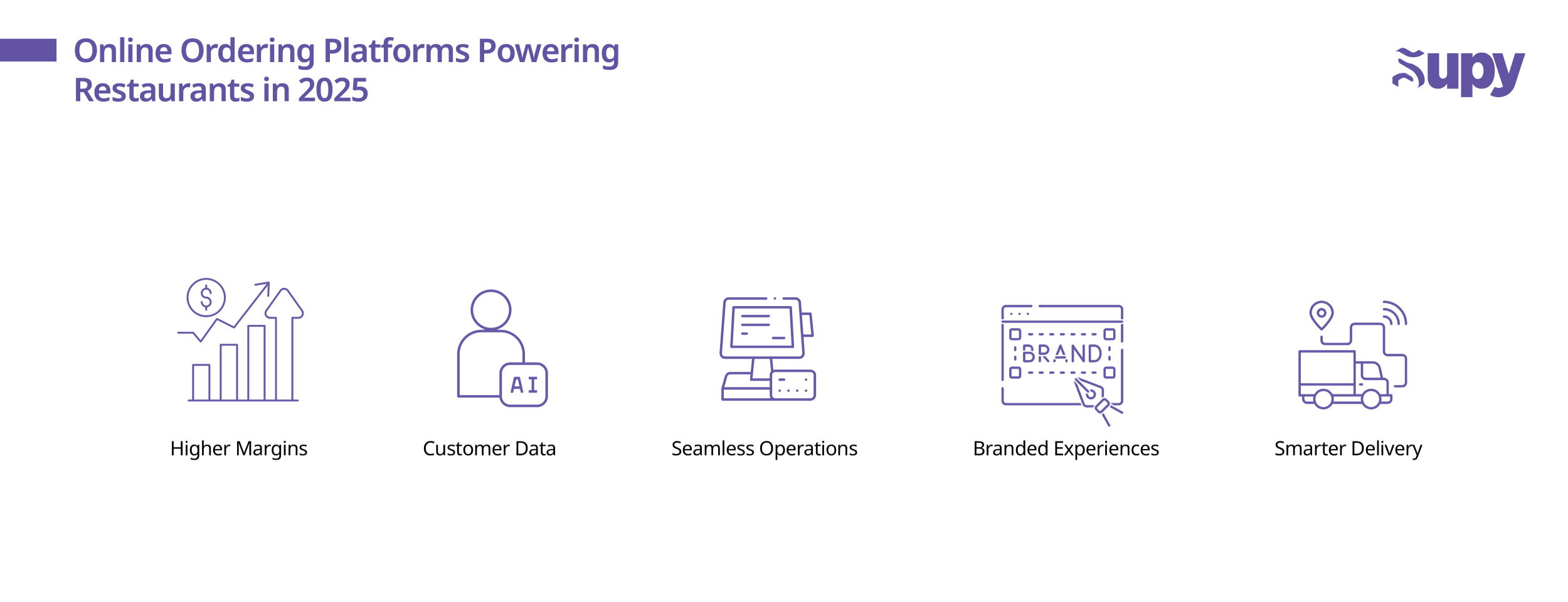
Depuis la pandémie, la commande en ligne est devenue un moteur de revenus majeur pour la restauration. Ce qui a commencé comme une tactique de survie est devenu un élément central de la façon dont les clients interagissent avec les marques. Les restaurants qui ont développé leurs plateformes de commande en ligne voient des bénéfices à emporter environ 30 % plus élevés par rapport à ceux qui s’appuient encore uniquement sur le service en salle ou les applications tierces.
Voici pourquoi la commande en ligne compte plus que jamais en 2025 :
- Marges plus élevées : Passer par votre propre site web vous aide à éviter les lourdes commissions tierces qui peuvent représenter 20-30 % de chaque vente. Vous gardez plus de revenus et conservez le contrôle de tout le processus de commande.
- Meilleures données clients : Lorsque les clients commandent directement, vous collectez des informations précieuses comme les e-mails, l’historique des commandes et les préférences. Combinées à des menus numériques faciles à mettre à jour et à personnaliser, elles facilitent la création de programmes de fidélité et l’envoi de promotions ciblées.
- Opérations plus fluides : La commande en ligne intégrée envoie les tickets directement en cuisine et met à jour votre POS automatiquement. De nombreux systèmes prennent désormais en charge la technologie en libre-service pour les commandes en salle et à emporter, réduisant la charge du personnel et accélérant le service.
- Expérience de marque améliorée : Votre plateforme de commande vous permet de contrôler l’expérience client, avec des menus interactifs, des suggestions d’upsell, un branding personnalisé et un suivi des commandes en temps réel. La commande vocale commence même à émerger, offrant plus de commodité aux clients à l’aise avec la technologie.
- Flexibilité sur les options de livraison : Les systèmes modernes vous permettent de proposer à la fois des services de livraison en propre et via des tiers, vous donnant plus de contrôle sur les commissions, la qualité du service et l’engagement client.
La plupart des clients s’attendent désormais à ce que la commande en ligne soit simple, rapide et cohérente. Si votre site ne dispose pas d’une interface conviviale pour passer une commande, ou s’il renvoie vers des applications tierces, vous risquez de perdre des ventes et d’affaiblir votre marque sur le long terme.
5. La planification intelligente et la gestion des effectifs pour un fonctionnement optimisé
La gestion du personnel a toujours été l’un des aspects les plus difficiles de la gestion d’un restaurant. Des indisponibilités de dernière minute aux coûts d’heures supplémentaires qui s’accumulent, même de petits problèmes de planning peuvent rapidement se transformer en grosses dépenses.
Il n’est pas étonnant que la demande d’outils intelligents de gestion de restaurant soit en hausse. Le marché des logiciels de gestion de restaurant à lui seul devrait connaître une forte croissance jusqu’en 2030, alors que de plus en plus de restaurateurs cherchent des moyens plus intelligents de gérer les effectifs sans jonglage manuel constant.
Voici comment les outils modernes de gestion du personnel aident les restaurants à garder une longueur d’avance :
- Planification des équipes plus intelligente : Les plateformes suggèrent désormais des niveaux d’effectifs optimaux basés sur les prévisions de ventes, les tendances historiques et les heures de pointe attendues. Cela vous aide à éviter le sous-effectif en période d’affluence et à réduire les coûts de personnel sans nuire à la qualité du service.
- Accès mobile pour le personnel : Les applications mobiles permettent aux employés de consulter leurs plannings, d’échanger des créneaux et de demander des congés de n’importe où, réduisant les absences et la confusion de dernière minute.
- Conformité simplifiée : De nombreux systèmes suivent automatiquement les législations du travail, comme les pauses obligatoires, les règles de planning fractionné et les heures supplémentaires, pour que vous ne soyez pas pris au dépourvu lors d’un contrôle.
- Meilleure fidélisation du personnel : Des plannings plus clairs, une communication facilitée et moins de surprises sur la fiche de paie conduisent à des équipes plus heureuses. Dans un secteur où le turnover est élevé, de petites améliorations ici peuvent avoir un grand impact.
- Prise de décisions basées sur les données : Avec des données de personnel et de ventes en temps réel, les managers peuvent ajuster les effectifs plus rapidement, repérer les tendances et faire des choix de planning plus intelligents sans se fier uniquement à leur instinct.
Si vous gérez encore vos plannings avec des tableurs, des chats de groupe ou d’anciens imprimés, il est temps de moderniser. Les outils modernes aident à protéger vos marges, à améliorer le moral de l’équipe et à vous libérer d’une préoccupation de plus pendant les semaines chargées.
6. Conclusion
La restauration en 2025 évolue plus vite que jamais, et la technologie est au cœur de cette transformation. Les systèmes de gestion des stocks plus intelligents, les outils pilotés par l’IA, les plateformes POS connectées, la commande en ligne directe et une meilleure gestion des effectifs aident déjà les restaurateurs à gérer des établissements plus légers et plus rentables. En examinant les tendances technologiques de la restauration 2025, il est clair que des innovations comme les analyses prédictives des clients, la robotique en cuisine et la commande vocale commencent à prendre forme. Les décisions technologiques que vous prenez aujourd’hui peuvent ouvrir de plus grandes opportunités demain, vous aidant à garder une longueur d’avance sur les attentes des clients et à construire un établissement plus solide dans un marché en mutation.
Pour approfondir le sujet, consultez notre guide Blog sur la tech stack par William Connors, Head of IT (ex-Wingstop, Wahaca, Popeye's, Burger King et Chotto Matte).
7. À propos de Supy
Supy est une plateforme moderne de gestion des stocks et d’approvisionnement conçue pour le secteur de la restauration. Elle aide les restaurants à gérer leurs stocks, suivre leurs coûts, optimiser les commandes fournisseurs et obtenir des Insights en temps réel pour gérer des établissements plus rentables. Avec un accès mobile, des rapports intelligents et des intégrations faciles avec les systèmes POS et comptables, Supy permet aux équipes de rester maîtresses de leurs stocks et de leurs achats sans les maux de tête habituels de la Back-of-House.
Vous souhaitez prendre le contrôle de vos opérations de Back-of-House ? Réservez une démo avec Supy et découvrez comment la gestion des stocks basée sur les données peut améliorer votre ROI.