.jpg)


Food Safety Management System: What Each Restaurant Must Record Daily
What a food safety management system actually is
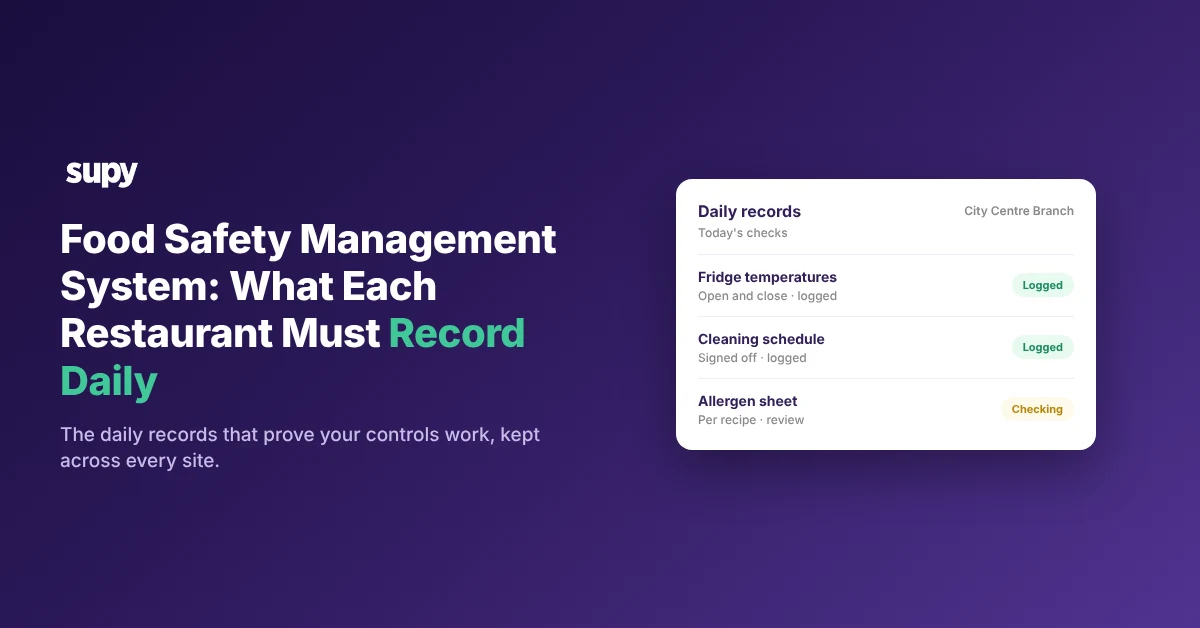
A food safety management system is the daily record-keeping that proves your controls are working. An inspector does not just check that the kitchen looks clean. They ask to see dated, signed proof of four things:
- Temperature logs: fridge, freezer and cooking checks through the day.
- The cleaning schedule: a daily sign-off, plus the deep-clean dates.
- Delivery and fridge checks: the temperature logged on arrival and at each unit.
- Allergen information: the detail per dish, updated on every recipe change.
This article sets out what a restaurant must record each day, who signs it off, and how to keep those records complete across several sites.
Both main food safety regimes build this on HACCP (Hazard Analysis and Critical Control Points):
- United States (FDA): seven principles, and the last one is record-keeping, the monitoring logs and the corrective actions (FDA HACCP principles).
- England and Wales (FSA): a small caterer can run the Food Standards Agency's Safer Food, Better Business (SFBB) pack as its whole system, keeping the diary pages until the next local authority visit (FSA Safer Food, Better Business).
The gov.uk guidance is blunt that the system must be based on HACCP and written down (gov.uk food safety management). The records are the proof the controls work.
Confirm the exact requirement with your own local authority or regulator before you rely on any summary. The detail changes by country and by the type of food business you run.
This post stays on the records system: what to record, who signs it, and how to keep it across sites. For the method underneath it, writing the plan and turning control points into daily checks, read our guide to the HACCP plan for a restaurant.
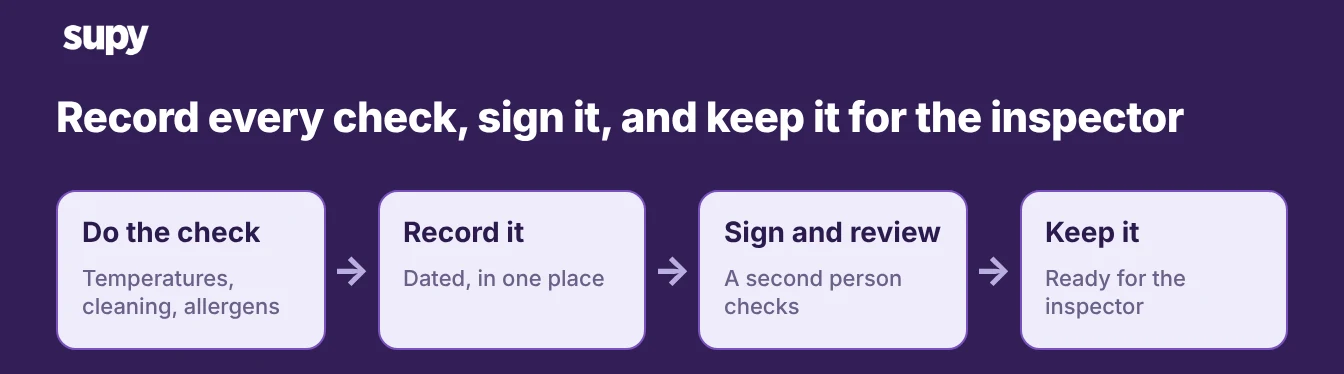
The daily records an inspector asks to see
An inspector works through a predictable list. Keep each record below dated and tied to a named person, because a record nobody owns is a record nobody did.
| Record | How often | Who keeps it |
|---|---|---|
| Fridge and freezer temperatures | Open and close, every day | Shift lead on duty |
| Cooking and reheating checks | Every service | Chef on the line |
| Cleaning schedule sign-off | Daily, plus deep-clean dates | Kitchen team, manager checks |
| Deliveries received | Every delivery | Person receiving goods |
| Allergen information per dish | On every recipe change | Head chef |
| Staff training | On hire and at refresh | Manager |
The delivery line is the one most groups run loosely. When a delivery arrives, the person receiving it raises a goods received note (GRN) against the order, so the quantity and the temperature on arrival are both logged. Miss that step and you have stock on the shelf with no record of when it came in or what state it was in.
Why paper diaries and WhatsApp groups break across sites
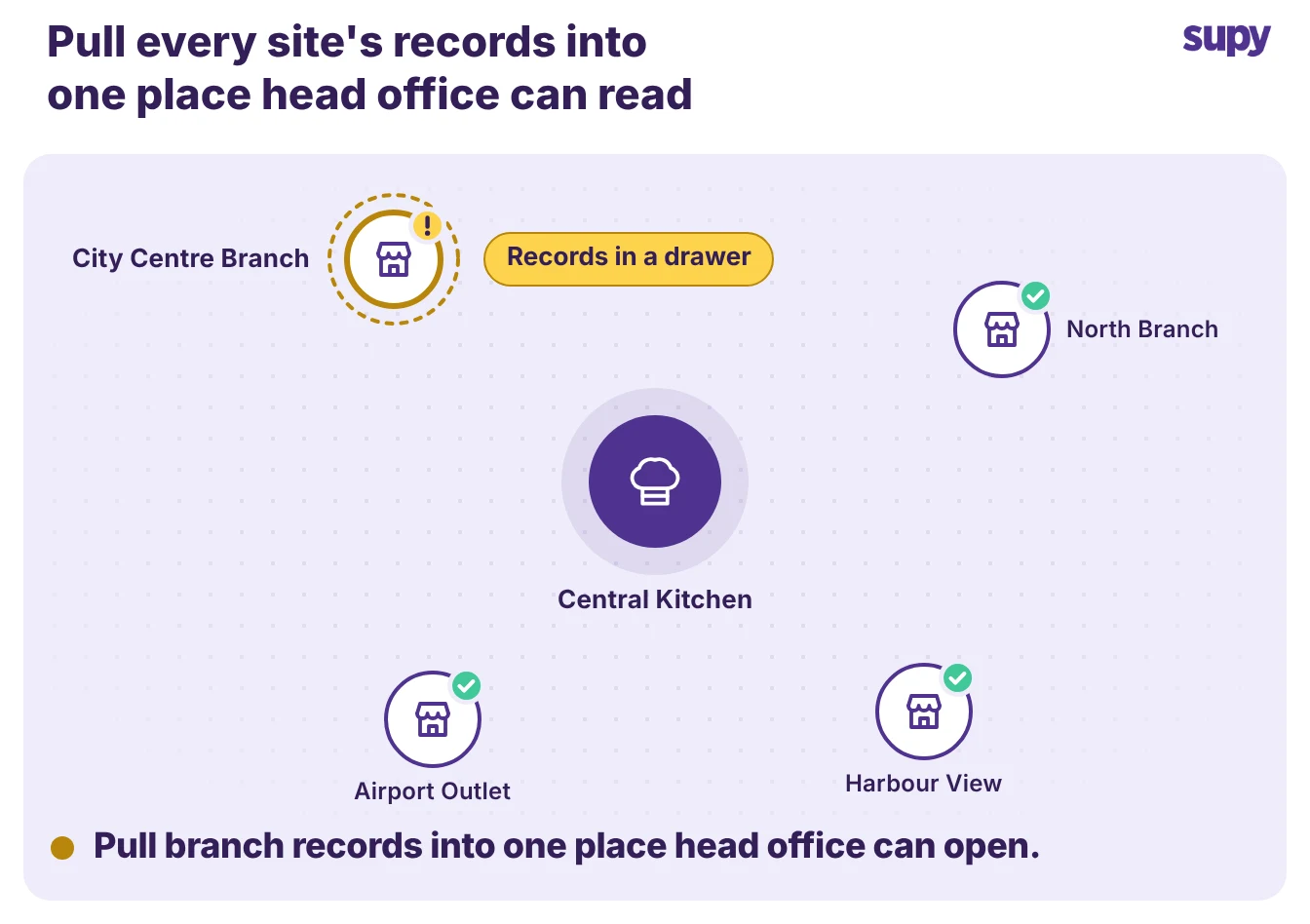
A single site can run on paper. A group cannot. The diary sits in a drawer at one branch. The checks get photographed into a WhatsApp group at another. Head office cannot tell whether today's checks happened without driving to each site. One quality manager described the state of it plainly, as a fragmented paper process spread across several WhatsApp groups.
Certification adds a demand that paper cannot meet. One four-site group kept its central production unit on a separate, certification-grade system, because the main tool could not carry the batch and allergen traceability that certification demanded. The group then ran its records across two systems that do not talk to each other.
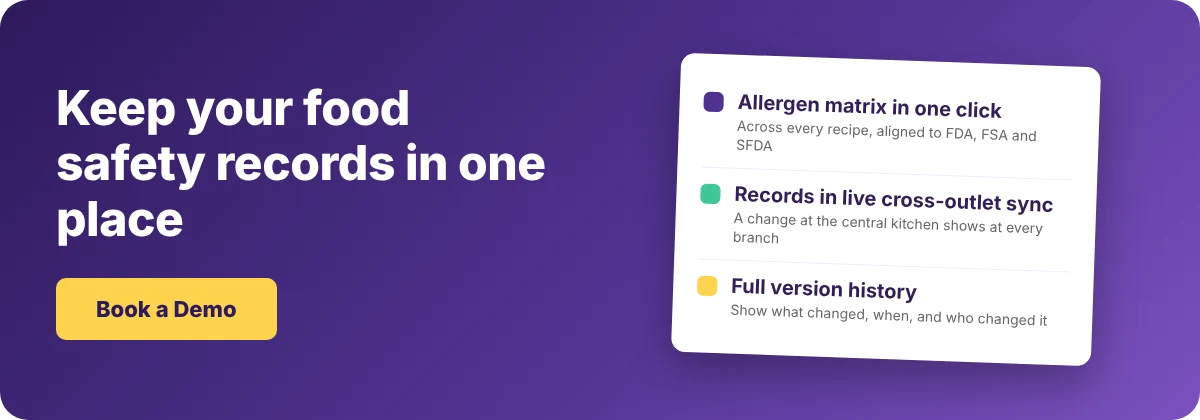
Pull the records into one place every site and head office can open. Supy keeps ingredient, recipe and allergen data in live cross-outlet sync, so a change at the central kitchen shows at every branch without a re-key. For the batch and lot side that certification asks about, see how expiry and lot tracking works in a central kitchen. The records belong in the same restaurant inventory system that already holds your stock and recipes, not in a drawer and a chat thread.
Who signs off, and why a signature is not a check
Decide who records, who reviews and who sees, then write those three roles down. Each role signs for what that person actually did, not for the whole chain.
| Role | What they do | What they sign for |
|---|---|---|
| Staff on the line | Log the check as it happens | The check they did themselves |
| Shift manager | Review the day's logs before close | That the logs were reviewed |
| Operations director | See the records across all sites | Oversight, not the daily check |
The reason this split matters is uncomfortable. The strongest driver behind a signed check is the wish to avoid blame, not the wish to confirm the check happened. A signature collected to cover someone is worth nothing to an inspector and nothing to you. So separate the logging from the review. The person who did the check signs it, and a second person reviews it. The review is where a skipped or faked entry gets caught.
An audit trail turns those signatures into evidence. Supy keeps full version history on ingredient, recipe and allergen records. You can show what changed, when, and who changed it. You can also restore a record if a fix to one setting quietly changed another. That is the difference between a tick and proof.
Keeping records complete when staff turn over
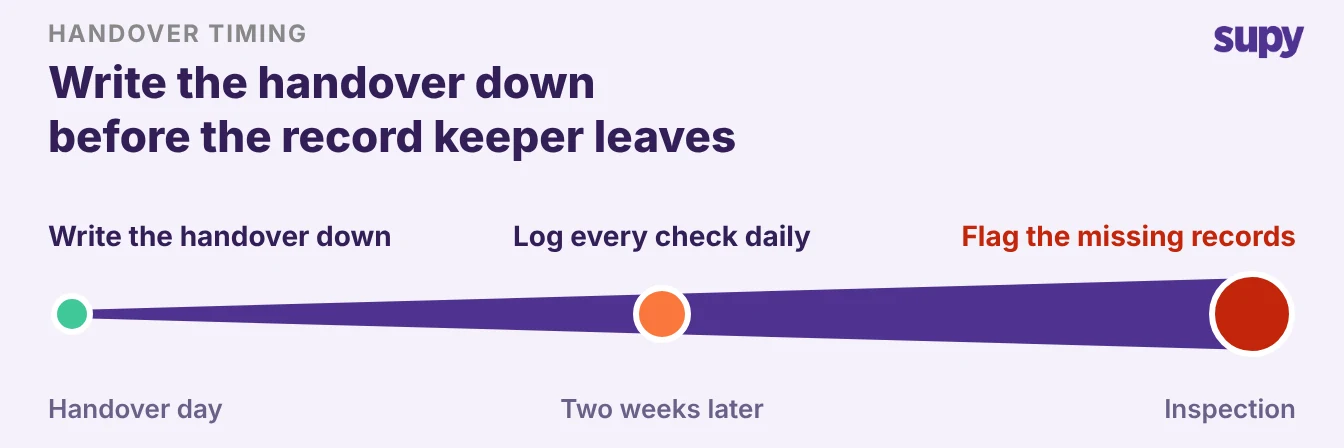
Usually one person knows the whole routine and nobody else does. When that person leaves, the new starter does not know which checks matter, where the diary is, or how the allergen list was built. The records go quiet for a fortnight, and that fortnight is exactly when an inspection finds a gap.
Keep the knowledge in the system, not in the person.
- Allergen tags sit on each ingredient and carry automatically into every recipe that uses it, so a new chef inherits correct allergen information instead of rebuilding it from memory.
- A one-click allergen matrix across your recipes, aligned to FDA, FSA and SFDA expectations, means the allergen record does not depend on who is on shift.
- Daily operational checklists for opening, closing and cleaning are coming soon in Supy, which will close the last gap between the records and the routine.
Put the records where they cannot walk out
Run a quick self-audit this week. Check three things in your own operation.
| Check | A real system | Not yet |
|---|---|---|
| Visibility | Head office sees today's checks at every site | You phone the site to ask |
| Attribution | Every record names a person and a time | The record carries only a tick |
| Continuity | The system stores the allergen list | One person keeps it in a notebook |
The first move is to pull every record into one place every site and head office can open, then name who logs, who reviews and who sees. A food safety management system is only as good as the records behind it, and records only hold up when they cannot leave with the person who made them.