F&B Management: Controlling Cost, Stock and Suppliers Across Sites
What good F&B management looks like across sites
F&B management is the work of holding food cost, stock, recipes and supplier spend to one standard at every site you run. Most groups already have the numbers; they lose margin because those numbers sit in spreadsheets and nobody sees them until month-end, too late to fix a bad week. Good F&B management puts the same figures in front of every manager while they can still act on them. This article shows what F&B management controls, where multi-site groups lose money, and the systems that close each gap.
The job splits into four areas that move margin, plus a fifth that keeps them honest across sites:
| Area | What you control | Where groups lose it |
|---|---|---|
| Food cost | True COGS per site, read often | A month-end figure seen too late to act on |
| Stock | Accurate counts and live stock on hand | Slow or skipped counts nobody trusts |
| Recipes | Dish cost against a target | Costs that go stale when prices move |
| Procurement | What each site buys and pays | Prices that change at the door unchecked |
| Consistency | One standard at every site | Each branch run its own way |
A single site can hold most of this in a manager's head. A group cannot. Once you add sites, the question changes from "is this kitchen run well" to "is every kitchen run the same way, and can I see it from one place".
Food cost you can see in days, not at month-end
Two moves close the gap between what a site spends and when you see it:
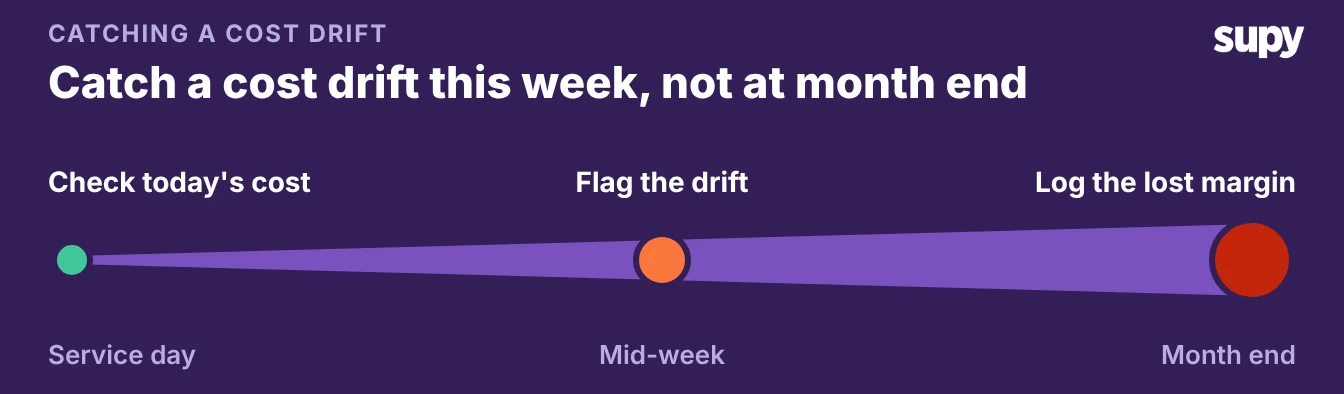
- Close the gap. The fastest win in F&B management is cutting the gap between what a site spends and when you find out. When food cost only appears in a month-end report, a bad week is already three weeks gone before anyone sees it, and the cause has been lost. Operators who close that gap stop losing margin they could never explain.
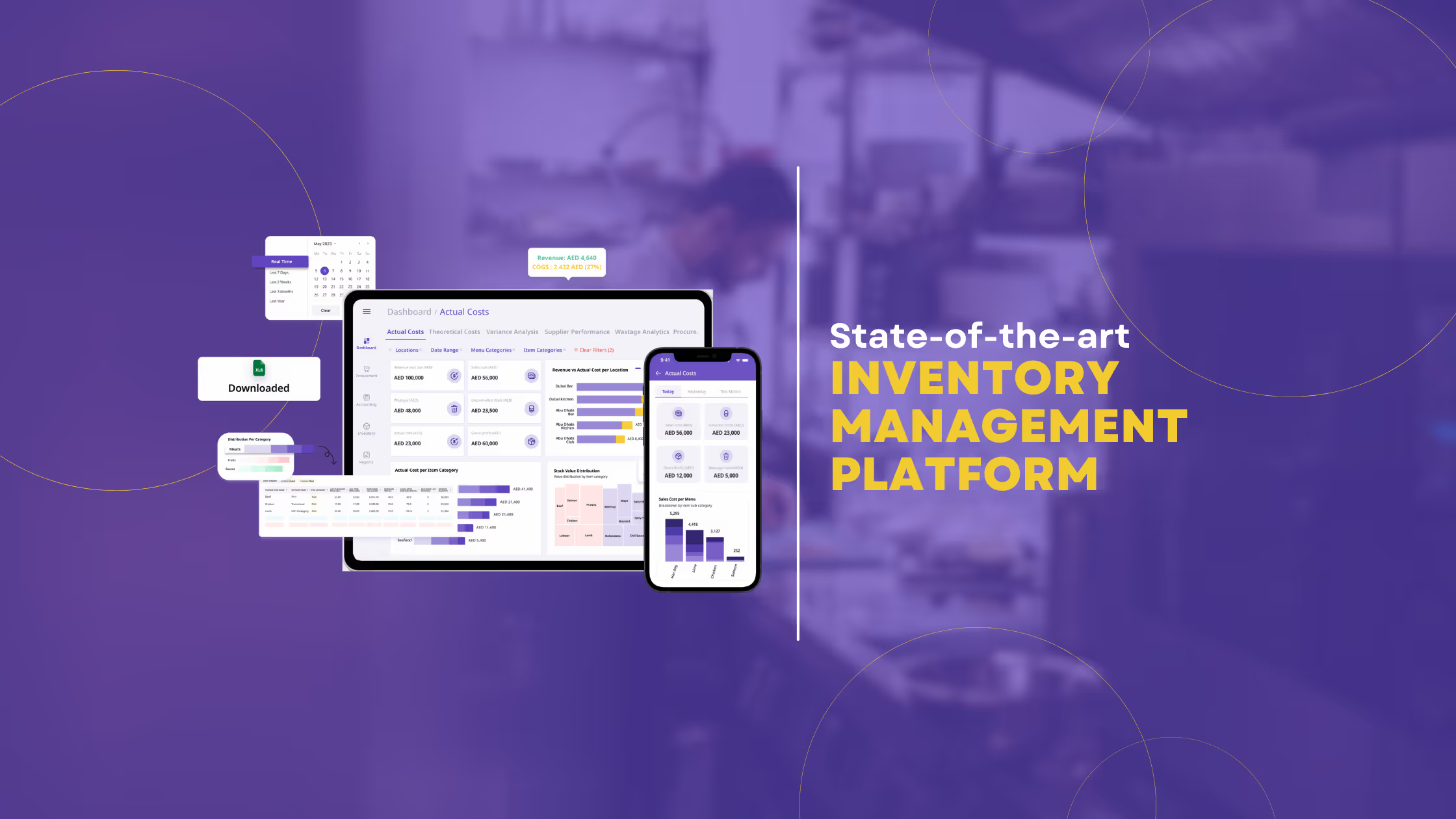
- Read cost often. A few points of food cost above target is real money leaving every week, and a month-end report tells you it happened without telling you where. The sites that fix this watch cost as it moves. They read actual COGS per site against target every day or week, built from receiving, recipe usage and wastage rather than typed in later.
Three things usually cause the drift, and each has a fix:
- The numbers are manual. Counts, purchases and costing live in spreadsheets, so the figure is late and nobody fully trusts it. Pull cost from the system that already records receiving and usage, and the figure arrives on its own.
- Recipe costs are stale. A dish is still priced on last quarter's ingredient costs, so its margin is wrong before service starts. Keep recipe costs live against current prices.
- Loss is invisible. Wastage, over-portioning and theft never reach the report, so the gap has no owner. Record wastage by site and reason, and the variance finally points somewhere.
For the full multi-site playbook, see our guide to restaurant cost control strategies for multi-site groups. The rest of this article covers the systems that feed a food-cost figure you can trust.
Stock counts you can trust at every site
Every other number depends on accurate stock, so F&B management starts with counts a group can rely on. A count that is slow, skipped or easy to fudge produces a variance figure nobody believes, and a figure nobody believes gets ignored. The goal is counts fast enough to happen on schedule and structured so the result means something.
- Count faster. Supy's stock counting uses reusable count templates in shelf order, so a counter walks the shelf once instead of hunting for items on a sheet. Several people can count in parallel, and the system merges their entries with attribution. That cuts counting time by more than half and shows who counted what.
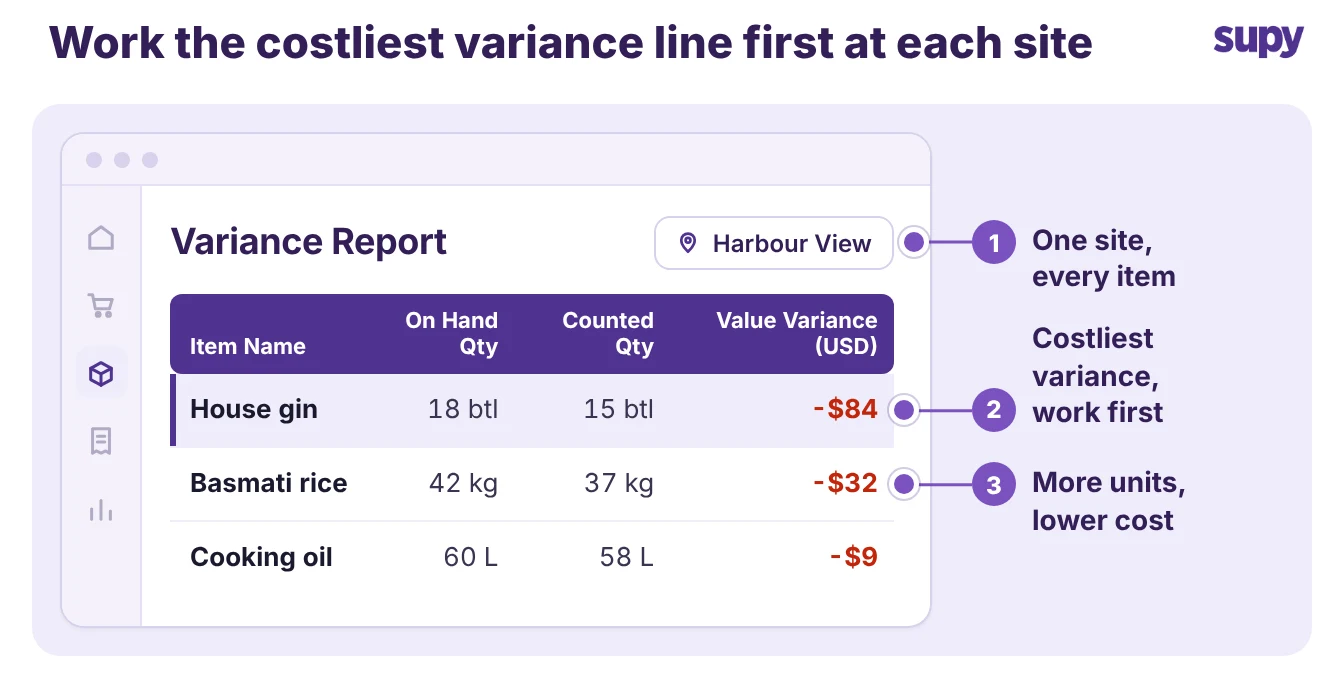
- Variance by cost. The moment a count is submitted, the variance report lists every item where the counted quantity differs from the theoretical quantity the system holds, for that one site. Work that report by cost, not by quantity. Each line carries the cost of its variance, so a costly line can outrank one that moved more units, and that is the line to chase first.
A par level tells a manager how much to order after a count, without guessing. It is the stock a site should hold for an item before its next delivery.
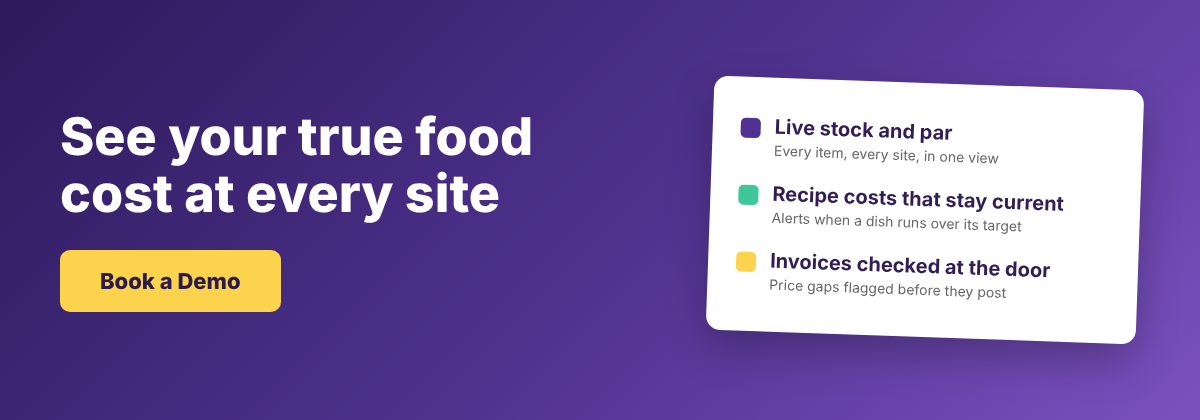
With Supy's restaurant inventory management software, live stock on hand shows against par and minimum thresholds per item per site, with alerts when a line falls below its minimum. Group-level par visibility lets you see where every site sits from one view.
If you'd rather not work par out by hand, the free par level calculator does it for every item on your sheet. It works from your usage, delivery days and supplier lead times.
Recipe costing that holds margin when prices move
A costed recipe is what keeps a dish profitable when the price of its ingredients changes, so recipe costing belongs at the centre of F&B management. Many groups never cost recipes at all, or cost them once and never again. A supplier price rise then eats margin for weeks before the monthly numbers reveal it.
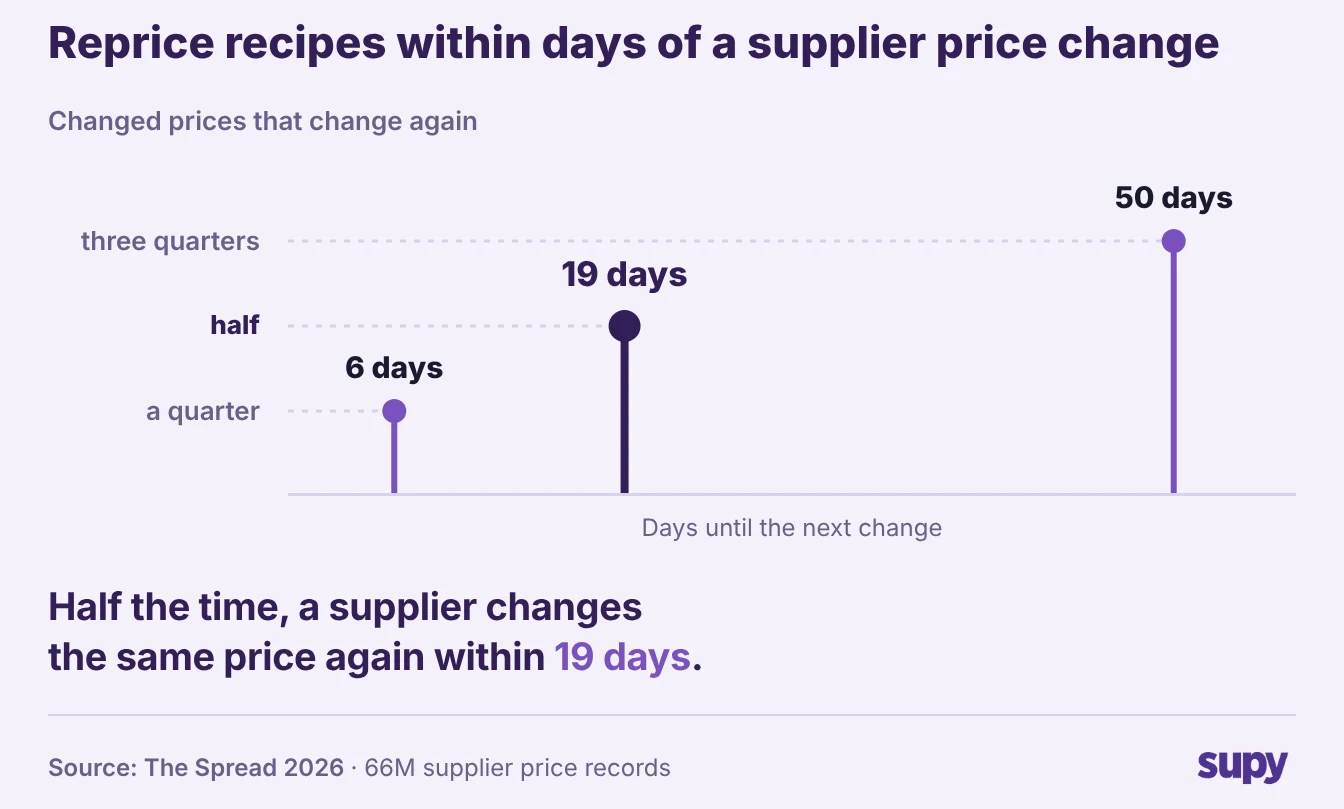
Supplier prices rarely settle after one move. In Supy's own data, half the time a supplier changes the same list price again within 19 days.
That figure covers genuine supplier list-price changes rather than agreed prices, and the items that actually change. A cost sheet you update once a quarter is stale almost as soon as you save it.
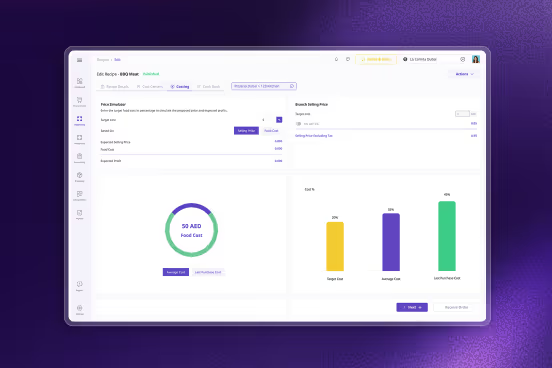
Supy's recipes and prep recipes link every dish and sub-recipe to its ingredients, and link the dish to its POS menu item so a sale depletes the right stock. Each recipe carries a target cost and alerts you when the actual cost runs over the threshold.
When a supplier raises a price by 6%, you see which dishes crossed their target that day, not at the end of the month. You can then reprice, re-portion or switch supplier while it still matters.
A group that costs recipes live can answer three questions any week.
- Dishes below margin. which dishes slipped below margin.
- Supplier at fault. which supplier caused it.
- Site response. what each site should do.
A group that costs once a quarter finds out only after the quarter has gone.
Procurement and supplier spend under control
Procurement is where a group's buying power either works for it or is lost, so controlling what each site orders and pays is core to F&B management. When sites order by phone and check prices by eye, nobody catches the supplier who quietly raises a price at the door. Nobody sees five branches buy the same item from the same supplier at five different prices.
Two mechanisms do most of the work:
- Capture the price at receiving, not at month-end. Supy's AI invoice receiving lets suppliers email invoices to a per-restaurant inbox, and matches each one to its purchase order. It reads the line items and prices across inconsistent formats, and flags a price or quantity that does not match before it updates stock and accounts. A line invoiced above the agreed price is caught at the door, where it is a credit to request rather than a cost to swallow.
- Put approval before spend, not after. Order against par and against an approval step, so a site buys what it needs and a person signs off anything outside the plan. The spend is controlled before it happens, which is the only point at which control is cheap.
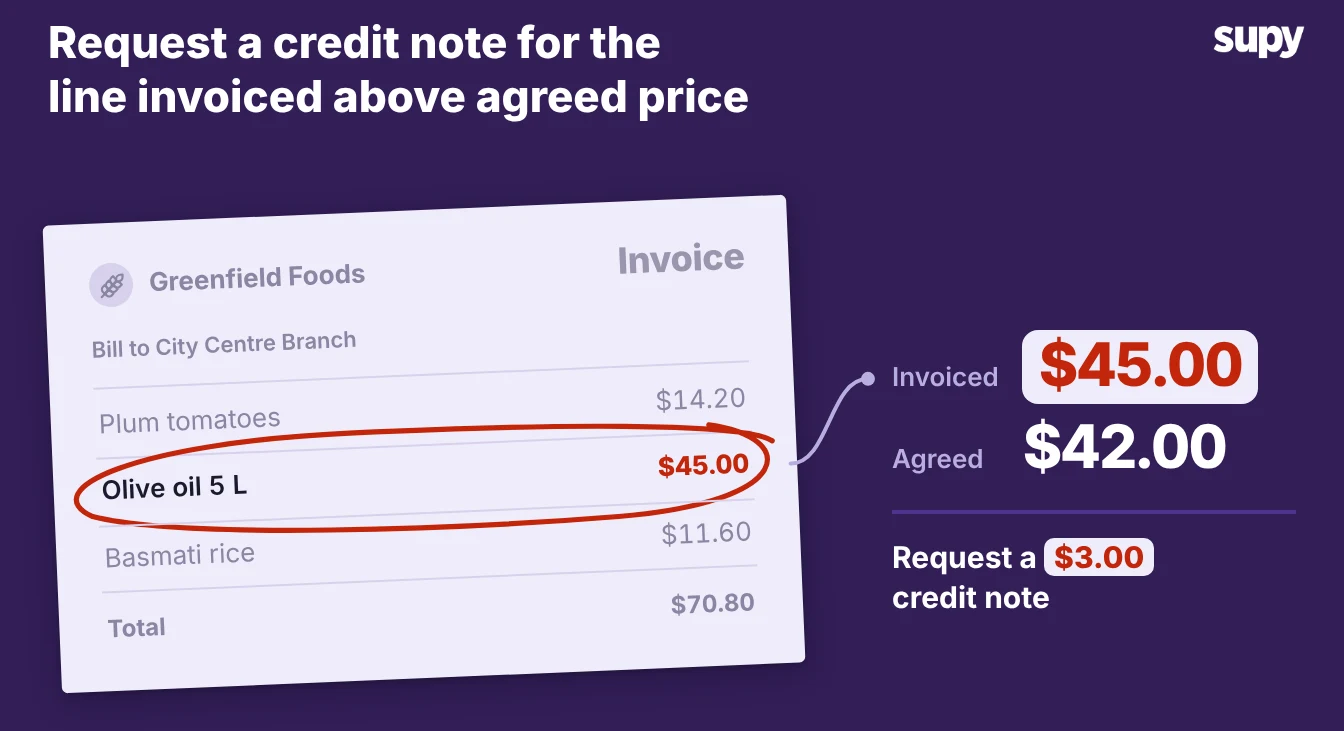
Supy connects to accounting and POS through 75+ integrations, so the cost you capture at receiving flows to the ledger without being retyped. Every rekeyed figure is a chance for the COGS number to drift from what was actually spent.
One standard across every site, and where to start
The difference between a single well-run kitchen and a well-run group is that a group makes the same standard hold everywhere, so the last job of F&B management is consistency. A six-site operator who finds three sites profitable and two not is rarely looking at two bad kitchens. More often it is five kitchens run five different ways, with no single view that would have shown it sooner.
Three controls hold the standard:
- One set of definitions. The same items, recipes, par levels and reports at every site, so a figure from one branch means the same as the figure from another, and a group report adds up.
- Stock that moves cleanly between sites. Inventory transfers between branches require the receiving site to accept before stock updates. They adjust both ends automatically and keep a full audit trail, so a central kitchen and its sites never lose the cost of what moved.
- A record you can trust. Audit logs record every inventory action with the user, the time and the before-and-after, and nobody can edit the log, so a variance always has a history you can follow.
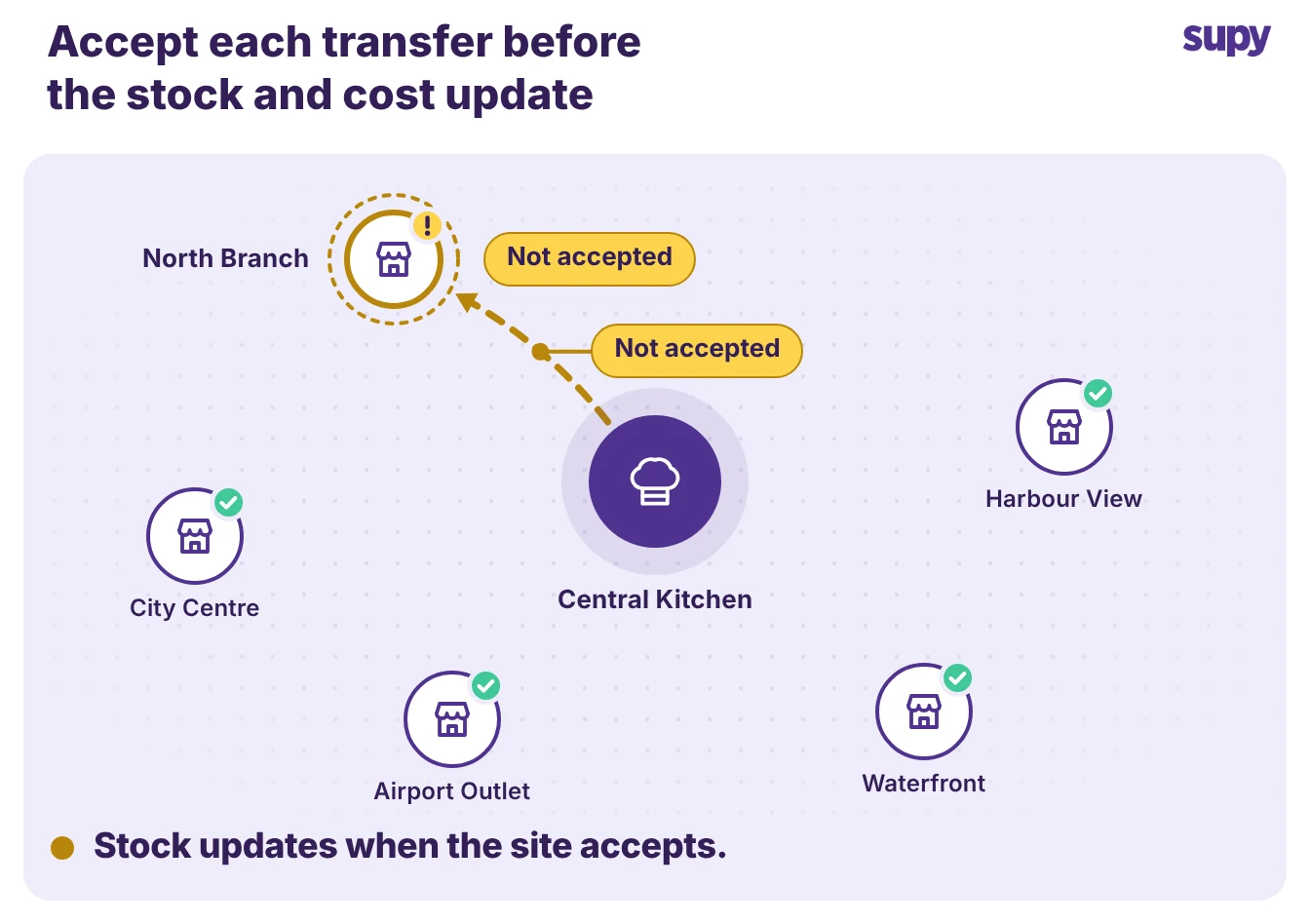
Where to start depends on where you lose most now:
- No weekly food cost per site? Start with the food-cost read and the receiving capture that feeds it.
- Slow or skipped counts? Start with count templates and par levels.
- Margin moves with supplier prices? Start with live recipe costing.
Pick the one gap that costs you most this month, and fix it at every site at once rather than one branch at a time. That is how a group runs F&B management well: the same standard, visible, at every site you run.