




What AI Agents for Restaurants Can Do for a Multi-Site Group

What an AI Agent Does for a Restaurant Group
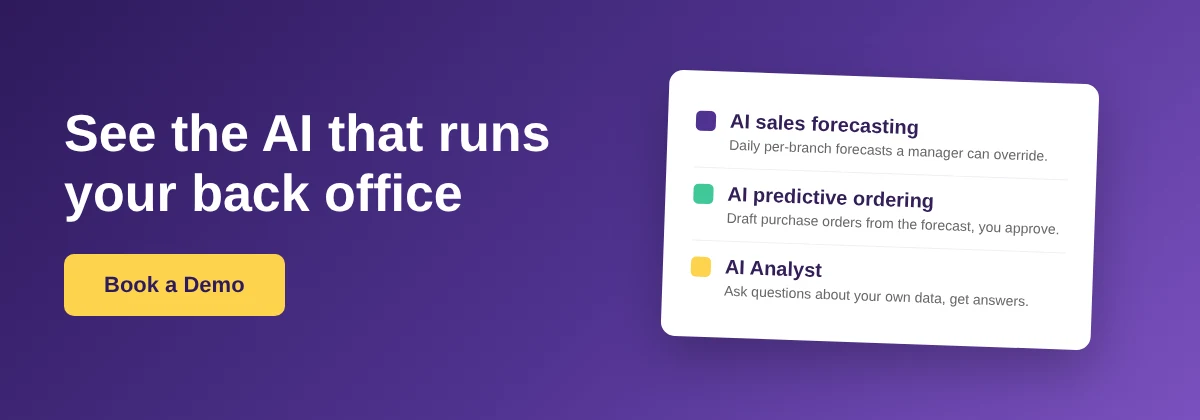
An AI agent for a restaurant group does a back-office job on your own numbers, then waits for a person to approve the result. The ones worth paying for forecast each branch's sales 14 days ahead, draft the supplier order, and answer your data questions. A manager can override any figure the model produces. This article shows which AI agents are worth buying for a multi-site operation, and what to check before you trust one.
Most of the agents you find when you search are built for guests. They take phone orders, run the website chat, and suggest an upsell at the kiosk.
Those tools matter at the counter, but they do nothing for the person who signs off purchasing across ten sites. The agents that move the money for a group sit in the back office. There they read your sales history, your recipes and your stock.
So the real question for a group is not whether AI can talk to a guest. It is whether an agent can take a repetitive back-office job off your team without taking the judgement away from them.
Guest-Facing Agents and the Agents That Run the Back Office
The split between the two kinds of agent decides where the payback is for a multi-site operator. Guest-facing agents raise sales at one counter. Back-office agents cut cost and labour across every site at once, which is where a group's margin actually comes from.
| What you are comparing | Guest-facing agents | Back-office agents |
|---|---|---|
| The job it does | Take orders, answer calls, suggest upsells | Forecast sales, draft orders, answer data questions |
| Whose work it changes | Front of house and the guest | The operator, the buyer and the branch manager |
| What it improves | One venue's top line | Purchasing, stock and labour across every site |
| Who stays in control | The guest completes the order | A manager approves the result |
Read the table one way and the choice looks obvious for a group. The back-office column is the one that touches purchasing, stock and labour at the same time. A guest-facing agent is a fine second project, rarely the first one a multi-site operator should buy.
The Back-Office Jobs Worth Handing to AI
Three back-office jobs are now safe to hand to an AI agent, because each one still ends with a person. Judge any agent on how well it does these, and on whether it leaves the manager in charge.
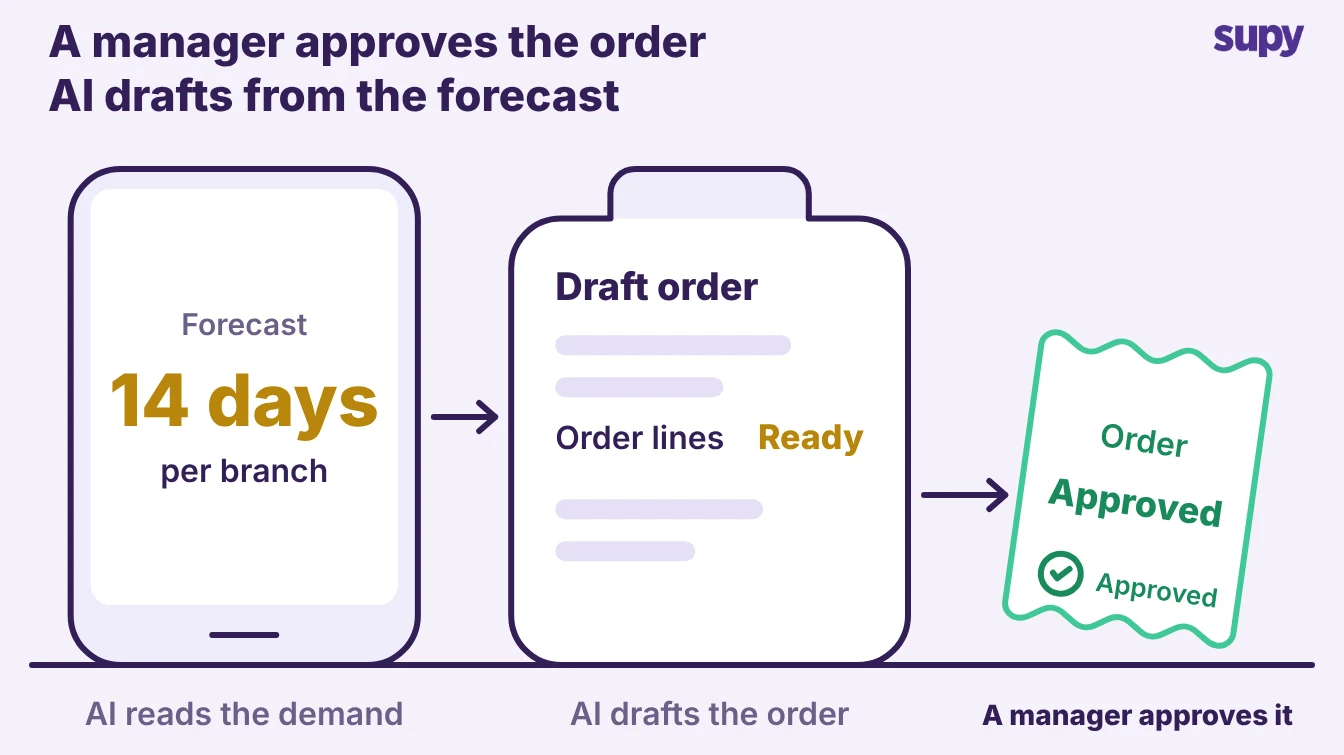
- Forecast demand you can correct. A sales forecast runs 14 days ahead for each branch, down to the menu item, shown against the 8-week average. A manager overrides any day or item when they know something the model does not, such as a local event, without retraining anything. The forecast stays useful because a person can fix it.
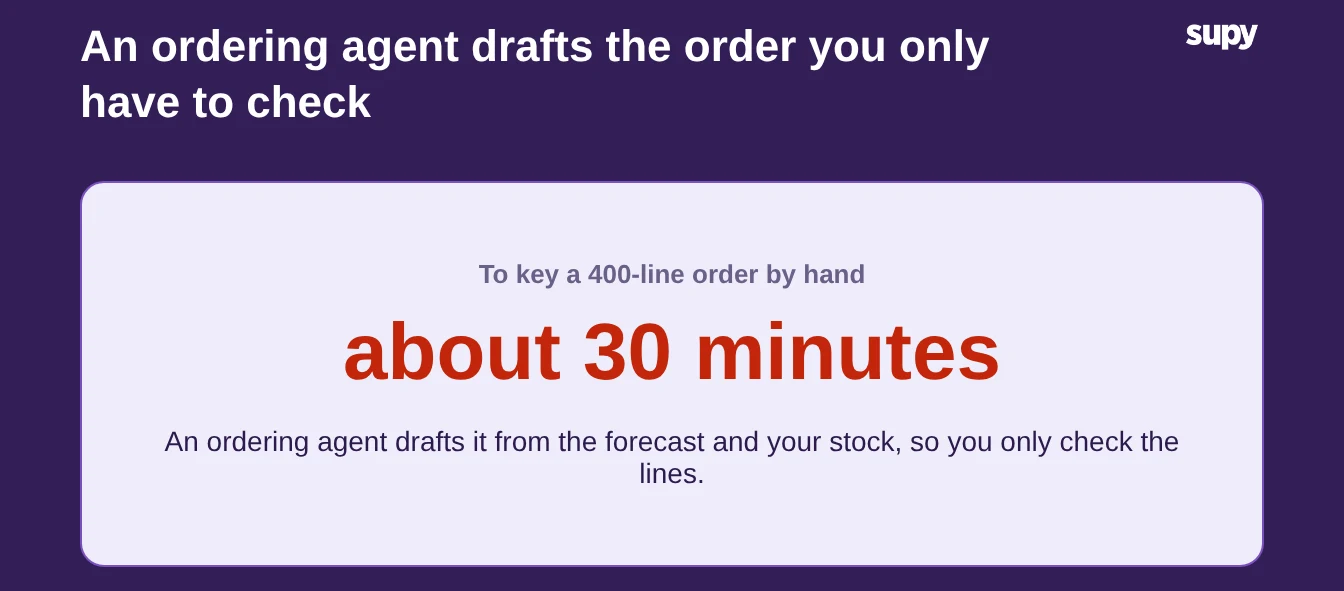
- Draft the order, then approve it. An ordering agent turns that forecast into a ready-to-submit purchase order, shows the 4-week average quantity on each line, and never sends it on its own. Someone reviews every line first, so a buyer skips about 30 minutes of keying a 400 line order by hand. You can read more on how AI predictive ordering keeps that review step.
- Ask your own data a question. The newest back-office agent is one you chat with. You ask it why food cost rose at two branches last week, and it answers from your own figures with a short summary, a chart or a table. For a group whose numbers sit in separate systems, this is the heart of restaurant analytics software a non-analyst can actually use.
None of these three replaces the operator. Each one removes the typing and the waiting, and leaves the call with a person.
What to Check Before You Trust an AI Agent
Before you sign for any AI agent, run it against four checks in the demo. Each one separates an agent that helps a group from a bot that only looks clever.
| What to check | What to ask for in the demo |
|---|---|
| It works on your own data | Watch it read your sales, recipes and stock, not a sample set |
| A person stays in control | The forecast is one a manager can override, and the order is one someone approves before it sends |
| It cuts work you can measure | Count the hours it removes, such as a 400 line order that took about 30 minutes to key |
| It is live and staff will use it | Ask what is live today, and how other groups got their branch managers to adopt it |
Score an agent on all four, and the back-office tools beat the guest-facing ones every time. Start with the agent that forecasts your demand, drafts your orders and reads your own data, and keep a manager on the approval.
Leave the guest-facing chat for later. Buying in that order is what makes AI cut the hours your team spends on purchasing and reporting, rather than stay a novelty.