.jpg)


Staff Meals in Restaurant Food Cost: Stop Skewing Your Percentage
Where Staff Meals Quietly Skew Your Food Cost Percentage
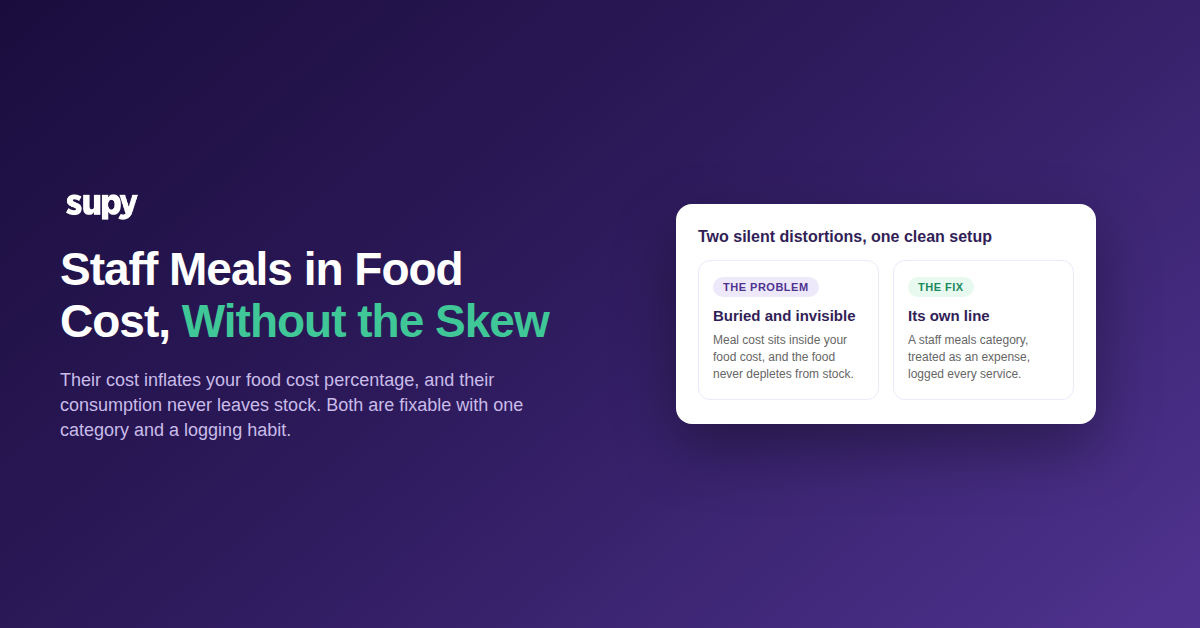
To account for staff meals in your food cost percentage, you separate their cost from the food you sold to customers. Left inside cost of goods sold, staff meals inflate the percentage and hide your true margin. The cleaner method is to record them in their own category, treated as an expense rather than cost of goods sold.
Staff meals distort the number in two separate ways. Most kitchens are living with both. The first is a cost problem. The meals your team eats are real food. But their ingredients get counted as if a paying customer bought them, so they sit inside cost of goods sold and push your food cost percentage up.
The second is a stock problem. A meal is often rung through the till as a flat staff button with no link to a recipe. Nothing is deducted from inventory. Your on-hand then reads high at every count.
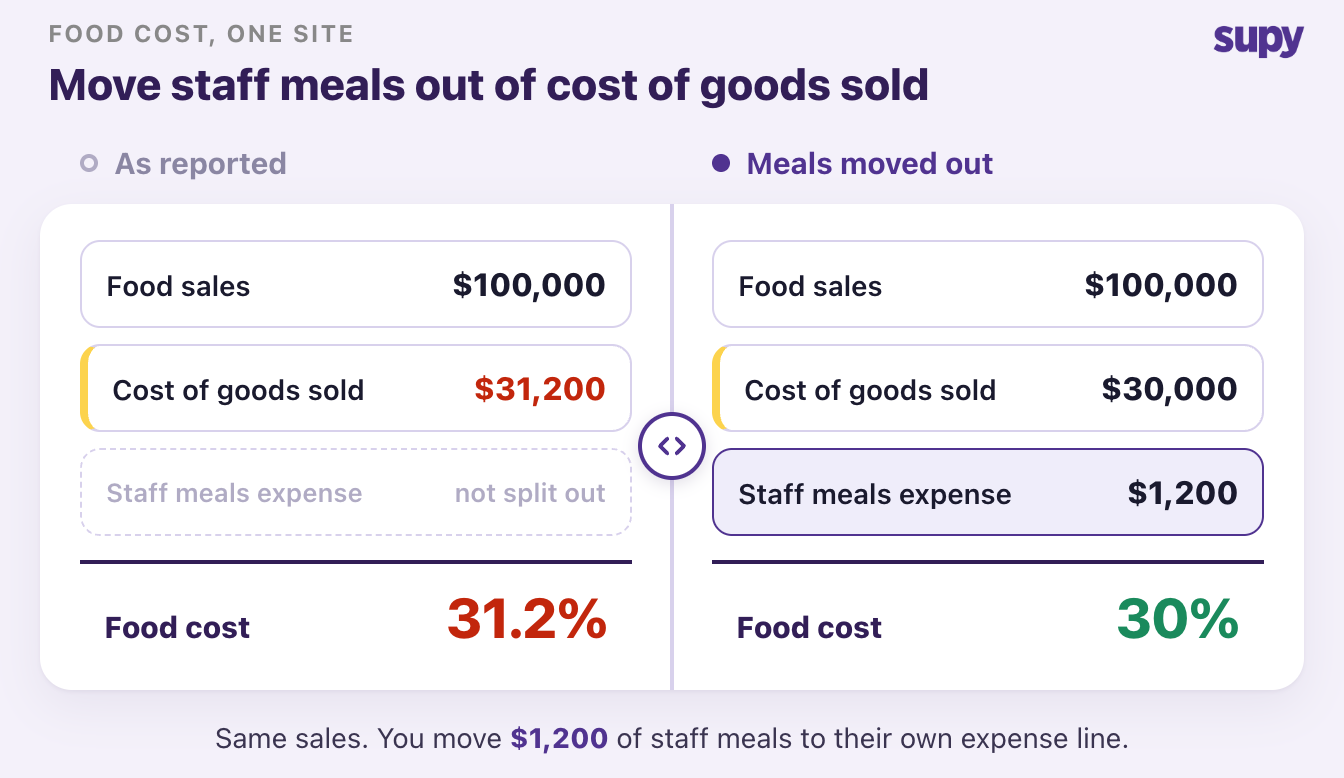
The scale is easy to underestimate. Say a site does $100,000 in food sales with $30,000 of true cost of goods sold, a clean 30% food cost. Now $1,200 of staff meals is rung through the kitchen and left inside cost of goods sold. Reported cost of goods sold becomes $31,200, and the food cost percentage reads 31.2%. Nothing about customer sales changed, yet the number is 1.2 points worse. Every decision you make off it starts from the wrong baseline.
Cost of Goods Sold or a Separate Expense? Make the Call First
Before you touch a setting, decide where staff-meal cost belongs. This one choice determines whether the cost shows up in your food cost numbers at all. Get it wrong and staff-meal cost either vanishes from a report or wrongly inflates it.
In practice most operators want staff meals out of the food cost percentage. That way the number reflects customer sales alone. The meal cost still gets tracked as its own visible line they can manage. The table below lays out what each choice does to your reporting.
| What to compare | Left in cost of goods sold | Moved to a staff meals expense |
|---|---|---|
| Effect on food cost percentage | Inflated by staff-meal cost | Reflects customer sales only |
| Where the cost shows | Buried inside food cost | Visible as its own line |
| Can you manage it | Hard to see, hard to act on | Trend it by branch and period |
| Best when | You deliberately budget meals within food cost | You want a true food cost and a staff-meal figure |
Set Up a Staff Meals Category That Reports Correctly
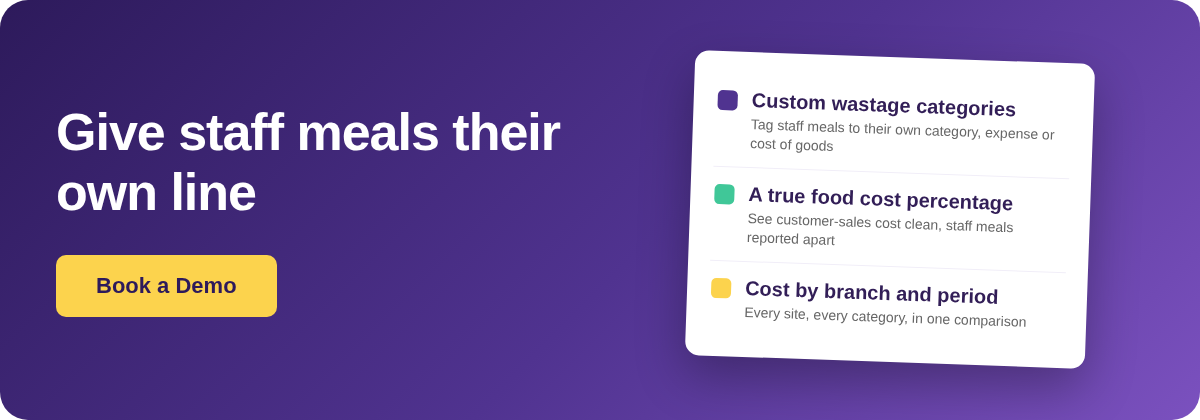
Once the call is made, the setup is short. In a restaurant inventory system you can create custom wastage categories. You add one named for staff meals and set how it is treated in cost reporting. From then on a staff meal is logged against that category. The ingredients deduct from stock, and the cost lands where you decided it should. Wastage cost is tracked by item and recipe, so you can trend staff-meal cost by branch and by period.
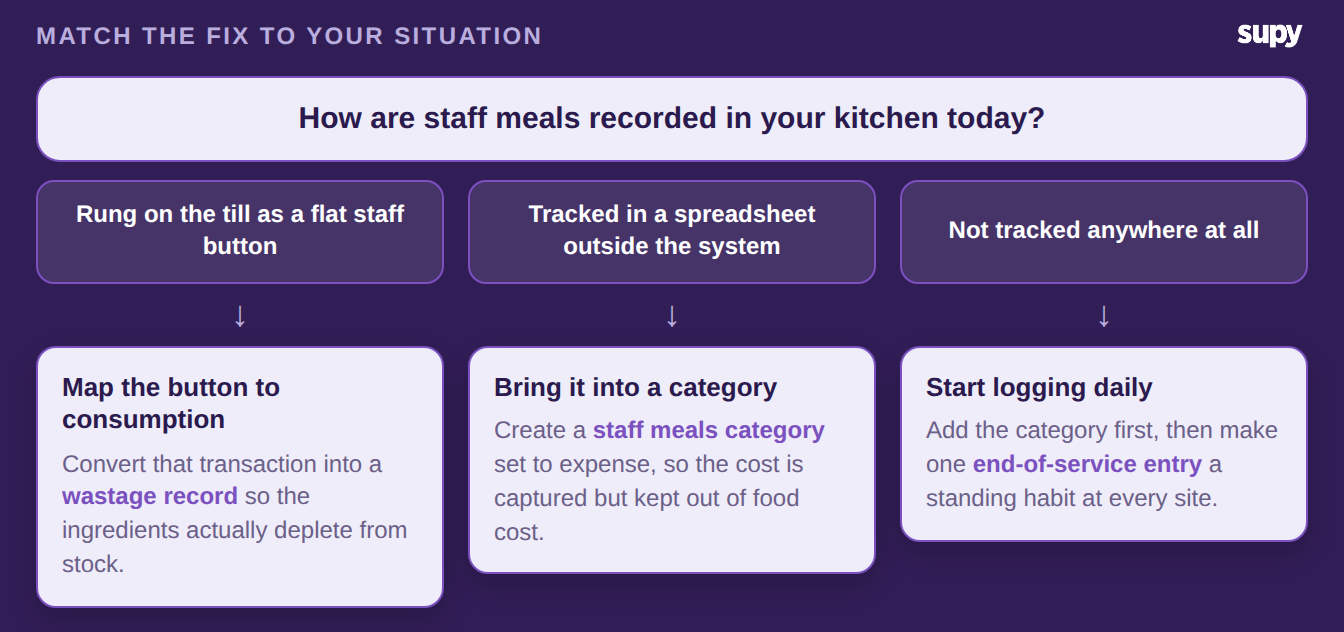
The right first move depends on how staff meals reach your books today. A kitchen ringing them on a flat button needs to map that button to consumption. A kitchen tracking them in a spreadsheet needs to bring that into a category. A kitchen not tracking them at all needs to start. A restaurant inventory management system that carries custom categories, each treated as expense or cost of goods sold, gives you all three paths without a workaround.
When Staff Meals Never Reach Your Stock Count
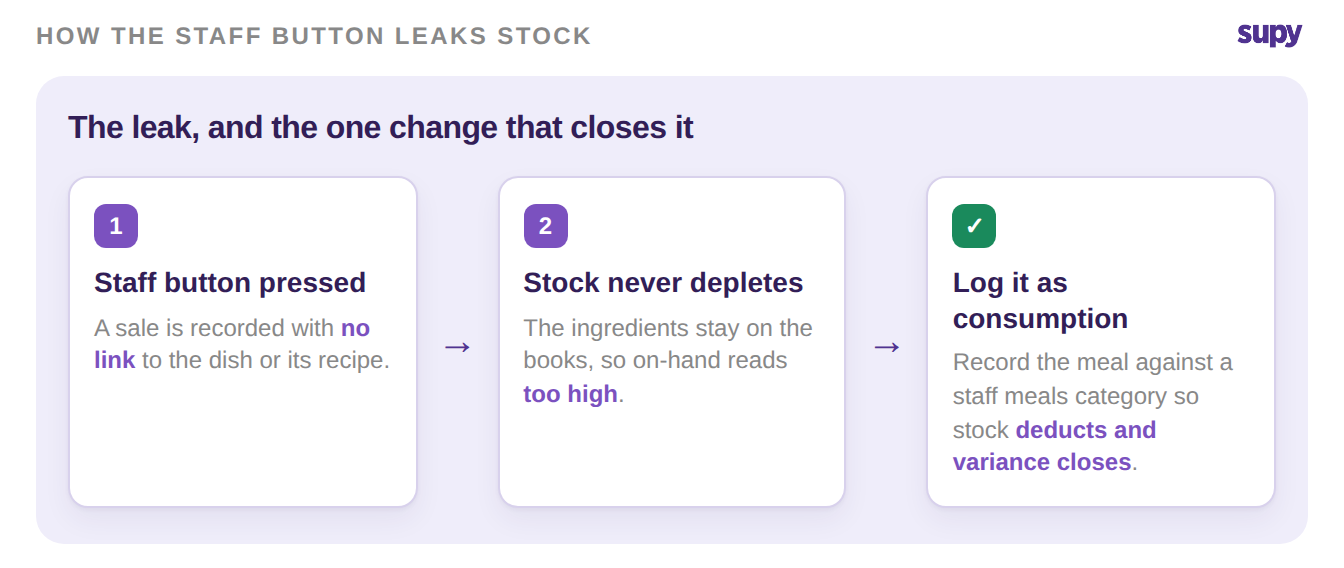
The category fixes the cost side. The stock side has its own trap. A flat staff button records a sale and links to no dish, so the recipe never fires. The ingredients are never taken off the shelf. Your inventory stays overstated by exactly what your team ate, and that gap surfaces as unexplained variance at the next count.
The move that closes it is to record the meal as consumption against the staff meals category. Stock then deducts in step and the variance disappears. A system that can convert voided or zero-value till transactions into wastage records does this without anyone re-entering the items by hand.
Whichever path you take, the method only holds if the logging holds. This is the honest objection operators raise. Any approach depends on staff entering the meals consistently, and a busy service is where discipline slips. Keep it to one standing habit: a single end-of-service entry per site. Then make the staff-meal figure something a manager reviews, so a gap gets noticed early.
Name the situation you are in and act on that one branch. If staff meals are rung on a flat button, map it to consumption so stock deducts. If they live in a spreadsheet, move them into a staff meals category set to expense. If they are not tracked at all, add the category and make one end-of-service entry the standing habit. Do that, and your food cost percentage finally reflects what customers actually cost you, with staff meals visible and managed on their own line.