





A Restaurant Inspection Checklist for Every Day, Not Inspection Day

What a Daily Restaurant Inspection Checklist Covers
A daily restaurant inspection checklist keeps every site ready for a surprise visit. The checks happen every day, not the morning an inspector arrives. It covers the five areas a health inspector looks at, from food safety and temperature to the records that prove it all happened. This article shows what goes on the list, how to fix a failed check, and how a group stays ready at once.
A good daily list is short and specific. One operator runs a 10-point open-and-close check in about two minutes, because a list that takes half an hour gets skipped by the second week. Keep each line to one thing a person can see, touch or read, so there is no guessing and no gap.
Build the list around these five areas:
- Food safety and temperature. Fridge and freezer readings, hot-holding temperatures, use-by dates on open items, and anything thawing or cooling.
- Cleaning and hygiene. Hand-wash stations stocked, surfaces and equipment cleaned to the schedule, waste out, and staff in clean uniform.
- Stock and storage. Items stored off the floor and covered, raw and ready-to-eat kept apart, oldest stock to the front, and nothing past its date.
- Equipment and pests. Fridges holding temperature, probes working and sanitised, extraction and drains clear, and no sign of pests.
- Records and labels. Prep and use-by labels on, temperature logs filled in, and cleaning signed off.
Here is the list as a table. Copy it once per site and set how often each area is checked.
| Check area | What to look at | How often |
|---|---|---|
| Food safety and temperature | Fridge, freezer and hot-holding readings, use-by dates | Open and close |
| Cleaning and hygiene | Hand-wash stations, surfaces, equipment, waste | Open and close |
| Stock and storage | Covered, off the floor, raw apart from ready-to-eat, dates | Daily |
| Equipment and pests | Fridge temperatures, probes, drains, pest signs | Daily |
| Records and labels | Prep and use-by labels, temperature logs, cleaning sign-off | Each shift |
Run the Checks Every Day, Not Just on Inspection Day
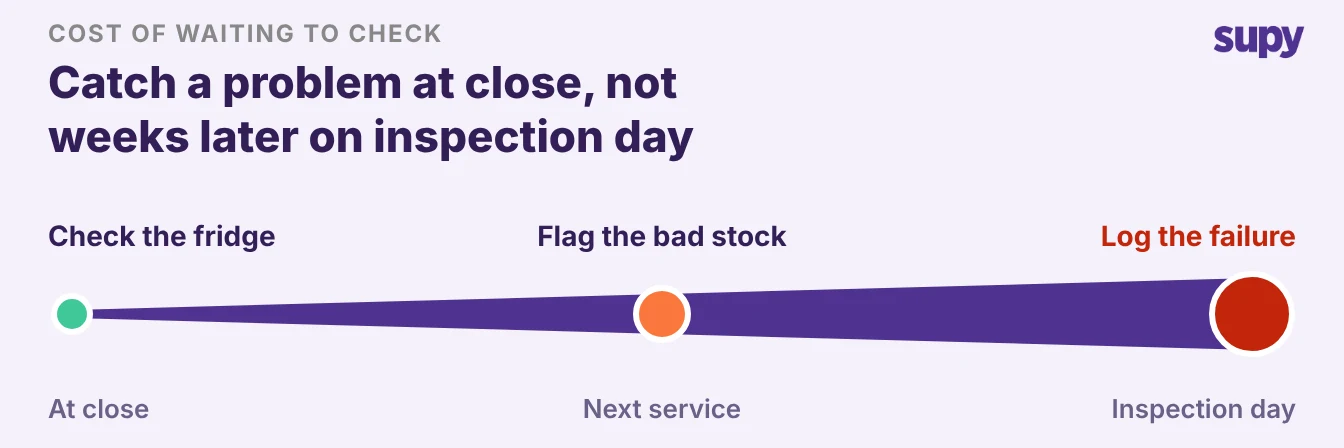
Run the list every day. The point is to catch a problem while you can still fix it, not to pass on the one day an inspector happens to call. A check you only do when you expect a visit tells you nothing about the other six days of the week.
A daily close check catches the most problems. At one multi-site group, an after-closing check found most of a fridge's stock had expired. The team caught it in time to pull it rather than serve it. An inspection-day check would have missed it by a week.
Keep the daily list doing its job with two habits:
- Make it quick. A short, specific list gets done. If a line needs a paragraph to explain, it is too vague, so cut it to the one thing a person checks.
- Check at the right moment. Temperatures at open and close, labels when stock comes in, cleaning as each shift ends. A check done at the wrong time is a tick with nothing behind it.
Turn a Failed Check Into a Fix, Not a Tick
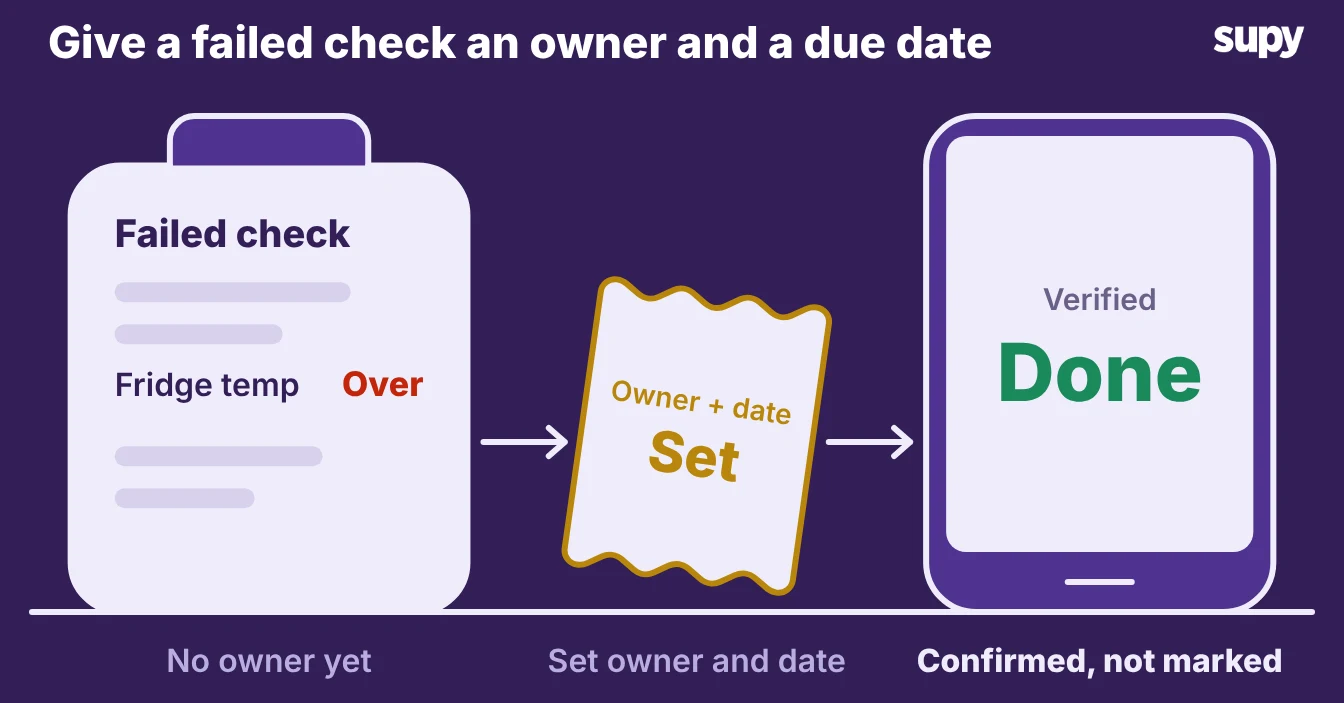
Give every failed check an owner and a due date, because a failure that is only ticked disappears the moment the list is submitted. Most inspection templates stop at the tick, so a broken fridge or a missing label is noted and then forgotten until it shows up on a real inspection.
A failed check needs three things to become a fix:
- An owner. One named person who will sort it, not "the team".
- A due date. When it has to be done by, so it does not drift.
- A verification. A second look that confirms it was actually fixed, not just marked done.
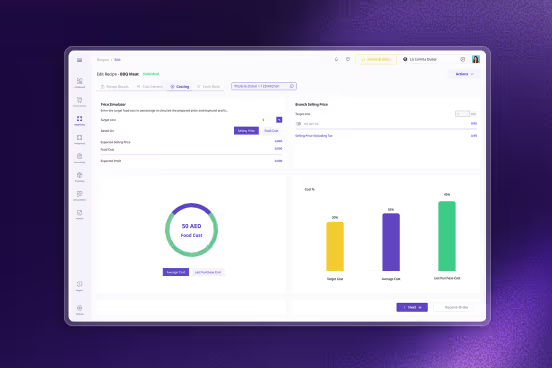
Supy's checklist feature is coming soon. It turns a failed step into a tracked job with an owner and a due date, so the fix is followed through rather than lost. Until then, a simple log with those three columns, reviewed every morning, does the same work by hand.
Keep the Records an Inspector Actually Asks For
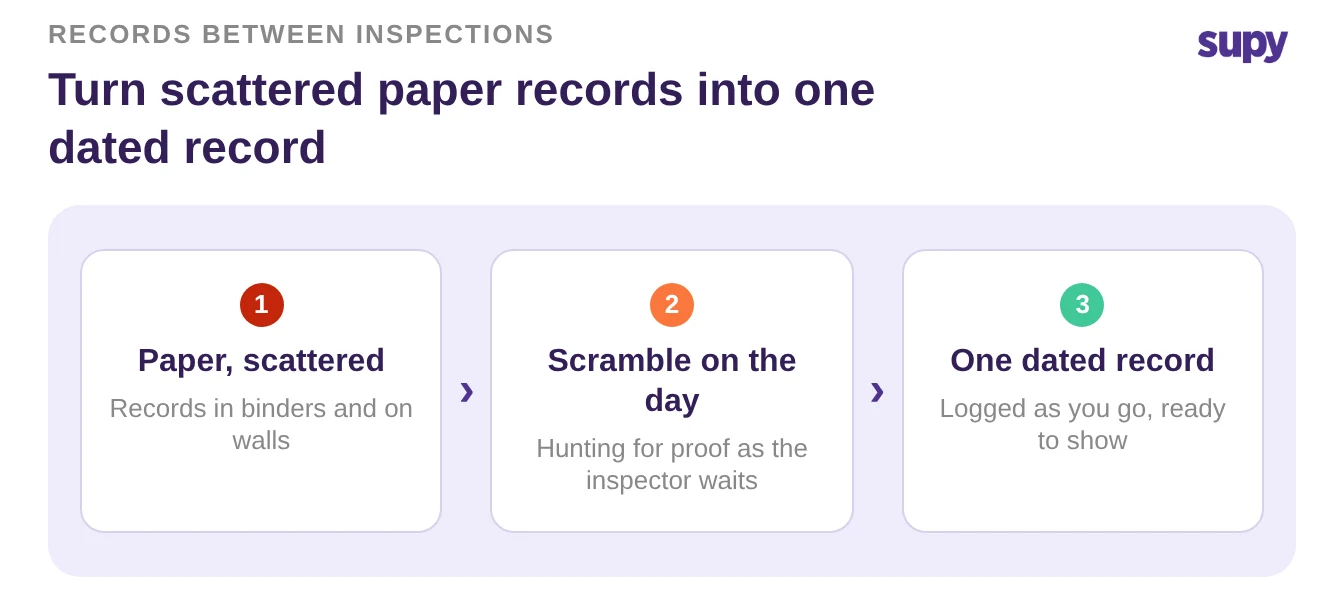
Keep a dated record as each check happens, because an inspector asks for proof, not promises. One operator's records were paper-based and scattered, so the team scrambled to pull them together during a health inspection. A check that leaves a clean, dated line as it is done beats a binder assembled in a panic.
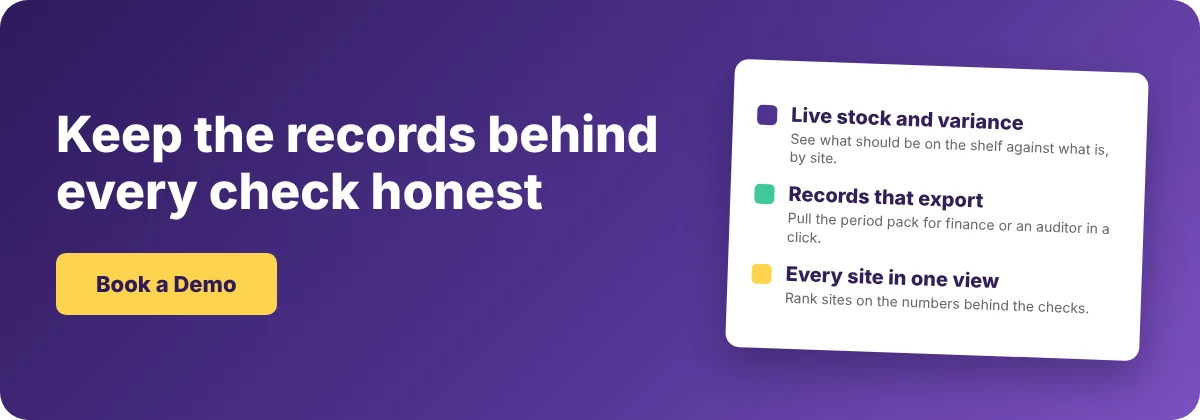
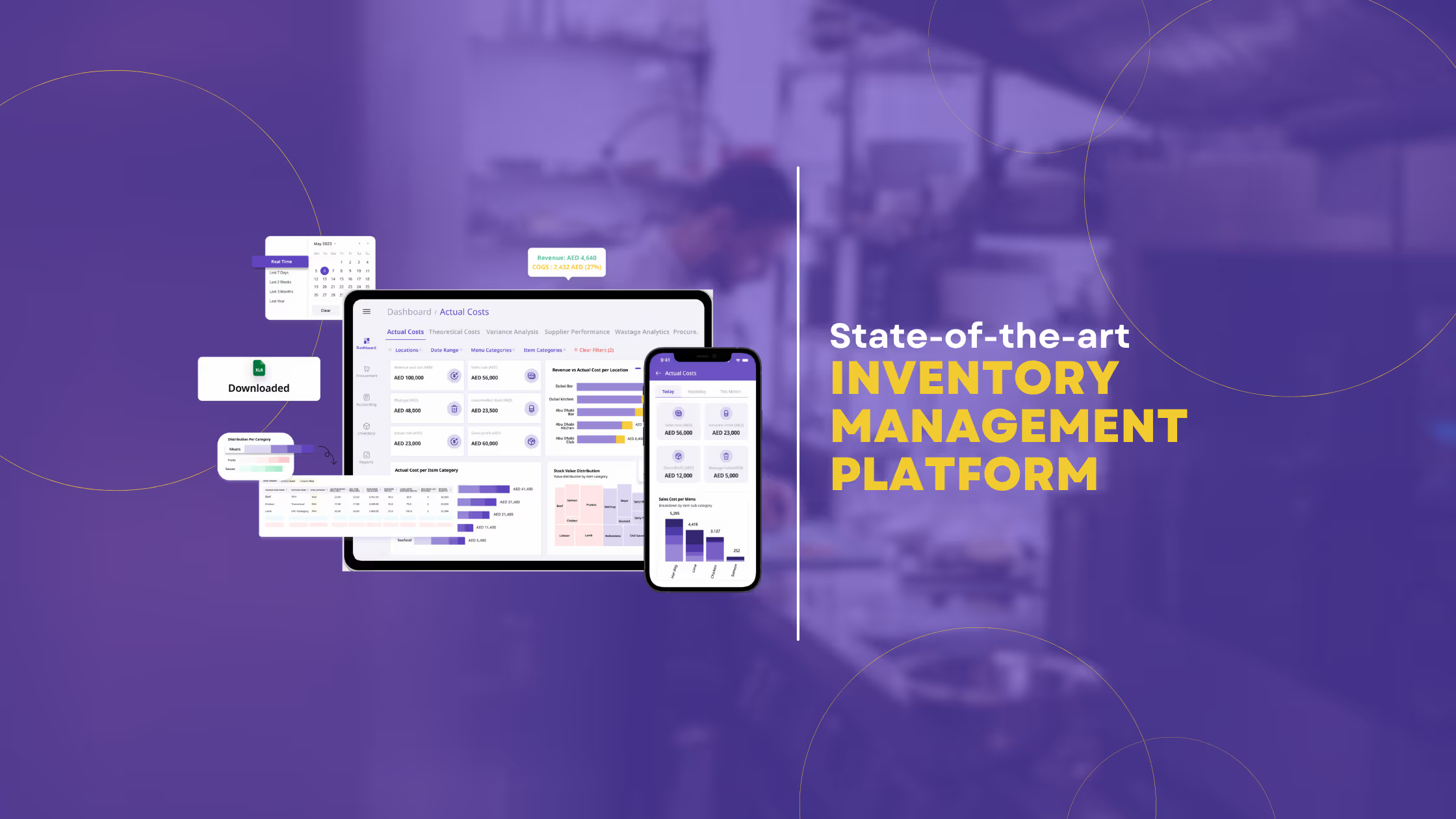
The records also catch what a checklist alone misses. An audit score can look fine while a site quietly loses stock that never shows up on the score sheet. Supy's restaurant inventory keeps a live record of stock and the variance between what should be there and what is, so the data behind the checks stays honest between visits. A guide to food safety monitoring records covers which records to keep and for how long.
Confirm the exact records and temperatures your own site must keep with your local health authority, because the detail varies by country and by council. In the US, the FDA Food Code is the common reference; your local department adopts and enforces its own version.
Keep Every Site Inspection-Ready at Once
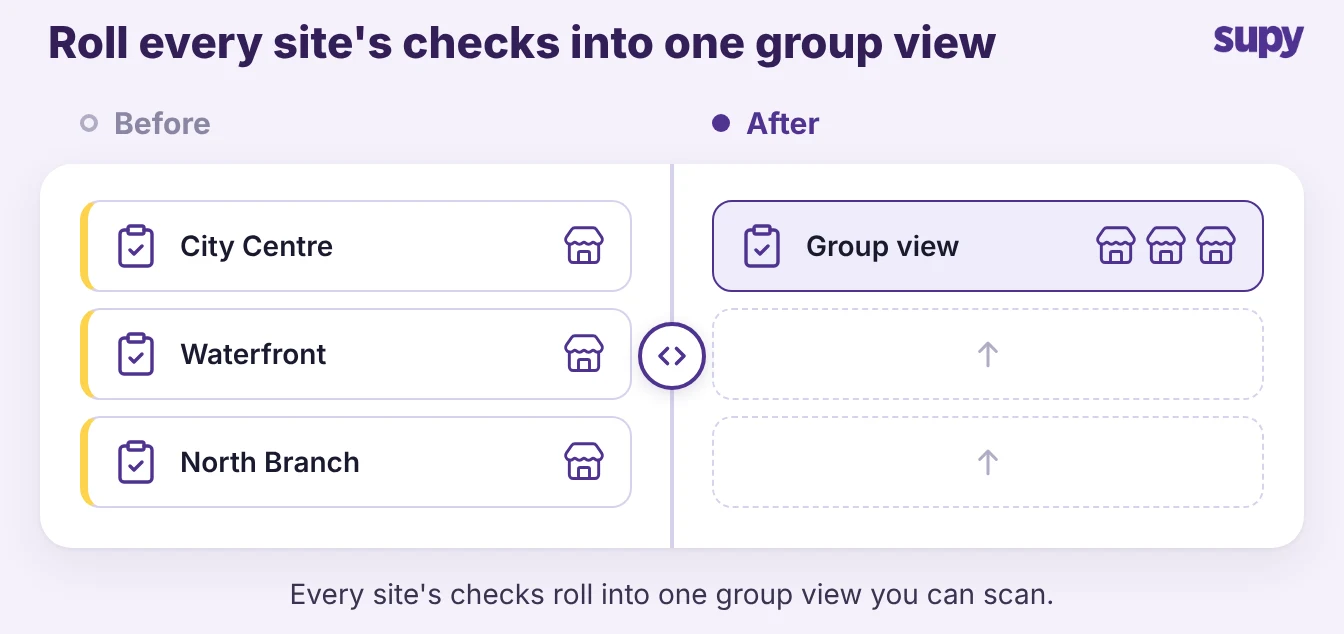
Watch every site on one view, because a group is only as inspection-ready as its weakest kitchen. A single-site checklist tells a manager their own site is fine; it does not tell head office which of 8 locations skipped a check last night.
Roll the per-site checks into a group view that shows where the gaps are:
- Per site. The same daily list, done by that site's team, so the manager owns it.
- Group view. Which sites are up to date and which are behind. Head office chases the 2 overdue branches rather than open eight sheets. A guide to the fuller restaurant audit checklist covers the periodic review that sits behind the daily one.
Run this quick self-audit on your own records. Pull the last week of checks, site by site, and find any site that skipped the same check twice. That is not bad luck, it is a habit, and it is the site to fix first.
Keep the list short, run it every day, and give every failure an owner. Then an inspection stops being a day you dread and becomes a day like any other.