.jpeg)

L’avantage de l’opérateur : pourquoi un Onboarding fluide et un support sans faille définissent le succès de la technologie de restauration
Choisir la bonne plateforme technologique pour votre restaurant n’est que la moitié de la bataille.
Le vrai test vient après la signature du contrat.
Sans un Onboarding et un support fluides dans la technologie de restauration, même les meilleurs outils peuvent échouer à produire des résultats.
Dans ce Blog, nous allons expliquer pourquoi l’Onboarding et le support sont essentiels, à quoi ressemble un excellent Onboarding, et comment Supy transforme la mise en place en avantage stratégique.
Le risque caché : un mauvais Onboarding fait perdre du temps et de l’argent
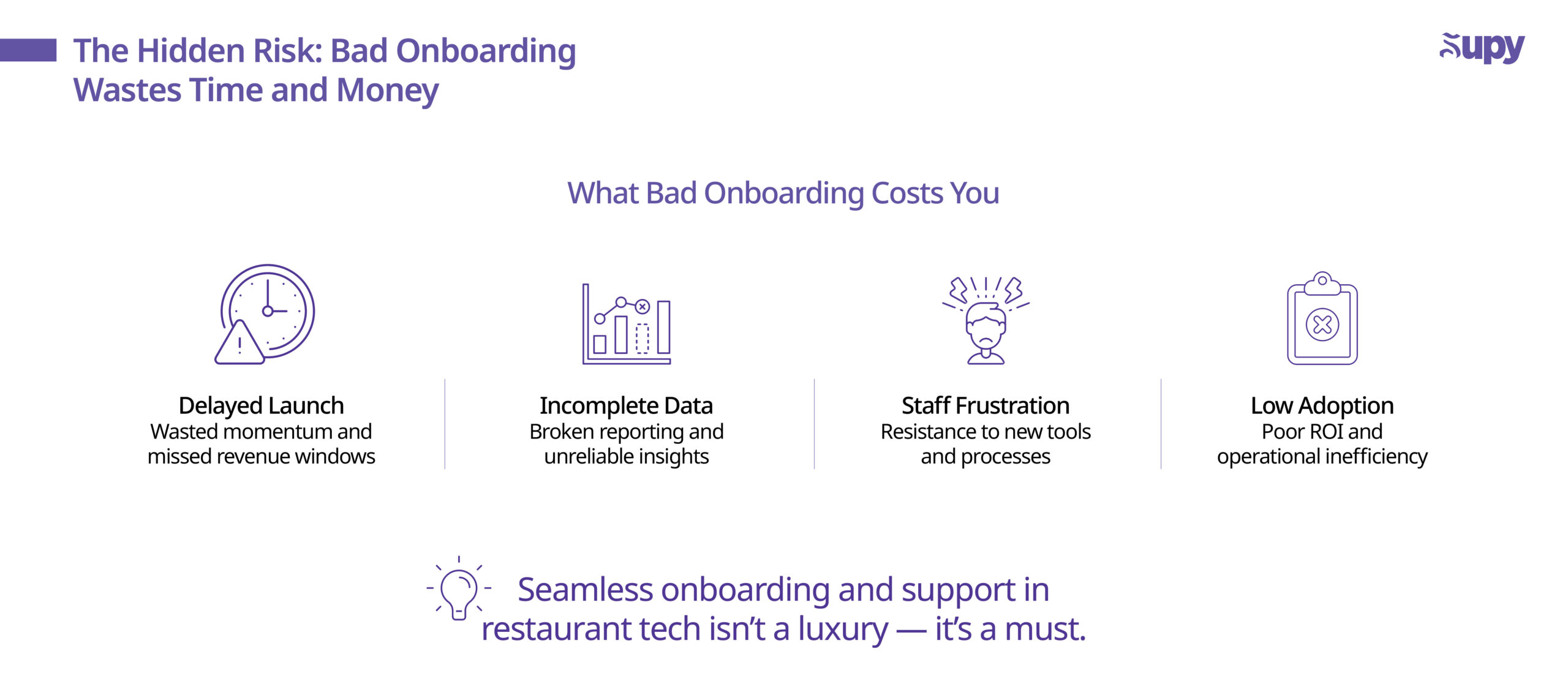
De nombreux opérateurs sous-estiment les dégâts causés par un mauvais Onboarding :
- Des lancements retardés qui gaspillent l’élan
- La frustration du personnel et la résistance au changement
- Des configurations de données incomplètes qui paralysent le reporting
- Des taux d’adoption faibles qui détruisent le ROI
Un Onboarding et un support fluides dans la technologie de restauration ne sont pas un luxe.
Ils sont essentiels pour débloquer rapidement et sans difficulté la pleine valeur de votre système.
À quoi ressemble vraiment un Onboarding fluide
Un bon Onboarding ne se résume pas à des vidéos de formation ou des manuels d’utilisation.
Il s’agit d’intégrer la technologie dans de vrais Workflow opérationnels.
Chez Supy, nous abordons l’Onboarding fluide et le support dans la technologie de restauration avec cinq principes :
- Des responsables Onboarding dédiés, pas des équipes de support génériques
- Une expertise approfondie du secteur (anciens opérateurs F&B, pas seulement des techniciens)
- Une aide pratique pour renseigner les ingrédients, fournisseurs, recettes et tarifs
- Des configurations de Workflow personnalisées basées sur le fonctionnement réel de vos cuisines
- Des vérifications de performance post-lancement pour détecter les erreurs précoces
Lorsque l’Onboarding est bien réalisé, votre équipe se sent confiante, votre système fonctionne dès le premier jour et les résultats arrivent plus vite.
Pourquoi le support est tout aussi important que la mise en place
Après l’Onboarding, le bon support garantit que votre système reste précieux, pas seulement fonctionnel.
Un excellent Onboarding et support fluides dans la technologie de restauration comprend :
- Une assistance en direct et en continu (pas seulement des systèmes de tickets)
- Des vérifications proactives du reporting pour détecter les erreurs précocement
- Une formation continue pour les nouvelles fonctionnalités ou le renouvellement du personnel
- Des réponses rapides aux questions opérationnelles et aux urgences
Le support ne se résume pas au dépannage.
C’est un partenariat continu pour maintenir des opérations efficaces et des marges solides.
Impact concret : retour sur investissement plus rapide et adoption renforcée
Dans le podcast Tech on Toast, le fondateur de Supy, Dani El Zein, a expliqué pourquoi l’Onboarding est au cœur du succès de Supy sur les nouveaux marchés.
- Supy a remporté plusieurs prix G2 pour le meilleur support et la meilleure mise en œuvre
- Les clients lancent souvent en aussi peu que 2–8 semaines, pas des mois
- Les taux d’adoption du personnel sont plus élevés parce que les Workflow semblent intuitifs dès le premier jour
En se concentrant sur l’Onboarding fluide et le support dans la technologie de restauration, Supy aide les opérateurs à obtenir un retour sur investissement plus rapide et évite les difficultés des déploiements échoués.
Le coût des raccourcis pris lors de l’Onboarding
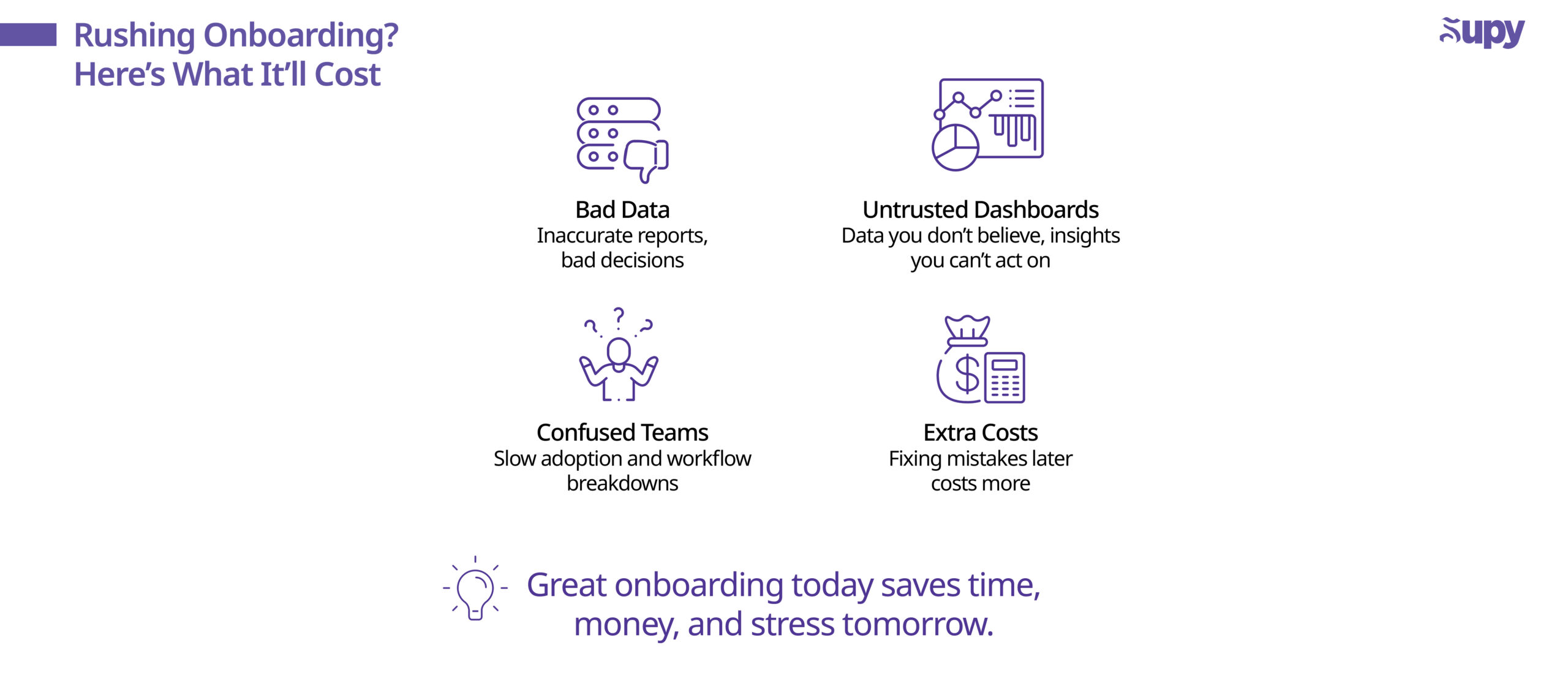
Certaines plateformes précipitent l’Onboarding pour conclure des contrats plus rapidement.
Mais un Onboarding précipité conduit à :
- Des données incorrectes qui détruisent votre reporting
- Des équipes confuses qui résistent à l’utilisation du système
- Des coûts supplémentaires pour corriger les erreurs
- Des Tableaux de bord avec des données auxquelles vous ne croyez pas
Investir dans un Onboarding fluide et un support dans la technologie de restauration permet de gagner du temps, de réduire le churn et d’instaurer la confiance, aussi bien avec votre équipe qu’avec vos clients.
L’approche de Supy : du premier jour au Jour 100
Chez Supy, l’Onboarding et le support ne sont pas des réflexions après coup.
Ils sont au cœur de l’expérience produit.
Notre équipe :
- Travaille directement avec vos responsables opérationnels pour saisir des données propres
- Personnalise les modèles pour vos inventaires, flux d’achats et reporting
- Vérifie votre Coût matière, vos mouvements de stock et vos rapports de gaspillage chaque semaine pendant les 3 premiers mois
- Signale les écarts opérationnels que vous pourriez manquer (comme les erreurs de portions ou les changements de prix des fournisseurs)
Le résultat ?
Un Onboarding fluide et un support dans la technologie de restauration qui apportent de véritables changements opérationnels, pas seulement de nouveaux logiciels.
Réflexion finale : la technologie ne vaut que par sa mise en œuvre
Vous pouvez acheter la meilleure stack technologique au monde.
Mais sans un Onboarding fluide et un support dans la technologie de restauration, vous laissez les résultats au hasard.
Si vous investissez dans la technologie pour maîtriser le Coût matière, améliorer l’efficacité et développer votre groupe de restauration, exigez plus que de simples logiciels.
Exigez un partenaire engagé à s’assurer que cela fonctionne réellement, dès le premier jour.
C’est Supy.



