.jpg)


The Future is Served: How AI in Restaurants is Transforming Dining Experiences
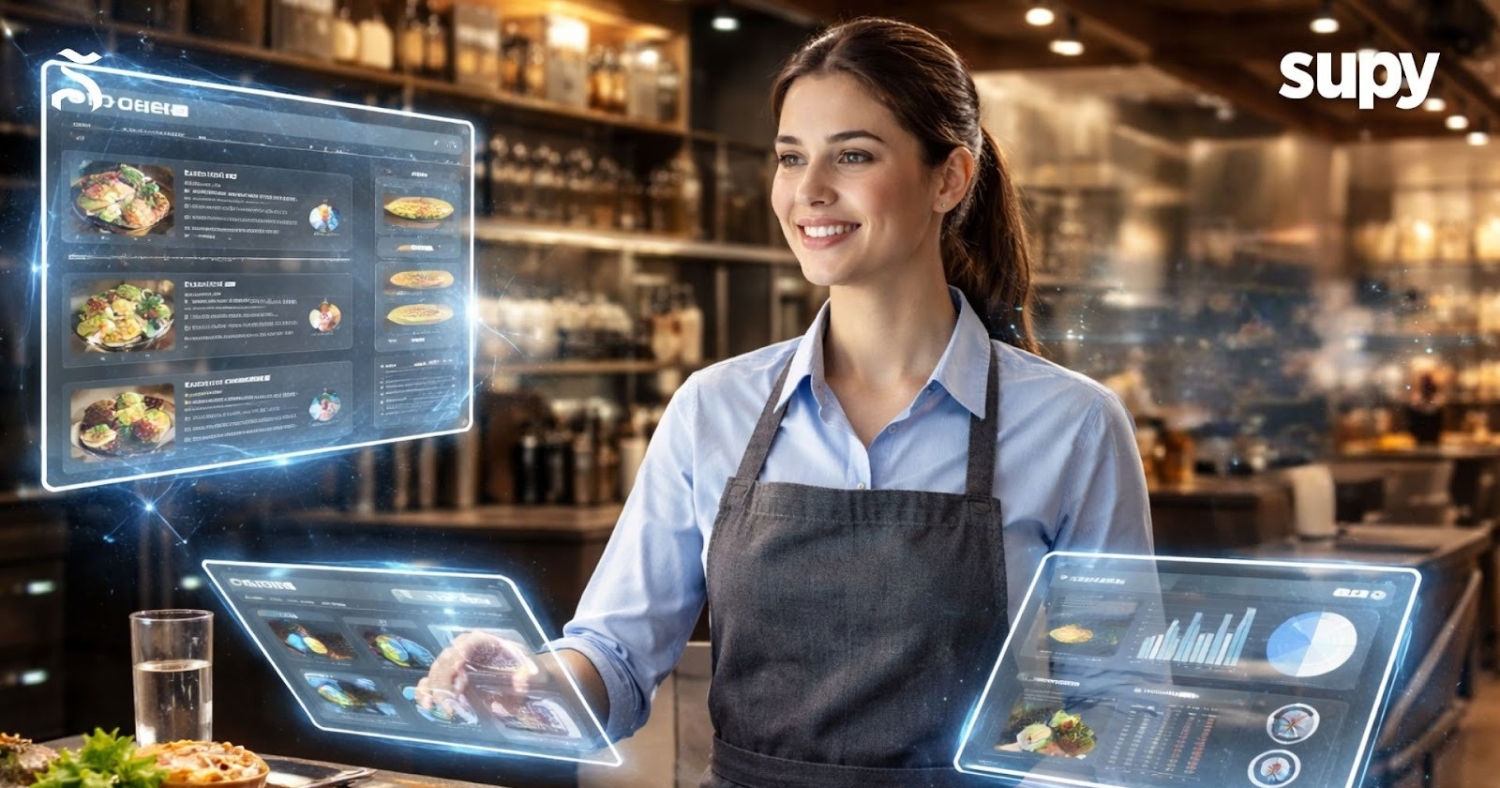
The way we eat out is changing, and a big reason for that is AI. You know, artificial intelligence? It’s not just for sci-fi movies anymore. Restaurants are starting to use it in all sorts of ways to make things better for everyone, from the people ordering food to the folks in the kitchen. It’s all about making dining smoother, more personal, and honestly, a bit more exciting. Let's take a look at how ai in restaurants is shaking things up.
Key Takeaways
- AI helps restaurants create menus and dining experiences that are just right for each person, considering what they like and any food rules they have.
- Restaurants can use AI to manage bookings, figure out how busy they’ll be, and keep track of food supplies, which means less waste and more money saved.
- Kitchens can use AI for tasks that are done over and over, making sure food is always made the same way and helping chefs focus on creativity.
- AI can help restaurants connect better with their customers through smart marketing and by using feedback to make things better.
- AI can help restaurant staff by taking on some of the harder or repetitive jobs, making their work less stressful, especially when it’s really busy.
Personalised Dining Journeys Through AI
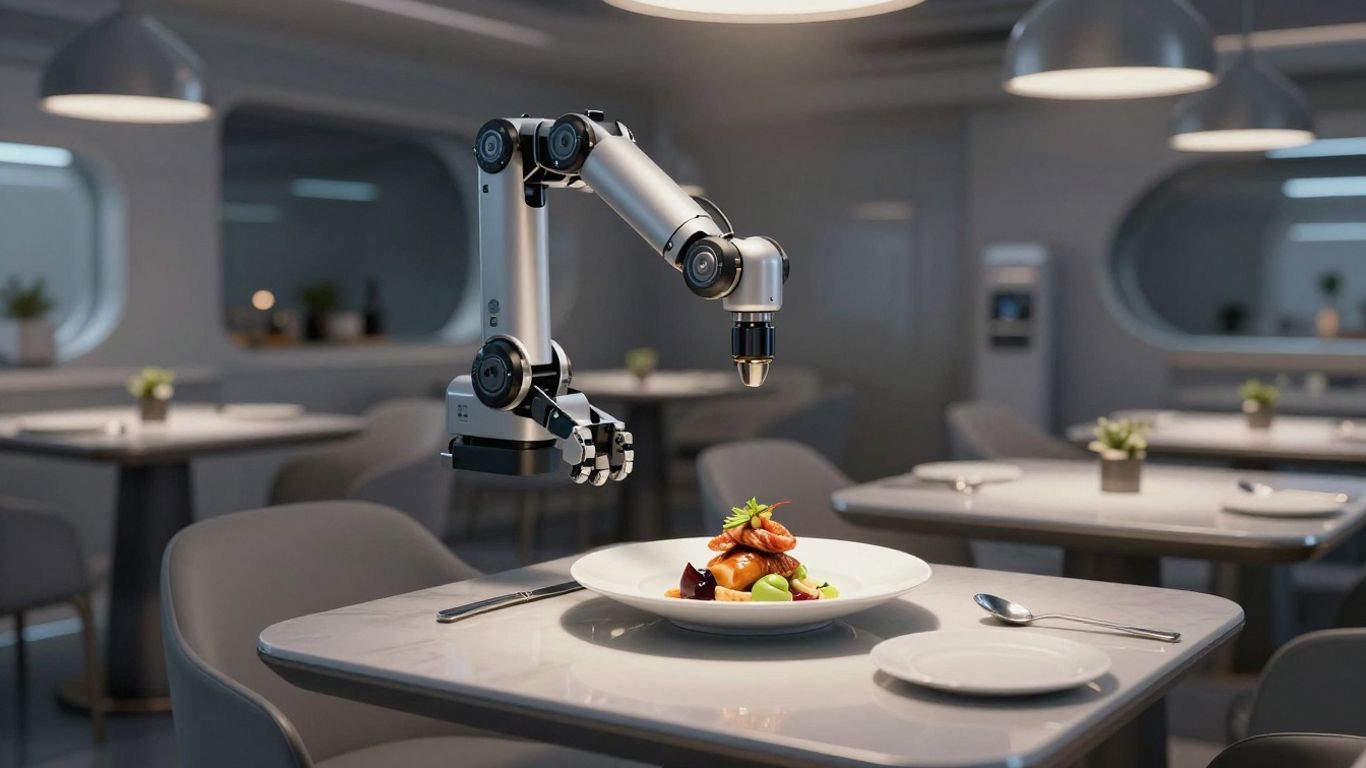
Tailoring Menus to Individual Tastes
Remember when menus were just a list of dishes? Those days are fading fast. AI is now helping restaurants get to know you, not just as a customer, but as an individual with unique tastes. By looking at what you've ordered before, perhaps even considering the weather outside or if you've visited during a specific season, AI can suggest dishes you're genuinely likely to enjoy. It's like having a personal food guide who knows your preferences inside out.
Anticipating Dietary Needs and Preferences
This is where AI really shines. Imagine you have a food allergy or follow a specific diet, like veganism or gluten-free. Instead of you having to meticulously scan every item and ask endless questions, the AI can step in. It can automatically filter out anything that doesn't fit your needs and highlight the options that are safe and delicious for you. This proactive approach makes dining out much more relaxed and inclusive. It shows a real commitment to looking after every guest.
Crafting Unique Culinary Experiences
Beyond just dietary needs, AI can help create truly memorable moments. It can identify patterns in what makes a dining experience special for different people. Perhaps it's suggesting a wine pairing that perfectly complements your meal, or even recommending a dessert based on your previous sweet treat orders. It's about moving beyond a standard meal to something that feels curated just for you, making each visit feel special and new.
Streamlining Restaurant Operations with AI
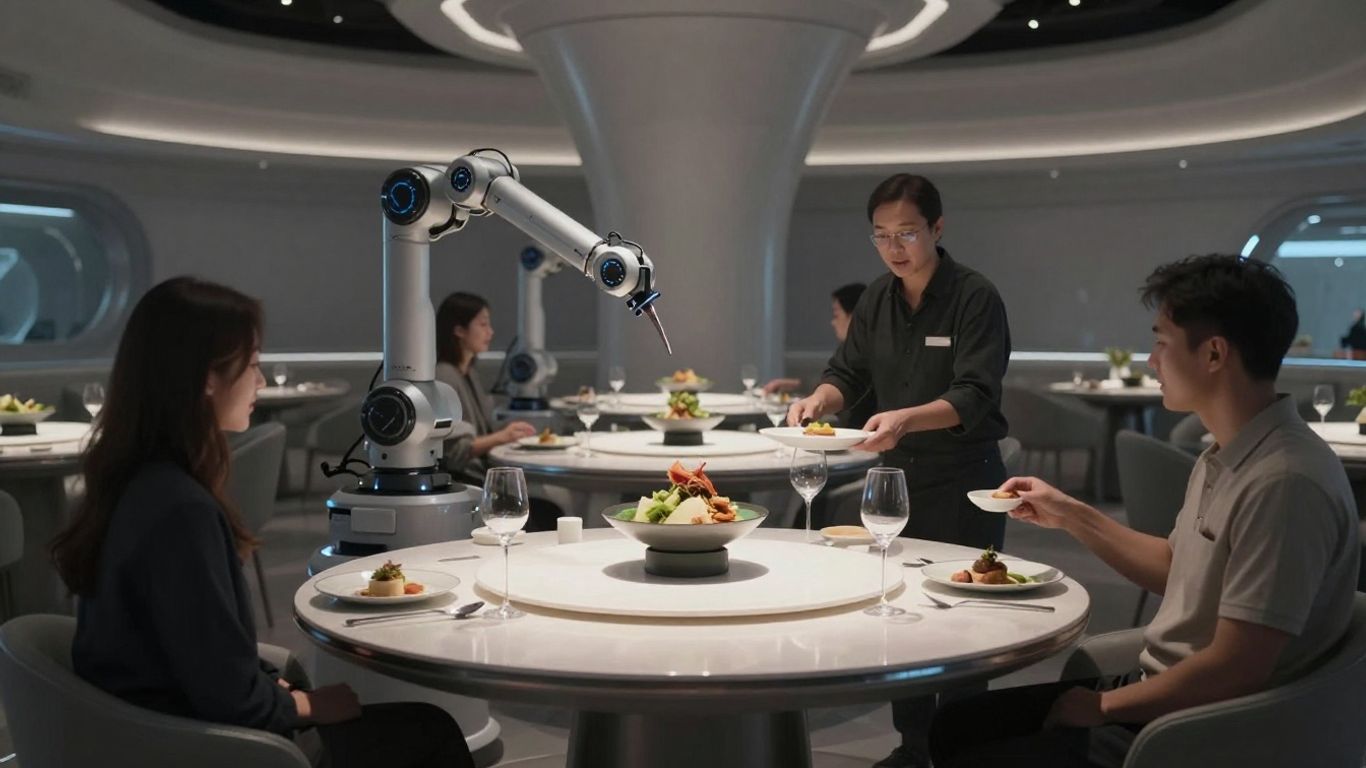
Running a restaurant is a complex dance, and AI is stepping in to help choreograph it more smoothly. It's not about replacing people, but about giving them better tools to manage the daily hustle. Think of it as having an extra pair of very organised hands.
Intelligent Reservation and Queue Management
Getting a table shouldn't feel like a battle. AI systems can now manage bookings with impressive accuracy. They look at past data, upcoming events, and even the weather to predict how busy the restaurant will be. This means fewer no-shows and a better flow of customers. When you arrive, instead of a chaotic queue, AI can give you a realistic wait time and even send a text when your table is ready. This makes the waiting period less stressful for everyone involved. It’s about making the whole process from booking to being seated feel effortless.
Optimising Inventory and Reducing Waste
Food waste is a big problem, both for the planet and for a restaurant's bottom line. AI can really help here. By analysing sales data, it can predict exactly how much of each ingredient is needed. This means less food spoiling in the fridge and fewer last-minute dashes to the shop. It’s a smart way to keep stock levels just right, saving money and being more sustainable. This kind of optimisation is key for better business control.
Automating Ordering and Customer Service
Many of us have already seen AI chatbots on restaurant websites or apps. These bots can handle simple tasks like taking orders, answering common questions about opening times or menu items, and even taking reservations. This frees up human staff to deal with more complex customer needs or to focus on providing a more personal touch during the meal. It’s about making sure customers get quick answers to simple queries while staff can focus on creating a memorable dining experience.
AI in operations isn't just about efficiency; it's about creating a more predictable and less stressful environment for both staff and customers. By handling the routine, it allows the human element of hospitality to shine through.
The Evolving Role of AI in Food Preparation
Automating Repetitive Kitchen Tasks
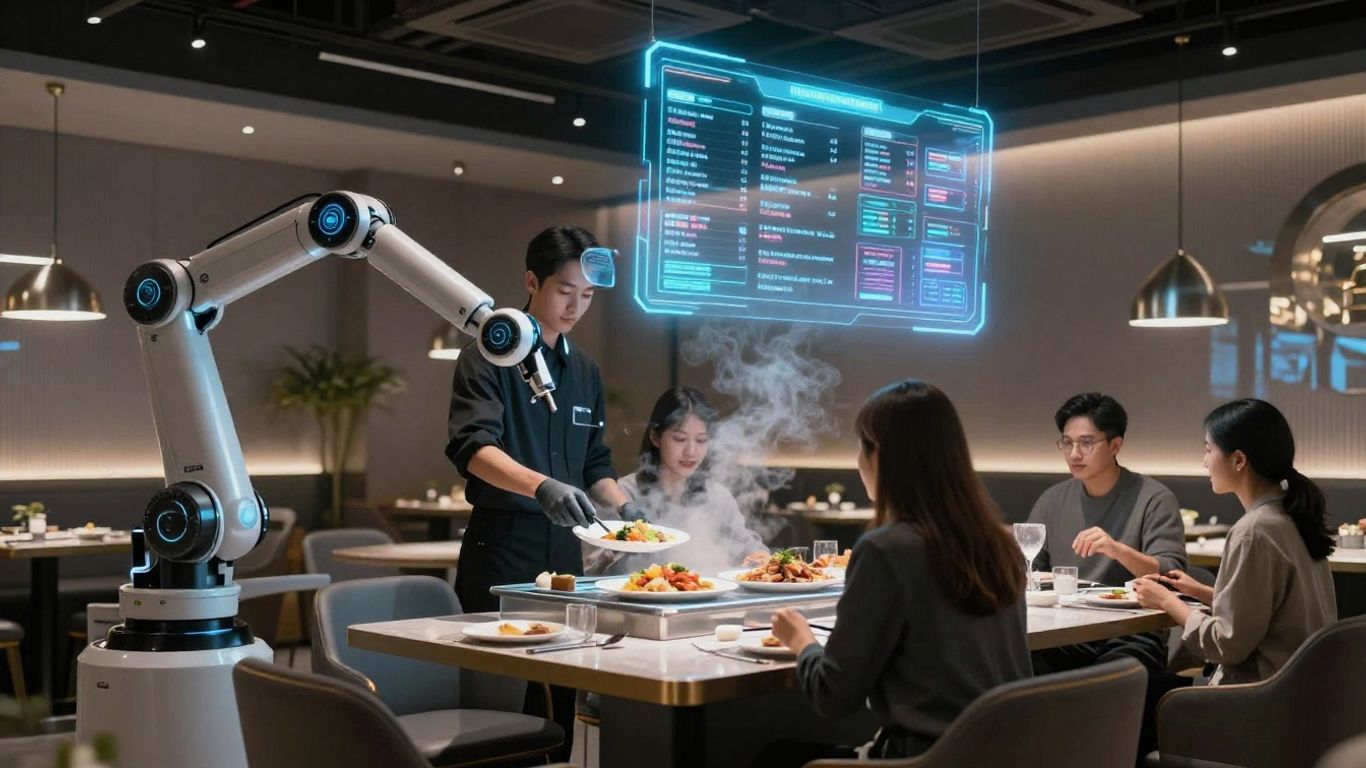
It's easy to imagine AI taking over the more mundane, repetitive jobs in a busy kitchen. Think about the sheer volume of vegetables that need chopping, or the constant need to flip burgers on a grill. AI-powered robotic arms can handle these tasks with incredible precision and speed, freeing up human chefs for more creative and complex work. This isn't about replacing chefs, but rather about giving them better tools. These systems can work tirelessly, maintaining a consistent pace without fatigue. For instance, a machine could be programmed to dice onions to a specific size, ensuring uniformity across every dish that requires them. This level of automation means less time spent on basic prep and more time for refining flavour profiles or plating.
Ensuring Consistency in Culinary Creations
One of the biggest challenges in any kitchen, especially a large one, is making sure every dish tastes the same, no matter who prepared it or when. AI can be a game-changer here. By precisely controlling cooking times, temperatures, and even ingredient measurements, AI systems can guarantee that a signature dish is replicated perfectly, time after time. This consistency builds customer trust and loyalty. Imagine a popular curry that always has the exact same spice blend and heat level. This consistency is something customers come to expect and rely on.
AI-Assisted Recipe Refinement
AI isn't just about doing the same thing over and over; it can also help create new and exciting things. By analysing vast amounts of data – from customer feedback and sales figures to ingredient pairings and even global food trends – AI can suggest modifications to existing recipes or even propose entirely new ones. It can identify which flavour combinations are most popular or which ingredients might be underutilised. This data-driven approach can help chefs innovate and stay ahead of culinary trends. For example, AI might notice that a particular herb is frequently ordered alongside a specific protein and suggest a new dish incorporating both. This collaborative process between human creativity and AI analysis can lead to some truly inspired culinary developments. It's a way to refine restaurant inventory software by understanding what's actually being used and what customers enjoy most.
Enhancing Customer Engagement with AI
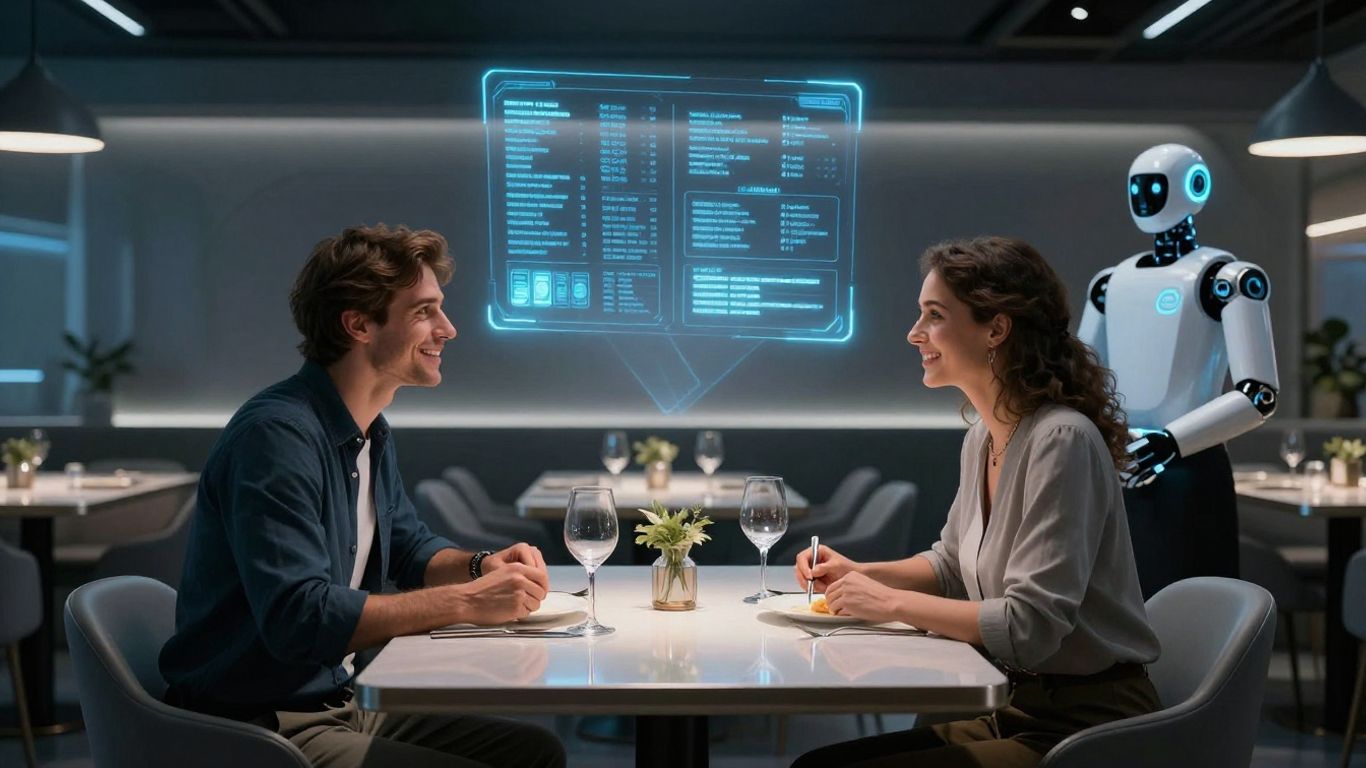
It's not just about getting people in the door; it's about making them feel truly seen and valued. AI is becoming a quiet partner in this, helping restaurants build stronger connections with their patrons. Think of it as having a really attentive friend who remembers your favourite dish and knows when you might fancy a change.
Data-Driven Marketing Strategies
Gone are the days of generic flyers. AI allows restaurants to look at what people actually like and order. By sifting through past purchases and preferences, businesses can put together marketing messages that actually hit the mark. This means fewer wasted offers and more happy customers getting deals they're genuinely interested in.
- Personalised offers: Sending out discounts for dishes a customer has ordered before or might like based on past choices.
- Targeted promotions: Identifying groups of customers who might be interested in a new menu item or a special event.
- Loyalty program boosts: Tailoring rewards to individual spending habits and visit frequency.
Leveraging Customer Feedback for Improvement
Every comment, review, and rating is a piece of the puzzle. AI can sort through vast amounts of feedback from online reviews, social media, and surveys. It spots recurring themes and highlights areas where the restaurant is doing well, and perhaps more importantly, where it could do better. This means quicker adjustments and a more responsive service.
AI acts as a tireless listener, processing feedback at a scale humans simply can't. This allows for a more objective view of customer sentiment, helping to pinpoint specific areas for operational or service improvements without getting lost in the noise.
Building Deeper Customer Relationships
When AI helps streamline the basics – like quick order taking or accurate reservation management – it frees up staff to focus on what truly matters: human interaction. This allows for more meaningful conversations, personalised recommendations from staff who are less rushed, and a generally warmer atmosphere. The goal is to make every visit feel special, not just transactional.
- Anticipating needs: Staff, armed with AI insights, can proactively offer assistance or suggestions.
- Remembering preferences: A quick note on a customer's profile, visible to staff, can remind them of a favourite drink or a dietary restriction.
- Personalised follow-ups: AI can help trigger a thank-you message or a special offer after a positive experience.
AI's Impact on Employee Experience
It's not just customers who are benefiting from artificial intelligence in the restaurant world. The people working behind the scenes and on the floor are seeing some significant changes too. AI is stepping in to help out, making jobs a bit easier and, dare I say, more enjoyable. This technology is helping to shift the focus from repetitive tasks to more engaging interactions.
Supporting Staff with Task Automation
Think about the daily grind in a busy kitchen or front-of-house. There are always those jobs that are necessary but, frankly, a bit dull. AI can take over some of these. For instance, systems can manage stock levels, flagging when supplies are running low, which is a big help for smarter restaurant operations. This means less time spent counting tins and more time on, well, actual cooking or serving.
Here's a look at some tasks AI is helping with:
- Automated inventory checks
- Basic customer query responses via chatbots
- Table management and reservation updates
Empowering Employees for Better Service
When AI handles the mundane, staff are freed up to do what they do best: connect with people. Imagine a server who isn't constantly worried about running back to the kitchen for a forgotten side order because the ordering system is more efficient. They can spend more time talking to guests, understanding their needs, and making their dining experience special. This isn't about replacing people; it's about giving them the tools to excel.
Reducing Burden During Peak Hours
We all know how hectic a restaurant can get during a rush. AI can act as a helpful assistant during these times. Intelligent systems can help manage queues, predict busy periods more accurately, and even assist with order taking, especially in drive-thru scenarios. This means less stress for the team and a smoother experience for everyone involved. It's like having an extra pair of hands that never get tired.
The goal is to create a work environment where technology supports human effort, allowing staff to concentrate on the aspects of their job that require a personal touch and genuine skill. This leads to happier employees and, ultimately, better service for diners.
The Future Landscape of AI in Restaurants
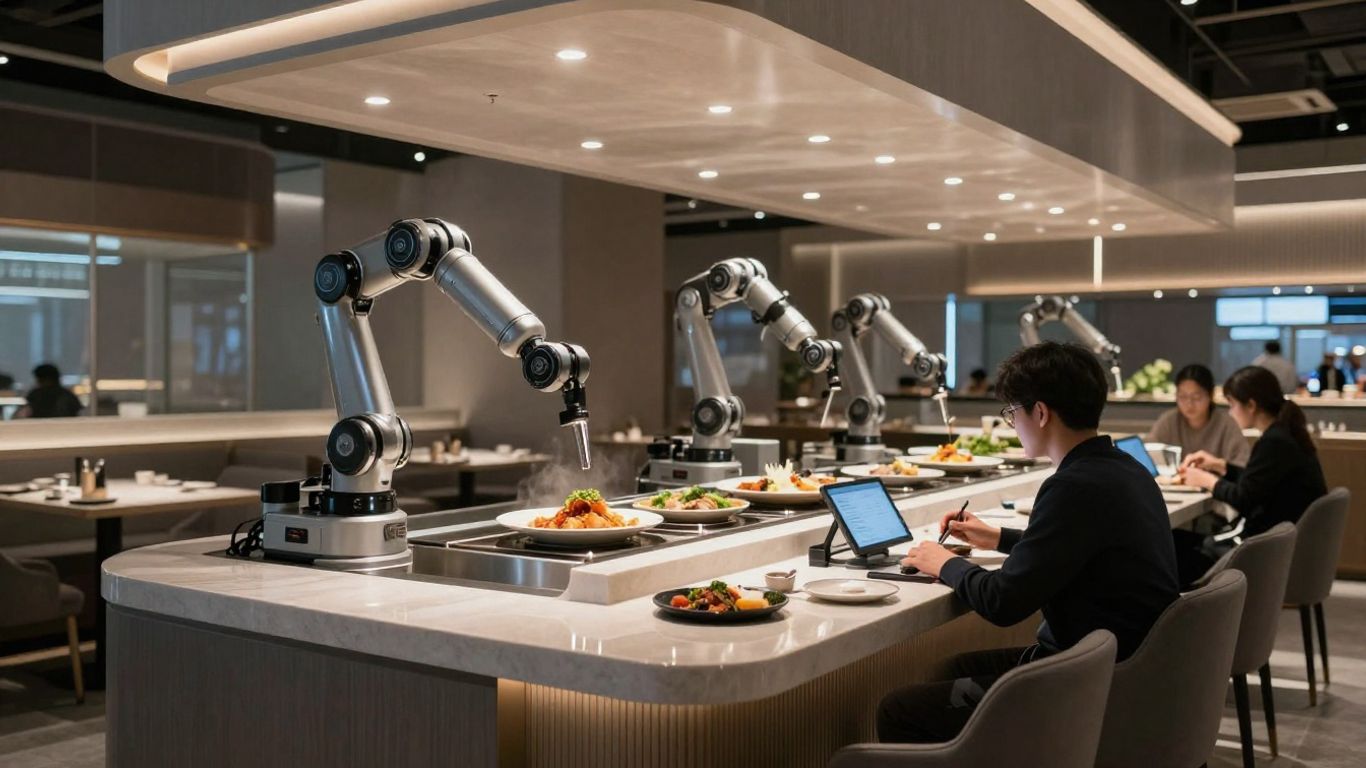
Looking ahead, the integration of artificial intelligence into the restaurant sector is set to become even more sophisticated. We're moving beyond simple automation and into a phase where AI will act as a true partner in every aspect of the dining experience. The goal is a more intuitive, efficient, and personalised journey for both the diner and the restaurant team.
Predictive Analytics for Demand Forecasting
Imagine a restaurant that knows, with remarkable accuracy, how many customers to expect on a Tuesday evening in February, or how many portions of a specific dish will be ordered during a sudden cold snap. This is the power of predictive analytics. By examining historical sales data, local event calendars, weather patterns, and even social media trends, AI can forecast demand with a precision that allows for significant operational improvements. This means:
- Optimised staffing levels, avoiding both over- and under-staffing.
- More accurate ingredient ordering, drastically reducing food waste.
- Proactive menu adjustments based on anticipated customer preferences.
This foresight allows businesses to operate more smoothly and sustainably, a win-win for profitability and the environment. It’s about being prepared, not just reactive.
AI-Powered Kitchen Assistants
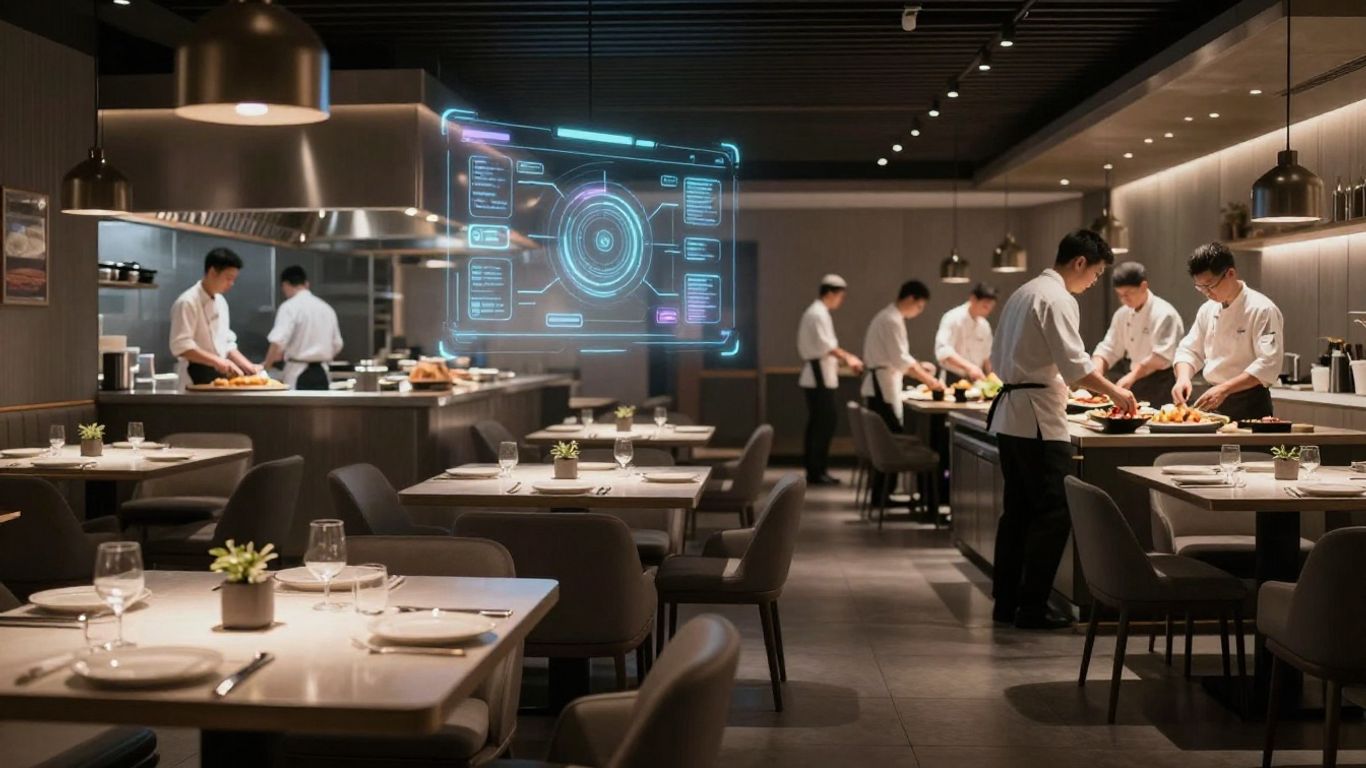
The kitchen is often the heart of a restaurant, and AI is set to become an invaluable member of that team. While human creativity and skill remain paramount, AI-powered assistants can handle the more repetitive, precise, or data-intensive tasks. Think of systems that monitor cooking temperatures in real-time, provide instant feedback on plating consistency, or even suggest optimal cooking sequences to maximise efficiency during busy periods. These assistants don't replace chefs; they augment their capabilities, allowing them to focus on the artistry and innovation that truly defines a dish. This collaboration can lead to consistently high-quality food, even under pressure.
Integrating Immersive Dining Technologies
The future of dining isn't just about what's on the plate; it's about the entire experience. AI is a key enabler for integrating immersive technologies like augmented reality (AR) and virtual reality (VR) into the dining space. Picture a menu that comes to life with AR, showing a 3D model of the dish, or a VR experience that takes diners on a virtual tour of the vineyard where their wine originated. These technologies, guided by AI that understands customer preferences and context, can transform a simple meal into a memorable event. This approach to customer experience is set to redefine hospitality, making dining more engaging and interactive than ever before.
The ongoing evolution of AI in restaurants points towards a future where technology and human touch work in concert. It's about creating smarter operations, more delightful customer interactions, and ultimately, a more sustainable and enjoyable dining industry for everyone involved.
AI is set to change how restaurants work. Imagine smart systems helping with orders, managing stock, and even predicting what customers will want. This could make running a restaurant much smoother and more efficient. Want to see how these clever tools can help your business? Visit our website to learn more about the exciting future of AI in the food world.
The Table is Set for AI
So, it looks like AI is really changing how we eat out. From getting a table without a fuss to having your order just right, it's all getting smoother. Restaurants are using smart tech to figure out what we like, meaning we might get menus that are just for us. Plus, all this tech helps kitchens run better and cuts down on wasted food, which is good for everyone. It’s not about replacing people, but about making things work better for both the staff and us diners. The future of eating out is definitely getting a tech upgrade, and honestly, it seems like a pretty good deal.
FAQ's:
1. What is AI and how can it help restaurants?
AI, or Artificial Intelligence, is like giving computers a brain to help them think and learn. In restaurants, AI can help in many ways. It can learn what you like to eat and suggest new dishes, help the kitchen know exactly how much food to order so none goes to waste, and even make sure your booking is sorted without any fuss. It's all about making things smoother for both the people eating and the people working.
2. Can AI really make menus just for me?
Yes, it can! AI can look at what you've ordered before, what you like, and even if you have any allergies or special diets. Then, it can help the restaurant suggest meals that are perfect for you. Imagine a menu that changes just for you, showing only the things you'll love and can eat safely. It's like having a personal chef who knows all your secrets!
3. Will AI take away jobs from chefs and waiters?
Not really. AI is more like a helpful assistant. It can do the boring, repetitive jobs, like chopping veggies or taking simple orders, so that chefs and waiters have more time to do the really important stuff. This means chefs can focus on creating amazing new dishes, and waiters can spend more time chatting with customers and making sure they have a fantastic time. It helps everyone do their job better.
4. How does AI help with ordering food and managing tables?
AI can make booking a table super easy. It can even guess how busy the restaurant will be, so you know the best time to come. When you arrive, AI can help manage queues, telling you exactly how long you'll wait and letting you know when your table is ready. For ordering, AI can help you choose what you want, take your order quickly, and even answer common questions, making the whole process much faster.
5. Can AI help restaurants be kinder to the planet?
Definitely! One big way AI helps is by making sure restaurants don't waste food. It can predict exactly how much of each ingredient is needed based on how many customers they expect and what they usually order. This means less food is thrown away. AI also helps manage supplies better, reducing the need for extra deliveries, which is good for the environment too.
6. What's next for AI in restaurants?
The future is really exciting! We'll see AI getting even smarter at predicting what customers want before they even know it themselves. Imagine robots helping out more in the kitchen, making sure every dish is perfect. And maybe even dining experiences that use cool technology like virtual reality to make your meal feel extra special. AI is going to keep changing how we eat out for the better.