.jpg)


Negotiating Supplier Prices: Pool Multi-Site Restaurant Group Spend
Start From One Spend Number, Not Ten Separate Ones
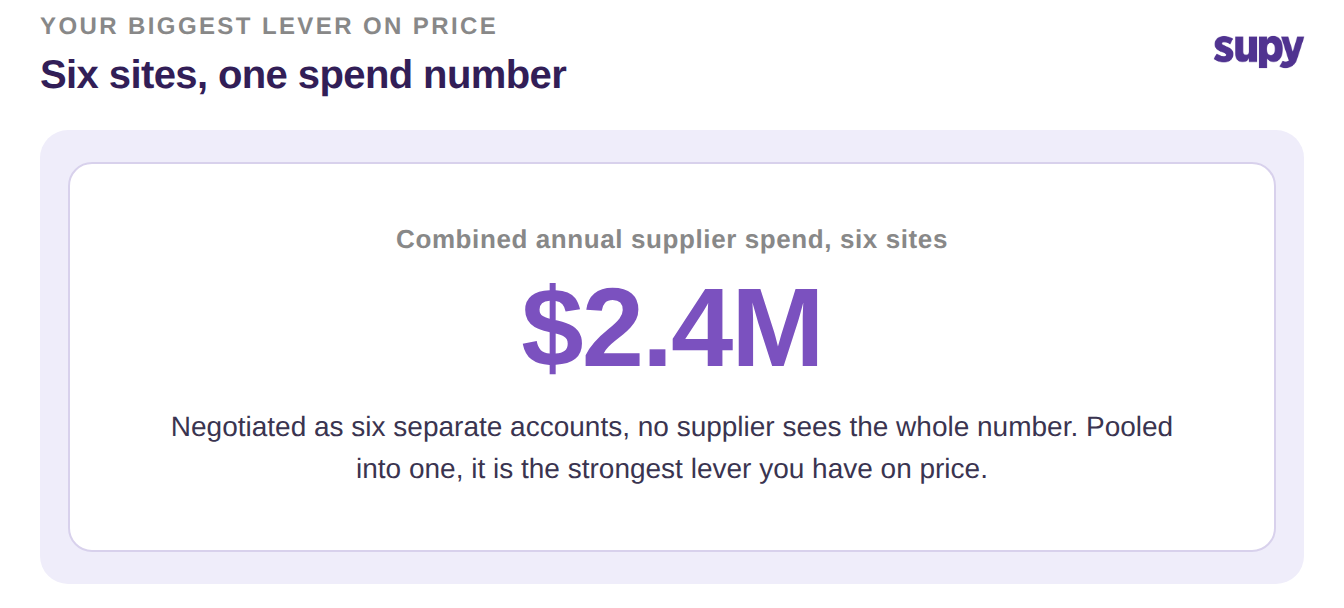
A multi-site restaurant group's biggest advantage in a supplier price negotiation is the volume it already buys. That advantage disappears when spend is split across sites and systems, and each branch negotiates by hand. Pull every site's purchase value for an item into one number, and you negotiate as the large account you actually are.
Most groups run several sites through separate supplier accounts. Each site orders on its own, so no supplier ever sees the full volume behind the group. You walk into the conversation without the one figure that carries the most weight.
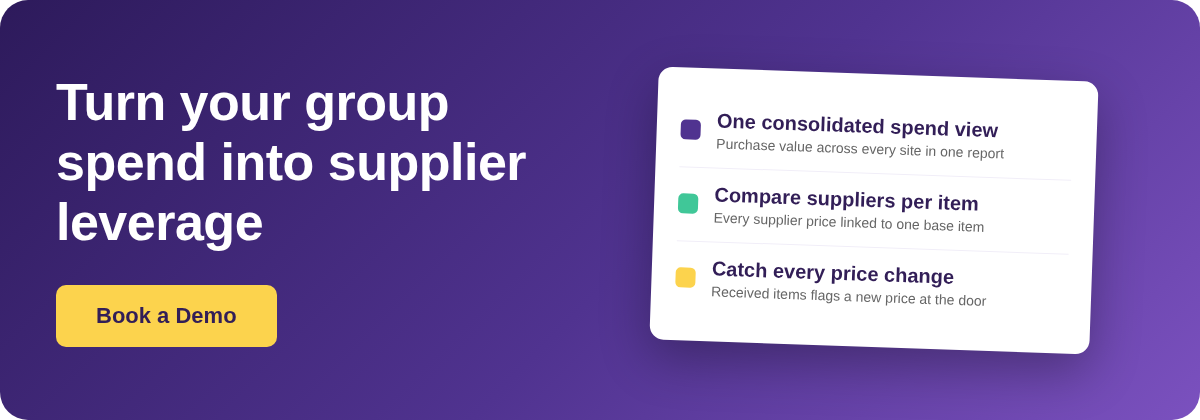
Fixing this is a data job before it is a negotiation job. Supy's restaurant procurement software reports purchase value across every site in one place, so the group total for any item is a number you can quote, not a guess. It is the same pooled view that lets a group run consolidated purchase orders instead of six separate ones. Pooling spend this way is one part of what good procurement looks like for a restaurant group.
Benchmark the Same Item Across Sites and Suppliers
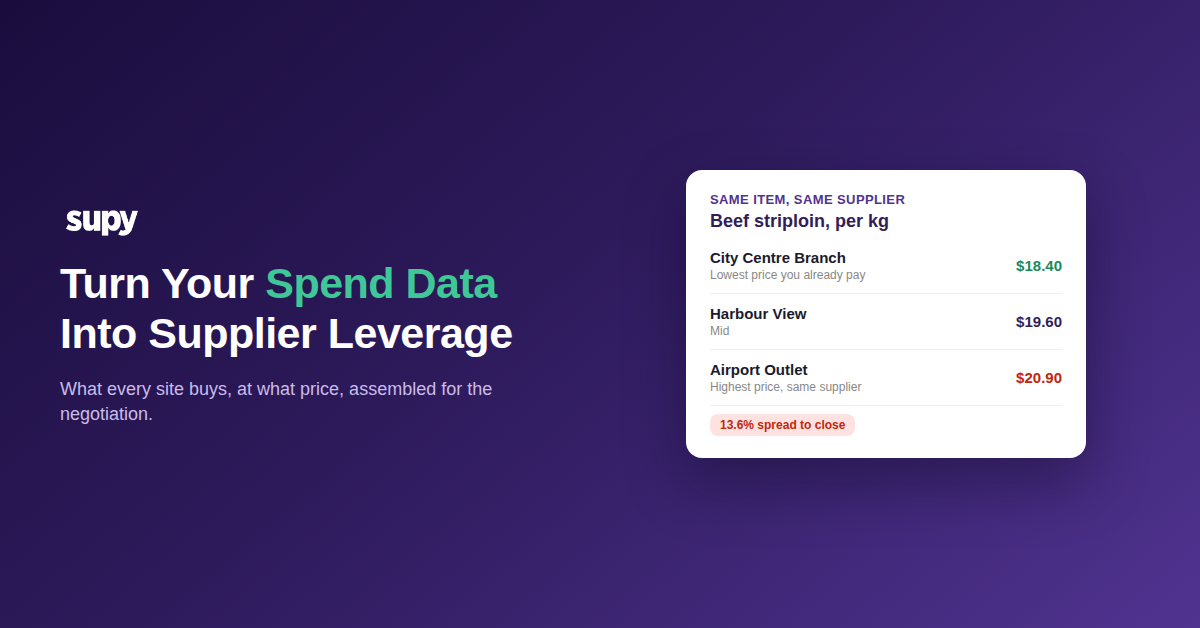
Once the spend is in one place, look for the gaps. The same item often carries a different price at each site, and a different price again from each supplier who can deliver it. Those gaps are your opening list for the negotiation.
Start with the items that move the most money: your high-volume commodity lines. For each one, put the price you pay now next to the lowest quote you can find. A small difference per unit turns into real money once you multiply it by every case, every week, across every site.
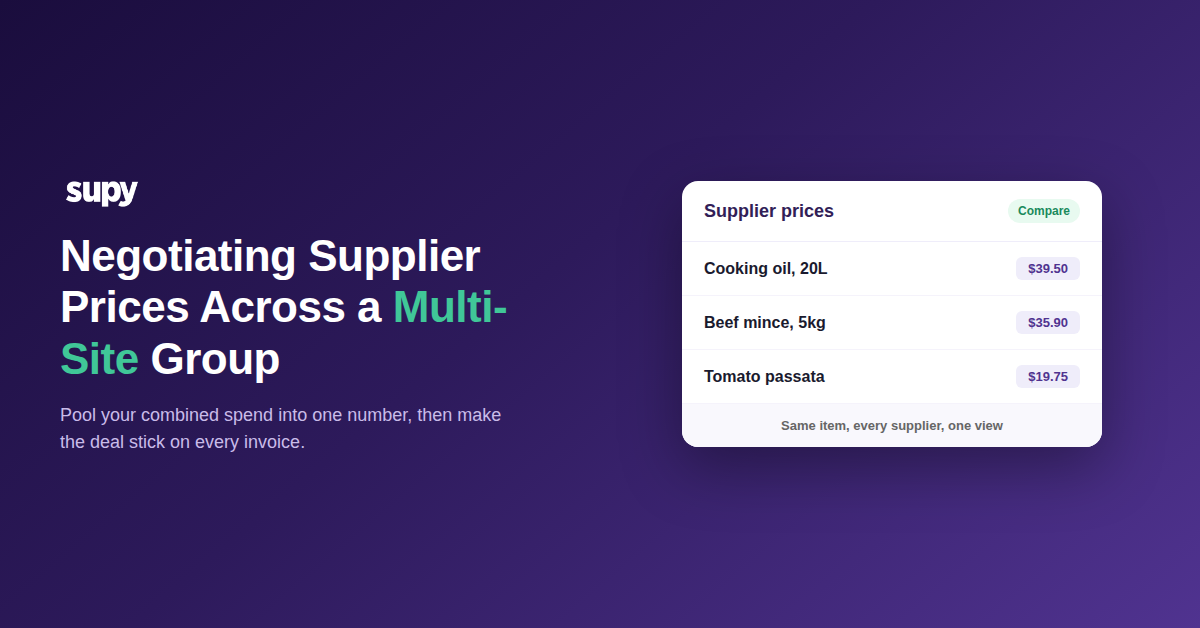
| Item (pack) | Price paid now | Lowest quote | Difference per unit |
|---|---|---|---|
| Cooking oil, 20L | $44.00 | $39.50 | $4.50 |
| Beef mince, 5kg | $38.50 | $35.90 | $2.60 |
| Tomato passata, case of 12 | $22.00 | $19.75 | $2.25 |
Supy links every supplier's SKU for an ingredient to one base item, so you can see what each supplier charges for the same thing. Supplier performance reports show which one delivers on price and on time. If you want to go deeper on the method, see our guides to supplier price benchmarking and multi-supplier price comparison per ingredient.
Match the Deal Structure to the Line You Are Buying
There is no single right deal. The structure that wins depends on the line in front of you, so decide it item by item before you open the conversation.
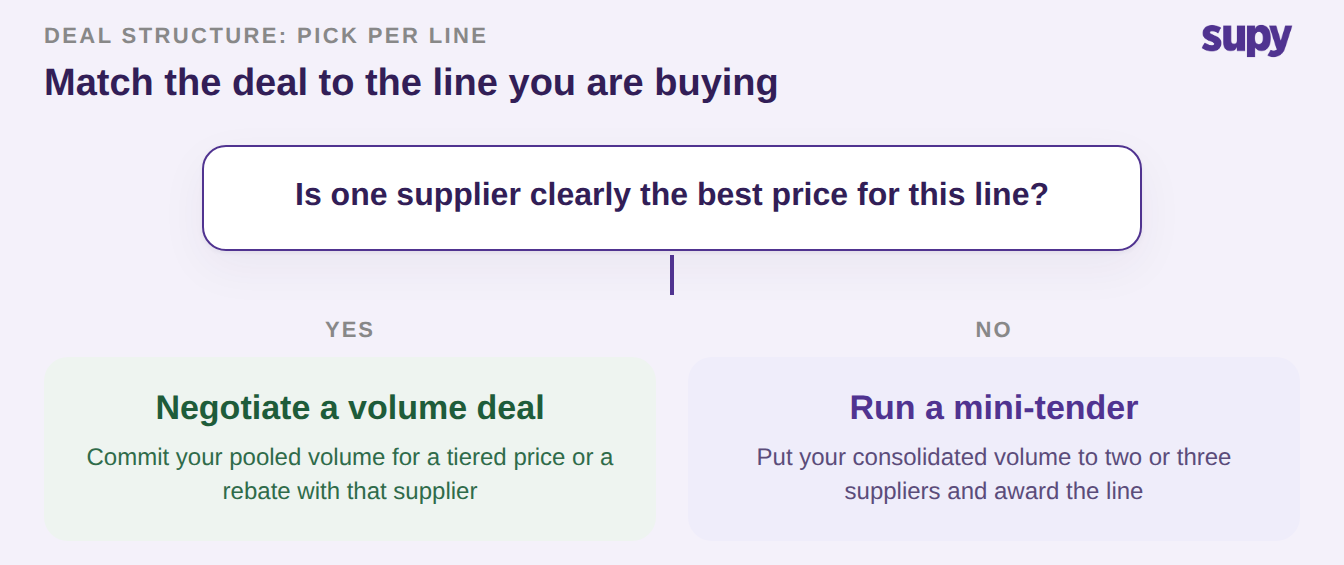
The first split is how many suppliers can serve the item well. If one supplier is clearly the best on price and reliability, commit your pooled volume to them for a tiered price or a rebate. If two or three can serve it, run a short tender: put your consolidated volume to each and award the line to the best offer.
The second split is commodity against specialty. On commodity lines that swing with the market, negotiate a formula or a review cadence, not a fixed price that goes stale in a month. On specialty lines from a sole supplier, lock a fixed price for a set term in exchange for your committed volume. Record the credit terms, minimum orders and trade terms per supplier so the agreement is written down, not remembered.
Catch a Price Change Before It Becomes the New Normal
A negotiated price only holds if you notice when it drifts. Suppliers raise prices between deliveries, and a rise nobody catches quietly becomes the new baseline. The trigger for your next renegotiation is the moment a price moves.
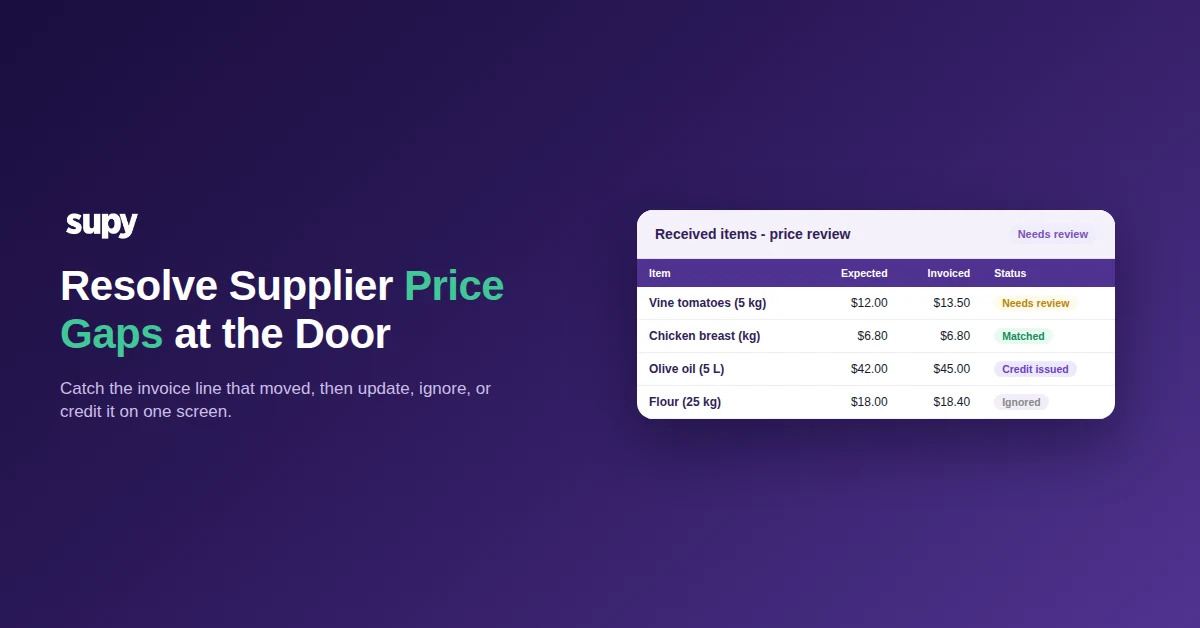
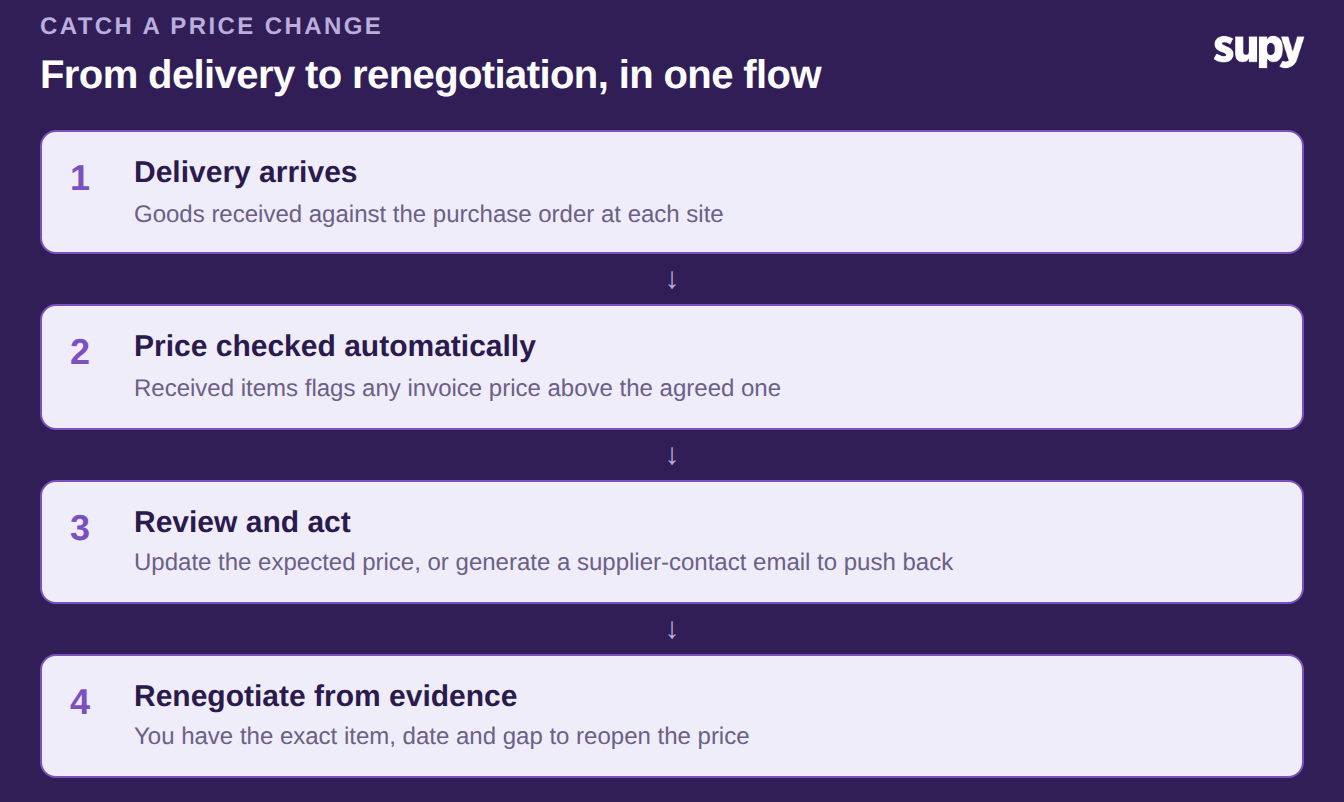
Catch it at the door, not at month-end. Supy's received-items view flags any invoice price above the one you agreed, and AI invoice scanning reads each invoice and marks price conflicts against the purchase order. From the flag you can update the expected price or generate a supplier-contact email to push back, with the exact item, date and gap in hand.
This is also how you stop paying more than the contract says. A supplier that overcharges by small amounts across many invoices is only visible when every line is checked against the agreed price.
Make the Negotiated Price Reach Every Invoice
A deal you win in a meeting is worth nothing until it is charged on every invoice, at every site. This is where multi-site groups lose the saving they fought for. One branch applies the new price, another keeps ordering at the old one, and the gap goes unnoticed for months.
Close it with enforcement, not trust. Load the agreed price into the supplier record with a bulk price edit so every site orders at the same rate. Set an invoice-receiving variance threshold so any bill above the agreed price is held for review. The negotiated rate then becomes the default the whole group buys at.
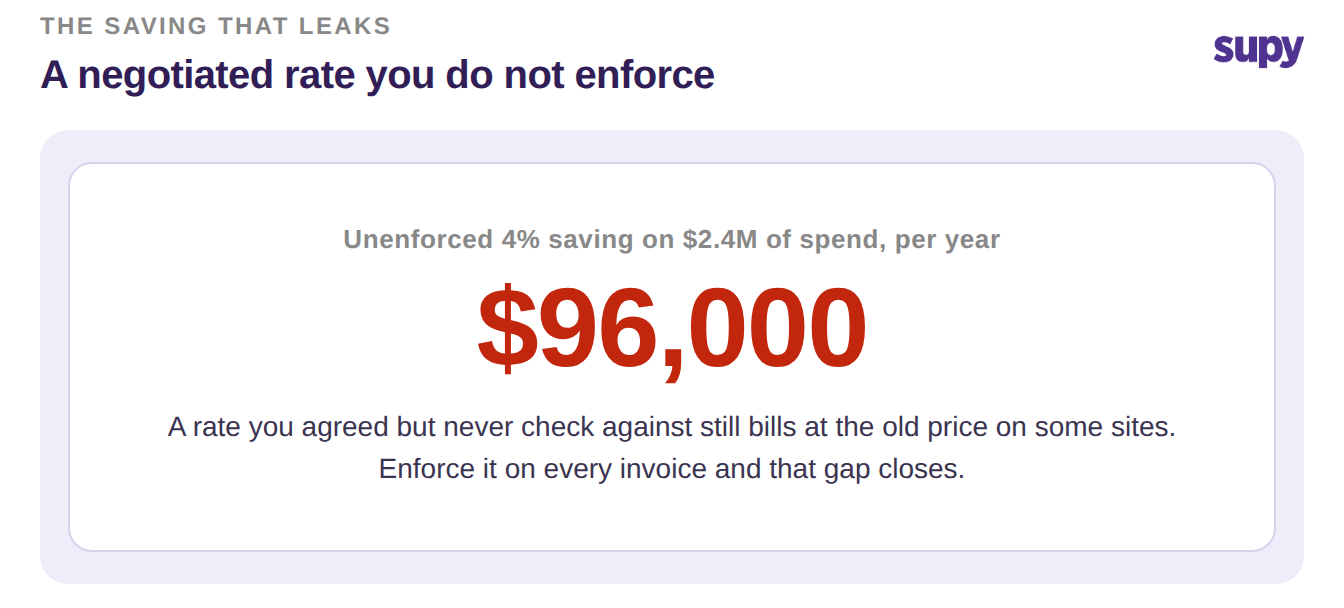
Rolling the same price to every site at once is a two-minute job when the prices live in one system. See how a group runs bulk supplier price updates across sites so a win in one place lands everywhere.
Where to Start This Week
Name the branch you are in. If your spend is still split across sites, your first move is to pull it into one number before you talk to any supplier. If you already have that number, pick your three highest-volume items and benchmark each one against the lowest quote you can find.
Then match the deal to each line, and set the price and the variance threshold so it holds. A negotiation is only as good as the invoice it reaches. Do the data work first, and the group's real buying power finally shows up at the table.