Inventory
Procurement

How Inventory Software Helps Restaurants Increase Profit Margins
Margins in restaurants are thin. Every gram of waste, every over-ordered item, every portioning mistake adds up.For multi-site operators, it’s not just one problem. It’s a hundred small problems happening daily, across every branch.The solution isn’t more spreadsheets.It’s visibility, control, and consistency.And that’s exactly what inventory software is designed to deliver.Here’s how:

1. Real-Time Food Cost Tracking

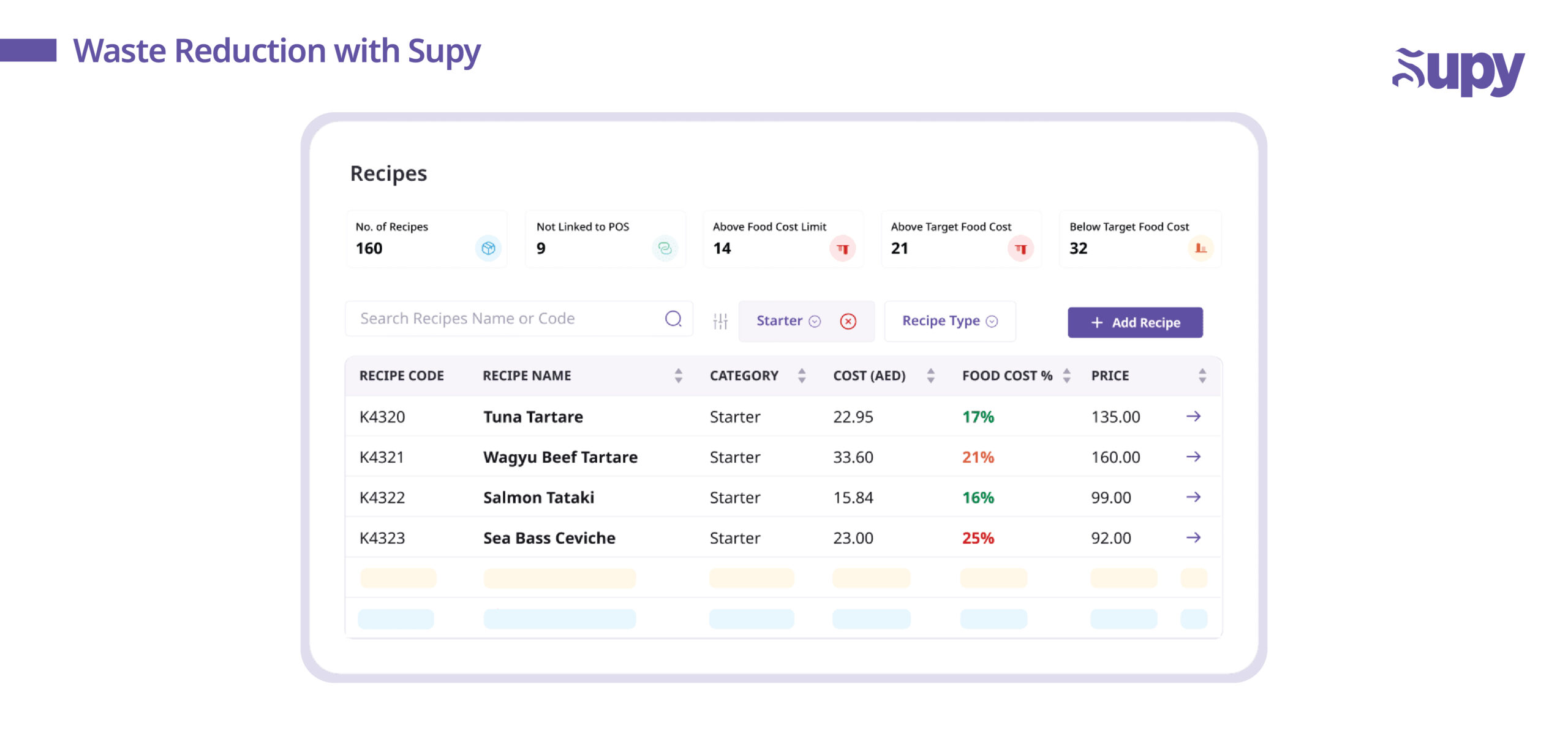
You can't fix what you can't see.Inventory software gives operators real-time visibility into food cost, not just at the end of the month, but as it happens.

  • See when a dish goes over target cost
  • Track ingredient-level spend
  • Get alerts when margins slip
  • Make fast, informed decisions

This allows operators to take action before the impact hits the bottom line.

2. Waste Reduction
How Inventory Software Helps Restaurants Increase Profit Margins

Overproduction, spoilage, and incorrect prep quietly erode margins.Inventory systems let you log waste as it happens, spot recurring patterns, and make improvements. You’ll understand:

  • What is being thrown out
  • When it’s happening
  • Why it’s happening
  • And how to prevent it next time

A 1 to 2 percent reduction in waste can translate into meaningful savings across a restaurant group.

3. Smarter Purchasing

Every extra case ordered and left sitting on a shelf ties up cash and risks spoilage.Inventory software allows you to:

  • Automate purchasing based on live stock data
  • Prevent over-ordering
  • Compare supplier pricing
  • Flag discrepancies between what was ordered and received

Purchasing becomes proactive and data-driven instead of reactive and guess-based.

4. Standardised Recipes and Portioning

Margins are protected on the prep line, not just in the P&L.With inventory software, operators can define recipes and portion sizes that are followed across every location. This leads to:

  • Consistent food cost per dish
  • Accurate stock depletion
  • Better portion control
  • More reliable financial reporting

Without standardisation, profitability becomes uncertain and difficult to measure.

5. Streamlined Stock Counts

Stock counts are not just about knowing what’s on the shelf. They are essential for margin accuracy.Inventory software makes stock counts:

  • Fast and mobile-friendly
  • Easy to complete on schedule
  • Visible to both ops and HQ teams

Frequent counts lead to more reliable data, which leads to better business decisions.

6. Better Communication Between Ops and Finance

Controlling margins is not just an operations problem. Finance needs visibility too.With integrations across POS, accounting, and ERP systems, inventory software:

  • Sends clean, structured data across departments
  • Reduces manual entry and reconciliation errors
  • Speeds up reporting
  • Creates alignment between ops and finance

The result is faster decisions backed by data both teams trust.

7. Margin Improvement at Scale

The impact of inventory software is most powerful across multiple locations.A small gain at one site becomes a big impact when scaled.For example, a 1.5 percent increase in gross margin across a group generating $10 million per year adds $150,000 to the bottom line.This is why top operators prioritise inventory early. They don’t wait for problems to appear — they build systems that prevent them.

Final Thought: Margin Control Is Not a Feature. It’s a Foundation.

Inventory software is more than a tool. It is a shift in how operators manage cost, waste, and profitability.It gives teams on the ground the clarity to act daily, and gives leadership the visibility to scale with control.If you’re relying on spreadsheets or end-of-month reports, you’re already behind.Inventory software closes the gap between what you think is happening and what’s actually happening.
Ready to optimize your restaurant operations?

Blog

Our operational insights

Analytics
F&B
Food cost

10 Tips To Reduce Restaurant Food Waste

F&B
Inventory

From Spreadsheets to Systems: Modernizing Your Restaurant’s Inventory Management

Analytics
F&B
Food cost
Menu engineering

Maximizing Restaurant Expansion with Cloud Kitchen Technologies

Your questions 
answered

Everything you need to know about Supy — from setup to integrations, pricing, and daily use. If it’s not covered here, just ask.

How do restaurant managers track deliveries and flag discrepancies without spreadsheets?
+

They check each delivery against its purchase order in inventory software, which flags any gap between what was ordered and what arrived. The receiver records the delivery against the order at the door, so a short or wrong delivery shows up the same day. A spreadsheet only shows the problem if someone types it in and compares it later. In Supy, a manager can turn a purchase order into a goods received note (GRN) and edit the quantity or price on receipt. The manager can also raise a credit note for a wrong charge. Supy can also match supplier invoices to purchase orders and flag price and quantity conflicts for review.

How does inventory software increase restaurant profit margins?
+

Inventory software increases margins because it shows you food cost, waste and over-ordering while you can still act on them. Without it, most operators only see these losses in the end-of-month report. The software tracks food cost as it happens, so you can see when a dish goes over its target cost. Your team logs waste with a reason, so you can spot patterns and prevent them. Purchasing follows live stock data, so you order less of what is already on the shelf. Standard recipes and frequent stock counts keep the numbers reliable at every site.

How much can cutting food waste save a restaurant group?
+

A cut of 1 to 2 percent in waste can mean meaningful savings across a restaurant group, because the same saving repeats at every branch. The saving starts when your team logs waste as it happens. Each entry records what was thrown out, when it happened and why. After a few weeks, patterns show up, such as the same prep item spoiling on the same day each week. You can then fix the cause, for example by changing prep quantities or order sizes. Overproduction, stock that goes off and incorrect prep are the usual causes, so check those first.

What is real-time food cost tracking in a restaurant?
+

Real-time food cost tracking means you see your food cost as it happens, not only at the end of the month. Inventory software tracks spend at ingredient level, so you can see when a dish goes over its target cost. You can also get alerts when margins slip. The head chef or ops manager can then act the same week, for example by checking a portion size or a supplier price. Supy's dashboards show live COGS and food cost percentage by group, site and menu category. In Supy, a recipe can carry a target cost, with an alert when the dish goes over it.

Why do standardised recipes protect restaurant margins?
+

Standardised recipes protect margins because every site makes each dish with the same ingredients and portion sizes, so the dish costs the same everywhere. When cooks portion by eye, one branch can use more meat or cheese than another, and food cost rises without anyone seeing why. A defined recipe also tells the inventory software which stock to deduct for each sale. That keeps stock levels accurate and makes financial reporting more reliable. Without standard recipes, you cannot measure the profit on each dish with confidence, because the real cost changes from plate to plate.

How often should a restaurant do stock counts?
+

Count often and on a fixed schedule, because frequent counts give you more reliable data for your decisions. A stock count does more than tell you what is on the shelf. It shows whether your food cost figures are accurate, because the count shows the variance between theoretical and actual stock. Inventory software makes counts quicker to finish, because staff count on a phone or tablet as they walk the store. The results are visible to both the ops team and head office, so both work from the same numbers.

How much does a small margin gain add across a restaurant group?
+

A 1.5 percent increase in gross margin adds $150,000 a year to the bottom line for a group with sales of $10 million a year. Small gains matter most across multiple locations, because the same improvement repeats at every site. A portion fix or a better order size at one branch saves a little. The same fix at every branch saves far more. Top operators put inventory systems in place early for this reason. They build controls that prevent problems instead of waiting for problems to show up in the monthly report.

Ready to transform your operations?

Join 3500+ restaurant operators cutting costs, streamlining operations and making smarter decisions with Supy.