Why Recipe Management Software is Essential for Restaurant Success

Restaurants face constant challenges in maintaining consistency and controlling food costs. They often overlook the root causes, which can stem from inaccurate portioning, fluctuating ingredient prices, and a lack of standardized recipes. Without proper tracking, small miscalculations add up, leading to unnecessary waste and shrinking profit margins.
A recipe management software for restaurants solves these problems by standardizing recipes, tracking ingredient costs, and ensuring precise portion control. It provides real-time updates on ingredient prices, helping restaurants make informed decisions to improve efficiency and profitability. With a structured system in place, kitchens can maintain quality, reduce waste, and streamline operations effortlessly.
Table of Contents:
- Consistent Recipe Execution Across Locations
- Accurate Food Costing and Profit Margins
- Adaptability to Ingredient Price Changes
- Real-Time Inventory Integration
- Improved Menu Engineering
- Scalability and Collaboration
- A Tool for Consistency and Profitability
1. Consistent Recipe Execution Across Locations
You may have heard a customer say the portion size isn’t the same as their last visit or that a dish tastes different from another branch.
These inconsistencies often happen when staff rely on memory, handwritten notes, or varying ingredient measurements, leading to unpredictable results across locations. Maintaining uniformity becomes even harder as restaurants expand, making it difficult to deliver the same experience at every outlet.
Recipe software solves this by standardizing ingredient quantities, recipe prep, and portion sizes. Digital recipe cards provide clear, step-by-step instructions, reducing errors and keeping every dish consistent.
A recipe manager can help organize all your recipes in one place, making updates seamless. Any modifications to recipe data sync instantly across all locations, so every kitchen follows the same process, no matter who is cooking.
2. Accurate Costing and Profit Margins
Pricing a menu without precise cost calculations can lead to shrinking profit margins. Many restaurants underestimate how much each dish actually costs, resulting in overpriced or underpriced items. Over-portioning, ingredient fluctuations, and hidden inefficiencies add up, making it difficult to track profitability.
Here are some hidden drawbacks of inconsistent recipes:
- Increased food costs
- Diminished profits
- Unpredictable portion sizes
- Higher ingredient waste
- Inconsistent customer experience
- Difficulty in menu pricing
These inefficiencies can go unnoticed until they start affecting the bottom line. For example, Pitfire Pizza used Supy’s software and discovered they were over-portioning mushrooms, leading to a $55,000 annual waste on that ingredient alone. By making adjustments, they significantly reduced costs and improved margins. Small optimizations like these help restaurants stay profitable without compromising quality.
3. Adaptability to Ingredient Price Changes
Ingredient prices fluctuate constantly due to market conditions, seasonal availability, and supply chain disruptions. Without a system to track these changes, restaurants risk miscalculating costs, leading to pricing mismatches that eat into their earnings. A dish that once brought in solid returns may suddenly generate lower margins if rising ingredient costs go unnoticed.

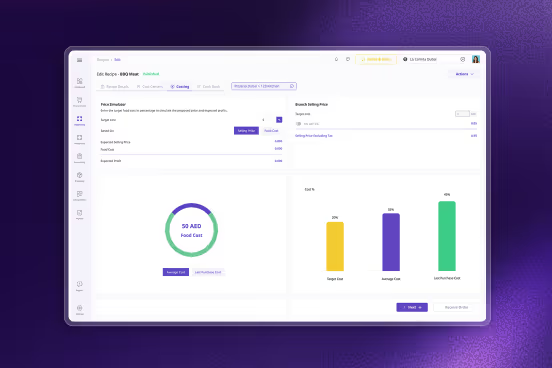
With Supy’s food costing software, restaurants can discover ingredient costs, calculate food cost percentages, and analyze how price fluctuations impact profitability. It helps identify high-cost ingredients, compare expected versus actual costs, and make informed adjustments to menu pricing or portion sizes. By incorporating recipe costing into their operations, restaurants can proactively optimize pricing strategies and maintain consistent profitability.
4. Real-Time Inventory Integration

A well-run kitchen depends on seamless coordination between recipes and inventory. Without alignment, restaurants risk stockouts, where key ingredients run out unexpectedly, or overstocking, leading to unnecessary waste. Manually tracking ingredient usage often results in discrepancies, making it difficult to maintain an efficient supply chain.
Inventory management software that integrates with a recipe database provides real-time ingredient tracking, allowing restaurants to maintain accurate stock levels. Every time a dish is prepared, the system deducts exact ingredient quantities, improving inventory control and reducing miscalculations.
Infographic
This prevents shortages that disrupt service and minimizes food waste by purchasing only what’s needed. With better synchronization between recipes and inventory, back-of-the-house operations run smoothly, avoiding costly errors and last-minute surprises.
5. Improved Menu Engineering

Most restaurants struggle or become overburdened with operational costs because they don’t analyze what works for them. They continue offering dishes without evaluating their profitability, demand, or impact on margins. In the current landscape, a fixed menu can limit growth opportunities, while a data-driven approach helps restaurants refine their offerings to maximize returns and focus on profitable recipes.
Infographic
Recipe management software provides valuable insights into menu performance, allowing restaurants to:
- Analyze the popularity of each dish over time – Identify which items bring in the most orders and contribute to customer satisfaction.
- Evaluate how much revenue and profit top-selling dishes generate – Focus on high-margin, high-demand items with the help of automated food cost calculations.
- Discover seasonal trends – Adjust menus based on when certain ingredients or dishes perform best.
- Identify underperforming items – Remove or modify low-profit, low-demand options while considering dietary restrictions and changing consumer preferences.
- Test new recipes with real data – Compare projected costs and margins before launching a new item, while also tracking nutritional values to meet health-conscious demands.
With these insights, restaurants can discover innovative menu engineering techniques and eliminate wasteful offerings.
6. Scalability and Collaboration
Expanding a restaurant, launching a catering service, or updating menus for seasonal offerings requires seamless collaboration. Without a structured recipe management system, chefs and kitchen staff rely on scattered notes and inconsistent methods, making it difficult to maintain uniformity across teams and multiple locations.
Managing recipes becomes effortless with a digital platform that allows teams to develop, modify, and scale recipes efficiently. Updates sync across all your restaurants instantly, supporting consistent production and accurate portioning. Whether introducing new menu items or handling large-scale catering, a well-integrated system helps ensure consistency without compromising quality or efficiency.
7. A Tool for Consistency and Profitability
Recipe management software helps restaurants stay efficient, control costs, and maintain consistency. It eliminates guesswork, reduces waste, and makes scaling operations smoother. With better insights into ingredient usage, menu performance, and food costs, restaurants can make smarter decisions that drive profitability.
Supy’s recipe management and inventory management solutions provide the tools needed to optimize kitchen operations. Book a demo today and see how it can improve efficiency and boost margins.
Related Resources
Take your hospitality business
to the next level