.jpg)


Restaurant Transfer Pricing Between Sites: Keep Group Costs Accurate
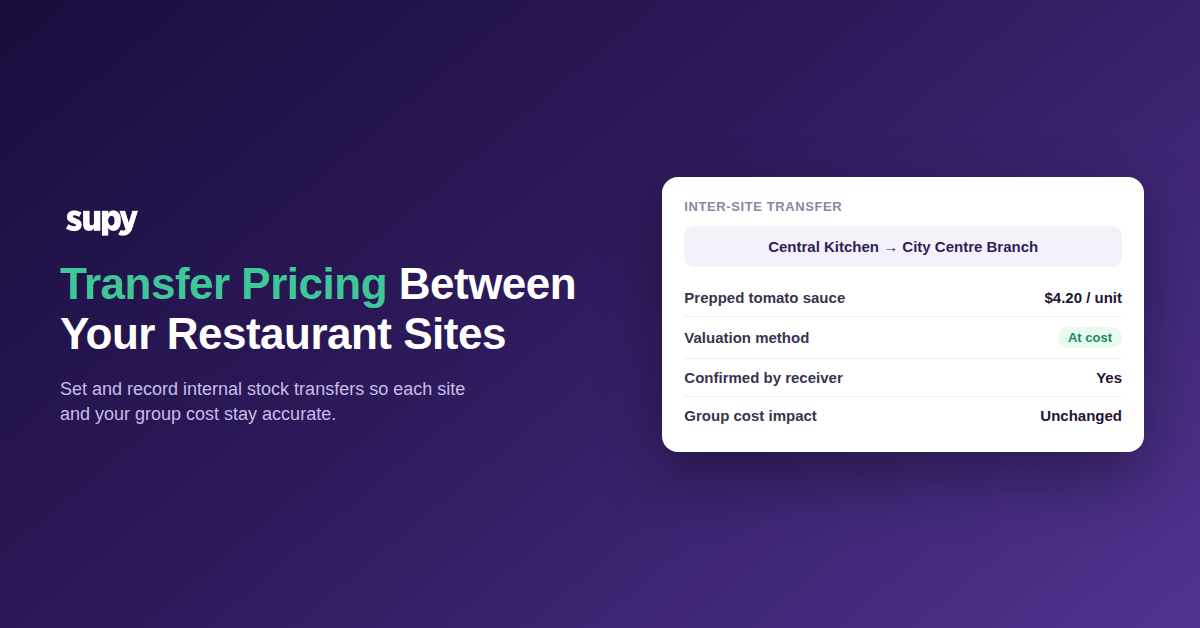
Where Inter-Site Transfer Costs Distort Your Group Numbers
Internal transfer pricing between restaurant sites is the cost you put on stock moved from one location to another, like a central kitchen shipping prepped items to an outlet. Get that price wrong and each site's cost of goods sold, or COGS, drifts. A branch then looks over or under target for a reason that has nothing to do with how it actually traded.
The distortion is easy to miss because the number still looks plausible. A blended group figure can hide it, and a single site can carry the error for a whole period before anyone asks why.
Say a site moves about $2,800 of stock a week in from another location. If that stock arrives priced wrong, it can move the site's food cost percentage by roughly 3.5 points. That is a full review meeting spent on a problem the kitchen never had.
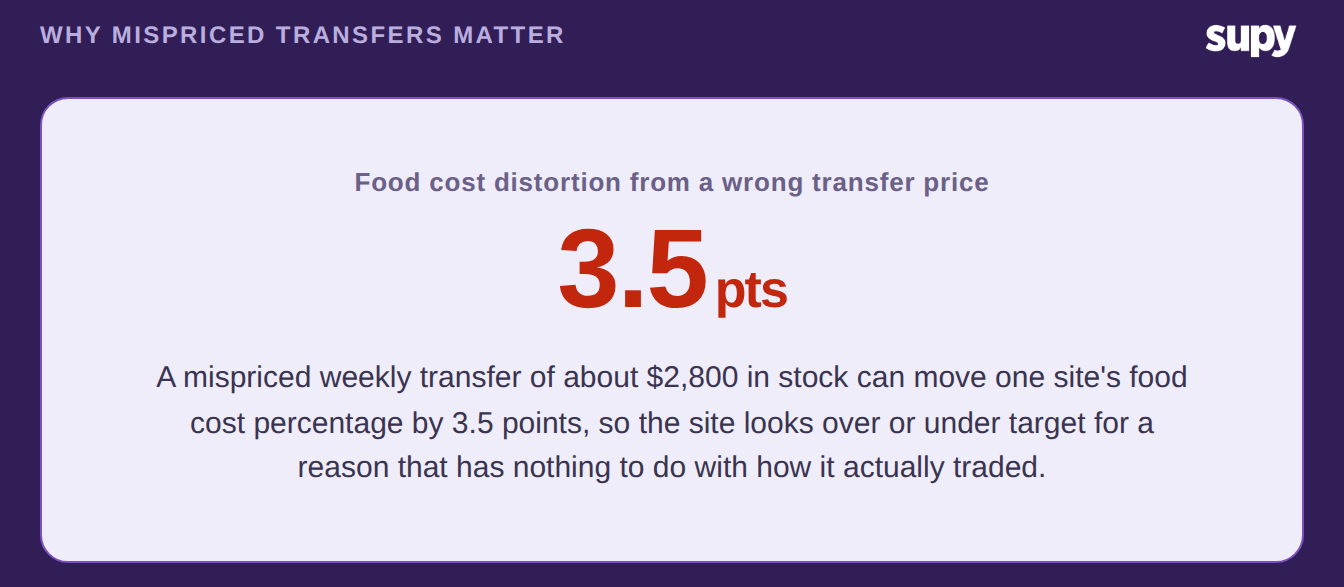
The reason is almost always the transfer price, not the site. So the rest of this guide sets that price once and records it so both locations agree. For the accounting side of moving stock between entities, our guide on multi-entity central kitchen transfers goes deeper on how the postings land.
Choose How You Value a Transfer: At-Cost, Cost-Plus, or Fixed
Every transfer needs one clear rule for what it is worth. There are three sensible choices, and the right one depends on how your group reports, not on the stock itself.
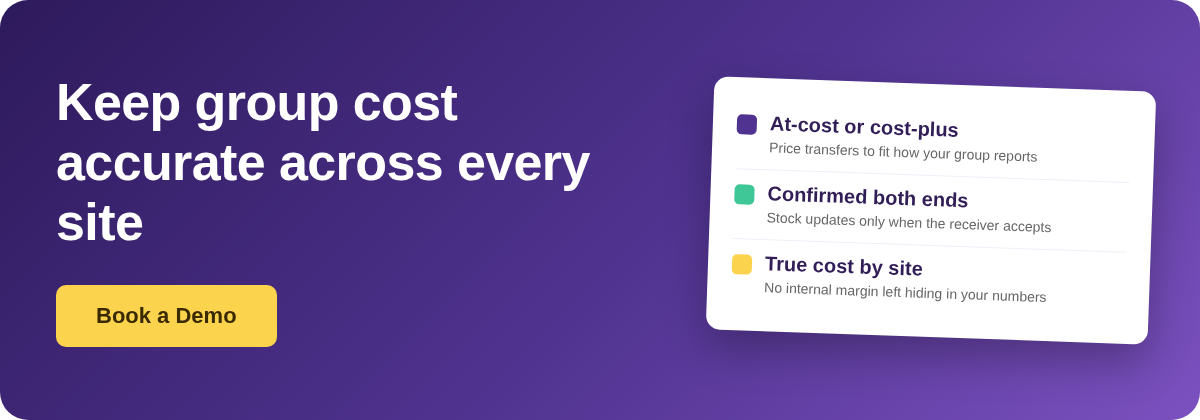
At cost keeps things simple: the item moves at its recorded cost, so the group total never changes. Cost-plus adds a set margin, which suits a central kitchen that bills its outlets. Fixed price sets an agreed number per item that stays put until you change it.
| Valuation method | How the transfer is priced | Best when | Effect on group cost |
|---|---|---|---|
| At cost | The item's recorded cost moves with the stock | Sites share one set of books and you want the true group cost | No internal margin, so group cost is unchanged |
| Cost-plus or markup | Recorded cost plus a set percentage, such as 12% | A central kitchen bills outlets, or sites report separately | Adds an internal margin you remove on consolidation |
| Fixed price | A set price per item, agreed in advance | You want stable, budgeted internal pricing | Predictable, and variance shows when real cost drifts |
Supy lets a central kitchen hold a separate price list per outlet or customer group, with a cost, markup, or fixed mode on each one. So the receiving site is invoiced at the agreed price automatically, and nobody works out the number by hand.
Which Method Fits Your Group
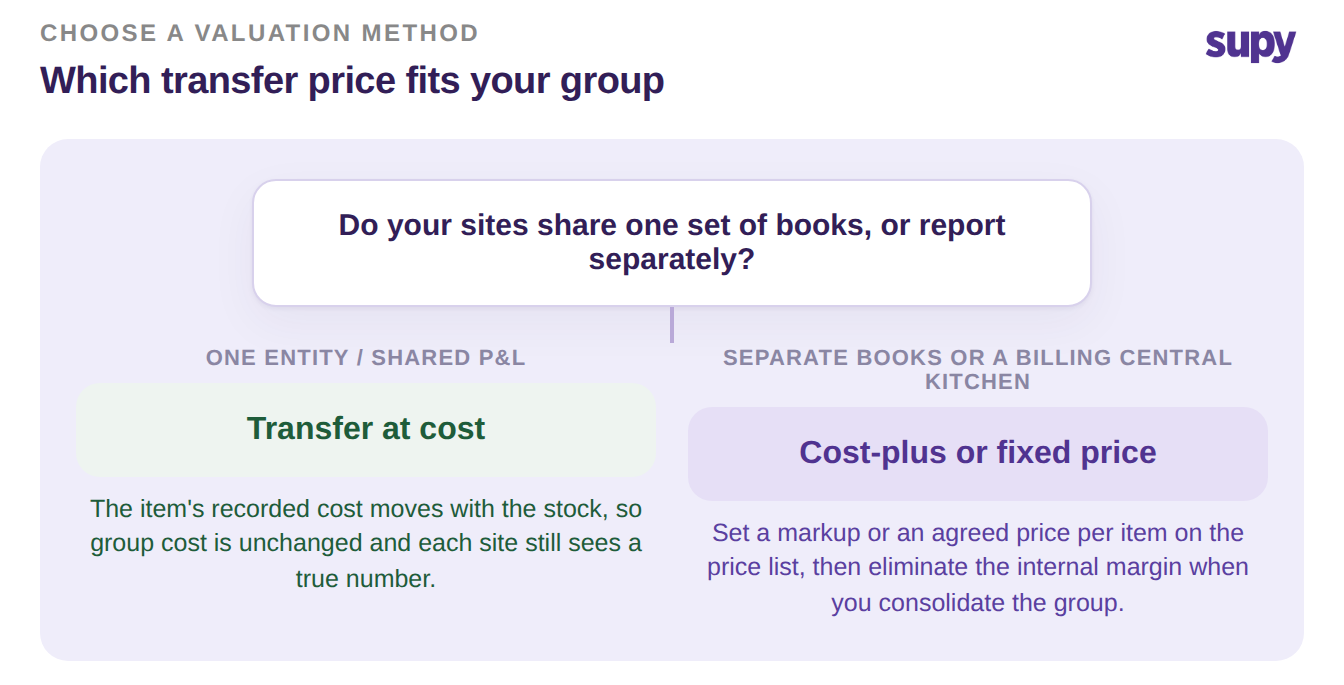
You do not need to pick the same rule for the whole group. The clean test is whether the two sites sit on one set of books or report separately.
If they share a profit and loss statement, transfer at cost. The stock simply moves at its recorded value, so the group cost stays true and each site still sees a real number. If a central kitchen bills its outlets, or the brands report on their own, use cost-plus or a fixed price and set the margin on the price list.
One caution on the numbers. A restaurant system values a transfer from the last recorded purchase cost, not a live market price, so keep your receiving prices current if costs move fast. When you build a group figure, remember to strip out any internal markup, or you will count the same margin twice.
Record the Transfer So Both Sites Reconcile
A valuation rule only helps if the transfer is recorded cleanly. The safe pattern is a confirmed movement in three stages, so the stock and its cost land on both sets of books at the same value.
The sending site raises the transfer. The cost travels with the shipment. The receiving site accepts it, and only then does stock update at either end, which prevents phantom adjustments. Both ledgers then carry the same cost, with an audit trail linking the two sides.
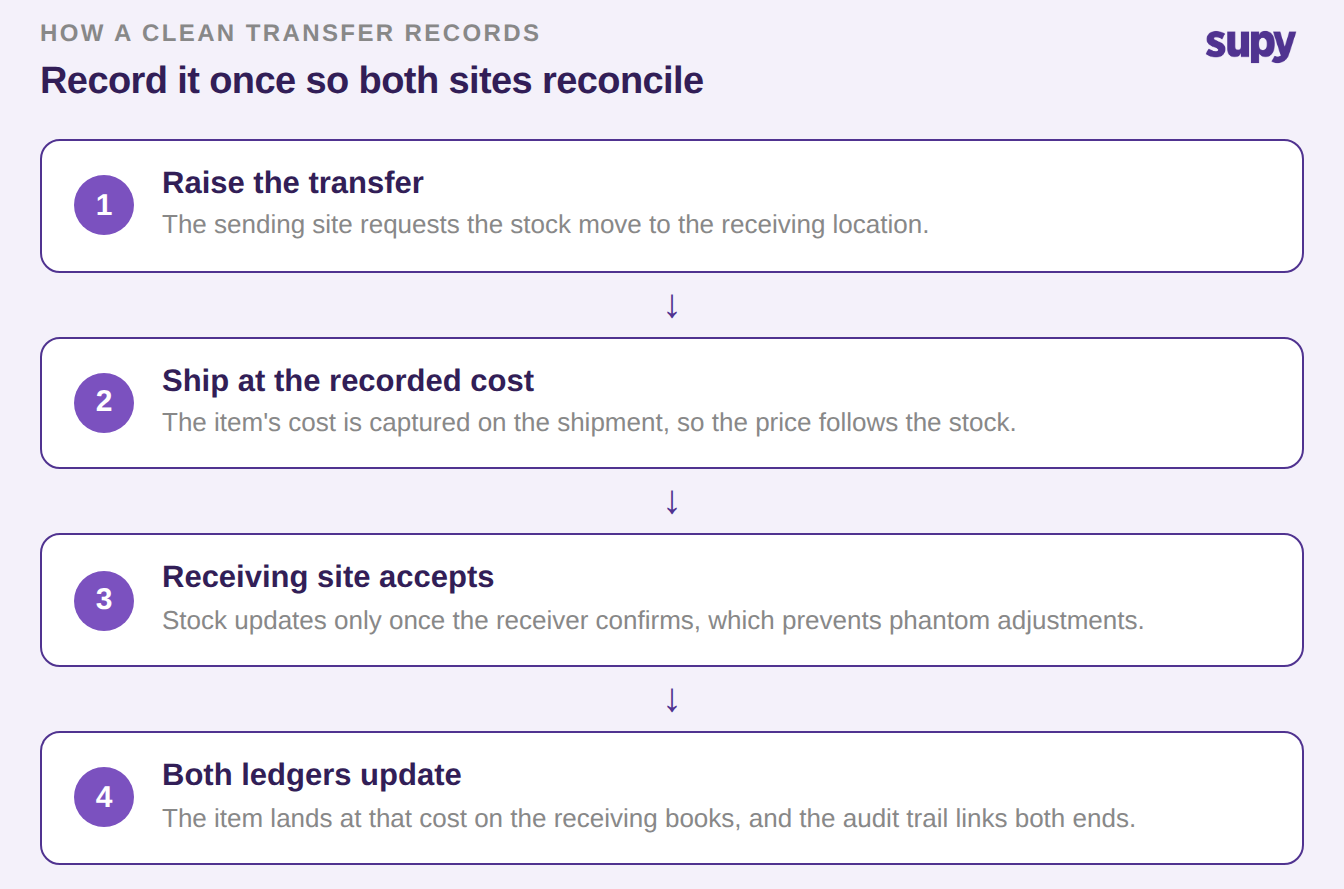
Because acceptance is required before anything moves, neither site can quietly disagree on what was sent or what it cost. You can see the full pattern in our guide to central kitchen stock transfer tracking. The same movements also feed the variance and live stock views in Supy's restaurant inventory management software.
Name the branch you are in and act on it. If your sites share one set of books, transfer at cost and move on. If a central kitchen bills its outlets, set the markup on the price list and remove that margin when you consolidate. Either way, record every transfer as a confirmed movement, so both sites reconcile on one number and your group cost finally means what it says.