.jpg)


Restaurant Bar Stock Take: Count Faster and Trust the Variance
How often should you stock take a bar?
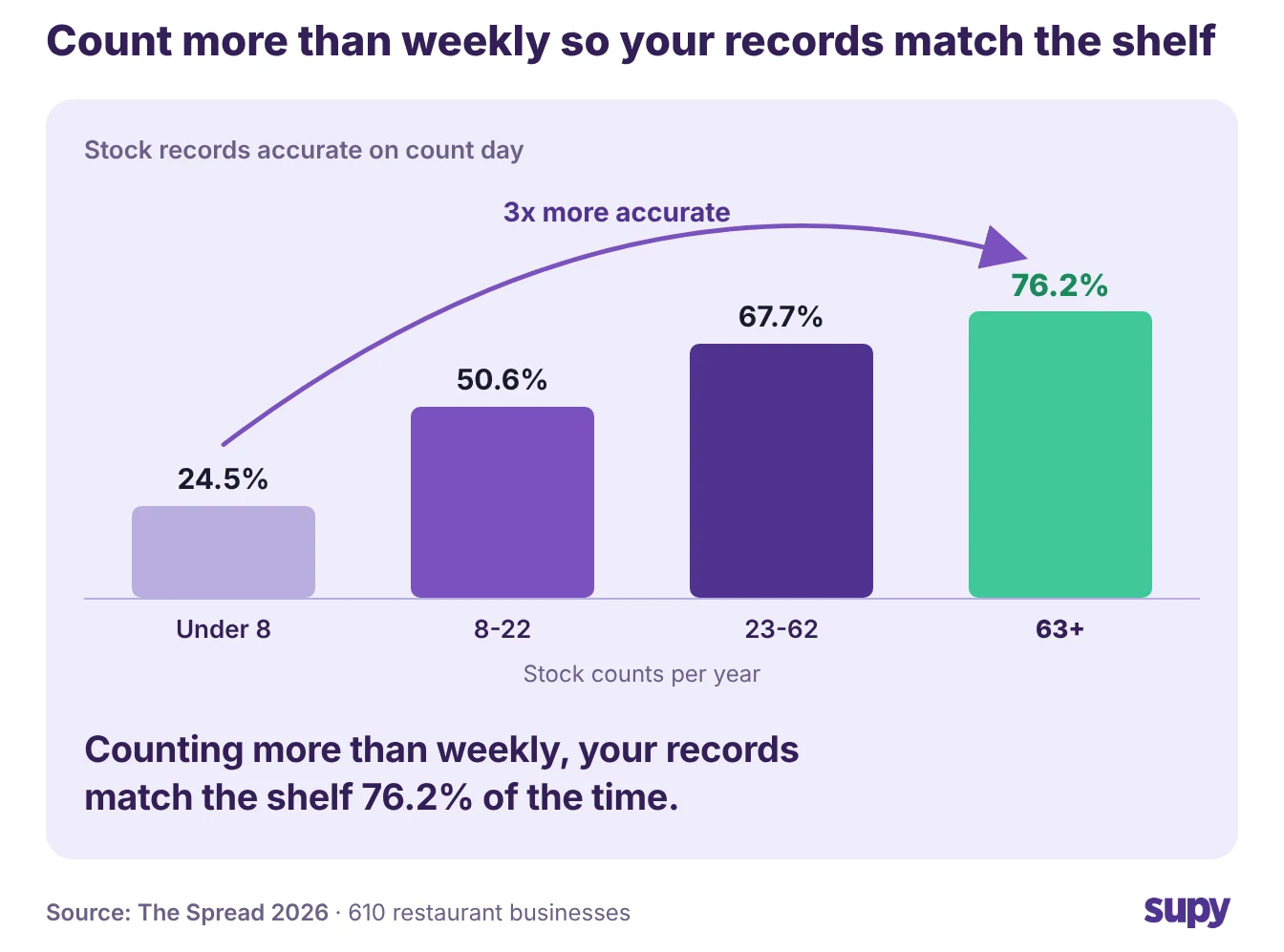
Count a bar by storage area, on a phone, and more often than once a week. That turns the bar stock take into something your team can act on the same session, not days later. The Spread, Supy's own data, found records are about 3x more accurate for bars counting more than weekly, 76.2% against 24.5%. This article shows how often to count, how to count by storage area, part bottles and kegs, and reading variance across a group.
Weekly is the floor for a busy bar, not the target. The Spread found the least frequent counters match the shelf on only 24.5% of count days, against 76.2% for those counting more than weekly. Match the cadence to how fast the stock moves and how much it is worth:
- Full count, weekly. Every line in every storage area, on the same day each week, so one week compares against the last.
- Spot count, two or three times a week. Your premium spirits, wine by the glass and draught kegs, counted between full counts so a problem shows up in days, not weeks.
- A fresh count after any big service. A festival weekend or a function empties the fast movers, so count them before you reorder against a shelf you think is full.
Count by storage area, not one long list
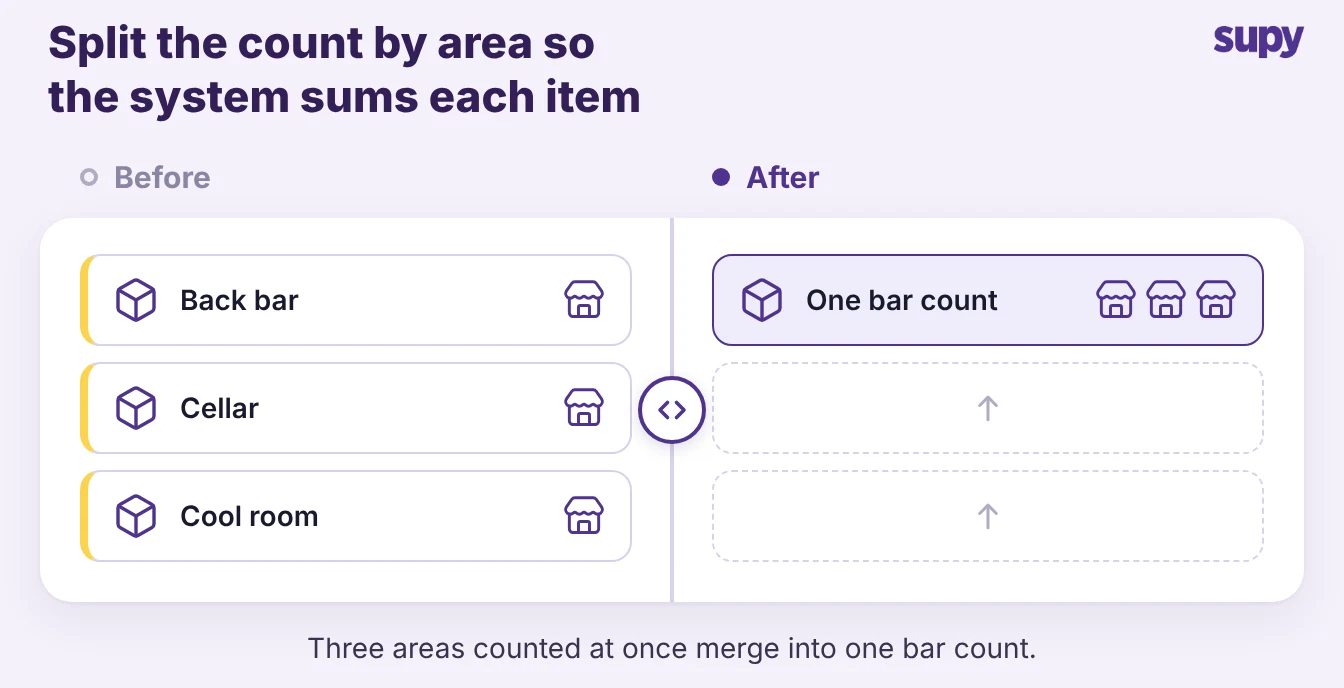
Split the count by where the stock sits, not by one flat list of every product. A bar holds the same gin in the back bar, the cellar and the cool room. One flat list makes a counter walk the venue three times and still miss a case.
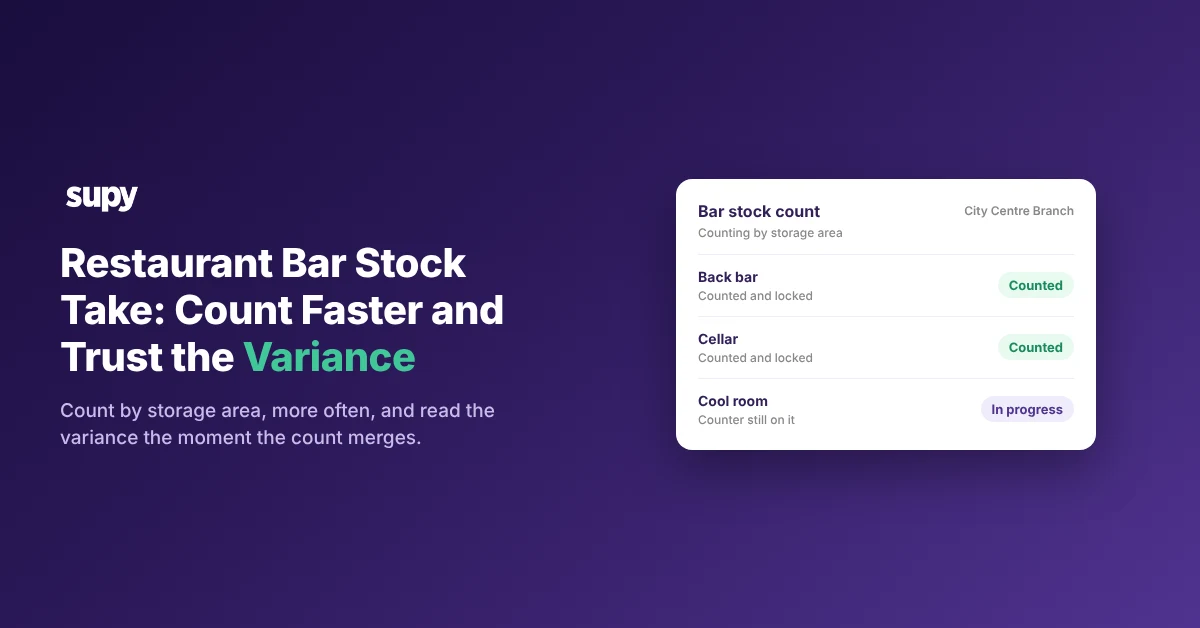
Counting by area lets each person take one area while the system sums each item across all of them. Supy builds the count around the bar's own layout:
- A reusable template in shelf order. Each outlet gets its own template, so a counter works left to right along the shelf instead of hunting for the next line on a sheet.
- Named sub-sections counted in parallel. Each area (back bar, cellar, cool room) is counted at once, and every sub-section locks when its counter finishes. Supy merges them into one count with each counter's name and an audit log.
- Counting on a phone, even offline. Supy's stock counting runs on a phone or tablet and keeps working in a cellar with weak signal, so a dropped connection does not lose the numbers already tapped in.
Teams that count this way report cutting their count time by more than 50%, because three people working three areas in parallel beat one person walking the whole venue.
The template needs upkeep as the range grows. A fine-dining group that adds new wine lines every month has to add them to the template too, or the next count skips them. For structuring a bar's stock from the ground up, see bar inventory management.
How to count part bottles, kegs and mis-rung drinks
Three bar items break a count that works fine for a dry store, and each has a reliable way to count it. Count them the same way every week, so you can compare this week's variance against last week's.
| Item | How to count it | What skews the variance |
|---|---|---|
| Part bottle of spirit | Count to the nearest tenth by eye or weigh it, and record it the same way every week | Guessing differently each week makes a line look like theft |
| Draught keg | Count full kegs as units and gauge the tapped keg by weight or flow meter | A half-logged tapped keg hides real pour cost |
| Post-mix and bag-in-box | Count sealed boxes and estimate the open one by weight | Open boxes left off the count overstate usage |
| Mis-rung drink | Read variance against till sales and flag the lines that do not reconcile | A drink rung as the wrong flavour moves the loss onto another line |
The mis-rung drink is the one people miss. When a double gin is rung as a single, the till records the sale against the wrong line, so one line shows a loss and another a matching gain. Reading variance against till sales finds the pair, and a word with the team fixes the buttons before the next service.
Why bar variance shows up too late
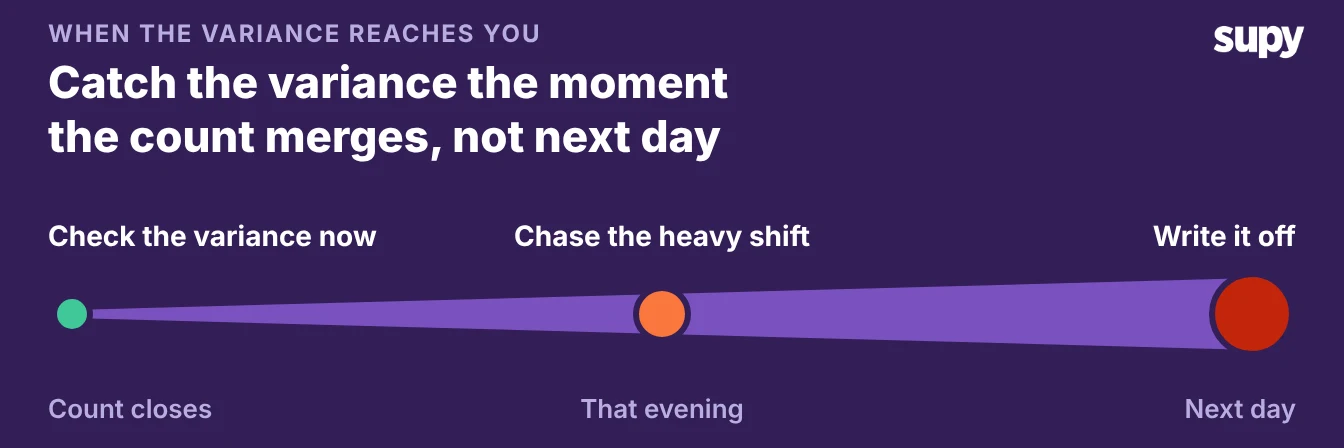
Variance you see after the count closes is a report, not a tool. A counter keys the sheet into a spreadsheet that evening, and the manager opens it the next day. By then the stock has moved, and nobody remembers which shift poured heavy.
Supy shows variance per area the moment each sub-section merges, against what the system expected from your deliveries and till sales. A manager watching the back bar close sees the vodka running short before the cellar is even counted. They drill into the line and act while the shift is still on.
Comparing bars across a group
One bar's variance means little until you put it next to the others. A group that runs the same template everywhere can line its bars up side by side. The clean counts and the drifting ones show at a glance, so the area manager visits the bar that needs it.
Supy's Stock Counts list shows the counts for every branch and location, filterable by branch and location. On count day, head office sees which bars have reported and which have not.
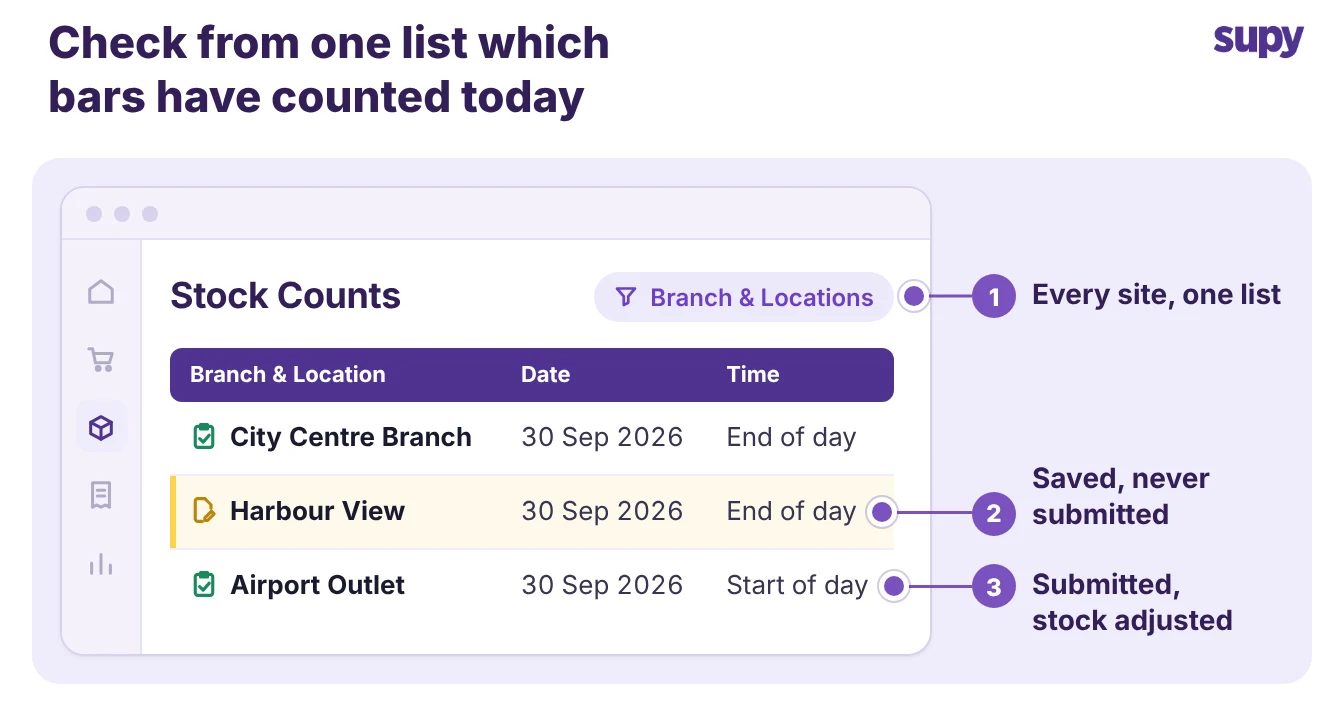
A stock count stays a draft until someone submits it, and submitting it adjusts inventory quantity and value and produces the variance report. Because every bar counts off the same template in shelf order, the variance compares like for like across the group. For the controls that keep those counts honest across sites, see stock count controls for multi-site groups.
Count weekly at a minimum, and spot count your highest-value lines two or three times a week. Act on any area where the variance is over your threshold the moment the count merges. Do that while the shift is still on, not at month end.