.jpg)


Recipe Costing for Menu Modifiers: One Setup, Every Variation
Cost the Base Recipe Once, Before Any Modifiers
Recipe costing for menu modifiers and variations starts with one base recipe, costed once. A Classic Burger has a fixed set of core ingredients, and their combined cost is the foundation every variation builds on. Get that base right, per branch, and you never recost it from scratch again. Each size, sauce or spice level then becomes a small change on top, not a whole new recipe.
Here is what a base cost looks like before any modifier is added. Every figure comes from the ingredients, their portions and the prep wastage on the dish.
| Base ingredient | Quantity | Cost |
|---|---|---|
| Beef patty | 150 g | $1.35 |
| Brioche bun | 1 | $0.45 |
| Cheese slice | 1 | $0.35 |
| Salad and house sauce | 1 portion | $0.40 |
| Prep and wastage | - | $0.25 |
| Base recipe cost | - | $2.80 |
Build Shared Parts as Prep Recipes You Reuse
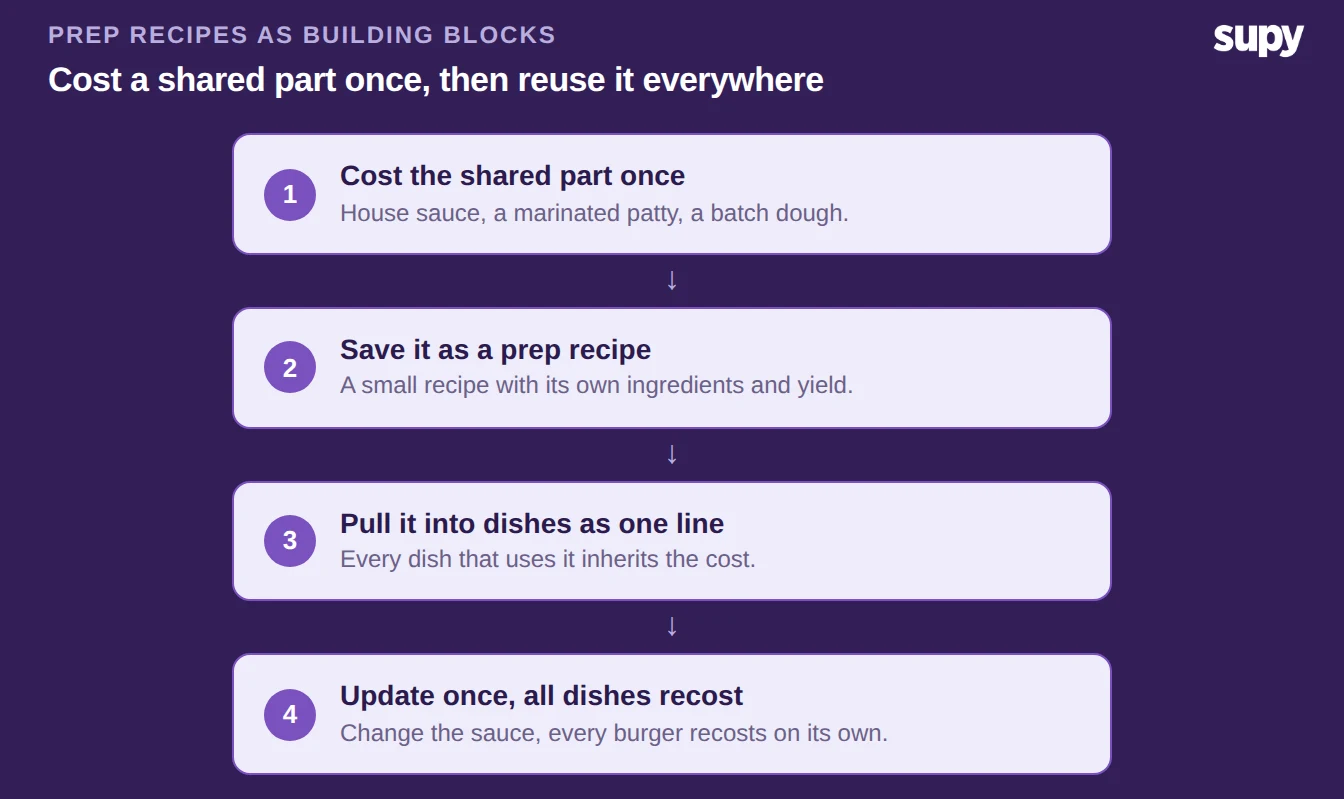
Many variations share the same components. The house sauce goes on three burgers. The spiced mayo appears across the wrap menu. Cost each shared part once as a prep recipe, then reuse it wherever it appears. A prep recipe is a small recipe in its own right, with its own ingredients and yield, that other recipes pull in as a single line.
This is what keeps the setup from ballooning. When the sauce recipe changes, every dish that uses it recosts on its own. You update one prep recipe, not thirty finished dishes. Semi-finished items such as a marinated patty or a batch dough work the same way, so the building blocks stay small and shared.
Cost Each Modifier as a Small Add-On, Not a New Recipe
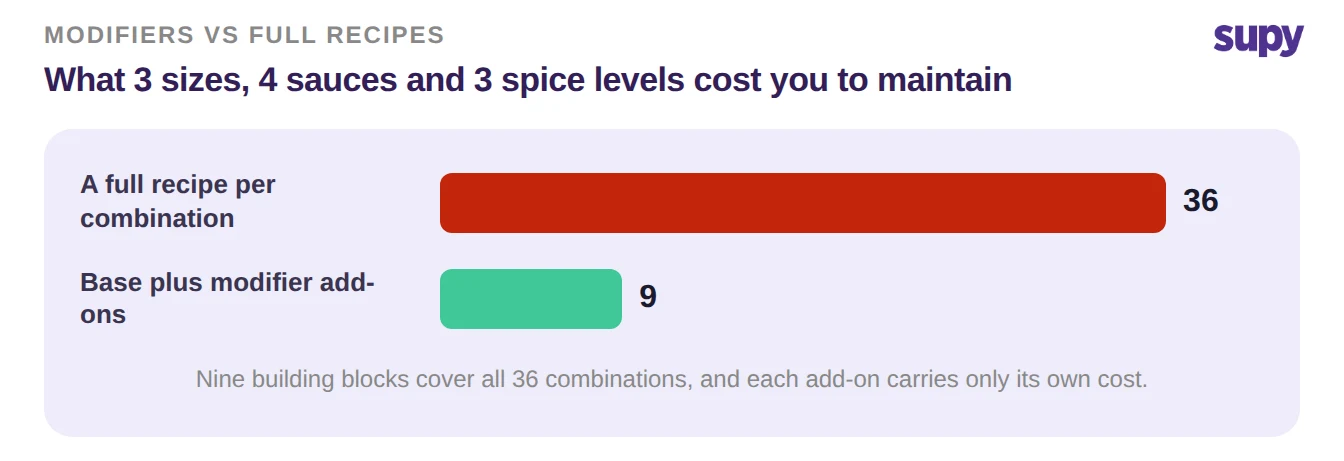
This is where variations usually go wrong. Three sizes, four sauces and three spice levels give 36 possible combinations. Build a full recipe for each and you have 36 recipes to maintain. Change one ingredient price and you edit all of them.
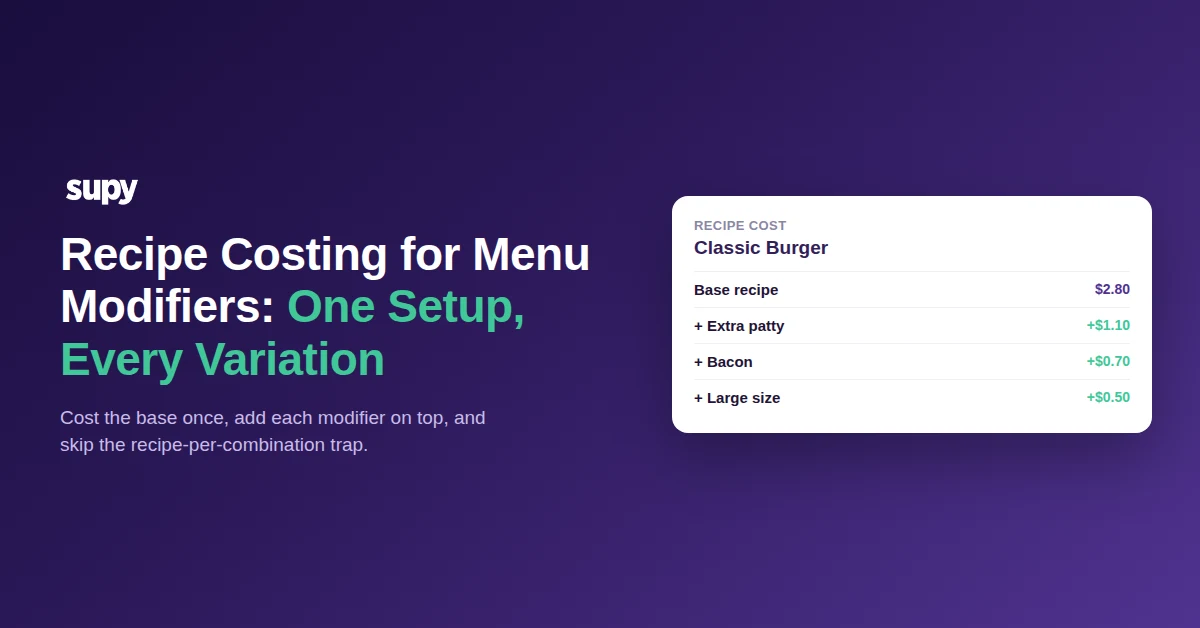
Do it the other way. Keep the base, and cost each modifier as its own small add-on: extra patty adds $1.10, bacon adds $0.70, the large size adds $0.50. One base plus a handful of add-ons, nine building blocks in total, covers all 36 combinations. Each add-on carries only its own cost, and the combination cost is just the base plus whatever the customer chose.
Map Recipes to POS Modifiers So Sales Deplete the Right Stock
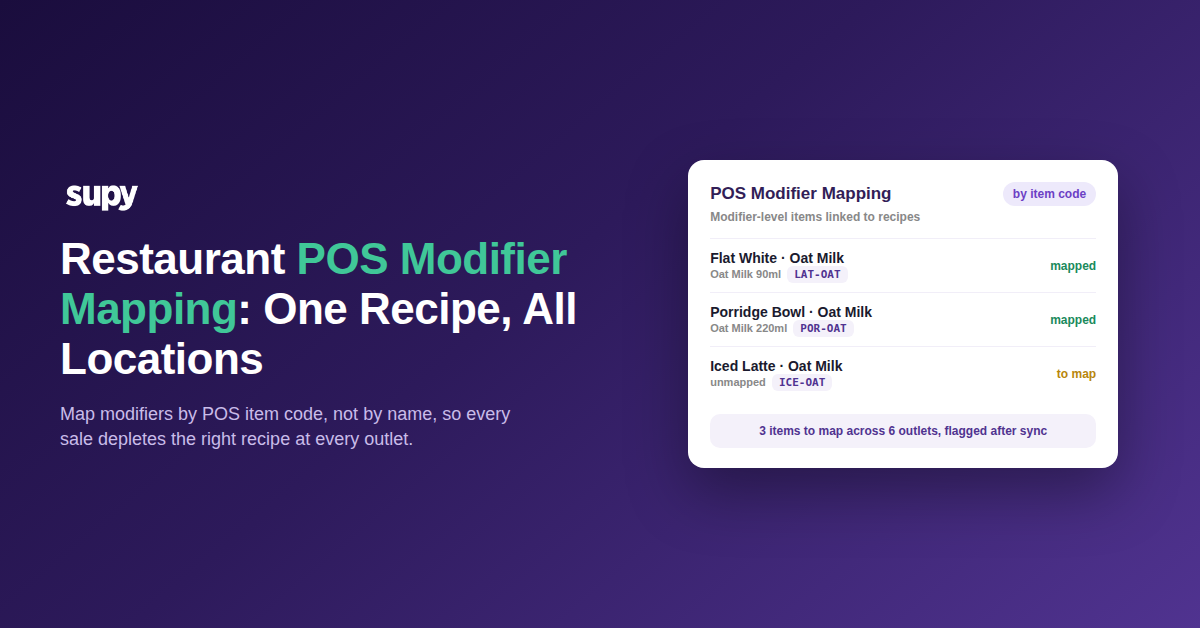
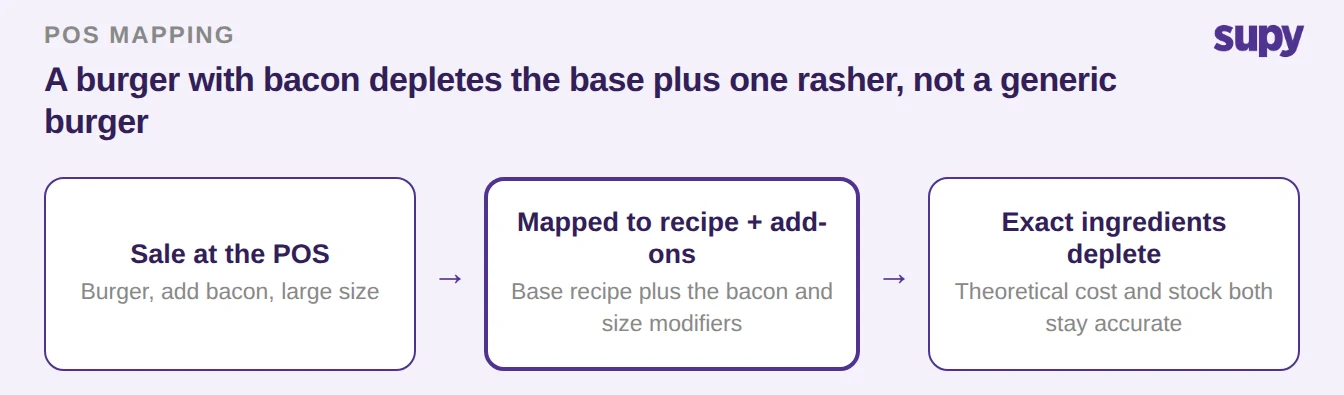
Costing is only half the value. The other half is stock. Link each recipe and its add-ons to the matching POS menu item and modifiers, so a sale reaches the right ingredients. When someone orders a burger with bacon, the sale depletes the base ingredients plus one rasher, not a generic burger.
Get this mapping right once and two things follow. Your theoretical food cost reflects what was actually sold, down to the modifier. And your stock counts line up with the menu, because every variation deducts exactly what it uses. When a POS cannot pass clean modifier data, that is the thing to fix first, because everything downstream depends on it.
Keep Every Variation's Cost Current Across Branches
A cost set once goes stale the moment a supplier price moves. Track each ingredient by its running average cost and its last purchase price, per branch, and every recipe and add-on that uses it recosts on its own. The way you handle live purchase price versus a fixed cost decides how quickly that happens.
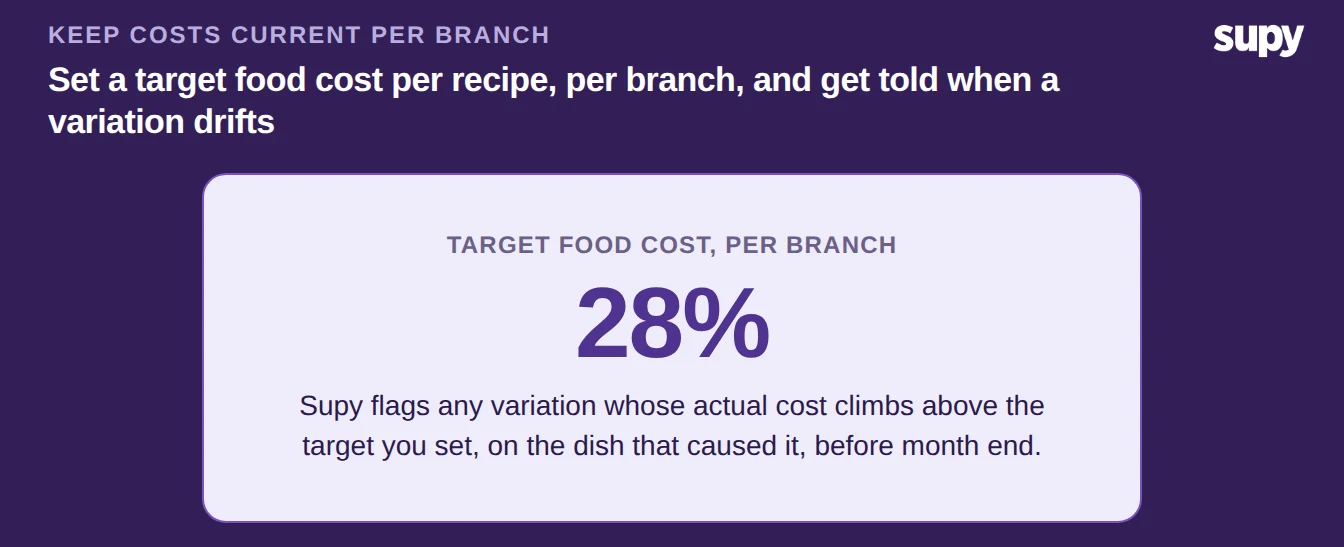
Set a target food cost for each recipe, per branch, because the same burger can carry a different price and target at the airport than in town. Recipe and prep-recipe costing then flags any variation whose actual cost climbs above the target you set. You see the drift on the dish that caused it, while you can still act on it, not at month end.
Start With One Base and Add As You Go
Pick your highest-volume dish first. Cost its base once, per branch, and get that number right. Turn every shared component into a prep recipe. Then add each size, sauce and spice level as its own small modifier, mapped to the POS. Watch the target food cost you set, say 28%: when a variation climbs above it, the ingredient price moved, not your recipe. One base and a short list of add-ons will always beat a recipe for every combination.