.jpg)

Hotel Food and Beverage Management: Why Cost Control Fails When Each Outlet Runs on Its Own System
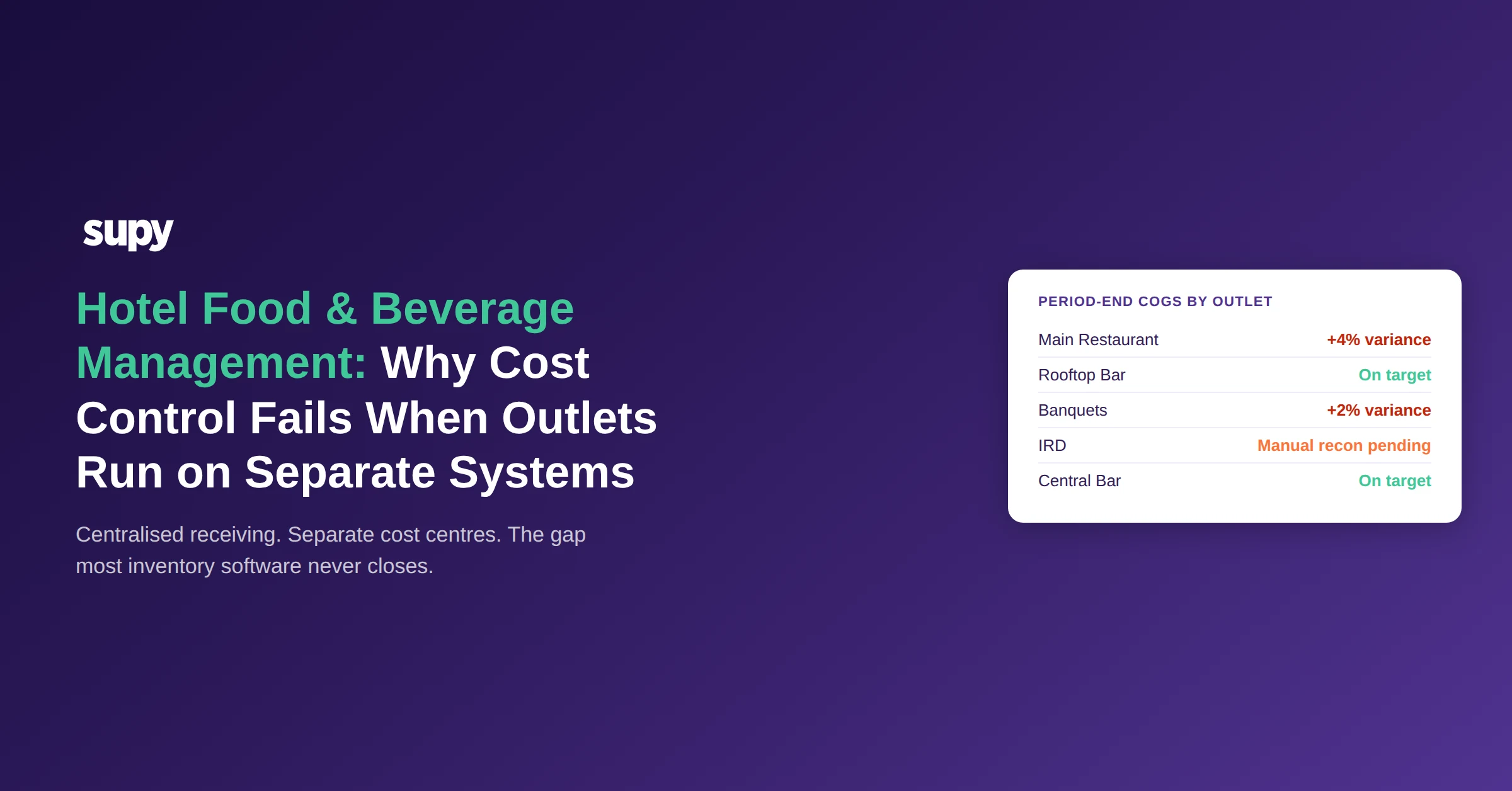
Hotel food and beverage runs several outlets off shared stores and one receiving dock, so cost control hinges on something most restaurant software never models well.
Where Hotel F&B Cost Control Breaks: The Shared Warehouse Problem
A standalone restaurant owns every item in its stockroom. The relationship between goods received and COGS is direct: one receiving location, one P&L. Hotel F&B breaks this assumption immediately.
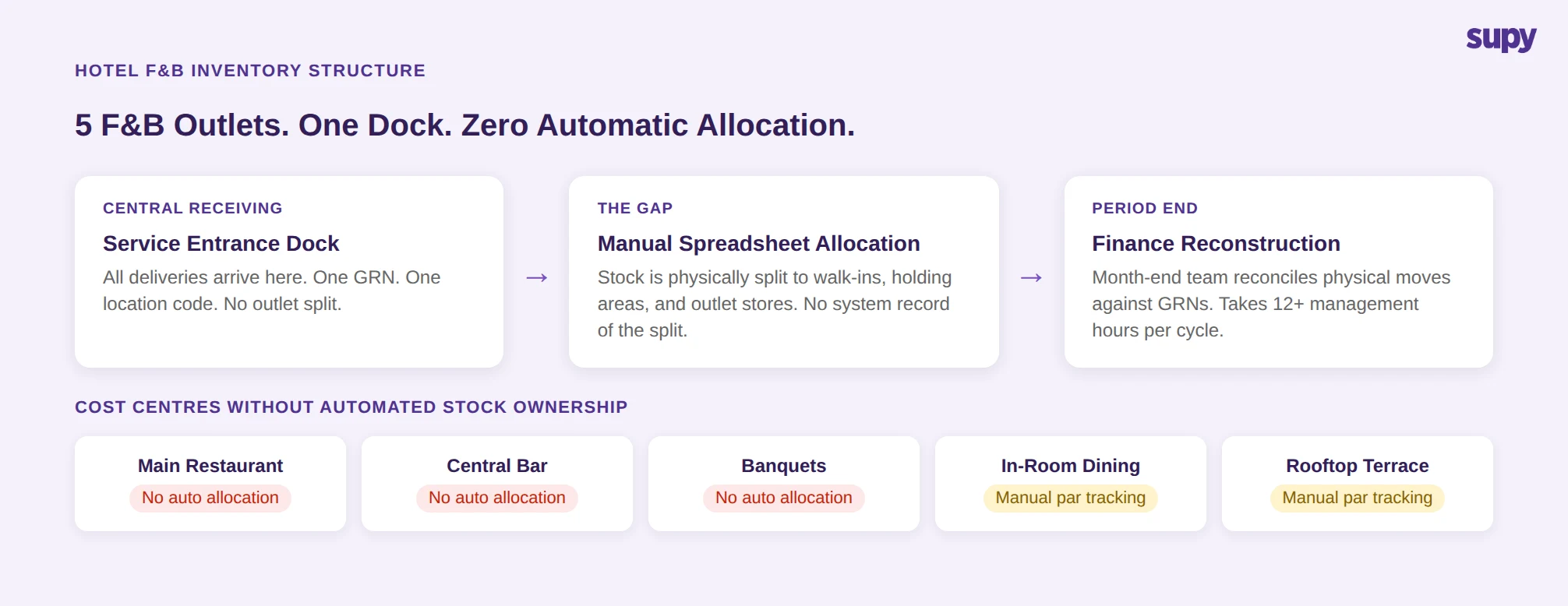
Central receiving at a hotel means one dock accepts deliveries for all outlets. The bar, the restaurant, and banquets share a walk-in. Minibar stock sits in a separate holding area before trolley runs. IRD maintains its own par for late-night covers. Each of these is a separate cost centre with its own budget - but the stock flows through a shared physical space before it reaches each outlet's hands.
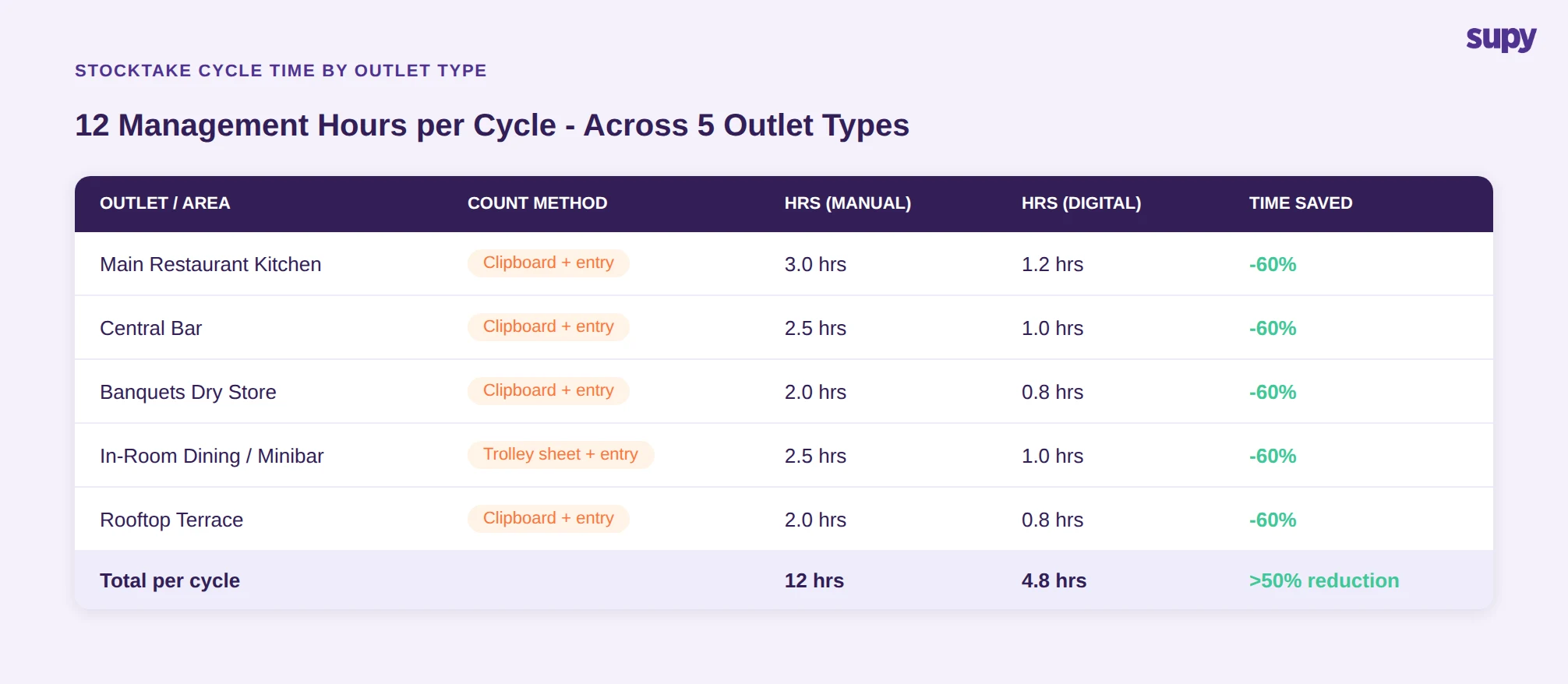
Restaurant-focused inventory systems handle this by treating each outlet as a standalone location with its own item master and receiving workflow. That forces the hotel to either duplicate every SKU across 5 locations or sacrifice cost-centre visibility entirely by receiving everything under one location code. Multi-outlet hospitality operators handling this structure report that manual spreadsheet allocation at period end becomes the default - with a stocktake cycle consuming around 12 management hours per cycle across outlets.
The right model for hotel F&B is outlet-level stock ownership inside a shared warehouse: stock is received once at the central location, then allocated to cost centres without triggering a physical inter-department sale. This distinction - between a stock transfer and an internal allocation - is not supported in tools built around single-site receiving logic.
Why Food Cost by Outlet Is Invisible Until Month-End
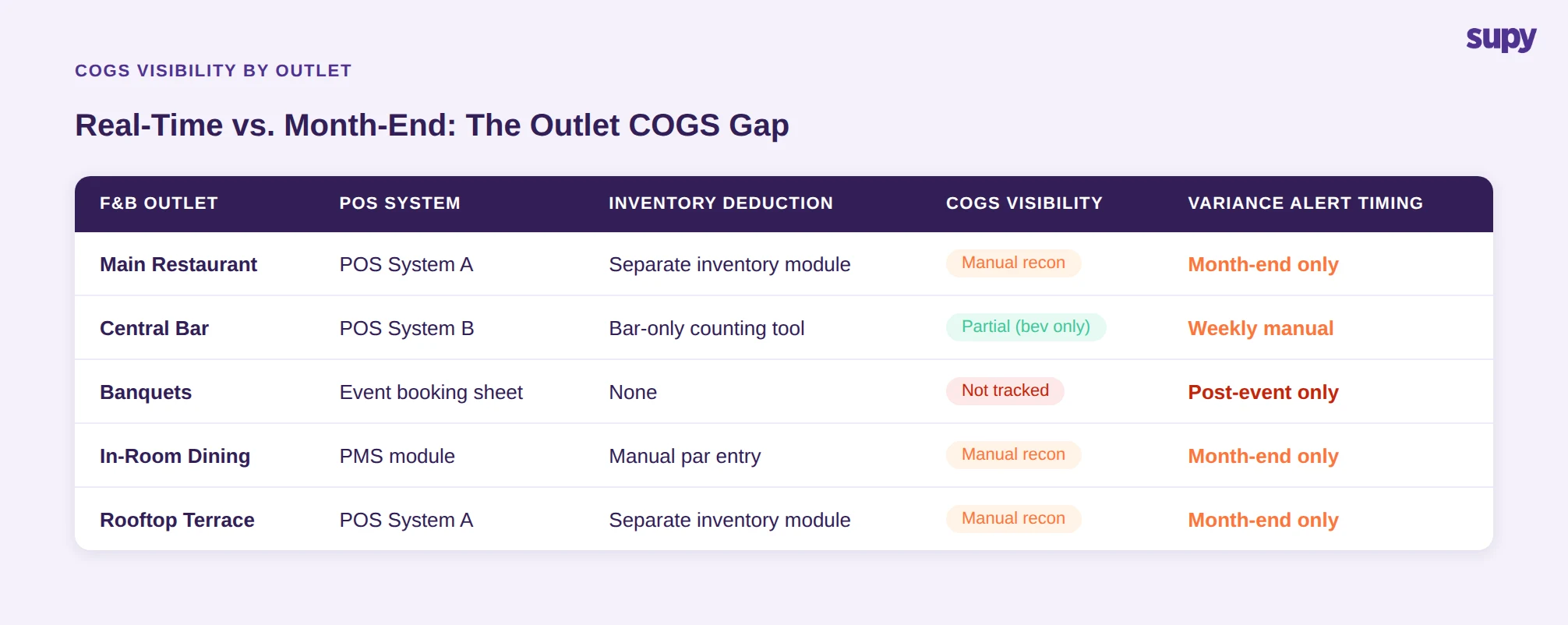
Each F&B outlet in a hotel typically runs a separate POS. The restaurant uses one system; the bar uses another; banquets operates off booking sheets. Each POS records sales independently, but none of them connects back to a shared inventory deduction layer that attributes consumed stock to the correct cost centre in real time.
The result: COGS exists as a total figure, but COGS by outlet is invisible until finance manually reconciles POS sales against the period's goods receipts and internal allocations. By then, a 4% variance in banquets food cost has already been baked into the quarter. The F&B director cannot act on a number they cannot see during the period.
This is the core gap that WISK, which focuses on bar beverage counting, and broader PMS-connected tools do not address. Bar-only counting gives you beverage COGS for the bar outlet with reasonable accuracy - but it does nothing for the restaurant kitchen, the rooftop, or banquets. And it does not give you the consolidated view across all outlets that hotel finance requires for month-end allocation. Supy's 75+ integrations include the POS systems across outlet types, enabling a single deduction layer that posts consumption against the correct cost centre as sales happen.
The GRN Cost-Centre Gap in Hotel Receiving
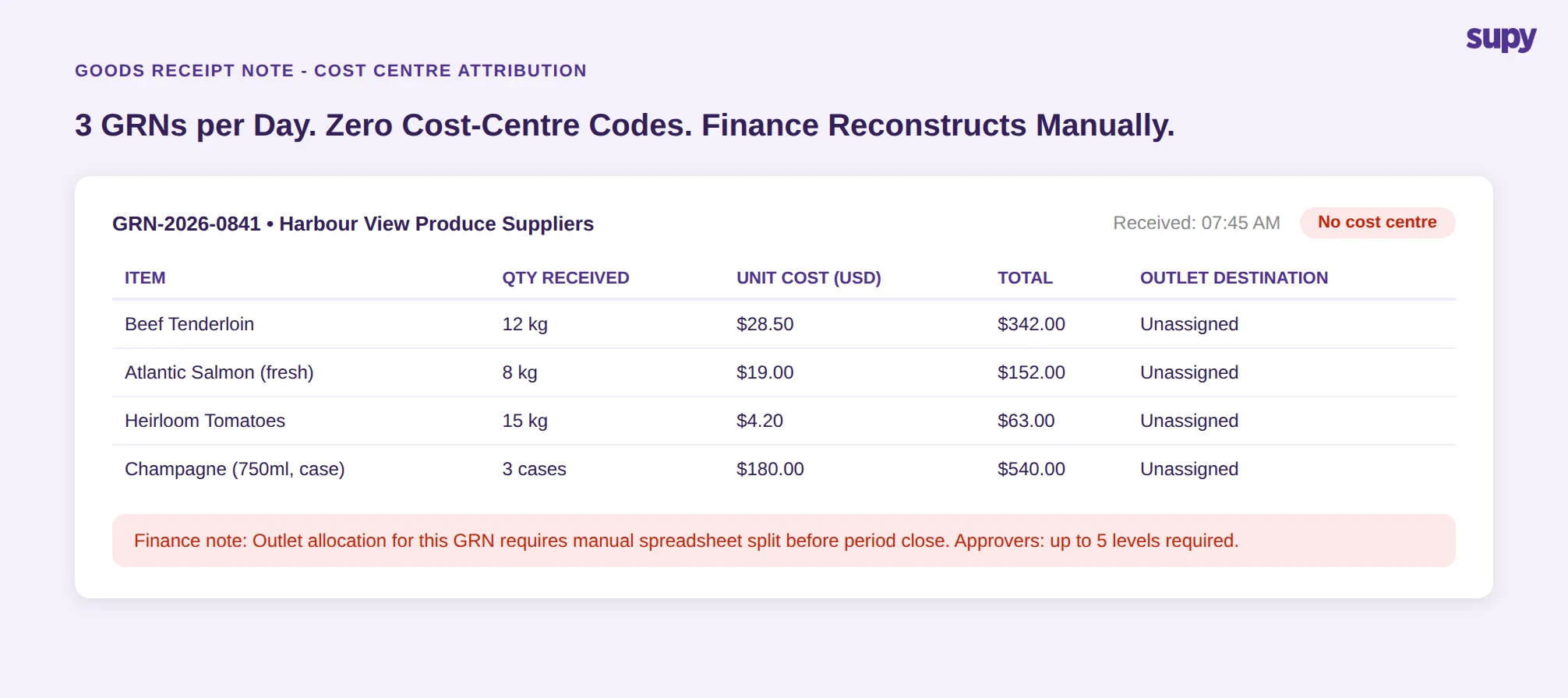
Every goods receipt note (GRN) processed by a hotel F&B operation should carry a cost-centre code. Hotel accounting requires it - each outlet is a P&L centre, and the cost of every delivery must be attributable to the outlet that ordered or will consume the stock. This is a basic requirement for hotel finance; it is not optional.
Most hospitality inventory systems only record the receiving location - which in a hotel is the central dock, not the consuming outlet. A GRN received at the main store carries no signal about whether those 10 kg of beef tenderloin are heading to the restaurant, banquets, or IRD. Finance is left to reverse-engineer the allocation from internal transfer records and manual notes at period close.
This creates a reconciliation gap on every delivery. Multi-cost-centre hospitality operators specifically identify GRN cost-centre attribution as a daily friction point: the accounting team needs per-outlet cost totals to complete the books, but the system records only the receiving dock. The fix requires either a receiving workflow that captures cost-centre intent at the time of GRN confirmation, or a post-delivery allocation step that is equally systematic - not ad hoc.
Supy's approval workflow supports up to 5 approvers in a structured chain, which maps to the multi-level authorisation hotel F&B requires: outlet manager approves the order, F&B director approves the cost centre, finance confirms the GRN. The paper trail is captured in the system, not in email threads.
Stocktakes Across Multiple Outlet Types: The Time Cost Nobody Budgets For
Hotel stocktaking is not one count - it is five or more. The bar count requires a different count sheet from the kitchen count, which differs from the minibar trolley count, which differs from the banquets dry store, which differs from the event linen-and-equipment log that sits alongside the food and beverage par. Teams physically move between locations. Some outlets can only be counted during the morning before service; others require a post-service count.
Without digital count templates and live valuation, the count cycle becomes a clipboard exercise followed by manual data entry. Multi-outlet operators report 10-15 management hours consumed per cycle - time spent moving between locations, transcribing, and entering counts rather than analysing the result. Supy reduces stock counting time by more than 50% by providing digital templates, searchable item lists, and live valuation as counts are entered - so the variance report is available as soon as the last count is submitted, not 24 hours later.
The minibar is a particular problem: it combines high pilferage risk with low-value items, making accurate counting essential but also time-consuming proportional to the value at stake. A count template that handles the minibar trolley separately from the kitchen, with its own par levels and reorder triggers, is not a luxury in hotel F&B management - it is a baseline requirement that generic inventory tools rarely provide.
Variable-Price Items and the Invoice Matching Failure
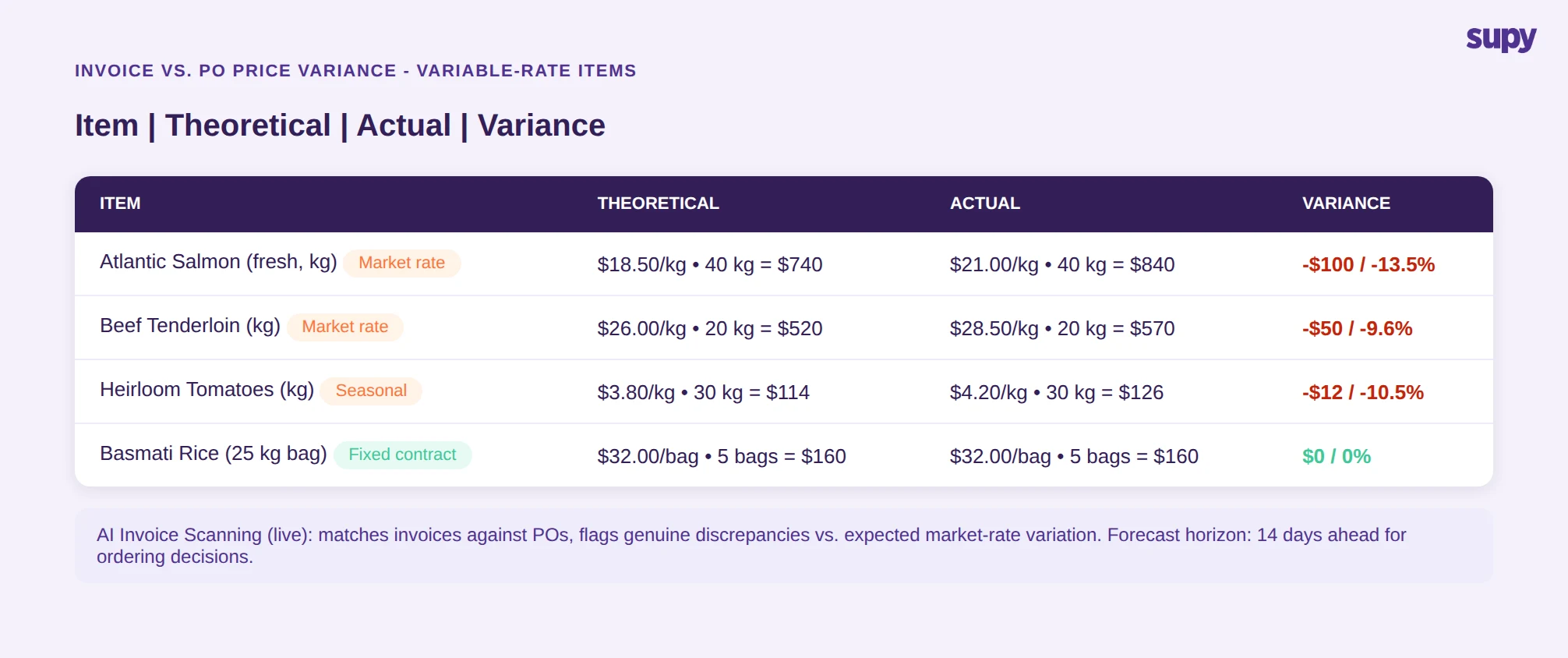
Hotel F&B purchases at market rates more often than restaurant chains do. Fresh fish is priced daily by the supplier. Seasonal produce fluctuates week to week. Premium proteins for banquets events are quoted per event, not on standing contract. These variable-price lines represent some of the highest-value and highest-risk items in the hotel F&B cost structure.
Restaurant-oriented purchasing systems handle this badly: the PO is raised at an estimated price, the invoice arrives at the actual market price, and the system flags a price discrepancy that requires manual override on every single line. On a hotel receiving dock processing 200 line items per delivery, with perhaps 30-40 of those at variable market rates, the manual override workload blocks automated invoice matching entirely. Receiving staff resolve this by accepting invoices without matching, defeating the control purpose of a three-way match.
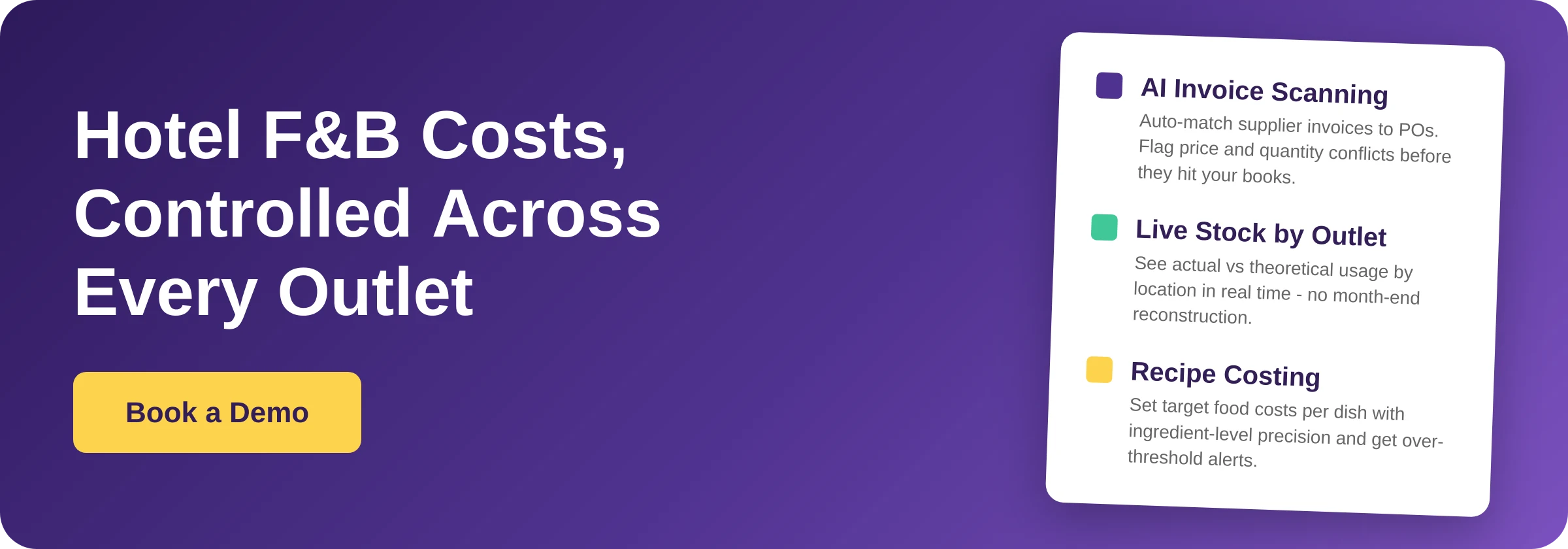
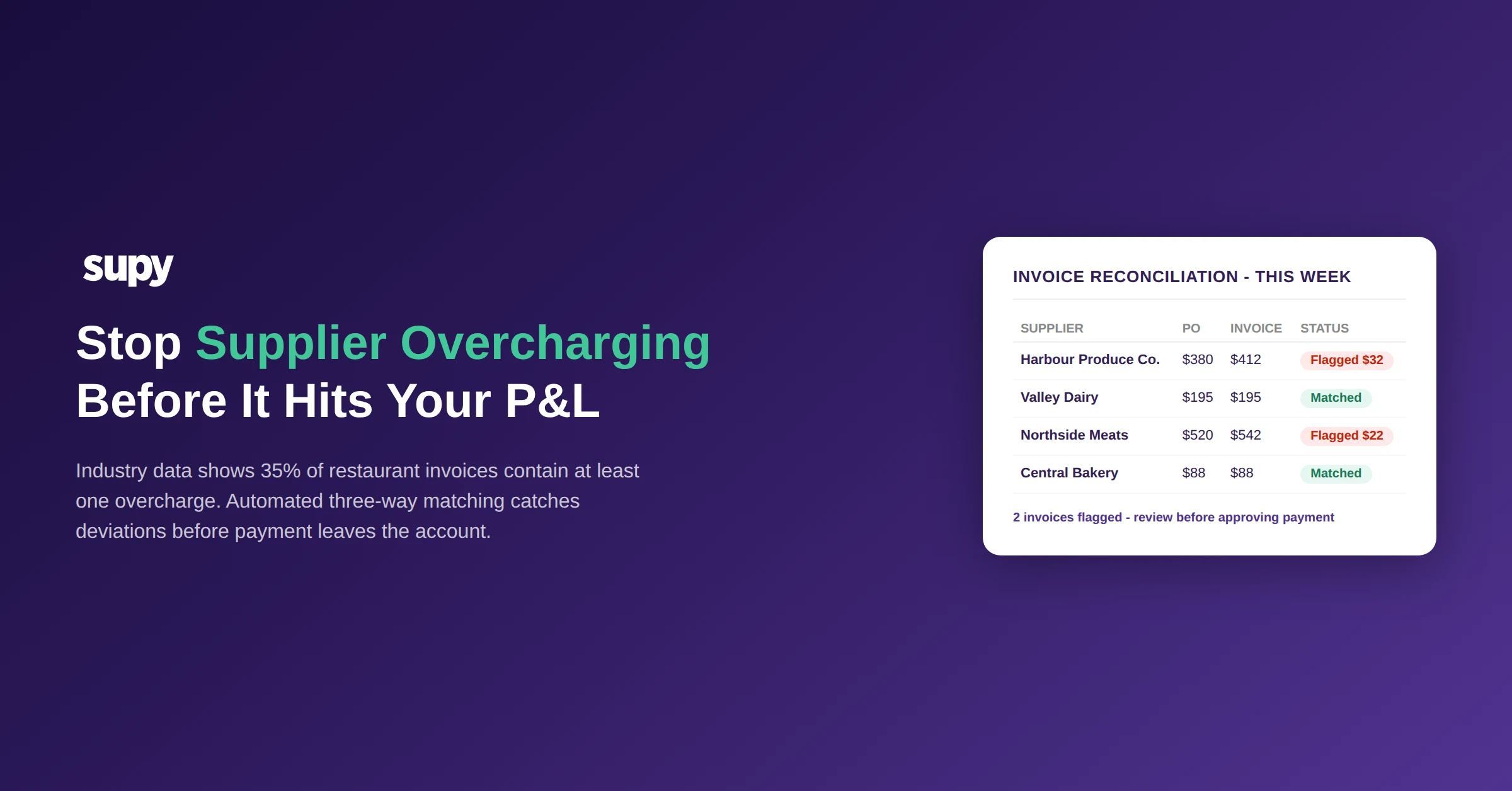
Supy's AI Invoice Receiving and Scanning is live and handles this workflow - scanning supplier invoices, matching them against POs, and flagging genuine discrepancies rather than expected price variations within a tolerance band. The AI Predictive Ordering feature, also live, uses 14-day demand forecasts to suggest order quantities that account for upcoming banquets bookings, public holidays, and seasonal demand shifts - so the hotel is not over-purchasing variable-rate items at peak market prices.
Hotel food and beverage management fails at cost control when the tools treat each outlet as a standalone restaurant. The problems are structural: shared receiving needs outlet-level allocation, not duplication; every GRN needs a cost-centre code, not just a location; COGS needs to be visible by outlet in real time, not reconstructed at month-end from disconnected POS reports. The operators who resolve this move to a platform built for multi-outlet hospitality cost structure - one that handles restaurant inventory management at scale across locations, integrates across POS systems from a single inventory layer, and brings the stocktake cycle down from a multi-day management effort to same-day results.