.jpg)


Commissary Kitchen Management: How Multi-Brand Ghost Kitchen Operators Control Costs and Quality at Scale
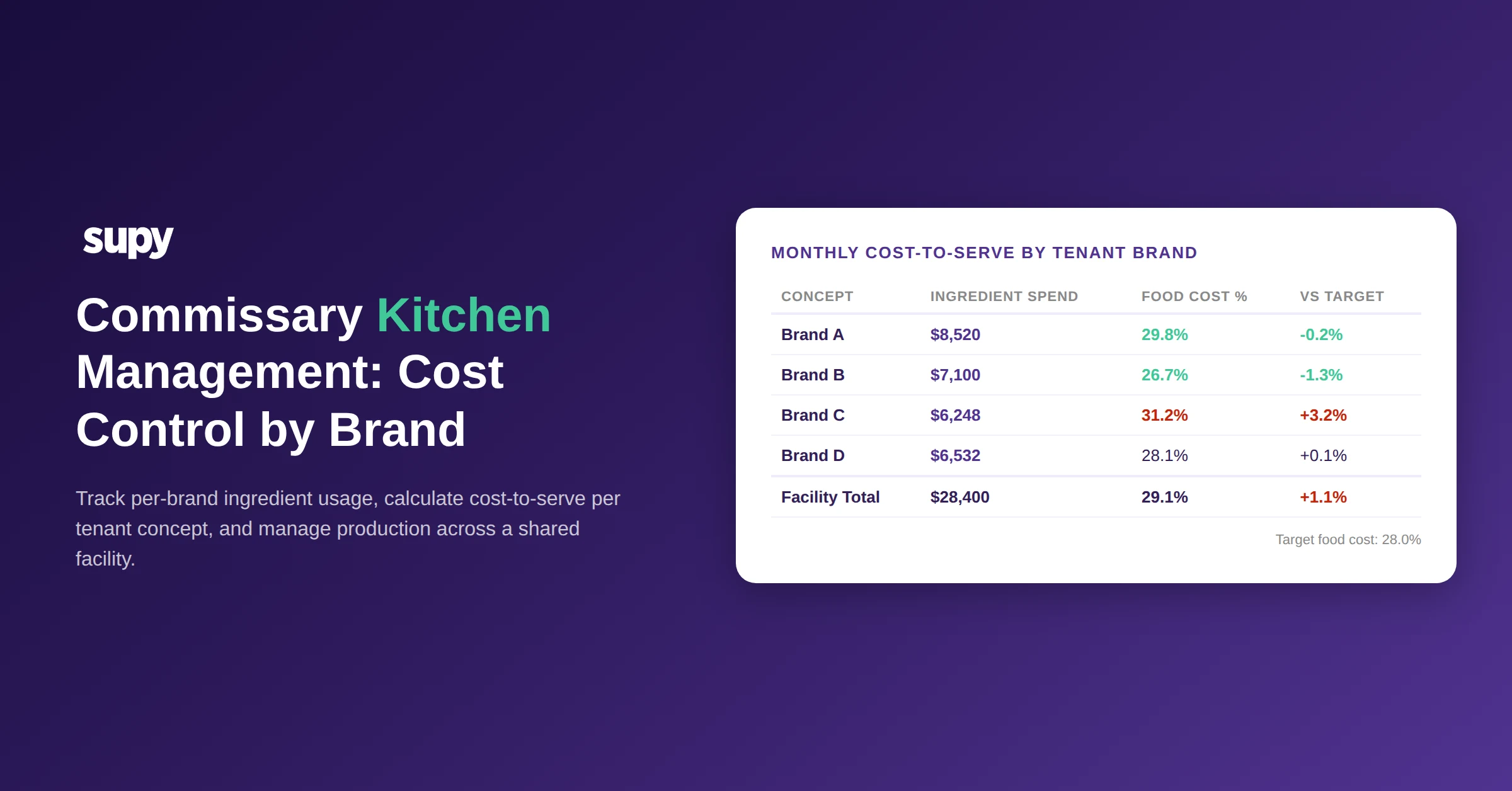
Multi-brand ghost kitchen groups that consolidate production into a shared commissary facility gain a structural advantage: every ingredient that enters the operation flows through one central point. The financial benefit of that consolidation depends entirely on whether the commissary kitchen management layer can separate costs by tenant brand - attributing what Brand A consumed, what Brand B consumed, and what shared inputs cost each concept across a billing period.
This guide covers the four operational capabilities that make per-brand cost control work in a shared commissary kitchen: ingredient usage separation by concept, cost-to-serve calculation per brand, production scheduling across multiple concepts, and transfer tracking between the central facility and satellite locations.
A commissary kitchen feeding several brands runs on different economics than a single restaurant, and the inventory tools built for one outlet quietly break when one kitchen's costs have to be split cleanly across every brand it supplies.
Why Commissary Kitchens Outgrow Single-Brand Inventory Software
Restaurant inventory tools are designed around a single operating entity. A standard system tracks what came in, what recipes consumed, and what remains on the shelf - all under one account structure. For a commissary kitchen serving four tenant concepts, that model creates a fundamental attribution problem: a 25 kg bag of plain flour lands in one inventory pool with no record of which brand will use it or in what proportion.
The result is that operators can see total facility food cost, but cannot produce a per-brand cost figure without assembling it manually. When a tenant billing cycle arrives, the calculation requires matching purchase records to estimated production runs, applying recipe yields, adjusting for wastage, and subtracting any items returned to the central store. For a facility running four concepts, that process produces a cost-to-serve figure that is already several days stale by the time it reaches the billing spreadsheet.
Ghost kitchen software reviews in 2026 consistently identify the inventory and food cost layer as the least standardised in the technology stack for shared facilities. Order aggregation and POS synchronisation across concepts are addressable with off-the-shelf tools; ingredient-level cost attribution by brand within a single facility is not.
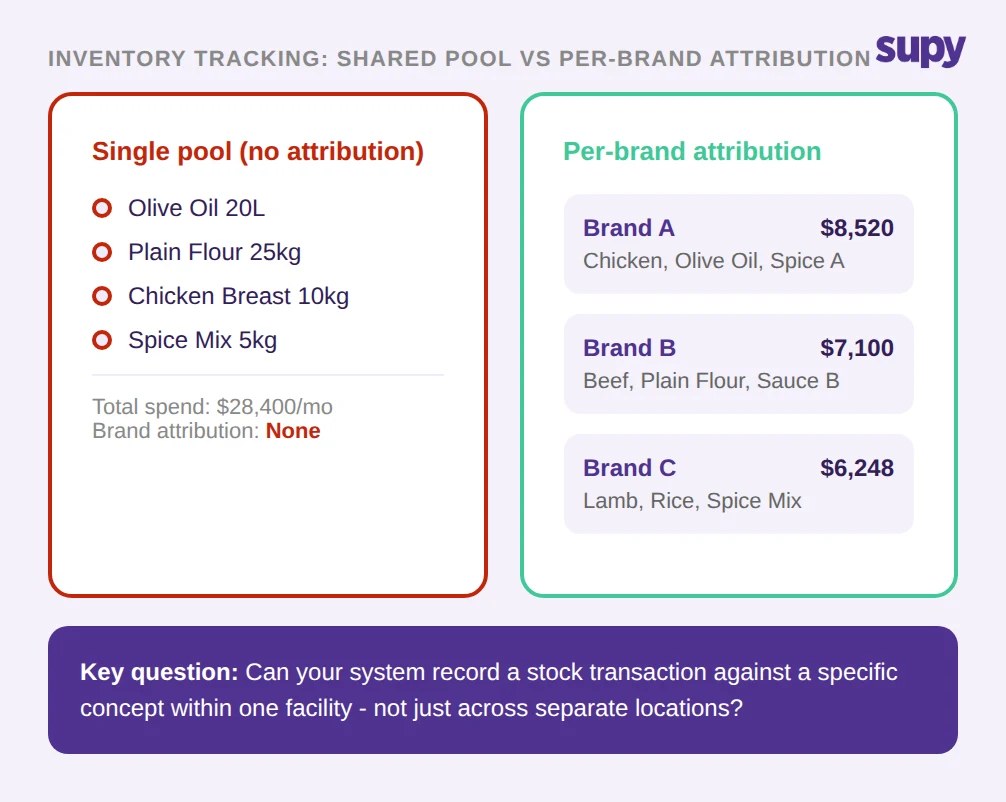
The question to ask before selecting any commissary kitchen management software: can it record a stock transaction against a specific concept or cost centre within one facility - not just across separate physical locations?
How Operators Separate Ingredient Usage Across Tenant Concepts
The model for per-brand ingredient separation in a commissary kitchen depends on how tightly concepts share raw inputs. Some ingredients are brand-exclusive - a proprietary spice blend or a specific cut of meat that only one concept uses - while others are shared across tenants, such as cooking oil, bulk flour, or packaging.
For brand-exclusive ingredients, the clearest separation method is dedicated storage zones within the facility: a labelled section of the walk-in, a tagged shelf area, or a named sub-location in the inventory system. Receipts and stock counts post against that zone, making the brand usage visible without requiring manual attribution after the fact.
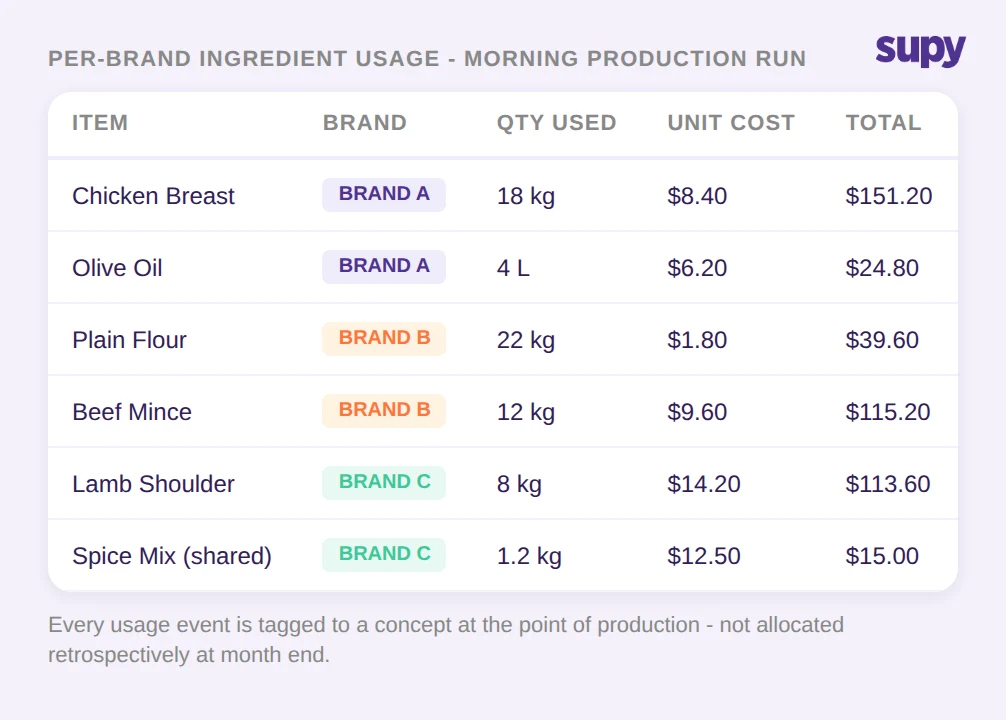
For shared inputs, usage is driven by production records: when Brand A runs a production batch calling for 18 kg of chicken breast, the system should deduct that quantity from the ingredient pool and record the draw against Brand A's cost account - not against the facility total. This requires recipe records to be built and tagged by concept, not by facility.
An 8-site bakery group's operations manager noted that most production items leaving their central production facility lacked consistent labelling - product codes, weights, manufacture dates, and use-by dates were missing at the point of dispatch - which made it impossible to trace which items belonged to which downstream outlet once they left the kitchen. The minimum requirement for commissary kitchen management is that every item dispatched from the shared facility carries a brand attribution, a transfer record, and a destination - creating a chain of custody from production to satellite delivery.
Calculating Cost-to-Serve Per Brand Without a Manual Spreadsheet
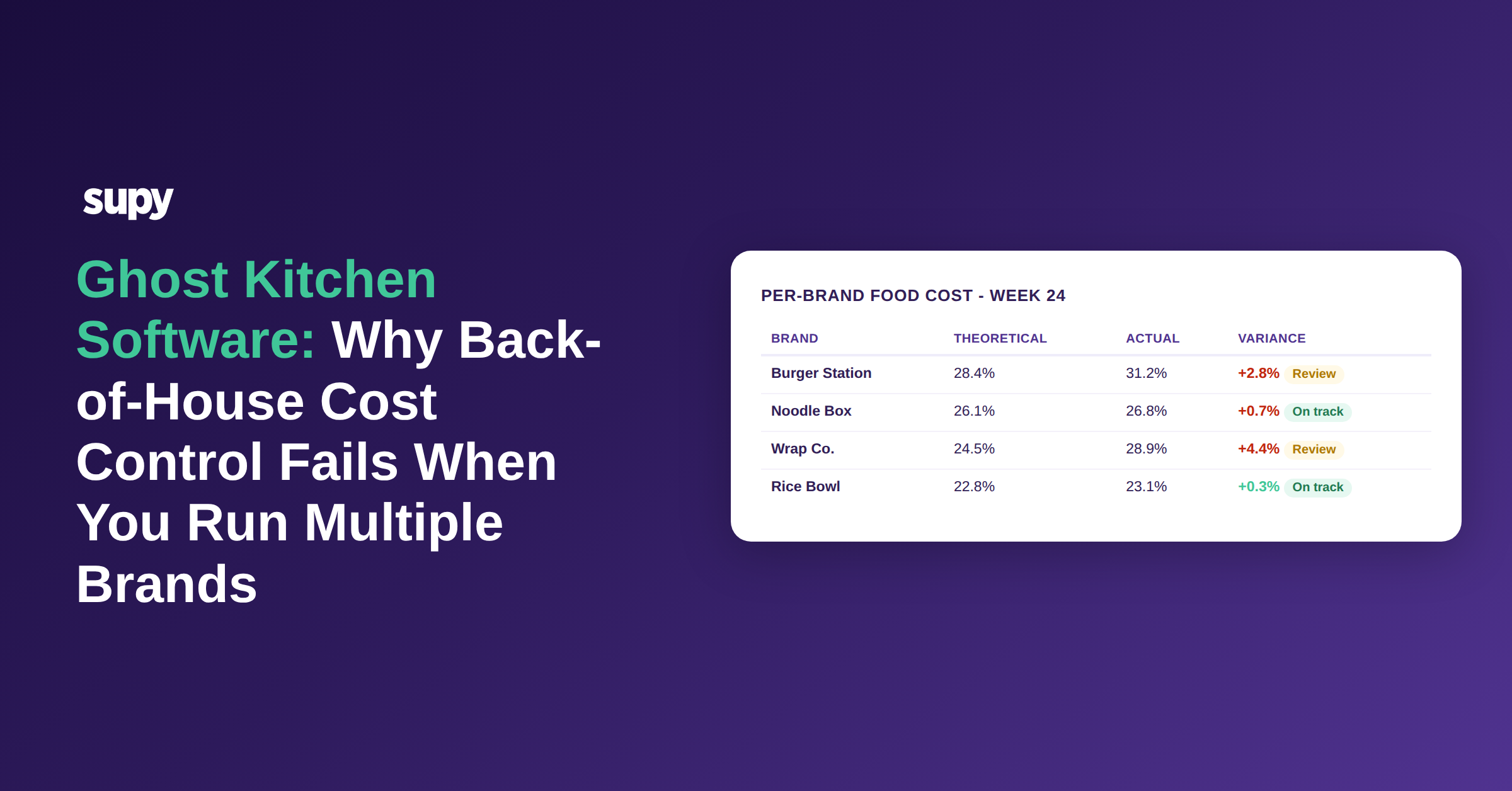
Cost-to-serve per tenant concept is the commercial core of commissary kitchen management. A facility that cannot produce a per-brand COGS figure cannot bill tenants accurately, cannot identify which concept is eroding facility margin, and cannot renegotiate pricing with evidence when a brand's consumption pattern changes.
When ingredient tracking runs through a shared pool with no concept attribution, cost-to-serve is assembled retrospectively. At a facility running four tenant brands with a combined monthly ingredient spend of $28,400 - split across Brand A at $8,520, Brand B at $7,100, Brand C at $6,248, and Brand D at $6,532 - assembling each brand's monthly spend from purchase records, production logs, and transfer documents can take a central kitchen team 14 hours per week.
A system that carries the concept as a cost-centre attribute on every transaction changes that calculation. Purchase receipts arrive against the facility; production runs deduct from the brand account; period-end cost-to-serve is a query, not a reconstruction. When Brand C shows a food cost percentage of 31.2% against a 28% facility target, the variance is visible at period end without requiring a manual audit to surface it.
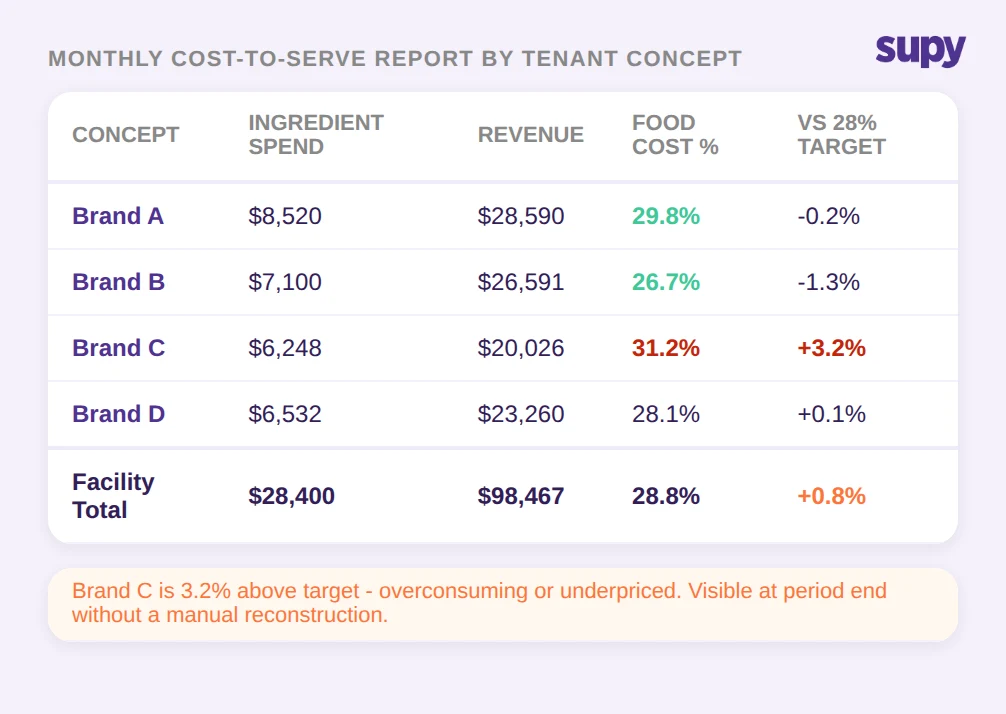
Before selecting a system, ask: does it produce a COGS report that can be filtered by cost centre or concept within a single facility - not only by physical location?
Production Scheduling When Multiple Concepts Share the Same Equipment
Production scheduling in a multi-brand commissary kitchen is a sequencing problem: which concept gets the combi oven from 06:00 to 10:00, which brand needs the blast chiller at 14:00, and how does a delayed delivery for one concept affect the production window of another. Standard kitchen production tools are built around a single concept's recipe schedule and do not model equipment contention across multiple tenant brands.
Most shared facilities manage this through a manual booking system - a shared calendar or whiteboard showing equipment slots per brand per day. The limitation is that this record sits outside the inventory system. A production run completed on schedule does not automatically post ingredient usage against the brand cost account or generate a transfer record to the receiving satellite location. The scheduler and the inventory system are disconnected.
A 12-location hospitality group's central kitchen team identified that managing stock counts across multiple client locations required entering each location separately, with no bulk cross-location view available, and that transfer records could not be edited after submission - staff had to void the entire record and re-enter it to correct an error. The time cost of that process was 45 minutes per correction event.
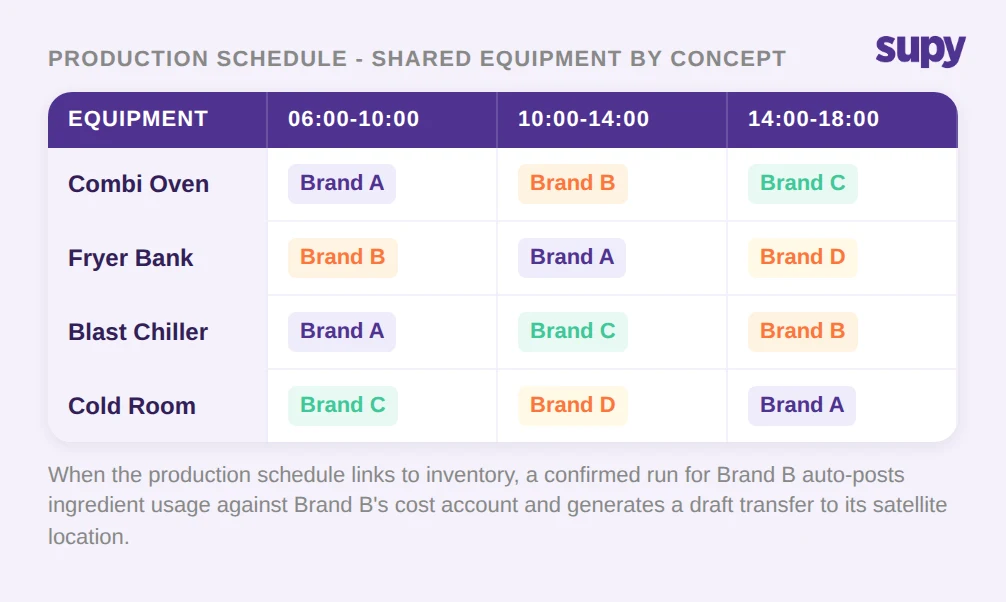
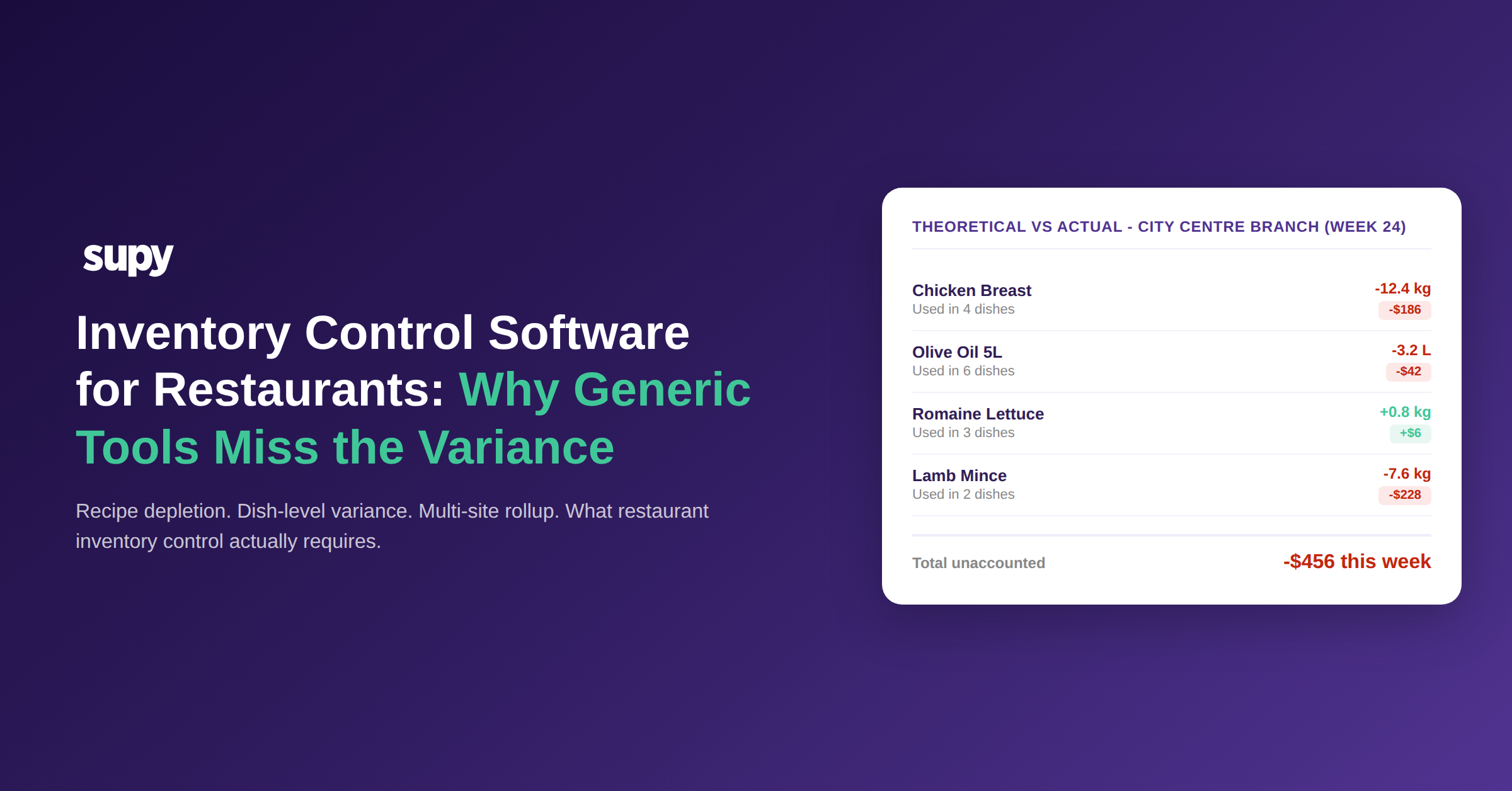
The integration that closes this gap links confirmed production events to inventory movements: when a Brand B production run is confirmed for the fryer bank, the system automatically draws the ingredient quantities from Brand B's stock account and drafts the transfer record to its satellite location. The production schedule becomes a trigger for inventory movement rather than a separate administrative document.
Transfer Tracking Between a Commissary Kitchen and Satellite Locations
Transfer records between a commissary kitchen and its satellite locations serve two functions: they are the stock reconciliation tool for the central facility and the billing support document for tenant brands. When a batch of Brand D's proteins moves from the central kitchen to a satellite location, the transfer record should simultaneously reduce stock at the commissary and add it at the receiving site - creating a matched pair of entries that keeps both records accurate without a manual count correction.
A transfer record fails as a reconciliation tool when it cannot be corrected after submission. If a quantity was entered incorrectly and the record is locked, the only remedy is to void the entire transfer and re-enter it from scratch. The audit trail then shows a void and a replacement, not a correction - and variance reports reflect the error until the next physical count cycle catches and resolves it.
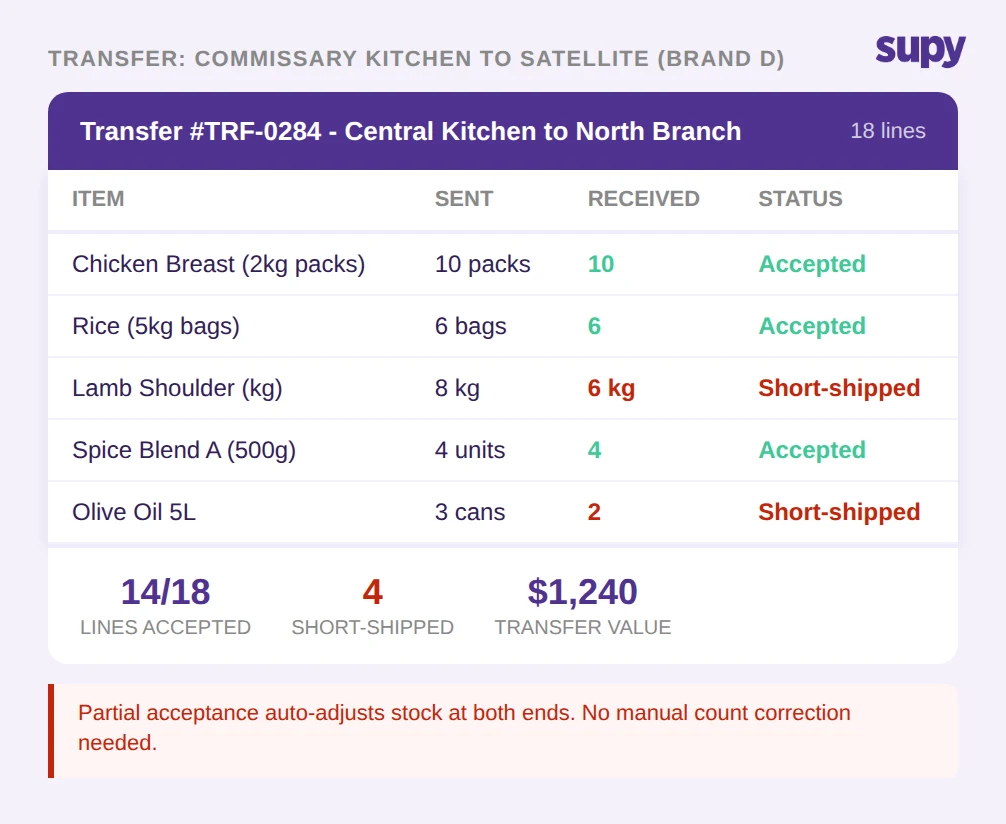
The test for any transfer system in a commissary kitchen context: can a receiving satellite partially accept a delivery - recording that 14 of 18 lines arrived and 4 were short-shipped - and does that partial acceptance automatically adjust stock at both the commissary and the receiving location without requiring a manual count adjustment?
What to Look for in Commissary Kitchen Management Software
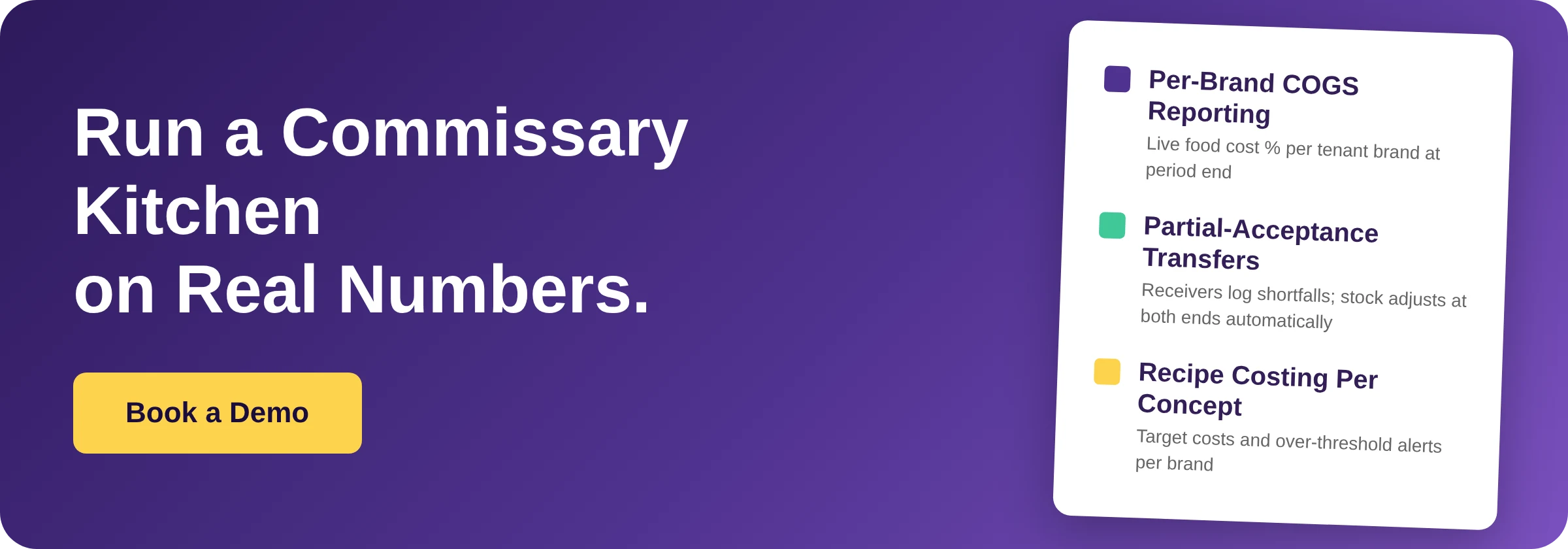
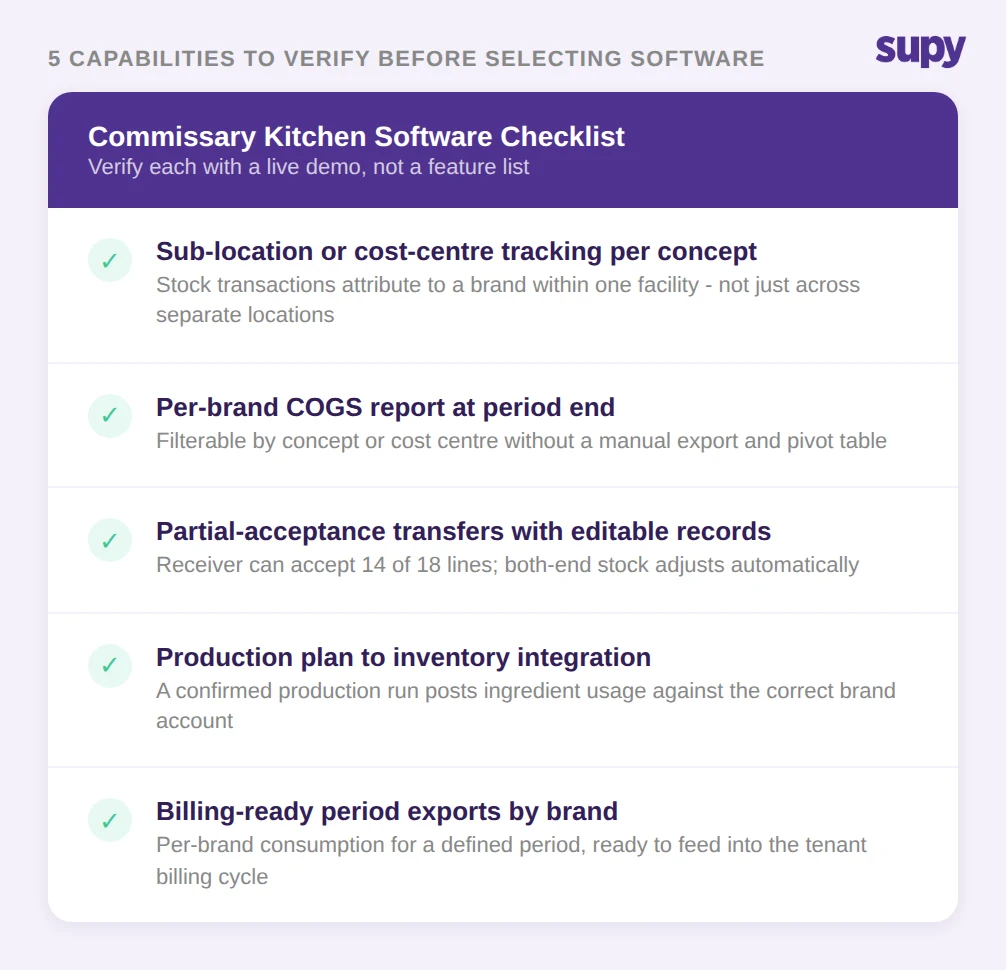
Most inventory software vendors design for single-brand restaurant groups. The commissary kitchen use case requires a specific set of capabilities that most platforms treat as secondary or custom: sub-location or cost-centre tracking within a single facility; brand-level COGS reporting filterable by concept at period end; transfer records that support partial acceptance and can be corrected after submission; production plan integration that posts ingredient usage against the correct brand account when a run is confirmed; billing-ready period exports showing per-brand consumption across a defined date range.
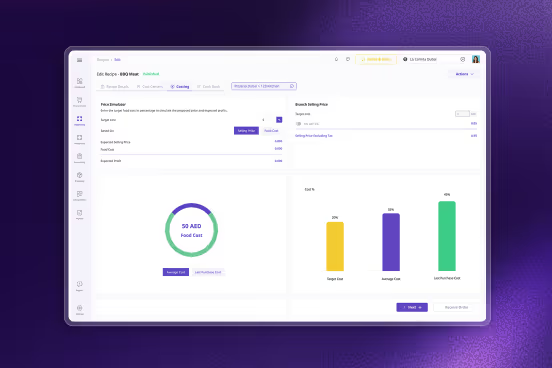
Supy's inventory platform includes multi-location stock visibility, inter-branch transfer requests with receiver acceptance workflows, and COGS reporting filterable by site. Operators using Supy's inventory management module alongside its Central Kitchen procurement layer can receive purchases against the facility, record production runs per brand, and produce a per-concept cost-to-serve report at period end - without assembling it from separate documents. Supy connects to 75+ integrations, including Foodics, Oracle Micros, QuickBooks, and Xero, so consumption data can flow directly into the accounting system used to invoice tenant brands.
Running a commissary kitchen as a multi-brand operation works commercially when the cost layer is visible at the concept level. Operators who can produce a per-brand COGS report at period end have the data to price tenants correctly, identify which concept is running above its cost target, and grow the facility without distributing costs unevenly across brands.