.jpg)


Back of House Software: Complete Guide to Modern Restaurant Operations

Back of house (BOH) software is the operational backbone of modern restaurants. It manages everything from inventory and procurement to staff scheduling and financial reporting - the critical systems that keep your restaurant running smoothly behind the scenes.
In this guide, we'll explore what back of house software does, how it differs from point of sale systems, and why it's essential for multi-location operators.
Back of House Software vs POS System
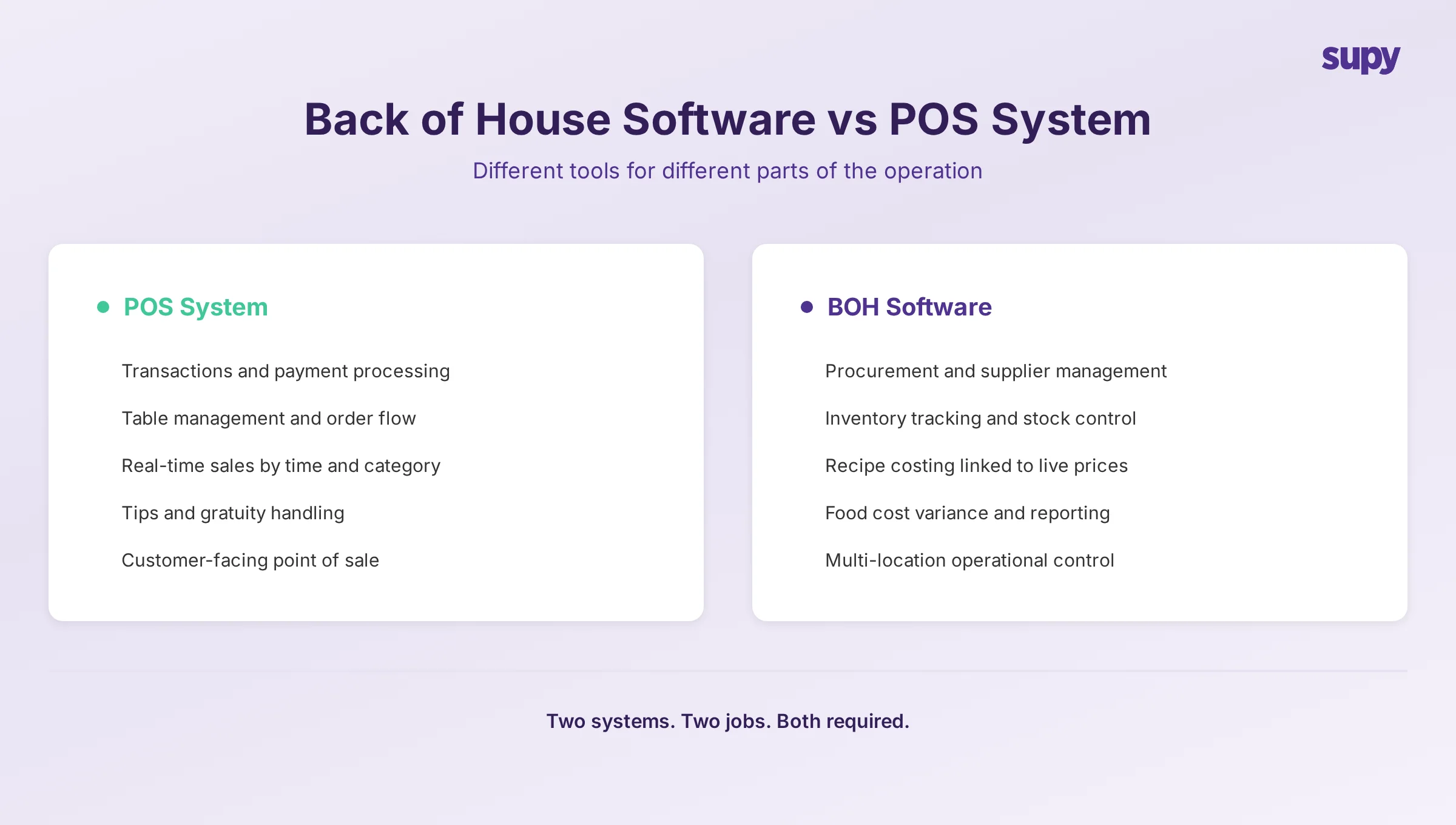
Many restaurant operators confuse back of house software with POS systems - they're complementary, not interchangeable.
A POS system is your front-of-house transaction hub. It handles orders, payments, and customer data at the till. It's customer-facing and real-time.
Back of house software, by contrast, is the operational engine. It orchestrates inventory, manages suppliers, tracks costs, and provides business intelligence across all your locations.
While a POS can include basic inventory features, it typically lacks the depth and sophistication that dedicated BOH systems provide.
Why Back of House Software Matters
For multi-location operators, back of house software delivers tangible benefits:
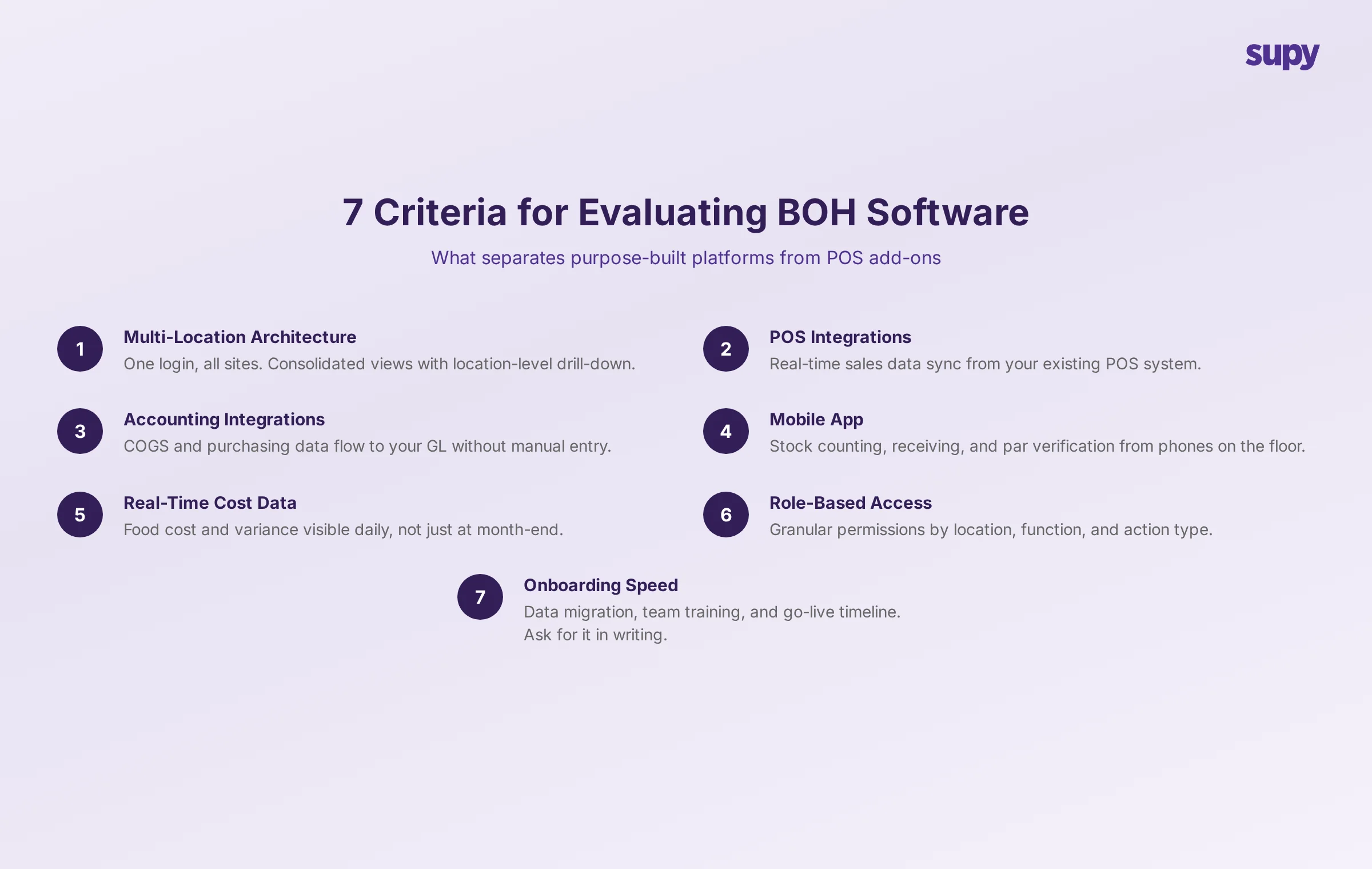
1. Cost Control - Real-time visibility into food costs, waste, and supplier pricing across all locations helps you identify savings opportunities and optimise margins.
2. Inventory Accuracy - Automated tracking reduces manual errors, shrinkage, and stockouts that disrupt service.
3. Multi-Location Consistency - Centralised purchasing and standardised recipes ensure every location maintains brand consistency and operational efficiency.
4. Compliance & Reporting - Integrated audit trails and real-time reporting help you stay compliant with food safety standards and financial regulations.
5. Data-Driven Decision Making - Unified analytics across all locations reveal trends, performance gaps, and growth opportunities.
6. Staff Efficiency - Automation reduces manual data entry and frees your team to focus on operations and customer service.
7. Scalability - Modern BOH systems scale with your business without requiring significant operational changes or system overhauls.
Common Back of House Software Mistakes
Many restaurant operators fail to realise the full potential of their back of house systems. Here are the pitfalls to avoid:
Mistake 1: Relying on Spreadsheets
Spreadsheets are error-prone, siloed, and impossible to scale across multiple locations. They delay decision-making and create compliance risks.
Mistake 2: Treating BOH as a POS Add-On
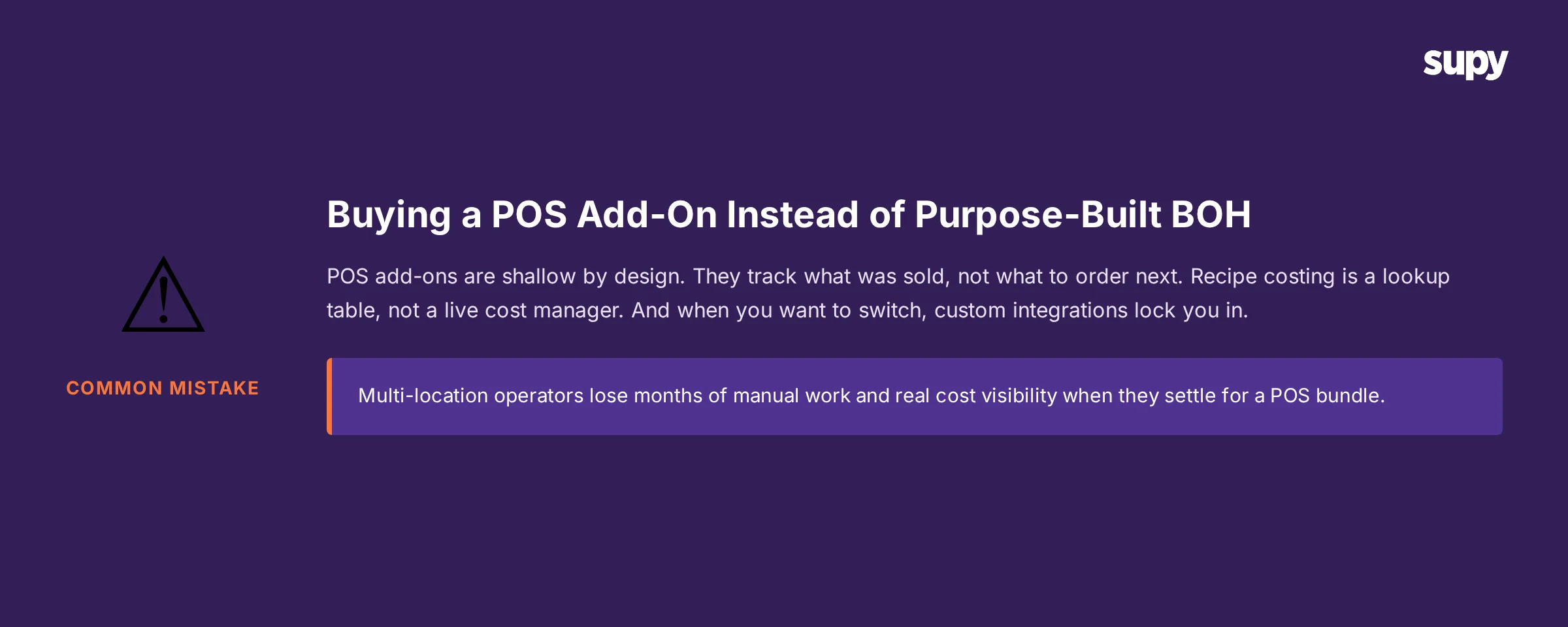
Many POS vendors offer basic inventory modules, but these lack the depth, integration, and reporting capabilities that dedicated back of house systems provide. You'll hit operational ceilings quickly.
Mistake 3: Poor Change Management
Deploying new software without proper training and buy-in from your teams leads to adoption failure. Staff revert to old processes, and you never realise the system's value.
Mistake 4: Ignoring Data Quality
Garbage in, garbage out. If your teams are inconsistent with data entry or skip steps in your processes, your reporting becomes unreliable and decisions suffer.
Mistake 5: Siloed Systems
When your BOH system doesn't integrate with your POS, accounting, or HR systems, you're manually reconciling data and losing visibility. Integration is non-negotiable.
4 Core BOH Modules
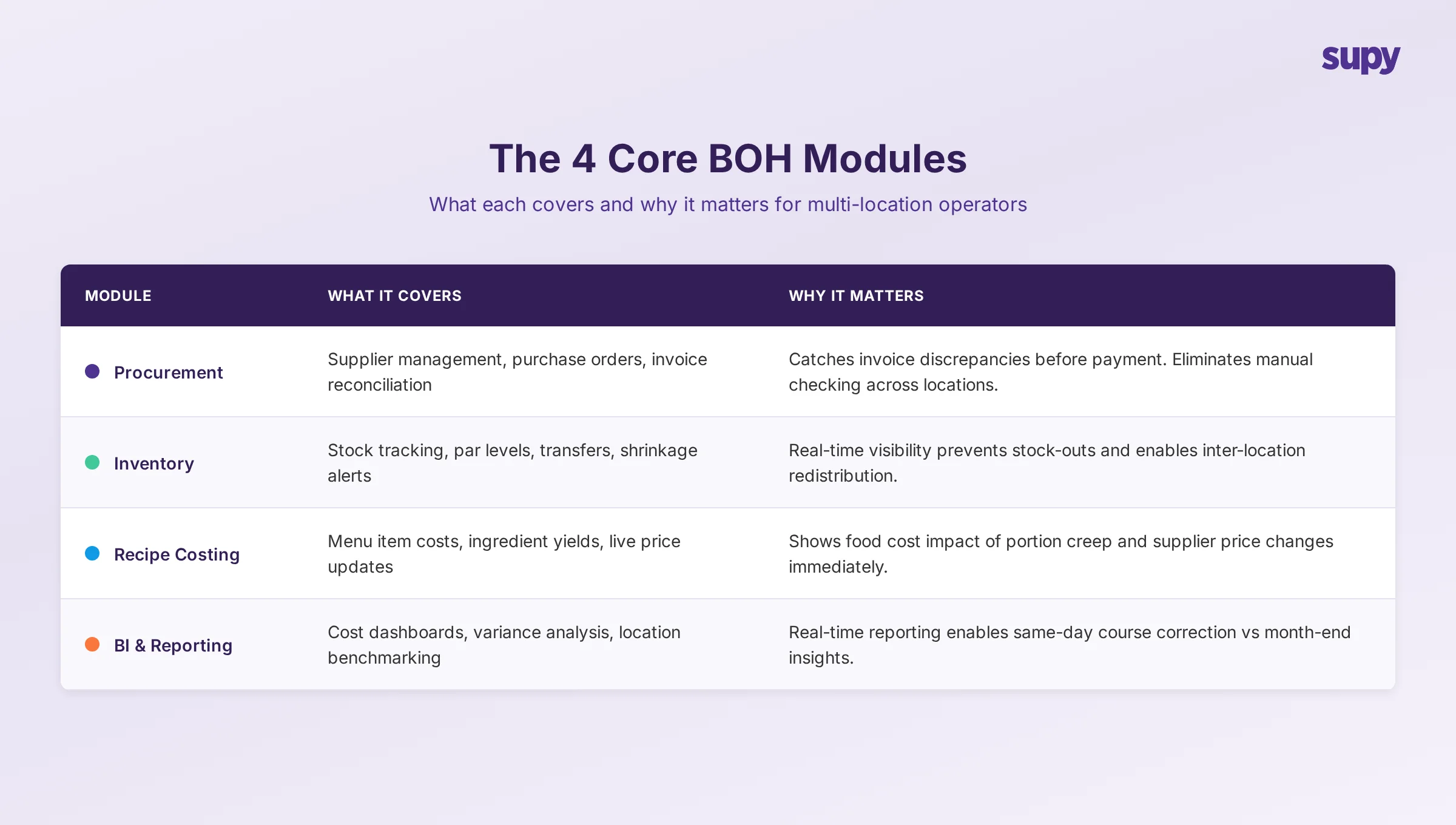
Comprehensive back of house software typically includes four core modules:
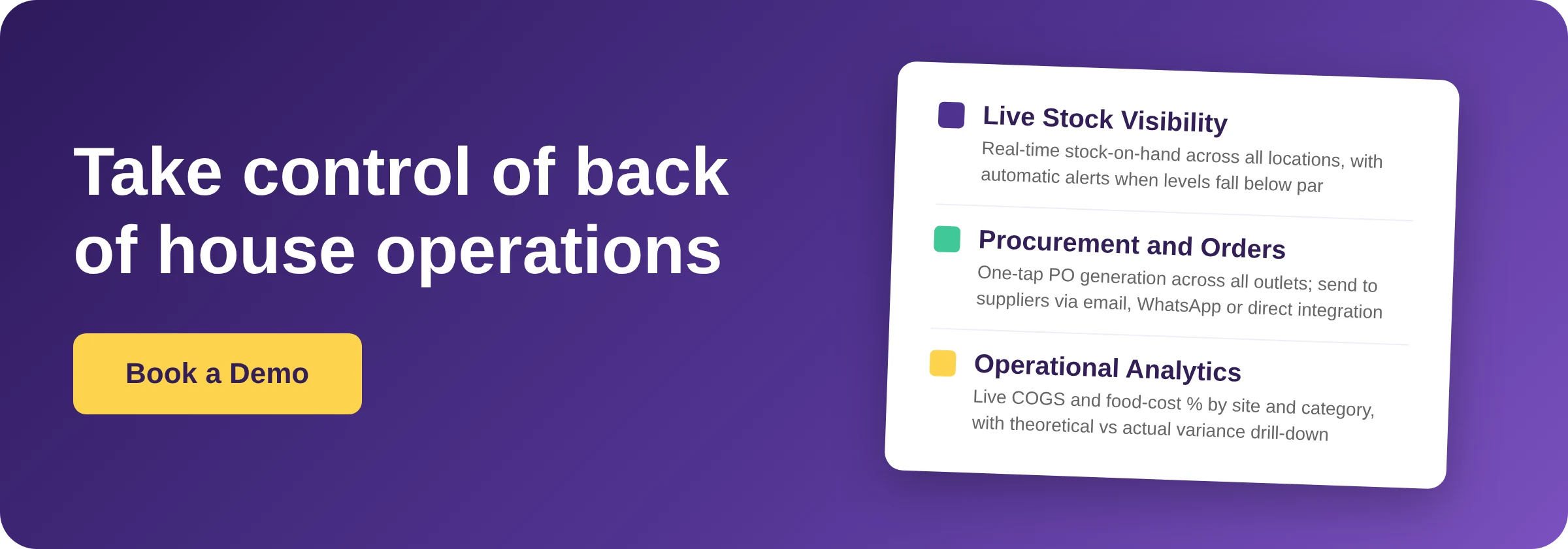
Procurement - Manages supplier relationships, purchase orders, and cost tracking across locations. Automates ordering and helps you negotiate better pricing through data-driven insights.
Inventory Management - Tracks stock levels in real-time, flags low stock, prevents waste, and reconciles with actual physical inventory counts.
Staff Scheduling - Optimises labour planning based on expected volume, ensures compliance with labour laws, and reduces payroll costs.
Business Intelligence - Aggregates data from all systems and locations to provide actionable insights on costs, profitability, trends, and performance.
What to Evaluate in Back of House Software
When selecting a back of house solution, prioritise these evaluation criteria:
Multi-Location Support - Can it manage inventory, purchasing, and reporting across all your locations from a unified interface?
Integration Capability - Does it integrate natively with your POS, accounting software, and other critical systems?
Real-Time Visibility - Can you access current inventory levels, costs, and operational metrics at any time?
Customisation & Flexibility - Can you tailor the system to your specific recipes, processes, and reporting needs?
Ease of Implementation - How quickly can you deploy it and train your teams to adopt it?
Support & Reliability - Is the vendor responsive? What's their uptime and security track record?
Scalability - Will the system grow with your business without requiring major upgrades?
Why Supy is Built for Back of House Operations
Supy is purpose-built back of house software for multi-location restaurant operators. We've engineered every feature to address the real operational challenges that restaurant operators face every day.
Unified Procurement - Manage all suppliers and purchasing from a single platform. Track costs in real-time and identify savings across all locations.
Real-Time Inventory - Get live visibility into stock levels, set automated reorder points, and prevent stockouts that hurt revenue.
Powerful BI - Analyse food costs, labour, and profitability across your empire. Make data-driven decisions confidently.
Built for Compliance - Audit trails, standardised recipes, and automated reporting keep you compliant with health and safety standards.
If you're serious about optimising back of house operations across multiple locations, let's talk. Book a demo to see how Supy transforms operational visibility and control.