.jpg)

AI Invoicing 2026: How Restaurants Cut Manual Labor & Best Practices for F&B Success
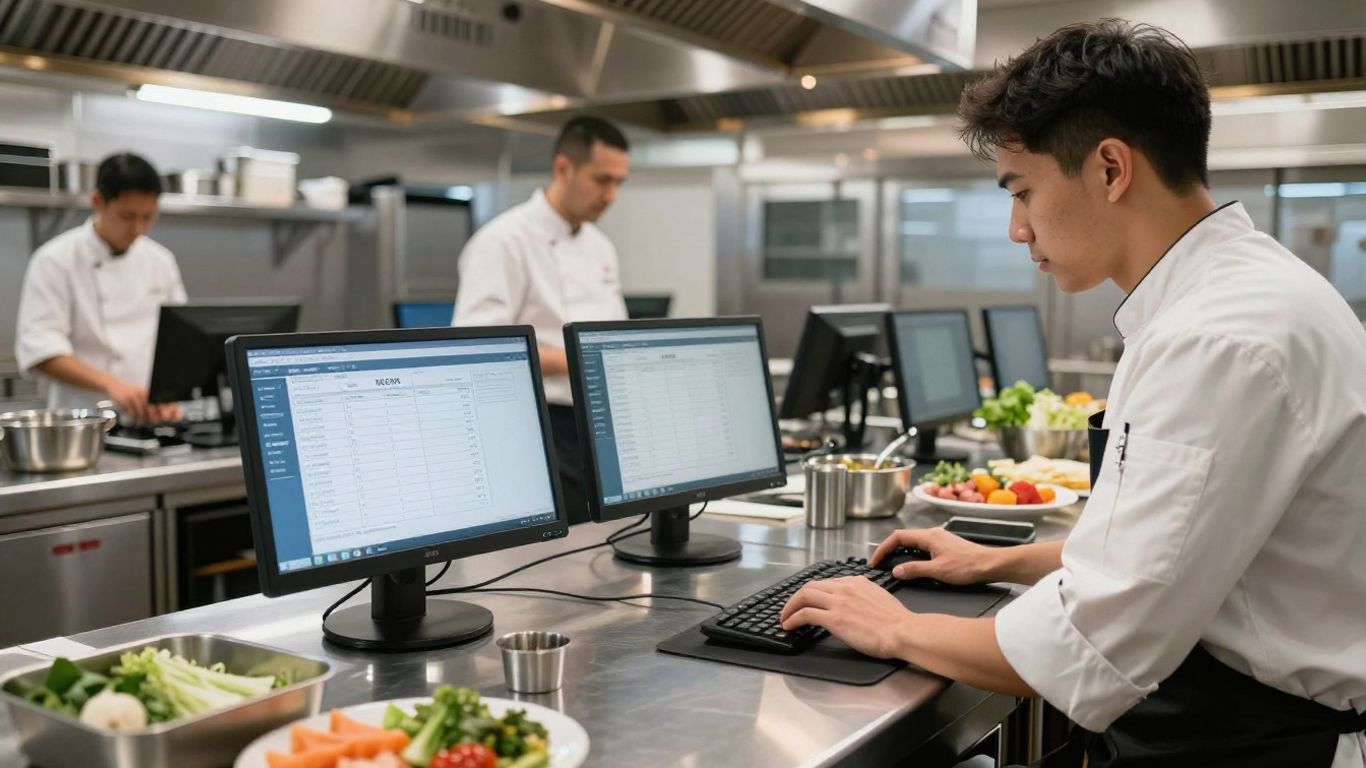
Running a restaurant in 2026 means dealing with a lot of moving parts. From keeping track of what's in the pantry to making sure you have enough staff on busy nights, it can feel like a constant juggling act. Manual tasks, especially with things like invoicing and inventory, eat up valuable time that could be spent making customers happy or improving the menu. This is where AI steps in, offering a way for restaurants to cut down on that tedious work and run much smoother. We'll look at how restaurants are using AI invoicing to cut down on manual labor and some smart ways F&B operators can make it work for them.
Key Takeaways
- AI invoicing tools are helping restaurants significantly reduce the hours staff spend on manual data entry and invoice processing, freeing them up for other tasks.
- By using AI for demand forecasting and inventory management, restaurants can buy smarter, cut down on food waste, and turn over stock more efficiently.
- AI-driven labor forecasting allows for more precise staff scheduling, balancing labor costs with actual sales demand and potentially improving employee satisfaction with predictable shifts.
- Integrating AI into customer-facing systems, like ordering and payment, can improve the overall dining experience and provide insights for personalization.
- Successful AI adoption starts with identifying a specific operational problem, integrating systems like POS with inventory and labor, and then measuring results before scaling up.
Streamlining Operations With AI Invoicing

Manual invoicing in the restaurant world used to be a huge time sink. Think stacks of paper, endless data entry, and the constant worry about errors. But that's changing fast. AI invoicing is stepping in to take over a lot of that tedious work, freeing up your team for more important things. This shift isn't just about saving time; it's about making your whole operation run smoother.
Reducing Manual Labor Through Automation
Remember spending hours reconciling receipts, checking vendor statements, and inputting invoice details into your accounting software? AI invoicing tools can now do that automatically. They scan invoices, extract key information like vendor name, date, amount, and line items, and then match them against purchase orders. This drastically cuts down on the hours your staff spends on data entry, reducing the chance of human mistakes that can lead to overpayments or missed discounts. It's like having a super-efficient assistant who never gets tired.
AI's Role in Optimizing Restaurant Workflows
AI doesn't just automate; it helps connect the dots. By integrating AI invoicing with your other systems, like your point-of-sale (POS) and inventory management, you get a clearer picture of your entire business. For example, when an invoice comes in for new produce, the AI can cross-reference it with your inventory levels and sales data. This helps identify if you're overstocked or if a particular item is selling slower than expected. This kind of connected data helps make smarter decisions across the board, from purchasing to menu planning. You can find more information on how artificial intelligence can improve restaurant operations here.
The Impact of AI on Operational Efficiency
When you cut down on manual tasks and improve data accuracy, the ripple effect on efficiency is significant. Your accounting team can focus on analysis rather than data entry. Managers get faster access to accurate spending reports, which helps in budget management. Plus, by catching errors early and taking advantage of early payment discounts, you can directly impact your bottom line. It's about making sure every dollar spent is accounted for and contributes to profitability.
Here's a quick look at the benefits:
- Reduced data entry time
- Fewer invoice processing errors
- Faster approval workflows
- Improved vendor payment management
- Better visibility into spending patterns
The integration of AI into invoicing processes transforms a traditionally labor-intensive task into a streamlined, data-driven function. This allows restaurants to reallocate valuable human resources towards customer service and strategic planning, ultimately boosting overall productivity and profitability.
Leveraging AI For Inventory And Cost Control
Keeping track of what you have in stock and how much it costs is a big deal for any restaurant. If you're not careful, ingredients can go bad, you can run out of popular items, or you might just buy too much stuff you don't need. This all adds up to lost money. AI is changing how restaurants handle this by making inventory smarter and cutting down on waste.
AI-Powered Demand Forecasting for Smarter Purchasing
Imagine knowing exactly how much of something you'll need before you even place an order. AI can look at your past sales, what's happening with the weather, local events, and even holidays to predict what customers will want. This means you buy just the right amount, not too much and not too little.
- Predicts sales: Analyzes historical data to guess future customer demand.
- Optimizes orders: Helps you order only what you'll actually use.
- Reduces overstock: Stops you from having too much of one thing sitting around.
Minimizing Food Waste with Predictive Analytics
Food waste is a huge problem in the restaurant world. A lot of perfectly good food ends up in the trash because it wasn't used in time or was over-ordered. AI uses what it learns from sales and inventory data to spot items that might go bad soon. It can then suggest using them in specials or alert you to reorder less of something that isn't selling.
AI can look at what's selling well and what's not, and even track expiration dates. This helps you use ingredients before they spoil, which is good for your wallet and the planet.
Optimizing Inventory Turnover Rates
How quickly you use up and replace your inventory, known as turnover rate, is a key sign of how well your business is running. If things sit on shelves too long, they might expire or become less fresh. AI helps speed this up by making sure you always have what you need, but not so much that it sits around. This keeps your stock fresh and your money working for you.
Here's how AI helps improve turnover:
- Real-time Tracking: AI systems can monitor stock levels constantly, so you always know what you have.
- Automated Alerts: Get notified when stock is low or when items are nearing their expiration date.
- Smarter Replenishment: AI suggests when and how much to reorder based on predicted demand and current stock.
Enhancing Staffing And Labor Management
AI-Driven Labor Forecasting for Precise Scheduling
Figuring out how many people you need on staff for any given shift can feel like a guessing game, right? Too many hands on deck means paying people who aren't busy, and that eats into profits. On the flip side, not enough staff means stressed-out employees, slow service, and unhappy customers. AI is changing this by looking at past sales data, upcoming events, and even things like the weather to predict customer traffic with much better accuracy. This means you can schedule just the right number of people, avoiding both overstaffing and understaffing headaches. For instance, some restaurants have seen labor costs drop by as much as $9,000 a month just by building schedules based on these AI-driven forecasts.
Balancing Labor Costs with Sales Demand
Labor is usually the biggest expense for a restaurant. It's not just about cutting staff, though. It's about making sure your labor costs line up with how busy you actually are. If you're short-staffed during a rush, your team can't keep up, service slows down, and you miss out on chances to sell more items. AI tools help by showing you when you'll be busy and when things will be slower. This way, you can staff up for those busy times and scale back a bit when it's quiet, making sure you're spending money on labor when it actually drives sales.
Here's a simple way to look at it:
- High Sales Periods: Need more staff to handle customer volume and upsell opportunities.
- Low Sales Periods: Can operate with fewer staff, reducing costs without impacting service quality.
- Event Days: AI can predict spikes based on local events, allowing for proactive staffing adjustments.
Managing labor costs effectively isn't just about saving money; it's about optimizing your team's presence to match customer flow. This balance directly impacts both your bottom line and the overall dining experience.
Improving Employee Retention Through Predictable Schedules
Nobody likes feeling like their schedule is a mystery or that they can't make plans outside of work. When employees can't easily swap shifts or know their hours well in advance, it causes stress. This stress can lead them to look for jobs elsewhere. AI scheduling tools can make things much easier. They allow staff to see their shifts clearly, request time off, and even swap shifts with colleagues through an app. This gives employees more control over their work-life balance. When people feel more in control and less anxious about their work commitments, they tend to be happier, more engaged, and more likely to stick around. High turnover is expensive, so making work life better through smart scheduling is a smart business move.
The Digital Customer Journey And AI Integration
AI in Enhancing Customer Experience
Think about the last time you ordered food. Chances are, you didn't just walk up to a counter or flag down a server. The way customers interact with restaurants has changed a lot, and AI is right in the middle of it. It’s not just about making things faster, though that’s a big part. It’s about making the whole experience smoother, from the moment someone decides they're hungry to when they pay the bill.
AI is helping restaurants get better at what customers want: quick, easy, and accurate service. This means fewer mistakes on orders, less waiting around, and a general feeling that the restaurant knows what it's doing. When things run like a well-oiled machine, customers notice, and they tend to come back.
Personalization Through Data Insights
Remember when restaurants just had a generic menu? Those days are fading fast. AI can look at what customers order, when they order it, and even what they ask for (like "no onions" or "extra sauce"). This information helps restaurants figure out what people really like.
Here's a quick look at how data helps:
- Order History: Knowing what a customer usually gets helps suggest similar items or new specials they might enjoy.
- Dietary Preferences: If a customer frequently orders vegetarian or gluten-free options, AI can highlight those choices.
- Time-Based Trends: Understanding that certain dishes are popular during lunch versus dinner allows for targeted promotions.
This kind of personalized touch makes customers feel seen and understood. It’s like having a server who remembers your usual order, but on a much bigger scale.
Streamlining Ordering and Payment Processes
Nobody likes a complicated ordering system. AI is making it simpler. Think about self-service kiosks or apps where you can build your meal exactly how you want it. AI helps these systems understand your choices, even if you have a few special requests.
Even phone orders are getting smarter. AI can now listen to a customer's voice, understand their order, and send it straight to the kitchen. This cuts down on misheard orders and frees up staff to handle other tasks.
The goal is to remove friction points. When ordering and paying is easy, customers are happier and more likely to spend more. It also means less work for staff on repetitive tasks, letting them focus on providing better service when it really counts.
Ultimately, AI is helping restaurants create a customer journey that feels modern, efficient, and tailored to each person. It’s a big shift from how things used to be, and it’s setting restaurants up for success in the years to come.
Best Practices For AI Adoption In Food Service
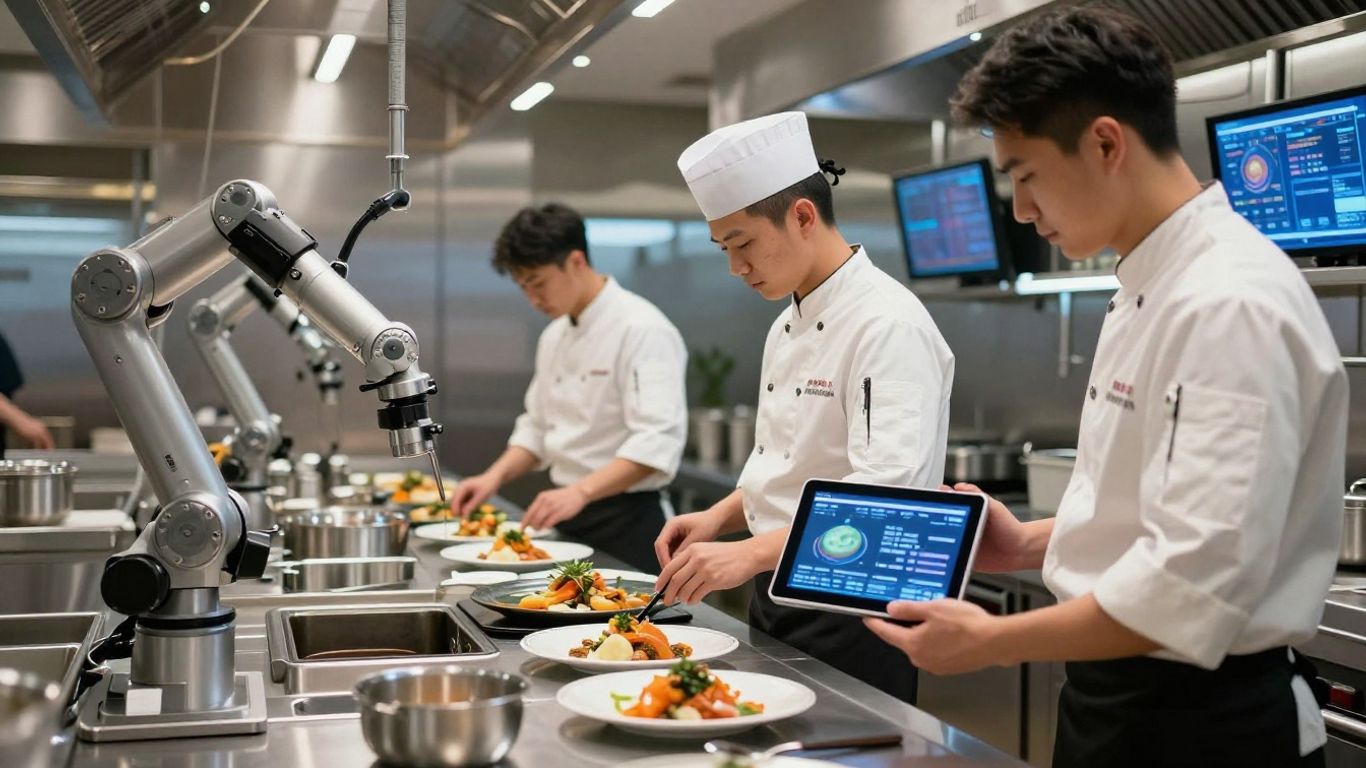
Getting AI into your restaurant isn't just about buying the latest software; it's about making smart choices that actually help your business. Think of it like adding a new piece of equipment to your kitchen – you wouldn't just put it anywhere, right? You'd figure out where it fits best and how it makes things run smoother. The same goes for AI. It’s about being strategic.
Starting with a Measurable Operational Pain Point
Before you even look at AI tools, take a good, hard look at what's really bugging you. Is it the endless paperwork for invoices? Are you constantly running out of popular ingredients or throwing away spoiled food? Maybe your staff schedule is always a mess, leading to overstaffing on slow nights and chaos during rushes. Pinpointing one specific problem you can measure is key. For instance, if you track how much food you waste each week, you have a clear number to aim for. If you know your average invoice processing time, you can see if AI actually speeds it up. This focus helps you pick the right AI solution and know if it's actually working.
- Identify the problem: What's costing you time or money? (e.g., food waste, labor hours, invoice errors)
- Quantify it: Put a number on it. How much waste? How many hours? What's the cost?
- Set a goal: What improvement do you want to see? (e.g., 15% less waste, 10% reduction in processing time)
Trying to fix everything at once with AI is like trying to cook a five-course meal with only one burner. It's overwhelming and usually ends up a mess. Start small, prove it works, then expand.
Integrating POS with Inventory and Labor Systems
Your Point of Sale (POS) system is like the central nervous system of your restaurant. It knows what's being sold. But to really get the most out of AI, especially for things like inventory and labor, you need that POS data talking to your other systems. When your sales data from the POS flows directly into your inventory management and labor scheduling software, you get a much clearer picture. This connection helps AI tools make smarter predictions. For example, if a popular dish suddenly starts selling way more, the system can automatically flag that you'll need more of its key ingredients and potentially more staff to handle the increased orders. This kind of integration is what makes AI truly powerful, moving beyond simple automation to intelligent decision-making. It’s about seeing the whole operation, not just isolated parts. This is where you can really start to see significant improvements in how you manage costs and serve customers, making your operations more efficient and profitable.
Measuring Results and Scaling AI Solutions
So, you've picked a problem, implemented an AI solution, and hopefully, you're seeing some positive changes. Now what? Don't just assume it's working perfectly. Keep an eye on those numbers you identified at the start. Are you hitting your goals? For example, if you aimed to reduce invoice processing costs, compare the new AI-driven cost per invoice against the old manual cost. The average cost per invoice with manual processing can be quite high, but AI can significantly cut that down. If the results are good, great! That’s your signal to think about scaling. Maybe that AI tool that cut down on food waste can now be used across all your locations, or perhaps the labor forecasting AI can be expanded to cover more complex scheduling scenarios. If the results aren't quite there, don't despair. It might mean tweaking the AI settings, providing more training data, or even reconsidering if that particular solution was the right fit for that specific problem. Continuous monitoring and a willingness to adjust are vital for long-term success with AI. It’s an ongoing process, not a one-time fix. You want to make sure you're getting the best return on your AI investment and that the technology is truly serving your business goals.
Future-Proofing Your Restaurant With AI
Look, the restaurant world is changing fast. You've probably noticed it yourself. Things that used to work just fine might not be cutting it anymore. This is where AI comes in, not as some sci-fi fantasy, but as a practical tool to keep your business running smoothly and ahead of the curve. Thinking about AI now means you're building a business that can handle whatever comes next. It's about making smart choices today so you don't get left behind.
Adapting to Technological Revolutions in Hospitality
The hospitality industry is seeing big shifts, and technology is a huge part of that. It’s not just about having a website anymore. We’re talking about systems that can actually help you run things better, day in and day out. Ignoring these changes is like trying to cook without a stove – you're going to struggle.
- Stay Current: Keep an eye on new tech that helps with ordering, inventory, or even how you schedule staff. Don't wait until everyone else is using it.
- Be Flexible: Your business might need to change how it operates. Be open to trying new software or adjusting your processes.
- Train Your Team: Make sure your staff knows how to use new tools. A great system is useless if no one knows how to work it.
AI as a Competitive Advantage for Operators
Think about your competitors. Are they using technology to their advantage? Maybe they're cutting down on food waste, or their staff is always scheduled perfectly. AI can give you that edge. It helps you work smarter, not just harder.
Using AI isn't about replacing people; it's about giving your team better tools. When your staff isn't bogged down with repetitive tasks, they can focus on what really matters – like making great food and giving customers a good experience. This makes your restaurant a better place to work and a better place to eat.
Building a Profit Engine with AI-Driven Decisions
Ultimately, all this tech is about making your restaurant more profitable. AI can help you make better decisions by looking at data you might not even know you have. It’s like having a super-smart advisor who’s always looking out for your bottom line.
Here’s a quick look at what AI can do for your profits:
By using AI to predict what you'll need and when, you cut down on wasted food and make sure you have the right amount of staff. This means less money going out the door and more coming in.
Looking Ahead: AI as Your Restaurant's New Best Friend
So, what's the takeaway from all this AI talk for restaurants in 2026? It’s pretty clear that artificial intelligence isn't just some fancy tech for big chains anymore. It's becoming a real tool that can help any restaurant, big or small, cut down on all that tedious manual work. Think less time wrestling with spreadsheets and more time focusing on what really matters – great food and happy customers. By smartly using AI for things like keeping track of inventory, figuring out staffing, and even predicting what customers will want, you can seriously trim down waste and labor costs. It’s not about replacing people, but about giving your team better tools so everyone can do their best work. Getting started might seem a bit much, but picking one area, like inventory, and trying out an AI solution can show you the benefits fast. The future of running a restaurant smoothly and profitably is here, and AI is a big part of it.