.jpg)

這就是建立獲利企業的原因
.png)
Watch extracts
Guest & host


Episode Summary
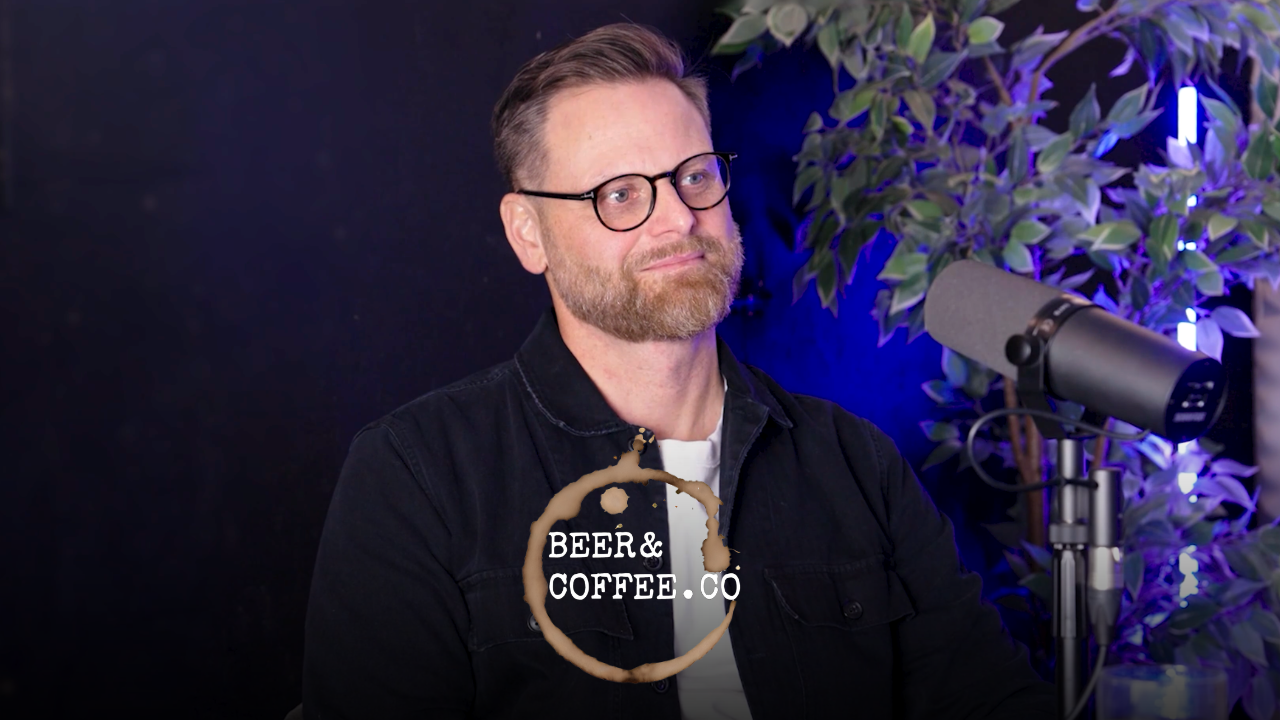
Marsel Khannane, Supply Chain Director at Tashas, unpacks end-to-end Procure to Pay automation and why it matters now more than ever. He explains how clean data, tight integrations, and recipe discipline convert P2P from theory into faster cycles, fewer manual touches, on-time supplier payments, and higher margins. Post-Covid volatility and aggregator pressure shifted forecasting from historical models to qualitative, market-read daily reads. Marsel details the tech stack that makes this work, the KPIs he monitors each day, how he standardizes quality across multiple venues, and why supplier partnerships, team development, and sustainability practices are core to resilient operations. For small operators, he outlines a practical path: engineer a focused menu, consolidate suppliers, invest early in the right tools and training, and hire supply chain leadership that can drive a proper transformation.
Learnings From The Episode
Procure to Pay, done right
- Create PO in a procurement tool, auto-convert to invoice, sync to inventory, reconcile in accounting, then push to payments.
- Benefits: roughly 70% cycle time reduction, major accuracy gains, fewer people in the loop, better dashboards, stronger supplier credibility through on-time payments.
Why P2P fails in practice
- Garbage in, garbage out: recipes, yields, units, and prices must be correct.
- Integration is non-trivial: procurement, inventory, POS, and ERP must speak the same language.
- Supply chain cannot work in a silo: align continually with culinary, beverage, and operations.
After Covid: new playbook
- Move from quantitative only to qualitative forecasting that reads real-world signals daily.
- Track inflation, fuel, logistics, harvests, fertilizer inputs, and geopolitical shocks, then anticipate 3 to 6 months ahead.
- Apply 80/20 focus: lock trade deals and capacity on the critical items that drive most sales and cost.
Daily operating system
- Start early on sites, coach teams on receiving, weights, specs, and the why behind standards.
- Midday market scan using trusted sources and tools, then office reviews, emails, and supplier sessions.
- Core metrics: live COGS tracker, menu engineering, sales mix, waste analysis, POS vs invoice discrepancies, automation health.
Tech stack that scales
- Procurements orders tool, POS with inventory, and an ERP, integrated end to end for full P2P.
- Explore AI analytics inside inventory or ERP to surface anomalies and trends.
- Maintain a learning platform to standardize training and adoption.
Multi-location consistency
- Specify products through structured tenders, sample and sign off specs, verify origin capacity, plan seasonality handovers, and contract for year-round supply.
Supplier relationships that work
- Aim for equilibrium, not squeeze: fair pricing for value, clear forecasts, formal contracts, and disciplined on-time payments.
Building the team
- Blend experienced hires with high-ceiling graduates; train hard, stay close early, then delegate with clear KPIs.
- First two hires when scaling from a single site: a proven procurement transformer, then a data analyst.
Playbook for single-site operators
- Engineer a focused menu from day one, aligned to what is consistently sourceable.
- Consolidate to about five primary suppliers plus two or three backups to gain economies of scale and service.
- Invest early in BOH software and, critically, in staff training and data hygiene.
Sustainability as an operating lever
- Product traceability and cold-chain verification, practical carbon accounting, creative upcycling of trims and stocks, and local sourcing where quality allows.
Bottom line: automate the backbone, obsess over clean data and integrations, read the market daily, and couple rigorous supplier and team systems with a tight menu and tech. The result is consistency, resilience, and healthier margins.
Ready to optimize your restaurant operations?
More stories from F&B leaders
.png)


.png)
.png)
.png)
.png)
.png)
.png)
.png)
.png)
.png)
.png)
.png)
.png)
.png)
.png)
.png)
.png)
.png)
.png)
準備好轉變您的營運了嗎?
加入3500多家餐廳營運商的行列,透過Supy削減成本、簡化營運並做出更明智的決策。
