.jpg)
酒店技術失敗的真正原因
.png)
Watch extracts
Guest & host

Episode Summary
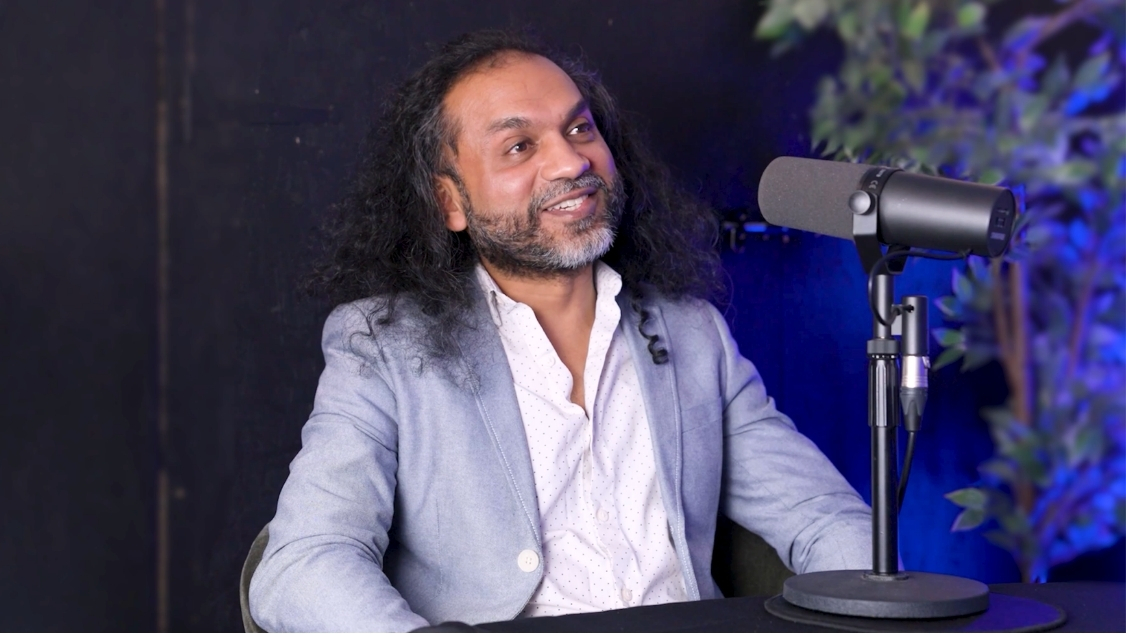
The biggest reason technology fails in hospitality has nothing to do with the technology itself. In this episode, Mitz Patel explains why trust, operational empathy, and early buy-in are the true levers that determine whether a new system lands - or quietly gets abandoned the moment the IT team leaves the building.
Drawing on his journey from the operational floor at David Lloyd to rebuilding Prezzo Italian's entire tech stack from scratch, and now leading IT delivery across Soho House's global estate, Mitz shares what happens when technology is pushed into an organisation without first understanding the people inside it. From staff in tears over handheld devices to robots making cocktails, this episode covers the full spectrum of hospitality tech adoption - what works, what doesn't, and why the answer almost always comes back to people.
Learnings From The Episode
Mitz has spent his career at the intersection of hospitality operations and IT delivery. The consistent thread across every role: the operators who get technology right are the ones who never lose touch with what happens on the floor.
Operations first, technology second
Before joining IT, Mitz worked in operations. That background shapes everything. His approach to technology is never to start with the system - it's to start with the people who will use it, the pinch points they face, and the trust that needs to be built before any rollout can succeed.
Getting out of the office and into venues isn't a nice-to-have. For Mitz, it is the work.
Tech adoption is a people problem
Organisations frequently mistake a technology failure for a system failure. In most cases, Mitz argues, it is a people failure - or more precisely, a change management failure.
When Prezzo Italian introduced handheld ordering devices, some long-serving staff burst into tears. Pen and paper wasn't just a tool - it was a shield. A source of confidence. Removing it without addressing the emotional dimension was a recipe for resistance.
The solution wasn't forcing adoption. It was:
- Being present, not just present at launch
- Showing the benefits in a language the team understood
- Building trust before expecting behaviour change
- And yes, occasionally being direct about what was no longer optional
By the time Mitz left Prezzo, the same staff who had refused the handhelds said they couldn't imagine working without them. The same pattern is now playing out at Soho House.
Fail fast - but learn faster
At Prezzo, the culture was to try things, fail where necessary, and recover quickly. Mitz led pilots on handheld devices, early Barclaycard walk-out payment technology, Dojo all-in-one terminals, and even a batch of custom-built payment devices shipped from China. Not all of them worked. All of them taught something.
The willingness to let operators run pilots - and to give smaller vendors a real-world test environment - kept the business at the cutting edge while helping emerging brands shape their products around genuine operator feedback.
Efficient service is not the same as fast service
One of the clearest distinctions in the episode: Soho House is not looking for fast service. Its members expect a certain quality of experience. What the business is focused on is efficient service - removing friction behind the scenes so that what members experience in front feels effortless.
This framing matters. Tech deployed in pursuit of speed can strip out the hospitality. Tech deployed in pursuit of efficiency can enhance it.
The right tech depends on the room
QR codes may be standard in casual dining. In a quiet corner of a Soho House, they might feel completely wrong. The technology that works around the pool in summer may be irrelevant in the private members' library.
Mitz's approach at Soho House is to build a menu of technology options - trialled and proven at one house of excellence (White City House) - and then let General Managers choose what fits their venue. The GMs are the decision-makers. They know their members. The IT team's job is to give them options worth choosing.
Build trust with operators before building anything else
Whether at Prezzo Italian or Soho House, Mitz's consistent starting point is the same: get close to the operational teams. Go to the venues. Help clear tables. Clean a terrace. Understand where the friction is.
GMs and front-of-house teams will not follow a tech rollout because an IT director told them to. They will follow it because they trust the person behind it, and because they can see what it does for them.
That trust is not built in meeting rooms. It is built on the floor.
Advice for anyone stepping into a hospitality IT leadership role
Mitz's guidance is direct:
- Get to know your operational team first - before anything else
- Go out and be a bit of a chancer: ask for free pilots, push for discounts, remove the barriers to getting real data
- Look at the data, actually - don't just run pilots and move on
- Be open to conversations with anyone building something new
- And remember: this is hospitality. Being nice costs nothing and pays back tenfold.
Know when to pull back
Perhaps the most important lesson from someone who has spent years pushing technology forward: sometimes the answer is less tech, not more. Leon's decision to remove screens and reintroduce a personal touch is a reminder that every rollout needs someone in the room willing to say "hang on, are we doing this for the right reasons?"
Over-engineering is a risk. Tech for the sake of tech detracts from hospitality. The goal is always to make the experience better - for members, guests, and the teams serving them.
Ready to optimize your restaurant operations?
More stories from F&B leaders
.png)
.png)
.png)
.png)
準備好轉變您的營運了嗎?
加入3500多家餐廳營運商的行列,透過Supy削減成本、簡化營運並做出更明智的決策。
