Cafe Inventory Management: Catch the Food Waste Your Till Misses
What cafe inventory management catches that your till cannot
Cafe inventory management catches the cost your till never records: the shot tipped out, the over-portioned bacon, the milk poured down the drain. You surface most of it by counting a few high-cost lines every week, costing each drink as prices move, and counting every site on the same day. Do that and you catch the waste that holds food cost near 35%. This article shows the cadence, the recipe costing, and the one count day that make it work.
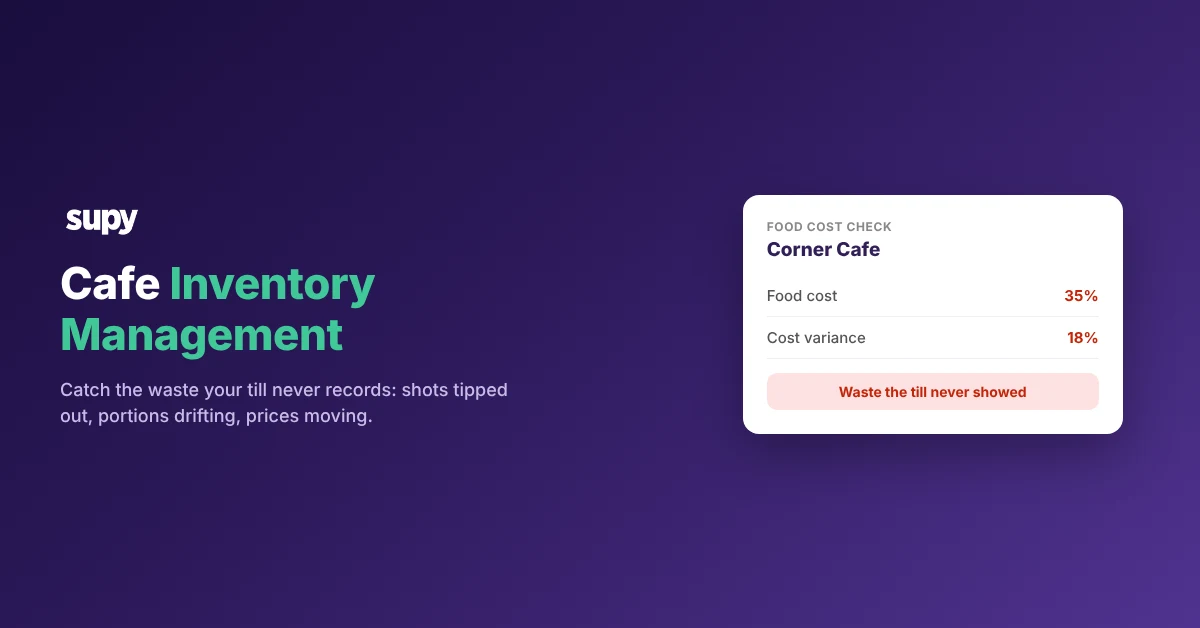
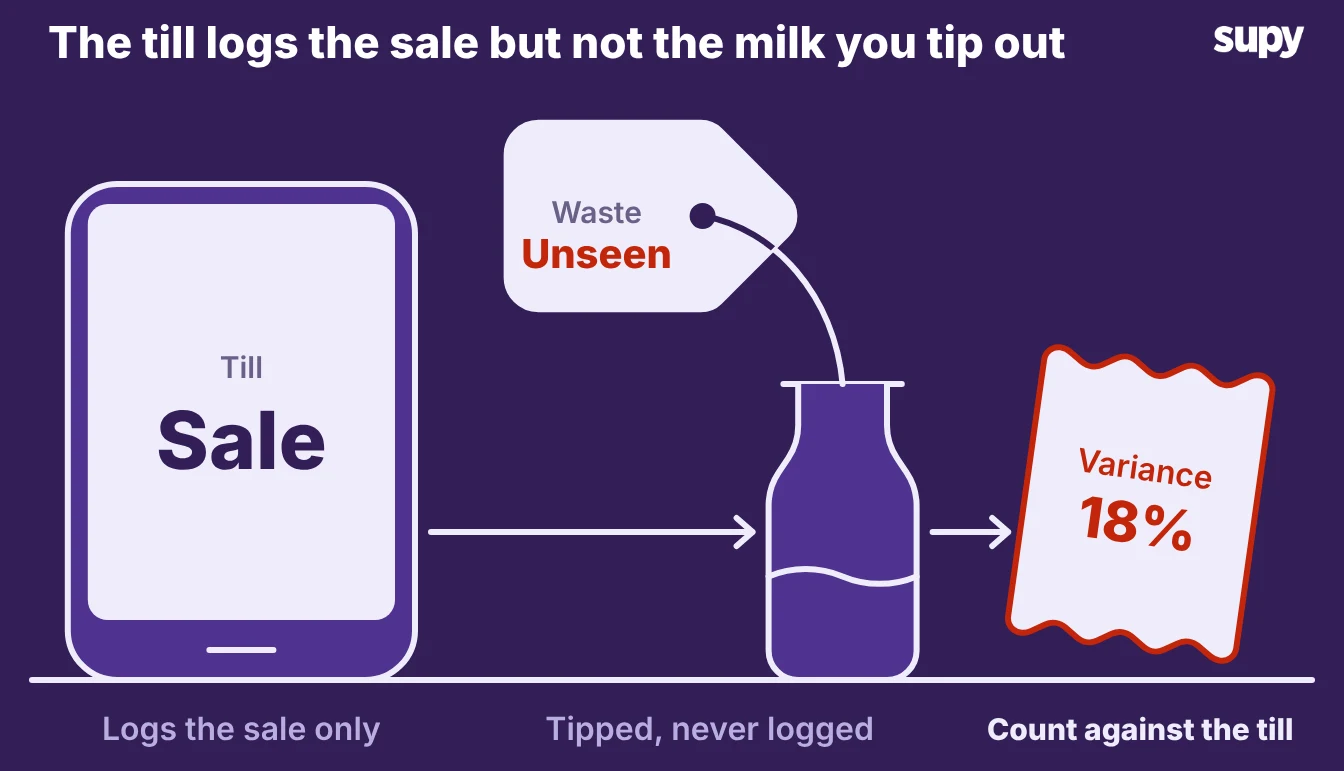
- Till blind spot. Your till records what sold, not what was wasted. A sold flat white and a tipped flat white look the same to the point of sale, because the point of sale only sees the sale. One multi-site cafe group found its food cost variance running about 18%, and the till could not say whether the gap came from over-portioning, wastage or theft.
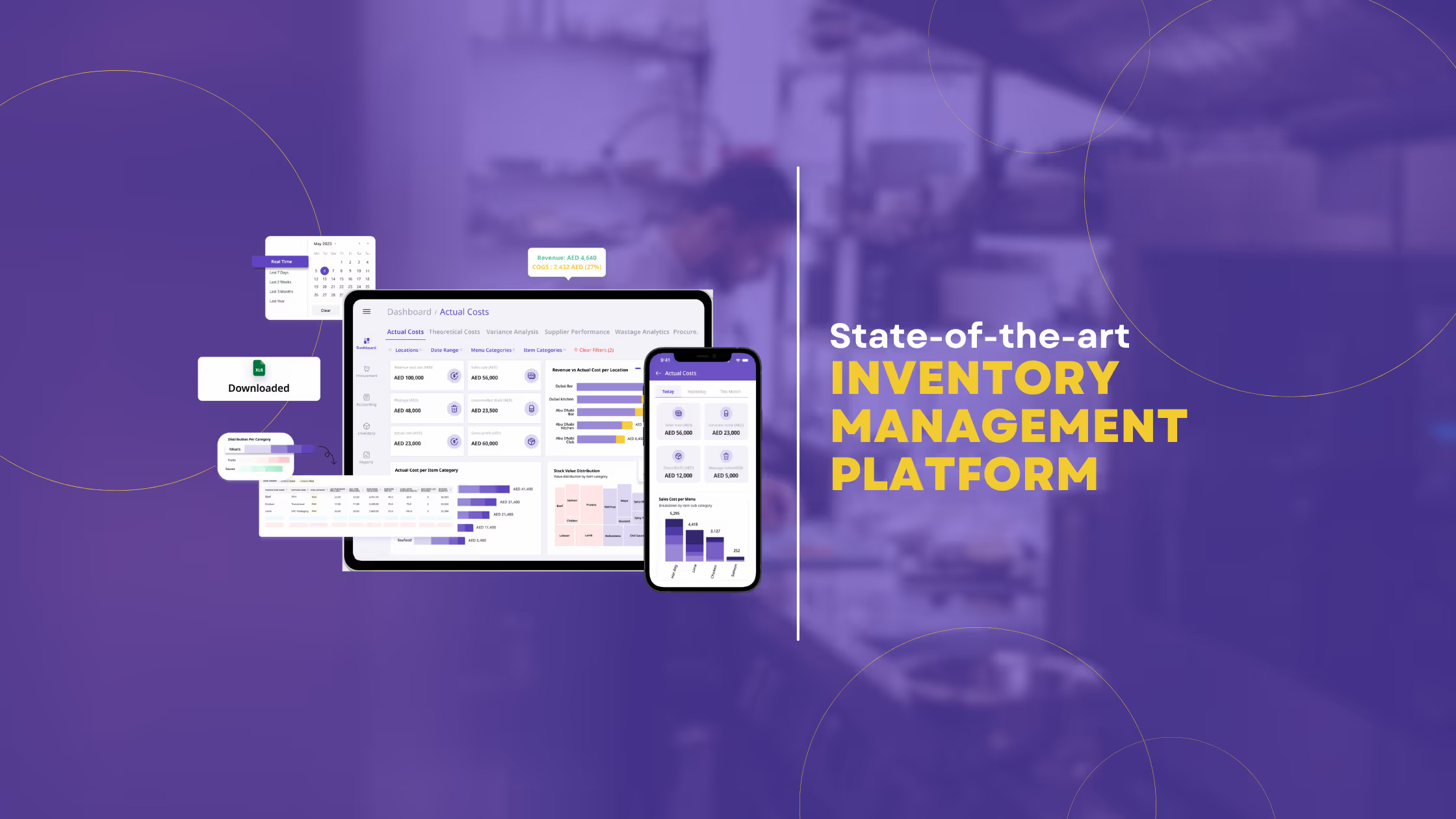
- Counting the gap. Inventory management closes that gap by counting what you hold and comparing it to what you should hold. The difference is the waste the till hid. Supy's cafe inventory management counts your stock, costs your recipes, and shows the variance per item, so the waste has a number instead of a hunch.
Count the high-cost lines every week, everything once a month
Count the few lines that carry most of your cost every week, and count everything once a month. A small cafe does not have time to count every item every week, so a sensible cadence beats an exhaustive one you skip.
For most cafes the weekly lines are coffee, milk, eggs and bacon, because they are both expensive and easy to over-portion.
- Proof it works. This cadence is what fixed one cafe running food cost at 35%. Weekly counts on eggs, bacon and coffee showed the portion waste the monthly count was too slow to catch. Counting everything by hand every week had taken the team about 3 hours, which is exactly why it got skipped.
- Order to par. A weekly count on the high-cost lines does more than catch waste. When you know what you hold, you order to par instead of guessing, so you stop swinging between over-ordering milk one week and running short the next. A count you can finish in minutes is a count you keep doing, and the record stays close to the shelf.
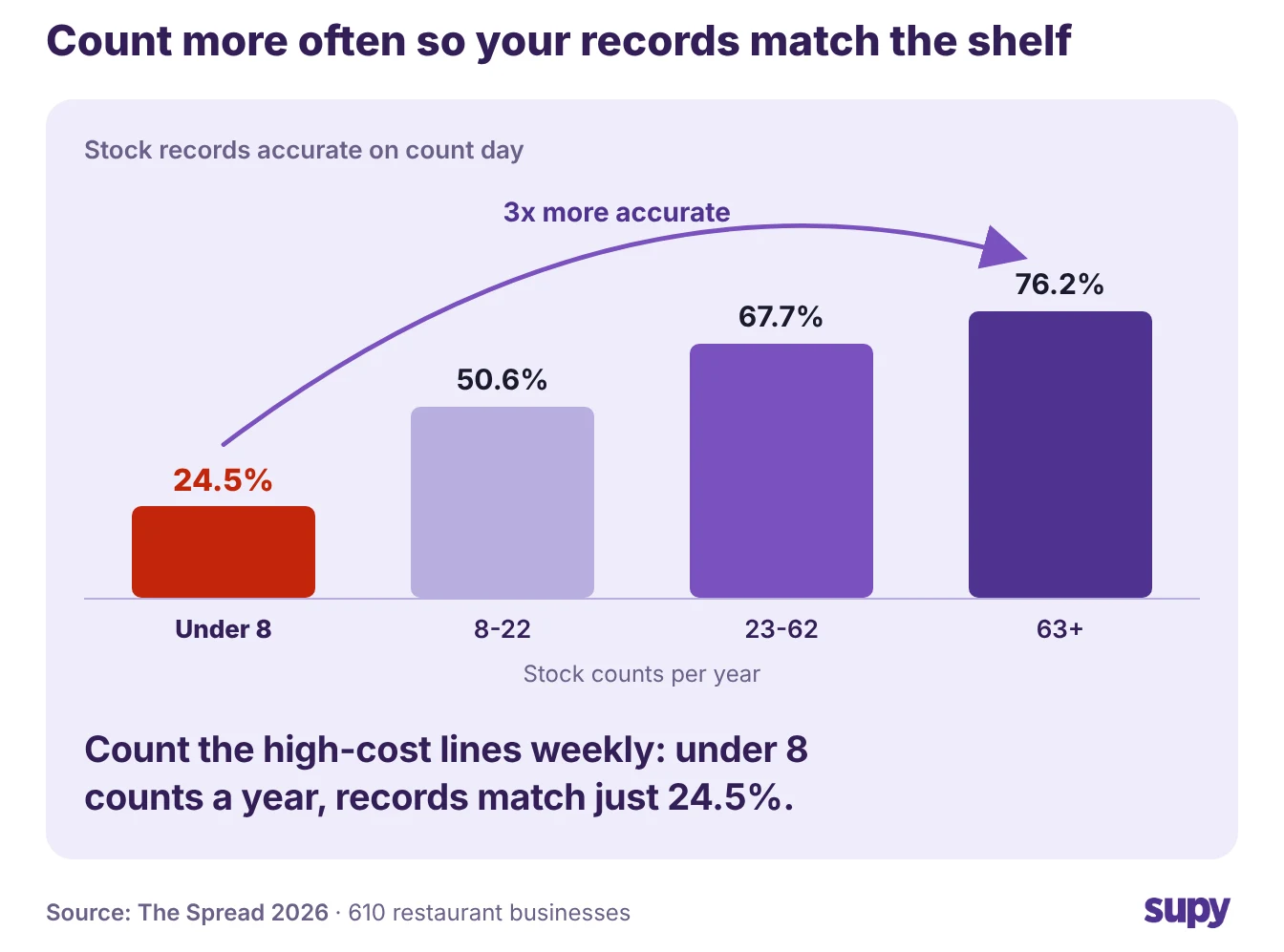
- Accuracy climbs. Counting more often pays off in accuracy. The Spread finds that with under 8 counts a year, records match the shelf just 24.5% of the time. Counting more than weekly runs about 3x more accurate, because the shelf and the record have less time to drift apart. A weekly count on the lines that matter keeps the record close without the Monday-morning marathon.
- One count day. If you run several cafes, count them all on the same day. A consolidated report rolls up each site's count, so a count submitted a day late leaves the group figure built on mismatched dates. One multi-site cafe group could not produce a cross-location report at all, because a single site counted a day earlier than the rest. Set one count day for the whole group. Sub-counts let different staff cover different areas of a site in parallel, so a shared day does not mean a longer morning.
Keep each drink's cost honest as milk and bean prices move
Cost each drink on today's prices, not last year's. Milk and coffee-bean prices move, and a drink costed once and never rechecked can quietly cost more than you charge. A recipe that reads the current ingredient cost keeps each drink's margin honest without a monthly rebuild.
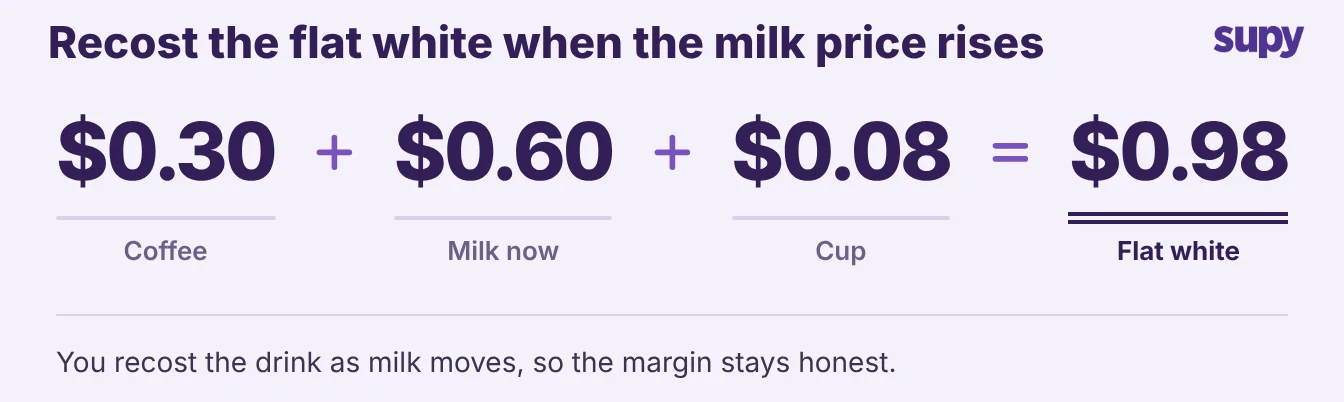
- Flat white cost. Take a flat white. Coffee at $0.30, milk at $0.45 and the cup at $0.08 make a drink that costs $0.83.
- Milk price rise. When milk rises to $0.60, the same drink now costs $0.98, and nothing on the menu changed to say so. A recipe tied to live ingredient costs moves with the milk price, so you see the new figure the week it happens.
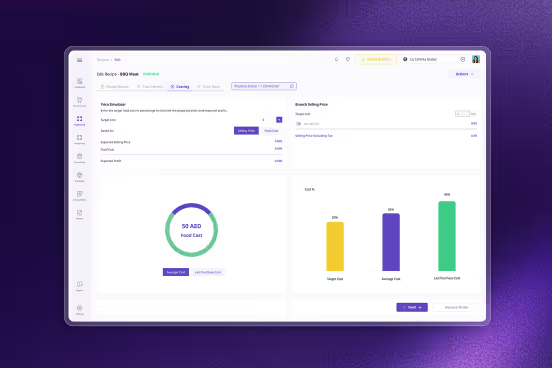
- Live recipe costing. Supy's recipe costing updates each drink as its ingredient costs move, so the cost on screen matches what you pay now. When a drink crosses the margin you set, you hear about it in the week it happens, not at month end.
Start this week. Count your highest-cost lines, cost one signature drink on today's prices, and set a single count day for every site.
If your food cost sits above 30%, the gap is usually in the waste your till never showed you. Fix the cadence first, and the number follows.