.jpg)


Restaurant Management Software: How to Get Internal Approval to Buy
Map the Sign-Off Chain Before You Shortlist
Approval for new restaurant management software rarely sits with the person running the evaluation. In most multi-site groups the decision moves up a chain. It runs through the operations manager, the central kitchen director, then finance or the owner, with head office and IT alongside. Map that chain first, then route your case to the person who can actually sign.
Skipping this step is the most common reason an evaluation dies. The evaluator does the demos and the reference calls, then discovers the contract needs written approval from someone they have never spoken to. By then the momentum is gone.
Who owns the decision also shifts with the group's structure. In one group the owner signs every purchase. In another a group general manager hands food and beverage choices to the operations manager. Confirm the real owner for your structure before you invest weeks in a shortlist.
Before you shortlist, line up the questions each stakeholder will ask. Our guide to the questions to ask a restaurant inventory software vendor is a useful starting point.
| Stakeholder | What they own in the decision | What they need to see to say yes |
|---|---|---|
| Operations Manager | Daily operations and F&B decisions | How it cuts variance and saves manager time |
| Central Kitchen Director | Production and the account structure | How outlets and the central kitchen map to the system |
| Finance / Owner | The budget and the contract | The business case in cost and margin terms |
| Head Office | Group standards and the rollout | A consistent setup across every site |
| IT | Security, access, and integrations | Data handling, permissions, and system fit |
Route the Evaluation to the Person Who Can Actually Say Yes
Evaluations stall when they never reach the person who can approve them. A local contact runs the trial, then says the decision is above their remit and hands it on, and the thread goes quiet at head office. Fix this at the start, not at the end.
Confirm who owns the decision, then bring finance and IT in early rather than presenting to them cold at the finish. Each one has a question that can block a signature late if it surfaces late. Finance wants the business case. IT wants to know how it connects and how access is controlled.
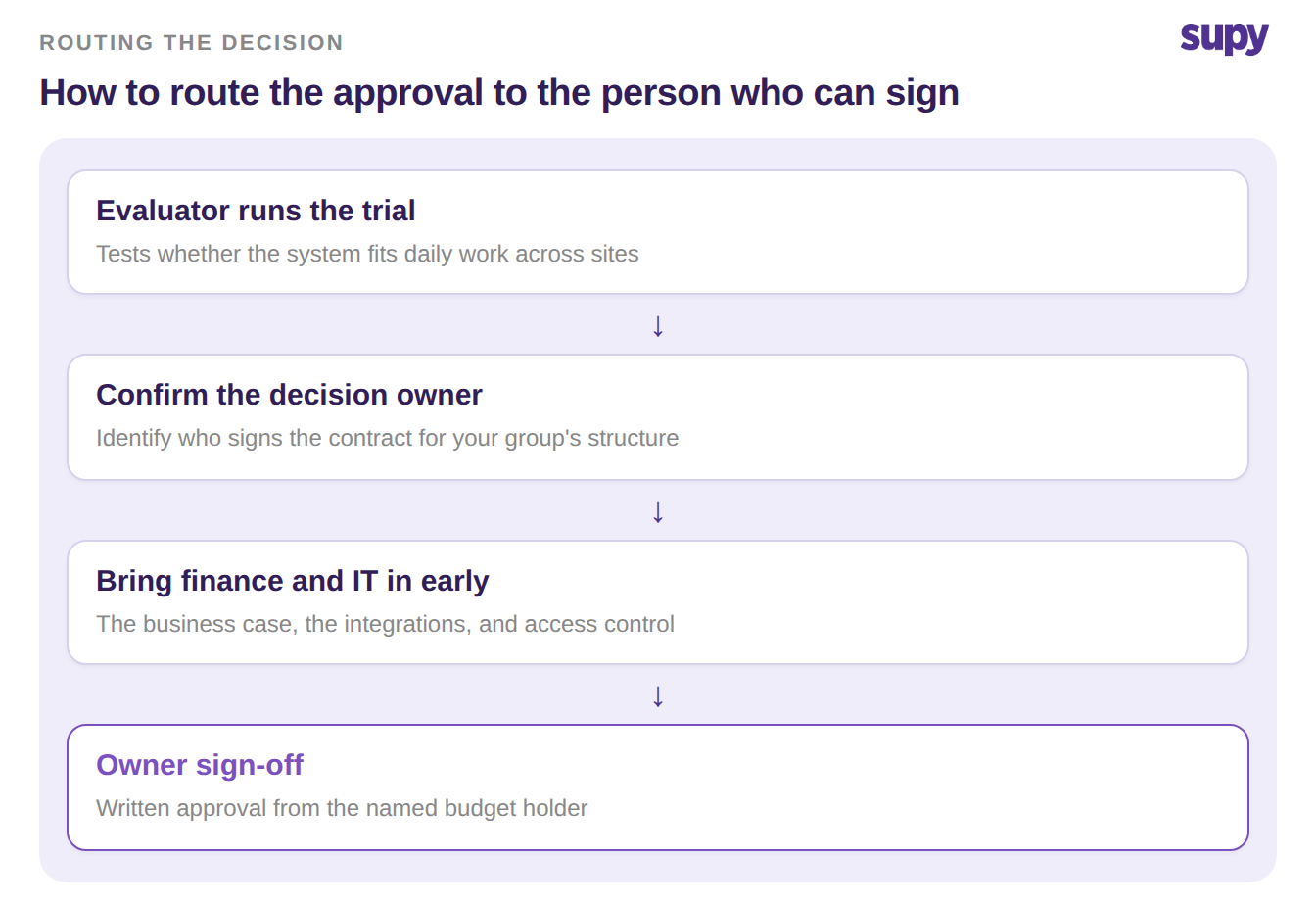
Remember that a proven result does not bypass sign-off. One operator on an existing system had already cut their cost of goods, and the owner still had to approve any new purchase. The route to the right budget holder matters as much as the product does.
IT will ask how the system connects to your point of sale and accounting. Supy lists 75+ integrations, and our note on restaurant software integrations covers what to check before that conversation.
Build the Business Case in Numbers a Budget Holder Recognises
A restaurant budget holder signs off on numbers they recognise. Food cost, waste, supplier price movement, and the hours lost to manual invoicing and ordering all count. Generic return-on-investment slides rarely move them, but margin evidence from their own sites does.
Model your own version before the meeting. For an illustrative six-site group the value areas might line up as below, and you replace each figure with your own numbers.
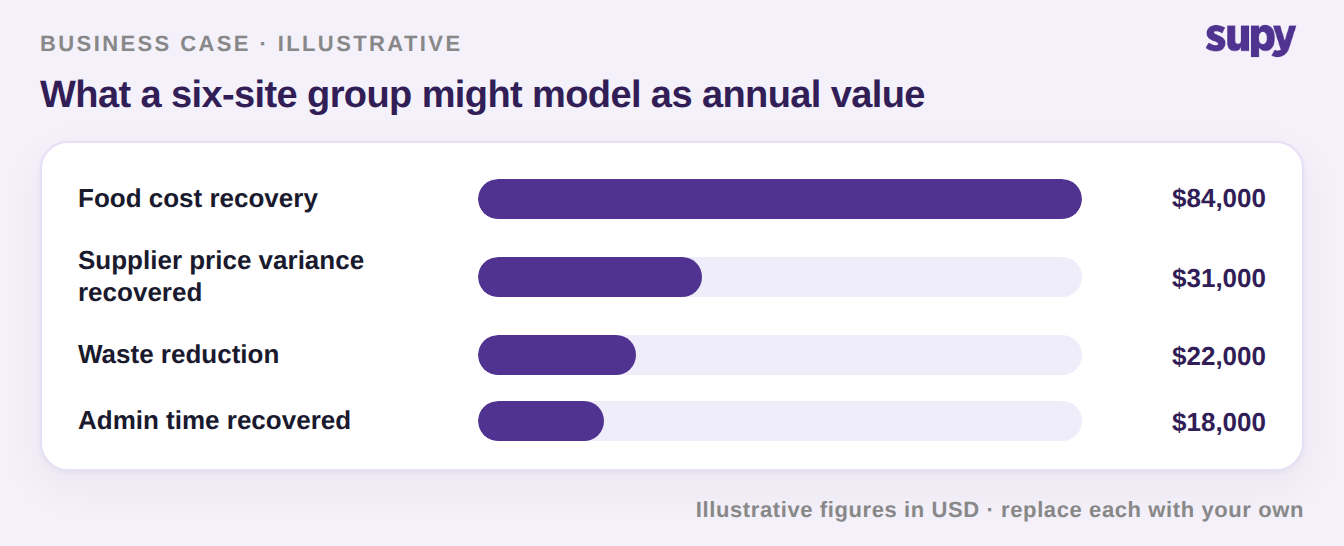
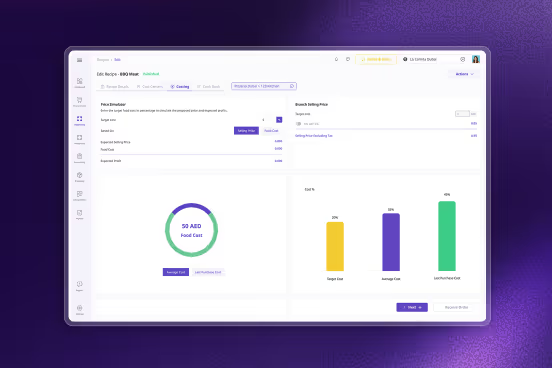
Show the before number now and commit to an after number. A system with live dashboards and exportable reports lets you pull the current figures today, then measure the change during a trial. Supy's restaurant analytics software is built to surface exactly these figures by site.
Then scope a short pilot. A 2 to 4 week run on one or two sites turns a projection into a real before-and-after that a budget holder can trust. A pilot also lets each stakeholder see the system on their own data, which does more than any slide.
Give Each Approver the View They Need, and a Written Trail
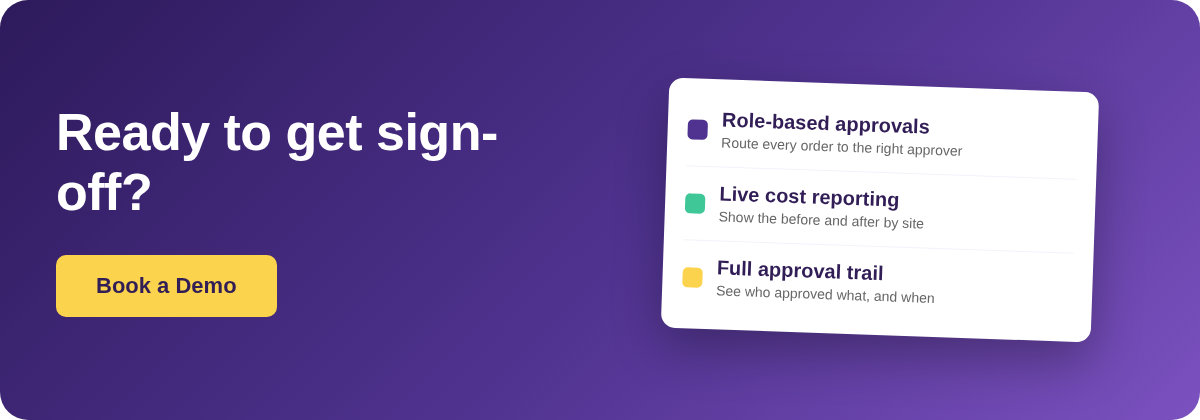
Each approver needs a different view of the same system. Finance wants cost and margin. Site staff need counts and orders, not the full cost picture. Role-based permissions let you give each person the view relevant to them, and hide cost and pricing figures from users who should not see them during the evaluation.
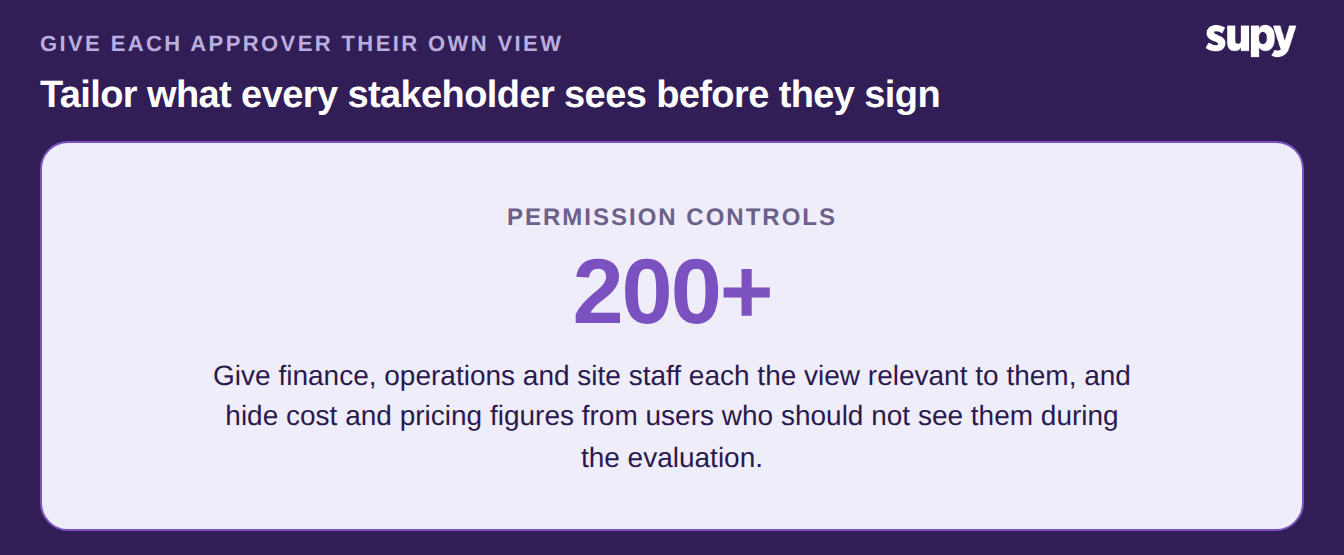
That control is not a nice-to-have in an approval process. It is often what lets a cautious finance lead or owner say yes, because the sensitive numbers stay with the people who own them.
Cover the written trail as well. Contracts and purchases usually need written approval from a named decision-maker. A system that records who approved what gives you that evidence by default. Once you are live, sequential approvals of up to 5 approvers, triggered by branch and order value, can enforce the same chain on every future order. IT will also look for single sign-on and controlled access, both of which are standard.
Four Checks Before You Take It to Sign-Off
Run these before you ask for a signature:
- Decision owner confirmed. You know the one person whose yes closes it, for your group's structure.
- The business case is in your own numbers. Food cost, waste, supplier price variance, and admin hours, not a generic slide.
- A short pilot is scoped. One or two sites, 2 to 4 weeks, with a clear before and after.
- Access and the approval trail are covered. Each approver sees only what they need, and every sign-off is recorded.
Clear all four and the decision stops being a leap of faith. It becomes a documented case routed to the person who can approve it. If you want to see how role-based approvals, live reporting, and a written trail come together on your own sites, book a demo below.