.jpg)

AI for Recipe Costing & Menu Engineering: The Future of Restaurant Profitability
.jpg)
For multi-location operators, the basics of profitability rest on two pillars: accurate cost visibility and menu decisions that reflect real economics. In the past decade, rising ingredient price volatility, supply chain complexity, and omni-channel demand have shifted margins tighter and unpredictably. Static costing spreadsheets and quarterly reviews simply do not keep pace with real-time changes in food costs, portion variations across locations, or the subtle ebb and flow of guest preferences.
What operators need today is a systematic way to cost every dish, track how that cost is changing, and feed that intelligence into intentional menu engineering decisions - so pricing is informed, consistent, and aligned with operational realities.
This is where AI-assisted recipe costing and menu engineering matter. Not because AI is a magic cost-cutting button, but because it makes previously manual, stale, and error-prone processes timely, repeatable, and connected to the business’s core data systems.
Recipe Costing Before AI - The Traditional Workflow
At its best, traditional recipe costing has three steps:
- Listing ingredients with quantities and units.
- Assigning costs based on the latest purchase prices.
- Summing to derive a per-dish cost and translating that into a food cost percentage.
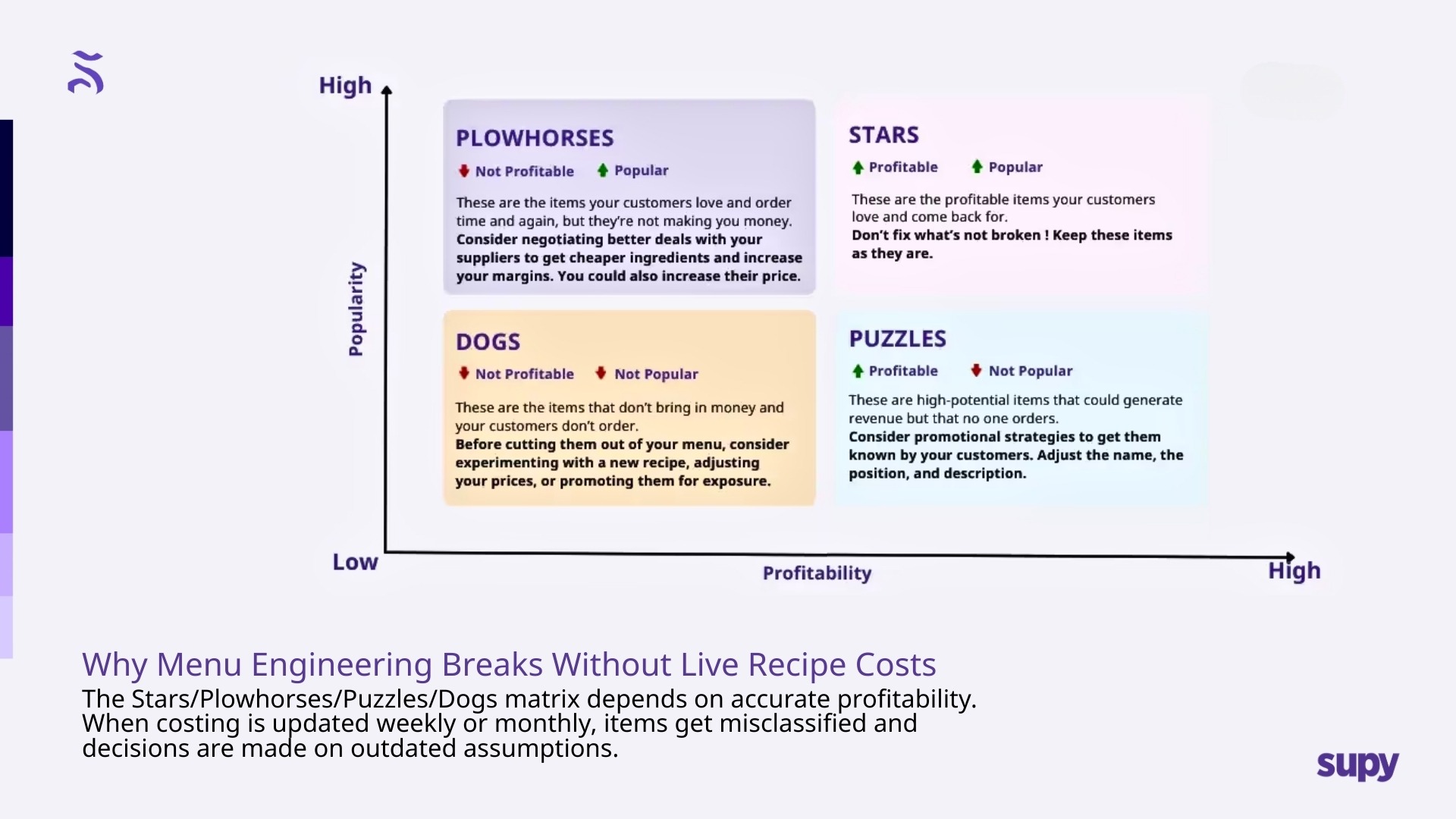
Even in well-run kitchens, this often occurs with spreadsheets updated weekly or monthly, costing exercises that lag behind actual purchases, and frequent manual aggregation across receipts, invoices, and inventory records. Operators know this dynamic:
- Ingredient prices change mid-month after a supplier adjustment.
- Portions vary by shift or station without corporate visibility.
- Different locations run at different efficiencies.
The result is a disconnection between the cost figures used to set prices and the true costs being incurred tomorrow. Without real-time data, operators often make decisions based on outdated assumptions, which undermines both cost control and profit forecasts. Accurate costing, in practice, requires consistent data inputs and infrastructure that most legacy systems simply were not designed for.
What AI Actually Delivers in Recipe Costing
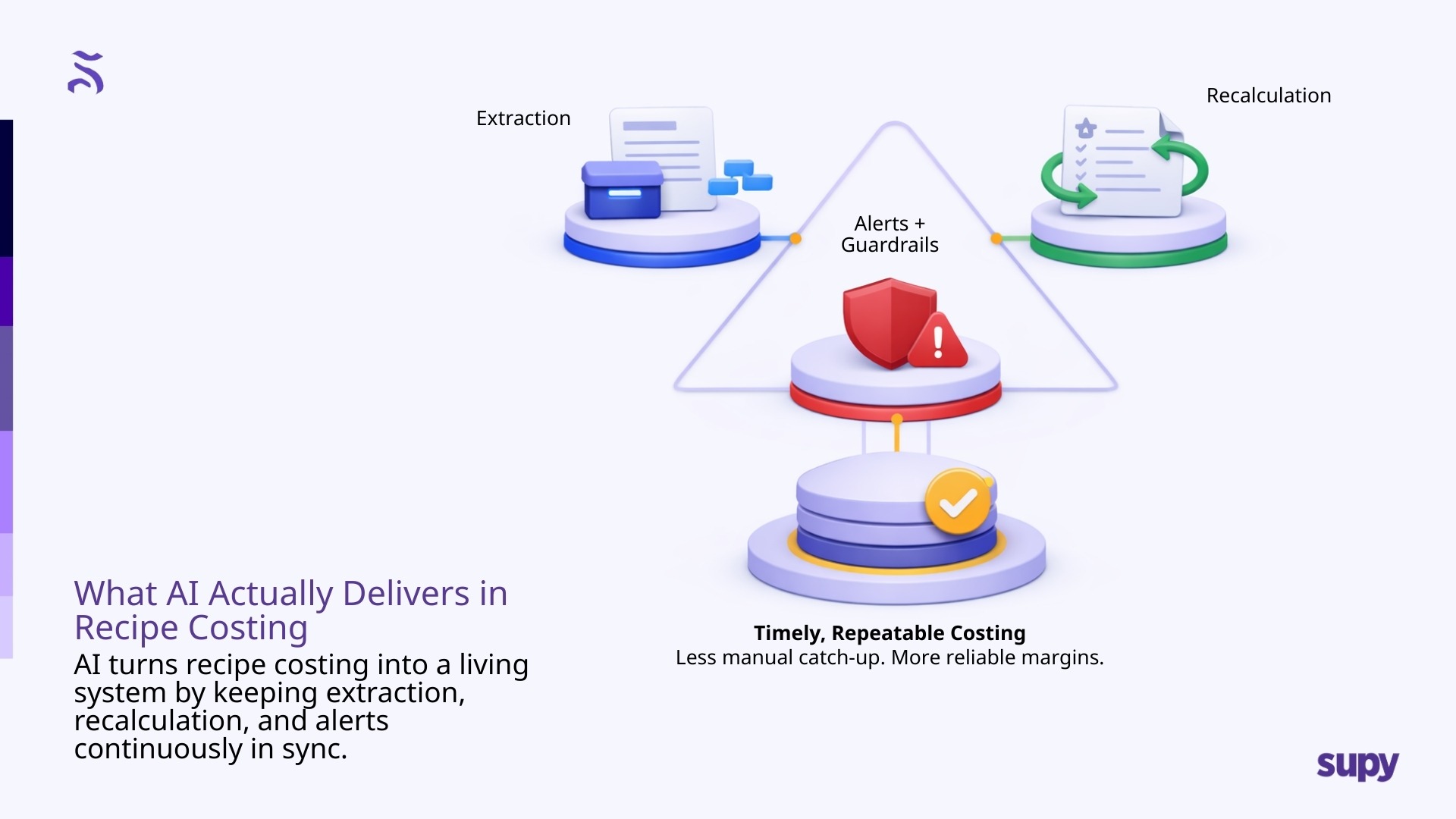
When we talk about AI in recipe costing, it helps to break it down into tangible capabilities that operators can act on:
1. Automated Cost Extraction & Normalisation
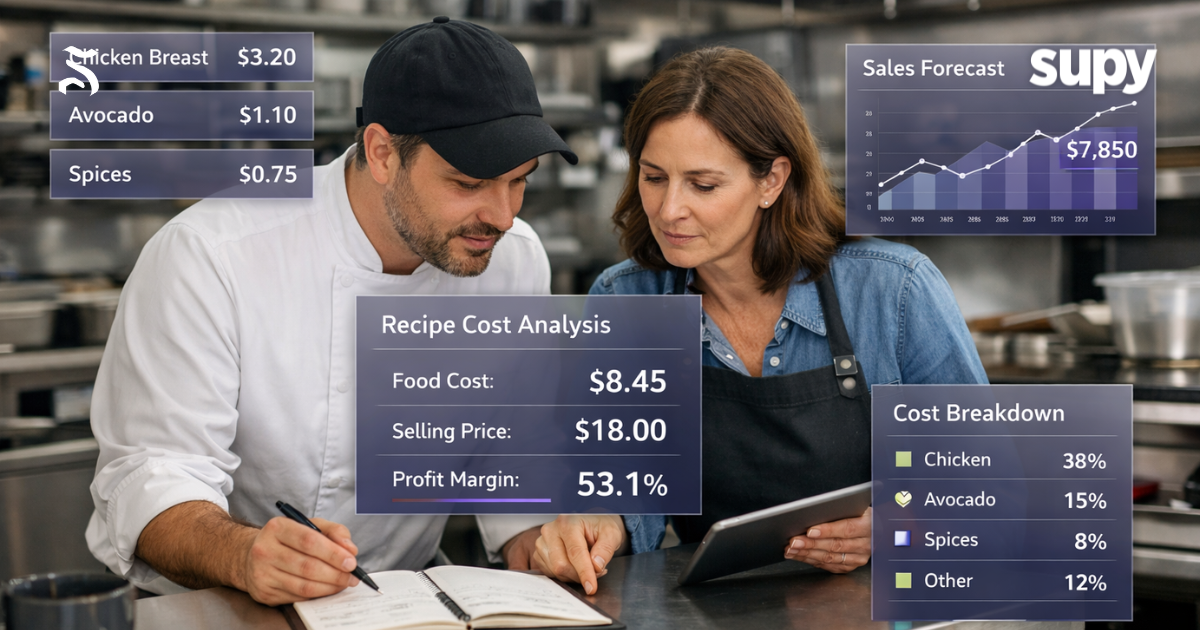
AI systems can parse incoming invoices and order data, standardize item descriptions, and map them to ingredient records used in recipe formulas - far faster and more consistently than manual entry. This directly addresses one of the biggest bottlenecks in operating CFOs’ workflows: keeping pricing data accurate and updated across hundreds of SKUs and suppliers.
2. Real-Time Cost Recalculation
As ingredient prices change or substitutions occur at the supplier level, AI helps ensure that recipe costs refresh continuously, rather than waiting for a monthly update. Turnovers and market shifts mean that yesterday’s price is no longer reliable, especially for proteins and produce, where market pricing can swing significantly week-to-week.
3. Variance Detection and Alerting
Rather than relying on ad-hoc audits, operators can receive alerts when ingredient costs deviate materially from budgeted expectations or historical trends. In the absence of such signals, unnoticed cost creep can quietly erode margins over time.
These capabilities do not replace strategic pricing decisions or operator judgment. AI does not determine list prices on its own; it gives teams accurate, contextualized data at the moment decisions are being made. The intelligence is only as good as the data it runs on - without clean, validated cost inputs, models produce outputs that reflect flawed inputs.
Menu Engineering - From Static Price Lists to Dynamic Profit Systems
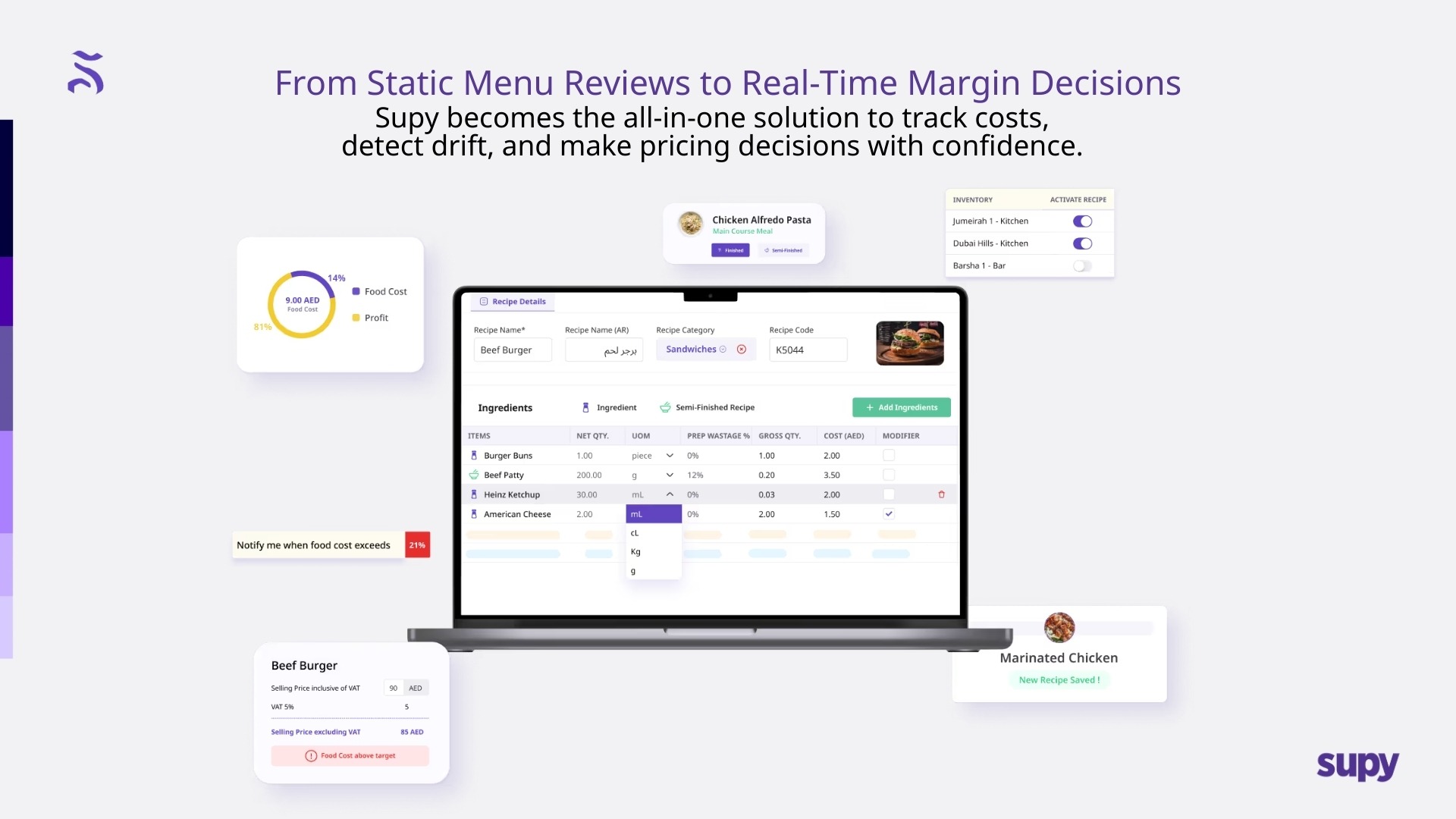
A well-executed menu engineering process answers:
- Which dishes contribute the most to profit?
- Which popular items are under-priced based on real cost changes?
- What happens to margins if ingredient costs rise by 10%?
- Where is customer demand elastic, and where is it stable?
Crucially, this richer analysis requires live cost data - not static numbers from last quarter’s spreadsheet. Operators can no longer plan menus in isolation: they must link recipe costs, ingredient inflation, inventory usage patterns, and sales performance into a feedback loop.
With this loop in place, teams can:
- Evaluate the impact of supplier price changes on each menu item’s contribution margin.
- Model “what-if” scenarios (e.g., seasonality, vendor substitutions) to see how pricing adjustments affect profitability.
- Focus on decisions that confidently influence revenue rather than reacting to surprise cost shifts.
This is the intersection where cost control connects to pricing strategy, and where AI enables real-time decision intelligence.
Where AI Doesn’t Replace Strategy
There are common misconceptions about AI in restaurant operations:
- AI won’t tell you what price your market will bear. It can show cost break-even points, historical elasticity signals, and price sensitivity patterns, but pricing remains guided by concept, demand drivers, and competitive context.
- AI isn’t a substitute for operational discipline. Without accurate inventory tracking, standardized recipe libraries, and active cost monitoring, automated costing will replicate garbage data faster.
- AI does not eliminate the human element of menu design. Creativity, brand positioning, and guest experience still shape what appears on the menu.
In other words, AI amplifies good processes; it does not replace them.
How Operators Actually Implement AI-Assisted Costing & Engineering Workflows
.jpg)
For an operational team, consistency and cadence matter as much as the analytical output.
Daily/Weekly Cost Reconciliation:
Set a routine to ingest invoice data daily or weekly, normalize ingredient costs, and validate changes against expected trends.
Automated Alerts for Cost Variance:
Configure thresholds for significant unit price changes on key staples. These alerts give procurement and kitchen managers timely visibility into supplier shifts.
Weekly Margin Review:
At the start of the week, review live cost reports that tie directly to POS sales of the top 20% menu items. This supports intentional pricing reviews and portion calibrations.
Scenario Modelling Before Price Changes:
Instead of ad-hoc price hikes, conduct structured scenario modelling - e.g., what happens if protein prices rise 8% next quarter? This uses real, live cost feeds rather than estimates.
These routines convert real-time data into operational predictability, improving planning and reducing reactive decision cycles.
What Operators Should Watch (Key KPIs)
Rather than looking for elusive “AI impact numbers,” operators should track achievable, grounded metrics:
- Recipe Cost Variance - difference between recorded ingredient costs and budget or forecasted costs.
- Menu Item Contribution Margin - profit after ingredients and direct labour.
- Food Cost Percentage Trends - rolling 4-week food cost percentage helps detect creeping costs before they become critical.
- Portion Yield Consistency - variations in portion sizes can mask real cost shifts, and consistent data feeds help expose those.
Industry guidance suggests that typical food cost percentages vary by concept, often between ~28 - 35% of sales revenue, though this can differ significantly by cuisine and service model. Tracking against realistic benchmarks helps operators set rational pricing targets. (Source: Flavor365)
Supy’s Role in the System
Supy’s platform is grounded in operational reality:
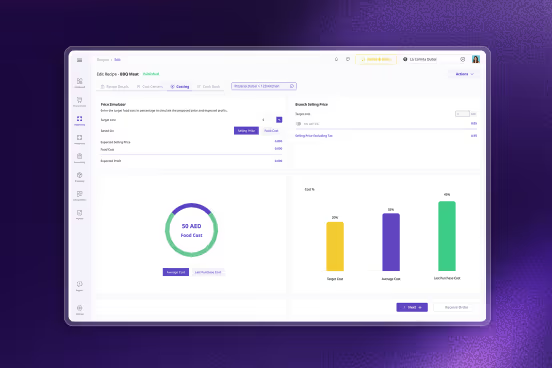
- Automates invoice receiving and line-item extraction, which feeds cost data into recipe and menu systems.
- Supports real-time visibility into supplier pricing and cost shifts, reducing the latency between when costs change and when teams see those changes.
- Connects cost signals to inventory, recipes, and forecasting - enabling operators to respond confidently, not reactively, to changing economics.
In practice, that means less time reconciling spreadsheets and more time understanding what the data implies for pricing, portions, or purchasing decisions.
Final Thoughts
In 2026, recipe costing and menu engineering will rely more heavily on strong, real-time systems over quarterly guesswork. AI strengthens the foundation behind pricing and profitability decisions, not because it replaces operators. When cost data is automated, accurate, and current, teams spend less time reconciling numbers and more time making informed decisions.
With the recipes & prep capabilities of a leading inventory management system like Supy, connecting plated dishes and prepping recipes directly to live ingredient costs, cooking yields, and wastage, gives operators a reliable source of truth for recipe profitability - a necessity in volatile F&B markets. That connection is what turns menu engineering into a continuous, data-driven discipline rather than a periodic review.
Want to learn how you can set your recipes for success with Supy’s Recipes & Prep feature? Read more here: https://supy.io/product-features/recipes-prep-recipes?utm_source=chatgpt.com or book a demo today!