What’s Next for Restaurant Management Technology? Emerging Innovations

In the bustling streets of downtown New York, a popular local restaurant chain found itself standing at a crossroads. For a long time now, the business had been trying to expand into new territories across the city but had been facing strict competition from its competitors. The management team knew that staying ahead of the game required more than just maintaining quality food and service—it meant leveraging the latest in restaurant technology to enhance their operations. Yet the restaurant’s owner still wasn’t entirely sold. Would upgrading their restaurant management systems really enhance their operations, improve revenue, and support their ambitious expansion plans?
Table of Contents
- Challenges Facing the Food and Beverage Industry in 2024.
- Advantages of a Restaurant Management System.
- Restaurant Management Software Solutions to Be Aware Of in 2024.
- Case Studies of Successful Implementations.
- Choosing the Right Restaurant Management Solution for Your Business.
- Supy's Role in Integrating Restaurant Management Systems.
- Conclusion.
- About Supy.
The evolution of modern restaurant management software presents an exciting opportunity for businesses to streamline their workflows. For restaurant owners and managers, the challenge at such a large scale is no longer about just maintaining quality service and delicious food; it’s also about integrating systems that can handle the intricacies of inventory management and order processing and maintain consistent levels of customer satisfaction across their various locations.
As we look ahead to the future, staying abreast of emerging innovations in restaurant management software is crucial for businesses that would like to stay competitive in this field. Not only do such advancements offer a pathway to managing your current operations more effectively, but they also form an integral part of paving the way for future growth and expansion!
1. Challenges Facing the Food and Beverage Industry in 2024

In 2024, the food and beverage industry is contending with a host of challenges that are testing the resilience and adaptability of businesses.
Perhaps the most pressing of these issues is the impact of inflation. Rising costs for ingredients and supplies is something businesses have complained about across the board. This has put incredible pressure on profit margins and forced many restaurants to consider hiking up their prices. However, with nearly half of consumers opting for cheaper home-cooked meals over dining out, raising prices isn't always a viable solution.
Another major issue is the labor shortages that continue to plague the industry, a lingering effect of the pandemic. The National Restaurant Association reports that 45% of restaurant operators are struggling to find sufficient staff to meet customer demand, even as self-serve technologies gain traction. The shortage of workers has led to increased workloads for existing staff and, in some cases, a decline in service quality.
Third party delivery services also present a significant challenge. While off-premise dining options have become crucial revenue streams, the high commission fees offered by third party delivery services—sometimes exceeding 20% per order!—are eating into restaurants’ profits. This is particularly concerning for smaller businesses that rely heavily on these platforms to reach customers.
Lastly, sustainability and regulatory compliance are also becoming increasingly important, adding another layer of complexity. As consumers gain more awareness, they are demanding more eco-friendly practices, and businesses must navigate evolving regulations around environmental impact and food safety.
Yet fear not! Advances in smart restaurant technology offer innovative solutions to many of these issues, from automated inventory management to enhanced customer engagement tools. Embracing these technologies can help businesses streamline operations, reduce costs, and improve overall efficiency, providing a glimmer of hope in an otherwise challenging landscape.
2. Advantages of a Restaurant Management System

The latest innovations in restaurant management software has revolutionized the way we operate our restaurants, offering a multitude of benefits designed to streamline workflows and enhance overall efficiency. For restaurant owners and managers, particularly those overseeing multichain operations, leveraging these advanced tools has been shown to lead to significant improvements in both day-to-day management and long-term growth.
One of the primary advantages of a restaurant management system is the automation of routine tasks. From inventory tracking to order processing, automated systems reduce the need for manual intervention, minimizing human error and freeing up staff to focus on customer service and other critical areas. This is particularly beneficial for multichain restaurants where maintaining consistency and accuracy across multiple locations can be challenging.
Another key benefit is the ability to gather and analyze data in real-time. Modern POS systems and integrated management platforms provide detailed insights into sales trends, customer preferences, and inventory levels. This data-driven approach allows restaurant owners to make informed decisions quickly, optimizing everything from menu offerings to stock purchases. Identifying top-selling items and ensuring their availability, for instance, can then enhance customer satisfaction and boost revenue.
Another advantage of restaurant management software is enhanced communication and coordination. With cloud-based restaurant management software, all team members, regardless of location, can access up-to-date information and collaborate more effectively. This makes sure that everyone is on the same page, reducing miscommunication and operational discrepancies.
Finally, these technologies often come with features that enhance customer engagement, such as online ordering, loyalty programs, and personalized marketing. By leveraging these tools strategically, restaurants can improve customer retention and drive repeat business!
3. Restaurant Management Software Solutions to Be Aware Of in 2024

As the restaurant industry continues to evolve, it’s important to stay on top of the latest trends in restaurant management systems to keep your competitive edge. Here are our top four trends to look out for in 2024:
- AI and Machine Learning Integration: In the last couple of years, artificial intelligence (AI) and machine learning have completely revolutionized how many restaurants manage their operations. From chatbots handling reservations and queries, to AI-driven personalization that tailors dining experiences according to customer data, technology is making service faster, more efficient, and increasingly personalized. AI technology can analyze past orders, dietary restrictions, and even weather data to curate a menu just for you. It can optimize kitchen operations, predicting peak times and suggesting ingredient prep based on real-time data. Talk about efficiency!
- Enhanced POS Systems: Modern point-of-sale (POS) systems are becoming an important hub for restaurant operations. Expect to see POS systems with advanced features such as integrated inventory management, real-time sales analytics, table management, restaurant reservation software, and customer relationship management (CRM) capabilities. These enhancements streamline operations, reduce errors, and provide valuable insights that can improve the efficiency of multichain restaurants where consistency and scalability are paramount.
- Sustainable Technology: As sustainability becomes a growing concern among customers, restaurants are adopting newer technologies that support eco-friendly practices. These include anything from energy-efficient kitchen equipment and waste management systems to software that helps track and reduce food waste.
- Mobile and Contactless Solutions: In 2024, the demand for convenience and safety has pushed customers to adopt mobile and contactless food ordering solutions. Mobile ordering, payment, and contactless delivery options have all become more prevalent over the years. These technologies enhance the customer experience by offering quick, seamless interactions and cater to the growing preference for contactless transactions.
Stay ahead of your competition by integrating these top four emerging trends into your restaurant management strategy!
4. Case Studies of Successful Implementations

Many restaurants have already experienced the transformative effects of Supy’s centralized, versatile POS system. Take Pinza! for instance. Nourishing, wholesome, and completely irresistible, Pinza! is on a mission to introduce their uniquely healthy menu to the thinkers, doers, movers, and shakers of life. Yet with 13 branches across the country, this dark pizza kitchen restaurant was experiencing large variance and profit losses due to inconsistent recording of events.
The solution? A full onboarding with data centralization and implementation of accurate recipes, items, suppliers, and first stock count for all kitchens. With this new instant access to real-time interactive dashboards, it was now a lot simpler to spot any discrepancies.
“Implementing controls in our operation with Supy’s Back of House allowed us to have clear visibility on our cost,” says Tamer Elkhayat, managing partner at Pinza!
With Supy’s help, the Pinza! the team managed to reduce variance by a whopping 85%! All thanks to easy, regular updates of stock, wastage, and invoices with Supy’s mobile app.
“Supy’s ultra-accurate inventory makes finding and addressing discrepancies quick and easy. We’ve reduced waste, improved variance, and increased profits in record time. Incredible!” said an overjoyed Tamer.

5. Choosing the Right Restaurant Management Solution for Your Business

It’s pretty obvious by now that the best way for restaurants to continue to survive and thrive, from 2024 to beyond, is to adapt to the new digital landscape. However, making the right decisions for your business isn’t always easy, even for those with a keen eye on hospitality industry trends.
When considering what solutions are best for your food and beverage business, we recommend prioritizing options that could offer you the greatest long-term returns on investment (ROI). Being mindful of how technology will help you down the line is one of the best ways to future-proof your business, whether it be by using self-service kiosks to reduce labor costs and improve labor management, or loyalty software to drive up sales.
6. Supy's Role in Integrating Restaurant Management Systems

Supy offers several consulting services focused on improving your business’ inventory management practices. Here are a few ways Supy is designed to help:
- Live Data: With Supy’s Restaurant Analytics feature, you don’t need to wait for data to make decisions whenever you need to. All your restaurant dashboards are powered by live data. Plan regular and automated data fetching from your point-of-sale systems and other tools for maximum accuracy.
- Parallel Stock Counting: Accelerate stock counting and increase count accuracy by running digital, synchronized, and cross-device counting sessions with your team. Count more regularly to keep track of the variance between your actual and theoretical stock. Count items in any package and let Supy do all the quantity adaptations for you.
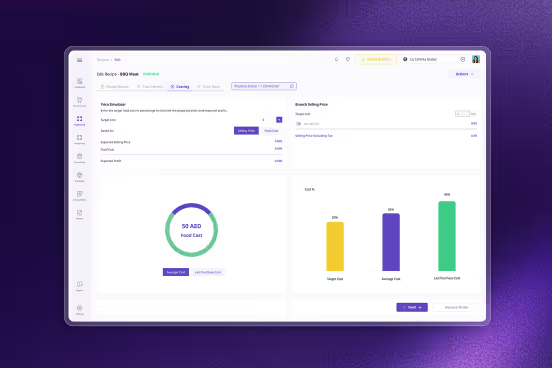
- Real-Time Reporting & Analytics: Track variance, stock value, stock quantity, waste, food cost, menu performance, and margin evolution on Supy’s built-in, real-time dashboards. Identify and address discrepancies immediately and avoid bad surprises at the end of the month.
· Unlock Profitable Restaurant Procurement: Track purchase value per supplier, location, and category. Understand which items are bought the most, from which supplier, and for which location to identify purchasing patterns and optimize your procurement operations.
7. Conclusion
At the end of the day, the best restaurant management software is driven by innovations aimed at enhancing efficiency and scalability. From advanced mobile POS systems and AI-driven analytics and accounting software to seamless inventory management solutions, all of the latest tools are designed to streamline operations, reduce costs, and improve customer satisfaction. As we look beyond the year 2024, expect trends like increased automation, enhanced data security, and the integration of sustainability practices to continue to shape the industry.
To learn more about how you can stay ahead of these trends, it's important to stay informed by seeking out expert guidance. At Supy, we specialize in helping restaurants optimize their operations through cutting-edge POS systems and tailored solutions. Why not subscribe to our newsletter to receive the latest insights, tips, and updates on how to make the most of these technologies? Or check out the Xenia app to learn how to centralize operations across your business?
Additionally, we invite you to book a free consultation with our team of experts. We'll work with you to identify the best strategies and technologies to enhance your restaurant's efficiency and growth. Don't miss out on the opportunity to elevate your restaurant management and stay ahead in the competitive F&B industry. Subscribe to our newsletter and book your free consultation today!
8. About Supy
Supy is the best restaurant management software platform tailored for multi-branch restaurants and franchises. With unbeatable features like real-time inventory tracking, smart procurement systems, and advanced analytics, Supy helps restaurants manage their various demands effectively. Whether centrally adjusting stock levels or optimizing supply chain relationships, Supy provides the tools restaurants need to thrive in a dynamic industry.
For the latest expert insights, download Supy’s ebook: The Ultimate Guide to Reducing Food Costs in Multi-Branch & Enterprise Restaurants.
Ready to find out more? Schedule a demo with Supy today and take the first step towards a streamlined, profitable future.