Promoting Sustainability Through Inventory Management
In today's rapidly evolving business landscape, restaurant sustainability has emerged as a critical focus for businesses across the food and beverage industry. As consumers become increasingly conscious of their ecological footprint, restaurants are pressured to adopt sustainable practices, including in their inventory management processes. Although such upgrades may seem tricky and difficult to adopt at first, with the right strategies, you may find that these practices lead you down the road to incredible environmental benefits and cost savings.
Table of Contents
- Inventory Management as the First Step Towards a Sustainable Food Business.
- Challenges to Sustainable Inventory Management
- Advantages of Sustainable Inventory Management
- How to Implement Sustainable Inventory Management Practices at Your Restaurant
- Case Studies of Successful Implementations.
- Supy's Role in Integrating Sustainable Inventory Management Practices.
- Conclusion.
- About Supy.
It's no secret that managing inventory and reducing food waste are two of the top sustainability challenges faced by the culinary industry. Fortunately, many new and emerging technologies on the market offer innovative solutions to help us tackle these issues.
In this article, we’ll explore how businesses in the food and beverage industry can incorporate different sustainability practices into their inventory management processes. These upgrades are designed to drive positive environmental impact while also enhancing your business’ operational efficiency and profitability.
1. Inventory Management as the First Step Towards a Sustainable Food Business
What is Inventory Management?
The restaurant inventory management process involves the systematic ordering, storage, and usage of a restaurant’s inventory. These items primarily include food and beverages, but may also include any goods that are used in the daily operations of the restaurant, such as cooking equipment and tableware. Proper inventory management ensures that these items are acquired at the right time, in appropriate quantities, and at a favorable cost, all of which are essential to maintaining a restaurant’s service and food quality without excessive spending.
The Effect of Proper Inventory Management on Restaurant Sustainability
For restaurants around the world, the inventory management process encompasses more than just tracking stock levels. By implementing advanced inventory systems, many modern restaurants can gain real-time insights into stock levels and patterns of customer demand. These systems allow restaurants to adjust their inventory based on actual consumption data, rather than relying on static forecasts, thus ensuring that perishable items are used within their optimal time frame to minimize food waste.
While looking into their inventory practices, restaurants should also consider moving towards eco-friendly suppliers and sourcing out local ingredients whenever possible. This reduces the carbon footprint associated with transportation and supports local economies.
A surprising benefit of optimizing your inventory processes is the ripple effect this produces on other areas of sustainability in your business. For example, less food waste leads to lower disposal costs and reduced environmental impact, while efficient inventory practices contribute to a leaner, more eco-friendly supply chain. In the end, it’s all about creating a sustainable restaurant practice that cares for our natural environment while also contributing to economic prosperity.
2. Challenges to Sustainable Inventory Management
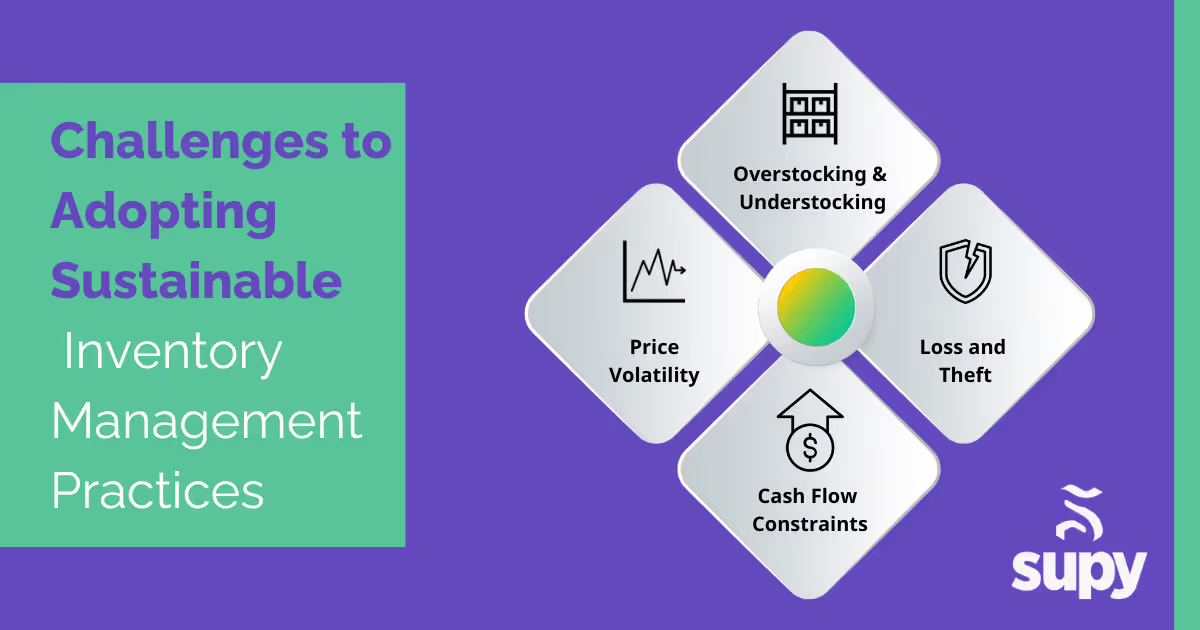
Despite all its purported benefits, adopting sustainable inventory management practices across multi-branch restaurants can present several challenges. Some of the most common of these have been listed below:
Overstocking and Understocking:
Perhaps one of the trickiest parts of running a restaurant is balancing your inventory. Avoiding either over or understocking your supplies always presents a fundamental challenge. If you overstock your supplies, you may waste food and money, both of which undermine any efforts at sustainability. However, if you find yourself understocking supplies, this may disrupt service and impact customer satisfaction. Thus, accurate demand forecasting and real-time inventory tracking are crucial to managing both of these risks effectively.
Cash Flow Constraints:
Although they often end up paying for themselves, implementing sustainable inventory practices almost always requires a significant upfront investment in new technology and systems. This financial strain can hinder efforts to adopt sustainable inventory management practices, especially if you own multiple restaurant branches.
Price Volatility:
Under the current global economy, fluctuating ingredient prices can complicate sustainable inventory management. Price volatility affects budget planning and forces restaurants to adjust their inventory strategies. This kind of unpredictability makes it difficult to establish stable supplier relationships and maintain consistent sustainability practices, such as locally sourcing your ingredients or using organic products.
Loss and Theft:
Finally, it’s important to put robust security measures and regular audits in place to mitigate the risk of supply loss or theft. By implementing inventory control systems that track usage and discrepancies, you can help identify and address the issue at its root.
3. Advantages of Sustainable Inventory Management
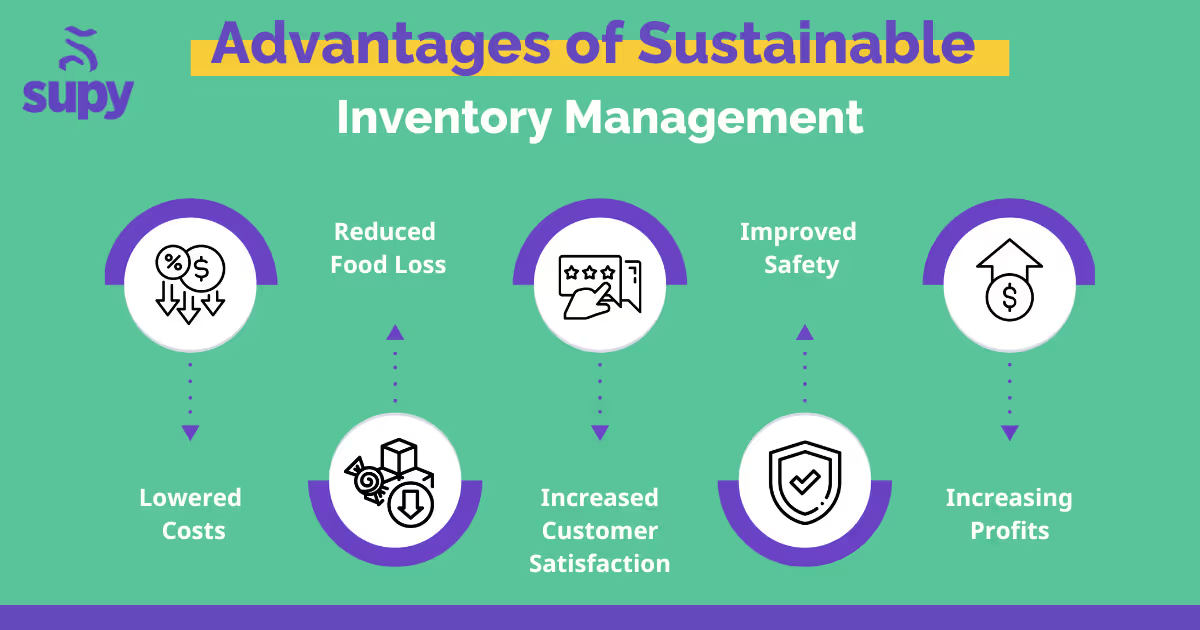
Despite the challenges it presents, sustainable inventory management still offers numerous valuable advantages to multi-branch restaurants, some of which are listed below:
Lowered Costs:
By optimizing inventory levels and reducing waste, sustainable inventory management can lead to incredible savings. With accurate demand forecasting, you can minimize overstock and reduce the need for markdowns on expired goods. This efficiency not only cuts costs associated with waste disposal but also lowers storage and handling expenses.
Reduced Food Loss:
Sustainable inventory management practices also help minimize food wastage by ensuring stock levels align with your restaurant’s actual consumption patterns. Techniques such as real-time tracking and data analytics enable restaurants to better predict demand, leading to fresher ingredients and less spoilage. This reduction in food waste supports environmental goals and contributes to more responsible resource use.
Increased Customer Satisfaction:
Many modern customers increasingly value sustainability and are drawn to businesses that demonstrate environmental responsibility. By adopting sustainable inventory management practices, restaurants can enhance their brand reputation and attract eco-conscious diners.
Improved Safety and Quality:
With sustainable inventory management, you can also ensure that your ingredients are being used within their optimal time frame. This works to enhance food safety and quality. With proper rotation and stock handling, you may reduce the risk of contamination and ensure all your dishes are being prepared with fresh, high-quality ingredients.
Increasing Profits:
Through cost savings from reduced waste and improved operational efficiency, restaurants can boost their profitability. sustainable inventory management practices not only streamline operations but also position the restaurant as a leader in eco-friendly dining, attracting more customers and fostering loyalty.
4. How to Implement Sustainable Inventory Management Practices at Your Restaurant
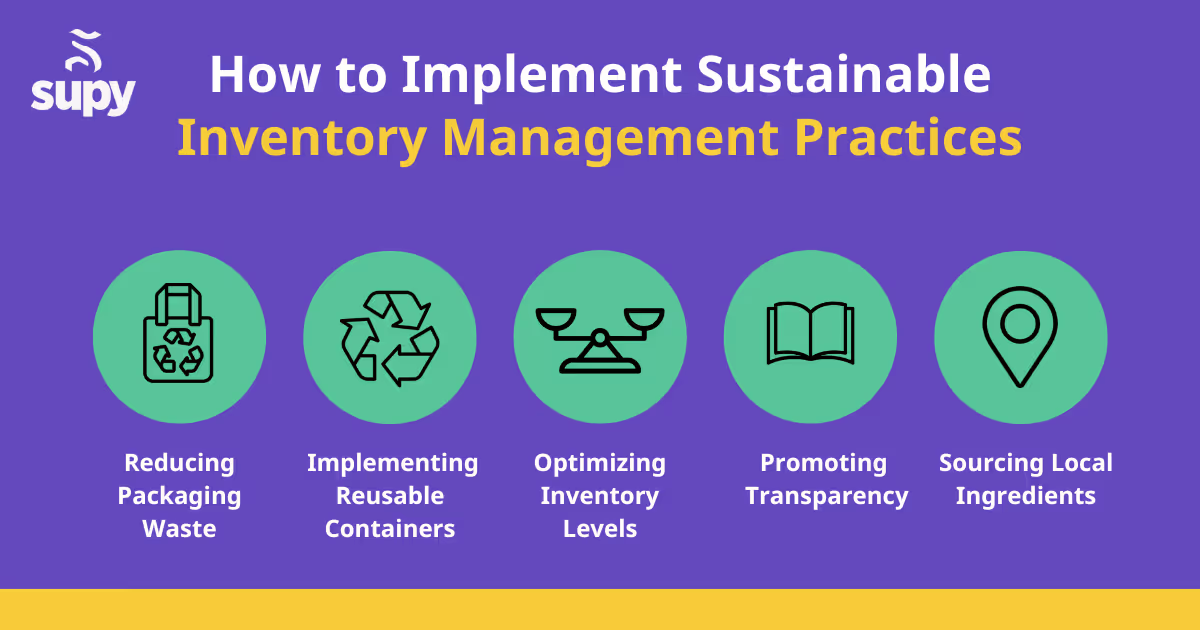
Implementing sustainable inventory management practices at your restaurant requires a multi-step approach. Here’s how to do it:
- Sourcing Local Ingredients: By prioritizing local and/or seasonal ingredients, you can greatly reduce the greenhouse gas emissions associated with transportation while supporting regional economies. Establishing partnerships with local farmers and suppliers can ensure fresher produce and create more sustainable supply chains.
- Reducing Packaging Waste: Minimizing packaging waste is crucial for sustainability. Opt for suppliers who use eco-friendly or minimal packaging and request them to reduce excess packaging materials. In your restaurant, try to minimize the use of single-use plastics and other non-recyclable materials.
- Implementing Reusable Containers: Transitioning to reusable containers for both storage and transport helps in reducing waste. Use durable, washable containers for storing ingredients and for packaging takeout or delivery orders.
- Optimizing Inventory Levels: It’s a good idea to invest in advanced inventory management systems to track stock levels and accurately forecast future demand. This helps prevent overordering, minimizes food spoilage, and ensures that inventory turnover aligns with actual consumption patterns.

5. Case Studies of Successful Implementations
Many organizations in the food and hospitality industry have already experienced the transformative effects of centralized inventory management software. Take Burger28, for instance, a renowned local burger chain based in the UAE that keeps customers coming back for more.
Burger28 used to struggle to maintain operational excellence across its multiple locations. It was difficult to reduce variance and monitor key metrics across inventories, while also delivering insights to floor staff for data-driven decision-making. The owner, Alex Debarre, also wanted to grow his business sustainably, maximizing the productivity of employees without distracting them or having to hire more staff.
With Supy’s help, Burger28 has managed to successfully centralize its data, eliminating all paperwork from this small business and aggregating its entire inventory onto a central platform. With Supy’s centralized data management tool, you can track inventory, variance, and stock data; all updated in real time! Owner Alex Debarre is now happy to report a 6% profitability increase, and a hundred hours of manual labor saved every month!
6. Supy's Role in Integrating Sustainable Inventory Management Practices
Supy offers comprehensive support and consulting services designed to ease the transition to sustainable inventory management. Our expertise in the hospitality industry means we understand the unique challenges you face and can provide tailored solutions to meet your needs. Here’s how Supy can assist:
- Centralized Data Storage: Instead of having multiple servers installed at every business location, store your data remotely on the cloud for easy inventory tracking and business processes. With that foundation, you can proactively manage waste, optimize your restaurant operations, and expand your sales channels confidently.
- Real-Time Reporting & Forecast Analytics: Forecasting tools use historical data to predict future needs, helping you to plan better and order more accurately. By analyzing past sales and consumption patterns, these tools can estimate how much of each ingredient will be required for a given period. This foresight allows you to adjust orders pre-emptively, reducing the likelihood of surplus stock that could become waste.
- Parallel Stock Counting: Accelerate stock counting and increase count accuracy by running digital, synchronized, and cross-device counting sessions with your team. Count more regularly to keep track of the variance between your actual and theoretical stock.
- Unlock Profitable Restaurant Procurement: Track purchase value per supplier, location, and category. Coordinating with your suppliers through technology can streamline your supply chain and prevent overstocking. This ensures sustainable practices like avoiding spoilage and excess inventory that can lead to waste.
7. Conclusion
The term “environmental sustainability” is no longer just a buzzword. Today, being eco-conscious has become a fundamental part of the food and beverage industry. By integrating sustainable inventory management processes, such as optimizing order quantities, using local and/or seasonal ingredients, and implementing robust inventory tracking systems, restaurants can significantly reduce their waste and improve sustainability.
As a business strategy, this is great because it not only allows businesses to reduce their environmental footprint; it also enhances brand reputation, attracts eco-conscious consumers, and drives long-term profitability! To anyone paying attention, it’s obvious that embracing sustainability is the only way forward for businesses committed to shaping a happier, greener future.
If you’re interested in learning more about how to implement sustainable inventory management practices at your restaurant, why not sign up for our newsletter or book a consultation with Supy? Alternatively, you may also want to check out the Xenia app for other ideas on how to improve your business.
Together, we can pave the way for a greener and more efficient future in the food and beverage industry!
8. About Supy
Supy is the best restaurant management software platform tailored for multi-branch restaurants and franchises. With unbeatable features like real-time inventory tracking, smart procurement systems, and advanced analytics, Supy helps restaurants manage their various demands effectively. Whether centrally adjusting stock levels or optimizing supply chain relationships, Supy provides the tools restaurants need to thrive in a dynamic industry.
For the latest expert insights, download Supy’s ebook: The Ultimate Guide to Reducing Food Costs in Multi-Branch & Enterprise Restaurants.
Ready to find out more? Schedule a demo with Supy today and take the first step towards a streamlined, profitable future.