Inventory

Restaurant Opening Checklist: The Checks to Finish Before Doors Open
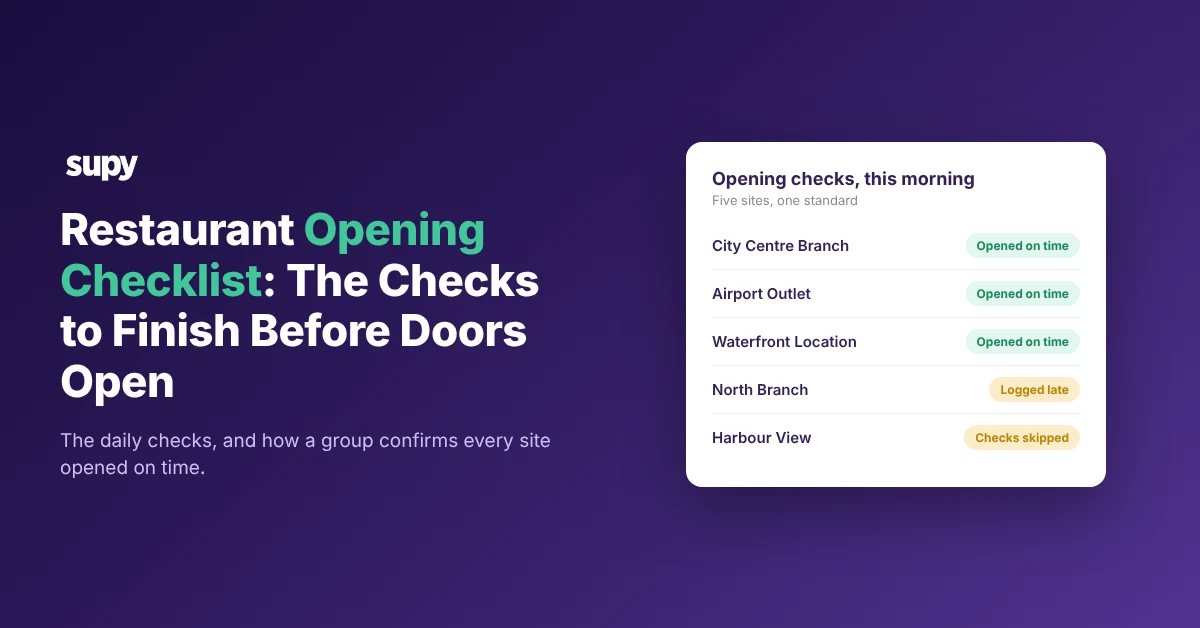
Restaurant opening checklist showing sites that opened on time and one logged late

The restaurant opening checklist

A restaurant opening checklist is the set of checks a team runs before the doors open, across the kitchen, the fridges and freezers, the front of house and the bar. A good one gets the site ready to trade safely and leaves a record you can show an inspector. This article gives the full checklist, then shows how a group confirms every site opened to the same standard.

AreaCheck before openingWhy it matters
KitchenFridges and freezers are holding a safe temperature, and the reading is written downA cold-holding failure overnight is the first thing to catch, before any stock gets used
KitchenDate labels and stock rotation are checked, and anything out of date is pulledService starts on safe stock, and waste gets logged instead of served
KitchenOvens, fryers and the pass are on and up to temperatureThe line is ready for the first order, not warming up during it
KitchenCleaning from the night before is signed off, and floors and surfaces are clearA skipped close becomes an open problem, so you catch it now
Front of houseThe dining room is clean, tables are set and floors are doneThe first guest sees a finished room, not the last of the setup
Front of houseTills are floated and card machines are liveA queue at the first sale is a till problem you could have caught at open
Front of houseAllergen information is to hand and current for today's menuThe team can answer an allergen question correctly from the first cover
BarDraught lines and bar fridges are checked, and the cellar temperature is loggedFlat beer and warm mixers are an open fault, not a service surprise
BarSpirits and stock are measured against par, and low lines are noted to orderYou order against a real count, not a guess at week's end
Whole siteFire exits are clear, and first aid and safety points are in placeThese are the checks an inspector asks about first, so they are never optional

Why opening checks get done late or from home

The problem with a paper opening checklist is rarely the list. It is that nobody can tell whether the checks actually happened. Two failures show up once a group runs more than one branch.

  • The late submission. The opening checklist arrives two hours after the doors opened, so the checks it records happened during service, if at all. A fridge noted as cold at eleven says nothing about eight o'clock.
  • The remote tick. The list gets filled in from a phone on the way to work, or from home the night before. A signed sheet proves someone had the sheet, not that anyone read the thermometer.

Both leave you with a tidy record and no idea whether the site was safe to open.
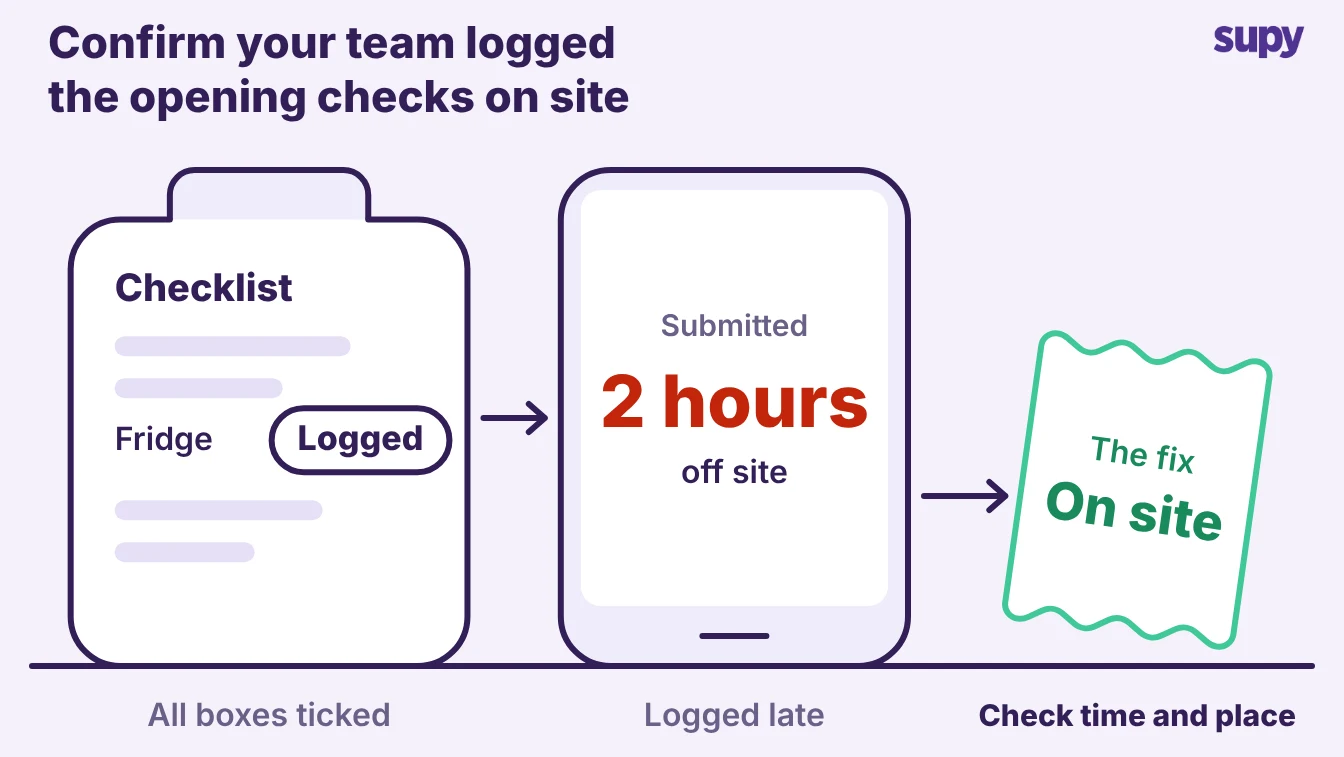
A ticked opening checklist, a phone showing it was submitted two hours late and off site, and the fix of logging checks on site.

How to confirm every site actually opened

A manager running several branches cannot stand in each kitchen at eight in the morning, so they need proof rather than a promise. The fix is to make each check carry the time and the place it was submitted. A completed opening checklist then means the checks were done on site, before the doors opened.

A manager sees which locations opened cleanly and which logged late, and calls the one that needs it. It is the same discipline a group applies to how it counts stock and runs inventory across sites: one record, checked against what happened.
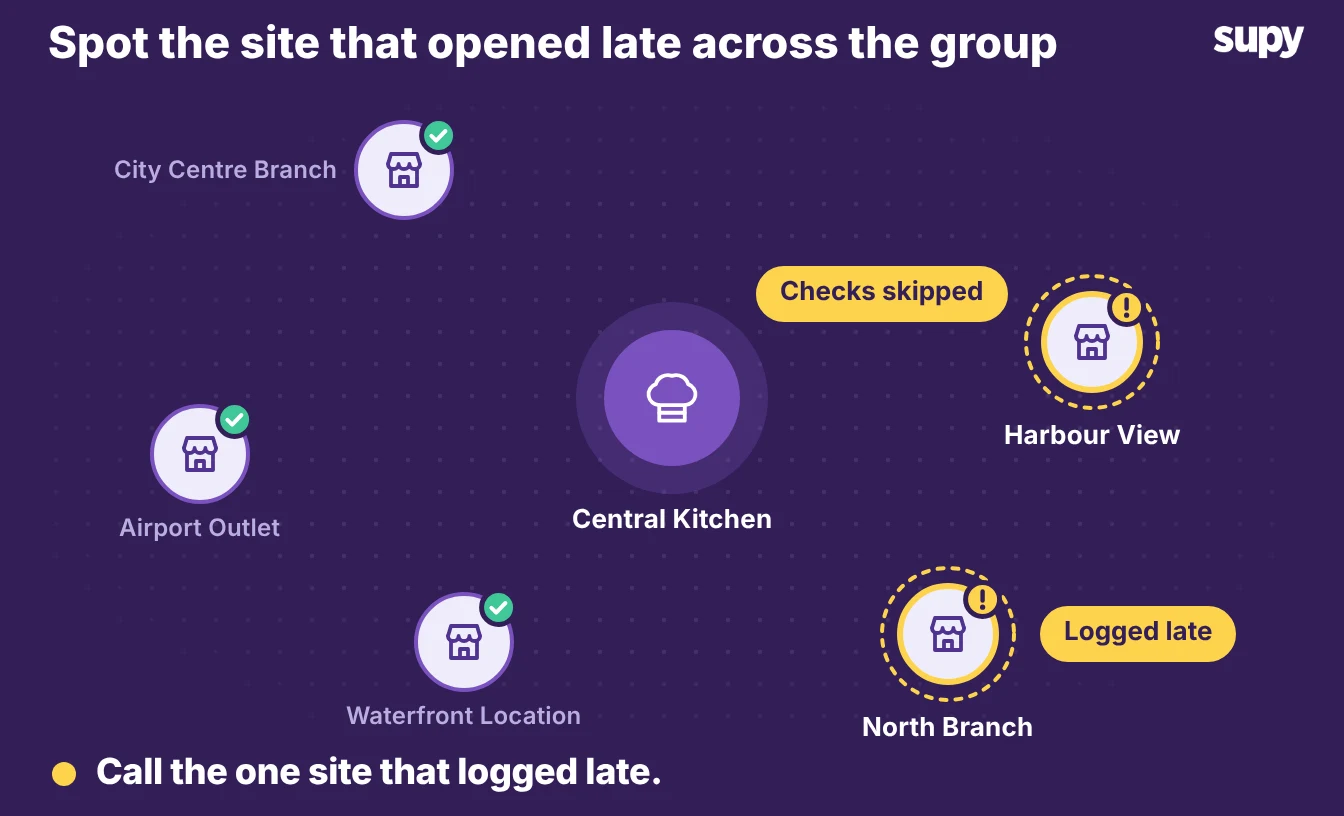
Five sites around a central kitchen, three opened on time and two flagged for logging late or skipping checks.

One opening standard across every site

In a group the risk is not one weak checklist. It is five different ones, each written by whoever opened that week. A shared opening standard means every branch runs the same checks in the same order, so the records line up when you compare them or hand them to an inspector.

OpeningWithout a shared standardWith one standard
The checksEach branch writes its own listEvery branch runs the same list
ProofPaper sheets end up in a drawerRecords are timestamped and kept together
An inspectionYou hunt for the right folderYou show the opening log for any date
A new siteIt starts from scratchIt opens to the group standard on day one

Run one test tomorrow on your busiest branch's opening checklist, and check two things:

  • The time it was submitted. If the checklist arrived after the doors opened, the checks it records happened during service.
  • Proof it was done on the floor. If you cannot show the checks happened on site, the list records activity you cannot stand behind.

Fix whichever you cannot answer first. For a branch-level version of this routine, see our cafe opening and closing checklist.
Book a Demo with Supy - restaurant opening checklist

Ready to optimize your restaurant operations?

Blog

Our operational insights

Allergen data in sync across every site
Inventory

Food Label Regulations UK: What Cafes and Restaurants Must Print

Inventory

Restaurant Audit Checklist: What Area Managers Should Check on a Visit

Inventory

Introducing Supy's Platform : The Data-Driven Back-of-House Solution for Hospitality Businesses

Your questions 
answered

Everything you need to know about Supy — from setup to integrations, pricing, and daily use. If it’s not covered here, just ask.

What should be on a restaurant opening checklist?
+
A restaurant opening checklist covers four areas: the kitchen, the fridges and freezers, the front of house and the bar. In the kitchen, check cold-holding temperatures, date labels and stock rotation, and that equipment is up to temperature. Front of house, check the dining room is clean, tills are floated and allergen information is current. At the bar, check draught lines, cellar temperature and stock against par. Across the whole site, confirm fire exits are clear and first aid points are in place. Record each check so you have proof it was done, not just a tick.
Who is responsible for completing the opening checklist?
+
The opening manager or shift lead on site is responsible for completing the checklist, because the checks only count if the person doing them is standing in front of the fridge, the line and the dining room. In a group, the area or operations manager owns the standard: they set which checks every branch runs and review that each site submitted its checklist on time. Splitting it this way keeps one person accountable at the site each morning, and one person accountable for the group's standard. Name both roles in your opening procedure so nobody assumes someone else did it.
How long should a restaurant opening checklist take?
+
A restaurant opening checklist usually takes about half an hour, depending on the size of the site and how much the closing shift left ready. The point is not speed but timing: the checks must be finished before the doors open, not during the first hour of service. If your checklist regularly runs long, look at what the close leaves undone, because an open problem is often a skipped close. Build enough time into the opening shift that the team can do the checks properly, log them, and still greet the first guest on time.
Why do opening checklists get completed late?
+
Opening checklists get completed late for two reasons, and both hide the same problem. The first is that the checklist is submitted after the doors open, so the checks it records happened during service rather than before it. The second is that it gets filled in away from the site, from a phone on the way to work, so a signed sheet proves someone had the sheet rather than that the checks happened. Catch both by recording the time and the place each checklist is submitted. A checklist logged late or off site is a prompt to call that branch, not a record to file.
Should a restaurant opening checklist be on paper or digital?
+
A digital opening checklist is easier to trust than a paper one, mainly because it can record when and where each check was submitted. Paper works for a single site with an owner who opens most days, but it falls down across a group: the sheets end up in a drawer, nobody sees a missed check until it matters, and there is no proof a check happened on site. A digital checklist timestamps each submission and shows every branch on one view, so a manager can see which sites opened cleanly and which need a call. Whichever you use, keep the completed records together so you can produce them for an inspection.
How does an opening checklist help with a health inspection?
+
An opening checklist is evidence. Inspectors often ask an operator to show that they did what they said they would do, so a completed, dated checklist is the record that answers that question. It shows the fridge temperatures you logged, the cleaning you signed off and the allergen information you confirmed, each with a time and a date. Keep the records together and easy to pull up by date, because hunting through a folder mid-inspection looks worse than having no system at all. Always confirm the specific requirements for your area with your local food safety authority before you rely on a checklist alone.
How do you keep one opening standard across multiple sites?
+
You keep one opening standard by giving every site the same checklist, in the same order, and reviewing that each branch submits it on time. Different sites writing their own lists is the usual reason records do not line up when you compare them. Set the standard once, train each opening manager on it, and make a new site open to that standard from its first day. Then review submissions as a group rather than site by site, so you spend your morning on the one branch that logged late instead of ringing all of them. A shared standard is what turns separate routines into something you can compare.

Ready to transform your operations?

Join 3500+ restaurant operators cutting costs, streamlining operations and making smarter decisions with Supy.