Restaurant Invoice Template: The Lines to Check on Every Supplier Bill
What a supplier invoice to a restaurant should show
A supplier invoice to a restaurant names the supplier, carries a unique number, and shows the date and payment terms. Each line names the item, its quantity and its agreed unit price, with a total that adds up. Check those lines when the delivery arrives, and you catch an overcharge before you pay it. Treat this as a template for the supplier invoices a restaurant receives: what every line should say, where they go wrong, and how to process them without retyping.
This is the invoice a restaurant receives from a supplier, not a template for billing your own customers. Use it as a field guide: read each line on the bill against what you ordered and what arrived.
| Line on the invoice | What it should show | What to check |
|---|---|---|
| Supplier and invoice number | A supplier you ordered from, with a unique number | The number is not one you have already paid |
| Date and payment terms | The invoice date and when payment is due | The due date fits the terms you agreed |
| Item, quantity and unit | Each item, how many, and the unit you buy in | Each line matches the delivery note |
| Unit price | The price per unit for each item | Each price matches your agreed price list |
| Line total | Quantity times unit price | The multiplication is correct |
| Tax and invoice total | The tax and the amount owed | The lines, tax and total add up |
The lines that go wrong on supplier invoices
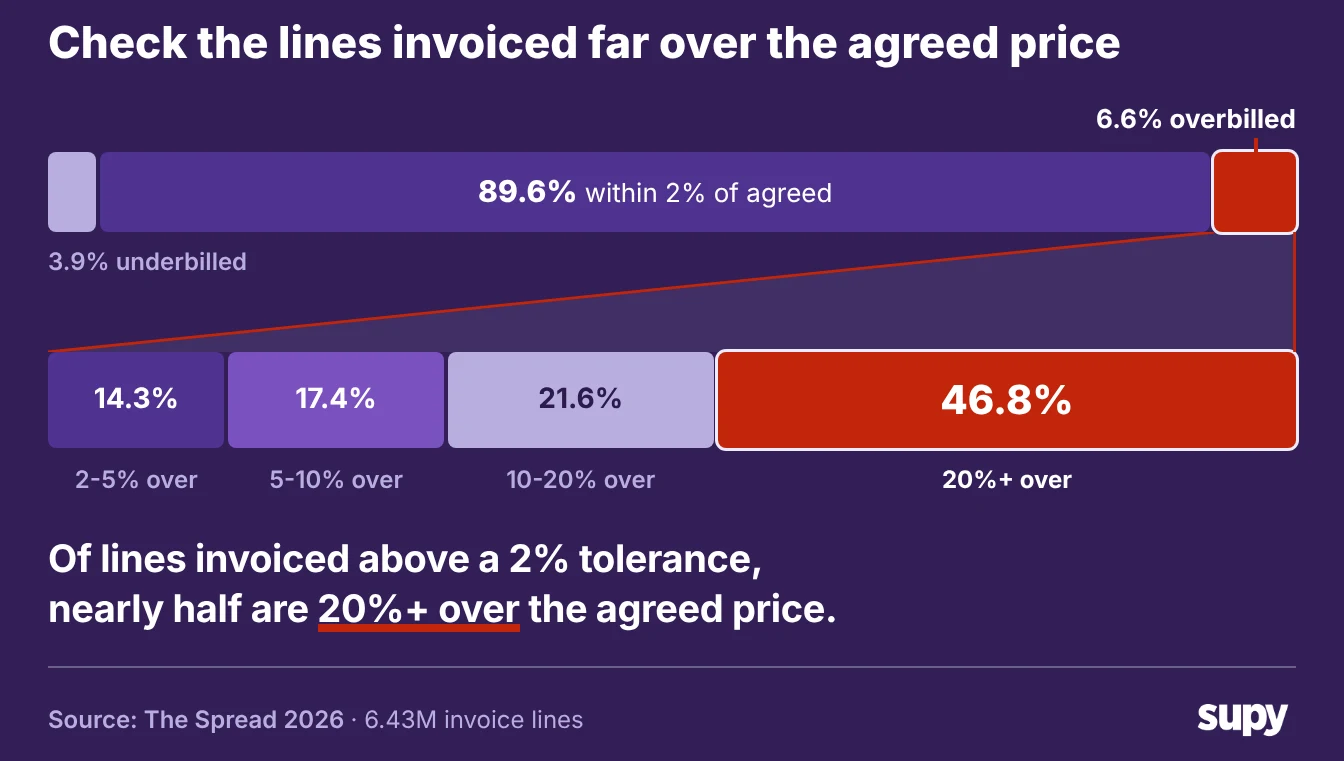
Most invoice lines are fine. Across 6.43 million lines, 89.6% sit within 2% of the agreed price, from The Spread. The problem is the lines that are wrong, because when a line is overbilled it is often badly overbilled.
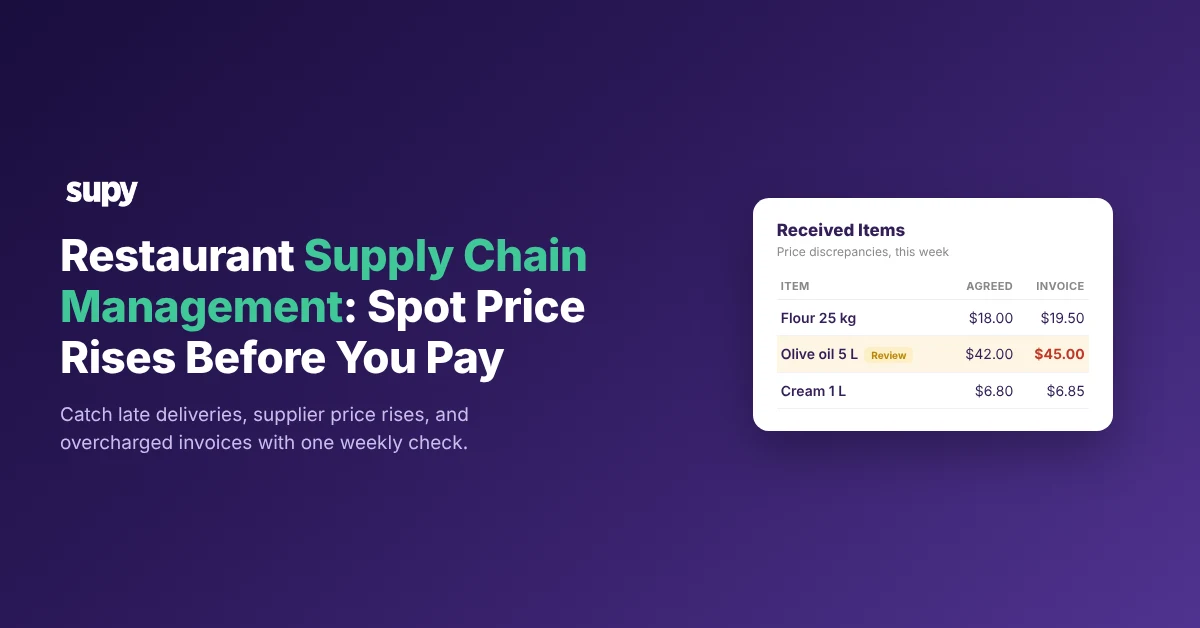
Nearly half of overbilled lines, 46.8%, are 20% or more over the agreed price (The Spread, 2026). A gap just means the numbers differ, not that the supplier made an error, so check the line before you dispute it. The lines worth your attention are not the few pennies here and there, but the handful billed far above what you agreed.
Four lines go wrong most often:
- Price above the agreed list. The unit price is higher than the price you agreed when you ordered.
- Quantity above the delivery. The invoice bills more than the delivery note or the scale shows.
- Wrong unit of measure. The bill charges per kilogram for an item you buy by the case, or the other way round.
- A credit note never raised. A short or rejected delivery was never credited, so you pay for stock you did not get.
Checking the invoice against the order and the delivery
Before you pay a line, match it across three records:
- The purchase order. What you asked the supplier for, at the price you agreed.
- The delivery note. What actually arrived at the door, by weight or count.
- The invoice. What the supplier is charging you for.
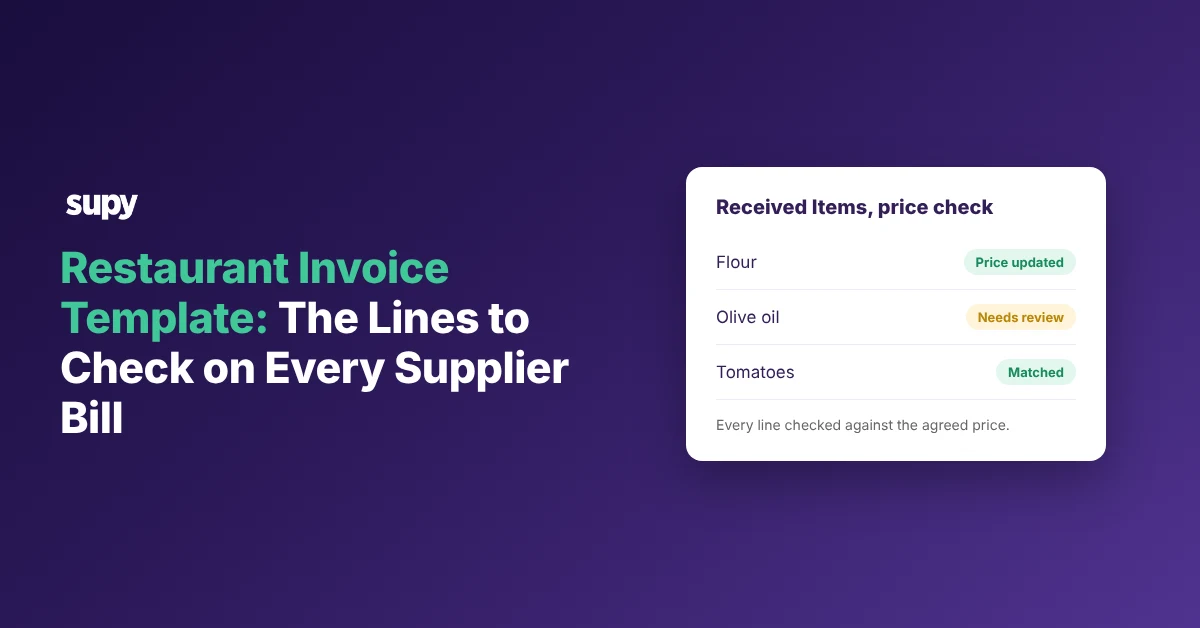
When all three agree on the item, the quantity and the price, the line is safe to pay. When they disagree, you have found the problem before the money leaves, which is the whole point of the check.
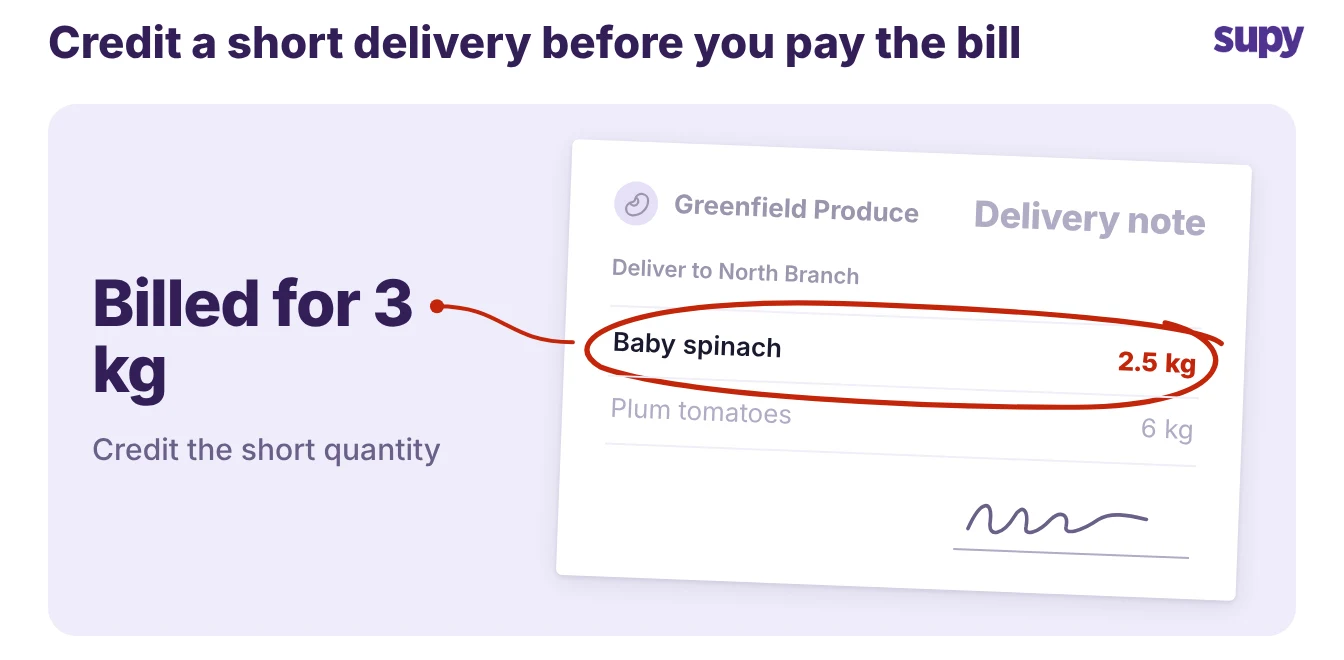
They most often disagree on quantity. One operator regularly orders produce at 3 kg and takes delivery of 2.5 kg, so the invoice, the order and the scale each show a different amount. Weigh the delivery, record what actually arrived, and bill against that.
Run the match at receiving, while the delivery is in front of you. If you are still buying and receiving on paper, read how a restaurant group runs procurement across sites first. The checks here need the order and the delivery recorded, not remembered.
Chasing credit notes before you pay
Raise the credit note at receiving, not at month end. When a delivery is short, a price is wrong, or an item is rejected, ask for the credit note while the driver is still there. A supplier accepts a same-day correction far more readily than one chased three weeks later.
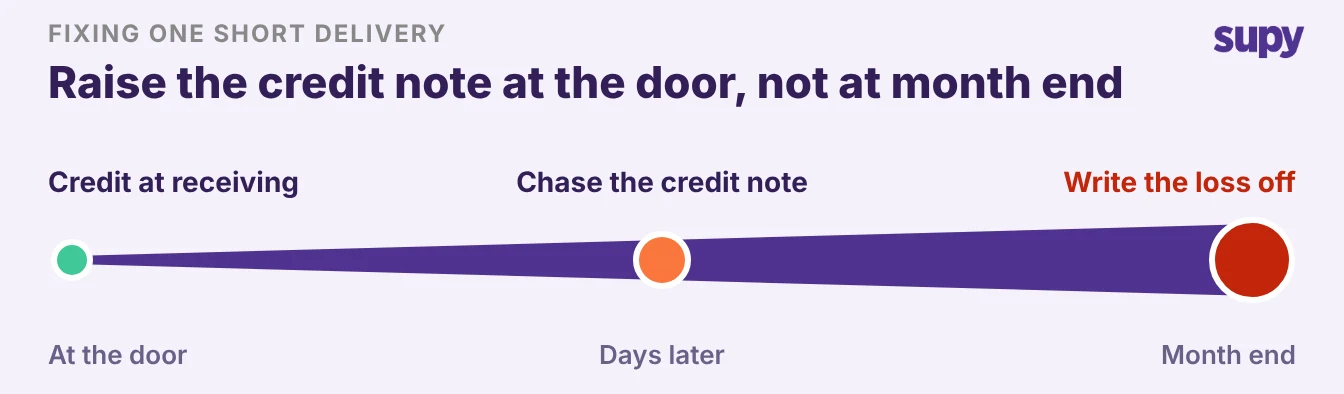
Hold payment on the disputed line until the supplier sends the credit note. Pay the lines that are right, and flag the line that is wrong. Settle before the credit note clears, and you pay for a short delivery and never get that money back.
Note the invoice number, the line, and the amount owed back when you flag it. A credit note that points at the original bill is easy for both sides to match later, and it clears far faster than a vague request for money back.
Processing supplier invoices without retyping them
Stop typing invoices by hand, and the errors above stop multiplying. One operations director came back from time away to 19 supplier invoices and spent over two hours reconciling them one at a time.
In many markets, most supplier invoices still arrive handwritten. Teams retype them through paper, then a spreadsheet, then the back office, and lose a line at every step.
Supy's invoice receiving takes a different route:
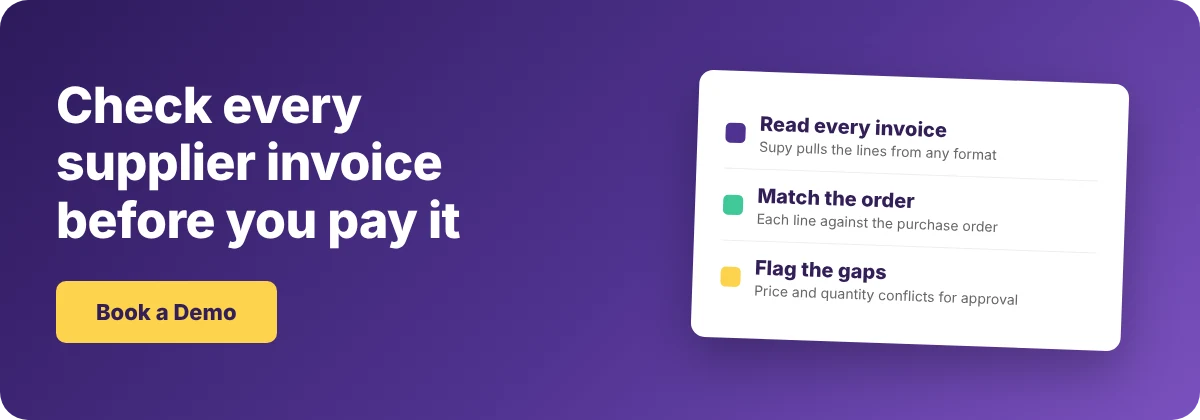
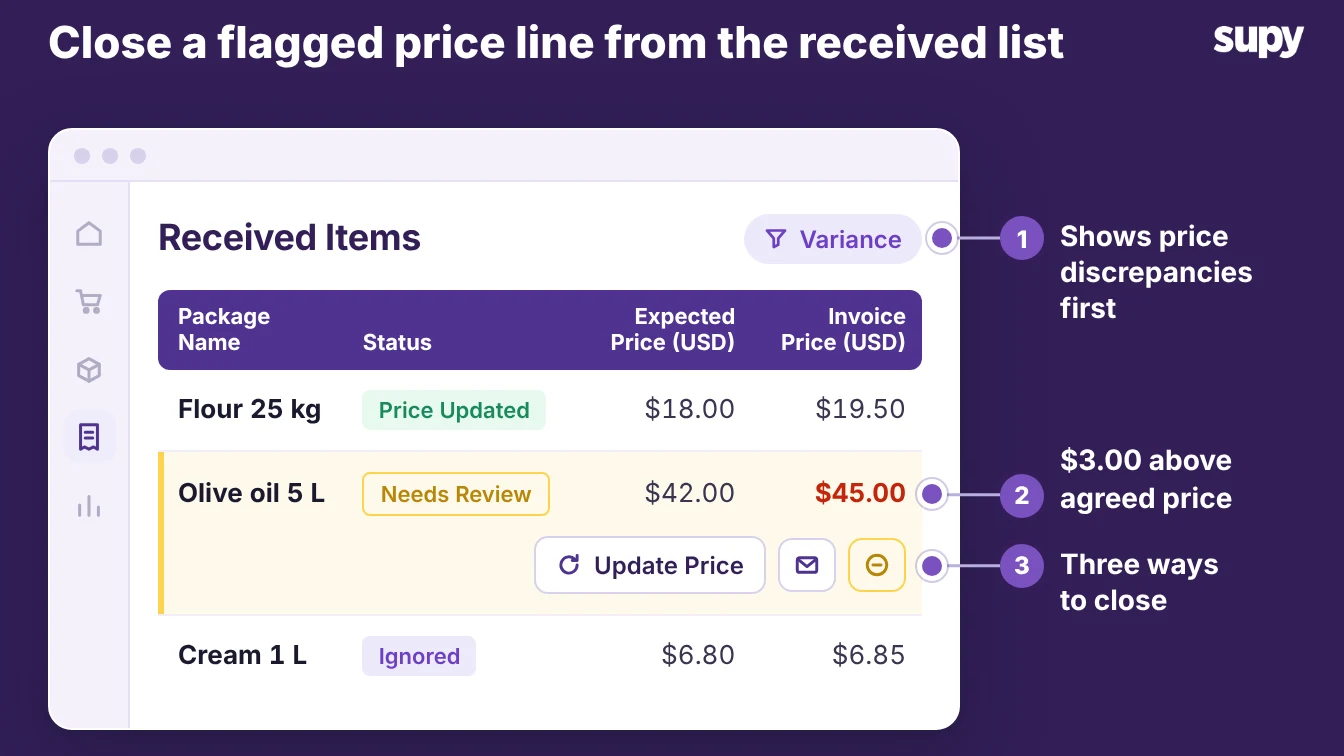
- Read. Suppliers email their invoices to an inbox for each restaurant, and Supy reads every field, whatever format the bill arrives in.
- Match. It matches each invoice to the purchase order and flags any price or quantity conflict for approval before stock and accounts update.
- Credit. A credit note for an over or incorrect charge carries its own audit trail.
Start with one week of supplier invoices. Run every line against the order and the delivery, raise a credit note on anything that misses, and pay only what matches. That one week shows which suppliers overcharge, and it builds the habit that keeps every bill after it honest.