Inventory

Bar Checklist: Opening, Closing and Stock Checks for a Restaurant Bar
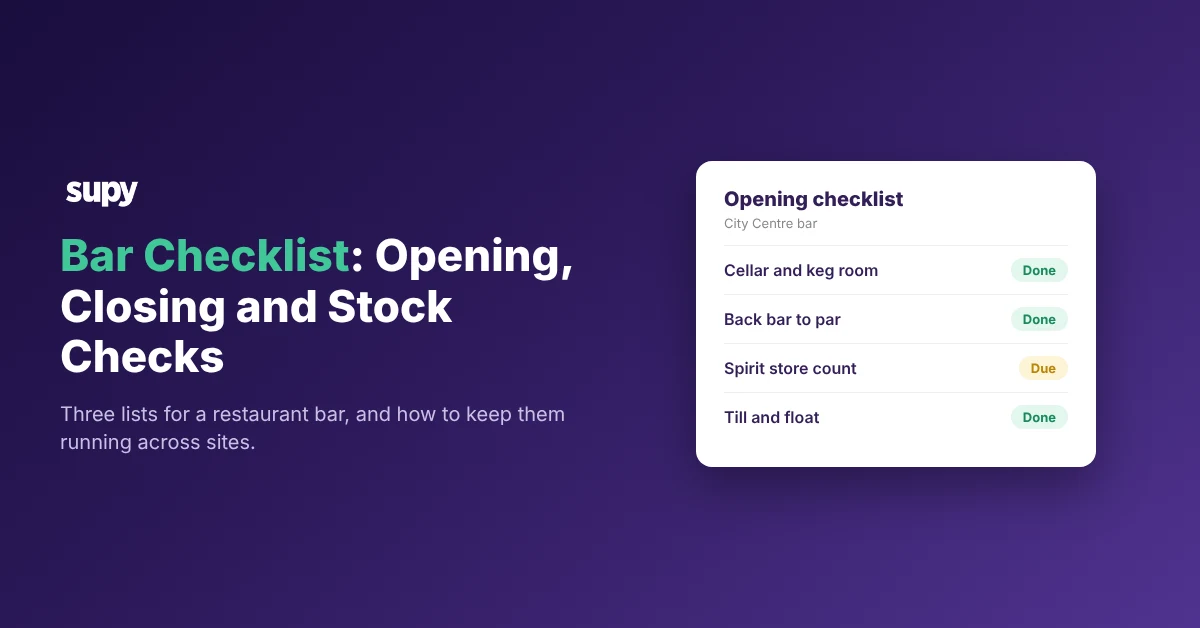
The bar opening checklist

A bar checklist is three short lists your team works through: opening, closing, and a stock count organised by storage area. The opening list gets the bar ready to trade. It confirms nothing is flat, missing or out of date before the first order. This article gives all three lists as tables you can copy, then shows how to keep them running across several venues.

Work the opening list in a fixed order so a new starter can run it.

AreaOpening check
Cellar or keg roomConnect the gas and CO2, turn the kegs on, check the lines pull clear
Back barRestock the spirits, mixers and garnishes to par
Cool roomCheck beer, wine and soft drinks are at temperature and in date
Spirit storeConfirm the high-value bottles match last night's close
Service areaClean the glassware, fill the ice wells, lay out the tools
Till and floatCount and agree the float, open the till, check prices are current

The bar closing checklist

Close is when stock goes missing and counts slip, so the closing list protects both the cash and the stock. Work it in the same order every night, so a late finish never costs you a step.

AreaClosing check
Cash and tillRun the Z-report, set the float aside, lock the takings away
High-value spiritsCount the premium bottles against the sheet
Cellar or keg roomTurn the gas off, clean or cap the lines, log the empties
Cool roomShut the doors, log the temperature, leave nothing out to spoil
WasteWrite down the breakages and spillage by area
SecurityEmpty the tills, lock the back doors, set the alarm

Bar stock checks by storage area

Count the bar by storage area, not as one long list, so each counter owns a space and no shelf gets missed. Counting by area also shows whether the back bar is back to par after a weekend. Give wine its own template, because a busy bar adds 10 to 20 new wine lines a month.

If you'd rather not work par out by hand, the free par level calculator does it for every item on your sheet from your usage, delivery days and supplier lead times.

Storage areaWhat to count
Back barOpen and sealed spirits, mixers, garnishes
Spirit storeSealed premium bottles, by brand
Cellar or keg roomKegs as full, part or empty, plus gas cylinders
Cool roomBeer, wine and soft drinks by line
Wine (own template)Each wine line counted on its own

For more on pulling a bar count together, see our guide to bar inventory software.

Why bar counts lapse, and how to keep them going

Bar counts lapse for two plain reasons, paper and a single scanner.

  • Paper doubles the work. One pub and casual dining group wrote counts on paper, then typed them in again. That cost about 4 hours per bar and kitchen each cycle, so the count was the first job to drop on a busy week.
  • One scanner is a single point of failure. Another pubs group stopped its weekly count the week its handheld scanner broke, and its daily wastage sheets went untracked across the bars, spirit room, cool room and keg room.

Counting more often keeps your records more accurate. Groups counting more than weekly keep records about 3x more accurate than those counting under 8 times a year, 76.2% against 24.5% on count day, in The Spread.

Keep counts going by making them short and shared:

  • Count by area. Two or three people can then work at once, each owning a storage space.
  • Count from a phone. A broken scanner cannot stop a count that runs on the devices people already carry.
  • Check variance at close. Compare the count against the system the moment it closes, not days later.

Supy's stock counting follows shelf order and merges several counters into one count. It shows variance against the system straight away, which the vendor states cuts counting time by more than 50%.
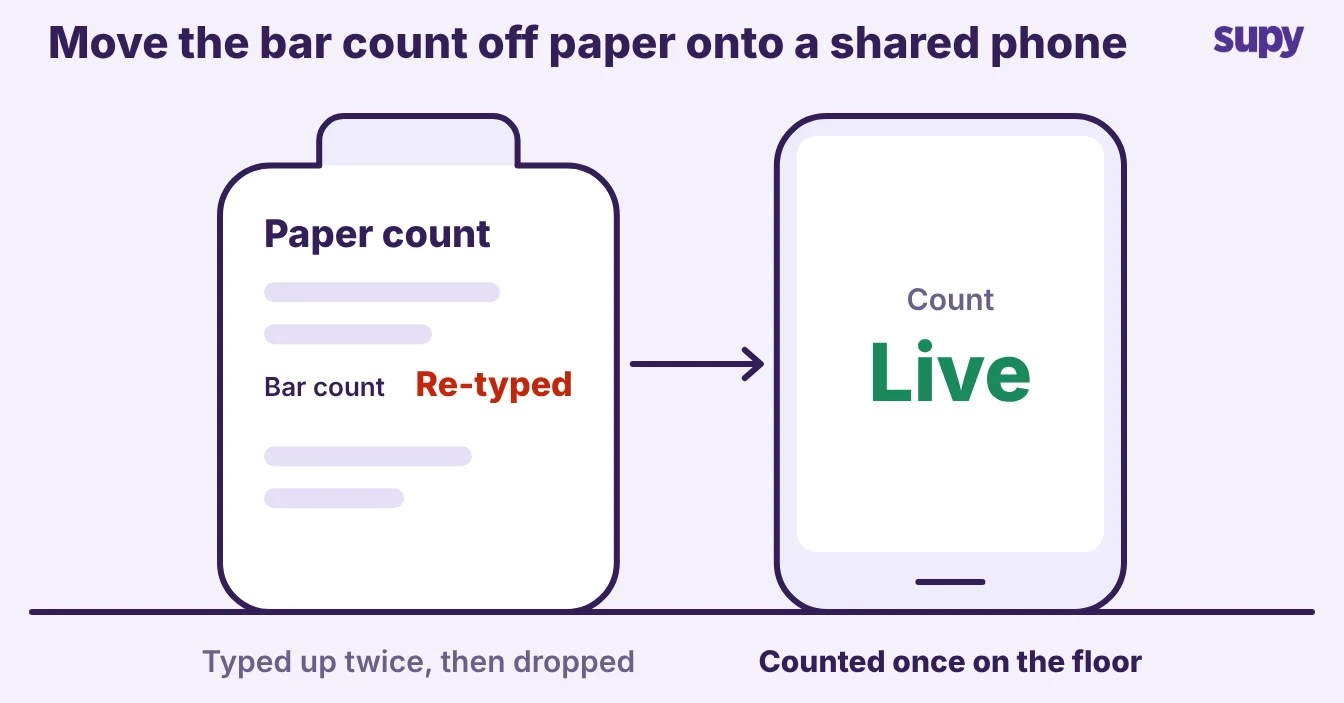
A paper bar count re-typed by hand next to a live count on a shared phone

Running bar checks across several venues

Across several venues the risk is not that checks are hard, it is that every bar ends up running its own version. Give each site one template per role and shift, so area managers can compare like with like.

The part you can compare live today is the stock count. A count stays a draft until someone submits it, so an area manager can see which sites are still in draft and which have submitted. A bar that always counts late then shows up against the others, not at month end.
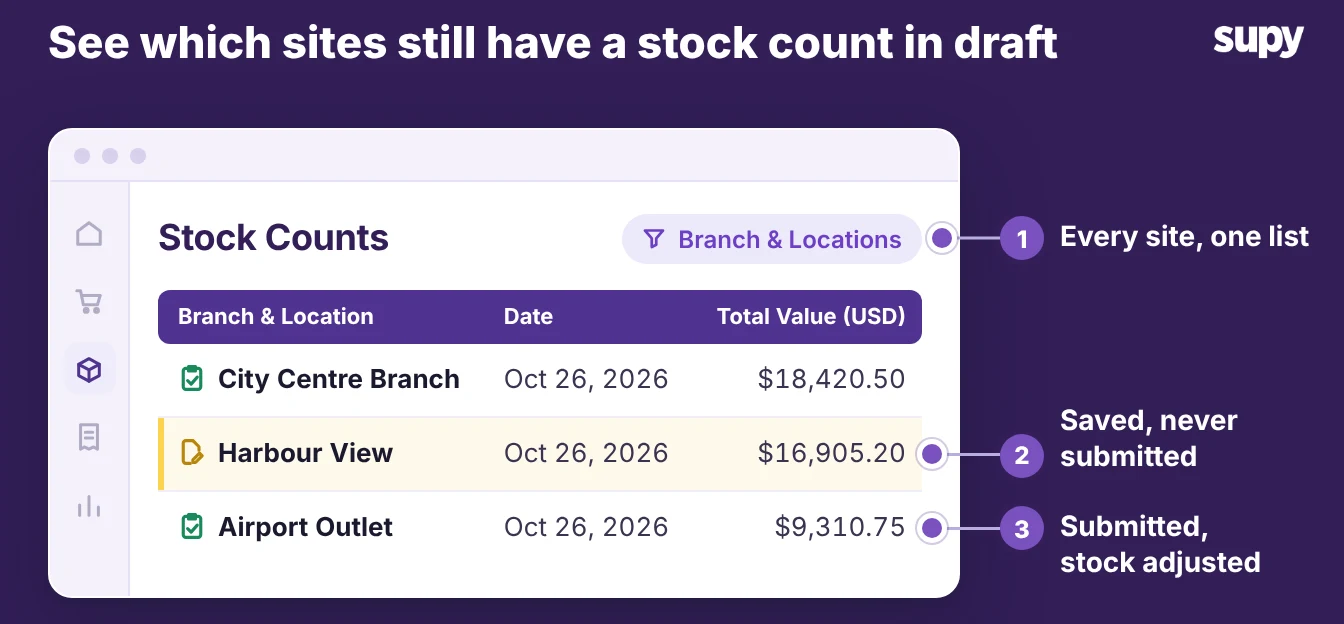
The Supy Stock Counts screen showing which sites have submitted their count and which are still in draft

Pick which of the three lists your bar runs today. If closing is your weak spot, start there, because close is where stock and cash go missing.

Supy's Checklists product is coming soon. It will assign a list by role and flag a failed check for follow-up. Until then, run these tables on a shared tablet, and keep the stock count live.
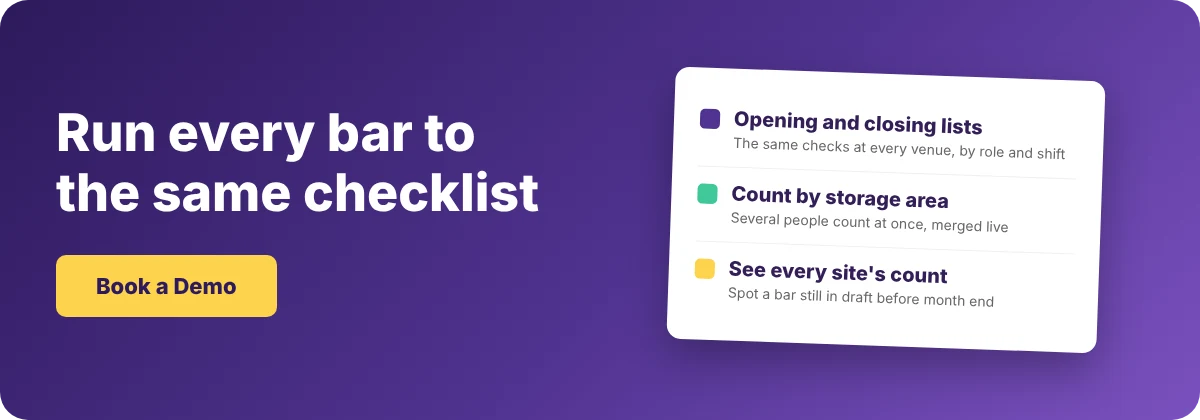
Book a Demo with Supy - bar checklists and stock counts across every venue

Ready to optimize your restaurant operations?

Blog

Our operational insights

Inventory

F&B Management Across Sites: Control Cost, Stock and Supplier Spend

Inventory

F&B Management: Controlling Cost, Stock and Suppliers Across Sites

Inventory

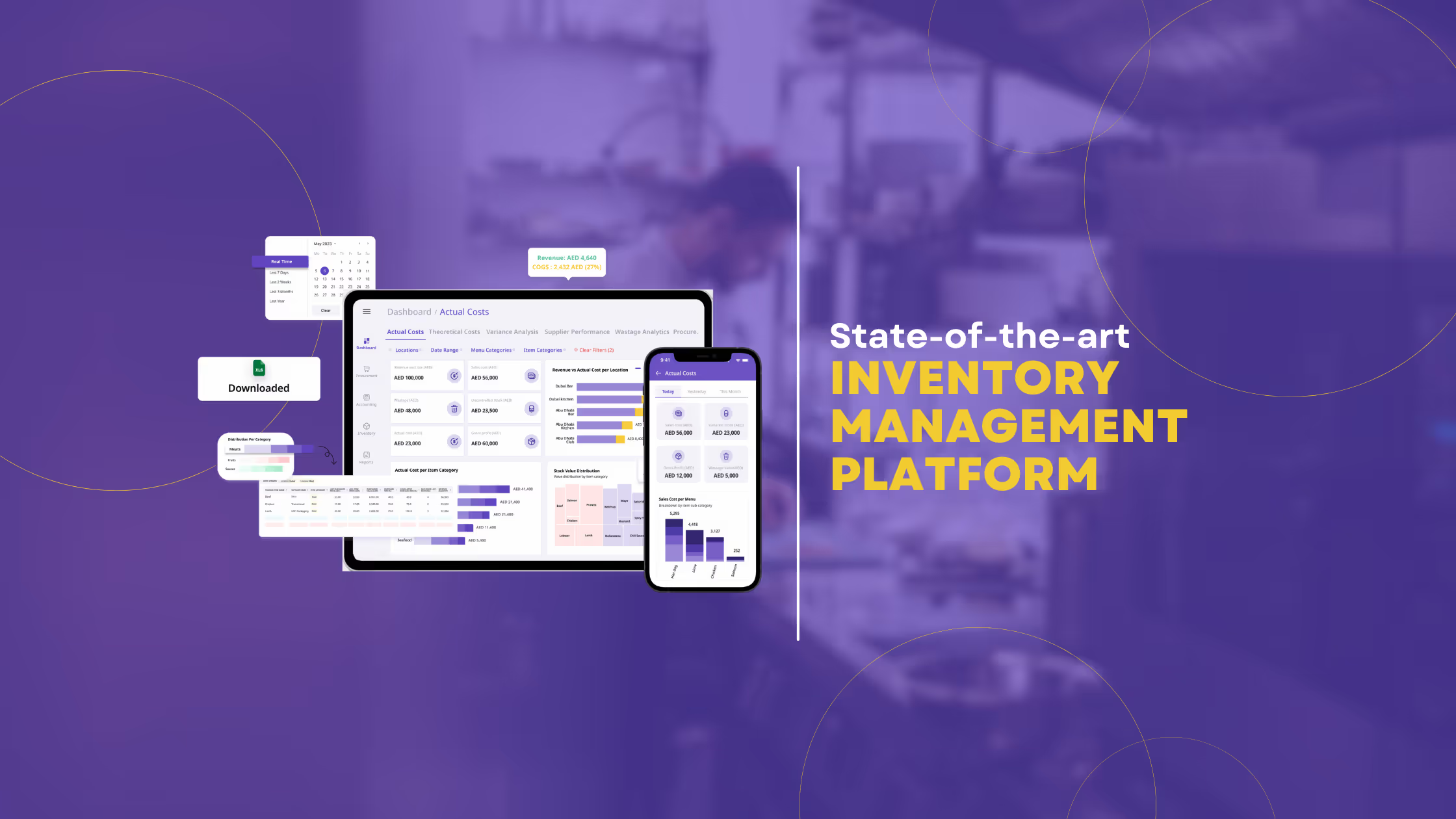
Introducing Supy's Platform : The Data-Driven Back-of-House Solution for Hospitality Businesses

Your questions 
answered

Everything you need to know about Supy — from setup to integrations, pricing, and daily use. If it’s not covered here, just ask.

What should a bar opening checklist include?
+
A bar opening checklist should cover the cellar, the back bar and the till before service starts. Check that gas and CO2 are connected and the lines pull clear, that spirits, mixers and garnishes are restocked to par, and that beer and wine are at temperature and in date. Confirm high-value bottles match last night's close, glassware is clean and the ice wells are filled. Count the float, agree it, and check the till prices are current. Work the list in a fixed order so a new starter can run it without missing a step.
What should a bar closing checklist include?
+
A bar closing checklist should protect the cash and the stock at the end of the night. Run the Z-report, set the float aside, reconcile the takings and lock them away. Count premium spirits against the sheet while the bar is quiet, turn the gas off, clean or cap the lines and log the empties. Shut the cool room, log its temperature and leave nothing out to spoil. Write down breakages and spillage by area so waste has a cause. Finish with security: empty the tills, lock the back doors and set the alarm.
How often should a bar do a stock count?
+
Count the bar at least weekly, and more often for high-value spirits and wine. Frequency is what keeps records accurate, because the more often you count, the closer your records stay to what is actually on the shelf. Weekly counting suits most back bars, but a venue losing margin on spirits should count those lines more often than the slow movers. Count by storage area so two or three people can work at once, which makes a weekly count quick enough to keep. The point is a steady rhythm your team can hold, not a one-off blitz that lapses the week someone is off.
How do you stop bar stock going missing at close?
+
Stop bar stock going missing at close by counting the high-value lines before anyone leaves. Count premium spirits against the sheet every night, not just on the weekly count, because close is when a bottle is easiest to lose and hardest to trace. Lock the spirit store, log waste and breakages by area so every loss has a cause, and reconcile the till before the cash leaves the floor. A closing routine that counts the expensive stock and records waste turns a vague monthly variance into a short list you can act on the next morning.
Why do bar counts become inaccurate?
+
Bar counts become inaccurate when they live on paper or depend on one device. Writing counts down and typing them in again doubles the work, so the count is the first job to drop on a busy week. One group spent about 4 hours per bar and kitchen each cycle on that double entry. A single handheld scanner is a single point of failure, so when it breaks the count stops. Counts also drift when every area goes on one long sheet and shelves get skipped. Counting by area, from a phone, with variance checked straight away keeps the numbers honest.
How do you run the same bar checklist across several venues?
+
Run the same bar checklist across several venues by giving every site one template per role and shift, not letting each bar build its own. A shared template lets an area manager compare completion like with like, so a bar that submits late or skips the spirit count shows up against the others instead of surfacing at month end. Keep the stock count on the same areas and templates everywhere, so a group count rolls up cleanly. Put the lists on a shared tablet rather than a personal phone, which also stops checks being ticked off from home.
Can you run a bar checklist on paper?
+
Yes, you can run a bar checklist on paper, and many bars still do, but it costs you time and accuracy. Paper counts have to be typed up before they are any use, which doubles the work and invites copying mistakes. Paper also makes it hard to see whether every site did the check, or whether a count was really done on the floor. A shared tablet keeps the same lists, shows an area manager what each venue completed, and feeds the stock count straight through. Start on paper if you must, then move the count to a device first.

Ready to transform your operations?

Join 3500+ restaurant operators cutting costs, streamlining operations and making smarter decisions with Supy.