.jpeg)

Die Rolle von Restaurant-Warenwirtschaftssoftware im Mehrfilialbetrieb
Laut diesem Artikel von Restaurant365 ist eine häufige Herausforderung für alle wachsenden Restaurants, wie sie die Qualität und Konsistenz ihrer Leistungen im Zuge ihres Wachstums aufrechterhalten können. Dies ist schwer zu erreichen, wenn keine standardisierten Verfahren zur Aufrechterhaltung der Lagerbestände und kein effektives Kommunikationssystem vorhanden sind.
Jede Filiale eines Restaurants hat individuelle Bestandsanforderungen, die sich aus den spezifischen regionalen Vorlieben der Kunden und der Verfügbarkeit der Lieferanten ergeben, was den Beschaffungsprozess verkompliziert. Darüber hinaus kann die Echtzeitverfolgung des Bestands ohne ein zentralisiertes System sehr aufwändig sein. Dies führt zu Überbeständen oder Fehlbeständen, die beide die Gewinnmargen eines Restaurants aufzehren können.
- Die Schwierigkeit der Bestandsverwaltung über mehrere Filialen
- Zentralisierte Bestandskontrolle über mehrere Standorte
- Beschaffung und Nachbestellung von Waren
- Verbesserte Datengenauigkeit und Berichterstattung
- Erfolgreiche Kundenreferenz
- Kostensenkung und Abfallminimierung
- Standardisierung von Prozessen und Konsistenz im Service
- Multi-Standort-Compliance und Lebensmittelsicherheitsverfolgung
- Skalierbarkeit und Flexibilität für wachsende Ketten
- Fazit
- Über Supy
Mit einem zentralisierten Warenwirtschaftssystem können Sie Konsistenz wahren, Verschwendung reduzieren und die Kosten von Mehrstandort-Restaurantbetrieben optimieren. Durch die Implementierung eines einheitlichen Systems können Restaurants ihre Rezepte und Abläufe standardisieren und so an jedem ihrer Standorte das gleiche Kundenerlebnis gewährleisten. Ein solches System erleichtert auch die präzise Bedarfsprognose und -planung und minimiert das Risiko von Überbestellungen oder Unterbeständen bei Zutaten. Darüber hinaus verbessert die zentrale Kontrolle die Kommunikation und Koordination zwischen den Filialen, optimiert die Abläufe und reduziert die Fehlerwahrscheinlichkeit.
Supys Restaurant-Warenwirtschaftssoftware wurde entwickelt, um all diese Herausforderungen direkt anzugehen. In diesem Artikel werden wir einige der wichtigsten Softwarefunktionen vorstellen, die Supy zu einem großartigen Tool für Mehrstandort-Restaurants machen.
1. Die Komplexität des Mehrfilialbetrieb-Managements meistern
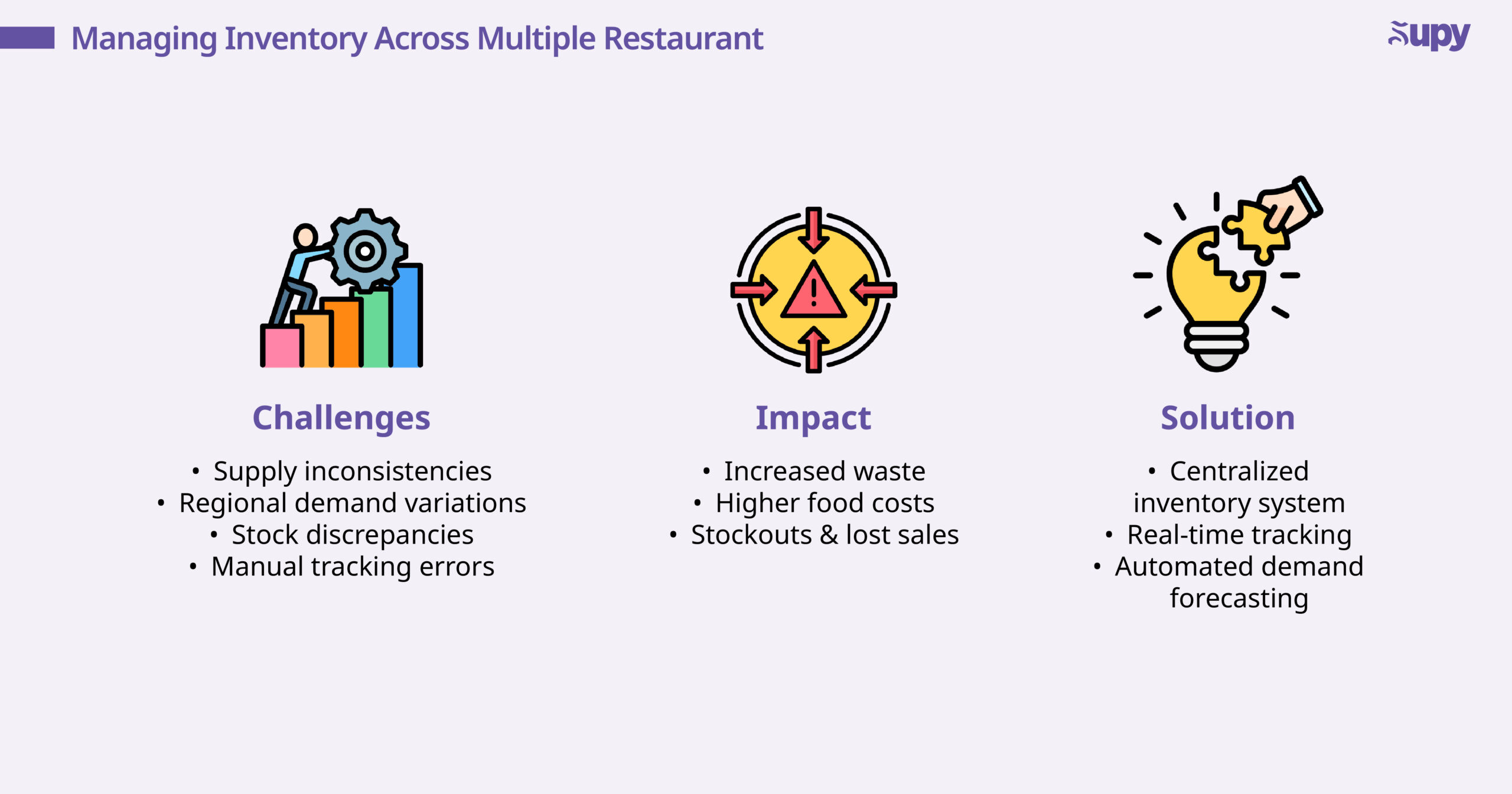
Die Bestandsverwaltung über mehrere Restaurantstandorte hinweg kann häufig einzigartige Herausforderungen mit sich bringen, die die Effizienz und Rentabilität Ihres Unternehmens erheblich beeinflussen können. So entstehen beispielsweise nicht selten Lieferinkonsistenzen aufgrund unterschiedlicher Lieferantenzuverlässigkeit. Regionale Nachfrageunterschiede können ebenfalls zu Warenüberschüssen oder -engpässen führen. Bestandsabweichungen dieser Art können noch häufiger auftreten, wenn jeder Standort seine eigenen Bestandsaufzeichnungen führt. Es ist kein Geheimnis, dass manuelle Erfassungssysteme diese Probleme weiter verschärfen können, da sie zeitaufwändig und fehleranfällig sind. Damit wird eine Echtzeit-Bestandsüberwachung nahezu unmöglich.
Die Auswirkungen einer schlechten Bestandsverfolgung sind erheblich und wirken sich direkt auf die Lebensmittelkosten, Verschwendung und die Gesamtrentabilität aus. Überkäufe aufgrund falscher Zählungen oder ungenauer Bedarfsprognosen können zu einem Überbestand führen, der verdirbt, bevor er verbraucht werden kann. Dies kann zu erheblichen Verlusten führen. Andererseits kann ein zu geringer Einkauf zu Fehlbeständen führen, was die Fähigkeit des Unternehmens beeinträchtigt, die Kundennachfrage zu erfüllen, und Kunden sogar vertreiben kann! Darüber hinaus kann ein schlechtes Warenwirtschaftssystem zu Verschwendung beitragen. All diese Faktoren zusammen gefährden die Gewinnmargen Ihres Unternehmens und können die finanzielle Gesundheit eines Restaurants bedrohen!
Traditionelle Bestandsmethoden wie manuelle Zählungen und papierbasierte Aufzeichnungen sind eindeutig unzureichend. Ihnen fehlt die Skalierbarkeit und die Echtzeitdaten, die Mehrstandort-Restaurantketten für eine effektive Standortverwaltung benötigen. Die Implementierung eines zentralisierten Warenwirtschaftssystems ist die Antwort auf all diese Fragen.
2. Zentralisierte Bestandskontrolle über mehrere Standorte
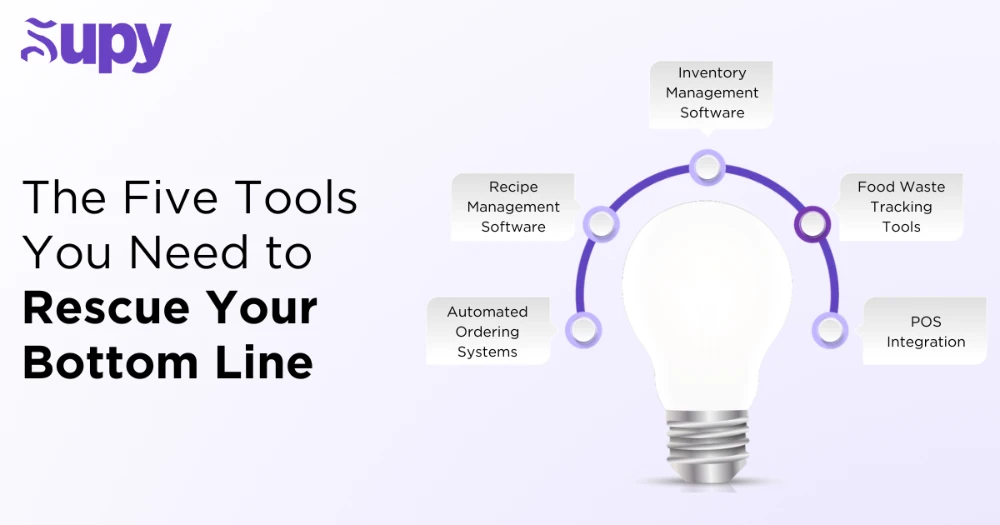
Supys zentralisierte Dashboards spielen eine Schlüsselrolle dabei, Mehrstandort-Restaurants bei der Echtzeit-Verfolgung ihrer Lagerbestände zu unterstützen. Unsere Funktionen zur Echtzeit-Berichte und Controlling sind darauf ausgelegt, historische Daten zu nutzen, um den zukünftigen Bedarf Ihres Restaurants vorherzusagen und Ihnen zu helfen, Ihre Abläufe zu planen und Zutaten präziser zu bestellen. Durch die Analyse vergangener Verkaufs- und Verbrauchsmuster können diese Tools einschätzen, wie viel von jeder Zutat für einen bestimmten Zeitraum benötigt wird. Diese Voraussicht ermöglicht es Restaurants, ihre Bestellungen vorausschauend anzupassen und so das Risiko von Fehlbeständen oder Überschüssen zu reduzieren, die zu Verschwendung führen könnten.
Hier erfahren Sie, warum Sie Supys zentralisiertes Warenwirtschaftssystem implementieren sollten:
- Fehlbestände und Überbestellungen vermeiden: Mit Echtzeit-Tracking-Funktionen überwacht Supy Ihre Lagerbestände kontinuierlich und reduziert das Risiko, dass wichtige Artikel ausgehen oder verderbliche Waren überbestellt werden.
- Konsistenz über alle Standorte: Die Installation eines einheitlichen Systems wie unseres stellt sicher, dass jede Restaurantfiliale die gleichen standardisierten Bestandspraktiken einhält. So können Sie die Produktverfügbarkeit und -qualität in der gesamten Restaurantkette aufrechterhalten.
Verbesserte Entscheidungsfindung: Der Zugang zu genauen und aktuellen Bestandsdaten ermöglicht es Managern, fundierte Kaufentscheidungen zu treffen und effektive Kosteneinsparungsstrategien umzusetzen.
3. Beschaffung und Nachbestellung von Waren
Mit Supys KI-gestütztem Warennachbestellungssystem können Restaurants nach Mindestbestand bestellen und Überbestände oder Fehlbestände für immer vermeiden. Durch die Analyse aktueller und historischer Verkaufsdaten kann Supy Ihnen helfen, den zukünftigen Bedarf präzise zu prognostizieren und so optimale Lagerbestände an jedem Ihrer Standorte zu gewährleisten.
Ein zentrales Merkmal von Supys Beschaffungssystem ist die Einrichtung automatischer Nachbestellungspunkte. Durch die Bewertung Ihres durchschnittlichen Tagesbedarfs und der Lieferzeiten der Lieferanten kann Supy präzise Nachbestellungsschwellen für jeden Artikel berechnen. Wenn die Lagerbestände diese vordefinierten Punkte erreichen, generiert Supy automatisch Bestellungen und optimiert so den Beschaffungsprozess. Sie können sogar personalisierte Niedrigbestandswarnungen einrichten, die Sie mit nur einem Klick benachrichtigen, wenn Artikel unter den Mindestbestand fallen!
Supy erleichtert Ihnen auch die Bestellung von Zutaten, indem Artikel verschiedener Lieferanten unter ihren Kategorien zusammengefasst werden. Wenn Sie regelmäßig Artikel vom selben Lieferanten beziehen, können Sie diesen sogar als bevorzugten Lieferanten festlegen, um den Einkaufsprozess zu beschleunigen! Besser geht es kaum für eine reibungslosere Supply Chain!
4. Verbesserte Datengenauigkeit und Berichterstattung
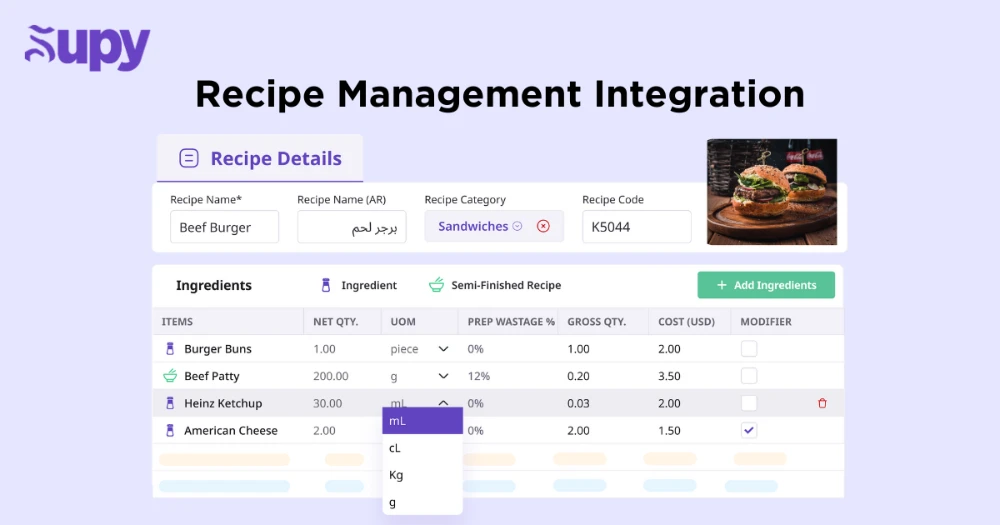
Ein zentralisiertes Datenerfassungs- und Berichtssystem ist zu einem wesentlichen Bestandteil des Mehrfilialbetrieb-Managements geworden. Diese Systeme ermöglichen es dem Management, Verbrauchsmuster, Verschwendung und Kostenentwicklungen an jedem Standort einfach zu verfolgen. Durch die Konsolidierung der Daten in einer einzigen Plattform können Restaurantmanager fundierte Entscheidungen treffen, um Betriebseffizienz und Rentabilität zu steigern.
Mit Supys Echtzeit-Controlling-Dashboard erhalten Manager sofortigen Zugang zu Lagerbeständen, Verkaufsmustern und finanziellen Ergebnissen, um die strategische Planung zu unterstützen.
5. Erfolgreiche Kundenreferenz
Den positiven Einfluss von Supys Berichte- und Controlling-Funktionen auf die Entscheidungsfindung können wir am Beispiel eines seiner Kunden, FIYA, sehen. FIYAs Inhaber Hattem Mattar stand vor einer großen Herausforderung: Sein Personal verbrachte zu viel Zeit mit manuellen Aufgaben, ohne klare Einblicke in die Lieferantenleistung oder Einkaufsmuster des Restaurants zu haben. Sein Team war überwältigt und verbrachte monatlich über 100 Stunden mit Rechnungsstellung, Inventur und Schwunderfassung.
Durch die Zentralisierung von FIYAs Supply Chain und den Zugang des Teams zu genauen Echtzeit-Daten gelang es Supy, das Unternehmen zu transformieren. Durch die Implementierung von Supys zentralisiertem Warenwirtschaftssystem erzielte FIYA eine 24 %-Reduzierung seines Wareneinsatzes (COGS) durch optimierte Verträge, Rezepte und Lieferantenverwaltung. Mit einer täglichen Rechnungs- und Schwunderfassungsfunktion sparte Supy dem Restaurant monatlich über 100 Stunden manuelle Arbeit und hielt gleichzeitig eine Bestandsabweichung von 3 % aufrecht.
Dieses Beispiel zeigt, wie Supys zentralisierte Berichte und Echtzeit-Controlling-Funktionen erhebliche Verbesserungen in der physischen Bestandsverwaltung Ihres Restaurants bewirken können. „Wir haben Unstimmigkeiten entdeckt, sobald wir Supy eingeschaltet haben", sagte Hattem. „Es war wie Magie!"
6. Kostensenkung und Abfallminimierung
Laut diesem Restaurant.orgArtikel setzen immer mehr Gastronomen auf Technologie, um ihre Bestände zu verwalten und Betriebskosten zu senken. Bei Supy sind wir überzeugt, dass die Integration unseres Warenwirtschaftsprozesses mit Menu-Engineering-Tools der beste Weg ist, Ihre Preisgestaltung zu optimieren und Rentabilität zu steigern. Durch die Analyse ihrer Zutaten können Restaurants fundierte Entscheidungen über ihr Speisenangebot, ihre Preisstrategien und Kostenkontrolle treffen.
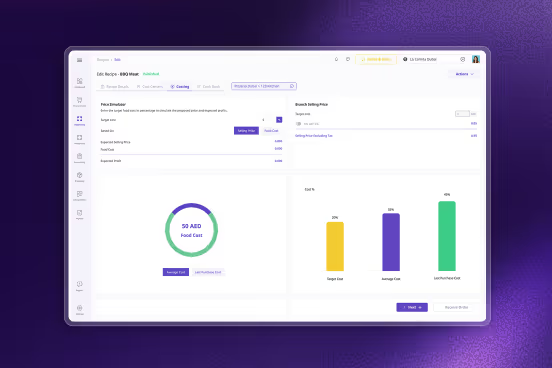
Supys intelligentes Warenwirtschaftssystem beinhaltet einen Echtzeit-Zutaten-Kostenverfolgungstool, das die Berechnung eines präzisen Wareneinsatz-Prozentsatzes so einfach wie nie macht! Dieser detaillierte Einblick ermöglicht es Gastronomen, ihre Preise auf Basis ihrer tatsächlichen Produktionskosten anzupassen. Mit Supys Menu-Engineering-Tool stellen Sie sicher, dass jedes Gericht seinen Beitrag zu Ihren Gesamtmargen leistet.
Eine Möglichkeit hierfür ist die Identifizierung Ihrer margenstarken und margenschwachen Artikel. Durch die Kategorisierung von Menüpunkten nach Rentabilität und Beliebtheit können Restaurants Gerichte wie „Stars" (hohe Rentabilität und hohe Beliebtheit) und „Dogs" (niedrige Rentabilität und niedrige Beliebtheit) klassifizieren. Diese Klassifizierung leitet Entscheidungen darüber, welche Artikel beworben, neu bepreist oder möglicherweise aus der Speisekarte gestrichen werden sollen. Wenn beispielsweise ein bestimmtes Gericht beliebt ist, aber eine niedrige Gewinnmarge aufweist, kann Supys System Sie dazu auffordern, Ihre Zutatenkosten und/oder Portionsgrößen zu überprüfen, um die Rentabilität zu verbessern. Umgekehrt können margenstarke Artikel, die weniger beliebt sind, strategisch beworben werden, um den Absatz zu steigern.
7. Standardisierung von Prozessen und Konsistenz im Service
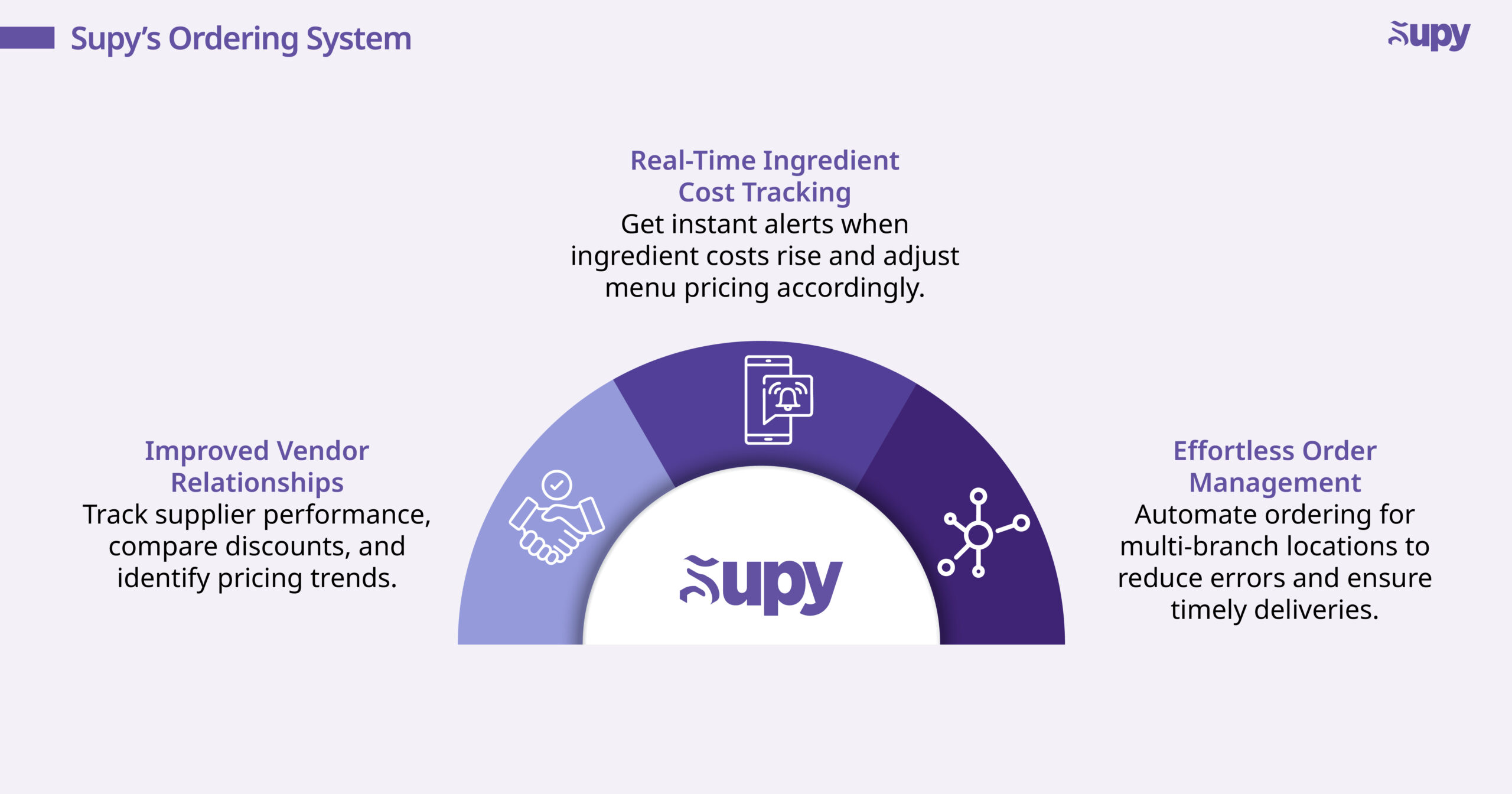
Die Supy-App bietet eine zentrale Plattform für Restaurantinhaber und -manager, um Bestellungen von mehreren Lieferanten zu verwalten. Dies hilft dabei, den Beschaffungsprozess Ihres Restaurants zu standardisieren, Fehler zu reduzieren und die Effizienz zu steigern. Durch die Automatisierung dieser wiederkehrenden Aufgaben gewährleistet Supy die rechtzeitige und präzise Lieferung von Bestellungen an jeden Mehrfilialstandort. Hier sind einige der Vorteile von Supys automatisiertem Bestellsystem:
- Verbesserte Lieferantenbeziehungen: Ein oft unterschätzter, aber wesentlicher Teil des Unternehmensaufbaus ist die Pflege von Beziehungen! Supy macht es einfach zu verfolgen, wie jeder Ihrer Lieferanten mit Ihnen umgeht. Gewährt Ihnen einer einen höheren Rabatt als ein anderer? Jetzt können Sie prüfen, welche Lieferanten ihre Preise erhöhen oder Ihnen gelegentlich einen Bonus bieten, um den besten Lieferanten für Ihr Geld zu finden!
- Rezeptrentabilität mit Echtzeit-Zutatenkostenverfolgung überwachen: Durch die Verknüpfung und regelmäßige Aktualisierung der Kosten Ihrer Zutaten für jedes Rezept sendet Supy Restaurantmanagern sofort Warnungen, wenn Preise steigen und die Rentabilität Ihrer Speisekarte beeinflussen. Mit nur einem Klick können Restaurantleiter die Rezepte identifizieren, die ihre Aufmerksamkeit benötigen, und sicherstellen, dass Sie nie mit Verlust verkaufen!
8. Multi-Standort-Compliance und Lebensmittelsicherheitsverfolgung
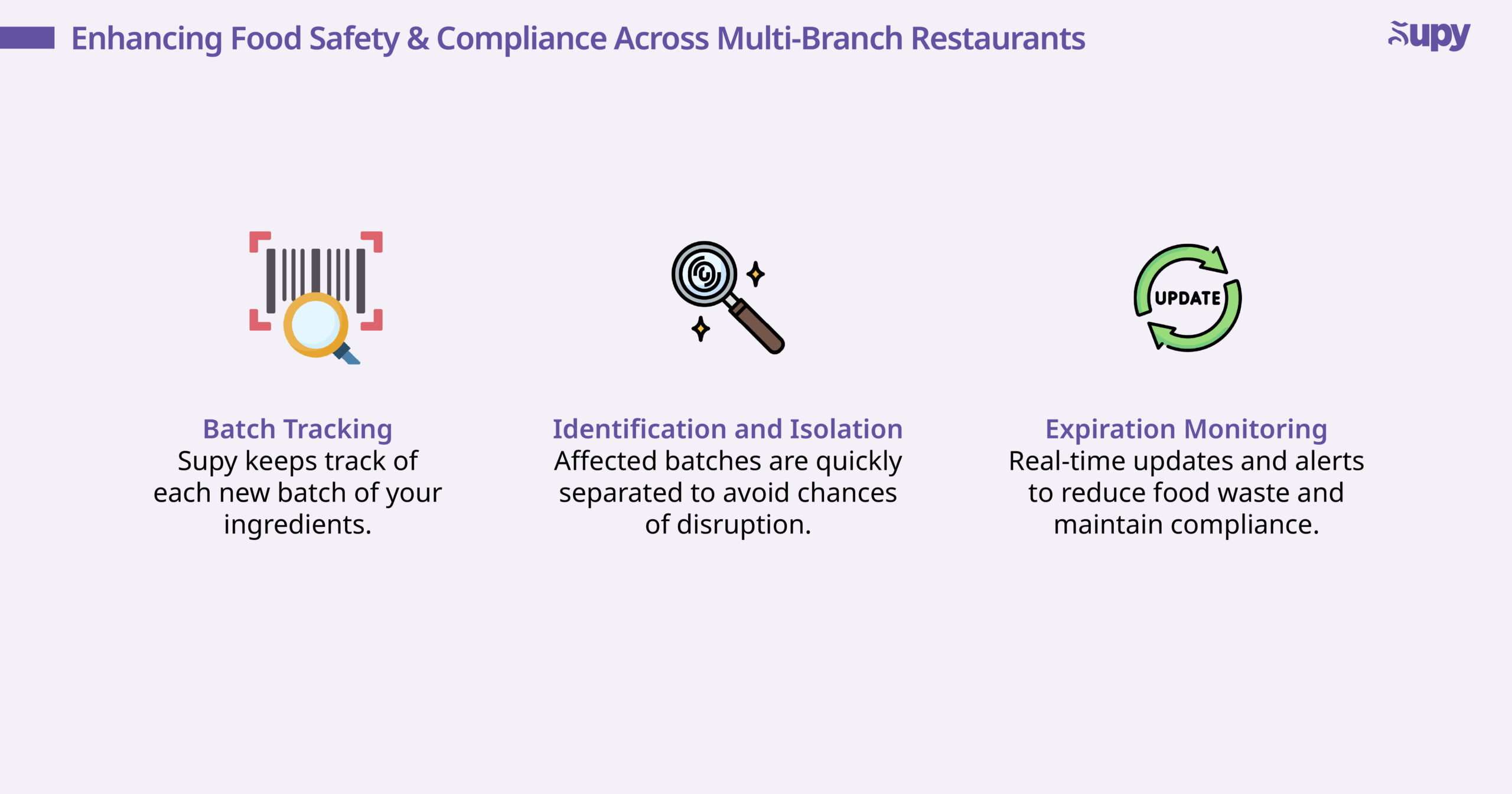
Um Markenintegrität und Kundenvertrauen zu wahren, ist es wichtig, Lebensmittelsicherheit und gesetzliche Compliance über mehrere Restaurantstandorte hinweg sicherzustellen. Mit Echtzeit-Rückverfolgbarkeit können Restaurants den Weg ihrer Zutaten vom Lieferanten bis zum Kunden überwachen. Diese gründliche Überwachung ermöglicht schnelle Reaktionen bei möglichen Sicherheitsproblemen.
So kann Supy die Lebensmittelsicherheit und Compliance im Mehrfilialbetrieb verbessern:
- Chargenverfolgung: Supy verfolgt jede neue Charge Ihrer Zutaten. Diese Funktion stellt sicher, dass im Falle eines Qualitätsproblems betroffene Chargen schnell identifiziert und isoliert werden können, wodurch das Risiko potenzieller Störungen minimiert wird.
Ablaufdatumüberwachung: Supys Warenwirtschaftssoftware liefert kontinuierlich Echtzeit-Updates zu Lagerbeständen und Ablaufdaten, sodass das Personal ältere Bestände vorrangig verwenden und Lebensmittelverschwendung reduzieren kann. Automatische Warnungen benachrichtigen Manager über bevorstehende Ablaufdaten und gewährleisten so, dass verderbliche Artikel rechtzeitig verbraucht werden.
9. Skalierbarkeit und Flexibilität für wachsende Ketten
Ein weiterer Vorteil der Einführung von Supy ist die nahtlose Integration mit mehreren führenden Point-of-Sale (POS)-Systemen und Buchhaltungssoftware. Diese einfache Integration ermöglicht die Echtzeit-Datensynchronisation über verschiedene Unternehmensbereiche hinweg und macht die Skalierung so einfach wie 1, 2, 3!
- Integration mit POS-Systemen: Durch die Anbindung an POS-Systeme kann Supy Ihre Lagerbestände automatisch auf Basis Ihrer Verkaufs- und Transaktionsdaten anpassen. Diese Echtzeit-Verfolgung gewährleistet eine präzise Bestandsverwaltung und verhindert Engpässe und Überbestände. Sie erleichtert auch die Kalkulation der Rezeptkosten, indem jeder Menüpunkt in seine Komponentenkosten aufgeschlüsselt wird, was eine detaillierte Zutatenverfolgung ermöglicht.
- Integration mit Buchhaltungssoftware: Supys Integration mit mehreren führenden Buchhaltungssystemen ist darauf ausgelegt, den Fluss Ihrer Finanzdaten zu automatisieren und Fehler bei der manuellen Dateneingabe zu reduzieren. Diese Art der Automatisierung führt häufig zu einer verbesserten Finanzberichterstattung und bietet einen umfassenden Überblick über Ausgaben und Gewinne. Sie optimiert auch den Rechnungserfassungsprozess und erhöht die Genauigkeit der Bestands- und Lieferantenzahlungsverwaltung.
Supys umfassende Integrationsmöglichkeiten bieten Restaurantketten somit die notwendigen Tools zur Optimierung ihrer Abläufe, zur Sicherstellung finanzieller Genauigkeit und zur Erzielung eines nachhaltigen Wachstums.
10. Fazit
Supys automatisierte Warenwirtschaftssoftware bietet Restaurantketten, die ihren Bestand über mehrere Standorte hinweg optimieren möchten, eine leistungsstarke Suite integrierter Lösungen. Mit dem Fokus auf zentrale Kontrolle, Automatisierung und Echtzeit-Analysen kann Supy Ihnen helfen, einige der häufigsten betrieblichen Herausforderungen von Mehrstandort-Restaurants zu bewältigen.
Wenn Sie bereit sind zu sehen, wie Supy Ihren Restaurantbetrieb aus erster Hand transformieren kann, laden wir Sie ein, noch heute eine kostenlose Demo mit uns zu buchen. Entdecken Sie, wie Supys Restaurant-Warenwirtschaftssoftware erhebliche Kosteneinsparungen erzielen, die Bestandsgenauigkeit verbessern und die Betriebseffizienz über alle Ihre Filialen hinweg optimieren kann. Melden Sie sich für unseren Newsletter an, Mehr erfahren!
Sie können auch hier klicken, um mehr über Restaurant-Warenwirtschaftssoftware zu erfahren.
11. Über Supy
Supy ist die beste Restaurant-Warenwirtschaftssoftware-Plattform, die auf Mehrfilialrestaurants und Franchisebetriebe zugeschnitten ist. Mit Funktionen wie Echtzeit-Bestandsverfolgung, intelligenten Beschaffungssystemen und fortschrittlichem Controlling hilft Supy Restaurants, ihre verschiedenen Anforderungen effektiv zu verwalten und bietet die Tools, die Restaurants benötigen, um in einer dynamischen Branche erfolgreich zu sein.
Für die neuesten Experteneinblicke laden Sie Supys E-Book herunter: Der ultimative Leitfaden zur Senkung der Lebensmittelkosten in Mehrfilialbetrieben & Enterprise-Restaurants.
Bereit, mehr zu erfahren? Demo buchen Sie noch heute mit Supy und machen Sie den ersten Schritt in Richtung einer optimierten, profitablen Zukunft.