
المخزون

ضوابط جرد المخزون للمطاعم متعددة المواقع: من يقدم ويقفل ويصحح الجرد قبل وصوله إلى التقارير الخاصة بالتباين
Stock count controls trusted across every site - Supy

ما الذي يجعل جرد المخزون موثوقاً فعلاً

ضوابط جرد المخزون هي الأذونات وقواعد سير العمل التي تحدد من يحق له العد، ومن يمكنه تقديم جرد المخزون وقفله، وما يمكن تغييره بعد التقديم. بالنسبة إلى مجموعة متعددة المواقع، هذه الضوابط هي ما يحول مجموعة من عمليات جرد الفروع المنفصلة إلى تقرير تباين واحد تستطيع المجموعة بأكملها التصرف بناءً عليه، لأن كل رقم فيه سُجّل وفق القواعد ذاتها.

الضبط الصحيح لهذه الضوابط يعود بمردود كبير. ينتهي جرد المخزون بسرعة أكبر لأن عدة أشخاص يمكنهم العمل في آن واحد، والأرقام قابلة للتحقق لأنك تعرف من أدخلها، ويعكس تقرير التباين حركة المخزون الفعلية لا تصحيحات تجري بصمت بعد الواقعة. وظيفة جرد المخزون في Supy مبنية حول هذه الضوابط، ويفيد المشغلون الذين يستخدمونها بانخفاض وقت الجرد بأكثر من 50% بمجرد اعتماد البنية المناسبة.
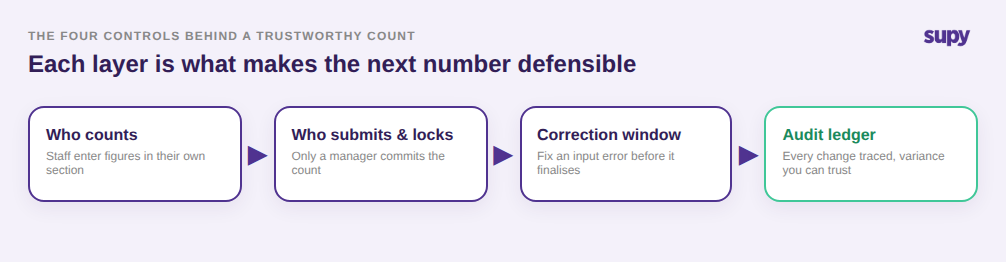
الضوابط الأربعة وراء جرد مخزون موثوق: من يعد، ومن يقدم ويقفل، ونافذة التصحيح، وسجل التدقيق

تحديد من يمكنه العد والتقديم وفتح قفل الجرد

قبل جرد المخزون التالي، حدد ما يسمح لعضو فريق الفرع بفعله وما يبقى من اختصاص مدير الفرع. تتيح لك أذونات القفل وفتح القفل المستندة إلى الأدوار في Supy الفصل بين الأمرين على الويب والجوال: يمكن للموظفين إدخال عمليات الجرد، بينما يبقى تقديم جرد المخزون وقفله وإعادة فتحه من اختصاص المدير. هذا القرار الواحد يسد أكثر الثغرات الرقابية شيوعاً التي يصفها المشغلون، وهي إمكانية أي شخص تغيير رقم معتمد دون أن يلاحظ أحد ذلك.

وصفت إحدى المجموعات متعددة المواقع افتقارها إلى أي سيطرة فعلية على المخزون في فروعها، مع جرد غير متسق، وأصناف تختفي، وعدم القدرة على رصد الخسائر الناجمة عن السرقة أو العطاء غير المصرح به للموظفين. في غياب الضوابط، كان هذا الموقع يسجل نسبة تباين تبلغ نحو 3.2% من مخزون بقيمة 21,000 دولار. الحل نادراً ما يكمن في إجراء المزيد من عمليات الجرد، بل في تحديد المسؤول عن الجرد وتطبيق ذلك في البرنامج حتى تسري القاعدة في كل فرع، لا في الفروع التي يصادف المقر الرئيسي مراقبتها فحسب.
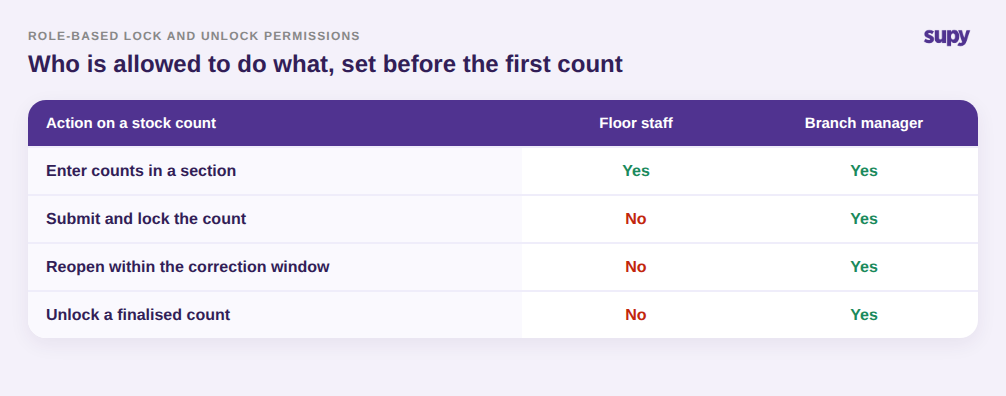
مصفوفة الأذونات: يمكن لموظفي الفرع إدخال الجرد، بينما يملك مدير الفرع وحده صلاحية التقديم والقفل وإعادة الفتح وفتح القفل

الجرد معاً دون الكتابة فوق عمل الآخرين

يمكن تقسيم جرد المخزون الواحد إلى أقسام مسماة لتتمكن عدة أشخاص من جرد مناطق مختلفة في الموقع ذاته في الوقت نفسه. يعمل كل عادّ في قسمه المقفل الخاص الذي لا يستطيع أحد آخر تعديله أثناء الجرد، وتدمج Supy الأقسام تلقائياً في جرد موحد حين ينتهي الجميع، مع الحفاظ على نسب المساهمة حتى تتمكن الإدارة من معرفة من جرد ماذا بالضبط.

بالنسبة إلى مجموعة تضم 12 موقعاً، هذا يغير اقتصاديات الجرد تغييراً جوهرياً. يمكن لثلاثة أشخاص جرد ثلاثة أقسام في موقع واحد بالتوازي بدلاً من شخص واحد يجوب الطابق بأكمله، وهو جزء كبير من انخفاض الوقت بأكثر من 50% الذي يفيد به المشغلون. ولأن كل قسم منسوب إلى صاحبه، يصبح الرقم الغريب سؤالاً يمكنك الإجابة عنه لأنك تعرف من تسأل، بدلاً من لغز يوسع التباين في صمت.
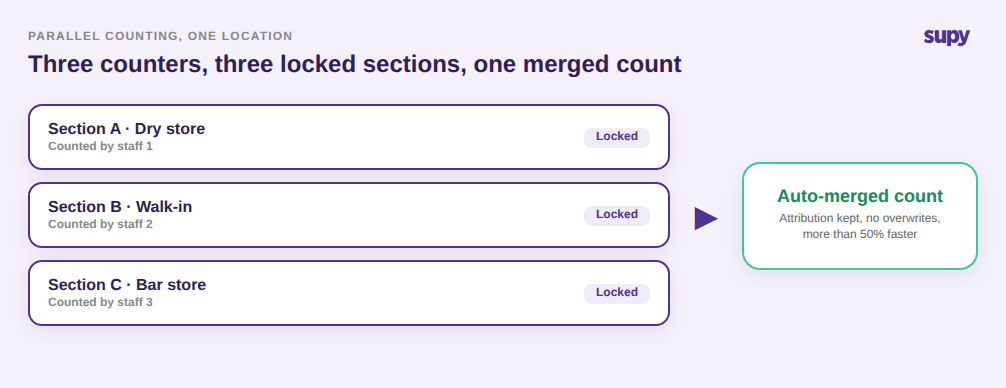
الجرد المتوازي: ثلاثة موظفين يجردون ثلاثة أقسام مقفلة تدمج تلقائياً في جرد موحد منسوب

من جرد مقفل إلى تقرير تباين يمكن التصرف بناءً عليه

تحدث أخطاء حقيقية، لذا بعد تقديم جرد المخزون تتوفر نافذة قصيرة لإعادة فتحه وتصحيح خطأ إدخال قبل إتمامه، وبعد ذلك يقفل. كل جرد للمخزون، كما هو الحال مع كل استلام بضائع ونقل وتسجيل هدر، يسجل في سجل حركة مخزون قابل للتدقيق، بحيث يكون التصحيح حدثاً قابلاً للتتبع لا مجرد كتابة فوق بيانات بصمت. عند اغلاق الجرد، تلتقط Supy آخر تكلفة وصفة لكل صنف، بحيث يظهر تقرير التباين ليس فقط فجوة الكمية بل أيضاً تأثيرها على تكلفة الغذاء لكل موقع.

هنا بالضبط تثمر الضوابط. جرد واحد مدخل بشكل خاطئ يمكنه تشويه تكلفة الوصفة بنحو 180 دولاراً ويدفع مديراً إلى ملاحقة تباين لم يكن حقيقياً. مع الجرد المضبوط، انخفضت نسبة التباين في الموقع ذاته من 3.2% إلى نحو 0.9% من المخزون، وانخفض الهدر الشهري الناجم عن السرقة والعطاء غير المصرح به والأخطاء من نحو 1,680 دولاراً إلى 470 دولاراً، ليس لأن الموظفين تغيروا بل لأن الجرد الذي يقاسون عليه بات موثوقاً أخيراً.
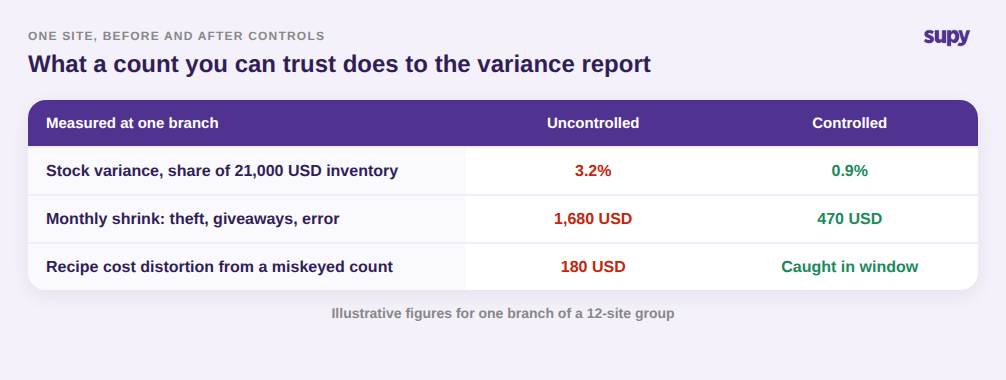
جدول المقارنة قبل وبعد: الجرد المضبوط خفض التباين من 3.2% إلى 0.9% والهدر الشهري من 1,680 دولاراً إلى 470 دولاراً في فرع واحد

إذا كنت تعد لهذا الأمر، فابدأ بقرار واحد قبل لمس أي نموذج جرد: من في كل فرع يملك صلاحية تقديم جرد المخزون وفتح قفله، ومن يحق له فقط الإدخال؟ حدد هذا الإذن أولاً، ونفذ الجرد التالي في أقسام متوازية ليكون أسرع ومنسوباً، ثم اقرأ تقرير التباين وأنت تعلم أن كل رقم فيه سجل وفق القاعدة ذاتها. هذا هو الفرق بين جرد تكتفي بأرشفته وجرد يمكنك التصرف بناءً عليه، وهي الانضباطية ذاتها التي تميز تطبيق برنامج جرد المخزون الموثوق عن جداول البيانات التي يعدلها الجميع. لمشاهدته على قائمة أصنافك الخاصة ومواقعك، احجز عرضاً توضيحياً من Supy.

احجز عرضاً توضيحياً من Supy لضوابط جرد المخزون في المطاعم متعددة المواقع

Ready to optimize your restaurant operations?

مدونة

رؤيتنا التشغيلية

Your questions 
answered

Everything you need to know about Supy — from setup to integrations, pricing, and daily use. If it’s not covered here, just ask.

What are stock count controls in a restaurant inventory system?
+

Stock count controls are the permissions and workflow rules that govern a physical count: who is allowed to enter counts, who can submit and lock a completed count, and what can be changed after submission. In a multi-site group they matter more than in a single site, because counts happen in parallel across branches and roll up into one variance report. Without controls, any user can alter a committed number and the group cannot tell which counts to trust. With them, every count is captured under the same rule, so the resulting figures are comparable and defensible across every location.

Who should be allowed to submit and lock a stock count?
+

Whoever is accountable for the count at that site, usually a branch or kitchen manager, should hold the rights to submit, lock, and reopen a count, while floor staff are limited to entering figures. Separating those two roles is the single most effective control, because it stops a committed count from being quietly changed by the same person who was measured against it. Supy applies these role-based permissions on both web and mobile, so the rule holds whether a count is finalised at a terminal or on a phone during the count itself, and it stays consistent as you add sites.

How does parallel stock counting work without people overwriting each other?
+

Parallel counting splits one location's count into named sections so several people can count different areas at the same time. Each counter works in their own locked section that no one else can edit while it is open, which prevents two people from overwriting the same items. When every section is complete, the software merges them into one consolidated count automatically and preserves attribution, so management can see who counted each section. For a group this cuts counting time sharply, because three people counting three sections finish far faster than one person walking an entire floor alone.

Can a stock count be corrected after it is submitted?
+

Yes, but under control rather than freely. After a count is submitted there is a short window to reopen it and fix a genuine input error before the count is finalised, after which it locks. The correction is written to an auditable stock-movement ledger alongside goods receipts, transfers, and wastage, so it is a traceable event rather than a silent overwrite. This matters because an uncontrolled edit made days later, with no record, is exactly what makes a variance report impossible to trust. A controlled correction window fixes real mistakes without opening the door to tampering.

Why do stock count controls matter for multi-site restaurant groups?
+

Multi-site groups compare performance across branches, so their counts have to be captured the same way everywhere or the comparison is meaningless. Controls make that possible: the same permissions decide who can submit and lock a count at every site, and the same audit ledger records every change. Operators often describe having no real control over stock across sites, with inconsistent counts and losses they cannot see. Standardising who counts and how counts are committed is what closes that gap, turning a set of separate branch numbers into one group-wide variance report leadership can actually act on.

How do stock count controls improve variance report accuracy?
+

A variance report is only as accurate as the count behind it. If counts can be edited after the fact by anyone, the report measures the edits, not the shelf. Controls fix this by locking who can commit a count and recording every correction, so the numbers reflect real stock movement. In Supy, when a count closes the latest recipe cost is captured per item, so the report shows both the quantity gap and its food-cost impact per site. That lets managers act on a specific, trustworthy figure instead of chasing a variance that a stray edit created.

Does controlling stock counts reduce shrinkage from theft or staff giveaways?
+

Indirectly but meaningfully. Controls do not stop theft on their own, but they make shrinkage visible and attributable, which is the first step to reducing it. When counts are locked, attributed, and recorded, an unexplained drop shows up cleanly in the variance report instead of hiding behind inconsistent counting. Managers can then see which site and which items are losing stock and investigate. Operators who tighten count controls typically watch unexplained losses shrink over the following months, not because staff changed, but because the count finally exposes the loss instead of absorbing it.

هل أنت مستعد لتطوير عملياتك؟

انضم إلى أكثر من 3500 مُشغلي مطاعم يخفضون التكاليف، ويبسطون العمليات، ويتخذون قرارات أكثر ذكاءً مع Supy