5 Proven Strategies to Control Food Costs in Restaurants

Food costs are one of the biggest challenges for restaurants. With tight margins, even a small increase in ingredient prices can take a big bite out of profits.
Based on the National Restaurant Association's latest report, wholesale food costs surged 7% in 2024 compared to the previous year, with some of the sharpest increases happening in the latter half of the year. Rising costs have put immense pressure on restaurant owners, making it harder to maintain profitability. Until prices stabilize, controlling food costs remains a top priority for the industry.
Cutting food costs doesn’t mean cutting quality. In our blog, we share the five golden rules of food cost control in restaurants that help reduce waste, optimize inventory, and boost efficiency in a challenging market.
- Conduct Regular Recipe Costing
- Implement Inventory Management Tools
- Optimize Supplier Relationships and Negotiate Better Deals
- Train Staff to Reduce Wastage
- Use Menu Engineering to Focus on High-Profit Items
- Get Your Food Costs Under Control Today
1. Conduct Regular Recipe Costing

Knowing exactly how much each dish costs is the foundation of effective food cost control. Recipe costing, or plate costing, helps restaurants determine the actual food cost per serving based on ingredient prices so they contribute to profitability. To maximize margins, it's essential to compare the ideal food cost (what a dish should cost) with the actual food cost (what it truly costs after accounting for waste and inefficiencies).
Tracking these numbers also helps calculate food cost percentage, a key metric that measures how much of your revenue is spent on ingredients. If the food cost percentage is too high, it signals the need for better portion control, supplier negotiations, or menu adjustments.
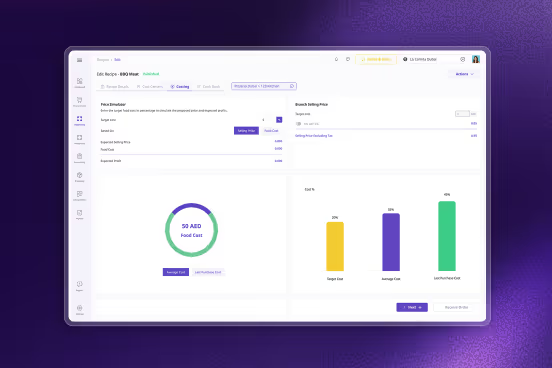
Calculating food costs allows you to identify expensive dishes, adjust pricing, and optimize portion sizes. Supy’s Food Cost Calculator makes this process easy by providing cost breakdowns, the expected selling price, and potential profit.
Here are a few ways to improve recipe costing:
- Implement portion control to avoid wastage and maintain consistency.
- Utilize recipe management software to standardize costing and track ingredient prices.
- Swap high-cost ingredients with budget-friendly alternatives without compromising quality.
2. Implement Inventory Management Tools
You cannot control food costs if you do not track and control your inventory. Monitoring food inventory, including stock-in, stock-out, and daily consumption, helps restaurants prevent over-ordering, reduce food waste, and catch inefficiencies before they hurt profits. Keeping a close eye on total food costs ensures that every ingredient is used effectively and nothing goes to waste.
Unlike manual tracking, which is slow and error-prone, a centralized inventory management system gives instant updates on variance and costs. For example, Pitfire Pizza used Supy’s real-time dashboards to track theoretical food costs versus actual usage, uncovering inefficiencies like over-portioning mushrooms. This insight alone helped them cut waste by $55,000.
Check your beginning inventory, then assess your inventory value to gauge demand and determine if restocking is needed. Real-time low-stock alerts ensure that essential ingredients are replenished at the right time, preventing shortages and excess ordering.
3. Optimize Supplier Relationships and Negotiate Better Deals
Strong supplier relationships can make a big difference in controlling food costs. The right partnerships help restaurants secure better pricing, reduce operating expenses, and maintain consistent quality, ultimately improving their profit margin.
According to Marsel Khanane, Head of Supply Chain at Tashas Group, restaurants should focus on economies of scale to maximize savings. The ideal number of suppliers depends on the restaurant’s size and menu variety, but having backup suppliers is essential to avoid disruptions. A well-planned supplier strategy ensures stable pricing and reliable food supplies, keeping the restaurant business running smoothly.
https://youtu.be/adMBIl7N3hQ?si=tn0s_7tLcKfkCyp1
Here are a few ways to negotiate better deals:
- Buy in bulk or join a group purchasing organization (GPO) to access bulk pricing and negotiate better vendor deals.
- Leverage seasonal discounts by purchasing ingredients when they are most affordable.
- Partner with local suppliers to reduce transportation costs and ensure fresher ingredients.
Maintain backup suppliers to avoid shortages without over-relying on a single vendor.
4. Train Staff to Reduce Wastage

Most of the time, kitchen staff like the chefs, cooks, and prep teams, don’t realize the actual costs behind every dish. Without proper training, ingredients are wasted due to over-portioning, improper storage, or lack of recipe consistency. Even small mistakes add up, impacting the restaurant’s bottom line. Establishing clear guidelines and training employees on portion control, standardized recipes, and mindful ingredient usage can significantly reduce wastage.
Labor costs also contribute to overall operating expenses, making it essential to train staff properly to maximize efficiency and minimize waste. A strong leadership team that actively trains staff on food cost control. Here are a few training essentials to reduce wastage:
- Emphasize reasonable portion sizes to prevent over-serving and ingredient waste, ensuring consistent food sales and profitability.
- Create a wastage log to track inefficiencies in the cooking process and identify recurring issues that lead to unnecessary costs.
- Encourage creative and innovative ways for staff to optimize ingredient usage when preparing food to minimize waste.
- Hold regular training sessions to update teams on best practices, reinforce consistency, and recognize their efforts in reducing waste.
5. Use Menu Engineering to Focus on High-Profit Items
If you're struggling with food costs, it’s essential to focus on the restaurant’s menu. Stocking ingredients for dishes that don’t sell well leads to waste and lost profits. Instead of just raising menu prices or cutting portions, refining the menu through menu engineering techniques ensures every item adds value to the business.
While past sales data from the POS helps identify popular dishes, you need a complete view of profitability. Tracking inventory costs alongside sales trends shows which items drive food sales and which drain resources.
Supy offers integrations with POS and accounting software, providing a centralized view of sales and inventory costs. This makes it easier to adjust pricing, refine portions, and highlight high-margin dishes. A well-engineered menu keeps costs in check while ensuring a great dining experience.
6. Get Your Food Costs Under Control Today
Running a successful restaurant starts with identifying opportunities to cut unnecessary costs without compromising quality. Food waste, inefficient inventory management, and poorly optimized menus can eat into profits, but small changes can make a big impact. Focusing on restaurant food cost control, smarter purchasing, and staff training ensures long-term success in the restaurant industry.
With the right tools, these changes become easier to implement. Supy’s inventory management, POS integrations, and real-time analytics give restaurants complete visibility into costs, helping them make informed decisions. Taking control of food costs today means stronger profitability, smoother operations, and a more sustainable business in the long run.
Related Resources
Take your hospitality business
to the next level