.jpeg)


Lieferantenpreismanagement in der Gastronomie: Warum Preise steigen, bevor es jemand bemerkt
Was unentdeckte Lieferantenpreisabweichungen wirklich kosten
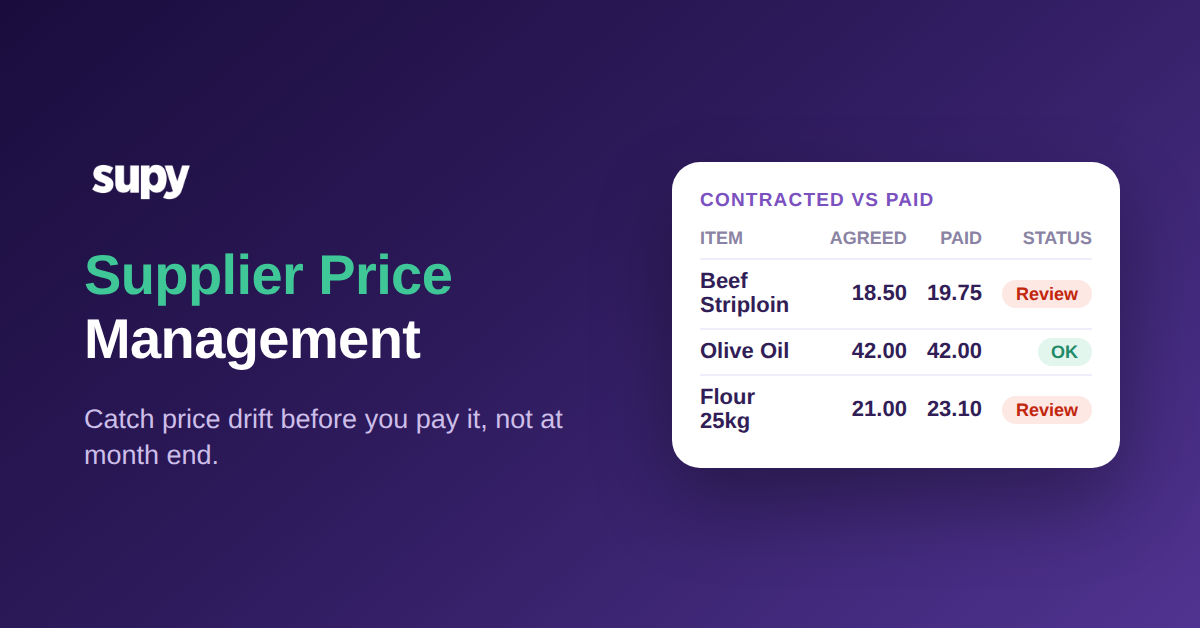
Niemand schickt eine E-Mail, um anzukündigen, dass Ihr Rindfleisch gerade teurer geworden ist. Der Preis auf der Rechnung schleicht sich um ein paar Prozent nach oben, die Lieferung kommt weiterhin an, die Küche kocht weiter, und die Position, die früher 18,50 Euro pro Kilo kostete, kostet jetzt 19,75 Euro. Multiplizieren Sie das über einige hundert Artikel und eine Handvoll Lieferanten, und das Geld verlässt das Unternehmen geräuschlos. Die meisten Betreiber bemerken es erst am Monatsende, wenn der Wareneinsatz einen Punkt höher ist als erwartet und keine einzelne Position offensichtlich falsch aussieht.
Diese Lücke ist ein Lieferantenpreismanagement-Problem, kein Pechproblem. Wenn Preise nur gelegentlich und per Augenschein kontrolliert werden — und nur dann, wenn jemand zufällig daran denkt —, ist die Abweichung unsichtbar, bis sie bereits bezahlt ist. Dieser Leitfaden zeigt, was diese Abweichung kostet, warum manuelle Kontrollen versagen, sobald Sie weitere Standorte hinzufügen, welche Felder eine Lieferantenpreisliste tatsächlich benötigt und wie Sie diese Liste von einem reinen Protokoll in ein Instrument zum Schutz der Marge verwandeln.
Preisabweichungen sind genau deshalb teuer, weil sie so klein sind. Eine einzelne Position, die von 18,50 auf 19,75 Euro steigt, entspricht einem Anstieg von 6,8 Prozent, den niemand abzeichnen würde, wenn ein Lieferant ihn schriftlich beantragen würde. Verteilt man das über einen Katalog und lässt es Position für Position geschehen, wirkt es wie Rauschen.
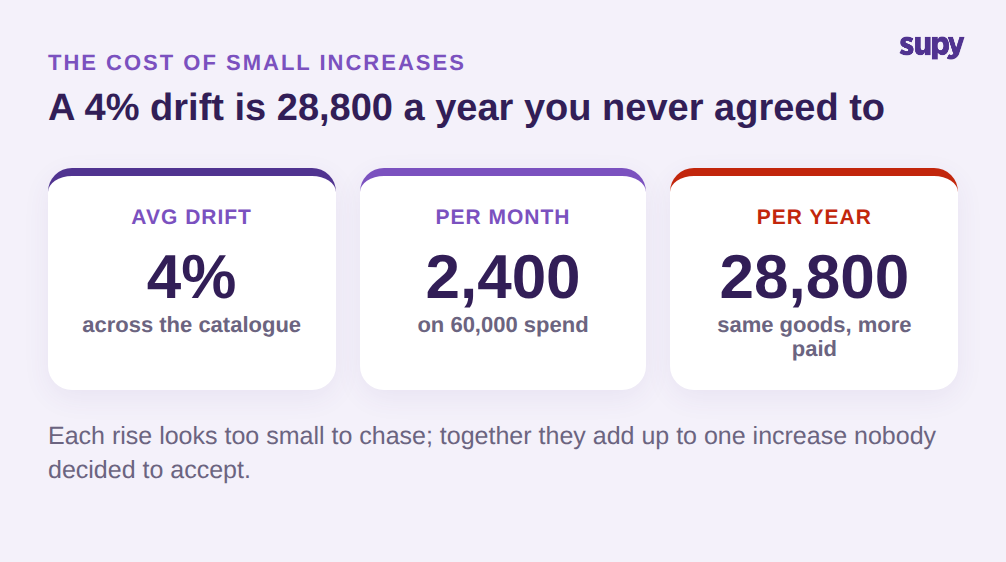
Beziffern Sie es. Wenn Ihre durchschnittlichen Lieferantenpreise bei einem monatlichen Wareneinsatz von 60.000 Euro um 4 Prozent ansteigen, verlassen 2.400 Euro pro Monat das Unternehmen für exakt dieselben Waren. Über ein Jahr sind das 28.800 Euro. Kein neuer Sitzplatz, kein besseres Essen, keine Serviceverbesserung wurde damit erkauft. Das Geld wandert schlicht von Ihrer Marge zu Ihren Lieferanten, weil niemand die Preise aufmerksam genug im Blick hatte, um gegenzusteuern.
Jeder einzelne Anstieg lässt sich auch leicht rationalisieren. Ein paar Cent pro Gebinde sieht aus wie eine Marktbewegung, nicht wie etwas, das einen Anruf wert wäre, also wird es durchgewunken. Das Problem ist, dass Dutzende kleiner, einzeln vertretbarer Erhöhungen zusammen eine große ergeben, der niemand jemals zugestimmt hat. Der Katalog driftet nach oben, weil jede einzelne Position für sich betrachtet nicht wert war, dafür innezuhalten.
Der Grund, warum das Problem weiterbesteht, ist, dass die beiden Momente, die es auffangen sollten, nicht verknüpft sind. Der Preis, den Sie mit dem Lieferanten vereinbart haben, liegt an einem Ort — oft in einer E-Mail oder einem unterschriebenen Blatt —, und der Preis, den Sie tatsächlich gezahlt haben, steht auf der Rechnung an einem anderen. Wenn jemand sie nicht absichtlich nebeneinanderlegt, sehen eine zu hoch abgerechnete und eine korrekte Position auf dem Lieferdock identisch aus. Betreiber, die Lieferantenpreise als etwas behandeln, das alle paar Monate stichprobenartig geprüft wird, stimmen in der Praxis zu, in den Wochen dazwischen das zu zahlen, was die Rechnung ausweist.
Warum manuelle Preiskontrollen versagen, wenn Sie weitere Standorte hinzufügen
Ein einzelner Standort mit einem Einkäufer kann Preise gerade noch im Kopf behalten. Sobald Sie mehr als einen Standort betreiben, funktioniert das nicht mehr — und das nicht allmählich.
Das erste Problem ist das Volumen. Jeder Standort generiert seine eigenen Rechnungen, und die Anzahl der wöchentlich zu prüfenden Positionen wächst mit jedem neuen Betrieb. Ein Finanzteam, das die Preise eines Restaurants noch visuell prüfen konnte, kann keine Hunderte von Positionen pro Woche über fünf Betriebe hinweg durchlesen, sodass die Kontrolle still zu einer Stichprobe, dann zu einer Formalität und schließlich zu nichts wird.
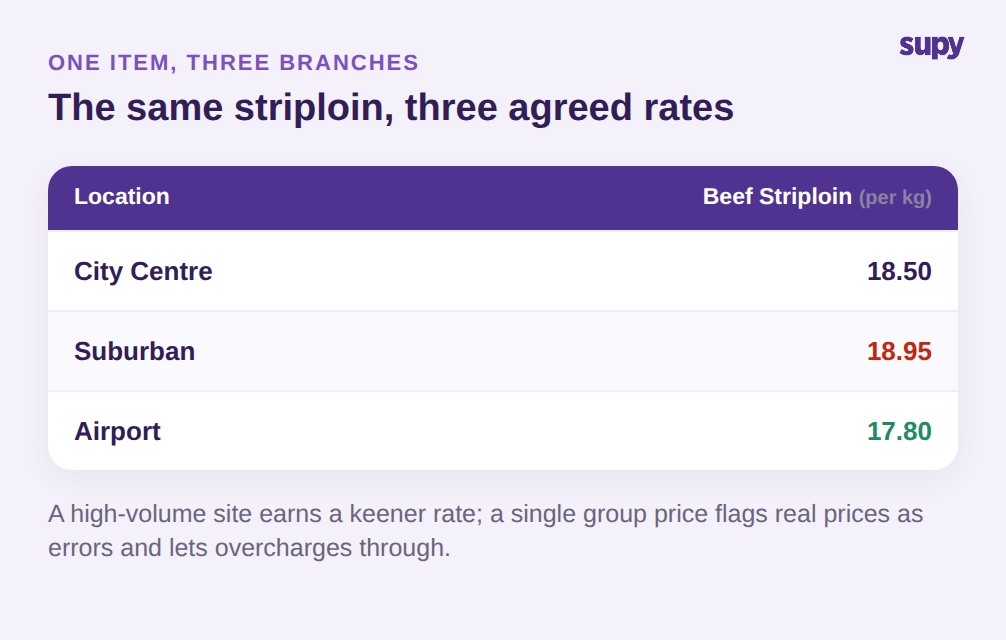
Das zweite Problem ist, dass dasselbe Produkt selten überall gleich viel kostet. Ein umsatzstarker Innenstadtbetrieb verhandelt einen günstigeren Preis als ein kleines Vorortrestaurant; ein Flughafenstandort zahlt wiederum einen anderen Preis aufgrund der Zugangs- und Lieferbedingungen. Betrachten Sie einen Artikel an drei Filialen: Dasselbe Roastbeef könnte 18,50 Euro pro Kilo am Innenstadtstandort kosten, 18,95 Euro im Vorort und 17,80 Euro am Flughafenauslass. Ein einziger gruppenweiter „Erwartungspreis" ist für alle drei falsch, sodass eine auf einer Zahl aufgebaute Tabelle echte Preise als Fehler markiert und echte Überpreisungen durchgehen lässt. Lieferantenpreise im großen Maßstab zu verwalten bedeutet, einen korrekten Preis pro Artikel und pro Standort zu führen — genau die Art von Detail, die eine gemeinsame Tabelle zuerst verliert. Wenn Überpreisungen bereits durchrutschen, behandelt unser Leitfaden zu Überpreisungen durch Lieferanten in der Gastronomie die Abstimmungsseite ausführlicher.
Die Felder, die eine funktionierende Lieferantenpreisliste benötigt
Eine Preisliste verdient ihren Platz nur, wenn jede Zeile eine Frage beantworten kann: Ist diese Position so bepreist, wie wir es vereinbart haben, und wenn nicht, um wie viel weicht sie ab? Dafür braucht es sechs funktionale Felder — nicht nur einen Namen und eine Zahl.
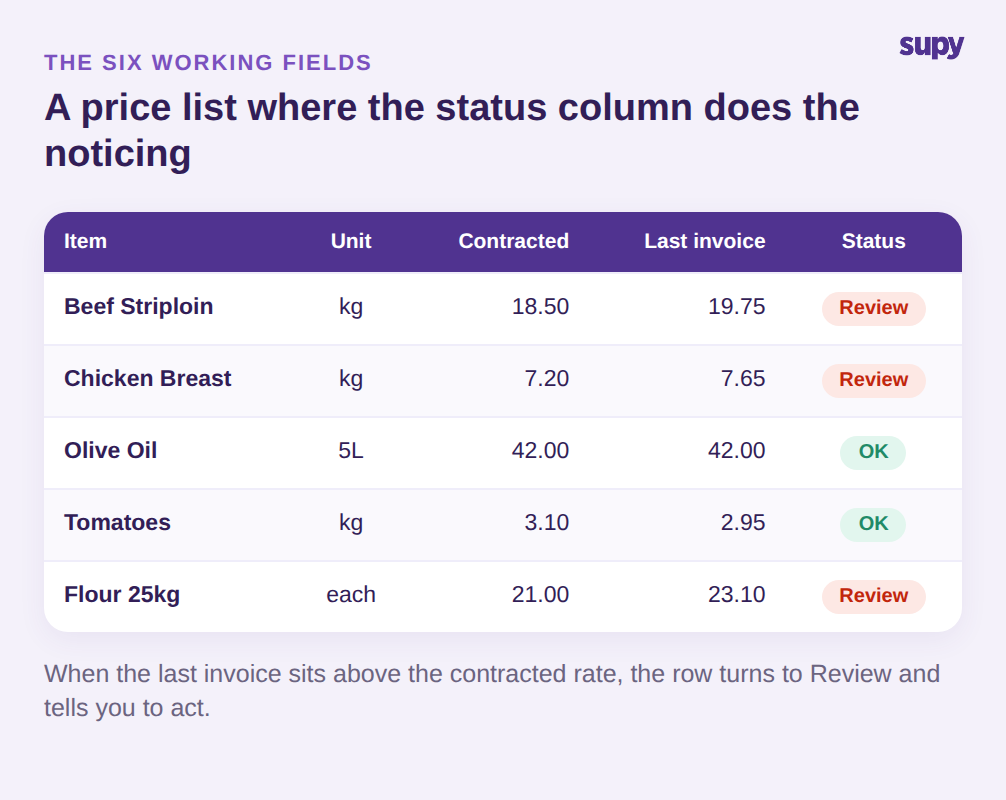
Die Kernfelder sind der Artikel, der Lieferant und die Maßeinheit, denn ein Preis ist ohne die zugehörige Einheit bedeutungslos. Dazu kommen der Vertragspreis — der tatsächlich vereinbarte Preis — und der letzte Rechnungspreis, also der zuletzt berechnete Betrag. Das sechste Feld ist das, das die meisten Tabellen überspringen: ein Status, der die beiden vergleicht, sodass die Zeile als Handlungsanweisung und nicht als bloßes Protokoll lesbar ist. Wenn der letzte Rechnungspreis über dem Vertragspreis liegt, wechselt der Status auf „Prüfen" und die Zeile fordert zur Aktion auf; wenn er übereinstimmt, bleibt die Zeile still.
Genau dieser eine Vergleich macht aus einer Liste ein Werkzeug. Eine Zeile, die Mehl zu einem Vertragspreis von 21,00 Euro und einem letzten Rechnungspreis von 23,10 Euro zeigt, ist kein abzulegendes Datum — es ist eine Abweichung von 10 Prozent, die diese Woche mit dem Lieferanten besprochen werden muss. Bauen Sie die Liste so auf, dass die Statusspalte das Bemerken übernimmt, und Sie müssen sich nicht mehr darauf verlassen, dass jemand daran denkt, zwei Zahlen aus verschiedenen Systemen zu vergleichen. Halten Sie dieselbe Disziplin für den Preis je Standort wie oben beschrieben, und eine Liste deckt jeden Betrieb ab, ohne so zu tun, als würden alle dasselbe zahlen.
Zwei weitere Felder machen die Liste belastbar statt nur nützlich. Notieren Sie das Datum, ab dem jeder Vertragspreis gilt, sodass Sie bei Preisänderungen durch den Lieferanten sehen können, ob Sie dem jemals zugestimmt haben und ab wann. Und halten Sie fest, wer die Beziehung zu jedem Lieferanten verantwortet, damit eine markierte Zeile zu der Person gelangt, die tatsächlich zum Telefon greifen kann. Eine Preisliste, die zeigt, was vereinbart wurde, was gezahlt wurde, wann es sich geändert hat und wen man anrufen muss, ist eine, auf deren Grundlage noch am selben Tag gehandelt werden kann — kein Dokument, das jedes Quartal von Grund auf neu erstellt wird.
Von der Preisliste zur geschützten Marge
Eine Preisliste, die Abweichungen aufdeckt, ist der Anfang. Der Wert ergibt sich aus drei folgenden Maßnahmen, und jede schließt eine Lücke, durch die Geld in der Regel versickert.
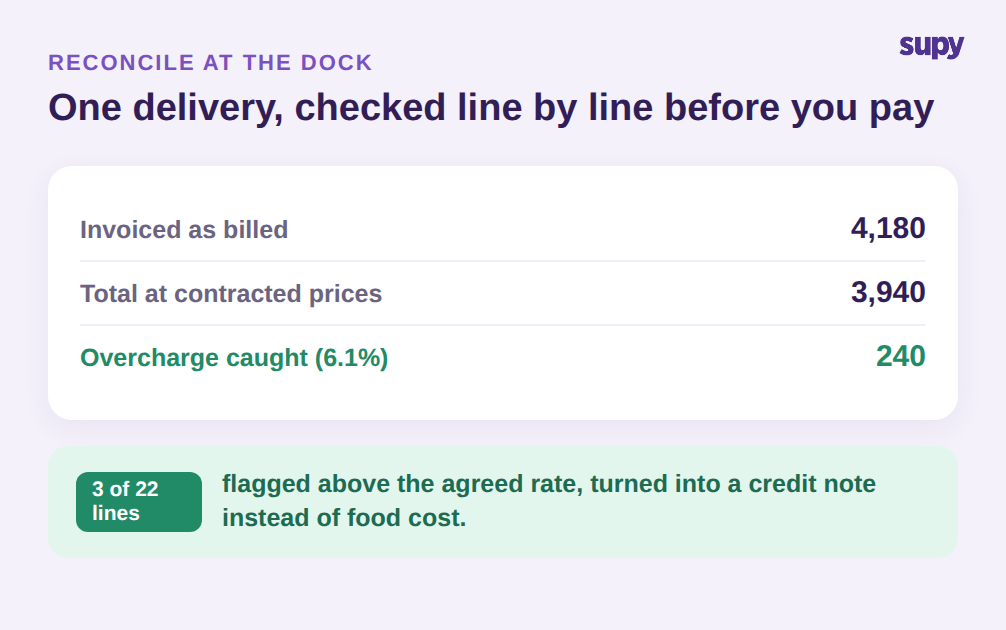
Die erste Maßnahme ist die Abgleichung: Stellen Sie jede Rechnung vor der Zahlung dem vereinbarten Preis gegenüber — nicht am Monatsende. Bei einer einzelnen Lieferung mit 22 Positionen könnte diese Prüfung 3 Positionen markieren und eine Überpreisung von 240 Euro gegenüber einem Soll-Betrag von 3.940 Euro aufdecken — eine Differenz von 6,1 Prozent, die Sie sonst vollständig bezahlt hätten. Am Lieferdock entdeckt, wird sie zur Gutschrift; übersehen, wird sie zum Wareneinsatz.
Die zweite Maßnahme ist die Weitergabe der Änderung. Wenn sich ein Lieferantenpreis tatsächlich ändert und Sie dies akzeptieren, muss dieser neue Aufwand in Ihre Rezeptkosten und Ihren Wareneinsatz fließen, sonst werden Ihre Margen auf Basis bereits veralteter Zahlen berechnet. Eine Preiserhöhung, die Sie letzten Monat übernommen haben, sollte bereits in den Kosten pro Teller dieses Monats sichtbar sein. Wenn nicht, kalkulieren Sie Ihre Speisekarte auf Basis eines Aufwands, den Sie nicht mehr zahlen. Unser Leitfaden zu Wareneinsatz-Prozentsätzen zeigt, warum ein kleiner unbemerkter Anstieg bei einer häufig verwendeten Zutat die gesamte Kennzahl verschiebt.
Die dritte Maßnahme ist die Nutzung der Daten als Hebel. Sobald Sie die Ausgaben nach Artikel und Lieferant sehen können, verdichtet sich das Bild in der Regel schnell: Drei Lieferanten könnten 68 Prozent der Ausgaben ausmachen, und Ihr größter Einzellieferant könnte 210.000 Euro pro Jahr ausmachen. Das ist eine Verhandlungsposition, nicht nur ein Bericht. Eine Reduzierung von 3 Prozent bei diesem Hauptlieferanten bedeutet 6.300 Euro pro Jahr, und Sie können das nur glaubwürdig verlangen, wenn Sie die Einkaufshistorie vorweisen können, die das rechtfertigt. Preiserhöhungen von Lieferanten sind weit leichter abzuwehren, wenn Sie belegen können, was Sie kaufen, wie oft und zu welchem Preis.
Zusammen verändern diese drei Maßnahmen die Beziehung. Statt Preiserhöhungen erst zu entdecken, nachdem Sie sie bezahlt haben, fangen Sie diese an der Tür ab, halten Ihre Kalkulation korrekt und gehen mit den Zahlen auf Ihrer Seite in Gespräche mit Lieferanten.
Wo Sie diese Woche anfangen
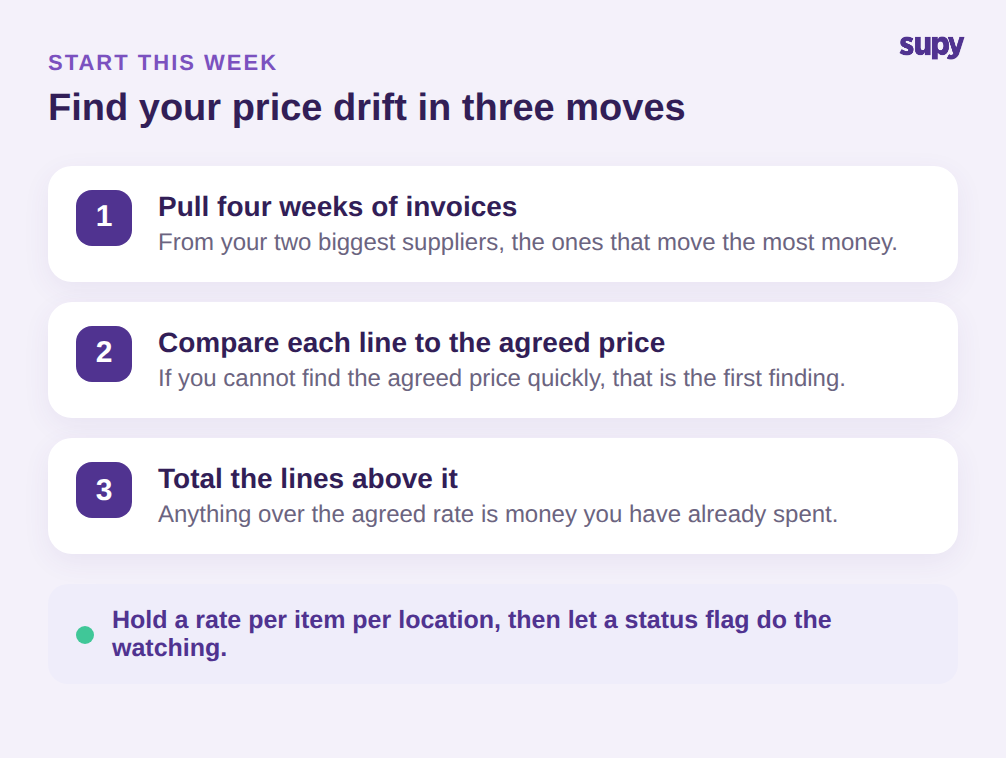
Sie brauchen kein Projekt, um herauszufinden, ob Preisabweichungen bei Ihnen auftreten. Nehmen Sie Ihre letzten vier Wochen Rechnungen von Ihren zwei größten Lieferanten und vergleichen Sie jede Position mit dem Preis, den Sie für vereinbart halten. Wenn Sie den vereinbarten Preis nicht schnell finden können, ist das der erste Befund. Wenn mehr als eine Handvoll Positionen darüber liegen, ist das der zweite — und es ist Geld, das Sie bereits ausgegeben haben.
Von da an ist die Lösung zunächst eine Disziplin, bevor sie ein Werkzeug ist: Führen Sie einen Vertragspreis pro Artikel und Standort, gleichen Sie jede Rechnung vor der Zahlung damit ab, und lassen Sie eine Statusmarkierung die Überwachung übernehmen, damit sich niemand daran erinnern muss. Ein Restaurant, das Lieferantenpreise so verwaltet, hört auf, für Abweichungen zu zahlen, denen es nie zugestimmt hat, und macht aus seiner eigenen Einkaufshistorie einen Hebel für die nächste Verhandlung.
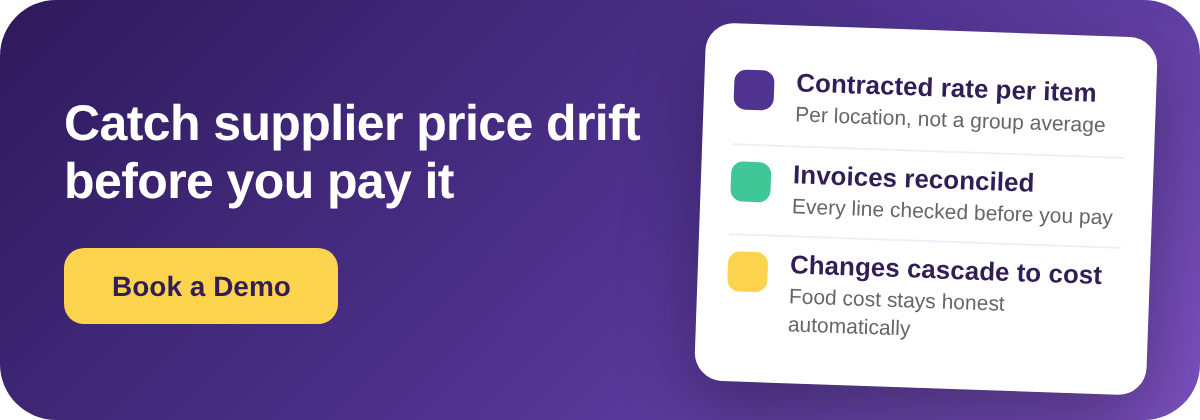
Supy gibt Betreibern mehrerer Standorte einen einzigen Ort, um Lieferantenpreise zu verwalten, Rechnungen automatisch mit vereinbarten Preisen abzugleichen und jede akzeptierte Preisänderung direkt in Rezeptkosten und Wareneinsatz-Reporting über alle Standorte hinweg zu übertragen, sodass Abweichungen vor der Zahlung und nicht danach aufgedeckt werden. Wenn manuelle Preiskontrollen Ihre Marge still belasten, schließt das diese Lücke.