.jpeg)


Mengeneinheitenumrechnung im Restaurant: Warum Kisten, Gramm und Stück Ihre Bestands- und Kostenzahlen verzerren
Warum Kisten, Gramm und Stück Ihre Zahlen auseinandertreiben
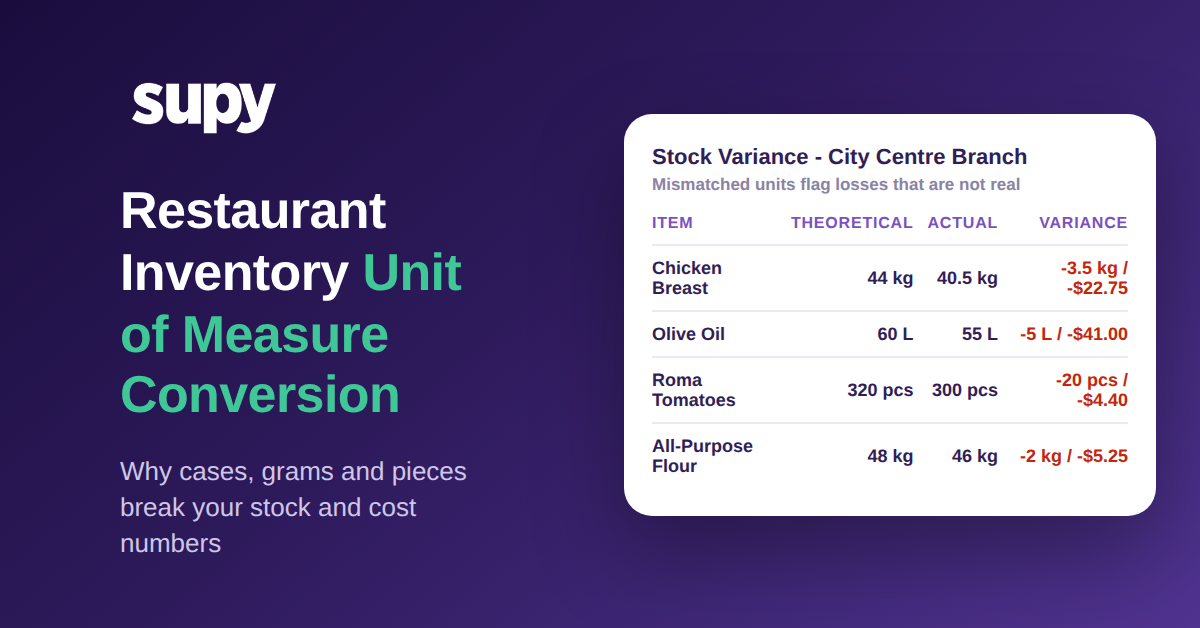
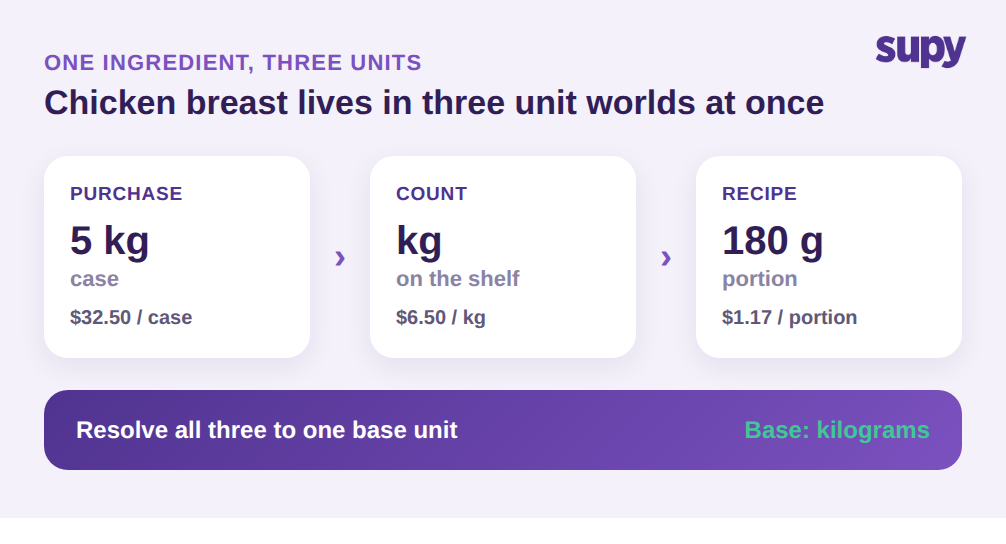
Jede Zutat in einem Restaurant lebt in mindestens drei Einheitenwelten. Sie kaufen sie in einer Einheit ein, zählen sie in einer anderen und verbrauchen sie in einer dritten. Hähnchenbrust kommt als 5-kg-Kiste zu 32,50 $ – also 6,50 $ pro Kilogramm. Ihr Team zählt sie in Kilogramm im Regal. Ein Rezept verbraucht sie dann in 180-g-Portionen, die jeweils etwa 1,17 $ kosten. Solange jeder Schritt sauber auf eine einzige Basiseinheit – hier Kilogramm – zurückgerechnet wird, stimmt die Rechnung.
Der Bruch entsteht, sobald eine dieser Umrechnungen fehlt oder falsch ist. Nehmen wir an, das System behandelt eine 5-kg-Kiste als eine einzige Bestandseinheit. Dann werden 40 kg tatsächlichem Verbrauch als 8 Einheiten ausgewiesen – der Verbrauch wird um rund 80 % unterschätzt. Der theoretische Bestand bleibt hoch, weil das System glaubt, die Position kaum angetastet zu haben, während das Regal eine andere Geschichte erzählt. Der Abweichungsbericht meldet eine Lücke, und jemand verbringt einen Nachmittag damit, einen Verlust zu suchen, der nie einer war. Es war eine Einheit, die nie umgerechnet wurde.
Genau diese Reibung schilderte das Betriebsteam einer Bäckereigruppe mit mehreren Standorten: gewichtsbasierte Bestellungen, Stück-zu-Gramm-Umrechnungen und mehrere Gebindegrößen für dieselbe Zutat – alles zur gleichen Zeit. Das ist kein Randfall. Es ist der Normalzustand jeder Küche, die von mehr als einem Lieferant einkauft oder mehr als einen Standort betreibt, und deshalb gehört die Mengeneinheitenumrechnung ins Zentrum der Lagereinrichtung – nicht in eine Fußnote.
Warum statische 1:1-Umrechnungen bei realen Gebindegrößen scheitern
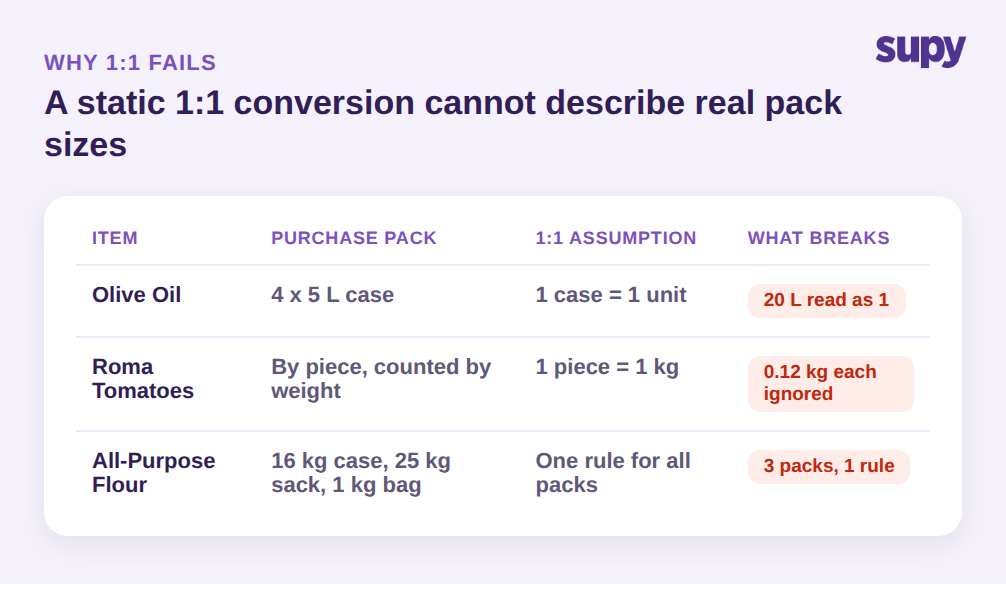
Die Standardabkürzung der meisten Systeme ist eine statische 1:1-Umrechnung: eine Einkaufseinheit entspricht einer Bestandseinheit – Punkt. Sie ist einfach zu konfigurieren und für fast jede echte Zutat falsch. Eine 1:1-Regel setzt voraus, dass das Gebinde, das Sie kaufen, auch die Einheit ist, in der Sie zählen und verwenden – was nur für die seltene Position gilt, die Sie als ganzes Stück kaufen, lagern und verbrauchen.
Alles andere zwingt zu einem manuellen Eingriff. Olivenöl kommt als 4-x-5-L-Karton zu 164,00 $, also ist eine Einkaufszeile 20 Liter, nicht eine Flasche. Romana-Tomaten werden stückweise verkauft, aber nach Gewicht mit durchschnittlich 0,12 kg gezählt. Mehl kann als 16-kg-Kiste von einem Lieferant, als 25-kg-Sack von einem zweiten und als 1-kg-Einzelpackung von einem dritten angeliefert werden – alles dieselbe Zutat, alle unterschiedliche Gebindegrößen. Eine einzige 1:1-Umrechnung kann keine dieser Situationen abbilden, sodass das Personal die Lücke von Hand am Wareneingang oder auf dem Zählblatt flickt – und jede manuelle Flickerei ist eine Chance, die falsche Zahl einzugeben.
Es gibt einen zweiten, leiseren Fehler, der mit Mathematik nichts zu tun hat. Die falsche Einheit zum Zeitpunkt der Entscheidung führt zur falschen Entscheidung. Das Produktionsteam einer Gastronomiegruppe stellte fest, dass die bevorzugte Verpackungseinheit beim Bestellen und Produzieren zuerst angezeigt werden sollte – genau weil die Anzeige der falschen Einheit dazu führt, dass Menschen die falsche Menge bestellen oder zählen. Wenn der Bestellbildschirm einen 4-x-5-L-Karton anzeigt und ein Manager 12 eingibt und dabei an einzelne Flaschen denkt, landen 240 Liter gegen einen Bedarf von 60 Litern. Die Umrechnung war vorhanden, aber die am Entscheidungspunkt angezeigte Einheit entsprach nicht dem, was der Verantwortliche im Sinn hatte.
Die Ursache beheben: eine Basiseinheit pro Zutat
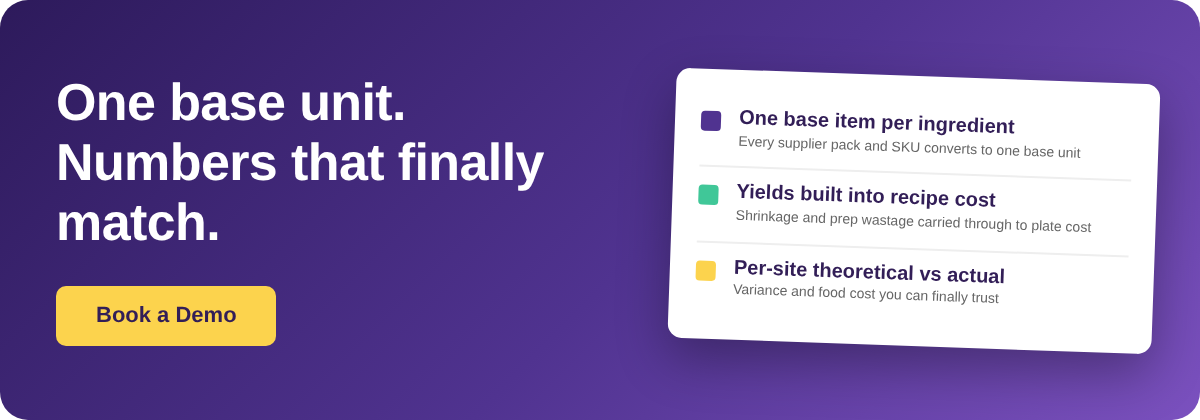
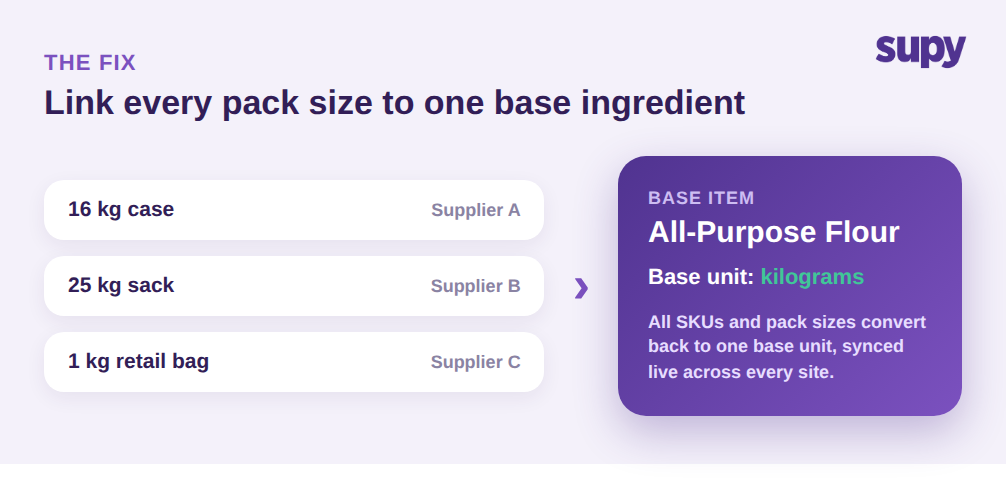
Die dauerhafte Lösung ist strukturell, nicht verfahrenstechnisch. Statt für jede Gebindegröße einen separaten Katalogeintrag zu pflegen und darauf zu hoffen, dass die Umrechnungen synchron bleiben, definieren Sie eine Basiszutat und verknüpfen jede Lieferantenvariante, jede SKU und jede Gebindegröße mit ihr. In Supy ist jede Zutat ein einziges Basis-Item – alle SKUs der Lieferanten und Verpackungsvarianten hängen an diesem einen Item. Mehl ist eine Zutat mit der Basiseinheit Kilogramm; die 16-kg-Kiste, der 25-kg-Sack und die 1-kg-Packung sind nur verpackte Ausdrücke derselben Basis.
Diese eine Entscheidung löst die meisten Unstimmigkeiten auf einmal. Bestellungen können in welchem Gebinde auch immer ein bestimmter Lieferant liefert aufgegeben werden, der Wareneingang erfasst die Kiste, und das System rechnet alles für die Zählung und den Verbrauch auf die Basiseinheit um. Sie müssen nicht mehr drei Katalogzeilen von Hand synchron halten, sodass es keinen Drift zu flicken gibt. Wenn ein neuer Lieferant eine vierte Gebindegröße einführt, hängen Sie sie an dieselbe Basiszutat statt ein paralleles Item zu erstellen, das in Ihren Berichten leise gegen das Original konkurriert. Diese Ein-Item-Disziplin ist das Fundament jeder zuverlässigen Restaurantlager-Software.
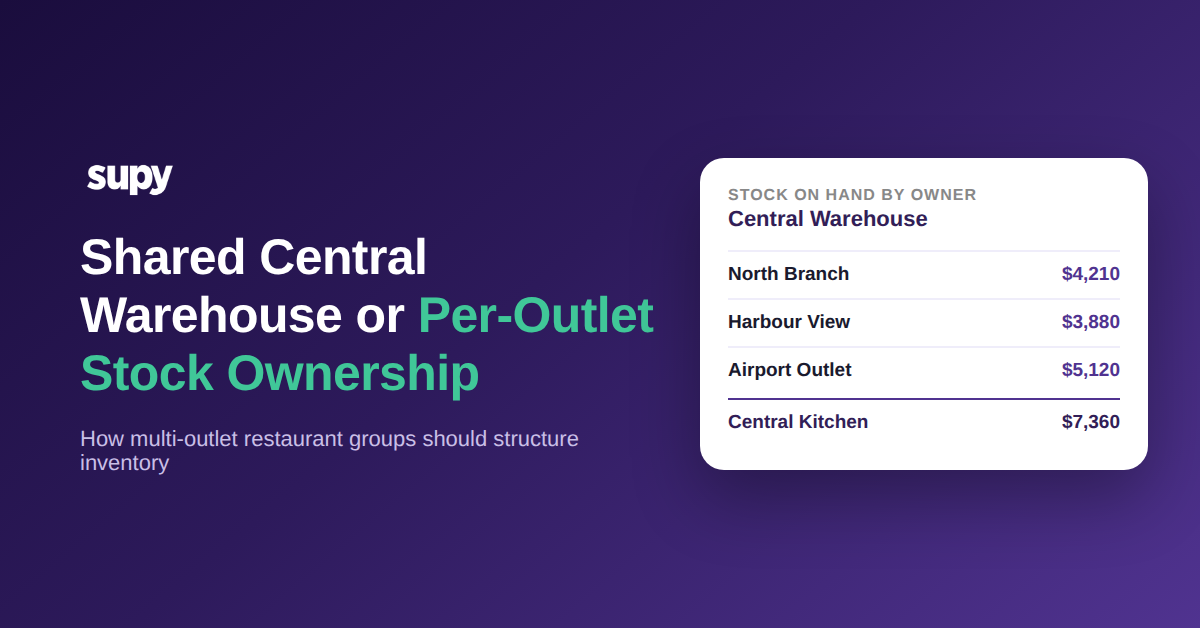
Sie behebt auch die standortübergreifende Version des Problems. Eine Multi-Standort-Restaurantgruppe, bei der eine Zutat in verschiedenen Filialen unterschiedliche Gebindegrößen hat, ist der schwerste Fall für einen flachen Katalog, weil die Abweichungen jedes Standorts in Isolation leben. Mit einer einzigen Basiszutat, die live über alle Filialen synchronisiert wird, ist eine an der Zentralküche hinzugefügte Gebindegröße überall verfügbar, und Inventurzählungen von jedem Standort werden in derselben Basiseinheit zusammengeführt. Der theoretisch-versus-tatsächlich-Vergleich vergleicht endlich Gleiches mit Gleichem, weil jede Filiale dieselbe Sache in derselben Einheit zählt. Allergenkennzeichnungen und andere zutatenspezifische Attribute bleiben an dieser einen Basis hängen und werden automatisch in jedes Rezept übernommen, statt pro Gebindegröße neu eingetragen zu werden.
Kosten korrekt halten: Ausbeuten, Schwund und standortbezogene Rezeptkalkulation
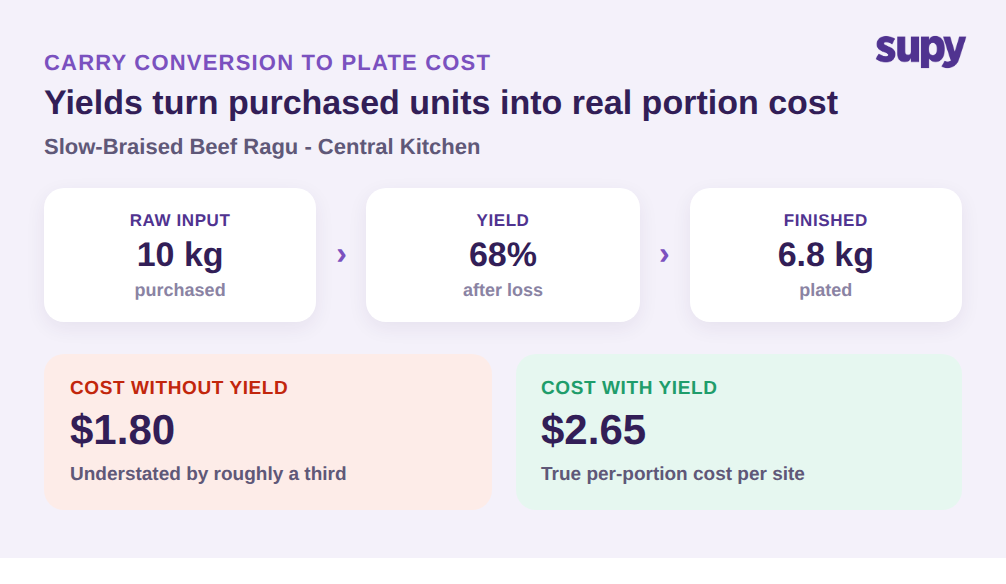
Die Umrechnung vom Einkauf zum Bestand richtig hinzubekommen ist nur die halbe Kette. Die andere Hälfte ist, was passiert, wenn aus einer Zutat ein Gericht wird – und hier kommen Ausbeuten und Schwund ins Spiel. Roheinsatz ist niemals fertiger Output. Zehn Kilogramm Rindfleisch für ein langsam geschmortes Ragù ergeben bei 68 % Ausbeute 6,8 kg – ein Rezeptpreis, der diesen Verlust ignoriert, unterschätzt den echten Portionspreis um rund ein Drittel. Eine mathematisch saubere Umrechnung von der Kiste zum Kilogramm liefert trotzdem einen falschen Tellerpreis, wenn sie bei der Rohzutat stoppt.
Die Rezeptschicht von Supy schließt diese Lücke. Rezepte und Vorzubereitungsrezepte tragen Ausbeuten, Schwund und Zubereitungsverschnitt, sodass die Basiseinheitsmenge, die den Bestand verlässt, den realen Produktionsverlust widerspiegelt – nicht nur das Rohgewicht auf dem Papier. Da Rezepte mit Point-of-Sale-Menüpositionen verknüpft sind, reduziert ein Verkauf automatisch die korrekten Zutatenmengen in der Basiseinheit, ohne dass jemand eine Umrechnung neu eingeben muss. Die Einheit, die einmal auf Zutatenebene definiert wurde, zieht sich bis zu dem durch, was vom Regal abgeht, wenn ein Gericht verkauft wird.
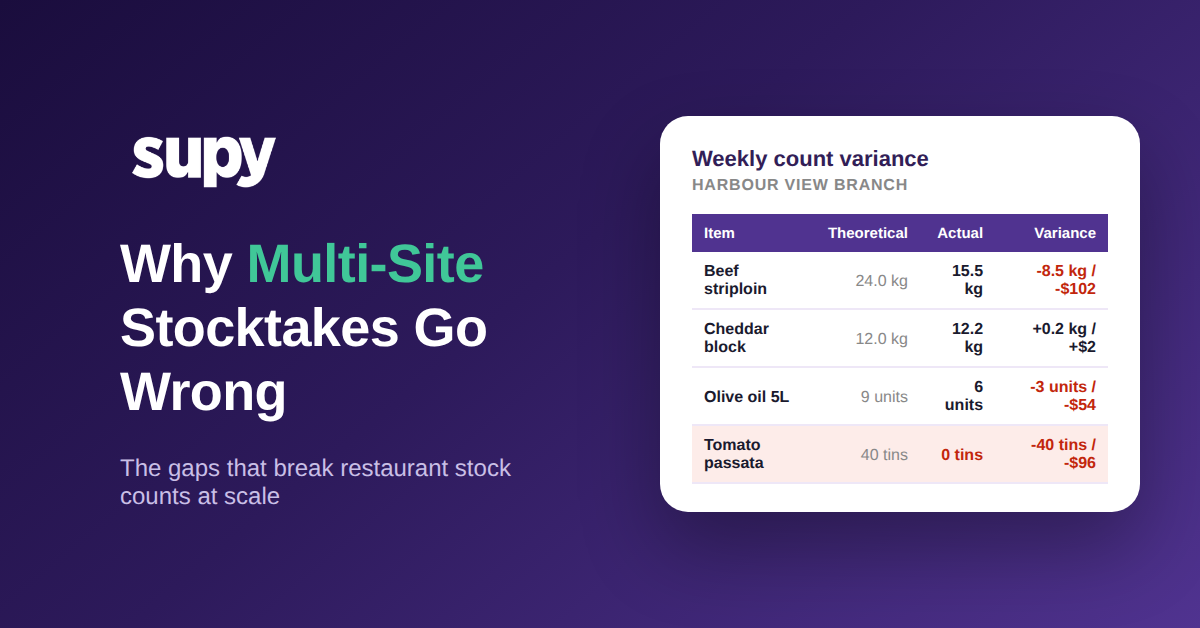
Nachgelagert macht das Kostendaten vertrauenswürdig. Live-Wareneinsatz und Food-Cost-Prozent werden je Standort und Kategorie berechnet, mit theoretisch-versus-tatsächlich-Abweichung und Schwund aufgeschlüsselt nach Typ und Standort. Rezeptkosten aktualisieren sich, wenn sich Einkaufspreise bewegen, sodass der angezeigte Tellerpreis widerspiegelt, was Sie tatsächlich bezahlt haben – umgerechnet durch dieselbe Basiseinheit, keine veraltete Schätzung. Wenn die darunter liegenden Umrechnungen korrekt sind, bedeutet eine 1,8-%-Schwankung beim Food-Cost, dass in der Küche etwas Reales passiert ist. Wenn nicht, ist dieselbe Schwankung Rauschen – und keine Analyse auf der Basis falscher Einheiten verrät Ihnen, welche von beiden es ist. Die korrekte Mengeneinheitenumrechnung ist das Fundament, auf dem der gesamte Kostenaufbau steht.
Zuerst die eigene Betrieb prüfen
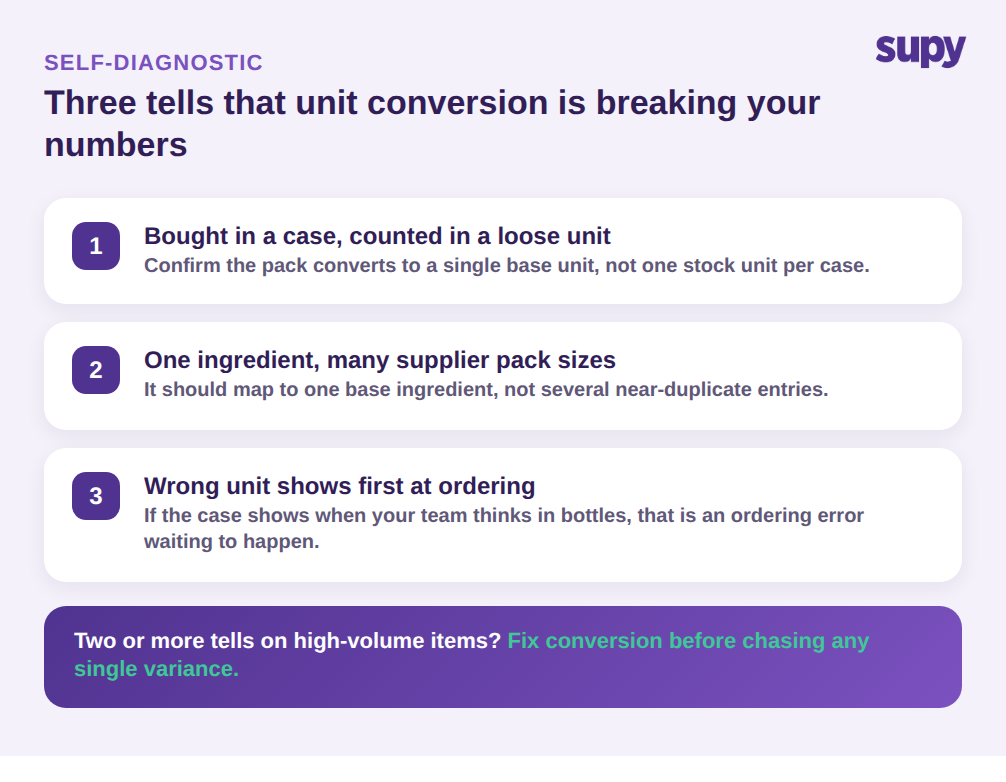
Bevor Sie etwas ändern, führen Sie eine schnelle Selbstdiagnose bei den Zutaten durch, die am wahrscheinlichsten ein Umrechnungsproblem verbergen. Ziehen Sie Ihren letzten Abweichungsbericht und achten Sie auf die drei Warnzeichen. Erstens: Jeder Artikel, den Sie in Kisten oder Gebinden kaufen, aber in einer losen Einheit zählen – Hähnchen, Öl, Mehl, Frischware –, ist ein Umrechnungskandidat; überprüfen Sie, ob das System das Gebinde auf eine einzige Basiseinheit zurückrechnet, statt die Kiste als eine Bestandseinheit zu behandeln. Zweitens: Jede Zutat, die von mehr als einem Lieferant in verschiedenen Gebindegrößen geliefert wird, sollte einer Basiszutat zugeordnet sein – nicht mehreren nahezu identischen Einträgen. Drittens: Öffnen Sie Ihren Bestellbildschirm und prüfen Sie, welche Einheit für einen Mehrgebinde-Artikel zuerst angezeigt wird; wenn es die Kiste ist, aber Ihr Team in Flaschen denkt, ist das eine Bestellfehlquelle, die darauf wartet auszulösen.
Wenn zwei oder mehr dieser Warnzeichen bei Ihren umsatzstarken Artikeln zutreffen, verzerrt die Einheitenumrechnung mit hoher Wahrscheinlichkeit Ihre Zählungen und Kosten – und es lohnt sich, das zu beheben, bevor Sie einzelnen Abweichungen hinterherjagen. Standardisieren Sie jede Zutat auf eine Basiseinheit, verknüpfen Sie die Gebindegrößen damit, und lassen Sie Rezeptausbeuten die Umrechnung bis hin zu den Tellerkosten tragen. Die Zählungen beginnen wieder mit dem Regal übereinzustimmen, und die Zahlen werden etwas, auf das Ihr Team reagiert, statt es zu diskutieren.
Supy standardisiert jede Zutat auf eine einzige Basiseinheit, verknüpft alle Gebindegrößen und SKUs der Lieferanten damit und zieht diese Einheit durch Rezepte, Live-Bestand und standortbezogene Kalkulation – sodass Ihre Zahlen vom Einkauf bis zum Teller konsistent bleiben. Demo buchen, um das an Ihren eigenen Zutaten zu erleben.