.jpeg)


Zentrallager oder Filial-Bestandseigentum: Warenwirtschaft für Gastronomiegruppen mit mehreren Standorten
Wer besitzt den Bestand im gemeinsamen Lager, und warum ist es eine echte Entscheidung
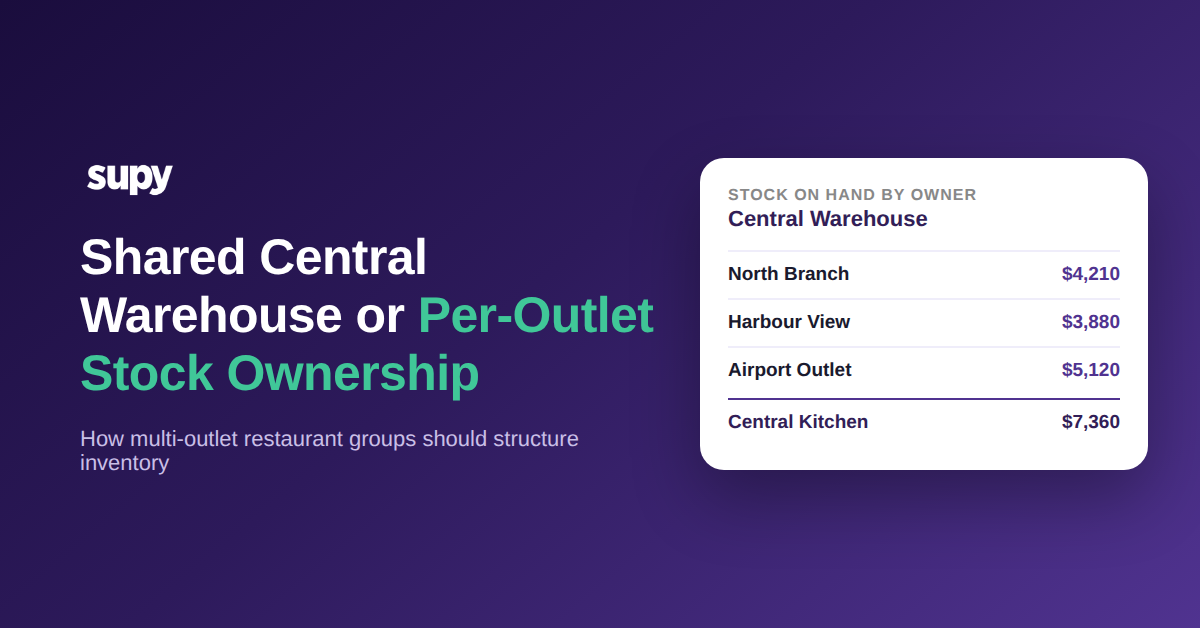
Filialbasierter Lagerbestandsbesitz in einem gemeinsamen Zentrallager bedeutet, dass der in einem Gebäude lagernde Bestand bestimmten Filialen zugeordnet wird – nicht dem Gebäude selbst. Es gibt zwei klar definierte Modelle. Beim Lager-eigenen Modell kauft, hält und liefert das Zentrallager Waren an die Filialen wie ein interner Lieferant. Beim Filialen-eigenen Modell kauft jede Filiale ihren eigenen Bestand, und das Lager stellt nur Regalplatz zur Verfügung. Die falsche Wahl zeigt sich als fehlerhafte Kostenrechnung.
Die Wahl ist real, weil die beiden Modelle unterschiedliche Buchungssätze, unterschiedliche Berichte und unterschiedliche tägliche Abläufe erzeugen. Es ist keine Namensvorliebe, die man später ohne erneute Erfassung von Monaten der Geschichte rückgängig machen kann. Die meisten Gruppen landen unbeabsichtigt bei einem Modell, erkennen seine Grenzen nach einem Jahr und versuchen dann, das andere Modell nachträglich darüberzulegen. Eine bewusste Entscheidung vor der Skalierung ist weit kostengünstiger als eine nachträgliche Migration der Eigentumsaufzeichnungen.

Wenn das Lager den Bestand besitzen sollte
Das Lager-eigene Modell passt zu vertikal integrierten Gruppen: Das Zentrallager oder die Zentralküche kauft in großen Mengen ein, hält den Bestand als eigenen und beliefert die Filialen wie ein externer Lieferant. Filialen stellen Bestellungen an die Zentralküche, die Zentralküche bestätigt, versendet und liefert gegen einen Lieferschein, und der Wert geht mit dem Eingang vom Lager auf die Filiale über. Genau so funktionieren Supy-Zentralküchenbestellungen: Filialen senden Bestellungen an die Zentralküche, der Bedarf wird pro Artikel über alle Filialen konsolidiert, und die Zentralküche bestätigt, versendet und liefert mit Lieferscheinen und interner Abrechnung.
Wählen Sie dieses Modell, wenn das Lager tatsächlich als Lieferant fungiert: Es verhandelt eigene Preise, hält Bestand, den niemand bestellt hat, und benötigt eine eigene Marge oder einen Transferpreis. Vertikal integrierte Betreiber, Gruppen, die eine eigene Großhandelsebene betreiben, die ihre Restaurants beliefert, und jede Struktur, bei der das Lager seinen eigenen Bestandswert ausweisen soll, gehören hierher. Der Kompromiss: Jede Bewegung zu einer Filiale ist eine interne Transaktion mit einem Preis, sodass Sie innerhalb Ihrer Gruppe ein kleines Großhandelsgeschäft führen und es als solches berichten.

Wenn jede Filiale ihren eigenen Bestand besitzen sollte
Das Filialen-eigene Modell passt zu Gruppen, bei denen Filialen direkt bei Lieferanten kaufen und das Zentrallager gemeinsamer Lagerraum ist, kein Lieferant. Hier besitzt das Lager nichts. Der Bestand ist auf denselben Regalen gemischt, aber filialweise nachverfolgt, und der Betreiber benötigt filialbezogenes Eigentum, ohne bei jeder Bewegung interne Verkaufstransaktionen zu erzeugen. Dies ist die Struktur, nach der Betreiber am häufigsten fragen und die sie am häufigsten nicht finden können, da viele Systeme davon ausgehen, dass das Gebäude, das den Bestand hält, ihn auch besitzen muss.
In diesem Modell bewegen sich Bestände zwischen Filialeigentümern als standortübergreifender Transfer, nicht als Verkauf. Supy-Transfers von der Zentralküche zur Filiale und standortübergreifende Transfers handhaben dies direkt: Ein Transfer wird ausgestellt, die empfangende Filiale muss ihn akzeptieren, bevor der Bestand aktualisiert wird, und die Menge passt sich automatisch auf beiden Seiten an – ohne interne Rechnung. Wählen Sie dieses Modell, wenn Filialen ihre eigenen Lieferantenbeziehungen und eigenen Margen behalten, wenn ein gemeinsames Lager hauptsächlich zur Konsolidierung von Lieferungen und Lagerung existiert, und wenn Sie nie einen internen Verkauf zwischen zwei Ihrer eigenen Standorte haben möchten.

Wo beide Modelle ohne Empfangsbestätigung und filialbezogene Berichte versagen
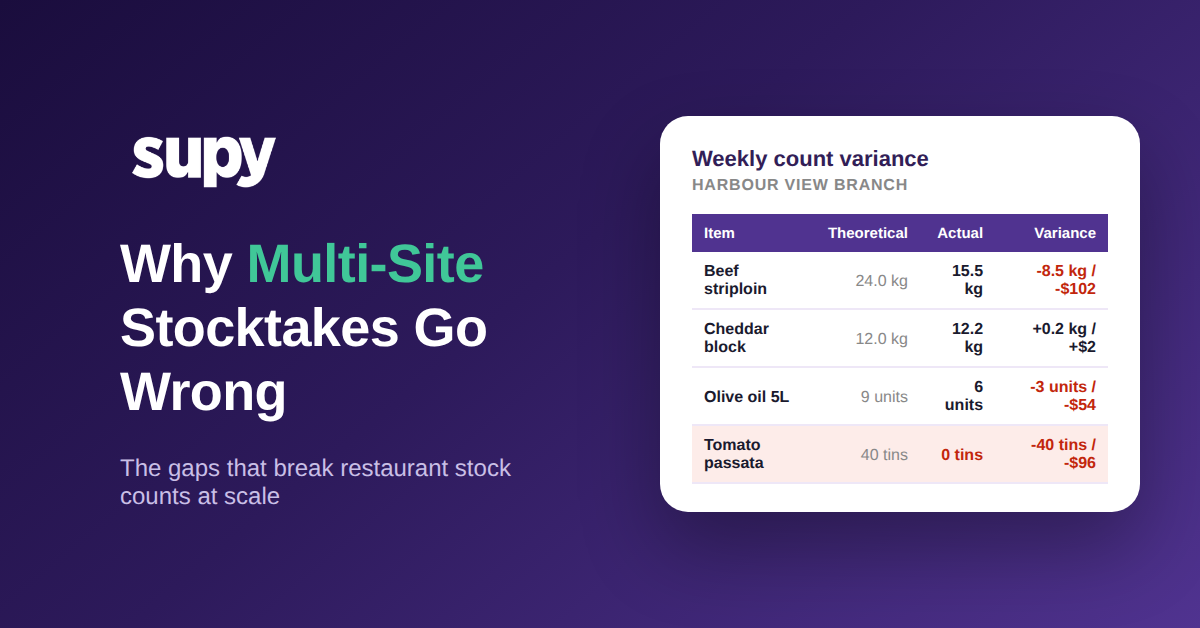
Keines der Modelle übersteht laxes Tracking. Das erste Versagen ist Phantombestand: Ein Transfer wird aus einem Filialkonto ausgestellt, aber nie in das andere bestätigt, sodass dieselben Waren gleichzeitig in zwei Buchungssätzen erscheinen und beide Bestände am Monatsende falsch wirken. In einer Gruppe mit acht Filialen, die ein Lager teilen, reichen einige unbestätigte Transfers aus, um gleichzeitig mehrere Tausend Euro an Bestand an zwei Orten zu haben. Ein Transferweg, bei dem der Empfänger akzeptieren muss, bevor der Bestand aktualisiert wird, schließt diese Lücke, da sich auf keiner Seite etwas anpasst, bis beide Seiten bestätigen, dass die Waren angekommen sind.
Das zweite Versagen sind Berichte, die auf Gruppenebene aufhören. Wenn Sie den Verbrauch gegenüber dem theoretischen Bedarf und dem Bestellvolumen pro Filiale nicht sehen können, können Sie nicht erkennen, welcher Standort überbestellt, welcher Verluste durch Verschwendung verursacht und welcher still einen anderen durch das gemeinsame Lager subventioniert. Filialbezogene Abweichungsberichte sind der Nutzen, der die Eigentumsverfolgung überhaupt lohnenswert macht. Supy-Dashboards zeigen den theoretisch-vs.-tatsächlichen Abweichung und Verbrauch nach Standort und Artikel, und die Multi-Standort-Bestandssichtbarkeit von Supy zeigt den Bestand pro Standort, sodass die Zahlen jeder Filiale für sich stehen – unabhängig davon, wessen Bestand das Regal teilt.

Ihr Modell wählen: Eigentum mit dem tatsächlichen Einkauf abstimmen
Wählen Sie das Lager-eigene Modell, wenn das Zentrallager kauft und an Ihre Filialen weiterverkauft, nicht zugewiesenen Bestand hält und seinen eigenen Bestandswert und eigene Marge benötigt. Wählen Sie das Filialen-eigene Modell, wenn Filialen direkt kaufen, ihre eigenen Lieferantenbedingungen behalten und das Lager nur gemeinsamer Lagerraum ist. Wenn Sie unsicher sind, folgen Sie dem Geld: Wer die Lieferantenbeziehung und das Kaufrisiko trägt, sollte den Bestand besitzen, und die andere Partei sollte nur Transfers sehen, niemals interne Verkäufe.

Bevor Sie sich festlegen, testen Sie jedes System in einer Demo mit drei Fragen. Erstens: Kann Bestand pro Filiale in einem physischen Lager nachverfolgt werden, ohne bei jeder Bewegung einen internen Verkauf zu erzwingen? Zweitens: Erfordert ein standortübergreifender Transfer, dass die empfangende Seite bestätigt, bevor der Bestand auf einer der Seiten aktualisiert wird? Drittens: Können Sie Verbrauch, theoretischen Bedarf und Abweichung für eine einzelne Filiale abrufen, nicht nur für die Gruppe? Eine Plattform, die alle drei erfüllt und über ihre 75+ Integrationen mit Ihren bestehenden Systemen verbunden ist, kann beide Modelle unterstützen, während Sie wachsen. Eine, die bei einem davon scheitert, wird still Ihr Modell für Sie wählen – und sie wird das wählen, das Ihre Berichte zunichtemacht.